

P1429 on 2014-2018 GMC Sierra 1500: Brake Vacuum Pump Failure and Fixes
P1429 on a 2014-2018 GMC Sierra most likely indicates a failure of the belt-driven brake vacuum pump. This is a very common and serious issue causing a hard brake pedal. The fix is to replace the pump and its belt, costing around $150-$250 for parts. A major recall, N192268490, was issued for this problem.
- P1429 on this GMC Sierra points to a serious and common failure of the brake vacuum pump.
- This is a critical safety issue. Do not drive the vehicle, as you may lose power brake assist, making it very difficult to stop.
- The most common fix is replacing the vacuum pump and its drive belt.
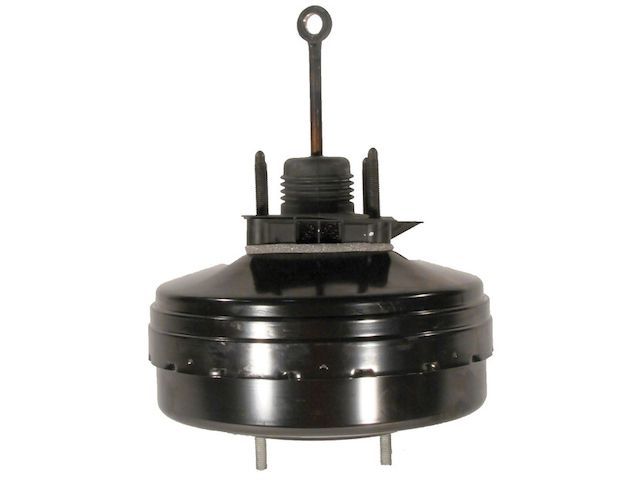
- It is essential to check for engine oil in the brake booster. If oil is present, the booster and vacuum line must also be replaced to avoid repeat failure.
- A major recall (N192268490) and a TSB (PIT5361D) exist for this exact problem.
What's Unique About the 2014-2018 GMC Sierra 1500
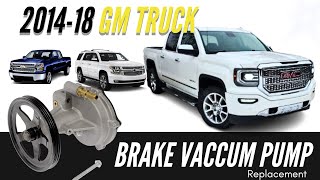
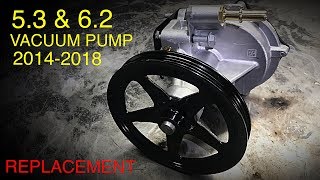
Unlike many vehicles that rely solely on engine vacuum, GM added a belt-driven mechanical vacuum pump to these trucks 🎬 Watch: How the vacuum pump works and how to replace it to compensate for low-vacuum conditions created by the Active Fuel Management (AFM) or cylinder deactivation system. This specific pump design proved to be a widespread failure point, leading to a massive recall (NHTSA 19V-645 / GM N192268490) affecting over 3.4 million vehicles and numerous technical service bulletins. The failure is so common that it's one of the most well-known issues for this truck generation, with the NHTSA receiving over 111 complaints leading up to the recall.
Symptoms You May Notice
- Extremely hard brake pedal, especially at low speeds or after repeated pedal applications
- "Service Brake Assist" message on the driver information c 🎬 Watch: Quick fix for a hard brake pedal at slow speedsenter
- Significantly increased stopping distance
- A ticking noise from the engine bay, sometimes mistaken for an exhaust leak, as noted in TSB PIT5361D.
- Brake pedal feels like it's fighting back or won't depress easily
- Brake pedal may vibrate when the hydraulic backup system activates (especially after the recall software update).
- Replacing the brake booster without checking for a failed vacuum pump. If the pump is bad and leaking oil, it will quickly destroy the new booster.
- Attributing the hard pedal to a faulty ABS module, when the root cause is a lack of vacuum assist.
Most Likely Causes
- Failed Mechanical Brake Vacuum Pump 🔴 High Probability → Shop Vacuum Pump The design of the oil-lubricated pump is susceptible to internal wear and failure of its vanes or diaphragm. Debris in the engine oil can also clog an internal filter screen, starving the pump and leading to failure. GM's TSB PIT5361D notes that poor oil change maintenance can contribute to premature failure.
How to confirm: With the engine running, a vacuum gauge is connected to the pump's outlet port. A healthy pump should produce a steady vacuum of 25 inHg or more. If the reading is low (e.g., below 15-20 inHg) or non-existent, the pump has failed. Also, inspect the vacuum hose and brake booster inlet for any signs of engine oil, which confirms an internal pump seal failure.
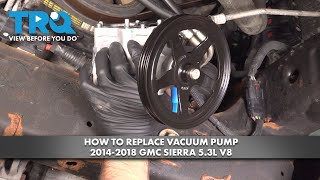
Typical fix: Replace the brake vacuum pump and the stretch-fit drive belt. 🎬 See this step-by-step vacuum pump replacement walkthrough
Est. part cost: $120-$250 - Oil Contamination of Brake Booster 🟡 Medium Probability → Shop Power Brake Booster When the vacuum pump's internal seal fails, it pushes pressurized engine oil through the vacuum line directly into the power brake booster, contaminating and destroying its internal rubber diaphragm.
How to confirm: Remove the vacuum line from the brake booster and use a borescope or light to look inside for pooled engine oil. The presence of any oil confirms contamination. This is a critical step outlined by GM.
Typical fix: Per GM TSB PIT5361D, if oil is found, you MUST replace the vacuum pump, the vacuum line between the pump and booster, the power brake booster, and the master cylinder to prevent a repeat failure. Ignoring this will cause the new booster to fail quickly.
Est. part cost: $400-$800 - Broken Vacuum Pump Drive Belt ⚪ Low Probability The vacuum pump is driven by its own small, stretch-fit belt. While not a common failure point on its own, it can break with age or if the pump seizes.
How to confirm: Visually inspect the front, lower passenger side of the engine block. The vacuum pump has a small pulley and its own dedicated belt. Check if the belt is present and intact.
Typical fix: Replace the stretch-fit drive belt. If the pump pulley does not spin freely, the pump must also be replaced.
Est. part cost: $15-$30
Diagnosis Steps
- Verify the complaint: Start the engine. While stationary or at very low speed, pump the brake pedal 3-4 times. If the pedal becomes very hard and difficult to press, a loss of vacuum assist is confirmed.
- Check for TSBs and Recalls: Enter the vehicle's VIN into the NHTSA or GM recall database to check the status of recall N192268490. Note that the recall fix is a software update, not a replacement of the pump. Some owners may also have a 'special coverage' extension on the pump itself.
- Inspect the Vacuum Pump Belt: Visually inspect the small belt that drives the vacuum pump on the lower passenger side of the engine. Ensure it is intact and on the pulleys.
- Test Vacuum Pump Output: Disconnect the vacuum hose from the brake booster. Connect a vacuum gauge to the hose coming from the pump. Start the engine. A healthy pump should produce strong, steady vacuum (25+ inHg). Little to no vacuum indicates a failed pump.
- Inspect for Oil Contamination: With the hose disconnected from the booster, carefully inspect the inside of the hose and the booster's inlet port for any trace of engine oil. This is a critical step mandated by TSB PIT5361D.
- Determine Repair Path: If no oil is present, plan to replace only the vacuum pump and its belt. If any oil is found, the vacuum pump, vacuum hose, brake booster, and master cylinder must all be replaced as a set to ensure a lasting repair.
Parts You'll Likely Need
- Brake Vacuum Pump
(OEM #12687986)— This is the primary failure point. The original design is prone to internal wear, causing a loss of vacuum and/or oil leaks into the brake system.
Trusted brands: ACDelco (GM Genuine), Dorman
OEM price range: $150-$250
Aftermarket price range: $100-$180 - Power Brake Booster
(OEM #84504232)— Required if the failed vacuum pump has contaminated the original booster with engine oil. The oil destroys the booster's internal diaphragm.
Trusted brands: ACDelco (GM Genuine)
OEM price range: $200-$350
Aftermarket price range: $150-$250 - Vacuum Pump Drive Belt
(OEM #12657393)— This is a stretch-fit belt that should always be replaced when the vacuum pump is replaced.
Trusted brands: ACDelco (GM Genuine), Continental, Gates
OEM price range: $20-$30
Aftermarket price range: $15-$25 - Brake Booster Vacuum Hose
(OEM #23395231)— Must be replaced if it has been contaminated with oil from a failed pump to prevent oil from reaching the new booster.
Trusted brands: ACDelco (GM Genuine)
OEM price range: $40-$60
Aftermarket price range: $30-$50
Related Codes That Often Appear With This One
- C0299 — This code often relates to Brake Booster Performance. A failing vacuum pump (P1429) directly causes poor brake booster performance, triggering C0299.
Technical Service Bulletins (TSBs) & Recalls
- PIT5361D: Diagnostic Tip - Additional Brake Pedal Effort. This TSB is the primary diagnostic guide for this issue, instructing technicians to check for low vacuum and subsequent oil contamination. It explicitly states that if engine oil is found in the vacuum line, the pump, booster, master cylinder, and vacuum line must all be replaced.
Platform-Specific Known Issues
- Recall N192268490: GM issued a massive safety recall for this issue. The official fix was a software update to the Electronic Brake Control Module (EBCM) to improve how the system uses the hydraulic brake boost assist when vacuum is low. Many owners and technicians found this to be a 'band-aid' that didn't fix the root mechanical failure, and mechanical replacement of the pump was still necessary for a complete repair.
- Oil Contamination Cascade Failure: A key issue with this platform is that the pump failure can cause a chain reaction. Leaked oil requires replacing the booster and associated lines, significantly increasing repair costs as outlined in TSB PIT5361D.
- Special Coverage N192268491: In addition to the recall, GM offered some owners a 'Special Coverage' program that extended the warranty on the vacuum pump itself, sometimes covering the replacement cost even outside the standard warranty period.
Scan Tool Commands That Help
- GDS2/Tech2: EBCM Reprogramming with SPS — This is the specific function required to perform the GM recall N192268490. The dealer uses the Service Programming System (SPS) to load a new calibration into the Electronic Brake Control Module (EBCM) that changes how the hydraulic brake boost assist is used when vacuum is low.
Wiring & Ground Locations
- EBCM Ground — Located on the frame rail beneath the driver's side door. It can be identified as a heavy gauge wire.. While not a direct cause of the mechanical pump failure for P1429, a poor EBCM ground can cause communication errors and trigger other ABS/Stabilitrak codes (like C0299) that often accompany the primary fault. The recall fix for P1429 involves reprogramming the EBCM, making a solid ground connection essential for both the update procedure and the subsequent operation of the hydraulic assist.
Real Owner Repair Stories
- GM-Trucks.com forum user 'sk' (2014-2018 GMC Sierra/Chevrolet Silverado (specific year not stated, but applies to platform)) — Hard brake pedal and an annoying ticking sound that was previously misdiagnosed as a normal direct-injection engine noise.
❌ Tried (didn't work) A previous replacement of only the brake booster had failed to resolve the issue long-term.
✅ What actually fixed it The dealership followed the procedure in TSB PIT5361, which, after finding oil in the vacuum line, mandated the replacement of the vacuum pump, brake booster, master cylinder, and associated vacuum lines as a complete set. This finally and permanently fixed the hard pedal and eliminated the ticking noise. - Reddit user r/Silverado (2014 Sierra) — Hard brake pedal at low speeds.
❌ Tried (didn't work) Considering the dealer recall which is just a software reprogram.
✅ What actually fixed it The community consensus, confirmed by multiple users, was that replacing the mechanical vacuum pump is the proper fix. The recall's software update was described as a 'band-aid' that makes the EBCM use the ABS pump for hydraulic assist, which results in a noticeable vibration in the brake pedal when activated. The physical replacement of the pump addresses the root cause.
OEM Part Supersession History
Unknown, multiple early versions existed.→12669488 (ACDelco), also seen as 12687986 in some catalogs.— The original vacuum pump design was prone to premature failure. The updated part, often identifiable by the 'WABCO' casting, is a revised design intended to be more durable.
Model Year Variations Within This Range
- Post-2018: Vehicles manufactured after the 2018 model year are not equipped with the same affected vacuum pump design that is the subject of recall N192268490.
Diagnostic Flowchart
Other Known Issues on This Vehicle
Issues unrelated to this code that are worth knowing about as an owner of this generation:
- AFM/DFM Lifter Failure 🔴 High — Common, especially on vehicles over 70,000 miles. Can occur earlier. Affects L83, L86, and other GM V8s. (Ref: Multiple TSBs exist; a class-action lawsuit was also filed regarding this issue.)
- 8-Speed (8L90) Transmission Shudder/Hard Shift 🟠 Medium — Very common on 2015-2018 models equipped with the 8-speed transmission. Often described as driving over rumble strips between 35-55 MPH. (Ref: TSB 18-NA-355 recommends a specific fluid flush with Mobil 1 Synthetic LV ATF HP (Blue Label) as the primary fix.)
- A/C Condenser Leak 🟠 Medium — Widespread failure where the condenser develops a leak at the seam welds, causing loss of refrigerant and A/C function. (Ref: Special Coverage Adjustment 17336 was issued for some SUVs on the platform but not typically for the Sierra/Silverado, despite using similar parts.)
- Cracked Dashboard ('Chevy Dash Crack') 🟡 Low — Common for the plastic dashboard to develop cracks, particularly around the passenger side airbag and instrument cluster bezel.
- Infotainment System Glitches/Failure 🟡 Low — Owners report issues with unresponsive touch screens, phantom touches, and Bluetooth connectivity problems.
Used vs. New Parts: Buying Guide for This Vehicle
When a used part is the smart pick: For this specific failure, a used part is almost never a smart choice. The high failure rate of the original pump design means a used part from a donor vehicle is highly likely to either be already faulty or fail shortly after installation.
Donor-vehicle mileage cap: roughly under 10000 miles for the part to have meaningful remaining life.
What to inspect on the donor part:
- Verify the part number is the updated, superseded version (e.g., 12669488).
- Inspect the vacuum port for any signs of oil residue, which indicates an internal seal failure.
- If possible, attempt to spin the pulley by hand; it should be smooth with no grinding or excessive resistance.
OEM-only on this vehicle (don't cheap out):
- Brake Vacuum Pump
Aftermarket brands forum-validated for this vehicle:
- ACDelco (GM Genuine)
- WABCO (Often the OEM manufacturer for the updated part)
Brands owners have reported issues with on this vehicle:
- Unknown, unbranded parts from online marketplaces should be avoided due to the critical safety nature of this component.
Real Owner Stories
Aggregated from forums and TSBs cited above. Mileages and costs reflect what owners reported in those sources.
2015 GMC Sierra 1500 5.3L V8
Symptoms: Classic low-speed hard pedal symptom. A previous repair involving only the brake booster failed to solve the issue.
What fixed it: The dealer followed TSB PIT5361D and replaced the vacuum pump, brake booster, and all associated lines due to oil contamination.
Source hint: GM-Trucks.com: Thread '2015 Sierra Hard Brake Pedal???'
2014 GMC Sierra 1500 5.3L V8
Symptoms: Hard brake pedal at low speeds. Discussion regarding the effectiveness of the official recall software update versus a mechanical fix.
What fixed it: Replacing the mechanical vacuum pump rather than relying solely on the dealer's software reprogram (Recall N192268490).
Source hint: Reddit r/Silverado: Thread '14 Sierra getting hard brake pedal at Low speed.'
2014 GMC Sierra 1500 5.3L V8
Symptoms: Hard brake pedal at low speeds; owner performed manual diagnostics and measured 27 inHg of vacuum directly from the pump.
What fixed it: Diagnostic testing confirmed the pump was producing adequate vacuum, suggesting the failure was located elsewhere in the assist system.
Source hint: GM-Trucks.com: Thread '2014 Hard Brake Pedal At Low Speed'
Related OBD-II Codes
Frequently Asked Questions
Does TSB PIT5361D apply to my 2015 GMC Sierra 1500 with the 5.3L V8?
I already had Recall N192268490 performed, but my brake pedal is still hard. Why?
Is there a warranty extension for the vacuum pump on my 2014 Sierra?
Why does my brake pedal vibrate after getting the GM recall software update?
The dealer says I need a new master cylinder and brake booster along with the pump. Is this necessary?
Can I just replace the vacuum pump belt to fix the hard pedal?
Helpful Videos
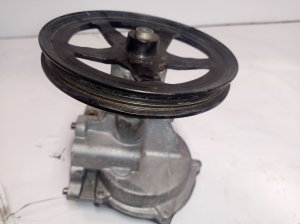
Used OEM Parts in Stock
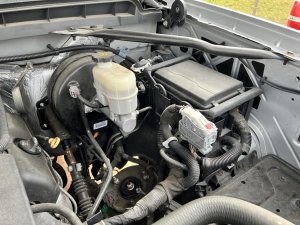
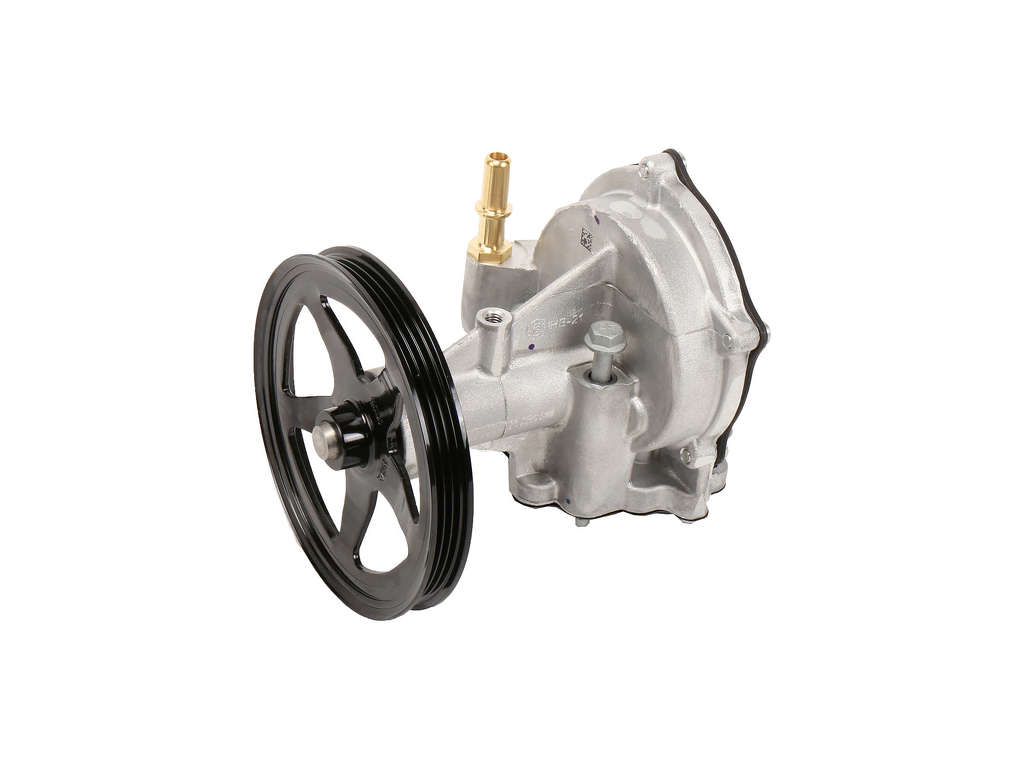
New Aftermarket Parts Available




The information in this article is provided for general reference and educational purposes only. Vehicle specifications, procedures, and part compatibility can vary by production date, trim level, and region. Always consult your vehicle's factory service manual and verify part numbers before purchasing or performing repairs. Safety-critical components such as airbags, seat belts, and braking systems should be installed by a qualified professional.
- GMC Sierra 1500:
- 🧭 Diagnostic Flowchart
- 🎬 Helpful Videos
- 🛍️ Shop This Part
- What's Unique About the 2014-2018 GMC Sierra 1500
- Symptoms You May Notice
- Most Likely Causes
- Diagnosis Steps
- Parts You'll Likely Need
- Related Codes That Often Appear With This One
- Technical Service Bulletins (TSBs) & Recalls
- Platform-Specific Known Issues
- Scan Tool Commands That Help
- Wiring & Ground Locations
- Real Owner Repair Stories
- OEM Part Supersession History
- Model Year Variations Within This Range
- Other Known Issues on This Vehicle
- Used vs. New Parts: Buying Guide for This Vehicle
- Real Owner Stories
- 2015 GMC Sierra 1500 5.3L V8
- 2014 GMC Sierra 1500 5.3L V8
- 2014 GMC Sierra 1500 5.3L V8
- Related OBD-II Codes
- Frequently Asked Questions
- 🎟️ Get 5% Off