

P1437 on 2005-2012 Ford Escape: A/C Evaporator Sensor Fault Causes and Fixes
On a 2005-2012 Ford Escape, code P1437 almost always means the A/C Evaporator Temperature Sensor has failed. This causes the A/C to stop blowing cold air. Replacing the sensor, located behind the glove box, is the common fix and costs about $30-$80 for the part.
- P1437 on a 2005-2012 Escape means your A/C won't work because of a fault in the evaporator temperature sensor circuit.
- The most common cause by far is a failed sensor, which is a relatively inexpensive part.
- Diagnosis is straightforward with a scan tool that can read live data; look for a -40° temperature reading from the sensor.
- The repair is DIY-friendly, requiring you to lower the glove box to access and replace the sensor in the HVAC housing. No special A/C equipment is needed.
What's Unique About the 2005-2012 Ford Escape
While P1437 has many different meanings across car manufacturers, on Ford vehicles of this era it consistently points to an issue in the HVAC system. For the Escape, this code is specifically tied to the evaporator temperature sensor circuit, not the blower motor resistor, which is a common point of confusion. The fix is the same for both the facelifted first-generation (2005-2007) and second-generation (2008-2012) Escape, as they use a similar sensor and HVAC case design. This issue is also shared with its platform mates, the Mercury Mariner and Mazda Tribute.
Generation note: This guide covers the facelifted first generation (2005-2007) and the second generation (2008-2012) of the Ford Escape. The cause, diagnosis, and repair for code P1437 are consistent across these model years, with the same sensor part number applicable to the entire range. The platform mates, Mercury Mariner (2005-2011) and Mazda Tribute (2005-2011), also share this design and failure mode.
Symptoms You May Notice
- Air conditioning does not blow cold air
- A/C compressor clutch does not engage
- A/C system may work intermittently before failing completely
- The fan (blower motor) continues to work normally
- Replacing the blower motor resistor. A bad blower motor resistor typically causes the fan to work only on the highest setting and does not usually set code P1437.
- Recharging the A/C system. While low refrigerant can cause the A/C to blow warm, it will not cause the specific 'Circuit High' fault of P1437. It would typically set other codes or no codes at all.
Most Likely Causes
- Failed A/C Evaporator Temperature Sensor 🔴 High Probability → Shop A/C Evaporator Core The sensor is a simple thermistor that degrades over time, eventually failing by creating an open circuit. This is a very common failure mode for this part across the Escape/Mariner/Tribute platform.
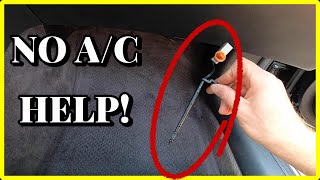
How to confirm: Use a scan tool to view the live data for the A/C Evaporator Temperature Sensor (ACET). A reading of -40°F or -40°C confirms a circuit high fault. Alternatively, test the sensor's resistance with a multimeter; an open circuit (infinite resistance or 'OL') indicates failure. A functional sensor's resistance should change when exposed to cold or heat. 🎬 Watch: How to test and replace the evaporator temperature sensor A quick check is to bypass the sensor by jumping the two pins in the electrical connector with a wire; if the A/C clutch engages, the sensor is bad.
Typical fix: Replace the A/C Evaporator Temperature Sensor. The sensor is located in the HVAC housing, accessible after lowering or removing the glove compartment.
Est. part cost: $25-$80 - Damaged Wiring or Connector ⚪ Low Probability Wiring in the dash can sometimes be disturbed during other repairs (like cabin air filter replacement) or simply fatigue over time, causing a break in the circuit.
How to confirm: Visually inspect the wiring harness and two-pin connector leading to the A/C evaporator temperature sensor for any breaks, corrosion, or loose pins. Perform a continuity test on the two wires between the sensor connector and the PCM if the sensor itself tests good.
Typical fix: Repair the broken wire or replace the damaged connector pigtail.
Est. part cost: $5-$25
Rare But Worth Checking
- Powertrain Control Module (PCM) Fault: This is extremely rare. The PCM should only be considered after definitively ruling out the sensor and its wiring. 🎬 Learn how to diagnose a module failure from a Ford tech In some cases on the 2008 Escape, a faulty alternator overcharging the system has been known to damage the PCM, but this would present with many other symptoms.
Diagnosis Steps
- Connect an OBD-II scanner and confirm P1437 is the only active code.
- Access the live data stream on the scan tool and monitor the parameter for the 'A/C Evaporator Temperature Sensor' or similar PID.
- Verify if the reading is locked at -40°F or -40°C. If so, this confirms the fault condition.
- Lower or remove the glove compartment to gain access to the side of the HVAC housing.
- Locate the A/C Evaporator Temperature Sensor. It is a small, black, probe-like sensor with a two-wire connector, plugged into the side of the HVAC case, often near the blower motor resistor.
- Inspect the sensor's electrical connector and nearby wiring for any signs of damage, corrosion, or disconnection.
- If wiring appears intact, disconnect the sensor. Test it with a multimeter set to measure resistance (Ohms).
- A reading of infinite resistance (OL) means the sensor has an internal open circuit and must be replaced.
- To confirm, you can test the new sensor before installation; it should show a resistance value that changes when you warm it with your hand. A good sensor should read approximately 4.9 kΩ at 20°C (68°F).
- If the original sensor shows a plausible resistance value, the fault likely lies in the wiring harness between the sensor and the PCM. A temporary jumper wire at the connector can be used to see if the scan tool reading changes from -40°F, which would confirm the wiring is the issue.
- Check for 5 volts at one of the pins on the harness-side connector with the key on, engine off. If 5V is not present, there is an issue with the reference voltage from the PCM.
Parts You'll Likely Need
- A/C Evaporator Temperature Sensor
(OEM #YH-1639)— This sensor is the primary cause of the P1437 code, failing internally and creating an open circuit which the PCM interprets as a fault.
Trusted brands: Motorcraft, Standard Motor Products, Duralast, Four Seasons
OEM price range: $70-$90
Aftermarket price range: $25-$45
Platform-Specific Known Issues
- Owner Experience: Intermittent Failure: An owner on a Ford forum noted that their A/C would work for a few minutes, then blow warm, then sometimes start working again later. This intermittent behavior continued for a week before the A/C failed completely, at which point code P1437 was stored. Replacing the evaporator temp sensor resolved the issue permanently.
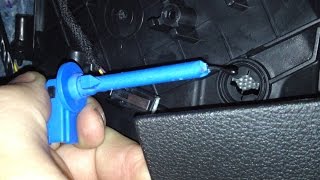
- DIY Repair Note: A DIY video for a similar model shows the sensor located directly behind the glove box, mounted to the HVAC case. Access is achieved by simply unclipping the glove box damper and letting it swing down. The sensor is held in by a small clip or tab and can be pulled straight out after disconnecting the electrical connector. 🎬 Vea este video sobre cómo cambiar el sensor de temperatura
Mechanic-Grade Diagnostic Values
- A/C Evaporator Temperature Sensor Resistance — expected: Approx. 4.9 kΩ at 20°C (68°F), 7.3-9.1 kΩ at 0°C (32°F). Resistance should increase as temperature drops.. Failure: Infinite resistance ('OL') indicates an open circuit and a failed sensor. A static value that doesn't change with temperature also indicates failure.
- Sensor Connector Voltage (Harness Side) — expected: Approx. 5.0 volts on one pin (VREF from PCM) with key on, engine off.. Failure: 0 volts indicates an open in the reference wire from the PCM. Voltage significantly lower than 5V could indicate a short.
Wiring & Ground Locations
- ACET Sensor Wires — At the two-pin connector for the A/C Evaporator Temperature Sensor, behind the glove box.. These wires provide the 5V reference and return signal. Based on common Ford wiring, expect a Violet/Brown wire (Signal Return) and a Grey/Blue wire (Sensor Signal). These should be tested for continuity back to the PCM if the sensor is good.
- G200 — Behind the right side of the dash.. This is a primary ground point for components on the passenger side of the dashboard for 2008 and newer models. A loose or corroded G200 could potentially affect the sensor's circuit reference.
- G202 — Behind the left side of the dash.. This is a primary ground point for pre-2008 models. While on the opposite side, it is part of the main dash ground distribution and could be relevant if a circuit issue is suspected.
OEM Part Supersession History
5F9Z-19C734-A (Engineering Number)→YH-1639 (Service Part Number)— Standard part number update from engineering/production to service/retail.
Heads up: YH-1639 is the correct service part for the entire 2005-2012 generation. Part numbers for 2013+ models (e.g., CV6Z-19C734-A) are not compatible.
Model Year Variations Within This Range
- 2005-2012: The primary dash ground point location may differ. 2008-2012 models often use ground G200 behind the right side of the dash, while earlier 2005-2007 models may use G202 behind the left side of the dash as a main grounding point.
Diagnostic Flowchart
Other Known Issues on This Vehicle
Issues unrelated to this code that are worth knowing about as an owner of this generation:
- Automatic Transmission Failure (CD4E) 🔴 High — Common in earlier models (2005-2008), with failures often occurring under 100,000 miles. Symptoms include hard shifting, slipping, or sudden total failure.
- Rear Shock Tower Rust 🔴 High — Very common in vehicles from the salt belt. The upper rear shock mount area rusts through, causing the shock to detach from the body. The passenger side is more prone to failure. (Ref: Repair kits (e.g., Dorman 924-358) are widely available due to the frequency of this issue.)
- Electric Power Steering (EPS) Failure 🔴 High — Affects 2008-2011 models. A faulty steering torque sensor can cause a sudden loss of power assist, making the vehicle difficult to steer at low speeds. (Ref: Ford Recall 14S05 was issued to reprogram the PSCM and/or replace the steering column if necessary.)
- Ignition Coil Failure 🟡 Low — A common issue across many model years, leading to engine misfires, stumbling, and the check engine light. Relatively inexpensive to fix.
- EVAP Purge Valve Failure 🟡 Low — A failing purge valve can cause difficulty starting the engine immediately after refueling, often setting code P1450.
Used vs. New Parts: Buying Guide for This Vehicle
When a used part is the smart pick: For this specific repair, buying a used sensor is not recommended. The part is inexpensive, fails due to internal degradation over time, and the labor to access it makes gambling on a used part's remaining lifespan impractical.
What to inspect on the donor part:
- Not applicable as new purchase is strongly advised.
Aftermarket brands forum-validated for this vehicle:
- Motorcraft (OEM)
- Standard Motor Products (SMP)
- Duralast
- Four Seasons
Brands owners have reported issues with on this vehicle:
- No-name, unbranded parts from online marketplaces should be avoided due to the higher likelihood of premature failure or incorrect resistance values.
Real Owner Stories
Aggregated from forums and TSBs cited above. Mileages and costs reflect what owners reported in those sources.
2005 Ford Escape
Symptoms: The A/C would work for a few minutes, then blow warm, then sometimes start working again later. This intermittent behavior continued for a week before the A/C failed completely.
What fixed it: Replacing the evaporator temp sensor.
Source hint: vehicle_specific_issues: Owner Experience: Intermittent Failure
2005 Ford Escape
Symptoms: A/C system issues; needed to distinguish the function of the evaporator temperature sensor from the low-pressure cycling switch regarding evaporator freeze-up.
What fixed it: Identifying the evaporator temperature sensor as the component responsible for preventing freeze-up.
Source hint: Ford Truck Enthusiasts Forum - '05 Escape AC'
2015 Ford Escape
Symptoms: A/C stops blowing cold air after a few minutes of operation.
What fixed it: Replacing the evaporator temp sensor.
Source hint: Reddit r/fordescape - '2015 Escape Evap Temp Sensor'
Related OBD-II Codes
Frequently Asked Questions
Is there a recall for the A/C issues causing code P1437 on my 2008-2011 Ford Escape?
Can I use a used sensor from a salvage yard Mercury Mariner to fix this code?
My 2005 Escape A/C works for a few minutes and then stops; is this P1437?
Is the A/C evaporator temperature sensor the same thing as the low-pressure cycling switch?
Do I need to remove the entire dashboard to replace the sensor on my Escape?
What brands should I look for when replacing the sensor to ensure it works with the PCM?
Helpful Videos
We Have This Part in Stock


The information in this article is provided for general reference and educational purposes only. Vehicle specifications, procedures, and part compatibility can vary by production date, trim level, and region. Always consult your vehicle's factory service manual and verify part numbers before purchasing or performing repairs. Safety-critical components such as airbags, seat belts, and braking systems should be installed by a qualified professional.
- Ford Escape:
- 🧭 Diagnostic Flowchart
- 🎬 Helpful Videos
- 🛍️ Shop This Part
- What's Unique About the 2005-2012 Ford Escape
- Symptoms You May Notice
- Most Likely Causes
- Rare But Worth Checking
- Diagnosis Steps
- Parts You'll Likely Need
- Platform-Specific Known Issues
- Mechanic-Grade Diagnostic Values
- Wiring & Ground Locations
- OEM Part Supersession History
- Model Year Variations Within This Range
- Other Known Issues on This Vehicle
- Used vs. New Parts: Buying Guide for This Vehicle
- Real Owner Stories
- 2005 Ford Escape
- 2005 Ford Escape
- 2015 Ford Escape
- Related OBD-II Codes
- Frequently Asked Questions
- 🎟️ Get 5% Off