

P1440 on 2006-2013 Audi A3 2.0L TFSI: EGR Valve Open Circuit Causes and Fixes
On this Audi, P1440 indicates an electrical fault in the EGR valve circuit, not an EVAP system leak. The most common fix is replacing the entire EGR valve due to an internal open circuit. Before replacing, check for broken wires under the battery tray, a known chafe point. Expect to pay $150-$250 for a quality aftermarket part.
- For your 2006-2013 Audi A3, P1440 is an EGR electrical fault, NOT an EVAP leak.
- The most likely cause is a failed EGR valve that needs to be replaced; cleaning it will not fix this specific code.
- Before buying parts, inspect the wiring harness under the battery tray for breaks and use a multimeter to check for power/ground at the connector and test the resistance of the old EGR valve to confirm the diagnosis.
- Always use a quality replacement part from brands like Pierburg or Bosch to ensure longevity.
- Do not waste time or money on EVAP system parts like a gas cap or purge valve for this code.
What's Unique About the 2006-2013 Audi A3
While P1440 on many other car brands (like Nissan) refers to an EVAP system (fuel vapor) leak, on Volkswagen Auto Group (VAG) vehicles like your Audi, it almost always points to an electrical problem with the EGR system. The 2.0L TFSI engines from this era (primarily the EA113 engine family, codes BPY, BWA, AXX) are equipped with an external EGR valve that can fail electrically. Mistaking this for an EVAP code is a common and costly diagnostic error that leads to unnecessary replacement of parts like the N80 purge valve or gas cap.
Symptoms You May Notice
- Check Engine Light (MIL) is on
- Failed emissions test
- Rough or unstable idle
- Slight decrease in engine performance or fuel economy
- Engine knocking sounds, especially at low RPMs, if the valve is stuck closed long-term
- Replacing EVAP system components like the purge valve (N80) or charcoal canister. This is the most common error, caused by relying on generic P1440 definitions that do not apply to Audi/VW.
- Cleaning a mechanically stuck EGR valve. While cleaning can fix flow-related EGR codes (like P0401), it will not fix the P1440 electrical 'Open Circuit' fault.
Most Likely Causes
- Internal Failure of the EGR Valve 🔴 High Probability → Shop Exhaust Gas Recirculation (EGR) Valve The internal solenoid windings within the EGR valve can break over time from constant heat cycles and engine vibration. This creates an 'open circuit' that the ECU detects, triggering P1440.
How to confirm: Using a multimeter, measure the resistance between the power and ground pins on the EGR valve's electrical connector. An 'OL' (Over Limit) or infinite resistance reading confirms an open circuit and a failed valve. A known-good valve will have a specific resistance value (check service manual).
Typical fix: Replace the EGR valve assembly. Cleaning the valve will not fix an electrical open circuit.
Est. part cost: $150-$350 - Damaged Wiring Harness 🟡 Medium Probability The engine bay wiring, particularly in the corrugated loom under the battery tray and near the starter, is a very common chafe point on this platform. Wires can become brittle from heat, rub through their insulation, and break, causing an open circuit.
How to confirm: Visually inspect the entire length of the wiring harness leading to the EGR valve. Pay close attention to the area under the battery. If no visible damage is found, perform a continuity test on each wire from the ECU connector to the EGR connector to find the break.
Typical fix: Repair the broken wire(s) with a new section of wire using solder and heat shrink connectors for a durable, weather-proof seal.
Est. part cost: $5-$20 - Corroded or Damaged Connector ⚪ Low Probability Moisture intrusion or repeated connection cycles can lead to corrosion (green/white powder) or physical damage to the pins within the EGR valve's electrical connector.
How to confirm: Unplug the connector from the EGR valve and inspect the pins on both the harness side and the valve side for corrosion, bent pins, or pins that have pushed out of the connector body.
Typical fix: Clean the connector with electrical contact cleaner. If pins are badly damaged, the connector will need to be replaced with a pigtail kit (e.g., part number 1J0973713G).
Est. part cost: $15-$40
Rare But Worth Checking
- Blown Fuse: While uncommon, a short circuit in a related component could blow the fuse that supplies power to the EGR valve. Forum discussions mention checking fuse F24 in the engine bay fuse box as a potential culprit. Always consult your vehicle's specific wiring diagram.
- Faulty Engine Control Unit (ECU): This is extremely rare. The driver circuit for the EGR valve within the ECU could fail. This should only be considered after all other possibilities (valve, wiring, fuses) have been definitively ruled out by thorough testing.
Diagnosis Steps
- Confirm the fault code P1440 (or VAG 17848) is present using an OBD-II scanner.
- Visually inspect the wiring harness leading to the EGR valve. Carefully remove the corrugated loom and check for chafed or broken wires, especially in the area under the battery tray and near the starter motor.
- Inspect the electrical connector at the EGR valve for corrosion, damage, or backed-out pins.
- With the ignition on and the connector unplugged, use a multimeter to verify that one of the pins in the connector has battery voltage (power supply).
- Check for a good ground on the corresponding ground pin in the connector.
- If power and ground are present, turn the ignition off. Set the multimeter to measure resistance (Ohms) and test across the corresponding pins on the EGR valve itself. A reading of infinite resistance ('OL') indicates an open circuit and confirms the valve has failed internally.
- If the valve's resistance is within spec (consult a repair manual), the fault lies in the wiring between the valve and the ECU. A continuity test on each individual wire is required to find the break.
Parts You'll Likely Need
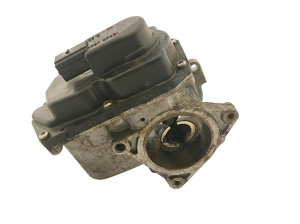
- EGR Valve
(OEM #06F131503B)— This is the most common failure point. The internal electrical solenoid coil breaks, causing the 'Open Circuit' fault. The part is shared across many VW/Audi 2.0T models from the era.
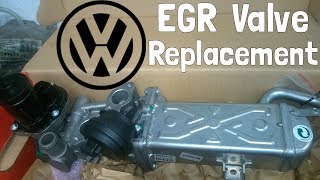
Trusted brands: Pierburg (often the OEM supplier), Bosch, Wahler 🎬 See this walkthrough on how to replace the EGR valve.
OEM price range: $250-$400
Aftermarket price range: $150-$250
Related Codes That Often Appear With This One
- 17848 (VAG DTC for 'EGR Valve (N18): Open Circuit') - This is the manufacturer's direct equivalent code for P1440.
- P0403 ('EGR Circuit Malfunction') - This is a more generic code that often appears with P1440, as both point to an electrical issue in the EGR system.
Platform-Specific Known Issues
- Wiring Harness Chafing: Owners on forums like CADDY2K.com specifically mention that the wiring loom under the engine bay fuse box and air intake is a common place for wires to chafe and break, causing open circuit faults like P1440. It is recommended to split the loom and inspect the wires before replacing any parts.
Mechanic-Grade Diagnostic Values
- EGR Valve (N18) Solenoid Resistance — expected: ~8.3 Ohms. Failure: An infinite reading ('OL' on a multimeter) indicates an open circuit and a failed solenoid coil.
- Voltage at EGR Harness Connector Pin 1 (Black/Red wire) — expected: ~12V (Battery Voltage) with ignition on.. Failure: 0V indicates a break in the power supply wire or a blown fuse.
Scan Tool Commands That Help
- VCDS (VAG-COM): Engine (01) -> Output Tests (03) -> EGR Valve (N18) — This command attempts to cycle the EGR valve solenoid. If the valve is physically accessible, you can observe or feel it for actuation. While this test can confirm the ECU is sending the command, a lack of response could still be the valve or wiring. It's most useful for confirming the ECU driver is functional and for checking if a new valve responds before full reassembly.
- VCDS (VAG-COM): Engine (01) -> Basic Settings (04) -> Group 074 -> EGR Adaptation — After replacing the EGR valve, this procedure should be run. It allows the ECU to learn the closed and open stop positions of the new valve's position sensor. Failing to do this can result in incorrect EGR operation even with a new part.
Wiring & Ground Locations
- EGR Valve (N18) Connector Pinout (6-pin connector) — On the EGR valve itself.. Knowing the pin functions is essential for testing. Pin 1: 12V+ from fuse. Pin 2: 5V reference from ECU. Pin 4: Sensor ground to ECU. Pin 5: Modulated ground from ECU (solenoid control). Pin 6: Position sensor signal to ECU. An 'Open Circuit' on P1440 specifically refers to the circuit involving pins 1 and 5.
- Ground Point 12 — On the left side of the engine compartment, often near the battery tray or on the longitudinal member.. This is a primary engine bay ground point. While the EGR circuit grounds through the ECU, the ECU itself relies on clean chassis grounds. A corroded main ground can cause a host of intermittent and difficult-to-diagnose electrical issues, including sensor and actuator faults.
- Ground Point 671 / 673 / 674 — Multiple ground points located on the front of the left longitudinal member in the engine bay.. These are critical chassis ground connections for the main engine harness. Verifying these are clean and tight is a key step when troubleshooting any electrical fault in the engine bay after checking the specific component's circuit.
Real Owner Repair Stories
- BRISKODA.net user 'jverdicchio' (Skoda Fabia 1.4 16V (BBZ engine) - a related VAG platform with a similar EGR system.) — Car would turn over but not start. Initially had an intermittent P1440, which became a hard fault.
❌ Tried (didn't work) Initial diagnosis pointed towards replacing the EGR valve, but the user wanted to confirm the wiring first.
✅ What actually fixed it A continuity test from the EGR connector (Pin 6) to the ECU connector (Pin 100) showed an open circuit. The user confirmed a broken wire in the harness was the root cause and planned to run a new wire to fix it.
OEM Part Supersession History
06F131503A→06F131503B— Likely an internal revision for improved reliability or manufacturing process change. The function and fitment are identical.
Heads up: The parts are fully interchangeable. If you find an 'A' version, it is simply an older production run of the same part.
Diagnostic Flowchart
Other Known Issues on This Vehicle
Issues unrelated to this code that are worth knowing about as an owner of this generation:
- HPFP Cam Follower Wear (EA113 Engine) 🔴 High — Very common on 2006-2008.5 models with the belt-driven EA113 (BPY) engine. Considered a routine maintenance item to be inspected every 10-20k miles. Failure can destroy the high-pressure fuel pump and camshaft, costing thousands. (Ref: A warranty extension previously existed but is now expired for most vehicles.)
- PCV Valve Failure 🟠 Medium — Common across all 2.0T engines of this era. The internal diaphragm tears, causing rough idle, oil leaks, high oil consumption, and a whistling noise. Onset can be anywhere from 50k miles onward.
- DSG Mechatronic Unit Failure 🔴 High — Affects models with the 6-speed wet-clutch DSG (DQ250). Symptoms include flashing PRNDS light, harsh shifting, and loss of drive. Failures can be intermittent at first and worsen with heat. Some warranty extensions have been offered. (Ref: Audi has issued warranty extensions for certain models/years.)
- Intake Valve Carbon Buildup 🟠 Medium — An inherent issue with all direct-injection engines of this era. Oil vapor from the PCV system and exhaust from the EGR system bake onto the back of the intake valves, restricting airflow. Typically requires manual cleaning (walnut blasting) every 60-80k miles to restore performance.
- High-Pressure Fuel Pump (HPFP) Failure 🟠 Medium — Can occur on both EA113 and later EA888 engines. On EA113, it's often a consequence of cam follower failure. On EA888 (2008.5+), the pump itself can fail internally, leaking fuel into the oil and causing rich running conditions.
Used vs. New Parts: Buying Guide for This Vehicle
When a used part is the smart pick: A used EGR valve is a poor choice for this repair. The failure mode is an internal electrical break from heat cycles and vibration over time. A used part has already been subjected to an unknown number of these cycles and may have a very limited remaining lifespan. Given the labor involved, installing a new, quality part is the most cost-effective strategy.
What to inspect on the donor part:
- Not applicable, as buying a used EGR valve is not recommended for this fault.
Aftermarket brands forum-validated for this vehicle:
- Pierburg (often the original equipment manufacturer for VAG)
- Wahler
- Bosch
- Magneti Marelli
Brands owners have reported issues with on this vehicle:
- Unbranded, 'white box' parts from online marketplaces should be avoided. Forum and mechanic consensus strongly favors using OEM or established OE-supplier brands to prevent premature failure.
Real Owner Stories
Aggregated from forums and TSBs cited above. Mileages and costs reflect what owners reported in those sources.
2006 Audi A3 2.0T TFSI
Symptoms: Fault code 17848 / P1440 present; diagnostic path required checking fuses and wiring integrity.
What fixed it: Confirmed the fault was an open circuit after checking fuse F24 and the valve's electrical integrity.
Source hint: Ross-Tech Forums: A thread on a 2006 Audi A3 with code 17848 / P1440
Audi A3 / VW Caddy Platform
Symptoms: P1440 code triggered; advised to check for wiring damage in the engine bay.
What fixed it: Inspected the wiring loom below the engine bay fuse box and air intake where wires commonly chafe through the conduit.
Source hint: CADDY2K.com: A user with P1440 is advised to immediately check the wiring loom
2.0T TFSI (EA113 family)
Symptoms: EGR P1440 17848 Power Stage Open; questioning if the EGR was 'cooked'.
What fixed it: Tested the valve's electrical integrity to confirm an internal open circuit rather than a simple clog.
Source hint: BRISKODA.net: In a thread titled 'EGR P1440 17848 Power Stage Open - is my EGR 'cooked''
Related OBD-II Codes
Frequently Asked Questions
Can I just clean the EGR valve on my 2006 Audi A3 to fix the P1440 code?
Is there a specific wiring area I should check on my Audi A3 before buying a new EGR valve?
What specific electrical connector part number do I need if my EGR plug is corroded?
Which fuse should I check for the EGR system on a 2006 Audi A3?
Does the P1440 code affect other Audi or VW models with the 2.0L TFSI engine?
Will a P1440 code cause my Audi A3 to fail an emissions test?
Helpful Videos
We Have This Part in Stock

The information in this article is provided for general reference and educational purposes only. Vehicle specifications, procedures, and part compatibility can vary by production date, trim level, and region. Always consult your vehicle's factory service manual and verify part numbers before purchasing or performing repairs. Safety-critical components such as airbags, seat belts, and braking systems should be installed by a qualified professional.
- Audi A3:
- 🧭 Diagnostic Flowchart
- 🎬 Helpful Videos
- 🛍️ Shop This Part
- What's Unique About the 2006-2013 Audi A3
- Symptoms You May Notice
- Most Likely Causes
- Rare But Worth Checking
- Diagnosis Steps
- Parts You'll Likely Need
- Related Codes That Often Appear With This One
- Platform-Specific Known Issues
- Mechanic-Grade Diagnostic Values
- Scan Tool Commands That Help
- Wiring & Ground Locations
- Real Owner Repair Stories
- OEM Part Supersession History
- Other Known Issues on This Vehicle
- Used vs. New Parts: Buying Guide for This Vehicle
- Real Owner Stories
- 2006 Audi A3 2.0T TFSI
- Audi A3 / VW Caddy Platform
- 2.0T TFSI (EA113 family)
- Related OBD-II Codes
- Frequently Asked Questions
- 🎟️ Get 5% Off