

Audi A4 P1450 (2008-2016): Causes and Fixes for "Unable to Bleed Up Fuel Tank Vacuum"
On the 2008-2016 Audi A4, code P1450 almost always indicates a problem with the Evaporative Emissions (EVAP) system, most commonly a faulty N80 purge valve that is stuck open. This is a relatively inexpensive part (around $25-$60) and is a common DIY fix that often resolves symptoms like rough idle and hard starts after refueling.
- P1450 on your Audi A4 most likely means there's too much vacuum in the fuel tank, and the system can't release it.
- The number one cause for this code on the 2.0T engine is a bad N80 EVAP purge valve, which gets stuck open.
- Symptoms can include a check engine light, rough idle, and trouble starting the car right after getting gas.
- Replacing the N80 valve is a common, relatively simple, and inexpensive DIY job that usually fixes the problem.
What's Unique About the 2008-2016 Audi A4
The 2.0L TFSI EA888 engine used in this generation of Audi A4 is known for issues with its EVAP purge valve, commonly called the N80 valve. This valve is a frequent failure point, often sticking open due to carbon contamination or internal wear. It is often the direct cause of P1450 or related EVAP codes like P0441. While the code definition itself can be generic, the solution on this specific platform very often points directly to this single component.
Symptoms You May Notice
- Check Engine Light is on.
- Difficulty starting the engine, especially right after filling the gas tank.
- Rough or unstable idle.
- A noticeable fuel smell near the vehicle.
- Slightly decreased fuel efficiency.
- A 'whoosh' sound of rushing air when opening the gas cap.
- Replacing the gas cap. While a loose or faulty gas cap can cause other EVAP codes (like for a small leak), it is not a typical cause for P1450, which relates to an inability to relieve vacuum rather than a leak.
- Replacing the fuel rail pressure sensor. This sensor measures high pressure fuel for injection and is unrelated to the low-pressure vapor system in the fuel tank that triggers P1450.
Most Likely Causes
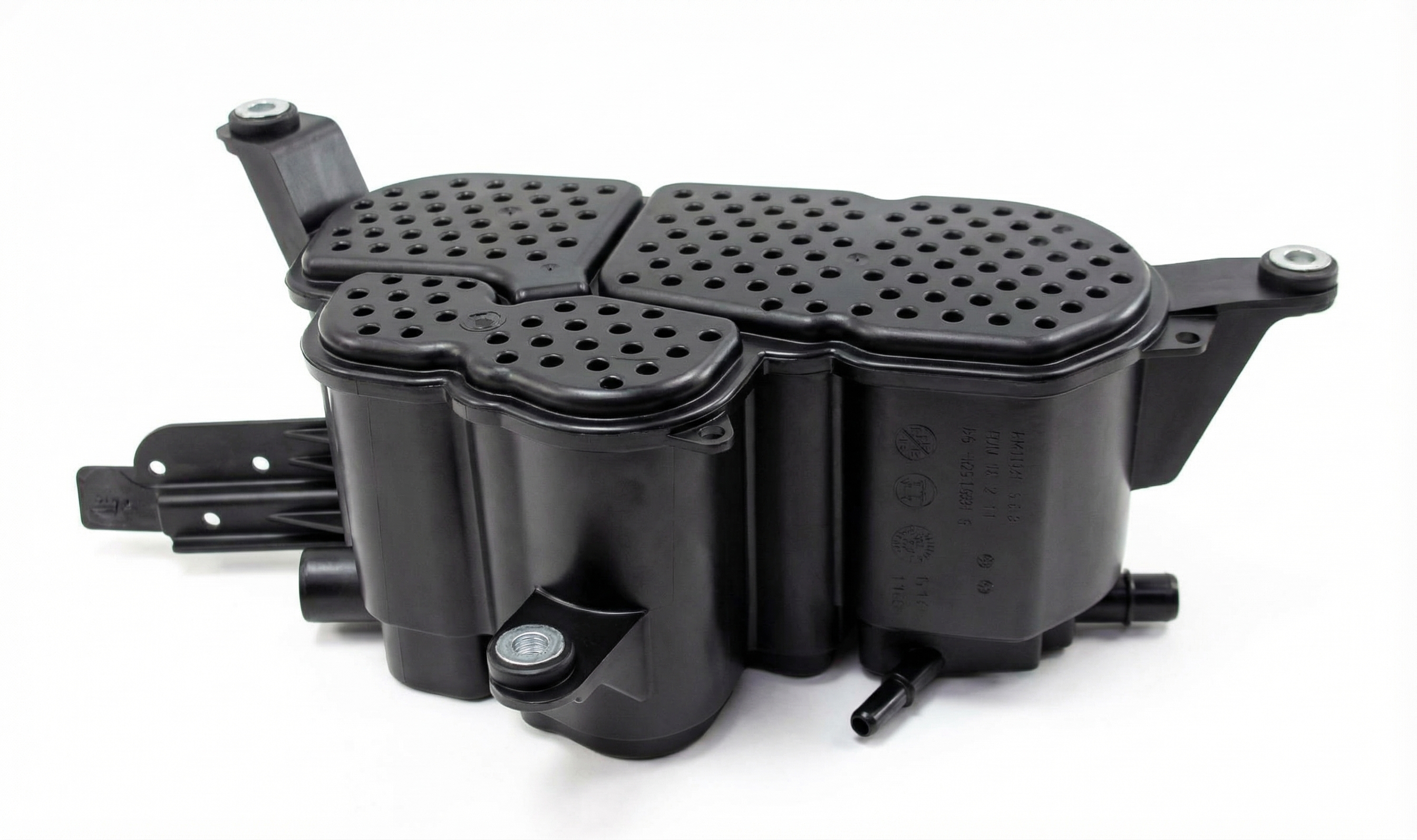
- Faulty EVAP Purge Valve (N80) 🔴 High Probability → Shop Vapor Canister The N80 valve on the EA888 engine is a well-documented, common failure item, often sticking open due to internal wear or contamination from fuel vapor and carbon particles.
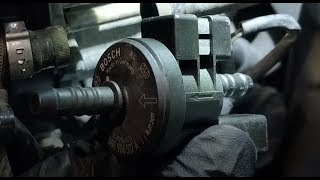
How to confirm: With the engine off, disconnect the valve and try to blow through it in the direction of the arrow on the housing; if air passes, it's stuck open and faulty. You can also use a scan tool like VCDS or OBDeleven to perform an output test, listening for an audible click as it cycles. A resistance check with a multimeter should show between 22-30 ohms.
Typical fix: Replace the N80 purge valve. It is located on top of the engine and is accessible for DIY replacement, typically requiring only basic tools and hose clamp pliers.
Est. part cost: $25-$60 - Blocked or Kinked EVAP System Hose 🟡 Medium Probability
How to confirm: Visually inspect all accessible vacuum lines between the intake manifold, N80 valve, and charcoal canister for kinks, collapses, or obvious cracks. A smoke test is the most effective way to find hidden blockages or leaks in the lines running to the rear of the vehicle.
Typical fix: Replace the damaged or blocked section of hose.
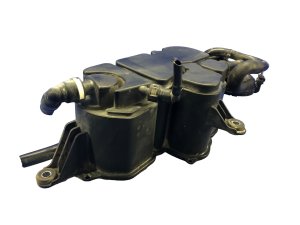
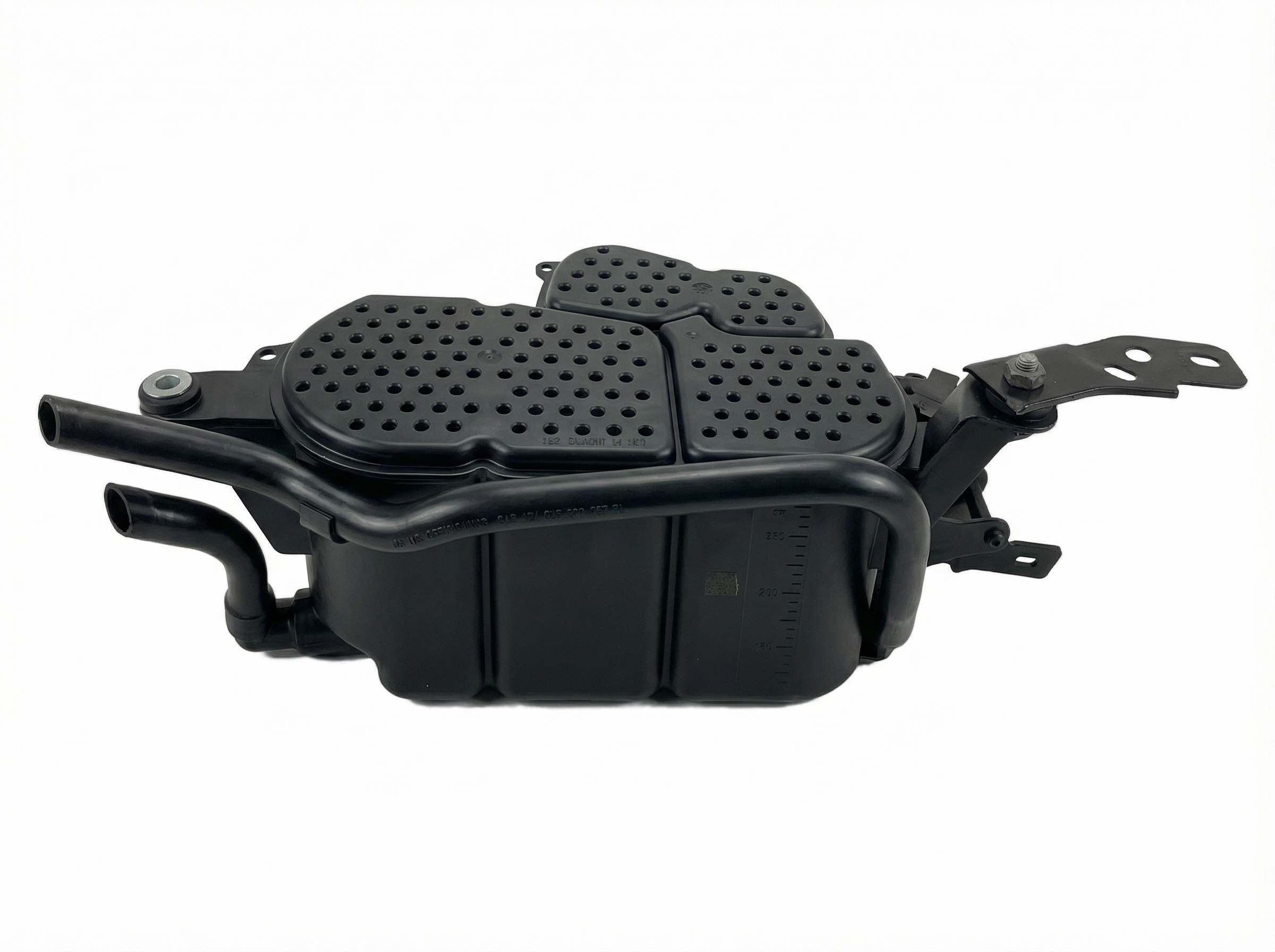
Est. part cost: $10-$50 - Clogged EVAP Canister or Vent Solenoid ⚪ Low Probability → Shop Vapor Canister Over-filling the fuel tank (topping off) can force liquid fuel into the charcoal canister, saturating it and causing blockage.
How to confirm: Inspect the canister (located near the fuel tank, under a protective cover) and its vent valve/filter for blockages from dirt, debris, or spider webs. If you have difficulty filling the fuel tank (pump clicks off constantly) 🎬 Watch: Diagnosing starting and refueling issues on an Audi 2.0T, this can point to a blocked canister vent path.
Typical fix: Clean the vent path or replace the charcoal canister if it is saturated with fuel or internally blocked.
Est. part cost: $70-$200 - Faulty Fuel Tank Pressure (FTP) Sensor ⚪ Low Probability → Shop Fuel Tank
How to confirm: Monitor the FTP sensor reading with a capable OBD-II scanner. The reading should change appropriately during EVAP system self-tests. An unchanging or erratic reading suggests a faulty sensor. The sensor is typically located on the fuel tank or a nearby fuel line.
Typical fix: Replace the fuel tank pressure sensor.
Est. part cost: $40-$100
Diagnosis Steps
- Read the code with an OBD-II scanner to confirm P1450 is present.
- Check the gas cap to ensure it is tight and the seal is intact. Listen for a strong 'whoosh' when opening it, which confirms excessive vacuum is present.
- Locate the N80 purge valve in the engine bay, on top of the engine. Visually inspect its connected hoses for cracks, kinks, or loose connections.
- Test the N80 valve. Disconnect the electrical connector and vacuum lines. With the valve de-energized, it should be closed (no air should pass through). 🎬 Watch: How to test an EVAP purge valve without tools A valve that allows air to pass is stuck open and must be replaced.
- If you have a capable scan tool (e.g., VCDS, OBDeleven), perform an EVAP system output test. Command the purge valve to cycle and listen for an audible click.
- If the N80 valve and its immediate hoses appear to be in good condition, the next step is to perform a smoke test on the EVAP system to identify any hard-to-see leaks or blockages in the lines running to the rear of the car.
- Inspect the charcoal canister and its vent valve (located near the fuel tank, may require removing a shield) for any physical damage or blockages from road debris.
Parts You'll Likely Need
- EVAP Canister Purge Valve (N80)
(OEM #06E906517A)— This is the most common failure point on the 2.0L TFSI engine that leads to code P1450.
Trusted brands: Bosch, Pierburg, Genuine VW/Audi
OEM price range: $50-$80
Aftermarket price range: $25-$50
Related Codes That Often Appear With This One
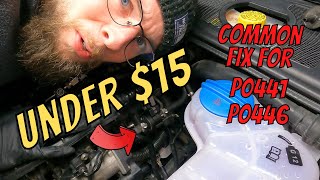
- P0441 — Stands for 'EVAP System Incorrect Purge Flow'. This code is very commonly triggered by a faulty N80 valve that is stuck open or closed, the same primary cause for P1450 on this vehicle.
Platform-Specific Known Issues
- The N80 purge valve is a known weak point on the EA888 engine platform and is frequently the cause of various EVAP system trouble codes. It is considered a routine maintenance item by many owners.
- Difficulty starting after refueling is a classic symptom of a stuck-open N80 valve on this platform. Unmetered fuel vapor is drawn into the intake manifold, creating a rich condition that makes starting difficult until the excess vapor is cleared.
Mechanic-Grade Diagnostic Values
- N80 EVAP Purge Valve internal resistance — expected: 22.0 to 30.0 Ohms. Failure: A reading of 'OL' (open circuit) or a value significantly outside this range indicates a faulty coil.
- Fuel Tank Pressure Sensor (G400) resistance — expected: 2200 ± 500 Ω at room temperature. Failure: A reading far outside this range suggests the sensor is faulty.
- Wiring harness continuity check — expected: Max 1.5 Ohms. Failure: Higher resistance indicates corrosion or a break in the wire between the component and the ECM.
Scan Tool Commands That Help
- VCDS (VAG-COM): Basic Settings - Group 070 — To initiate the EVAP system's short test (tank venting and valve test). The tool will command the system to run its diagnostic sequence and report a pass/fail result.
- VCDS (VAG-COM): Basic Settings - Group 071 — To initiate the EVAP system's fuel tank leak test. This is a more comprehensive test to check for small and large leaks.
- VCDS (VAG-COM) / OBDeleven: Output Tests for N80 Valve — To manually cycle the N80 purge valve on and off. This allows a technician to listen for the audible 'click' of the solenoid, confirming it is receiving the command and is not mechanically seized.
Wiring & Ground Locations
- G18 — On the engine block, often near the ignition coils.. This point grounds the ECM and ignition coils. A poor ground here can cause erratic behavior from the ECM and the components it controls, including the N80 valve.
- G671 — On the front of the left longitudinal member in the engine bay.. This is a primary chassis ground in the engine compartment. Corrosion or a loose connection here can affect any nearby electronic component, including those in the EVAP system.
- 220 (Earth Connection) — An earth connection located within the main engine wiring harness.. This is a dedicated 'sender earth' for various sensors. A fault with this internal ground connection can cause incorrect readings from sensors like the Fuel Tank Pressure (FTP) sensor, leading to a false P1450 code.
Real Owner Repair Stories
- Ross-Tech Forums (2006 Audi A4 2.0T (B7 with BUL engine, but diagnostic principle is identical for B8)) — Check Engine Light with code P2187 (System too Lean at Idle), a common side effect of a leaking N80 valve.
❌ Tried (didn't work) Running the VCDS EVAP system test in Basic Settings (Group 070), which repeatedly PASSED., Performing a full VAG1687 pressure test., Replacing the Air Mass Meter (MAF)., Replacing the front Lambda (O2) sensor.
✅ What actually fixed it Replacing the N80 purge valve. Despite passing the electronic self-test, the valve was mechanically leaking a small amount of air, causing the lean condition. The electronic test was not sensitive enough to detect this minor mechanical failure.
"I Checked Everything" — The Actual Cause
- A known pattern for this platform involves the N80 purge valve failing in a way that is not detectable by the onboard diagnostics or even a smoke test in some cases. In one documented instance, a technician found that the VCDS 'Basic Settings' test for the EVAP system consistently reported 'System OK', yet the vehicle had a persistent lean code. The root cause was a mechanically leaking N80 valve that was allowing unmetered air into the intake. This highlights that the valve can fail mechanically even if it passes its electronic function test.
When the Usual Fixes Don't Work
- While the primary diagnostic step for a faulty N80 valve is to use a scan tool's output test or basic settings function, there is evidence that this is not foolproof. In at least one case, a car's N80 valve passed the VCDS electronic self-test repeatedly, yet was the ultimate cause of a related engine fault code. The valve was leaking mechanically, a failure mode the electronic test could not detect. This proves that a 'pass' from the scan tool does not 100% rule out the N80 valve, and a physical test (blowing through the valve when de-energized) remains a critical diagnostic step.
OEM Part Supersession History
06E906517A→06E906517A (no direct supersession, but often confused with other parts)— N/A
Heads up: This part number is widely associated with the 'N80 valve' but is specified for the older EA113 FSI engine (in the B7 A4) and various V6 engines. It may not be correct for the EA888 engine in the B8/B8.5 A4. The correct part for the 2.0T EA888 is likely 06H906517H. Using 06E906517A may result in fitment or performance issues. Always confirm with VIN.
Model Year Variations Within This Range
- 2013-2016 (B8.5): The B8.5 facelift models have different front-end body parts, electric power steering (vs. hydraulic), and revised interior controls compared to the 2008-2012 B8 models.
- 2013-2015: A Technical Service Bulletin (TSB 2035073/12) was issued for a faulty NVLD (Natural Vacuum Leak Detection) pressure sensor that specifically affects 2013-2015 models. This can cause various EVAP codes.
- 2013+: The DSG (S-Tronic) automatic transmission received internal revisions (Mechatronic unit) starting with the B8.5 generation, making it generally more reliable than the units in early B8 models.
Diagnostic Flowchart
Other Known Issues on This Vehicle
Issues unrelated to this code that are worth knowing about as an owner of this generation:
- Excessive Oil Consumption 🔴 High — Very common on 2009-2011 models with engine code CAEB. Caused by faulty piston rings and/or PCV valve issues. Consumption can be as high as 1 quart per 1,000 miles or worse. (Ref: A class-action lawsuit led to an extended warranty and a multi-stage repair process, starting with a new PCV valve and software update (TSB 2027731), and escalating to piston/ring replacement.)
- Timing Chain Tensioner Failure 🔴 High — Common on early EA888 Gen 2 engines (approx. pre-2013). The original tensioner design can fail without warning, allowing the timing chain to jump teeth, leading to catastrophic engine damage (bent valves). (Ref: A class-action lawsuit resulted in an extended warranty (U35) covering the tensioner and chain for 10 years/100,000 miles. An updated tensioner part resolves the issue.)
- Water Pump / Thermostat Housing Failure 🟠 Medium — The plastic water pump and thermostat housing are prone to cracking or leaking coolant, often between 50,000 and 100,000 miles. (Ref: A class-action settlement extended the warranty on the water pump for some model years. Many owners proactively replace the plastic unit with an all-metal aftermarket version.)
- Intake Manifold Runner Flap Issues 🟡 Low — The intake manifold has plastic runner flaps that can break or get stuck, leading to fault codes (e.g., P2015) and poor performance. Carbon buildup can also impede their operation. (Ref: Audi extended the warranty for this component on many vehicles.)
- Carbon Buildup on Intake Valves 🟠 Medium — As a direct-injection engine, fuel does not wash over the intake valves. This leads to significant carbon buildup over 60,000-80,000 miles, causing misfires, hesitation, and reduced performance.
Used vs. New Parts: Buying Guide for This Vehicle
When a used part is the smart pick: For repairing code P1450, a used part is almost never a smart choice. The most common cause is the N80 purge valve, which is a high-failure wear-and-tear item. A used valve from a salvage yard has an unknown history and is likely to fail soon, if it is not already faulty. Given the low cost of a new, high-quality aftermarket part (around $30-$50), buying new is the most logical option.
What to inspect on the donor part:
- Not applicable, as used EVAP purge valves are not recommended for this repair.
OEM-only on this vehicle (don't cheap out):
- Gas Cap: It is strongly recommended to use a genuine OEM gas cap if it needs replacement. Aftermarket caps for this platform are known to have inconsistent sealing properties, which can cause other EVAP system codes to appear.
Aftermarket brands forum-validated for this vehicle:
- Bosch: Bosch is the original equipment manufacturer (OEM) for the N80 valve. Buying a Bosch-branded part is equivalent to buying the Genuine Audi part, often at a significant discount.
- Pierburg: Another reputable OEM supplier for many VAG components, Pierburg is a trusted alternative for the purge valve.
Brands owners have reported issues with on this vehicle:
- Unbranded 'universal' parts from online marketplaces. These often have incorrect dimensions, electrical specifications, or use inferior materials, leading to premature failure or improper function.
Real Owner Stories
Aggregated from forums and TSBs cited above. Mileages and costs reflect what owners reported in those sources.
2011 Audi A4 2.0T
Symptoms: Rough idling and needing to rev the engine to stay on right after refueling.
What fixed it: Replacing the EVAP purge canister (N80 valve).
Source hint: reddit.com/r/MechanicAdvice
Audi A4 (B8) 2.0T
Symptoms: Hard starts after fueling and a P1450 code.
What fixed it: N80 valve replacement.
Source hint: audizine.com - B8 A4 section
Audi A4 (B8) 2.0T
Symptoms: P1450 - Unable to Bleed Up Fuel Tank Vacuum.
What fixed it: The user diagnosed the gas cap first but ultimately solved the problem by replacing the N80 valve.
Source hint: audiworld.com - thread titled 'P1450 - Unable to Bleed Up Fuel Tank Vacuum'
Related OBD-II Codes
Frequently Asked Questions
Why does my 2008-2016 Audi A4 struggle to start only after I fill up the gas tank?
Is there a specific part number for the N80 valve I should look for to fix P1450?
Can 'topping off' my gas tank cause the P1450 code on my Audi A4?
How can I manually test if the N80 valve is the cause of my P1450 code?
I hear a 'whoosh' sound when I open my gas cap; is this related to P1450?
Are there any other major issues I should watch for on my 2009-2011 Audi A4 while fixing this EVAP code?
Helpful Videos
We Have This Part in Stock


The information in this article is provided for general reference and educational purposes only. Vehicle specifications, procedures, and part compatibility can vary by production date, trim level, and region. Always consult your vehicle's factory service manual and verify part numbers before purchasing or performing repairs. Safety-critical components such as airbags, seat belts, and braking systems should be installed by a qualified professional.
- Audi A4:
- 🧭 Diagnostic Flowchart
- 🎬 Helpful Videos
- 🛍️ Shop This Part
- What's Unique About the 2008-2016 Audi A4
- Symptoms You May Notice
- Most Likely Causes
- Diagnosis Steps
- Parts You'll Likely Need
- Related Codes That Often Appear With This One
- Platform-Specific Known Issues
- Mechanic-Grade Diagnostic Values
- Scan Tool Commands That Help
- Wiring & Ground Locations
- Real Owner Repair Stories
- "I Checked Everything" — The Actual Cause
- When the Usual Fixes Don't Work
- OEM Part Supersession History
- Model Year Variations Within This Range
- Other Known Issues on This Vehicle
- Used vs. New Parts: Buying Guide for This Vehicle
- Real Owner Stories
- 2011 Audi A4 2.0T
- Audi A4 (B8) 2.0T
- Audi A4 (B8) 2.0T
- Related OBD-II Codes
- Frequently Asked Questions
- 🎟️ Get 5% Off