

P1471 on 2020 Jeep Renegade: Catalyst Protection Mode Causes and Fixes
P1471 means your Renegade's computer is protecting the catalytic converter from damage, usually due to an engine misfire. The fix is to diagnose the misfire (often a bad spark plug or ignition coil) or related oil solenoid codes, not to replace the converter itself. A PCM software update is a very common and well-documented solution per Jeep's own service bulletins.
- P1471 is a 'protection' code, not a 'failure' code. Your Jeep is trying to prevent damage to the catalytic converter.
- Do not replace the catalytic converter or O2 sensors. The problem is almost certainly upstream.
- The most likely causes are an engine misfire (bad plug/coil), a faulty MultiAir oil solenoid, or out-of-date PCM software.
- Always check for other codes. P1471 rarely appears alone and the other codes will point to the true root cause.
- Check if your vehicle needs a PCM software update as specified in TSBs 18-007-23 or 18-057-23, as this is a very common solution.
What's Unique About the 2020-2020 Jeep RENEGADE
On the 2020 Renegade, particularly with the 1.0L and 1.3L turbo 'FireFly' engines, P1471 is well-documented by Jeep in Technical Service Bulletins (TSBs). These engines use a 'MultiAir' system, where intake valve lift is controlled by electro-hydraulic solenoids. A fault in this system, the ignition system, or the PCM logic itself can cause incomplete combustion. The code rarely appears alone and is almost always accompanied by misfire codes (P030x) and/or codes related to the engine's MultiAir oil supply solenoid valves (P106x). This pattern strongly suggests the root cause lies in the ignition system, the MultiAir valve train, or the PCM software itself, rather than a random component failure.
Diagnostic Flowchart
Tap your situation to follow the diagnostic path that matches what you're seeing on this vehicle.
Symptoms You May Notice
- Check Engine Light (MIL) illuminated
- Flashing Check Engine Light (if misfire is active and severe)
- Poor engine performance or hesitation
- Rough idle, sometimes described as 'borbottanti' (bubbling/muttering) on a cold start.
- Engine Stop/Start system automatically deactivated.
- Message on dash to 'Have Engine Checked'.
- Replacing the catalytic converter. The converter is the victim, not the cause. P1471 is a protective action, not an indication that the converter has failed (though failure may result if the root cause is ignored).
- Replacing oxygen sensors. O2 sensors report the state of the exhaust gas; they do not cause the kind of severe misfire that triggers this code.
Most Likely Causes
- PCM Software Calibration 🔴 High Probability Jeep has issued multiple TSBs (e.g., 18-007-23 for the 1.0L and 18-057-23 for the 1.3L) for the 2020 Renegade, indicating that the original PCM software can be overly sensitive or contribute to the conditions causing this code. This is the most common documented fix.
How to confirm: A Jeep dealership or a qualified shop with access to OEM software (wiTECH) can check the vehicle's current calibration ID and compare it to the latest version specified in the TSBs.
Typical fix: Reprogramming the Powertrain Control Module (PCM) with the latest available software, a procedure that takes approximately 0.4 hours.
Est. part cost: $0-$250 - Engine Misfire 🔴 High Probability This is the primary trigger for catalyst protection mode. The TSBs explicitly list misfire codes (P0301, P0302, P0303, P0304) alongside P1471. Common causes are faulty spark plugs or ignition coils. The service interval for spark plugs on the 1.3L Turbo is every 40,000 miles.
How to confirm: Check for corresponding P030x codes. Swap the ignition coil from the misfiring cylinder to another cylinder. If the misfire code follows the coil, the coil is bad. Inspect spark plugs for wear, fouling, or incorrect gap.
Typical fix: Replace the faulty ignition coil(s) and/or spark plug(s). 🎬 Watch: How to replace your ignition coils and spark plugs.
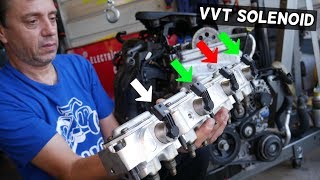
Est. part cost: $40-$150 - Faulty Cylinder Oil Supply Solenoid Valve 🟡 Medium Probability → Shop Engine Variable Valve Timing (VVT) Solenoid The 1.3L MultiAir engine's valve lift is controlled by oil pressure, managed by these solenoids. A stuck or slow-to-respond solenoid can cause improper valve timing and poor combustion, leading to a misfire. TSBs list codes like P1061, P1063, etc., as appearing with P1471.
How to confirm: Check for accompanying P106x codes. Diagnosis requires checking the solenoid's electrical circuit and may involve testing the component itself using a diagnostic tool like wiTECH.
Typical fix: Replace the faulty cylinder oil supply solenoid valve. Note: these solenoids are often integrated into the MultiAir 'brick' and not sold separately.
Est. part cost: $50-$120
Rare But Worth Checking
- Faulty Fuel Injector: A clogged or failing fuel injector can cause a lean misfire, which would also trigger catalyst protection. This is less common than ignition issues but a valid cause for a persistent single-cylinder misfire.
- Vacuum Leak: A significant vacuum leak can cause multiple cylinders to run lean, potentially leading to misfires and triggering P1471. TSB 18-057-23 mentions a vacuum leak code (P2173 - High Airflow/Vacuum Leak Detected) in conjunction with P1471.
- Intermittent No-Crank Condition: A related TSB for the 1.3L engine (18-006-23) notes that PCM software issues can also cause an intermittent no-crank, especially when the engine is hot. While not a direct cause of P1471, it points to the wide range of issues solvable by a PCM flash.
Diagnosis Steps
- Read all stored Diagnostic Trouble Codes (DTCs) with an OBD-II scanner. Note all codes, including pending ones, and check freeze frame data.
- Prioritize any misfire (P030x) or component-specific (P106x) codes over P1471. P1471 is a symptom of these other codes.
- Crucial Step: Check for applicable Technical Service Bulletins (TSBs), specifically 18-007-23 (1.0L) and 18-057-23 (1.3L). The most common fix is a PCM software update. A dealer can verify if the update has been performed using the vehicle's VIN.
- If a specific cylinder misfire is present (e.g., P0303), inspect the spark plug and ignition coil for that cylinder. A common diagnostic step is to swap the ignition coil with a known good cylinder (e.g., swap coil from cylinder 3 to cylinder 2) and clear the codes. If the misfire code returns for cylinder 2 (P0302), the ignition coil is confirmed to be faulty.
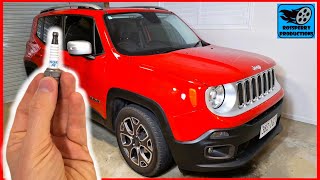
- Inspect spark plugs for wear, damage, or carbon tracking. The recommended replacement interval for the 1.3L Turbo is 40,000 miles. 🎬 Watch: Step-by-step 1.3L turbo spark plug installation guide.
- If oil supply solenoid codes (P106x) are present, follow the manufacturer's diagnostic procedure for the MultiAir system, which includes checking wiring and solenoid operation with a tool like wiTECH.
- Inspect for any large vacuum leaks (e.g., torn intake boots, disconnected hoses), especially if code P2173 is also present.
- Once the root cause (software update, faulty coil, worn plugs, etc.) is repaired, clear all codes and perform a complete drive cycle to ensure P1471 does not return.
Parts You'll Likely Need
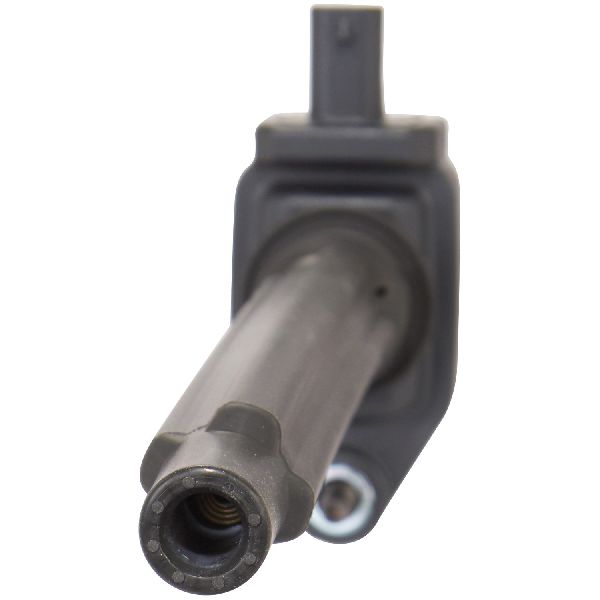
- Ignition Coil
(OEM #68440243AA)— A primary cause of engine misfires that trigger the P1471 code.
Trusted brands: Mopar, NGK, Bosch
OEM price range: $65-$95
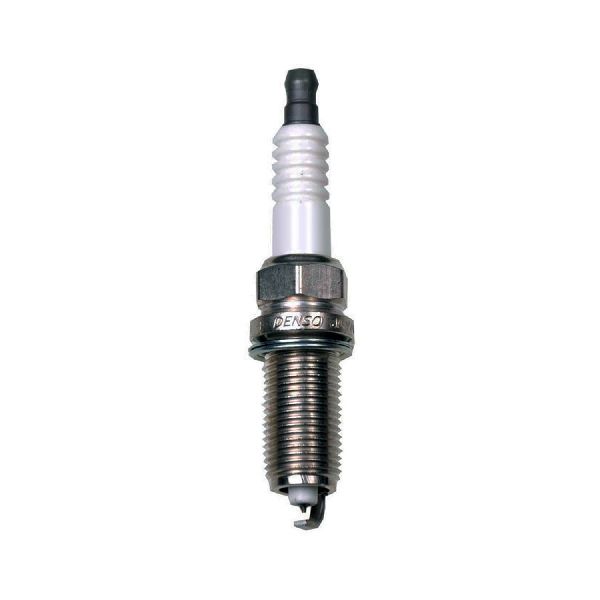
Aftermarket price range: $40-$80 - Spark Plugs
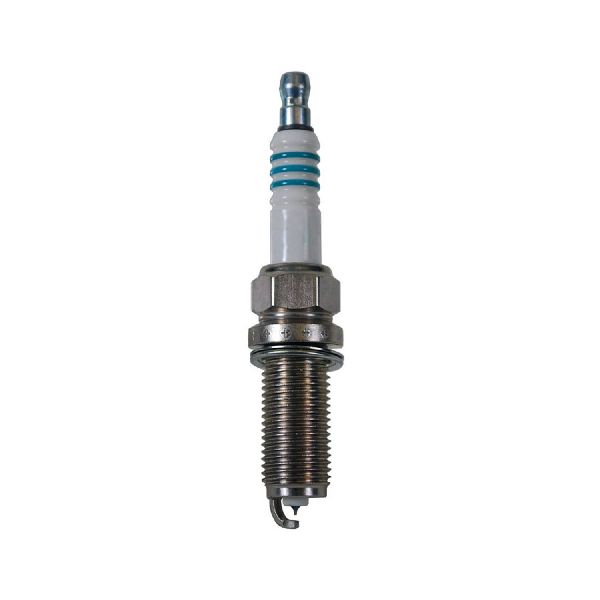
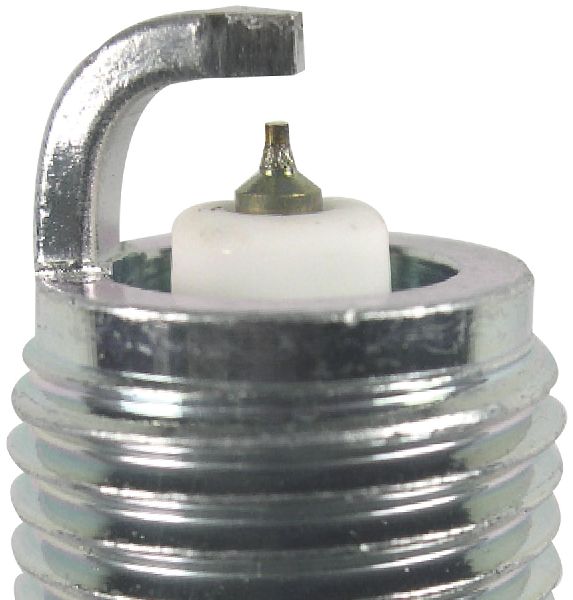
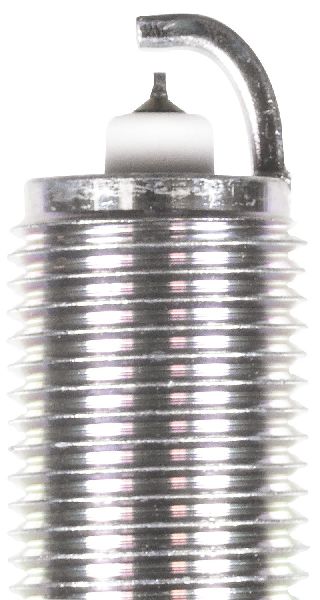
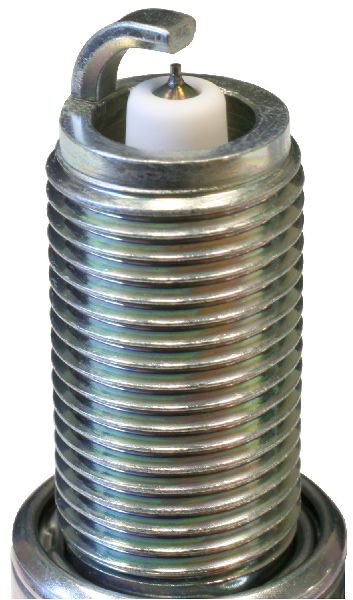
(OEM #68440226AA)— Worn or fouled spark plugs are a common and fundamental cause of misfires, with a 40k mile replacement interval on this engine.
Trusted brands: Mopar, NGK, Champion
OEM price range: $15-$25 per plug
Aftermarket price range: $8-$18 per plug - Cylinder Oil Supply Solenoid Valve
(OEM #68496801AA (replaces 5048437AA, 5048437AB))— A known issue on the MultiAir engines, this part's failure can cause misfires and is cited in TSBs along with P1471.
Trusted brands: Mopar
OEM price range: $190-$290
Aftermarket price range: $50-$100
Related Codes That Often Appear With This One
- P0300 — Random/Multiple Cylinder Misfire Detected. This is a direct trigger for catalyst protection.
- P0301, P0302, P0303, P0304 — Cylinder-specific misfire codes. These are direct triggers for catalyst protection and are explicitly mentioned in TSBs alongside P1471.
- P1061, P1063, P1069 — Cylinder Oil Supply Solenoid Valve codes. These indicate a fault in the MultiAir system, which can cause a misfire and subsequently trigger P1471.
- P2173 — High Airflow/Vacuum Leak Detected. TSB 18-057-23 lists this as a possible accompanying code, indicating a potential vacuum leak as a root cause.
- P2110, P0607 — Electronic Throttle Control System Forced Limited RPM (P2110) and Control Module Performance (P0607) are also listed in TSB 18-057-23, pointing to a broader PCM software issue.
Technical Service Bulletins (TSBs) & Recalls
- 18-057-23: Flash: Powertrain Control Module (PCM) Updates for 1.3L engines, linking P1471 to misfires, oil solenoid codes (P106x), vacuum leaks (P2173), and other performance codes, recommending a software update as the repair.
- 18-007-23: Flash: Powertrain Control Module (PCM) Updates for 1.0L engines, also linking P1471 to misfires and oil solenoid codes, and recommending a software update.
Platform-Specific Known Issues
- The 2020 Jeep Renegade with the 1.0L and 1.3L Turbo engines is subject to TSBs #18-007-23 and #18-057-23, respectively. These bulletins explicitly state that a combination of codes, including P1471, misfires (P030x), and oil solenoid faults (P106x), can be caused by PCM software and is correctable with a software update. Symptoms also include poor performance and the Stop/Start system being deactivated.
Mechanic-Grade Diagnostic Values
- Ignition Coil Primary Resistance — expected: 0.56 - 0.68 Ohms. Failure: A reading outside this range indicates a faulty primary winding.
- Ignition Coil Secondary Resistance — expected: 7.8 - 9.6 kOhms. Failure: A reading outside this range indicates a faulty secondary winding.
- Fuel Injector Resistance — expected: Approximately 12 Ohms. Failure: A reading that is significantly different from other injectors, or is an open/short circuit.
- Fuel Pressure (Static) — expected: 43.5 PSI (3 Bar). Failure: Low fuel pressure can cause lean conditions and misfires, though it would likely affect multiple cylinders.
Hidden / Shadow Codes Worth Checking
- Mode $06 Data (Misfire Monitor): While not a 'shadow code' in the proprietary sense, OBD-II Mode $06 provides access to the raw data from non-continuous monitors, including the misfire monitor for each cylinder. A technician can view the misfire counts for the current and last ten drive cycles. This allows them to see if a cylinder is misfiring occasionally, even if the count is not yet high enough to trigger a P030x DTC and illuminate the check engine light. This is invaluable for diagnosing intermittent issues. (see via A professional OBD-II scan tool with Mode $06 capability.)
Scan Tool Commands That Help
- wiTECH (or equivalent professional scanner): Active Test: Multi-Air VVA Solenoid — When P106x codes are present, this bidirectional command allows a technician to individually activate the oil supply solenoid for each cylinder with the engine off. A healthy solenoid will produce an audible click. The absence of a click from one solenoid while others are working points to a failure in that solenoid or its circuit, helping to pinpoint the fault without disassembly.
- wiTECH: Reprogram PCM — This is the specific repair procedure called for by TSBs 18-057-23 and 18-007-23 when P1471 is present with related misfire or MultiAir codes. It updates the engine's control logic to correct overly sensitive fault detection or performance issues.
Real Owner Repair Stories
- YouTube channel 'SERVICE ENGINE' (2016 Jeep Renegade Trailhawk 2.4L with 90,000 miles (Note: Engine is different but cause/symptom is analogous to 1.3L)) — Rough, bucking, kicking driving experience. Check engine light came on. Code read was P0301 (Cylinder 1 Misfire).
❌ Tried (didn't work) Proactively replaced all four spark plugs just before the issue became severe; the misfire and CEL still occurred.
✅ What actually fixed it The dealership replaced the ignition coil for cylinder 1 and performed vehicle software updates. The total cost was approximately $300.
"I Checked Everything" — The Actual Cause
- A technician may find code P2173 (High Airflow/Vacuum Leak Detected) stored alongside P1471 and associated misfire codes. A standard smoke test of the intake system may reveal no leaks, leaving the technician confused. However, TSB 18-057-23 explicitly lists P2173 as one of the codes that can be caused by a PCM software issue, meaning the 'leak' is a perceived one by the software logic, not a physical one. The actual fix in this case is reprogramming the PCM.
OEM Part Supersession History
5048437AA, 5048437AB→68496801AA— Part has been updated or revised by the manufacturer.
Heads up: The new part number is the correct service replacement for the older numbers.
Model Year Variations Within This Range
- 2020: There was a mid-year change to the engine wiring harness for the 1.3L engine. Part number 68466393AA is specified for vehicles built 'Before 7/16/2020'. This could be relevant if diagnosing a wiring issue.
Helpful Videos
We Have This Part in Stock

The information in this article is provided for general reference and educational purposes only. Vehicle specifications, procedures, and part compatibility can vary by production date, trim level, and region. Always consult your vehicle's factory service manual and verify part numbers before purchasing or performing repairs. Safety-critical components such as airbags, seat belts, and braking systems should be installed by a qualified professional.
- Jeep RENEGADE:
- 🧭 Diagnostic Flowchart
- 🎬 Helpful Videos
- 🛍️ Shop This Part
- What's Unique About the 2020-2020 Jeep RENEGADE
- Symptoms You May Notice
- Most Likely Causes
- Rare But Worth Checking
- Diagnosis Steps
- Parts You'll Likely Need
- Related Codes That Often Appear With This One
- Technical Service Bulletins (TSBs) & Recalls
- Platform-Specific Known Issues
- Mechanic-Grade Diagnostic Values
- Hidden / Shadow Codes Worth Checking
- Scan Tool Commands That Help
- Real Owner Repair Stories
- "I Checked Everything" — The Actual Cause
- OEM Part Supersession History
- Model Year Variations Within This Range
- 🎟️ Get 5% Off