

P1500 on 1999-2002 Saab 9-3: Battery Voltage Fault Causes and Fixes
On a 1999-2002 Saab 9-3, code P1500 means the system voltage is too high or too low. This is almost always caused by a failing alternator or a bad battery. Check the running voltage; if it's not around 14V, the alternator is the likely culprit. Cleaning the main ground points is also a critical and low-cost diagnostic step.
- P1500 on this Saab is an electrical system voltage problem, not a speed sensor or idle control issue.
- Before replacing any parts, use a multimeter to check the battery voltage with the engine off (should be ~12.6V) and running (should be ~14.0V). This is the most important diagnostic step.
- The most likely culprits are a failing alternator or an old battery.
- Always inspect and clean the main battery cables and chassis/gearbox ground points, as corrosion here is a common and inexpensive-to-fix problem.
What's Unique About the 1999-2002 Saab 9-3
Saab electrical systems from this era are notoriously sensitive to voltage fluctuations. Unlike many other brands where P1500 points to a speed sensor or idle control valve, on the first-generation 9-3 with the Motronic or Trionic 5 engine management system, this code is strictly for diagnosing a problem with the vehicle's charging and electrical supply system. Owners frequently report a cascade of warning lights for systems like ABS, TCS, and airbags when voltage becomes unstable. This can be alarming but typically points back to a single root cause in the charging system, often the alternator, battery, or a corroded ground connection.
Symptoms You May Notice
- Check Engine Light is on
- Battery or charging system warning light is on
- Multiple, seemingly unrelated warning lights appear simultaneously (e.g., ABS, TCS, Airbag), often called the 'Christmas tree' effect
- Flickering or dimming headlights and interior lights
- Engine stalls while driving
- Slow or difficult engine cranking
- Erratic behavior from electrical accessories like the radio, power windows, or instrument cluster
- Burning smell from an overheating alternator
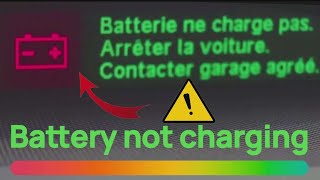
- Message on SID (Saab Information Display) such as "BATTERY NOT CHARGING. MAKE A SAFE STOP."
- Replacing individual electronic modules (like ABS or TCS controllers) that have thrown error codes, when the root cause is unstable system voltage. The 'Christmas tree' effect is a classic symptom of a systemic voltage problem, not multiple simultaneous component failures.
Most Likely Causes
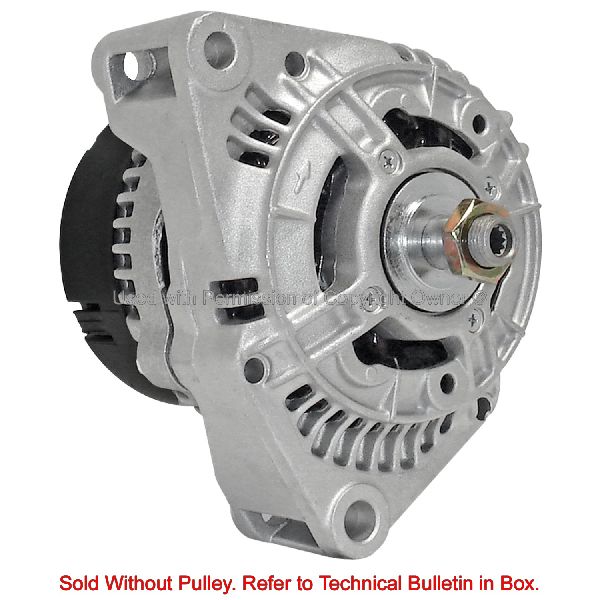
- Failing Alternator 🔴 High Probability Alternators are a common failure item on many vehicles as they age, and are a known weak point on Saabs. The internal voltage regulator can fail, causing either undercharging (low voltage) or overcharging (high voltage). Remanufactured alternators can also be of inconsistent quality, leading to repeat failures.
How to confirm: With the engine running, use a multimeter to measure the voltage across the battery terminals. A healthy alternator should produce between 13.8 and 14.4 volts. A reading below 13.5V or above 15V indicates a faulty alternator. Many auto parts stores can also test alternators on a bench tester. A user on Reddit confirmed a reading of 10.6V while running pointed directly to a bad alternator.
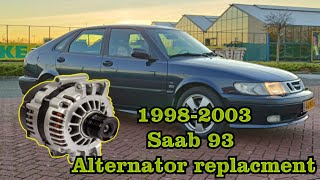
Typical fix: Replace the alternator assembly. 🎬 Watch: Step-by-step alternator replacement for the 1998-2003 Saab 9-3. Using a genuine Bosch (OEM) or a high-quality remanufactured unit is highly recommended.
Est. part cost: $150-$400 - Weak or Dead Battery 🟡 Medium Probability Batteries have a typical lifespan of 3-5 years. Saab's sensitive electronics can react poorly to a battery that can no longer provide stable voltage under load, even if it manages to start the car. This can trigger the P1500 code and the associated 'Christmas tree' of dash lights.
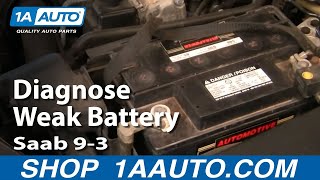
How to confirm: Test the battery voltage with the engine off; it should be at least 12.6V. A better method is to have the battery load-tested at an auto parts store. 🎬 See how to diagnose a weak battery on your Saab. This test determines if the battery can still deliver its rated amperage under load, which is a more accurate measure of its health.
Typical fix: Replace the battery.
Est. part cost: $100-$250 - Corroded or Loose Grounds/Connections 🟡 Medium Probability Poor ground connections are a well-documented issue on this platform. The main battery ground cables connect to the chassis and the gearbox, and these points are exposed to the elements and can corrode over time, creating high resistance that disrupts the entire electrical system.
How to confirm: Visually inspect the battery terminals, positive cable connections, and especially the main ground straps. According to the Saab Workshop Information System (WIS), for a 1999-2002 9-3, the main ground points are G2 (on the left-hand wheel housing behind the battery) and G25 (on the gearbox). Look for corrosion (white or green powder), looseness, or frayed wires. Perform a voltage drop test across the ground cables to check for high resistance.
Typical fix: Remove, clean, and securely re-attach all corroded connections. Use a wire brush to clean the contact points to shiny bare metal. Applying dielectric grease can help prevent future corrosion. 🎬 Watch this guide on how to fix car ground connections. Replace any badly damaged or corroded cables/straps.
Est. part cost: $10-$50
Rare But Worth Checking
- Serpentine Belt Issue: A worn, loose, or slipping serpentine belt can prevent the alternator from spinning at the correct speed, leading to undercharging. This is usually accompanied by a squealing noise from the engine bay.
- Faulty ECU: In very rare cases, the Engine Control Unit (ECU) itself can malfunction and incorrectly report a voltage issue. This should only be considered after all other possibilities in the charging system have been exhaustively ruled out.
Diagnosis Steps
- Read all fault codes from all modules to see what other systems are affected. Note any ABS, TCS, or Body codes. A Saab-specific scanner like a Tech 2 will provide the most comprehensive data.
- With the engine off, measure the battery voltage using a multimeter. A healthy battery should read approximately 12.6V.
- Start the engine. Measure the battery voltage again. It should be between 13.8V and 14.4V. If it's below 13.5V, the system is undercharging. If it's above 15V, it's overcharging.
- If voltage is low, turn on all accessories (headlights, blower fan, rear defroster) and check if the voltage drops significantly. A large drop points to a weak alternator.
- If the charging voltage is correct, turn off the engine and have the battery professionally load-tested to check its health.
- Regardless of voltage readings, thoroughly inspect all major electrical connections. Disconnect the negative battery terminal first. Check the battery terminals for tightness and corrosion.
- Locate and inspect the main ground straps. Per the SAAB WIS for a 2002 9-3, one cable goes from the battery to the left-hand wheel housing (G2) and another to the gearbox (G25). These are critical points. Clean these connection points with a wire brush until they are shiny metal and re-secure them tightly.
- Perform a voltage drop test on the main power and ground cables. With the engine running, connect a multimeter between the positive battery post and the alternator's B+ terminal. The reading should be less than 0.5V. Then, connect it between the negative battery post and the alternator case. This reading should also be less than 0.5V. Readings higher than this indicate excessive resistance in the cables or connections.
- Inspect the main positive cable from the battery to the starter and alternator for any signs of corrosion or damage.
- If the alternator is overcharging (high voltage), the voltage regulator (which is internal to the alternator) has failed and the alternator must be replaced.
Parts You'll Likely Need
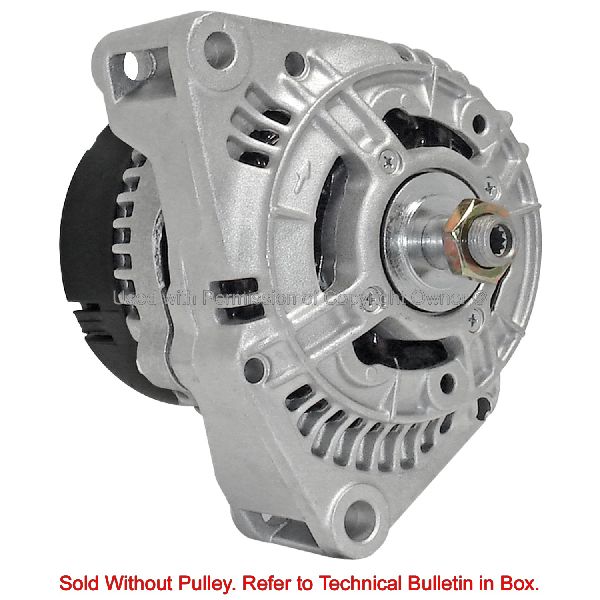
- Alternator
(OEM #5248372)— This is the most common cause of both undercharging and overcharging conditions that trigger P1500. The internal voltage regulator is the typical failure point.
Trusted brands: Bosch (OEM), Denso, Duralast Remanufactured, Valeo
OEM price range: $300-$450
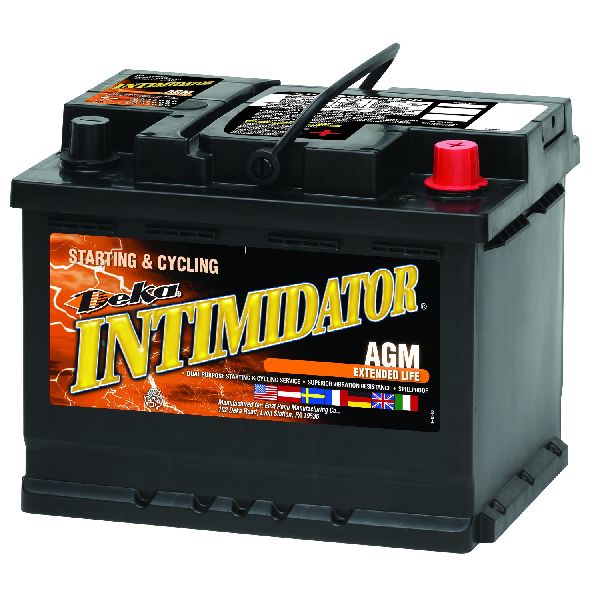
Aftermarket price range: $150-$300 - Battery — An old battery that can no longer hold a stable charge is a frequent cause of low voltage issues and electrical gremlins on Saabs.
Trusted brands: Interstate, DieHard, Duralast, ACDelco
OEM price range: $180-$250
Aftermarket price range: $100-$200 - Battery Ground Cable / Strap — Corrosion at the chassis (G2) or gearbox (G25) ground points is a known weak spot, and replacing the cable is often easier than trying to clean a badly degraded original.
Trusted brands: Standard Motor Products, ACDelco, Genuine Saab
OEM price range: $25-$50
Aftermarket price range: $10-$30
Related Codes That Often Appear With This One
- P1628 — According to the Saab Workshop Information System, P1628 (Battery Voltage +30 Input to Control Module Incorrect) is often generated along with P1500 as they both relate to battery voltage issues detected by the ECU.
- Various B-codes and C-codes — Unstable voltage can cause communication errors and false readings in various control modules, such as the ABS (C-codes) or Body Control Module (B-codes), leading to multiple warning lights for ABS, TCS, Airbag, etc.
Platform-Specific Known Issues
- Electrical System Sensitivity & 'Christmas Tree' Lights: The first-generation Saab 9-3's electrical system is known to be very sensitive to low or unstable voltage, often resulting in a cascade of warning lights for unrelated systems like ABS, TCS, and Airbags. Owners on forums frequently describe the dashboard 'lighting up like a Christmas tree' as the first sign of an alternator or battery problem.
- Ground Point Corrosion: Corrosion of the main grounding points, especially the one on the gearbox housing (G25) and the one on the wheel housing (G2), is a common problem that can mimic alternator or battery failure. These connections are exposed to moisture and road salt, leading to high resistance. Cleaning these grounds is a crucial, often overlooked, diagnostic step.
Mechanic-Grade Diagnostic Values
- DTC Set Threshold — expected: System voltage remains between 10V and 16V after starting.. Failure: Code P1500 is set if voltage is > 16V (any duration) or < 10V for at least 3 seconds.
- Charging System Voltage Drop (Positive Side) — expected: < 0.5 Volts. Failure: A reading > 0.5V indicates high resistance in the cable or connections between the alternator B+ post and the positive battery terminal.
- Charging System Voltage Drop (Negative Side) — expected: < 0.5 Volts. Failure: A reading > 0.5V indicates high resistance in the ground path between the alternator case and the negative battery terminal.
- Alternator Output Voltage (Under Load) — expected: 13.8V - 14.4V. Failure: Voltage consistently below 13.5V with accessories on, or above 15.0V at any time.
Hidden / Shadow Codes Worth Checking
- P1628: Battery Voltage +30 Input to Control Module Incorrect. This code is frequently set in conjunction with P1500. (see via A Saab-specific scanner like a Tech 2 is most reliable for pulling all manufacturer-specific codes.)
Wiring & Ground Locations
- G2 — On the left-hand wheel housing, located behind the battery.. This is one of the two main grounding points for the battery (via a 16 mm² cable). Corrosion here creates high resistance and can cause system-wide low voltage issues, mimicking a bad alternator.
- G25 — On the gearbox housing.. This is the primary, heavy-duty ground for the battery (via a 25 mm² cable). It is crucial for proper starter and charging system operation. It is exposed to road grime and corrosion.
- Alternator B+ Terminal — The main, large-gauge wire connection on the back of the alternator.. This is the point where all charging current leaves the alternator. A loose or corroded connection here will cause a significant voltage drop, preventing the battery from charging properly and triggering P1500.
Real Owner Repair Stories
- Reddit user, r/saab (2007 Saab 9-3 (Note: newer generation, but symptom is highly relevant)) — After replacing a faulty alternator, battery, belt, and tensioner, the car showed correct charging voltage (14.11V at idle, 13.68V under full load) but the SID warning "battery not charging. Make a safe stop" and the battery light remained on.
❌ Tried (didn't work) Initially, unplugging and replugging the alternator connector worked once, but the light returned on the next startup.
✅ What actually fixed it The warning light and message eventually went away on their own after several drive cycles. The likely cause was that the new battery was in a low state of charge, and the ECU needed time to clear the stored fault status after verifying the charging system was functional over a period of time.
When the Usual Fixes Don't Work
- I
- n
- s
- o
- m
- e
- c
- a
- s
- e
- s
- ,
- e
- v
- e
- n
- a
- f
- t
- e
- r
- r
- e
- p
- l
- a
- c
- i
- n
- g
- t
- h
- e
- a
- l
- t
- e
- r
- n
- a
- t
- o
- r
- a
- n
- d
- b
- a
- t
- t
- e
- r
- y
- ,
- t
- h
- e
- '
- B
- A
- T
- T
- E
- R
- Y
- N
- O
- T
- C
- H
- A
- R
- G
- I
- N
- G
- '
- w
- a
- r
- n
- i
- n
- g
- m
- a
- y
- p
- e
- r
- s
- i
- s
- t
- o
- n
- t
- h
- e
- S
- I
- D
- d
- e
- s
- p
- i
- t
- e
- m
- u
- l
- t
- i
- m
- e
- t
- e
- r
- r
- e
- a
- d
- i
- n
- g
- s
- s
- h
- o
- w
- i
- n
- g
- a
- h
- e
- a
- l
- t
- h
- y
- c
- h
- a
- r
- g
- i
- n
- g
- v
- o
- l
- t
- a
- g
- e
- (
- e
- .
- g
- .
- ,
- 1
- 4
- .
- 1
- V
- )
- .
- T
- h
- i
- s
- c
- a
- n
- b
- e
- c
- a
- u
- s
- e
- d
- b
- y
- t
- h
- e
- E
- C
- U
- r
- e
- q
- u
- i
- r
- i
- n
- g
- s
- e
- v
- e
- r
- a
- l
- d
- r
- i
- v
- e
- c
- y
- c
- l
- e
- s
- t
- o
- r
- e
- c
- o
- g
- n
- i
- z
- e
- t
- h
- e
- n
- e
- w
- c
- o
- m
- p
- o
- n
- e
- n
- t
- s
- a
- n
- d
- c
- l
- e
- a
- r
- t
- h
- e
- p
- e
- r
- s
- i
- s
- t
- e
- n
- t
- f
- a
- u
- l
- t
- ,
- e
- s
- p
- e
- c
- i
- a
- l
- l
- y
- i
- f
- t
- h
- e
- n
- e
- w
- b
- a
- t
- t
- e
- r
- y
- w
- a
- s
- i
- n
- s
- t
- a
- l
- l
- e
- d
- i
- n
- a
- d
- i
- s
- c
- h
- a
- r
- g
- e
- d
- s
- t
- a
- t
- e
- .
OEM Part Supersession History
5248372→12770124, 93184940 (among others)— Standard part evolution and consolidation by Bosch and Saab.
Heads up: The OEM alternator is a 140 Amp Bosch unit. While other part numbers may supersede it, ensure any replacement is rated for 140A and is from a quality manufacturer. Low-quality remanufactured units are a common source of repeat failures.
Model Year Variations Within This Range
- 1999-2000: During these years, Saab transitioned from the B204 engine family (using Trionic 5 engine management with a red ignition cassette) to the B205 family (using Trionic 7 with a black cassette). The vehicle in this article, a B204i, uses the even less common Bosch Motronic system. While the P1500 code's meaning remains the same (battery voltage fault), be aware that engine management components are not interchangeable between these systems.
Diagnostic Flowchart
Other Known Issues on This Vehicle
Issues unrelated to this code that are worth knowing about as an owner of this generation:
- Direct Ignition Cassette (DIC) Failure 🔴 High — Very common failure item, often without warning. Recommended to carry a spare. Failure can occur anytime after 60,000 miles.
- Saab Information Display (SID) Pixel Failure 🟡 Low — Extremely common on virtually all 1994-2004 Saabs. Lines of pixels or the entire display will fade and become unreadable.
- Engine Oil Sludge (B205/B235 Engines) 🔴 High — Primarily affects the later B205/B235 engines (2000-2003 9-3), not the B204. Caused by an inadequate PCV system. (Ref: Saab issued an updated PCV kit (PCV fix #6) to address this.)
- Bulkhead / Steering Rack Mount Cracking 🟠 Medium — A known issue, more common on higher-mileage or hard-driven cars.
- Water Leaks (Cabin and Trunk) 🟡 Low — Common as the car ages and seals degrade.
Used vs. New Parts: Buying Guide for This Vehicle
When a used part is the smart pick: A used OEM Bosch alternator from a low-mileage wrecked vehicle can be a reliable and cost-effective alternative to a new aftermarket part of questionable quality. Given the high failure rate of some remanufactured units, a tested, used original part is often a smarter buy.
Donor-vehicle mileage cap: roughly under 100000 miles for the part to have meaningful remaining life.
What to inspect on the donor part:
- Check for a visible date code on the part; newer is better.
- Ensure the pulley spins smoothly by hand with no grinding or roughness, which would indicate bad bearings.
- Inspect the casing for any signs of oil contamination from a leaking engine, which can degrade the alternator.
- If possible, ask the salvage yard if they tested the output before pulling the part.
OEM-only on this vehicle (don't cheap out):
- While not strictly 'OEM-only', the alternator's voltage regulator is critical. For this reason, a new or remanufactured unit from Bosch (the original supplier) is the highest-confidence repair. Avoid 'white-box' no-name brands.
Aftermarket brands forum-validated for this vehicle:
- Bosch (New or Remanufactured)
- Denso
- Valeo
Brands owners have reported issues with on this vehicle:
- Unbranded, 'white-box' remanufactured alternators have a high rate of out-of-box failure or premature failure. A Duralast unit from a major parts store caused initial issues for one owner before eventually working correctly.
Real Owner Stories
Aggregated from forums and TSBs cited above. Mileages and costs reflect what owners reported in those sources.
Saab 9-3
Symptoms: A user confirmed a running voltage of 10.6V, indicating a severe undercharging condition.
What fixed it: The user's discussion pointed to alternator failure, with the implied fix being the replacement of the alternator.
Source hint: Reddit r/saab - Thread 'Saab 9-3 alternator problem'
Saab 9-3
Symptoms: The owner experienced widespread electrical issues, with the dashboard lighting up like a 'Christmas tree'.
What fixed it: The issue was corroborated as a common symptom of alternator failure, making alternator replacement the fix.
Source hint: SaabTechTalk.com - Thread 'Saab 93 major electrical failure possible . Help please'
Related OBD-II Codes
Frequently Asked Questions
My dashboard has lit up like a 'Christmas tree' with ABS, TCS, and Airbag lights. Is this related to the P1500 code on my 9-3?
The Saab Information Display (SID) says 'BATTERY NOT CHARGING'. What's the first thing I should check?
Where are the critical ground points G2 and G25 located on a 1999-2002 Saab 9-3?
My car starts, but I still get the P1500 code and electrical issues. Could the battery still be the problem?
I replaced my alternator, but it failed again after a short time. Why might this happen?
What are the correct battery voltage readings I should expect when testing my Saab 9-3?
Is this P1500 charging system issue also common on the older Saab 900?
Helpful Videos

We Have This Part in Stock



The information in this article is provided for general reference and educational purposes only. Vehicle specifications, procedures, and part compatibility can vary by production date, trim level, and region. Always consult your vehicle's factory service manual and verify part numbers before purchasing or performing repairs. Safety-critical components such as airbags, seat belts, and braking systems should be installed by a qualified professional.
- Saab 9-3:
- 🧭 Diagnostic Flowchart
- 🎬 Helpful Videos
- 🛍️ Shop This Part
- What's Unique About the 1999-2002 Saab 9-3
- Symptoms You May Notice
- Most Likely Causes
- Rare But Worth Checking
- Diagnosis Steps
- Parts You'll Likely Need
- Related Codes That Often Appear With This One
- Platform-Specific Known Issues
- Mechanic-Grade Diagnostic Values
- Hidden / Shadow Codes Worth Checking
- Wiring & Ground Locations
- Real Owner Repair Stories
- When the Usual Fixes Don't Work
- OEM Part Supersession History
- Model Year Variations Within This Range
- Other Known Issues on This Vehicle
- Used vs. New Parts: Buying Guide for This Vehicle
- Real Owner Stories
- Saab 9-3
- Saab 9-3
- Related OBD-II Codes
- Frequently Asked Questions
- 🎟️ Get 5% Off