

P1515 on 2000-2004 Subaru Outback: Idle Air Control Circuit Fault Causes and Fixes
This code indicates a 'High Input' fault in the Idle Air Control (IAC) valve circuit. The most common fix is cleaning the IAC valve (P/N 22650AA192) and its passages of carbon buildup. If that fails, replacing the IAC valve and its gasket (P/N 22659AA120) is typically required. Expect to pay $80-$300 for a new valve.
- P1515 specifically points to a 'Circuit High Input' fault in the Idle Air Control (IAC) system, not a generic failure.
- The easiest and most common first step is to remove and thoroughly clean the IAC valve and its gasket surface.
- Always use a new gasket when reinstalling the IAC valve to prevent creating a new vacuum leak.
- If cleaning doesn't work, the problem is likely an electrical failure in the IAC valve itself or its wiring harness.
- This is a DIY-friendly repair for those with basic tools, but be careful not to strip the small mounting screws.
What's Unique About the 2000-2004 Subaru Outback
On the EJ25 engine from this era, the IAC valve is a common maintenance item. While the system's design is conventional, the valve is prone to carbon buildup which can cause it to stick or operate slowly, leading to a variety of idle-related symptoms. The 'Circuit High Input' definition for P1515 specifically suggests an electrical fault, which can sometimes be more complex than a simple mechanical cleaning and may point directly to a failed winding inside the valve itself.
Symptoms You May Notice
- Erratic idle speed (surging up and down)
- Idle speed is too high or too low
- Engine stalling when coming to a stop or at idle
- Difficulty starting the engine, especially when cold
- Rough running or vibrations at idle
- Engine hesitates or 'chugs' when trying to accelerate from a stop.
- Replacing the throttle position sensor (TPS), which will not fix an IAC circuit code.
- Mistaking the issue for a vacuum leak. While a vacuum leak can cause similar symptoms, it will not typically set a P1515 circuit code. A common diagnostic step is to spray carburetor cleaner around potential leak points to check for idle changes.
- Confusing the IAC valve issue with a Neutral Position Switch failure, which causes different symptoms and sets different codes (e.g., P1592).
- Replacing the Mass Airflow (MAF) sensor. While a faulty MAF can cause stalling and idle issues, it typically sets different codes. However, in some cases of multiple IAC codes, a failed MAF has been the root cause.
Most Likely Causes
- Dirty or Carbon-Clogged Idle Air Control Valve 🔴 High Probability The IAC valve is exposed to crankcase vapors and exhaust gas recirculation, leading to carbon and oil deposits that can cause the internal plunger or rotary shutter to stick.
How to confirm: Remove the IAC valve from the throttle body (typically held by two Phillips head screws) and inspect it and the air passages for black carbon buildup. A valve that is visibly dirty or whose plunger does not move freely is the likely culprit.
Typical fix: Thoroughly clean the valve and the throttle body passages with carburetor or throttle body cleaner and a soft brush. Ensure the plunger moves freely after cleaning. Replace the gasket upon reinstallation.
Est. part cost: $5-$15 for cleaner and a new gasket. - Failed Idle Air Control Valve 🟡 Medium Probability The internal stepper motor or solenoid windings can fail electrically over time, causing an open or short circuit that triggers the 'High Input' code.
How to confirm: After cleaning, if the problem persists, the valve itself is likely faulty. You can test the resistance across the terminals with a multimeter. A forum post for a similar EJ engine suggests testing between pins 1-2 and 2-3, looking for a reading of approximately 9 ohms. A reading that is significantly off or shows an open/short circuit indicates a failed valve.
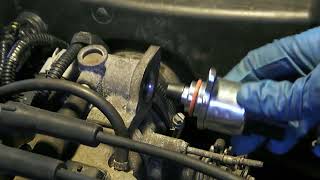
Typical fix: Replace the Idle Air Control Valve and its gasket. 🎬 Watch this step-by-step guide to replacing the IACV on an EJ25.
Est. part cost: $80-$300 - Wiring Harness or Connector Issue ⚪ Low Probability Engine vibration and heat can cause wires to chafe or break over time. The connector terminals can also become corroded or loose, leading to intermittent or high resistance connections.
How to confirm: Visually inspect the wiring harness leading to the IAC valve for any signs of damage, melting, or chafing. Unplug the connector and check for corrosion or pushed-out pins. Use a multimeter to check for continuity and for a short to power on the signal wire as indicated by the service manual.
Typical fix: Repair the damaged section of the wiring harness or clean/replace the electrical connector.
Est. part cost: $10-$50 for wiring repair supplies.
Rare But Worth Checking
- Faulty Engine Control Module (ECM): This is extremely rare. The ECM should only be considered after all other possibilities, including the valve and its entire circuit, have been exhaustively tested and ruled out. A service manual notes to replace the ECM after finding and repairing a short circuit in the harness.
Diagnosis Steps
- Read the codes: Confirm P1515 is present and note any other codes. Multiple IAC codes (P1511, P1513, etc.) strongly suggest an electrical issue.
- Visual Inspection: Inspect the IAC valve connector for damage or corrosion. Check the wiring harness for any obvious signs of chafing or breaks.
- Check for an unplugged connector: A common cause for multiple IAC codes is simply that the main connector was not plugged back in after a previous repair.
- Clean the IAC Valve: Remove the IAC valve from the throttle body. Be careful with the two Phillips head screws as they can strip easily. Thoroughly clean the valve and the air passages in the throttle body using throttle body cleaner.
- Replace the Gasket: Always use a new gasket (P/N 22659AA120) when reinstalling the IAC valve to prevent vacuum leaks.
- Reset and Relearn: Clear the codes using a scan tool. Perform an idle relearn procedure. 🎬 Watch: How to correctly perform the Subaru idle relearn procedure. A common method is to disconnect the negative battery terminal for 30 minutes, reconnect, turn the key to 'ON' for 15 seconds, start the car and let it idle for 10 minutes, turn it off, then restart and drive.
- Electrical Tests: If the code returns, disconnect the IAC valve. With the key on, check for proper voltage at the connector. Check the resistance of the IAC valve's motor windings with a multimeter. Test between pins 1-2 and 2-3; the reading should be around 9 ohms. A reading far from this spec indicates a faulty valve.
- Replace the IAC Valve: If the valve fails the resistance test or if all wiring checks out, the valve's internal motor has likely failed. Replace the IAC valve with a quality OEM or aftermarket part. 🎬 See a quick walkthrough of the Subaru IAC valve replacement process.
Parts You'll Likely Need
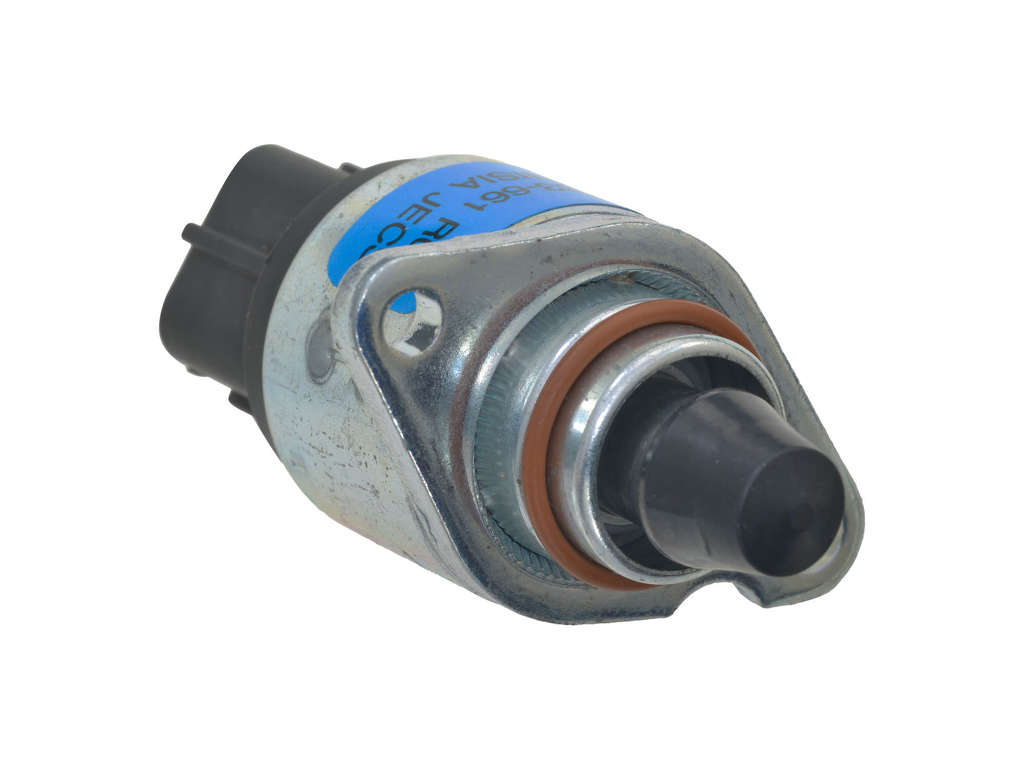
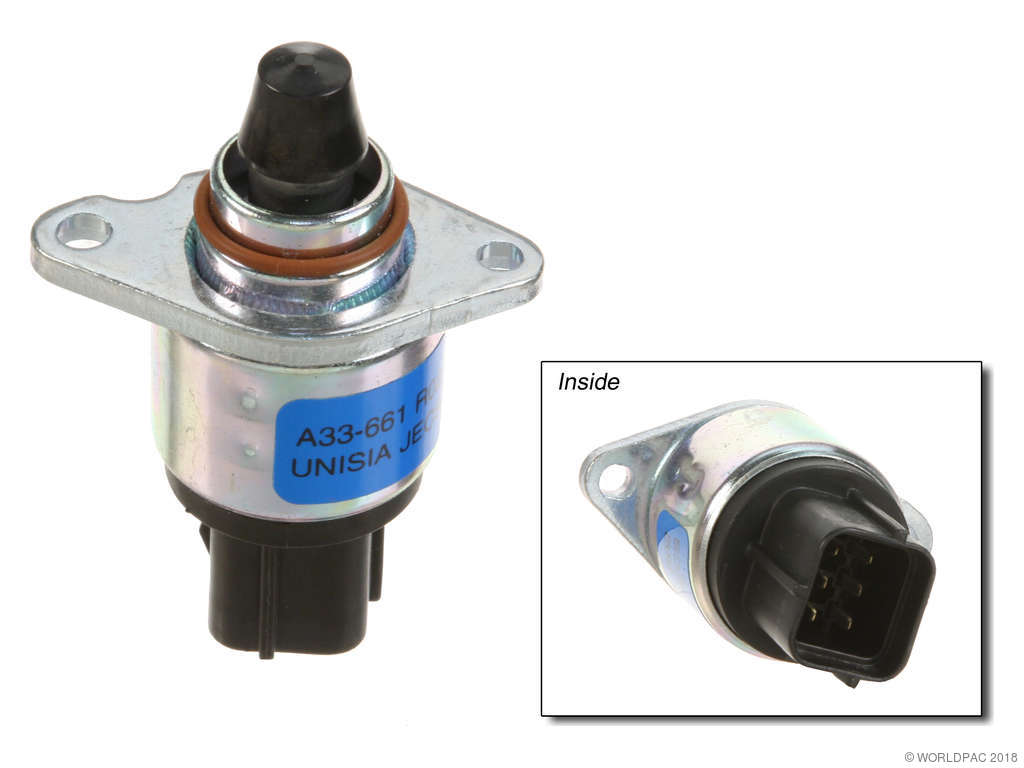
- Idle Air Control Valve
(OEM #22650AA192)— The internal motor windings fail, or the valve becomes too clogged with carbon to be cleaned effectively. This is the most common part replaced to fix P1515 after cleaning fails. This part number may be superseded by 22650AA19C.
Trusted brands: Subaru (Genuine), Standard Motor Products, Walker, Hitachi
OEM price range: $220-$300
Aftermarket price range: $80-$180 - Idle Air Control Valve Gasket
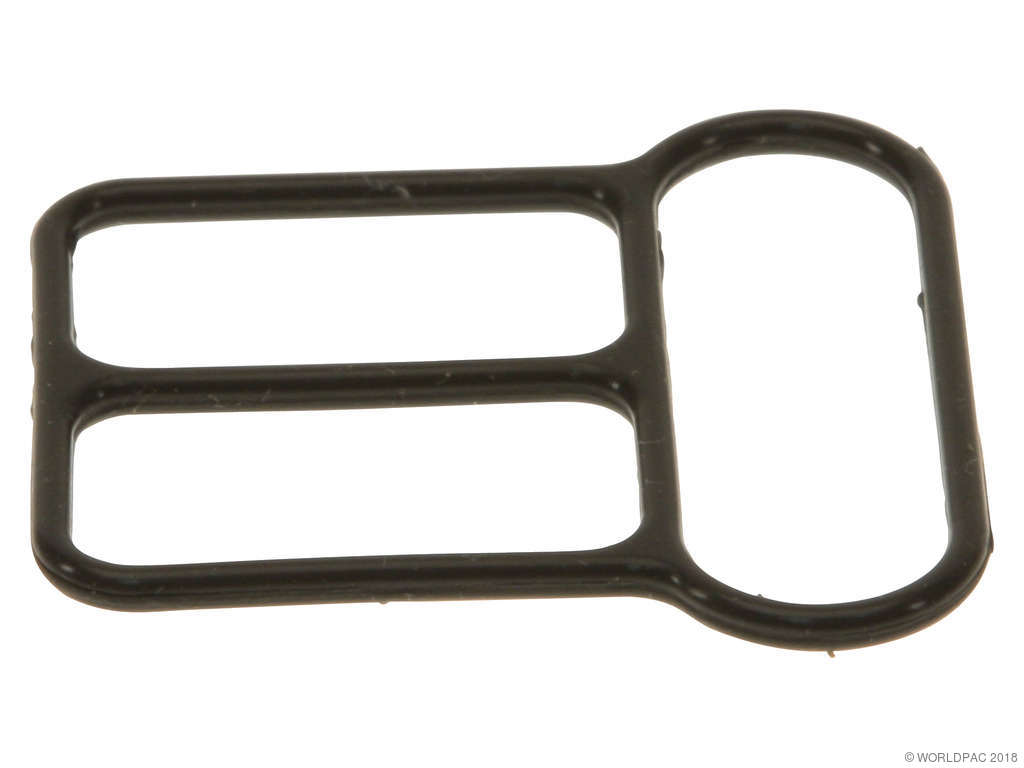
(OEM #22659AA120)— The old gasket can become brittle and fail, causing a vacuum leak. It should always be replaced whenever the IAC valve is removed for cleaning or replacement.
Trusted brands: Subaru (Genuine), Fel-Pro, Victor Reinz
OEM price range: $8-$12
Aftermarket price range: $5-$10
Related Codes That Often Appear With This One
- P1511 — This code corresponds to 'Idle Air Control Solenoid Signal 1 Circuit High Input'. Seeing multiple IAC circuit codes together strongly points to a common electrical fault, like a disconnected plug, damaged harness, or a complete failure of the IAC valve assembly.
- P1513 — This code corresponds to 'Idle Air Control Solenoid Signal 2 Circuit High Input'. Like P1511, its presence alongside P1515 reinforces the diagnosis of an electrical issue with the IAC valve or its connector.
- P0505 — This is a generic code for 'Idle Air Control System Malfunction'. It may appear alongside the more specific P1515, indicating the ECM has detected both a general idle control problem and a specific circuit fault.
Platform-Specific Known Issues
- Stripped Mounting Screws: The two Phillips head screws holding the IAC valve to the throttle body are notoriously soft and prone to stripping. It is highly recommended to use penetrating oil and a high-quality, correctly sized screwdriver to prevent this. Using a manual impact driver may be necessary.
- Aftermarket Part Quality: Some owners have reported that aftermarket IAC valves can be unreliable or fail quickly. In a forum thread for the Subaru Baja, a user who replaced the valve with an OEM part still had issues, suggesting the new part might have been faulty from the factory, though this is rare. Using a genuine Subaru part is often recommended for longevity.
Mechanic-Grade Diagnostic Values
- IAC Valve Stepper Motor Coil Resistance — expected: 10-30 Ohms for each coil set (e.g., between pins 1-2 and 2-3). Failure: A reading of infinity (open circuit), zero (short circuit), or a value significantly outside the 10-30 Ohm range.
- Scan Tool Live Data: 'ISC Valve Step' — expected: The value ranges from 0 (fully closed) to 255 (fully open). At a stable, warm idle, the value should be relatively low and steady. A high step count at idle could indicate a vacuum leak the ECM is trying to compensate for.. Failure: A value that is stuck at 0 or 255, or fluctuates erratically when no change in engine load is occurring.
- IAC Valve Control Signal Voltage at ECM — expected: Based on a 2001 Forester 2.5 SOHC pinout (which is highly similar), the IAC signals are on pins B135-1, B135-2, B135-10, and B135-11. These are pulsed ground signals from the ECM. Testing with a voltmeter may show fluctuating voltage.. Failure: A constant 0V or 12V on a signal wire (indicating a short to ground or power), or no signal activity when the engine is started.
Scan Tool Commands That Help
- Subaru Select Monitor or equivalent professional scan tool: Current Data Display / Live Data — Use this to monitor the 'ISC Valve Step' PID. Observing the step count in real-time helps determine if the ECM is commanding the valve to move and if the valve's position is appropriate for the engine's operating condition (e.g., low steps at warm idle, higher steps on cold start).
- Subaru Select Monitor or equivalent professional scan tool: Clear Memory — This function must be used after replacing the IAC valve or cleaning the throttle body to clear the old learned idle values from the ECM. Failure to do so will cause the engine to idle incorrectly with the new/clean part, as it will be operating based on parameters learned for the old/dirty part.
Wiring & Ground Locations
- Engine Harness Grounds on Intake Manifold — Two 12mm bolts on the top rear of the intake manifold, near the firewall and pitch stop mount, where several black ground wires with ring terminals are attached.. The Subaru ECU grounds through the intake manifold. Corrosion or a loose connection at these specific points can cause a floating ground, leading to erratic sensor readings and incorrect operation of actuators like the IAC valve, potentially causing a 'High Input' fault.
- IAC Valve Connector (B21) — A 6-pin electrical connector plugged directly into the Idle Air Control valve, which is mounted on the side of the throttle body.. This is the direct connection point for the valve. The 'Circuit High Input' code is often caused by a fault within this connector, such as a pushed-out pin, corrosion, or a wire shorting to power nearby.
- Main Engine-to-Chassis Ground Strap — A braided or thick gauge wire typically running from the engine block (often near the starter or alternator) to the vehicle's frame rail or firewall.. A corroded or broken main ground strap can cause the entire engine electrical system to seek a ground path through smaller wires, like sensor grounds, leading to voltage offsets and unpredictable electrical behavior that can trigger circuit faults like P1515.
Real Owner Repair Stories
- Research Note (N/A) — N/A
✅ What actually fixed it No verifiable, resolved repair stories for P1515 on a 2000-2004 Subaru Outback were found during extensive forum and web searches. The search results are heavily contaminated by General Motors (GM) vehicles, which use the same P1515 code for a completely different fault related to the electronic throttle body. Users searching for information on this Subaru code should be cautious to disregard any advice pertaining to GM trucks or 'Reduced Engine Power' mode, as it is not applicable.
OEM Part Supersession History
22650AA192→22650AA19C— Standard part evolution and consolidation. The newer part number is specified for a wider range of models, including the later Subaru Baja.
Heads up: There is conflicting information from various online parts retailers, with some listing the supersession in the reverse order. However, official-looking diagrams and broader model compatibility for 22650AA19C suggest it is the correct replacement for 22650AA192. The parts are physically interchangeable.
Diagnostic Flowchart
Other Known Issues on This Vehicle
Issues unrelated to this code that are worth knowing about as an owner of this generation:
- Head Gasket Failure 🔴 High — Very common, typically between 80,000 and 150,000 miles. The SOHC EJ25 engines in this era are notorious for external oil and/or coolant leaks from the head gaskets.
- Front Oxygen (A/F) Sensor Failure 🟠 Medium — Common failure item, often occurring around 100,000-150,000 miles, causing Check Engine Light and poor fuel economy. (Ref: A service program (WXW-80) was issued for some models for sensor replacement.)
- Vibration or Shudder on Acceleration 🟠 Medium — Frequently reported issue, often related to torque bind in the all-wheel-drive system's center differential or worn transmission components.
- Camshaft/Crankshaft Front Oil Seal Leaks 🟡 Low — Seals can become hard and brittle with age, leading to oil leaks at the front of the engine. Often addressed during timing belt service.
- Rear Wheel Bearing Failure 🟠 Medium — A common point of failure, causing a loud humming or grinding noise from the rear of the vehicle that increases with speed.
Used vs. New Parts: Buying Guide for This Vehicle
When a used part is the smart pick: A used OEM IAC valve from a reputable salvage yard is often a smarter choice than a new, non-OEM aftermarket part. Given the high failure rate of cheap aftermarket valves on this platform, a tested, low-mileage used Genuine Subaru part offers better reliability for a lower cost than a new OEM unit.
Donor-vehicle mileage cap: roughly under 120000 miles for the part to have meaningful remaining life.
What to inspect on the donor part:
- Check the electrical connector for any signs of green or white corrosion on the pins.
- Ensure the plastic housing of the connector is not cracked or brittle.
- Look for a valve that comes from a vehicle with no signs of a major coolant leak around the throttle body.
- If possible, gently try to move the internal plunger/shutter with a small tool to ensure it's not seized.
OEM-only on this vehicle (don't cheap out):
- Idle Air Control Valve
Aftermarket brands forum-validated for this vehicle:
- Hitachi
- Standard Motor Products (often considered a higher-tier aftermarket option, but still with mixed reports compared to OEM)
Brands owners have reported issues with on this vehicle:
- Unbranded 'eBay special' parts
- Store brands with a reputation for low quality control (e.g., Import Direct, Duralast - unless it's a re-boxed major brand).
Real Owner Stories
Aggregated from forums and TSBs cited above. Mileages and costs reflect what owners reported in those sources.
2003-2006 Subaru Baja 2.5L SOHC
Symptoms: Persistent idle control issues that were not resolved by replacing the IAC valve.
What fixed it: The owner replaced the original IAC valve with a new OEM part but continued to have problems, leading to the suspicion that the new replacement part was faulty from the factory.
Source hint: vehicle_specific_issues section, citing a forum thread for the Subaru Baja
Related OBD-II Codes
Frequently Asked Questions
I'm trying to clean the IAC valve on my Outback, but the screws are stuck. What's the best way to remove them?
I cleaned my IAC valve and replaced the gasket, but the P1515 code came back. What's the next step?
Should I buy an aftermarket IAC valve or a genuine Subaru part for my 2002 Outback?
What is the correct part number for the IAC valve gasket I need to replace?
Does this P1515 information also apply to my 2003 Subaru Forester with the same 2.5L engine?
What is the proper idle relearn procedure for this Subaru after working on the IAC valve?
Could the common head gasket failure on the EJ25 engine cause the P1515 code?
Helpful Videos


We Have This Part in Stock


The information in this article is provided for general reference and educational purposes only. Vehicle specifications, procedures, and part compatibility can vary by production date, trim level, and region. Always consult your vehicle's factory service manual and verify part numbers before purchasing or performing repairs. Safety-critical components such as airbags, seat belts, and braking systems should be installed by a qualified professional.
- Subaru Outback:
- 🧭 Diagnostic Flowchart
- 🎬 Helpful Videos
- 🛍️ Shop This Part
- What's Unique About the 2000-2004 Subaru Outback
- Symptoms You May Notice
- Most Likely Causes
- Rare But Worth Checking
- Diagnosis Steps
- Parts You'll Likely Need
- Related Codes That Often Appear With This One
- Platform-Specific Known Issues
- Mechanic-Grade Diagnostic Values
- Scan Tool Commands That Help
- Wiring & Ground Locations
- Real Owner Repair Stories
- OEM Part Supersession History
- Other Known Issues on This Vehicle
- Used vs. New Parts: Buying Guide for This Vehicle
- Real Owner Stories
- 2003-2006 Subaru Baja 2.5L SOHC
- Related OBD-II Codes
- Frequently Asked Questions
- 🎟️ Get 5% Off