

P1516 on 1996-2005 Ford Taurus 3.0L V6: Intake Manifold Runner Control Fault Guide
On a 1996-2005 Taurus with the 3.0L Duratec V6, code P1516 almost always points to a problem with the Intake Manifold Runner Control (IMRC) system. The most common failures are broken plastic linkage clips (bushings) or a faulty IMRC actuator motor, which can cause a loss of power, rough idle, and sometimes a rattling noise. The fix is typically replacing these inexpensive parts, though access to the actuator and linkage at the end of the intake manifold can be tight.
- P1516 on your Taurus is an issue with the Intake Manifold Runner Control (IMRC), not the throttle body.
- Before buying any parts, visually inspect the IMRC linkage on the driver's side of the intake manifold. The most common fix is replacing a small, broken plastic clip.
- If the linkage is intact, test the actuator by revving the engine past 3,500 RPM to see if it moves.
- This is a common and well-documented problem on the 3.0L Duratec V6 engine.
- Fixing this issue can restore lost engine power and improve fuel economy.
What's Unique About the 1996-2005 Ford Taurus
The 3.0L Duratec V6 used in this era of Taurus is well-known for IMRC system issues. The system relies on an electric actuator motor located on the driver's side end of the intake manifold. This motor pulls a cable connected to a lever, which pivots the runner flaps. The connection points, particularly the small plastic clips/bushings, become brittle from constant engine heat and vibration, leading to cracks and breakage. This is a common mechanical failure point unique to this engine's design, often causing the flaps to become disconnected from the actuator, rendering the system inoperative.
Generation note: This guide covers the third generation (1996-1999) and fourth generation (2000-2005) Ford Taurus. Both generations used the 3.0L DOHC Duratec V6 and share the same fundamental IMRC design and common failure points. A Technical Service Bulletin (TSB 02-15-3) was issued for the 1996-1999 models for a related IMRC code (P1518), indicating a long history of issues with this system on the platform.
Symptoms You May Notice
- Check Engine Light is on
- Noticeable loss of power and torque, especially at low or high RPMs
- Hesitation or stumbling during acceleration
- Rough or unstable idle
- Decreased fuel economy
- Audible rattling or clicking noise from the driver's side of the engine, caused by the broken linkage arm hitting other components.
- Replacing spark plugs or ignition coils, assuming the hesitation is an ignition problem.
- Replacing the throttle body, confusing the IMRC issue with a more common throttle control problem on other vehicles.
- Diagnosing a vacuum leak, which is a common cause for IMRC issues on other Ford engines (like the 4.2L V6) but not on the electrically-actuated Duratec V6.
Most Likely Causes
- Broken IMRC Actuator Linkage Clips/Bushings 🔴 High Probability The small, often green or white, plastic clips that connect the actuator cable to the runner flaps are a known weak point. They are made of a plastic that becomes extremely brittle from engine heat and vibration and frequently break, disconnecting the actuator from the flaps.
How to confirm: Visually inspect the IMRC linkage on the driver's side end of the intake manifold. Use a flashlight to check if the plastic clips on the control lever are cracked, broken, or missing entirely, causing the cable to hang loose.
Typical fix: Replace the broken plastic clips. Aftermarket repair kits are widely available and are often sold in multi-packs. This is the cheapest and most common fix. 🎬 Watch: Step-by-step guide to replacing the broken bushing
Est. part cost: $5-$25 - Failed IMRC Actuator 🟡 Medium Probability The electric motor inside the actuator can fail, or the internal plastic gears can strip, preventing it from moving the control cable. This is the second most common failure after the external clips.
How to confirm: With the engine running, have a helper rev the engine past 3,500 RPM. Observe the IMRC actuator; you should see the cable pull the linkage. If there is no movement but the linkage is intact, the actuator is likely faulty. You can also use a scan tool to command the IMRC on and off to test its function.
Typical fix: Replace the IMRC actuator assembly. This is a bolt-on part, but access can be tight.
Est. part cost: $50-$150 - Stuck IMRC Butterfly Valves ⚪ Low Probability Over many miles, carbon can build up inside the intake manifold, causing the metal butterfly flaps to bind and stick in one position, typically open or closed.
How to confirm: Disconnect the actuator linkage cable from the runner lever. Try to move the runner lever on the manifold by hand. It should pivot smoothly with minimal resistance. If it is stuck or very difficult to move, the flaps are binding internally.
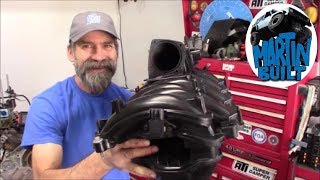
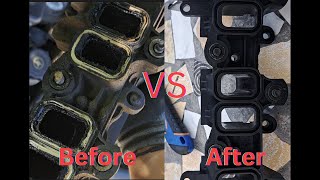
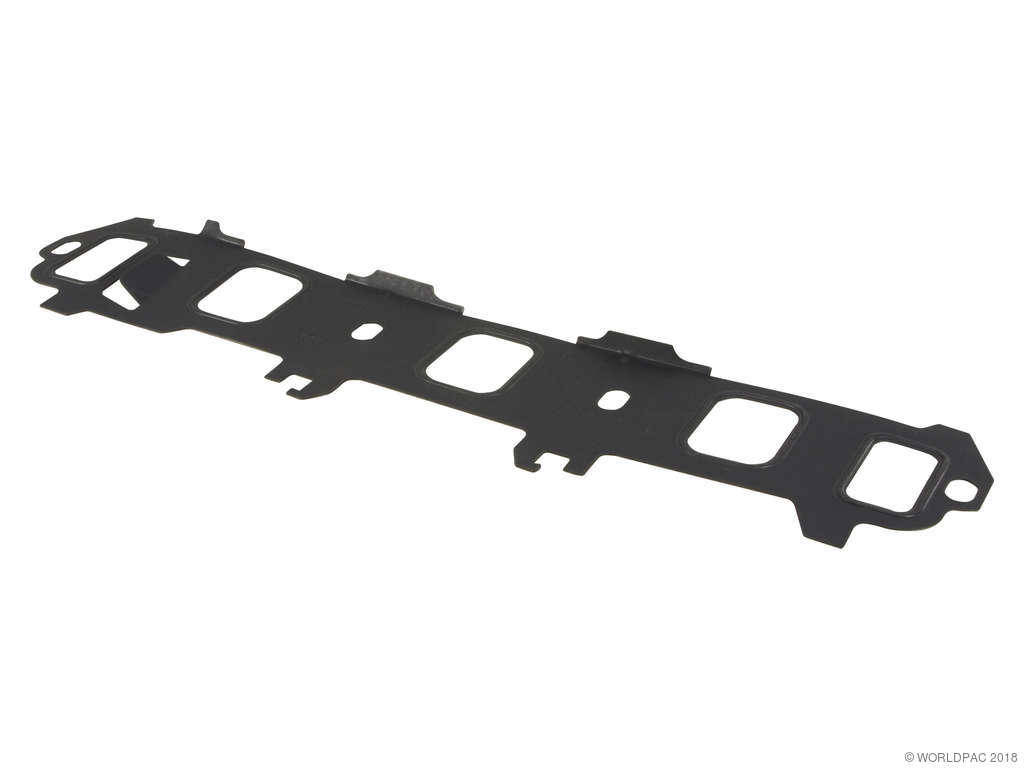
Typical fix: This is a labor-intensive repair that requires removing the upper and lower intake manifolds to manually clean the carbon deposits from the butterfly valves and intake runners. Intake manifold gaskets must be replaced during this procedure. The upper intake manifold bolts should be torqued to 89 inch-pounds. 🎬 See this walkthrough on removing the intake manifold
Est. part cost: $40-$100 (for gaskets)
Rare But Worth Checking
- Damaged Wiring or Connector: The wiring harness to the IMRC actuator can become damaged from heat or chafing against other components, causing an open or short circuit. This should be checked with a multimeter if a new actuator fails to operate.
- Powertrain Control Module (PCM) Fault: In very rare cases, the driver circuit within the PCM that controls the IMRC actuator can fail. This should only be considered after all other possibilities (mechanical, wiring) have been exhaustively ruled out.
Diagnosis Steps
- Scan for Codes: Read the trouble codes with an OBD-II scanner to confirm P1516 is present and see if any other IMRC-related codes (P1517, P1518, P1520) are stored.
- Visual Inspection: Locate the IMRC actuator on the driver's side end of the upper intake manifold. Use a flashlight and mirror to carefully inspect the actuator cable and the lever it connects to. Look for the small plastic clip/bushing. Check if it's cracked, broken, or missing, and if the cable is disconnected from the lever.
- Test Actuator Movement: Have a helper rev the engine from idle to above 3,500 RPM and back down while you watch the IMRC linkage. You should see the actuator's cable pull the lever and then release it. If there is no movement, proceed to the next steps.
- Check for Binding: Disconnect the actuator cable from the linkage (if it's still attached). Try to move the runner control lever on the manifold by hand. It should pivot smoothly. If it's stuck, the problem is internal to the manifold (carbon buildup).
- Test Electrical Circuit: If the linkage is intact and moves freely but the actuator doesn't work, check the actuator's electrical connector for damage or corrosion. Use a multimeter to verify it is receiving power and has a good ground connection when commanded on by the PCM (or during the engine rev test).
- Determine the Fault: Based on the tests, determine the point of failure. If the linkage clip is broken, replace it. If the linkage is good and moves freely but the actuator doesn't move despite having power and ground, the actuator is bad. If the manifold lever is stuck, the intake needs to be cleaned. 🎬 Watch: How to clean carbon buildup from your intake
Parts You'll Likely Need
- Intake Manifold Runner Control Linkage Clips/Bushings
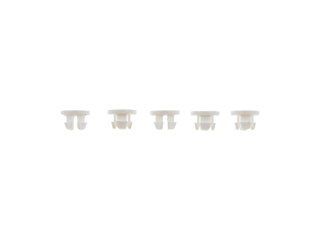
(OEM #F5RZ9F955AB)— These small plastic parts are the most common failure point, breaking due to age and heat. They are a very inexpensive fix.
Trusted brands: Dorman (P/N: 47099), Motorcraft
OEM price range: $15-$30
Aftermarket price range: $5-$20 - Intake Manifold Runner Control (IMRC) Actuator
(OEM #1F1Z-9J559-BA (example, verify by VIN))— The electric motor in the actuator can burn out or the internal gears can fail, preventing it from operating the runners.
Trusted brands: Motorcraft, Standard Motor Products (P/N: IMRC5), Dorman (P/N: 911-912)
OEM price range: $100-$200
Aftermarket price range: $50-$150
Related Codes That Often Appear With This One
- P1517 — This code is for 'IMRC Input Error (Bank 2)'. Since the Duratec V6 in the Taurus uses a single actuator for both banks, seeing this code along with P1516 is rare but could point to a more complex internal manifold or sensor issue.
- P1518 — This code means 'IMRC Stuck Open'. It often shares the same root causes as P1516, such as broken linkage or a failed actuator, and is the subject of TSB 02-15-3.
- P1520 — This is a general code for 'IMRC Control Circuit Malfunction', pointing to an electrical rather than a purely mechanical issue, such as a wiring fault or a bad actuator motor.
Technical Service Bulletins (TSBs) & Recalls
- Ford TSB 02-15-3: Issued on August 5, 2002, for 1996-1999 Ford Taurus and Mercury Sable models with the 3.0L 4V Duratec engine. It specifically addresses the MIL being illuminated with DTC P1518 (IMRC Stuck Open). This confirms a history of known issues with the IMRC system's mechanical components sticking or failing on these exact models.
Platform-Specific Known Issues
- The 3.0L Duratec V6 in this platform is specifically cited as being prone to IMRC failures due to its design, particularly the degradation of plastic components from engine heat.
Mechanic-Grade Diagnostic Values
- IMRC Actuator Connector Pinout (at harness) — expected: Black wire: Ground; Red/Yellow wire: +12V from PCM power relay; Brown wire: PCM command (pulls to 0V to activate); Orange/White wire: Position feedback signal to PCM.. Failure: Missing voltage, no command signal from PCM, or no change in feedback signal when actuator is moved indicates a wiring or PCM issue.
- IMRC Actuator Internal Position Resistors (testing a removed actuator) — expected: Similar Ford IMRC systems use two internal resistors (e.g., 127 ohms and 182 ohms). When flaps are commanded open, the PCM should see a combined parallel resistance of approximately 75 ohms.. Failure: An open reading (infinite resistance) or a reading that doesn't match the expected values for open/closed positions indicates a failed internal switch or resistor inside the actuator.
- Upper Intake Manifold Bolt Torque — expected: 89 inch-pounds. Failure: Over-tightening can crack the manifold; under-tightening can cause vacuum leaks. This is critical when servicing stuck IMRC valves.
Hidden / Shadow Codes Worth Checking
- Mode 6, Test IDs ~$81-84: While not a 'shadow code', Mode 6 data can reveal a failing IMRC system before a DTC like P1516 is set. A technician can use a capable scan tool (like FORScan) to view the results of the non-continuous monitors. For CAN-bus era Fords (later models in this range), misfire and other component tests are often under Test IDs like $81, $82, etc. The technician would look for the specific Test ID (TID) and Component ID (CID) for the IMRC monitor and check if its measured value has exceeded the manufacturer's threshold, indicating a failure even without a Check Engine Light. (see via Advanced scan tool with Mode 6 capability, such as Ford IDS or FORScan.)
Scan Tool Commands That Help
- Ford IDS (Integrated Diagnostic System): Output Test Mode / Active Command — This bidirectional control is used to command the IMRC actuator open and closed while the vehicle is in a Key On, Engine Off (KOEO) or Key On, Engine Running (KOER) state. It allows a technician to verify if the actuator motor is functional and if the position sensor feedback voltage changes accordingly, isolating the fault between the actuator, wiring, or a mechanical bind without having to rev the engine.
Wiring & Ground Locations
- G107 — Top left side of the engine compartment.. This is a primary engine compartment ground point. A poor connection here can cause a variety of electrical issues for engine sensors and actuators, including the IMRC.
- Rear Intake Manifold Bracket Stud — On the back of the engine, on the support bracket that runs from the intake manifold to the cylinder head.. On similar Duratec family engines (SHO), this stud is the location for a critical ground strap for the ignition and ECU. A missing or corroded ground here can cause erratic behavior and is an often-overlooked cause of electrical faults.
- IMRC Actuator Connector — On the IMRC actuator itself, located on the driver's side end of the intake manifold.. This 4-pin connector provides power, ground, and the command/feedback signals. Verifying +12V, ground, and the command signal from the PCM at this connector is the primary electrical diagnostic step.
Real Owner Repair Stories
- YouTube user 'bigred96' (1999 Ford Taurus 3.0L Duratec V6 with 182,000+ miles) — Hesitation, hunting for gears, general poor running.
✅ What actually fixed it The owner performed a full tune-up which required removing the upper intake manifold (plenum). He discovered the intake runners and plenum were caked with approximately 1/16" of stubborn carbon buildup. The fix involved a 4-hour cleaning process using a shop vac, STP spray cleaner, scrapers, and a die grinder with a polishing stone to clean the runners and the IMRC butterfly valves, restoring their function.
"I Checked Everything" — The Actual Cause
- A technician may perform a smoke test to check for vacuum leaks and notice a small amount of smoke escaping from where the IMRC butterfly valve shafts enter the intake manifold. According to Ford, slight leakage at this location is normal and expected, and the PCM calibration is designed to account for it. A technician might mistakenly replace the intake manifold or gaskets for this 'leak' when the actual fault lies elsewhere, such as the actuator or linkage.
OEM Part Supersession History
1S7Z-9J559-BA→3S4Z-9J559-AA— Part revision by manufacturer.
Heads up: The IMRC actuator part number has been superseded multiple times. The Pass 2 data lists 1F1Z-9J559-BA as an example. It is critical to verify the correct part number for your specific vehicle using the VIN, as different numbers may have different calibrations or physical fitment.
Model Year Variations Within This Range
- 1996-2005: No significant design changes to the fundamental IMRC system (actuator, cable, linkage, internal flaps) on the 3.0L Duratec V6 have been documented between the 3rd (1996-1999) and 4th (2000-2005) generation Taurus. The primary failure points and diagnostic procedures remain consistent across this entire model year range.
Diagnostic Flowchart
Other Known Issues on This Vehicle
Issues unrelated to this code that are worth knowing about as an owner of this generation:
- Automatic Transmission (AX4N/4F50N) Failure 🔴 High — Very common, particularly in higher mileage vehicles. Often presents as a sudden loss of forward and reverse engagement while driving. (Ref: While no specific recall covered all vehicles, the issue is widely documented. The primary failure is the stripping of the torque converter splines where they connect to the transmission pump shaft.)
- Camshaft Synchronizer Failure (OHV Vulcan Engine) 🟠 Medium — Common on the OHV Vulcan V6, not the DOHC Duratec. Typically begins as a 'chirping' or 'squeaking' noise from the engine bay, often mistaken for a bad belt or pulley. Failure can lead to stalling and no-start conditions. (Ref: Ford TSB 05-22-12 was issued for the related 3.0L Vulcan engine for a buck/jerk/miss condition caused by the synchronizer.)
- Ignition Coil Pack Failure 🟠 Medium — A common cause of misfires, rough idle, and poor acceleration. The rear bank of coils (near the firewall) is more difficult to access, requiring removal of the upper intake manifold.
- Cracked Plastic Coolant Reservoir (Degas Bottle) 🟡 Low — The plastic coolant reservoir becomes brittle with age and heat cycles, leading to hairline cracks and coolant leaks. This is a very common failure across both Duratec and Vulcan engines.
- Leaking Timing Cover Gasket (OHV Vulcan Engine) 🟠 Medium — Primarily an issue on the OHV Vulcan engine, where the timing cover gasket is prone to failing and causing significant coolant leaks from the passenger side of the engine.
Used vs. New Parts: Buying Guide for This Vehicle
When a used part is the smart pick: For the IMRC actuator, a used part is a significant gamble. Given that the failure modes include a burnout-prone electric motor and brittle internal plastic gears, a used part may have very limited life remaining. It is generally not recommended unless as a temporary, low-cost diagnostic part. For the plastic linkage clips, buying used is not logical as new parts are extremely inexpensive.
Donor-vehicle mileage cap: roughly under 50000 miles for the part to have meaningful remaining life.
What to inspect on the donor part:
- If considering a used actuator, source it from the lowest-mileage vehicle possible.
- Visually inspect the actuator for any cracks in the housing.
- Check that the cable pivot moves smoothly without binding and that the cable itself is not frayed.
- If possible, test the internal resistance of the position sensor switches before purchase to ensure they are not open-circuited.
OEM-only on this vehicle (don't cheap out):
- While not strictly 'OEM-only', the Motorcraft-branded actuator is highly recommended over aftermarket for longevity. Professional technicians often prefer installing a known-good used OEM part over a new, unproven aftermarket alternative.
Aftermarket brands forum-validated for this vehicle:
- Dorman (P/N 911-912 for the actuator, 47099 for the clips) is the most widely available aftermarket brand and is generally considered a functional replacement.
- Standard Motor Products (SMP) is another reputable aftermarket supplier for the actuator (P/N IMRC5).
Brands owners have reported issues with on this vehicle:
- While no specific brands are universally cited as 'bad' for this part, be wary of unbranded, 'white-box' parts from online marketplaces. Quality control can be non-existent, and issues like poor internal construction or incorrect electrical specifications are more common.
Real Owner Stories
Aggregated from forums and TSBs cited above. Mileages and costs reflect what owners reported in those sources.
2000 Ford Taurus 3.0L Duratec V6
Symptoms: Poor acceleration and a Check Engine Light.
What fixed it: Replaced the broken green plastic clip on the IMRC linkage using a Dorman replacement kit (47099).
Source hint: Taurus Car Club of America: IMRC repair with pics
Related OBD-II Codes
Frequently Asked Questions
Does Ford TSB 02-15-3 apply to my 1998 Taurus with the Duratec engine?
I hear a rattling noise from the driver's side of my 3.0L Duratec engine; could this be related to P1516?
Is there a specific part number for the plastic clips that frequently break on the Taurus IMRC linkage?
My Taurus is stumbling during acceleration and has a P1516 code. Could this be the transmission instead?
How do I check if the IMRC actuator itself has failed on my 2002 Taurus?
What is the torque specification for the intake manifold bolts if I have to clean carbon buildup?
Helpful Videos
We Have This Part in Stock

The information in this article is provided for general reference and educational purposes only. Vehicle specifications, procedures, and part compatibility can vary by production date, trim level, and region. Always consult your vehicle's factory service manual and verify part numbers before purchasing or performing repairs. Safety-critical components such as airbags, seat belts, and braking systems should be installed by a qualified professional.
- Ford Taurus:
- 🧭 Diagnostic Flowchart
- 🎬 Helpful Videos
- 🛍️ Shop This Part
- What's Unique About the 1996-2005 Ford Taurus
- Symptoms You May Notice
- Most Likely Causes
- Rare But Worth Checking
- Diagnosis Steps
- Parts You'll Likely Need
- Related Codes That Often Appear With This One
- Technical Service Bulletins (TSBs) & Recalls
- Platform-Specific Known Issues
- Mechanic-Grade Diagnostic Values
- Hidden / Shadow Codes Worth Checking
- Scan Tool Commands That Help
- Wiring & Ground Locations
- Real Owner Repair Stories
- "I Checked Everything" — The Actual Cause
- OEM Part Supersession History
- Model Year Variations Within This Range
- Other Known Issues on This Vehicle
- Used vs. New Parts: Buying Guide for This Vehicle
- Real Owner Stories
- 2000 Ford Taurus 3.0L Duratec V6
- Related OBD-II Codes
- Frequently Asked Questions
- 🎟️ Get 5% Off