

P1516 on 2002-2009 GMC Envoy 4.2L: Causes and Fixes for Reduced Engine Power
On a 2002-2009 GMC Envoy, code P1516 almost always means the electronic throttle body is dirty or has failed, triggering 'Reduced Engine Power' mode. The most common fix is to thoroughly clean the throttle body. If that doesn't work, inspect the wiring harness for hidden breaks near the connector. If wiring is good, replacing the entire throttle body assembly is the next step, costing between $100 for an aftermarket part and $350 for an OEM part.
- P1516 on a 4.2L Envoy will almost always put the vehicle into 'Reduced Engine Power' mode, making it unsafe for normal highway driving.
- Always start by removing and thoroughly cleaning the throttle body before buying any parts. This is the most common fix and is very inexpensive.
- If cleaning doesn't work, the next most likely solution is to replace the entire throttle body assembly. The internal sensors are not sold separately.
- A throttle relearn procedure is required after cleaning or replacing the throttle body to ensure a stable idle.
- Do not immediately suspect the gas pedal sensor; the fault is almost always located in the engine bay with the throttle body or its wiring.
What's Unique About the 2002-2009 GMC Envoy
The GMT360 platform, which includes the Envoy and Chevrolet Trailblazer, is well-known for electronic throttle body issues on the 4.2L LL8 engine. The problem is so common that most owners will encounter it. The primary culprits are heavy carbon buildup from the PCV system that causes the throttle plate to stick, failure of the non-serviceable internal electronics of the throttle body, and brittle wiring right at the throttle body connector from years of heat and vibration. Forum discussions frequently highlight the wiring as a major source of frustration, as the break can be internal to the insulation and not visually apparent.
Symptoms You May Notice
- "Reduced Engine Power" message on the dashboard
- Check Engine Light is on
- Severely limited acceleration and vehicle speed (limp mode)
- Unstable, rough, or bouncing idle
- Engine may stall when coming to a stop
- Little to no throttle response
- Butterfly plate on the throttle body audibly clicks back and forth at idle just before entering limp mode
- Replacing the Accelerator Pedal Position (APP) sensor. While part of the throttle control system, the APP sensor rarely causes the P1516 code on this platform; the issue is almost always located at the throttle body itself, its wiring, or grounds.
- Assuming a new throttle body is defective. If the code returns immediately after replacement, the root cause was likely a hidden wiring break, a bad ground, or a skipped throttle relearn procedure.
Most Likely Causes
- Dirty or Sticking Throttle Body 🔴 High Probability → Shop Fuel Injection Throttle Body The 4.2L LL8 engine's crankcase ventilation (PCV) system routes oil vapor and byproducts into the intake, causing a sticky ring of carbon to build up, which physically impedes the throttle plate's movement. This is the most common and easiest-to-fix cause.
How to confirm: Remove the intake ducting and visually inspect the throttle plate and bore for a thick, black layer of carbon buildup.
Typical fix: Remove the throttle body from the intake manifold and clean it thoroughly with dedicated throttle body cleaner and a soft brush or rag. Cleaning it while still on the vehicle is often insufficient. A throttle relearn procedure is required after cleaning. 🎬 Watch: Step-by-step guide to cleaning your throttle body
Est. part cost: $5-$15 - Damaged Wiring Harness or Connector 🔴 High Probability Engine heat and vibration cause the wires to become brittle and break internally, typically within 1-4 inches of the 8-pin connector at the throttle body. The insulation may look fine, but the copper strands inside are broken. This is a very common failure point discussed extensively in owner forums.
How to confirm: With the engine running, carefully wiggle the wiring harness near the throttle body connector. If the idle stumbles or the 'Reduced Power' message appears, it indicates an intermittent connection. A 'tug test' on each individual wire at the connector can also reveal an internal break if a wire stretches.
Typical fix: Repair the broken wire(s) or replace the connector pigtail. The standard repair is to splice in a new pigtail connector 🎬 See: How to diagnose and fix the P1516 code, such as ACDelco PT2628.
Est. part cost: $15-$40 - Failing Throttle Body Assembly 🟡 Medium Probability → Shop Fuel Injection Throttle Body The internal electronic components, including the actuator motor and the integrated Throttle Position Sensors (TPS), wear out over time. The potentiometer contacts wear down, or plastic gears can strip. These components are not sold separately. Manufacturer Bulletin #PIP4578B notes that P1516 and reduced engine power mode may be experienced on high mileage vehicles.
How to confirm: If a thorough cleaning does not resolve the code, and the wiring is confirmed to be good, the throttle body assembly itself is the most likely point of failure. A scan tool that can command the throttle open and closed can confirm if it's responding correctly.
Typical fix: Replace the entire throttle body assembly. A throttle relearn procedure must be performed after installation.
Est. part cost: $100-$350 - Poor Ground Connection ⚪ Low Probability Corrosion on chassis or engine block grounds can create intermittent electrical issues that are difficult to trace and can mimic a failing component. This is a known issue on GM trucks of this era, with grounds G103 and G104 being common culprits.
How to confirm: Inspect the main engine and chassis ground straps for looseness, fraying, or corrosion. Perform a voltage drop test on the ground circuits. This is often the cause for intermittent codes that other fixes don't solve.
Typical fix: Clean the contact points of the ground connections with a wire brush and ensure they are tight. In some cases, owners add redundant ground wires from the engine block to the firewall to ensure a good connection, sometimes even grounding the TAC module itself.
Est. part cost: $0-$20
Rare But Worth Checking
- Frozen PCV System / Throttle Body Icing: → Shop Fuel Injection Throttle Body Per TSB PIP4573B, this occurs in extremely cold temperatures (below -10°F / -23°C) where moisture in the PCV system freezes. This can cause excessive crankcase pressure and potential icing on the throttle body, which can trigger P1516, P2101, and other codes. According to Bulletin #PIP4573B, technicians may also find oil leaks from the crank seals, cam cover gasket, or dipstick in these conditions.
- Failing Powertrain Control Module (PCM): While rare, the PCM itself can fail. This should only be considered after all other possibilities (throttle body, wiring, grounds) have been exhaustively ruled out.
Diagnosis Steps
- Scan the vehicle for codes and confirm P1516 is present. Note any other related codes like P2135, P1515, or P2101.
- Visually inspect the throttle body for heavy carbon buildup. This is the most likely cause.
- Remove the throttle body from the vehicle for a thorough cleaning. Use dedicated throttle body cleaner and a soft cloth or brush to remove all carbon from the plate and bore.
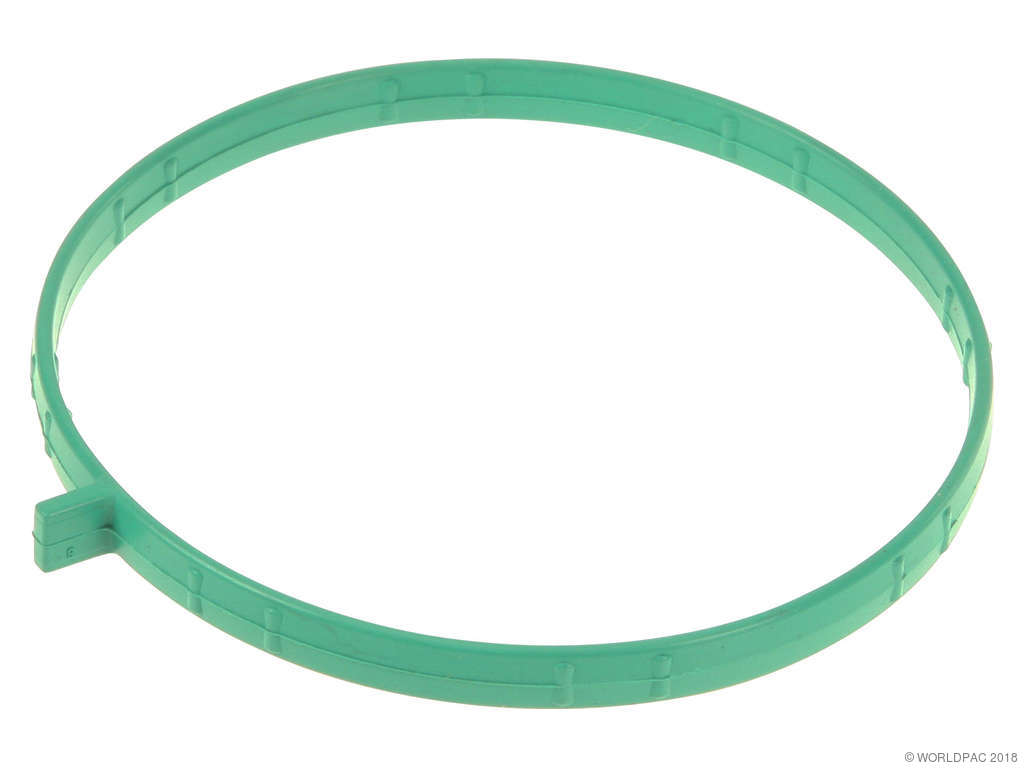
- Reinstall the throttle body with a new gasket to prevent vacuum leaks.
- Perform a throttle relearn procedure. A common method is to disconnect the battery for 30 minutes. A more reliable method per TSB PIP4578B is to start the engine and let it idle for 3 minutes, turn the engine off for 60 seconds, then restart and idle for another 3 minutes without touching the accelerator. This bulletin also notes that this procedure can address idle surge issues.
- If the code returns, inspect the wiring harness and 8-pin connector at the throttle body. With the engine idling, carefully wiggle the harness within 4 inches of the connector. If the engine stumbles or the code sets, a wiring fault is likely. Perform a 'tug test' on each wire to check for internal breaks.
- If wiring appears intact, use a multimeter to check for voltage drop on the main engine grounds (specifically G103 and G104 on GM trucks) and the ground wire at the throttle body connector. Clean, tighten, or add redundant grounds as needed.
- If wiring and grounds are confirmed good, the throttle body assembly has likely failed internally and should be replaced.
Parts You'll Likely Need
- Throttle Body Assembly
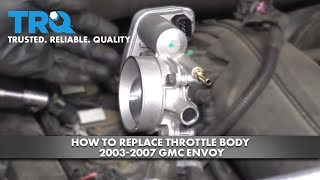
(OEM #12570800, 19420713)— This is the most common fix if a thorough cleaning and wiring check do not resolve the code. The internal sensors and motor are not sold separately. 🎬 Watch: How to replace the throttle body assembly GM part #12570800 has been superseded by #19420713.
Trusted brands: ACDelco (OEM), Hitachi (ETB0024), Bosch, Dorman
OEM price range: $250-$400
Aftermarket price range: $100-$200 - Throttle Body Connector Pigtail
(OEM #PT2628)— If the wiring is found to be broken or damaged at the connector, replacing this 8-pin pigtail is the standard repair. It is a well-documented failure point.
Trusted brands: ACDelco (GM Genuine), Dorman (645-203)
OEM price range: $30-$50
Aftermarket price range: $15-$30 - Throttle Body Cleaner — This is required for the first and easiest troubleshooting step: cleaning the throttle plate and bore.
Trusted brands: CRC, Gumout, Berryman
Aftermarket price range: $5-$15
Related Codes That Often Appear With This One
- P2135 — This code for 'Throttle/Pedal Position Sensor/Switch A/B Voltage Correlation' is very common with P1516 as it points directly to an electrical failure of the sensors inside the same throttle body assembly.
- P1515 — This is a similar GM-specific code for 'Control Module Throttle Actuator Position Performance'. They often appear together and point to the exact same set of problems with the throttle body or its wiring.
- P2101 — This code for 'Throttle Actuator Control Motor Circuit Range/Performance' is also frequently seen with P1516, as both indicate a performance issue with the throttle body's electronic control system. TSBs often group these codes together.
Technical Service Bulletins (TSBs) & Recalls
- PIP4573B — Diagnostic tips for SES light with DTCs P1516, P2101, P2119, and/or P2176 when ambient temperature is colder than -10°F (-23°C). Attributes the cause to a frozen PCV system creating excessive crankcase pressure or throttle body icing. Affects all GMT360s with the inline engines.
- PIP4578B — Addresses idle surge, reduced engine power mode, and DTCs including P1516, P0068, and P2101, particularly on high mileage vehicles.
- 01012004 (NHTSA 10009584) — Addresses a service engine soon light and reduced engine power with DTC P1516, possibly accompanied by P0120, P0220, P1514, P1515, P1518, and P2135. Points towards issues within the electronic throttle control system.
- PI0746B (and successors) — While for different engines, this TSB for other GM vehicles also mentions P1516 in conjunction with cold weather operation and PCV issues, showing a pattern in GM's diagnostic approach to this code.
Mechanic-Grade Diagnostic Values
- Throttle Actuator Control (TAC) Motor Resistance — expected: 2 to 13 Ohms. Failure: A reading below 1 Ohm (short) or OL/infinity (open) indicates a failed motor. Test across pins E (Yellow) and F (Brown) on the throttle body.
- Throttle Position Sensor 1 (TPS1) Internal Resistance — expected: Approximately 3.0 kOhms. Failure: A reading of 0 Ohms or OL (open circuit) indicates a failed sensor. Test across pins C and G on the throttle body.
- Throttle Position Sensor 2 (TPS2) Resistance Sweep — expected: Smoothly changes from ~2.4 kOhms (closed throttle) to ~1.0 kOhms (wide-open throttle).. Failure: Jumpy, erratic, or static readings when moving the throttle plate indicate a failed sensor. Test across pins B and D on the throttle body.
- 5-Volt Reference at Throttle Body Connector — expected: 4.8V to 5.2V with key on, engine off.. Failure: Voltage below 4.8V or absent points to a wiring issue, a PCM problem, or a short in another sensor on the same 5V circuit (like the fan clutch).
- Ground Circuit Voltage Drop — expected: Less than 0.1V (100mV). Failure: Voltage drop greater than 0.1V between the ground point (e.g., G103/G104) and the battery negative terminal indicates a poor ground connection that needs cleaning or repair.
Scan Tool Commands That Help
- GM Tech2 / GDS2: TAC System Test / Throttle Position Sweep Test — This bidirectional control commands the throttle plate to sweep from open to closed with the engine off. It is used to verify if the motor responds correctly and to watch live data for sensor dropouts or sticking points, separating a mechanical bind from an electrical failure.
- GM Tech2 / GDS2: Throttle/Idle Learn — This function is mandatory after cleaning or replacing the throttle body. It resets the learned idle and throttle range values stored in the PCM to prevent high idle, stalling, or setting new codes like P2176.
Wiring & Ground Locations
- Throttle Body 8-Pin Connector — Directly on the electronic throttle body at the front of the engine.. This is the single connection point for the actuator motor and both TPS sensors. Pinout: A=TPS2 Signal, B=5V Ref (TPS2), C=Low Ref (TPS1), D=TPS1 Signal, E=TAC Motor Ctrl (Yellow), F=TAC Motor Ctrl (Brown), G=5V Ref (TPS1), H=Low Ref (TPS2).
- G104 — On the back of the driver's side (left) cylinder head.. This is a primary engine ground. Corrosion or looseness here is a notorious cause of intermittent P1516 and other electrical faults that seem to have no cause. It is difficult to access.
- G103 — On the cowl in the left rear of the engine compartment, often above the brake booster.. This is a critical body and module ground. A poor connection here can affect the PCM and TAC module communication, directly leading to P1516.
Real Owner Repair Stories
- Tahoe Yukon Forum / YouTube Commenters (2003-2006 GM Trucks (Silverado/Tahoe/Envoy platform)) — Persistent, intermittent 'Reduced Engine Power' with P1516, especially after hitting bumps or after the vehicle warms up.
❌ Tried (didn't work) Replacing the throttle body (sometimes multiple times), Replacing the throttle body connector pigtail, Replacing the TAC module, Replacing the accelerator pedal assembly
✅ What actually fixed it Adding new, redundant ground wires. The most successful combination was running a 10-gauge wire from the engine block (e.g., alternator bracket) to the firewall, and another from the TAC module bracket to the firewall. This bypasses the corroded and hard-to-reach factory grounds (G104) at the back of the engine. - GM Forum User (2006 GMC Sierra 2500HD 6.0L) — P1516, P2135, P0220 would set only when coming to a stop or at idle. Drove fine otherwise. Throttle plate audibly clicked back and forth at idle just before limp mode.
❌ Tried (didn't work) Cleaning the throttle body, Replacing the TPS sensor on the side of the throttle body, Performing a throttle relearn
✅ What actually fixed it Replacing the entire throttle body assembly permanently fixed the issue. This indicates an internal electronic failure of the unit that cleaning could not resolve.
"I Checked Everything" — The Actual Cause
- A user reported chasing P1516 and pedal sensor codes after all common electrical checks passed. The actual root cause was a deteriorated PCV hose under the air intake housing. This created a large, unmetered vacuum leak that the PCM could not reconcile with the throttle position, causing it to incorrectly flag a throttle performance fault.
When the Usual Fixes Don't Work
- In many documented cases, replacing the throttle body and connector pigtail does not fix a persistent, intermittent P1516. The ultimate cause is frequently traced back to poor engine grounds, specifically G104 at the rear of the cylinder head. The most effective, long-term repair for these stubborn cases is not another part replacement, but adding new, dedicated ground straps from the engine block and TAC module directly to the firewall or chassis, bypassing the faulty factory ground path entirely.
OEM Part Supersession History
12570800→19420713— Standard part number update and potential minor revisions by the manufacturer.
Model Year Variations Within This Range
- 2002-2009: No significant design changes affecting this fault were made during the 2002-2009 production run for the 4.2L LL8 engine. The causes, parts, and diagnostic procedures are consistent across all years. One anecdotal report suggests GM may have used slightly thicker gauge wires in the pedal/TAC harness on 2004+ models, but this is not officially documented.
Diagnostic Flowchart
Other Known Issues on This Vehicle
Issues unrelated to this code that are worth knowing about as an owner of this generation:
- Cracked Exhaust Manifold 🟠 Medium — Common on higher mileage vehicles, especially 2002-2005 models. Often presents as a ticking noise when cold that may disappear as the engine warms up. (Ref: Special Coverage Adjustment 11220 for 2008-2009 models, but the issue is prevalent across all years.)
- Failing Instrument Cluster 🟡 Low — Very common across all years. Gauges (speedometer, tach, etc.) become erratic, get stuck, or stop working entirely due to failed stepper motors on the circuit board. (Ref: Numerous repair services exist due to the high failure rate.)
- Faulty Fan Clutch 🟠 Medium — A frequent failure item. The electronically controlled fan clutch can fail, leading to a loud 'jet engine' roar at all times or, conversely, a failure to engage, causing overheating at idle.
- Worn Camshaft Position Actuator Solenoid 🟠 Medium — Extremely common cause for codes like P0014 or P0017. The solenoid gets clogged with oil sludge or its screen tears, causing rough idle, stalling, and poor performance. (Ref: TSB PIP4581B, PIP3694F relate to similar timing-related issues.)
- 4WD System Malfunctions 🟠 Medium — Common issues include a faulty front axle disconnect actuator or a failing transfer case encoder motor, leading to the 'Service 4WD' light and inability to switch between 2WD/4WD modes.
- Failed Ignition Coils 🟡 Low — Misfires due to failing ignition coils are a common tune-up related issue, often causing a rough idle and setting codes like P0300-P0306.
Used vs. New Parts: Buying Guide for This Vehicle
When a used part is the smart pick: A used OEM (ACDelco) throttle body from a low-mileage donor vehicle can be a cost-effective alternative to a new unit, especially when compared to notoriously problematic cheap aftermarket parts. Given the high failure rate, this is a common junkyard-sourced part.
Donor-vehicle mileage cap: roughly under 100000 miles for the part to have meaningful remaining life.
What to inspect on the donor part:
- Check the donor vehicle's mileage if possible; lower is better.
- Visually inspect the throttle bore. A relatively clean bore may indicate a well-maintained engine.
- Bring a multimeter. Test the TAC motor resistance across pins E and F; a reading between 2-13 Ohms is a good sign.
- Ensure the 8-pin electrical connector and the pins themselves are straight, clean, and free of any green or white corrosion.
OEM-only on this vehicle (don't cheap out):
- Throttle Body Assembly - While not strictly 'OEM-only', forum consensus strongly advises against cheap, unbranded aftermarket units. They are known to have incorrect sensor calibrations that can cause the P1516 code to return immediately. Stick with OEM ACDelco or the OEM supplier, Hitachi.
Aftermarket brands forum-validated for this vehicle:
- Hitachi (Part #ETB0024) - Hitachi is the original equipment manufacturer for GM for this part, so their branded part is considered equivalent to OEM ACDelco.
Brands owners have reported issues with on this vehicle:
- Unbranded or 'white box' throttle bodies from online marketplaces. Owners frequently report these parts failing quickly or not working correctly out of the box, leading to wasted time and money.
Real Owner Stories
Aggregated from forums and TSBs cited above. Mileages and costs reflect what owners reported in those sources.
2006 GMC Envoy 4.2L I6
Symptoms: The vehicle entered limp mode with a 'Reduced Engine Power' message. The owner noticed the butterfly plate on the throttle body audibly clicking back and forth at idle just before the error occurred.
What fixed it: The owner diagnosed a wiring harness break near the 8-pin connector. Repairing the broken wires near the throttle body resolved the P1516 code.
Source hint: GMTNation: SOLVED: P1516 06 4.2 ls trailblazer
2006 Chevrolet Silverado (GM Truck Platform)
Symptoms: Service engine soon light and reduced engine power occurring specifically at idle.
What fixed it: Inspection revealed broken wires inside the insulation within 4 inches of the throttle body connector and issues with grounds G103 and G104.
Source hint: GM Forum: P1516 code
2002-2009 GMC Envoy/Yukon Platform
Symptoms: Persistent 'Reduced Engine Power' message and P1516 code that remained even after parts were replaced.
What fixed it: The owner cleaned the contact points of the ground connections and added redundant ground wires from the firewall to the engine block and the TAC module.
Source hint: Tahoe Yukon Forum: Solution to Reduced Engine Power Message and p1516. Look Here
2002-2009 GM Truck/SUV
Symptoms: P1516 code and reduced power mode.
What fixed it: Performed a 'tug test' on the brown and yellow wires at the throttle body connector, which revealed internal copper breaks despite the insulation appearing intact.
Source hint: PerformanceTrucks.net Forums: P1516 Code, New Throttle Body?
Related OBD-II Codes
Frequently Asked Questions
My 2006 Envoy is showing 'Reduced Engine Power' in extremely cold weather. Is there a specific TSB for this?
I've heard the wiring near the throttle body is a common failure point on the 4.2L LL8. How do I check it?
Which specific ground points should I check on my GMC Envoy to resolve intermittent P1516 codes?
Is there a specific replacement pigtail for the throttle body connector on the 2002-2009 Envoy?
What is the correct throttle relearn procedure for the 4.2L I6 after I clean the throttle body?
Why does the 4.2L LL8 engine require such frequent throttle body cleaning?
Helpful Videos


Used OEM Parts in Stock
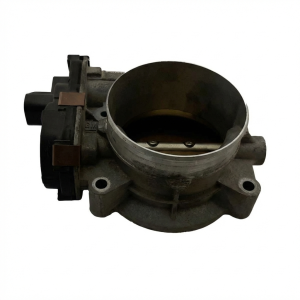
New Aftermarket Parts Available




The information in this article is provided for general reference and educational purposes only. Vehicle specifications, procedures, and part compatibility can vary by production date, trim level, and region. Always consult your vehicle's factory service manual and verify part numbers before purchasing or performing repairs. Safety-critical components such as airbags, seat belts, and braking systems should be installed by a qualified professional.
- GMC Envoy:
- 🧭 Diagnostic Flowchart
- 🎬 Helpful Videos
- 🛍️ Shop This Part
- What's Unique About the 2002-2009 GMC Envoy
- Symptoms You May Notice
- Most Likely Causes
- Rare But Worth Checking
- Diagnosis Steps
- Parts You'll Likely Need
- Related Codes That Often Appear With This One
- Technical Service Bulletins (TSBs) & Recalls
- Mechanic-Grade Diagnostic Values
- Scan Tool Commands That Help
- Wiring & Ground Locations
- Real Owner Repair Stories
- "I Checked Everything" — The Actual Cause
- When the Usual Fixes Don't Work
- OEM Part Supersession History
- Model Year Variations Within This Range
- Other Known Issues on This Vehicle
- Used vs. New Parts: Buying Guide for This Vehicle
- Real Owner Stories
- 2006 GMC Envoy 4.2L I6
- 2006 Chevrolet Silverado (GM Truck Platform)
- 2002-2009 GMC Envoy/Yukon Platform
- 2002-2009 GM Truck/SUV
- Related OBD-II Codes
- Frequently Asked Questions
- 🎟️ Get 5% Off