

P1530 on 2012-2016 Porsche Cayman: Camshaft Adjustment Fault Causes and Fixes
On a 2012-2016 Porsche Cayman (981), code P1530 almost always points to a faulty Bank 1 camshaft adjustment solenoid (VarioCam actuator). Before replacing parts, check your engine oil level and condition. The solenoid itself costs between $250 and $700, and replacement is a moderately difficult DIY.
- P1530 on a 981 Cayman means there's a problem with the camshaft timing adjustment on Bank 1.
- The most likely cause is a bad camshaft adjustment solenoid (VarioCam actuator).
- Always check your engine oil level and quality first, as low or dirty oil is a common cause of this fault.
- The best DIY diagnostic is to swap the solenoids between Bank 1 and Bank 2 to see if the fault code follows the part.
What's Unique About the 2012-2016 Porsche Cayman
The 2012-2016 Porsche Cayman belongs to the 981 generation, which uses a flat-six 9A1 engine with the VarioCam variable valve timing system. This system is hydraulically operated and relies on precise oil pressure to function. Unlike on some other makes where this code number can refer to A/C or other systems, on a modern Porsche, it is almost exclusively related to this camshaft adjustment function. The location of the actuators on the front of the cylinder heads 🎬 Watch: Locate the VarioCam actuators and other engine components, near the hot exhaust manifolds, can also make the wiring harnesses susceptible to heat damage over time.
Symptoms You May Notice
- Check Engine Light is on
- Slightly rough or unstable idle, particularly when warm
- Noticeable loss of power, especially at certain RPMs or under load
- Reduced fuel economy
- Hesitation or stumbling during acceleration
- Replacing spark plugs and ignition coils. While a timing fault can cause misfires, the root cause is the timing adjustment, not the ignition system. Address P1530 first.
Most Likely Causes
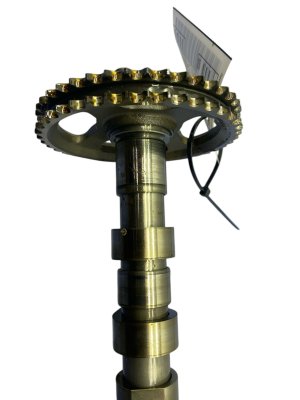
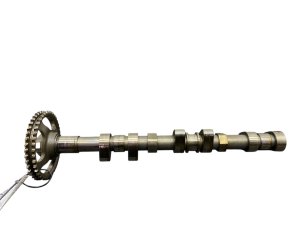
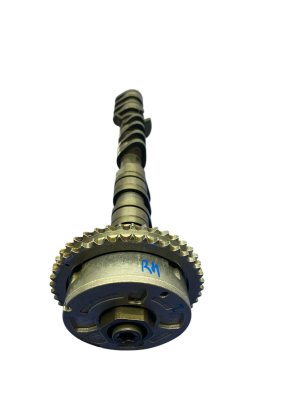
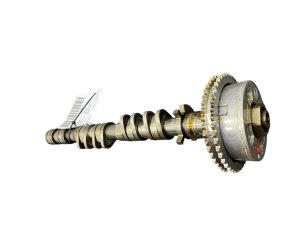
- Faulty Camshaft Adjustment Solenoid (VarioCam Actuator) 🔴 High Probability → Shop Engine Camshaft This solenoid is an electro-hydraulic part that constantly works while the engine is running. It can fail electrically or become mechanically stuck from oil contaminants or simple wear and tear. It is the most common point of failure for this code.
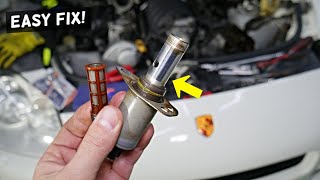
How to confirm: Swap the Bank 1 and Bank 2 solenoids. Clear the codes and drive the car. If the fault code changes to P1531 (Camshaft Adjustment, Bank 2), the solenoid is bad. You can also test the solenoid's resistance (should be around 10-15 Ohms) or use a Porsche-specific scan tool (like a PIWIS or Durametric) to activate it and watch for a change in engine behavior 🎬 See how to test and clean your VVT solenoid or cam deviation angles.
Typical fix: Replace the faulty camshaft adjustment solenoid for Bank 1.
Est. part cost: $250-$700 - Low, Dirty, or Incorrect Viscosity Engine Oil 🟡 Medium Probability The VarioCam system is hydraulic and extremely sensitive to oil pressure and cleanliness. Sludge or using oil that is too thick or thin can prevent the solenoid from operating correctly or clog its internal passages.
How to confirm: Check the oil level via the electronic dash display. Review service records to ensure the correct Porsche-approved A40 specification oil was used at the last oil change. Inspect the oil for signs of sludge or contamination.
Typical fix: Perform an oil and filter change using a Porsche-approved oil (e.g., Mobil 1 0W-40 or other A40-spec oil). Clear the codes and see if the fault returns.
Est. part cost: $100-$200 - Wiring Harness Damage ⚪ Low Probability The wiring for the solenoid is located near the exhaust manifold and can become brittle, frayed, or melted from heat over time, causing a short or open circuit.
How to confirm: Unplug the connector at the solenoid and inspect it for corrosion or damage. Carefully trace the wiring harness back as far as possible, looking for any signs of melting, chafing, or breaks. Check for continuity and shorts to ground with a multimeter.
Typical fix: Repair the damaged section of the wiring harness and secure it away from heat sources. Replace the connector if it is damaged.
Est. part cost: $10-$100
Rare But Worth Checking
- Sticking Mechanical Camshaft Actuator: → Shop Engine Camshaft This is the actual gear mechanism on the end of the camshaft, not the solenoid that controls it. A Rennlist forum user found the internal plunger was stiff and discovered debris from a degraded internal green O-ring, which caused the actuator to stick. This is a much more labor-intensive repair and should only be considered after the solenoid and wiring have been ruled out.
- Faulty DME (Engine Computer) Driver: In very rare cases, the transistor within the DME that provides the ground signal to the solenoid can fail, often getting stuck 'on' or 'off'. This requires advanced electronic diagnosis and either DME repair by a specialist (like ECU Doctors) or replacement.
Diagnosis Steps
- Read the fault codes with a Porsche-compatible OBD-II scanner to confirm P1530 is the primary code.
- Check the engine oil level and condition. Ensure it is full, clean, and of the correct Porsche A40 specification. If in doubt, change the oil and filter.
- Clear the codes and perform a spirited drive to see if the code returns. Sometimes, increased oil pressure and temperature can free a temporarily stuck solenoid.
- If the code returns, locate the camshaft adjustment solenoids on both banks of the engine. They are on the front of the cylinder heads, accessible after removing the wheel and fender liner.
- Inspect the electrical connector and wiring to the Bank 1 solenoid for any signs of heat damage, corrosion, or breaks.
- The most effective diagnostic step is to swap the solenoids between Bank 1 and Bank 2. They are identical parts. Mark them before removal to track the faulty one.
- Clear the codes again and drive the vehicle. If the code changes to P1531 (Bank 2), you have confirmed the solenoid you moved is faulty and needs replacement.
- If the P1530 code returns, the problem lies in the wiring to Bank 1 or, more rarely, the mechanical actuator or the DME itself. Advanced diagnostics with a tool like Durametric to monitor camshaft deviation angles would be the next step.
Parts You'll Likely Need
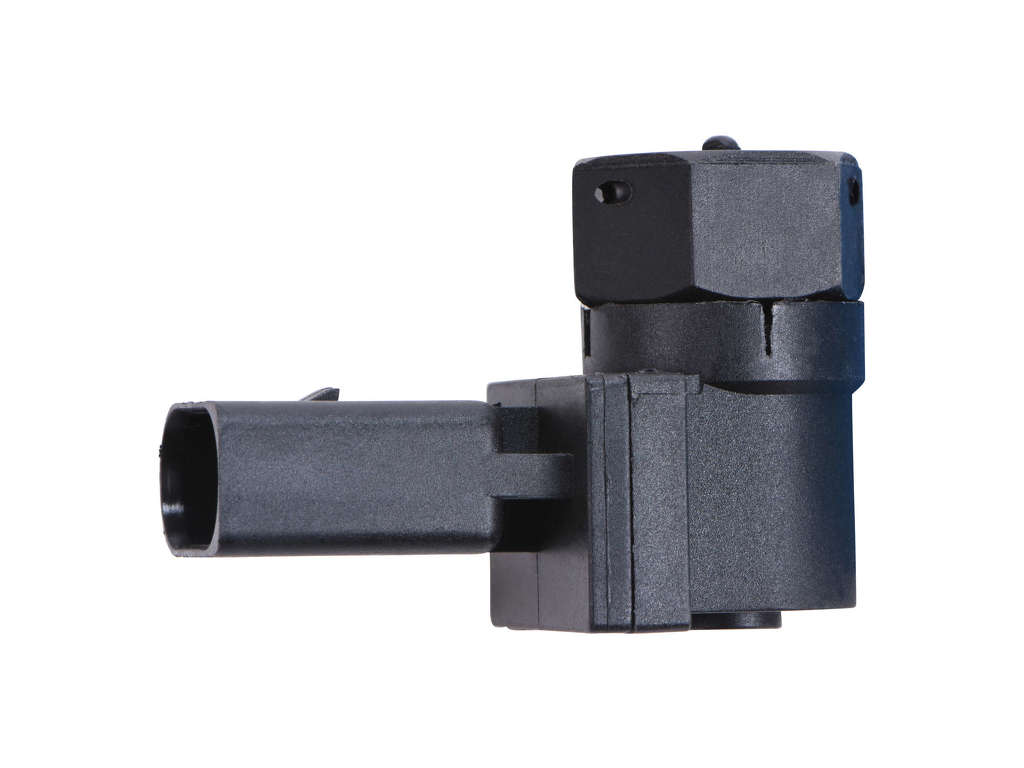
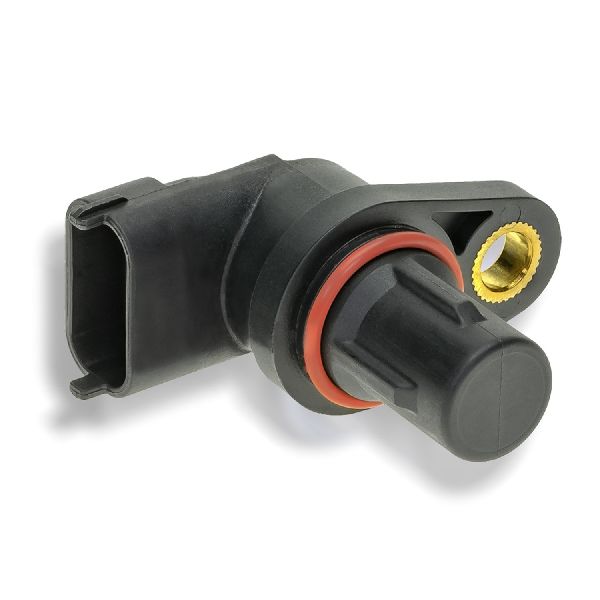
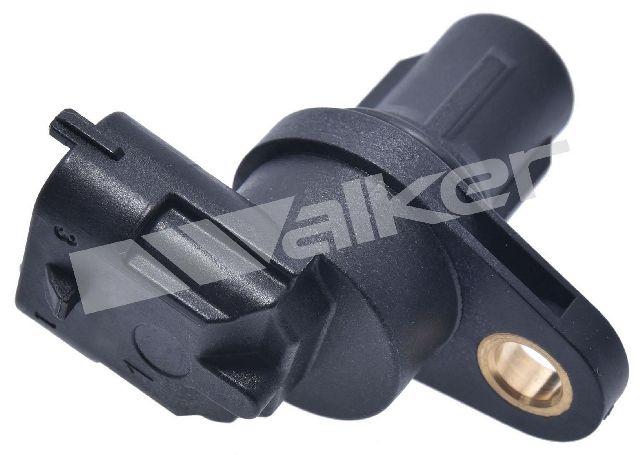
- Camshaft Adjustment Solenoid / VarioCam Actuator Valve
(OEM #9A110530803)— This is the most common failure point for the P1530 code. It is an electro-hydraulic valve that controls oil flow to the mechanical camshaft adjuster. The part number 9A1-105-308-03 supersedes the earlier 9A1-105-308-02.
Trusted brands: Porsche (OEM)
OEM price range: $240-$450
Aftermarket price range: $125-$250
Related Codes That Often Appear With This One
- P1531 — This is the identical fault but for Bank 2. Seeing both P1530 and P1531 together could point to a systemic issue like old/improper oil rather than two simultaneous hardware failures.
- P1340 — This code for 'Timing Chain Out of Position' can sometimes appear with P1530, indicating the electrical fault with the actuator has resulted in a detectable mechanical timing deviation.
- P1313, P1314, P1315 — These are misfire codes for cylinders 1, 2, and 3 (Bank 1). They are a direct symptom of the incorrect camshaft timing on that bank caused by the P1530 fault. The DME logs these when the timing deviation disrupts stable combustion. 🎬 Watch: Diagnosing a Porsche Cayman misfire and timing issue
Technical Service Bulletins (TSBs) & Recalls
- Porsche Workshop Manual (WM) 155555: 'Removing and installing solenoid valve for camshaft adjustment'. This document provides the official procedure, including torque specifications, for replacing the VarioCam solenoid.
Mechanic-Grade Diagnostic Values
- Camshaft Adjustment Solenoid Resistance — expected: 10 - 15 Ohms. Failure: A reading significantly outside this range, or 'OL' (Open Loop), indicates a failed solenoid.
- Solenoid Connector Voltage (Key On, Engine Off) — expected: Pin 1 (Supply): ~12V. Pin 2 (Signal): ~3.3V.. Failure: No voltage on Pin 1 points to a power supply issue. Incorrect voltage on Pin 2 could indicate a wiring or DME issue.
- Solenoid Connector Voltage (During Scan Tool Activation) — expected: Pin 2 (Signal) should be pulled to ground (0V) by the DME when the solenoid is commanded ON.. Failure: If the voltage on Pin 2 does not change when activated by a scan tool, it points to a problem with the DME driver or the wiring.
- Camshaft Deviation Angle (Live Data at Idle) — expected: Between -6.0 and +6.0 degrees.. Failure: A value consistently outside this range at idle indicates a timing problem. A value that doesn't change when the solenoid is activated points to a mechanical or hydraulic issue.
- Engine Oil Pressure (at Idle, Operating Temp) — expected: At least 1.4 ± 0.6 bar (approx. 12-29 PSI).. Failure: Pressure below this minimum can prevent the hydraulic VarioCam system from functioning correctly, triggering timing faults.
Hidden / Shadow Codes Worth Checking
- Scanner Discrepancy: Some non-OEM scanners may report conflicting information. One owner reported a Foxwell scanner showed P1530 in generic OBD-II mode but P1531 (Bank 2) when using the Porsche-specific software module, causing confusion. This highlights the importance of using a reliable, Porsche-aware tool. (see via Occurs with multi-function scanners that have both generic and manufacturer-specific modes.)
Scan Tool Commands That Help
- Durametric or PIWIS: Activations -> Camshaft adjustment bank 1 — This is a critical diagnostic step. Use this command with the engine at idle to manually trigger the solenoid. A healthy system will result in a dramatic change in engine sound, a rough idle, or even stalling. If there is no change, it confirms a fault in the solenoid, wiring, or mechanical actuator.
- Durametric or PIWIS: Actual Values -> Camshaft deviation bank 1 — Monitor this live data while performing the activation test. You should see the deviation angle change significantly when the solenoid is activated. If the angle does not change, but the solenoid clicks, the problem is likely mechanical (stuck actuator) or hydraulic (oil pressure).
Wiring & Ground Locations
- Solenoid Connector Pin 1 — The 2-pin electrical connector on the Bank 1 VarioCam solenoid, located on the front of the cylinder head.. This is the 12V+ power supply pin. A voltage test here confirms if the solenoid is receiving power from the vehicle's electrical system.
- Solenoid Connector Pin 2 — The 2-pin electrical connector on the Bank 1 VarioCam solenoid.. This is the signal wire that the DME pulls to ground to activate the solenoid. Testing this pin during scan tool activation confirms if the DME is sending the command signal.
Real Owner Repair Stories
- Rennlist user 'kbatl' (1999 Porsche 911 (996), engine architecture and VarioCam system are precursors to the 9A1.) — Rough idle, CEL with code P1530. Also saw P1340 (Timing chain out of position) initially.
❌ Tried (didn't work) Replacing the Bank 1 VarioCam solenoid. The P1530 code returned., Performing a LiquiMoly engine flush to try and free any sticking parts.
✅ What actually fixed it The mechanical camshaft actuator on Bank 1 was replaced. Upon disassembly, the user found the actuator's internal plunger was very stiff and discovered pieces of a degraded green internal O-ring that had caused it to jam. This was the root cause, preventing the new solenoid from being able to adjust timing.
"I Checked Everything" — The Actual Cause
- The diagnostic equivalent of a 'smoke test' for this code is swapping the solenoids between banks. In a high-value case from Rennlist, a user did this (and even replaced the solenoid) but the P1530 fault remained on Bank 1. The actual cause was not the solenoid or wiring, but a mechanically seized camshaft actuator. The failure was only found by using a Durametric tool to observe that the camshaft deviation angle failed to change when the new solenoid was activated, pointing to a mechanical blockage.
OEM Part Supersession History
9A1-105-308-02→9A1-105-308-03— Standard part revision, likely for improved reliability or manufacturing process.
Diagnostic Flowchart
Other Known Issues on This Vehicle
Issues unrelated to this code that are worth knowing about as an owner of this generation:
- Door Panel Warping / Delamination 🟠 Medium — Extremely common, especially in cars exposed to heat and sun. The adhesive fails, causing the leather or vinyl to lift and bubble away from the door card.
- Sagging Headliner 🟠 Medium — Very common issue where the foam-backed fabric separates from the headliner shell due to adhesive failure, similar to the door panels.
- High-Pressure Fuel Pump (HPFP) Failure 🟠 Medium — A known weak point on the 9A1 direct-injection engine. Failure can lead to long crank times, stumbling, hesitation, and loss of power.
- Water Pump Failure 🔴 High — Water pumps can fail, leading to coolant leaks and potential engine overheating. It is often recommended as a preventative replacement item.
- AC Condenser Leaks 🟡 Low — The front-mounted condensers are vulnerable to debris and corrosion, which can cause refrigerant leaks and loss of A/C function over time.
Used vs. New Parts: Buying Guide for This Vehicle
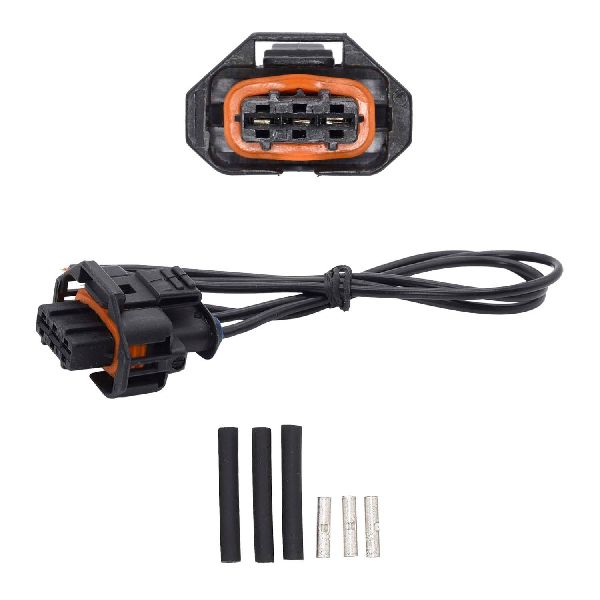
When a used part is the smart pick: For this repair, a used part is only advisable for the electrical connector pigtail if the original is damaged. Due to the high failure rate and critical engine function, used solenoids or mechanical actuators are not recommended.
Donor-vehicle mileage cap: roughly under 50000 miles for the part to have meaningful remaining life.
What to inspect on the donor part:
- For a connector pigtail, ensure the wiring is flexible with no signs of cracking, melting, or brittleness.
- Ensure the locking tab on the connector is intact and functional.
OEM-only on this vehicle (don't cheap out):
- Camshaft Adjustment Solenoid (VarioCam Actuator)
- Mechanical Camshaft Actuator
Brands owners have reported issues with on this vehicle:
- While cheaper aftermarket solenoids exist, forums generally advise against them for this critical component, as failures can lead to repeated, labor-intensive repairs. Sticking with Genuine Porsche is the safest bet.
Real Owner Stories
Aggregated from forums and TSBs cited above. Mileages and costs reflect what owners reported in those sources.
2015 Cayman — 35000 miles
Symptoms: The Check Engine Light came on with a 'P1530 Camshaft Adjustment Bank 1 fault'.
What fixed it: The owner did not report the final fix. An expert on the forum suggested checking if the triggering wire was shorted to ground or if the actuator itself was bad, as these were the likely causes if the wiring harness was intact.
Source hint: The Porsche Club of America - Tech Q&A - 2015 Cayman With P1530 Camshaft Adjustment Bank 1 Fault.
Porsche 911 (991.1)
Symptoms: Vehicle was throwing a P1530 code. The owner replaced the VarioCam solenoid for Bank 1, but the code returned, indicating the solenoid was not the root cause.
What fixed it: After further diagnosis, the problem was found to be the mechanical camshaft actuator itself. A degraded internal O-ring within the actuator had failed, preventing it from functioning correctly.
Source hint: Rennlist - 'Cam Solonoid P1530'
Related OBD-II Codes
Frequently Asked Questions
What is the most common and effective way to confirm the VarioCam solenoid is bad on my 2012-2016 Cayman?
I just got a P1530 code. Should I try changing the oil before replacing any parts?
Where is the Bank 1 camshaft adjustment solenoid located on my 981 Cayman?
Is there an official Porsche procedure I can reference for replacing the VarioCam solenoid?
I have a 2014 Porsche Boxster with a P1530 code. Is the information in this article applicable?
What resistance reading should I expect from a healthy camshaft adjustment solenoid on my Cayman?
Helpful Videos
Used OEM Parts in Stock
New Aftermarket Parts Available


The information in this article is provided for general reference and educational purposes only. Vehicle specifications, procedures, and part compatibility can vary by production date, trim level, and region. Always consult your vehicle's factory service manual and verify part numbers before purchasing or performing repairs. Safety-critical components such as airbags, seat belts, and braking systems should be installed by a qualified professional.
- Porsche Cayman:
- 🧭 Diagnostic Flowchart
- 🎬 Helpful Videos
- 🛍️ Shop This Part
- What's Unique About the 2012-2016 Porsche Cayman
- Symptoms You May Notice
- Most Likely Causes
- Rare But Worth Checking
- Diagnosis Steps
- Parts You'll Likely Need
- Related Codes That Often Appear With This One
- Technical Service Bulletins (TSBs) & Recalls
- Mechanic-Grade Diagnostic Values
- Hidden / Shadow Codes Worth Checking
- Scan Tool Commands That Help
- Wiring & Ground Locations
- Real Owner Repair Stories
- "I Checked Everything" — The Actual Cause
- OEM Part Supersession History
- Other Known Issues on This Vehicle
- Used vs. New Parts: Buying Guide for This Vehicle
- Real Owner Stories
- 2015 Cayman — 35000 miles
- Porsche 911 (991.1)
- Related OBD-II Codes
- Frequently Asked Questions
- 🎟️ Get 5% Off