

P1604 on 2010-2015 Toyota Prius: Startability Malfunction Causes and Fixes
On a 2010-2015 Toyota Prius, code P1604 almost always means the 12V auxiliary battery is weak or has failed. The car will fail to enter 'READY' mode. Replacing the 12V AGM battery in the trunk is the most common fix, costing around $200-$280 for a quality replacement.
- P1604 on a Gen 3 Prius means the car failed to enter 'READY' mode.
- Before suspecting expensive hybrid components, test the 12V auxiliary battery in the trunk. It is the cause over 90% of the time.
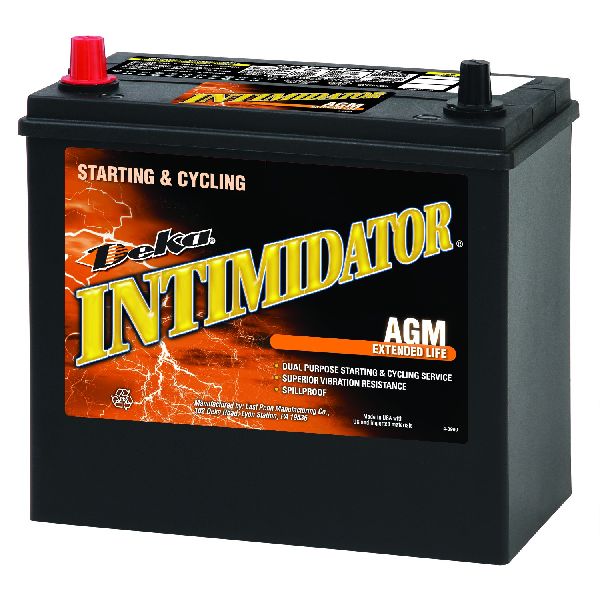
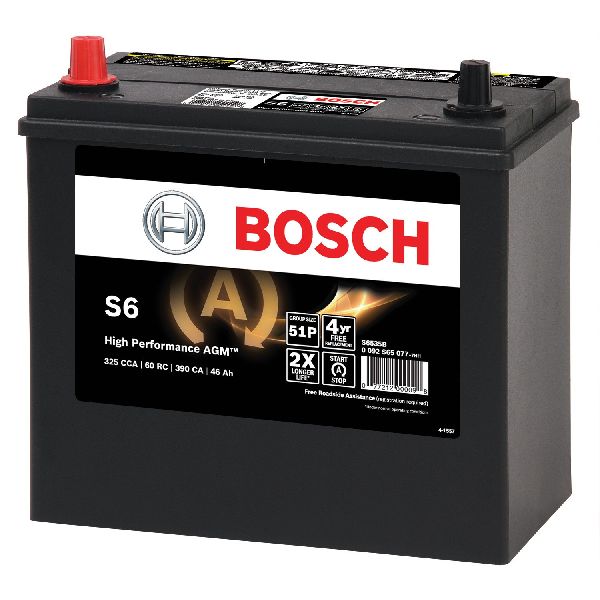
- Ensure any replacement 12V battery is an AGM type, group size S46B24R, and has the correct 'pencil post' terminals and a vent port.
- Diagnosis is straightforward: check the 12V battery, its connections, and the brake light switch before moving to more complex systems.
- Running out of fuel can also trigger a P1604 code, so check the gas gauge before assuming a complex electrical fault.
What's Unique About the 2010-2015 Toyota Prius
Unlike a conventional car where a weak battery might still crank the engine slowly, a Prius has a very different startup procedure. It relies entirely on the 12V auxiliary battery to power up all the vehicle's computers and control modules (ECUs). Only after these systems are online and communicating in a successful 'handshake' can the high-voltage hybrid battery be engaged to make the car 'READY'. A 12V battery with even a slight drop in voltage (e.g., below 12.2V) can fail to complete this boot-up sequence, leading to a no-start condition 🎬 Watch: Understanding the P1604 startability malfunction and its causes. and a P1604 code, even if the dashboard lights turn on.
Symptoms You May Notice
- Car will not go into 'READY' mode
- Power button light may be amber or off
- Multiple warning lights on the dashboard (sometimes called the 'Christmas tree' effect)
- Complete failure to power on, or only accessory mode works
- Intermittent starting issues, requiring multiple attempts to get the car 'READY'
- A single 'click' sound from the rear of the car when pressing the power button, but nothing else happens
- Replacing the fuel pump. While a valid cause for P1604 on a conventional car, a Prius that won't enter 'READY' mode has an electrical issue preventing the startup sequence, not a fuel delivery problem.
- Assuming the main hybrid battery has failed. While possible, the 12V auxiliary battery is a far more common and cheaper failure point that produces the exact same symptoms.
Most Likely Causes
- Weak or Failing 12V Auxiliary Battery 🔴 High Probability → Shop Vehicle Battery The Prius's startup sequence is highly dependent on stable voltage from the 12V battery to power up numerous ECUs before the main hybrid system engages. These batteries are often smaller AGM types that can degrade after 3-5 years. The 'smart key' system also contributes a small but constant parasitic drain that can weaken the battery if the car isn't driven regularly.
How to confirm: Use a multimeter to test the 12V battery voltage with the car off. A healthy, fully charged AGM battery should read 12.6V or higher. A reading below 12.2V indicates a weak or discharged battery that is unlikely to start the car. For a definitive test, use a digital battery load tester to check its health and cold cranking amps (CCA). Many auto parts stores will perform this test for free.
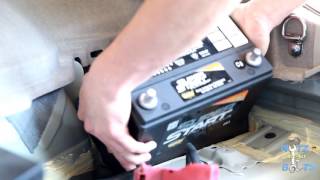
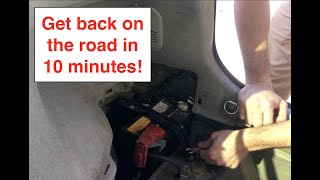
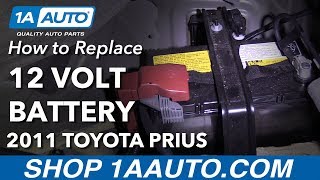
Typical fix: Replace the 12V auxiliary battery located in the trunk. 🎬 See how to replace the 12V auxiliary battery in minutes. Ensure the replacement is an AGM (Absorbed Glass Mat) battery of the correct group size (S46B24R) with a vent tube port and JIS 'pencil post' terminals.
Est. part cost: $190-$280 - Loose or Corroded 12V Battery Terminals 🟡 Medium Probability → Shop Vehicle Battery
How to confirm: Visually inspect the battery terminals in the trunk. Check for white or blue-green crust (corrosion). Attempt to wiggle the terminal clamps by hand; they should not move at all.
Typical fix: Disconnect the terminals (negative first), clean them and the battery posts with a wire brush and baking soda solution, reconnect them securely (positive first), and apply anti-corrosion grease.
Est. part cost: $5-$10 - Failed Brake Light Switch ⚪ Low Probability → Shop Brake Light Switch
How to confirm: Have someone stand behind the car while you press the brake pedal (with the car in accessory mode). If the brake lights do not illuminate, the switch is likely faulty. The car's computer requires a signal from this switch to confirm the brake is pressed before it will allow the system to enter 'READY' mode.
Typical fix: Replace the brake light switch located at the top of the brake pedal arm. 🎬 Watch: Step-by-step guide to replacing a faulty brake light switch. The OEM part number is often 84340-47020 or a superseding number.
Est. part cost: $20-$50
Rare But Worth Checking
- Hybrid System Relay (Contactor) Failure: The high-voltage battery pack contains relays that connect it to the rest of the car. If you hear a single click but the car doesn't become 'READY', one of these relays may be stuck open. This is a more complex issue often requiring professional diagnosis.
- Inverter/Converter Failure: A major failure in the hybrid inverter can prevent the car from starting and will typically set other, more specific diagnostic trouble codes (like P0A94, P324E, P3004) along with P1604. Toyota has issued warranty extensions for this component on some models.
- Main Hybrid Battery Failure: → Shop Vehicle Battery If the main high-voltage battery has failed or has a significant imbalance between cells, the Battery ECU will prevent the car from starting to protect the system. This will almost always be accompanied by codes like P0A80 (Replace Hybrid Battery Pack).
- Ran Out of Fuel: While the primary issue is electrical, the P1604 code can also be logged if the car attempts to start the gasoline engine and fails due to a lack of fuel. The system logs this as a 'startability malfunction'.
Technical Service Bulletins (TSBs) & Recalls
- A manufacturer service bulletin for another Toyota model, TSB Bulletin #T-SB-0166-19_Rev, notes that P1604 can be triggered alongside fuel trim issues (P0171/P0174) and may be related to elevated alcohol density estimates in the fuel system.
Diagnosis Steps
- Scan for all codes. P1604 is often a secondary code; other codes may point directly to the problem.
- Test the 12V auxiliary battery. Use a multimeter to check for at least 12.4V (ideally 12.6V+). A load test is the most reliable method to confirm its health.
- Inspect 12V battery terminals for corrosion and tightness. Ensure the chassis ground connection is also clean and secure.
- Check for brake light operation. Press the brake pedal and confirm the brake lights turn on to rule out a faulty brake switch.
- Check fuel level. Ensure the vehicle has not run out of gasoline, as this can also log a P1604 code.
- If the 12V system is healthy, check fuses related to the hybrid system and ECU.
- If the above steps do not resolve the issue, the problem is likely more complex (inverter, hybrid battery, ECU) and requires advanced diagnostics with a tool like Toyota Techstream to check hybrid system live data and freeze frame data.
Parts You'll Likely Need
- 12V Auxiliary Battery (AGM)
(OEM #28800-21171)— This is the most common failure point causing a no-start condition and P1604 on a Gen 3 Prius. The original battery often lasts 3-5 years before degrading.
Trusted brands: Toyota TrueStart (OEM P/N: 00544-21171-325), Optima (YellowTop DS46B24R), Interstate (MTX-S46B24R), Yuasa (S46B24R)
OEM price range: $210-$260
Aftermarket price range: $190-$280 - Brake Light Switch (Stop Lamp Switch)
(OEM #84340-47020)— A less common but known failure point that prevents the car from detecting the brake pedal press, which is a requirement for starting.
Trusted brands: Toyota (OEM), Standard Motor Products, Beck Arnley
OEM price range: $40-$60
Aftermarket price range: $25-$45
Related Codes That Often Appear With This One
- P0A80 — Indicates a failing high-voltage battery pack. If the HV battery is unhealthy, the car will not start, triggering the P1604.
- U0100 — Indicates a loss of communication with the ECM/PCM. A weak 12V battery can cause communication errors between modules during startup.
- P3000 — Indicates a general fault with the high-voltage battery system, often a precursor or companion to P0A80.
Platform-Specific Known Issues
- A user on Reddit with a P1604 code that appeared intermittently found their 12V battery died completely a month later. Replacing the battery resolved the code. A friend with a RAV4 had the exact same experience, suggesting this code can be an early warning of battery failure.
- Freeze frame data, accessible with advanced scan tools like Toyota Techstream, is particularly useful for P1604. It records engine conditions at the moment the fault was logged and can help differentiate between a fuel issue, low voltage, or other system faults.
Mechanic-Grade Diagnostic Values
- 12V Auxiliary Battery Voltage (Car OFF) — expected: ≥12.6V. Failure: <12.4V indicates a discharged state. <12.2V is unlikely to initiate the READY sequence.
- 12V System Voltage (Car in READY mode) — expected: 13.7V - 14.7V. Failure: Voltage below 13.7V indicates a problem with the DC-DC converter (the Prius's equivalent of an alternator).
- Brake Light Switch Continuity (4-pin type) — expected: Two pins show continuity when the pedal is pressed (brake light circuit), and the other two pins show continuity when the pedal is released (cruise control/interlock circuit).. Failure: No continuity on the brake light circuit when the pedal is pressed, or continuity when it's not pressed.
Hidden / Shadow Codes Worth Checking
- P1604 with Freeze Frame Data: P1604 is an informational code. The critical diagnostic data is in the 'freeze frame' data stored at the time of the fault. A technician must use a scan tool like Toyota Techstream to view this data, which shows sensor readings (voltage, temperatures, etc.) during the failed start attempt. This data helps determine if the cause was low voltage, a fuel issue, or another system failure. (see via Toyota Techstream or other advanced OBD-II scanner with manufacturer-specific data capabilities.)
Scan Tool Commands That Help
- Toyota Techstream: Freeze Frame Data Analysis — This is the primary diagnostic step for P1604. Since the code only means 'startability malfunction', the freeze frame data is essential to see the state of all vehicle systems at the moment of failure. It helps differentiate a 12V battery issue from a fuel issue or a sensor failure without guesswork.
- Toyota Techstream: Health Check — Performs a comprehensive scan of all ECUs on the vehicle. A weak 12V battery often causes communication codes (U-codes) in multiple modules, which would be displayed in a health check report, reinforcing the diagnosis of a power supply issue.
Wiring & Ground Locations
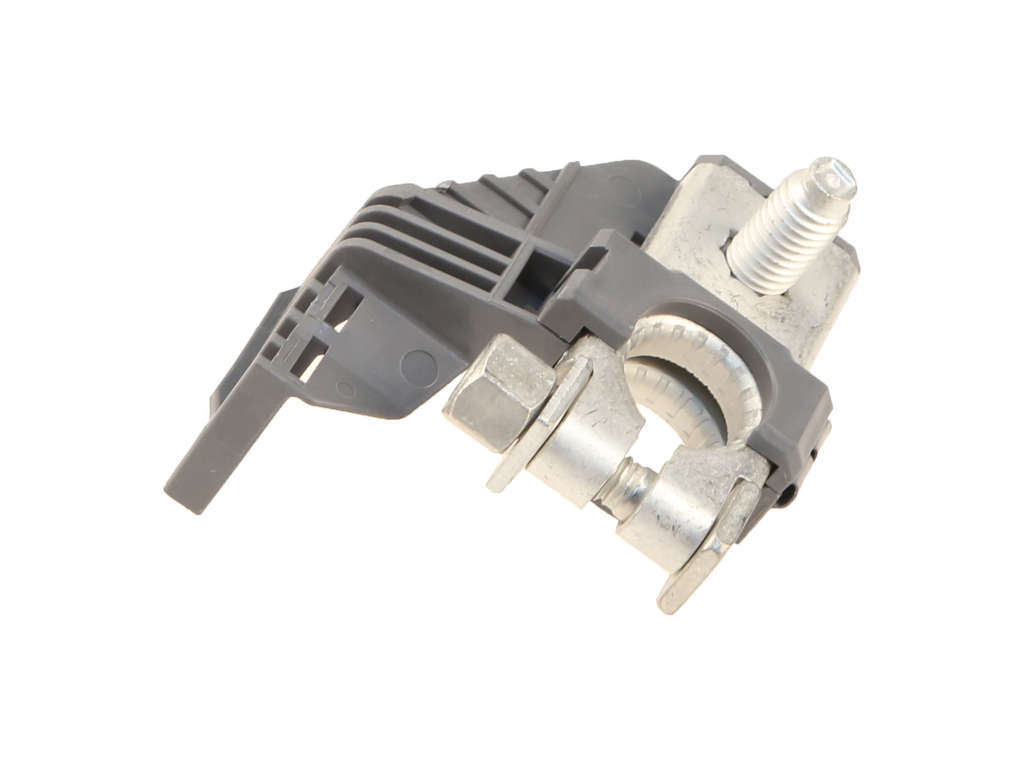
- 12V Battery Ground — In the trunk, the main negative cable from the 12V battery connects to the vehicle chassis nearby.. A corroded or loose chassis ground connection for the 12V battery can cause the exact same symptoms as a failed battery, preventing ECUs from powering up correctly. This should be checked whenever the battery is replaced.
- Ground Points IG, IH, II — Located in the engine compartment, on the left and right sides of the chassis frame.. These are primary ground points for various engine and hybrid system components. A failure at one of these points can interrupt power to critical ECUs needed for the startup sequence.
- Instrument Panel Junction Block — Located under the instrument panel on the driver's side.. This block contains multiple fuses and relays, including the 'STOP' fuse (for the brake light switch circuit) and ECU-IG fuses that power up the ECUs. It's a central point for checking power distribution during a no-start condition.
Real Owner Repair Stories
- PriusChat user 'Viridis' (2012 Prius, 102,000 miles) — Car would not go into 'READY' mode. Intermittent at first, requiring a jump start. Later, completely dead, even after a new 12V battery was installed.
❌ Tried (didn't work) Jump starting the old battery., Replacing the 12V auxiliary battery.
✅ What actually fixed it The final fix was not posted, but the diagnosis pointed to a significant parasitic draw draining the new battery in just two days. A technician suggested using a DC clamp meter and pulling fuses one by one to isolate the circuit causing the drain. A possible culprit mentioned was the rear hatch light staying on. - PriusChat user 'gen 2 owner' (2005 Prius (Gen 2, but relevant principle)) — Intermittent hard starting. Car would not go into READY unless the brake pedal was pressed with a specific angle and force.
❌ Tried (didn't work) Charging the 12V auxiliary battery.
✅ What actually fixed it The owner diagnosed and repaired the brake light switch. The switch has two internal contacts; one for the brake lights and one for the cruise control/start interlock. The interlock contact was failing. After disassembling and cleaning the switch, the car started flawlessly every time. This highlights a mechanical failure mode of the switch beyond a simple 'on/off' test. - An owner reported in NHTSA ODI #11592352 that their vehicle stalled in a drive-thru; while a mechanic retrieved code P1604, they noted the code was too generic to pinpoint the exact problem immediately.
- In NHTSA ODI #11534554, a technician found P1604 alongside misfire codes and a damaged spark plug, illustrating that mechanical engine damage can also trigger this startability fault.
- NHTSA ODI #11023574 describes an intermittent issue where P1604 was pulled along with P2610 (ECM internal timer performance) and B1507.
- A report in NHTSA ODI #11723306 mentions P1604 appearing with several transmission-related codes (P0741, P075B) involving the torque converter and CVT.
"I Checked Everything" — The Actual Cause
- For P1604, the equivalent of a 'smoke test clean' is when the 12V battery tests good with a simple voltmeter but the car still won't start. The actual cause is often that the battery has high internal resistance and cannot deliver the required amperage under load to boot up all the ECUs simultaneously, even though it shows 12.6V at rest. A professional digital battery tester that performs a load test is required to identify this failure mode.
When the Usual Fixes Don't Work
- In rare cases where a new, confirmed-good 12V battery does not resolve the P1604 and no-start condition, the issue is almost certainly not the battery itself. The next step is to investigate for a parasitic draw that is draining the new battery. This involves a systematic process of using a multimeter with an amp clamp to measure current draw while pulling fuses for various circuits (e.g., dome light, audio system, door control modules) until the draw is isolated. Common culprits for parasitic draws on a Prius include a stuck rear hatch light, a faulty aftermarket accessory, or a failing ECU.
OEM Part Supersession History
28800-YZZPD→28800-21171, then 00544-21171-325, then 28800-AZC34— Standard part number updates and revisions by Toyota for their TrueStart line of batteries.
Heads up: The key is ensuring the replacement is group size S46B24R. Some owners report that parts systems may suggest a smaller S34B20R battery, which may fit but has lower capacity and is not the correct OEM specification for all Gen 3 models. Always verify the group size required for the specific vehicle.
Model Year Variations Within This Range
- 2012-2015: The Gen 3 Prius received a facelift for the 2012 model year. Changes were mostly cosmetic but included some equipment updates like a revised infotainment system (Toyota Entune), new headlights, and a standard 6.1-inch touchscreen. While not directly causing P1604, these additional electronics add to the complexity and potential parasitic draws on the 12V battery. The fundamental startup sequence and common causes for P1604 remain the same across the 2010-2015 range.
Diagnostic Flowchart
Other Known Issues on This Vehicle
Issues unrelated to this code that are worth knowing about as an owner of this generation:
- Excessive Oil Consumption 🔴 High — Common in 2010-2014 models, especially over 100,000 miles. Caused by faulty piston rings. All 2015 models have revised parts. (Ref: T-SB-0168-16 (Inspection) and T-SB-0169-16 (Repair).)
- Brake Booster / Actuator Assembly Failure 🔴 High — Can occur at various mileages, leading to a loss of braking assist and multiple warning lights. Affects 2010-2015 models. (Ref: Customer Support Program ZJB extends warranty coverage for this failure (10 years/150,000 miles). Related DTCs include C1391, C1252, C1256.)
- Hybrid Inverter Failure 🔴 High — The Intelligent Power Module (IPM) within the inverter can fail due to thermal stress, causing the car to stall or enter limp mode. Affects 2010-2014 models. (Ref: Warranty Enhancement Program ZE3 (and others) extended warranty coverage. A class-action settlement further extended coverage to 20 years for certain DTCs (P0A94, P0A1A, P324E, P3004).)
- EGR (Exhaust Gas Recirculation) System Clogging 🟠 Medium — The EGR valve, cooler, and intake manifold passages can become clogged with carbon, typically after 100,000 miles, leading to engine knocking, shaking, and potential head gasket failure if ignored.
Used vs. New Parts: Buying Guide for This Vehicle
When a used part is the smart pick: For a P1604 diagnosis, obtaining used parts is generally not recommended. The most common failure parts (12V battery, brake switch) are either wear items or inexpensive enough that a new part is the only logical choice. A used ECU or junction block could be considered from a reputable salvage yard with a warranty, but only after exhaustive diagnostics have ruled out all other possibilities.
Donor-vehicle mileage cap: roughly under 100000 miles for the part to have meaningful remaining life.
What to inspect on the donor part:
- For an ECU or other electronic module, verify the part number exactly matches the original.
- Inspect for any signs of water damage, corrosion on pins, or physical damage to the casing.
- Ensure the donor vehicle was not involved in a flood or fire.
OEM-only on this vehicle (don't cheap out):
- 12V Auxiliary Battery: While good aftermarket options exist, they must be the correct AGM type (S46B24R) with a vent port. Avoid conventional flooded batteries.
- Brake Light Switch: Given its criticality for starting and low cost, an OEM switch is highly recommended to avoid quality issues.
- Engine Control Module (ECU): Due to programming and security pairing, replacing an ECU is complex. If required, an OEM unit or a specialist remanufactured unit is the safest path.
Aftermarket brands forum-validated for this vehicle:
- Optima (YellowTop DS46B24R) for 12V battery
- Interstate (MTX-S46B24R) for 12V battery
- Yuasa (S46B24R) for 12V battery
Brands owners have reported issues with on this vehicle:
- Any conventional (non-AGM) 12V battery.
- No-name, ultra-cheap brake light switches from online marketplaces.
Real Owner Stories
Aggregated from forums and TSBs cited above. Mileages and costs reflect what owners reported in those sources.
2013 Toyota Prius hybrid — 120136 miles
Symptoms: Multiple error messages on infotainment screen and speedometer; fault code P1604 - Startability Malfunction.
What fixed it: Took it to a shop. Turns out the coding was off.
Source hint: Carly Community - Prius error codes and startability malfunction
2010-2015 Toyota Prius
Symptoms: P1604 code appeared intermittently; the car eventually failed to start a month later.
What fixed it: Replacing the 12V auxiliary battery.
Source hint: Reddit (r/prius)
2010-2015 Toyota Prius
Symptoms: No-start or 'not READY' condition.
What fixed it: Replacing a weak 12V auxiliary battery.
Source hint: PriusChat
Related OBD-II Codes
Frequently Asked Questions
My 2012 Prius is showing P1604 and won't go into 'READY' mode. Could this be related to the brake system warranty extension?
Is there a specific 12V battery I should buy for my 2010-2015 Prius to avoid P1604 issues?
Can running out of gas cause a P1604 code on a Toyota Prius?
My 2013 Prius has P1604 and the dashboard looks like a 'Christmas tree.' Is this the hybrid inverter failure I've heard about?
Does the Lexus CT200h suffer from the same P1604 issues as the Prius?
I have a 2011 Prius with P1604 and it's also consuming a lot of oil. Are these related?
Helpful Videos



We Have This Part in Stock



The information in this article is provided for general reference and educational purposes only. Vehicle specifications, procedures, and part compatibility can vary by production date, trim level, and region. Always consult your vehicle's factory service manual and verify part numbers before purchasing or performing repairs. Safety-critical components such as airbags, seat belts, and braking systems should be installed by a qualified professional.
- Toyota Prius:
- 🧭 Diagnostic Flowchart
- 🎬 Helpful Videos
- 🛍️ Shop This Part
- What's Unique About the 2010-2015 Toyota Prius
- Symptoms You May Notice
- Most Likely Causes
- Rare But Worth Checking
- Technical Service Bulletins (TSBs) & Recalls
- Diagnosis Steps
- Parts You'll Likely Need
- Related Codes That Often Appear With This One
- Platform-Specific Known Issues
- Mechanic-Grade Diagnostic Values
- Hidden / Shadow Codes Worth Checking
- Scan Tool Commands That Help
- Wiring & Ground Locations
- Real Owner Repair Stories
- "I Checked Everything" — The Actual Cause
- When the Usual Fixes Don't Work
- OEM Part Supersession History
- Model Year Variations Within This Range
- Other Known Issues on This Vehicle
- Used vs. New Parts: Buying Guide for This Vehicle
- Real Owner Stories
- 2013 Toyota Prius hybrid — 120136 miles
- 2010-2015 Toyota Prius
- 2010-2015 Toyota Prius
- Related OBD-II Codes
- Frequently Asked Questions
- 🎟️ Get 5% Off