

P1613 on 1998-2005 Hyundai Sonata: Understanding the TCM MIL Request Code
P1613 on a Hyundai Sonata is not the real problem. It's an informational code meaning the Transmission Control Module (TCM) has a separate fault and has asked the main computer to turn on the Check Engine Light. You must scan the TCM for other codes (usually P07xx) to find the actual issue, most commonly a faulty input/output speed sensor.
- P1613 is not the root problem; it's a message from the transmission computer.
- You MUST scan the Transmission Control Module (TCM) for additional codes to find the actual fault.
- The most likely causes are faulty speed sensors or the transmission range switch.
- Do not replace the ECM or look for immobilizer issues; this is a transmission-related code on this vehicle.
- Check transmission fluid level and condition as a basic first step.
What's Unique About the 1998-2005 Hyundai Sonata
Unlike many other manufacturers that might use P1613 for immobilizer or other system faults, Hyundai designated it during this era as a communication flag between the engine and transmission computers. This is similar in function to the more common generic code P0700. Owners can be misled by looking at generic code definitions, but for this Sonata, P1613 is exclusively a signpost pointing towards a problem stored in the transmission module.
Generation note: This guide covers the fourth generation (1998-2001) and fifth generation (2001-2005) Hyundai Sonata. The 2.7L V6 was paired with a 4-speed automatic transmission (F4A51) in both generations, and the diagnostic logic for code P1613 is consistent across this year range.
Symptoms You May Notice
- Check Engine Light is on
- Harsh or erratic shifting
- Transmission slipping between gears
- Vehicle gets stuck in one gear (limp mode, often 2nd or 3rd)
- Stalling when coming to a stop or at low speeds
- Delayed engagement when shifting from Park to Drive or Reverse
- Flashing 'D' gear indicator on the instrument cluster
- Replacing the Engine Control Module (ECM)
- Searching for an immobilizer or security system fault
- Looking for a problem with a cargo lamp circuit
Most Likely Causes
- Faulty Input or Output Speed Sensor 🔴 High Probability These sensors are a very common failure point on the F4A42/F4A51 transmission. They are simple magnetic pickups that wear out over time, providing erratic or no signal to the TCM.
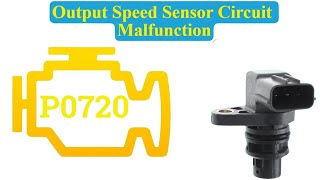
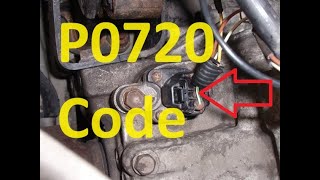
How to confirm: Scan the TCM for codes like P0715 (Input/Turbine Speed Sensor Circuit Malfunction) or P0720 (Output Speed Sensor Circuit Malfunction). The sensors can also be tested with a multimeter for correct resistance, typically between 0.7-1.4 kOhms, but checking against a known good part is best.
Typical fix: Replacement of the failed sensor. They are located on the outside of the transmission case. The input sensor is on the front (radiator side), and the output sensor is on the top, closer to the firewall.
Est. part cost: $40-$90 - Defective Transmission Range Switch (Inhibitor Switch) 🟡 Medium Probability This switch communicates the selected gear (P, R, N, D) to the TCM and is mounted externally on the transmission, where it's exposed to road grime and moisture, leading to internal corrosion and failure.
How to confirm: Scan the TCM for codes like P0705, P0707, or P0708. Symptoms include the gear indicator on the dash not matching the shifter position, the reverse lights not working, or the vehicle not starting because it doesn't recognize it's in Park or Neutral.
Typical fix: Replacement of the transmission range switch.
Est. part cost: $50-$100 - Failing Shift Solenoid 🟡 Medium Probability Solenoids are electro-mechanical valves that direct fluid flow. Over many cycles, their internal coils can short or go open-circuit, or the valve can become stuck due to fluid contamination.
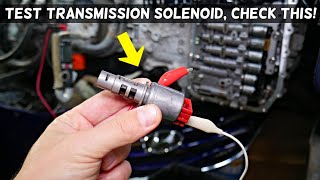
How to confirm: Scan the TCM for solenoid-specific codes (e.g., P0750, P0755, P0760). Diagnosis involves checking the solenoid's resistance (typically 20-30 ohms) and wiring. A simple test can be done with a 9V battery to see if the solenoid clicks. 🎬 Watch: A simple walkthrough for testing your transmission solenoids.
Typical fix: The transmission fluid pan must be removed to access and replace the specific solenoid or the entire solenoid pack.
Est. part cost: $60-$150 per solenoid - Low or Burnt Transmission Fluid ⚪ Low Probability
How to confirm: Check the transmission fluid dipstick (with the engine running and warm, after cycling through all gears, check in Neutral). The fluid should be at the correct level and bright red. If it's low, dark brown, or smells burnt, it indicates a problem.
Typical fix: If low, top off with Hyundai-specified fluid (SP-III) and check for leaks. If burnt, a fluid and filter change is necessary, but this is often a symptom of a larger internal transmission issue.
Est. part cost: $50-$150 for fluid and filter
Rare But Worth Checking
- Faulty Transmission Control Module (TCM): While rare, the TCM itself can fail. This is usually suspected only after all sensors, solenoids, and wiring have been confirmed to be good. Water intrusion into the passenger cabin can sometimes damage the module.
- Wiring Harness Damage: Corrosion at connectors or physical damage to the wiring between the TCM and transmission components can cause intermittent and hard-to-diagnose issues. Pay close attention to the harness where it may rub against the chassis or engine components.
Diagnosis Steps
- Confirm the presence of code P1613 in the Engine Control Module (ECM).
- Using a scan tool that can communicate with the Transmission Control Module (TCM), scan for any stored trouble codes. This is the most critical step.
- Document any codes found in the TCM (e.g., P0708, P0720, etc.). The P1613 code is now irrelevant; focus all diagnosis on the new codes.
- Based on the TCM codes, inspect the corresponding component (e.g., speed sensor, range switch, solenoid).
- Check the wiring and connectors for the suspect component for any signs of damage, corrosion, or looseness.
- Test the component itself using a multimeter according to the factory service manual specifications (e.g., checking resistance of a sensor or solenoid).
- Check the level and condition of the automatic transmission fluid. Fluid should be Hyundai SP-III or a compatible equivalent.
- After repairing the root cause (e.g., replacing a sensor), clear the codes from both the TCM and the ECM.
- Perform a test drive to ensure the transmission shifts correctly and the Check Engine Light does not return. A TCM adaptive value reset may be beneficial for optimal shift quality.
Parts You'll Likely Need
- Transmission Output Speed Sensor
(OEM #42621-39052)— A very common failure that triggers codes like P0720, leading to a P1613 request. Responsible for reporting vehicle speed from the transmission.
Trusted brands: Hyundai OE, Delphi, Standard Motor Products (SMP), Beck/Arnley
OEM price range: $70-$110
Aftermarket price range: $30-$60 - Transmission Input Speed Sensor
(OEM #42620-39051)— Another common failure causing codes like P0715. It measures the rotational speed of the transmission's input shaft.
Trusted brands: Hyundai OE, Mando, Beck/Arnley, Standard Motor Products (SMP)
OEM price range: $70-$110
Aftermarket price range: $30-$60 - Transmission Range Switch (Inhibitor Switch)
(OEM #42700-39055)— Fixes codes like P0705/P0708 and can cause no-start conditions or erratic behavior, triggering a P1613.
Trusted brands: Hyundai OE, Standard Motor Products (SMP)
OEM price range: $80-$120
Aftermarket price range: $45-$75
Related Codes That Often Appear With This One
- P0700 — This is the generic SAE equivalent of Hyundai's P1613. Some scan tools may show both codes, but they mean the same thing: a fault is stored in the TCM.
- P0705-P0708 — These codes point to a fault in the Transmission Range Switch circuit, a common cause for the TCM to request the MIL.
- P0715-P0723 — These codes indicate faults with the input (turbine) or output speed sensors, which are critical for proper shifting and a very common root cause.
- P0750-P0774 — This range of codes points to electrical faults with the various shift solenoids inside the transmission.
Technical Service Bulletins (TSBs) & Recalls
- Hyundai TSB 09-AT-013: This TSB addresses diagnostic procedures for Transmission Range Switch codes P0705, P0707, and P0708, which are common underlying causes for a P1613 code.
Platform-Specific Known Issues
- Speed Sensor Access: On the 2.7L V6, the Output Speed Sensor (VSS) is located on the top of the transmission housing, near the firewall. Access can be tight, often requiring the removal of the air intake snorkel and housing assembly to reach the 10mm bolt securing it.
- Input/Output Sensor Confusion: The Input and Output speed sensors are visually similar but have different part numbers and are not interchangeable. The Input sensor is typically black, while the Output sensor is often gray or green. Always verify the part number for the specific location you are replacing.
Mechanic-Grade Diagnostic Values
- Shift Solenoid Resistance (Low/Reverse, Underdrive, 2nd, Overdrive, Direct Clutch) — expected: 2.6 - 3.2 Ohms. Failure: A reading outside of this range indicates a faulty solenoid coil (open or shorted).
- Transmission Fluid Temperature (TFT) Sensor Resistance — expected: At 20°C (68°F): 7.3 – 8.9 kOhms; At 80°C (176°F): 1.0 – 1.2 kOhms.. Failure: Resistance values that are drastically different from the expected values at a given temperature indicate a failed sensor.
Scan Tool Commands That Help
- Hyundai GDS (Global Diagnostic System) or Hi-Scan Pro: Resetting Auto T/A values — This function should be used after replacing the transaxle, TCM, or specific components like solenoids to erase the old adaptive shift data. This forces the TCM to relearn shift points and clutch fill times, which is critical for achieving optimal shift quality after a repair.
- Hyundai GDS (Global Diagnostic System) or Hi-Scan Pro: Actuator Driving / Actuation Test — This allows a technician to command individual shift solenoids on and off with the vehicle stationary to verify their electrical operation and listen for an audible click from the solenoid, helping to isolate a single failed component without having to remove the transmission pan.
Wiring & Ground Locations
- TCM Ground — For the 2007 Sonata (similar generation), a key ground point for the A/T system is G06, located at the left rear of the engine compartment. While exact locations can vary slightly by year, this is a primary area to inspect for corrosion or looseness.. A poor ground connection for the TCM or its related sensors can cause erratic voltage signals, leading to false sensor readings, incorrect solenoid operation, and the setting of various transmission codes that trigger P1613.
- Transaxle Range Switch Connector — Located on top of the transaxle, accessible after removing the air intake assembly.. This is the main electrical connection for the inhibitor switch. It is exposed to heat and vibration, making it a common point for corrosion or pin fretting, which can cause P0705-P0708 codes. Checking for clean, tight pins here is a crucial diagnostic step.
- Main Transmission Case Connector — This is the large, multi-pin round or rectangular connector on the transmission that houses the wiring for the speed sensors and internal solenoids.. Any damage, corrosion, or fluid intrusion into this main connector can disrupt signals for multiple components at once, leading to various P07xx codes and subsequent P1613. A visual inspection for damage and clean connections is essential.
Real Owner Repair Stories
- Kelley Blue Book Consumer Review (2002 Hyundai Sonata GLS V6) — Unspecified transmission issue requiring repair.
✅ What actually fixed it The owner reported replacing the transmission input shaft speed sensor (related to code P0715) for $55, which resolved the issue and restored reliability.
OEM Part Supersession History
42621-39050, 42621-39100→42621-39052— Standard part revision for the Transmission Output Speed Sensor.42700-39050→42700-39055— Standard part revision for the Transmission Range (Inhibitor) Switch.
Model Year Variations Within This Range
- 1998-2001 (4th Gen) vs 2001-2005 (5th Gen Facelift): The major facelift for the 2002 model year introduced revised styling but the core powertrain, including the 2.7L V6 and F4A51 4-speed automatic transmission, remained largely the same. Part numbers for key transmission sensors and switches are generally consistent across the entire 1998-2005 range for the 2.7L V6.
Diagnostic Flowchart
Other Known Issues on This Vehicle
Issues unrelated to this code that are worth knowing about as an owner of this generation:
- Crankshaft Position Sensor (CKP) Failure 🔴 High — Very common, especially over 100,000 miles. Often fails when hot, causing the engine to stall and not restart until it cools down.
- Valve Cover Gasket Leaks 🟠 Medium — Common after 80,000+ miles. The front (radiator side) valve cover gasket can leak oil directly onto the alternator, causing premature alternator failure.
- Premature Timing Belt Wear 🔴 High — The 2.7L V6 is an interference engine. While the recommended replacement interval is 60,000 miles, failures have been reported earlier. A snapped belt will cause catastrophic engine damage.
- Cracked Exhaust Flex Pipe 🟡 Low — The flexible pipe section of the exhaust system is prone to cracking over time, causing a loud exhaust leak.
Used vs. New Parts: Buying Guide for This Vehicle
When a used part is the smart pick: For this vehicle, external electronic components like the input/output speed sensors and the transmission range switch are good candidates for used parts from a reputable salvage yard. They are relatively inexpensive, easy to replace, and their failure doesn't typically cause catastrophic damage, making the risk of a used part failing acceptable.
Donor-vehicle mileage cap: roughly under 120000 miles for the part to have meaningful remaining life.
What to inspect on the donor part:
- Check for low mileage on the donor vehicle if possible.
- Visually inspect the part for any cracks in the plastic housing or corrosion on the electrical pins.
- Ask the salvage yard if they have any history on the donor vehicle (e.g., was it running before being dismantled).
- Ensure the part comes with at least a 30-day warranty.
OEM-only on this vehicle (don't cheap out):
- Transmission Control Module (TCM) - Due to the need for potential programming and the high risk of incompatibility, a new or professionally remanufactured OEM unit is strongly advised if the TCM is condemned.
Aftermarket brands forum-validated for this vehicle:
- Delphi
- Standard Motor Products (SMP)
- Beck/Arnley
- NTK
- Dorman
Brands owners have reported issues with on this vehicle:
- No-name, unbranded sensors sold on marketplaces like eBay or Amazon should be avoided, as their internal electronics may not meet OEM specifications for signal accuracy and durability, leading to persistent or intermittent issues.
Real Owner Stories
Aggregated from forums and TSBs cited above. Mileages and costs reflect what owners reported in those sources.
2000 Hyundai Sonata 2.7L V6
Symptoms: The vehicle would get stuck in 3rd gear (limp mode) and had codes P1613 and P0720.
What fixed it: Replacing the Output Speed Sensor (VSS) resolved both codes and the shifting issue.
Source hint: Hyundai-Forums user report cited in article
2001-2006 Hyundai Santa Fe 2.7L V6
Symptoms: Vehicle stored a P0720 code, which is associated with limp mode and erratic shifting.
What fixed it: A senior forum member confirmed that replacing the input and output speed sensors is the standard, reliable fix for these codes.
Source hint: Hyundai-Forums.com thread titled 'Output speed sensor code P0720'
2000 Hyundai Sonata 2.7L V6
Symptoms: The user noted that a bad input speed sensor can make it feel like the entire transmission is failing and set a P0715 code.
What fixed it: The issue was resolved by replacing the Input Speed Sensor.
Source hint: Eric_Tennant on YouTube video showing Input Speed Sensor replacement
Related OBD-II Codes
Frequently Asked Questions
Where are the input and output speed sensors located on my 2.7L V6 Sonata?
Are the input and output speed sensors the same part and can I interchange them?
My mechanic only found code P1613. What's the most important next step?
What type of transmission fluid should I use in my 1998-2005 Sonata?
I saw a reference to TSB 09-AT-013. Is that relevant to my P1613 code?
How can I test a speed sensor to see if it's bad?
What other vehicles share this same P1613 problem?
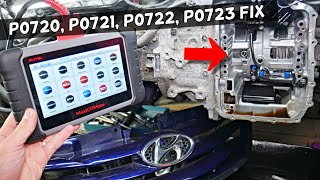
Helpful Videos


We Have This Part in Stock

The information in this article is provided for general reference and educational purposes only. Vehicle specifications, procedures, and part compatibility can vary by production date, trim level, and region. Always consult your vehicle's factory service manual and verify part numbers before purchasing or performing repairs. Safety-critical components such as airbags, seat belts, and braking systems should be installed by a qualified professional.
- Hyundai Sonata:
- 🧭 Diagnostic Flowchart
- 🎬 Helpful Videos
- 🛍️ Shop This Part
- What's Unique About the 1998-2005 Hyundai Sonata
- Symptoms You May Notice
- Most Likely Causes
- Rare But Worth Checking
- Diagnosis Steps
- Parts You'll Likely Need
- Related Codes That Often Appear With This One
- Technical Service Bulletins (TSBs) & Recalls
- Platform-Specific Known Issues
- Mechanic-Grade Diagnostic Values
- Scan Tool Commands That Help
- Wiring & Ground Locations
- Real Owner Repair Stories
- OEM Part Supersession History
- Model Year Variations Within This Range
- Other Known Issues on This Vehicle
- Used vs. New Parts: Buying Guide for This Vehicle
- Real Owner Stories
- 2000 Hyundai Sonata 2.7L V6
- 2001-2006 Hyundai Santa Fe 2.7L V6
- 2000 Hyundai Sonata 2.7L V6
- Related OBD-II Codes
- Frequently Asked Questions
- 🎟️ Get 5% Off