

P1614 on 2013-2022 Buick Encore: Immobilizer Fault Causes and Fixes
P1614 on a Buick Encore means the car's anti-theft system is preventing it from starting. This is most often caused by a faulty key transponder or a weak car battery. Try your spare key first; if that doesn't work, the key may need to be reprogrammed by a professional.
- P1614 means your car's anti-theft system has been triggered and is preventing the engine from starting.
- Before spending any money, try your spare key and fully charge or test your main car battery.
- A simple 'Security Relearn Procedure' (the 30-minute key 'ON' cycle) might resolve the issue without any tools.
- If simple fixes don't work, you will likely need a professional to reprogram your keys or diagnose the fault with a scan tool.
What's Unique About the 2013-2022 Buick Encore
The Buick Encore, and its platform mates like the Chevrolet Trax and Sonic, use a transponder-based immobilizer system that is particularly sensitive to voltage fluctuations. A weak or dying vehicle battery is a very common trigger for this security fault, often leading to a misdiagnosis of the key or control modules. Before assuming a component has failed, it is crucial to verify the main vehicle battery is fully charged and healthy, as this can often resolve the communication error and clear the P1614 code. Additionally, radio frequency interference (RFI) from aftermarket chargers or devices can sometimes disrupt the key-reading process.
Symptoms You May Notice
- Engine will not crank or start.
- Engine starts for a second and then immediately dies.
- Flashing or solid security light (often a car with a padlock symbol) on the dashboard.
- Message on the driver information center like 'Theft Attempted' or 'Service Theft Deterrent System'.
- Remote key fob functions (lock/unlock) may work, but the engine still won't start.
- Replacing the starter motor when the engine doesn't crank. The immobilizer system actively prevents the starter from engaging, so the starter itself is rarely the problem.
- Replacing the fuel pump when the engine starts and dies. The ECM is disabling the fuel pump due to the security fault; the pump itself is likely functional.
Most Likely Causes
- Defective or Unprogrammed Ignition Key 🔴 High Probability → Shop Ignition Switch The transponder chip in the key can fail internally, lose its programming, or the key's internal battery can die, preventing the signal from being sent. This is especially common if the key is dropped or gets wet.
How to confirm: Try starting the vehicle with a known-good spare key. If the spare key works, the original key is faulty.
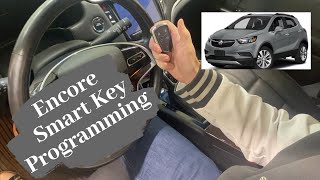
Typical fix: The faulty key needs to be replaced and/or all keys need to be reprogrammed to the vehicle 🎬 See how to program a Buick Encore smart key by a dealer or automotive locksmith with appropriate scan tools.
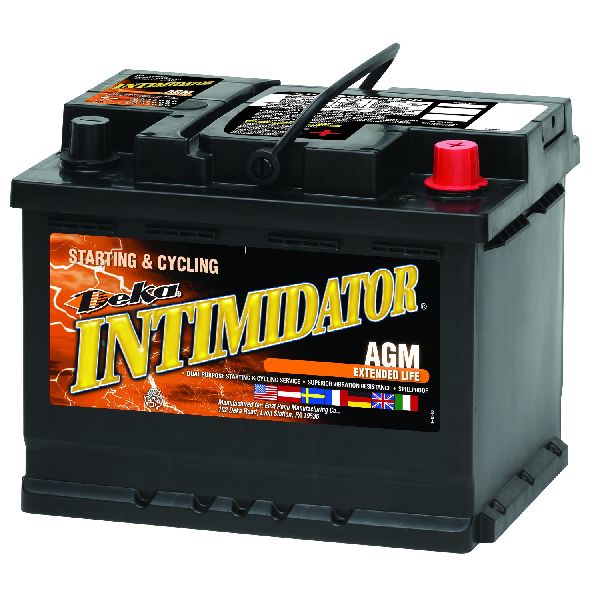
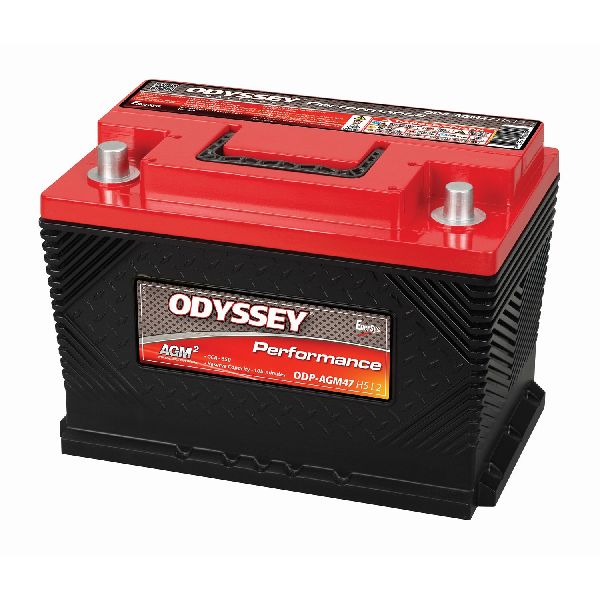
Est. part cost: $50-$150 - Weak or Dead Vehicle Battery 🟡 Medium Probability → Shop Vehicle Battery Low system voltage during startup can cause communication glitches between the BCM and ECM, triggering a false security event. These vehicles are known for battery drain issues which can exacerbate this problem.
How to confirm: Test the vehicle's battery with a multimeter; a healthy battery should read approximately 12.6 volts at rest. If it's below 12.2 volts, it is significantly discharged. Attempting to jump-start the vehicle may temporarily resolve the issue and allow the car to start.
Typical fix: Recharge or replace the vehicle's 12V battery. Ensure the replacement meets or exceeds OEM specifications.
Est. part cost: $150-$250 - Faulty Body Control Module (BCM) ⚪ Low Probability → Shop Body Control Module The BCM is the hub for the immobilizer system. An internal failure, often due to voltage spikes or water intrusion, can prevent it from validating the key and sending the correct signal to the ECM.
How to confirm: This requires a professional scan tool capable of communicating with the BCM to check for specific BCM-related trouble codes (B-codes) and to monitor its data stream. A technician will verify power, ground, and communication lines to the BCM.
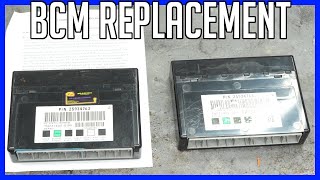
Typical fix: Replace the BCM and have the new module programmed to the vehicle, along with all keys. Some services offer mail-in cloning of your original BCM to a new unit 🎬 Watch: How to replace your Body Control Module, which avoids dealer programming.
Est. part cost: $300-$500 - Faulty Immobilizer Antenna / Ignition Lock Cylinder ⚪ Low Probability → Shop Ignition Switch The antenna ring that reads the key's transponder chip can fail, or the wiring between it and the BCM can become damaged or corroded. This component is sometimes referred to as the exciter ring or key reader.
How to confirm: This is diagnosed by exclusion. If the keys and battery are good, a technician will test the wiring and antenna circuit for continuity and signal using a multimeter or oscilloscope. The antenna itself is a relatively inexpensive part to test by substitution.
Typical fix: Replace the ignition lock cylinder or the immobilizer antenna module. The antenna is often a separate part from the lock cylinder.
Est. part cost: $100-$300
Rare But Worth Checking
- Faulty Engine Control Module (ECM): While rare, the ECM can fail in a way that it no longer correctly processes the security signal from the BCM. This is usually the last item to be suspected after all other components have been verified.
- Radio Frequency Interference (RFI): Strong radio signals from aftermarket devices plugged into the vehicle's power outlets (like phone chargers, power inverters, or dash cams) can interfere with the low-frequency signal between the key and the immobilizer antenna. GM has identified this as a potential cause in TSB PIC5650 for similar systems. Unplugging all such devices is a simple diagnostic step.
Diagnosis Steps
- Verify P1614 is the primary code. Note any other communication (U-codes) or BCM-related codes (B-codes) like B3060.
- Try to start the vehicle with all available keys. If one key works and another doesn't, the non-working key is the issue.
- Inspect and test the main vehicle battery. Ensure it has a full charge (12.6V) and can hold a load. A weak battery is a very common cause of this code.
- Remove any aftermarket electronic devices plugged into the power outlets (chargers, dash cams, etc.) to eliminate potential Radio Frequency Interference (RFI).
- If available, try a 'Security Relearn Procedure'. Turn the ignition to the 'ON' position (do not start) for 10-15 minutes until the security light stops flashing and turns solid or off. Turn the ignition off for 10 seconds. Repeat this process two more times (for a total of about 30 minutes). On the fourth attempt, try to start the engine. 🎬 Watch: GM security lockout reset procedure
- If the relearn procedure fails, the vehicle will need to be diagnosed with a professional scan tool.
- A technician will use the scan tool to check communication with the BCM and ECM, and attempt to reprogram the existing keys.
- If reprogramming fails, the technician will diagnose the BCM, immobilizer antenna (exciter ring), and associated wiring for faults before recommending component replacement.
Parts You'll Likely Need
- Ignition Key / Key Fob
(OEM #13585812 (Flip Key, 2013-2018), 13506665 (Smart Key, 2017-2021))— The transponder chip inside the key is the most common failure point leading to this immobilizer code.
Trusted brands: ACDelco, Strattec
OEM price range: $70-$150
Aftermarket price range: $30-$60 - Vehicle Battery — Low system voltage is a frequent trigger for security system communication errors on this platform.
Trusted brands: ACDelco, DieHard, Interstate
OEM price range: $200-$280
Aftermarket price range: $150-$220 - Body Control Module (BCM)
(OEM #13586273 (2013-2014), 13594571 (2015-2021), 13521148 (2017-2019))— As the central computer for the security system, a faulty BCM can prevent the car from recognizing a valid key. Part numbers vary by year and features.
Trusted brands: ACDelco (GM Genuine)
OEM price range: $300-$450
Aftermarket price range: $200-$350 (often requires cloning service) - Immobilizer Antenna
(OEM #13580790 or 13580789)— This ring around the ignition switch reads the key's transponder. A failure in the antenna or its wiring will prevent key recognition.
Trusted brands: ACDelco (GM Genuine)
OEM price range: $35-$90
Aftermarket price range: $30-$60
Related Codes That Often Appear With This One
- B3060: Unprogrammed Transponder Key
- B3055: No Transponder Key
Platform-Specific Known Issues
- Owner Experience: Key Fob Failure: → Shop Keyless Entry Transmitter A user on the Carly blog with a Buick Encore experienced a no-start condition due to immobilizer issues. Diagnostics found corroded pins and damaged wiring in the connection to the antenna module. The repair involved replacing the wiring harness and the antenna module, followed by reprogramming, which resolved the starting problem and also fixed intermittent radio reception issues.
- Forum Discussion: BCM Replacement: On various GM forums, owners of Chevrolet Trax and Buick Encores discuss P1614 leading to BCM replacement. A common repair path is to purchase a used BCM with a matching part number and use a mail-in service to clone the data from the original module, which avoids expensive dealership programming.
Mechanic-Grade Diagnostic Values
- Normal System Voltage for BCM/Immobilizer Operation — expected: 9.5V to 15.5V. Failure: Voltage below 9.5V during crank can trigger false security codes.
- Immobilizer Antenna Wiring Continuity — expected: Below 1.0 ohms. Failure: Resistance of 1.0 ohm or higher indicates high resistance or an open in the wiring between the BCM and the antenna ring.
Hidden / Shadow Codes Worth Checking
- Symptom Byte: GM's GDS2 software displays a 'Symptom Byte' alongside the main DTC. This is a hexadecimal value that provides more specific information about the nature of the fault (e.g., 'Invalid Signal', 'No Signal Received'). This helps a technician differentiate between a key that's sending the wrong code versus no code at all. (see via GM GDS2 or a high-end professional scan tool with equivalent manufacturer-specific capabilities.)
Scan Tool Commands That Help
- GDS2 (GM Techline Connect): Immobilizer Learn (All Keys Lost) — Used when no working keys are available. This is a 30-minute procedure that erases all previously known keys and learns a new set. It's initiated through the Service Programming System (SPS) within GDS2.
- GDS2 (GM Techline Connect): Add/Replace Key Fobs — Used when you have at least one working key and want to add another. This is a much faster procedure found under the 'Remote Control Door Lock Receiver' module functions.
- GDS2 (GM Techline Connect): BCM Programming/Setup — This is required after replacing the Body Control Module. The new module must be programmed with the vehicle's VIN and configured for its specific options before the immobilizer key relearn can be performed.
Wiring & Ground Locations
- Body Control Module (BCM) — Located on the left-hand (driver's) side of the dash, sometimes accessed by removing the lower passenger side panel of the center console.. The BCM is the central computer for the immobilizer system. All signals from the key and antenna are processed here before the 'OK to start' message is sent to the ECM. Poor connections or a bad ground at the BCM can cause P1614.
- G103 — A primary ground point located at the left rear of the engine compartment on the cowl, often above the brake booster.. This ground serves multiple critical modules, including the BCM, Instrument Panel Cluster (IPC), and the Data Link Connector (DLC). A loose or corroded G103 can cause intermittent communication issues and trigger security faults like P1614.
- X50A Fuse Block - Underhood — The main fuse block in the engine compartment.. Fuse F9UA (5A) in this block provides power to the Body Control Module. Verifying this fuse and its terminals is a basic but critical step.
Real Owner Repair Stories
- Reddit user post (2017 Buick Encore (push-button start)) — Car would not start, brake pedal was hard. 'Service Theft Deterrent System' message displayed. Trying to start resulted in clicking, flashing dash lights, and a single slow windshield wipe.
❌ Tried (didn't work) Locking/unlocking with fob., Using physical key in door., Placing fob in the center console backup slot.
✅ What actually fixed it The owner had drained the battery completely. After getting a jump start, the theft system activated. The final fix was to perform the key relearn procedure for both the original key and a newly purchased spare key. As soon as the programming was complete, the theft light went out and the car started normally. - Carly Blog user story (2014 Buick Encore, 190,000 km) — Key fob stopped working for remote lock/unlock, and the engine would not start without inserting the key (implying an intermittent immobilizer issue).
❌ Tried (didn't work) The owner suspected the antenna but first sought advice before replacing parts.
✅ What actually fixed it A mechanic performed diagnostic testing and found corroded pins and damaged wiring in the harness connector for the vehicle's antenna module near the center console. The fix was to replace the corroded wiring harness and the antenna module, followed by reprogramming the system. This resolved the starting issue and also fixed intermittent radio reception.
OEM Part Supersession History
13594571→13534185— Standard part revision by the manufacturer.
Heads up: The BCM part number 13594571 is also listed as a direct interchange for 13591222 and 13598198. When sourcing a used part, matching any of these numbers is critical for compatibility on 2015-2021 models.
Model Year Variations Within This Range
- 2013-2016 (approx.): Primarily use a traditional 'flip key' with a steel blade. The 'Add a Key' procedure is simple if you have a working key: insert working key and turn ON then OFF, then within 5 seconds insert the new key and turn ON.
- 2017-2022 (approx.): More commonly equipped with push-button start and a smart key. The 'All Keys Lost' procedure is a 30-minute process involving turning the physical key in the driver's door lock 5 times, then waiting for DIC prompts in 10-minute intervals.
- All: The 'All Keys Lost' relearn procedure is a mandatory 30-minute process across all model years if no working key is present. This involves three 10-minute ignition-on cycles to teach the BCM the new key's value.
Diagnostic Flowchart
Other Known Issues on This Vehicle
Issues unrelated to this code that are worth knowing about as an owner of this generation:
- PCV System Failure (Valve Cover/Intake Manifold) 🔴 High — Very common, often occurs between 60,000-100,000 miles. A ruptured PCV diaphragm in the valve cover causes a vacuum leak, rough idle, and can force oil past seals, leading to high oil consumption and even destroying the turbocharger seals. (Ref: Special Coverage N202299080 extends warranty to 10 years/120,000 miles for some model years.)
- Turbocharger Failure 🔴 High — Common across all model years, can fail as early as 30,000-40,000 miles. Symptoms include whining noise, power loss (P0299 code), and smoke from exhaust. Often caused by a failed PCV system or leaking coolant/oil lines. (Ref: Special Coverage N232395330 extends warranty for turbo failure to 10 years/120,000 miles on 2017-2018 models.)
- Coolant Leaks (Water Pump, Thermostat Housing, Hoses) 🟠 Medium — Frequent, especially on earlier models (2013-2017). Plastic components like the thermostat housing, water outlet, and radiator end tanks become brittle and crack. The water pump is also a common failure point.
- Valve Cover and Oil Cooler Gasket Leaks 🟠 Medium — Common after 60,000 miles. Gaskets harden and leak oil onto the engine block, exhaust manifold (causing a burning smell), and down the back of the engine.
- Persistent Battery Drain 🟡 Low → Shop Vehicle Battery — Reported frequently, particularly on 2014 models. Owners report batteries dying unexpectedly, even after replacement. Can be caused by faulty modules not going to 'sleep' or other parasitic draws.
Used vs. New Parts: Buying Guide for This Vehicle
When a used part is the smart pick: A used Body Control Module (BCM) is a viable option, but ONLY if you send it to a mail-in service to have the data from your original BCM cloned onto it. This avoids expensive dealer programming. A used immobilizer antenna ring is also a low-risk part to buy used.
Donor-vehicle mileage cap: roughly under 150000 miles for the part to have meaningful remaining life.
What to inspect on the donor part:
- For a BCM, the part number MUST be an exact match or a known interchange number (e.g., 13594571, 13591222, 13598198).
- Inspect connector pins on the BCM for any signs of corrosion, which indicates water intrusion.
- Avoid parts from vehicles with obvious flood or fire damage.
OEM-only on this vehicle (don't cheap out):
- Body Control Module (BCM): While a used OEM part can be cloned, avoid new aftermarket BCMs as they have a high failure rate and can cause unpredictable electrical issues. Stick with genuine GM parts, whether new or used.
Aftermarket brands forum-validated for this vehicle:
- For keys, Strattec is a well-regarded brand that is often the original OEM supplier.
Brands owners have reported issues with on this vehicle:
- Unbranded, no-name key fobs from online marketplaces may have transponder chips that fail to program or have a very short lifespan.
Real Owner Stories
Aggregated from forums and TSBs cited above. Mileages and costs reflect what owners reported in those sources.
2013 Buick Encore 1.4L Turbo
Symptoms: No-start condition with an immobilizer error; diagnostics found corroded pins and damaged wiring in the connection to the antenna module.
What fixed it: Replacing the wiring harness and the antenna module, followed by reprogramming. This also resolved intermittent radio reception issues.
Source hint: Carly blog titled 'my-buick-encore-wont-start-immobilizer-error-could-it-be-the-key/'
2013 Buick Encore 1.4L Turbo
Symptoms: No-start with an immobilizer error.
What fixed it: Reprogramming the key at a workshop.
Source hint: Carly blog user report
2015 Buick Encore 1.4L Turbo
Symptoms: No-crank condition with a solid anti-theft light; the vehicle also had a dead battery.
What fixed it: The issue was linked to low voltage from a dead battery.
Source hint: Reddit r/BuickEncore thread 'Anti theft light won't turn off'
Related OBD-II Codes
Frequently Asked Questions
My 2013 Buick Encore won't start and the security light is flashing; could it be the key?
Is there a way to reset the theft system on my Encore without a scan tool?
Can a weak battery cause the P1614 code on a 2015 Encore?
Is the PCV system failure on the 1.4L Turbo engine covered by a warranty extension?
Where is the immobilizer antenna located on the Buick Encore?
Can I replace the BCM myself to fix P1614 without going to a dealer?
Helpful Videos
Used OEM Parts in Stock


New Aftermarket Parts Available


The information in this article is provided for general reference and educational purposes only. Vehicle specifications, procedures, and part compatibility can vary by production date, trim level, and region. Always consult your vehicle's factory service manual and verify part numbers before purchasing or performing repairs. Safety-critical components such as airbags, seat belts, and braking systems should be installed by a qualified professional.
- Buick Encore:
- 🧭 Diagnostic Flowchart
- 🎬 Helpful Videos
- 🛍️ Shop This Part
- What's Unique About the 2013-2022 Buick Encore
- Symptoms You May Notice
- Most Likely Causes
- Rare But Worth Checking
- Diagnosis Steps
- Parts You'll Likely Need
- Related Codes That Often Appear With This One
- Platform-Specific Known Issues
- Mechanic-Grade Diagnostic Values
- Hidden / Shadow Codes Worth Checking
- Scan Tool Commands That Help
- Wiring & Ground Locations
- Real Owner Repair Stories
- OEM Part Supersession History
- Model Year Variations Within This Range
- Other Known Issues on This Vehicle
- Used vs. New Parts: Buying Guide for This Vehicle
- Real Owner Stories
- 2013 Buick Encore 1.4L Turbo
- 2013 Buick Encore 1.4L Turbo
- 2015 Buick Encore 1.4L Turbo
- Related OBD-II Codes
- Frequently Asked Questions
- 🎟️ Get 5% Off