

P1614 on 2004-2014 Ford F-150: PATS Immobilizer Failure Causes and Fixes
P1614 on a 2004-2014 Ford F-150 means the anti-theft system (PATS) has failed, causing a no-start. For 2004-2008 models, the most likely cause is a faulty instrument cluster due to internal solder joint failure. For all years, also check for a bad key transponder or a failed antenna ring around the ignition.
- P1614 means your truck's anti-theft system has failed, and it will not start.
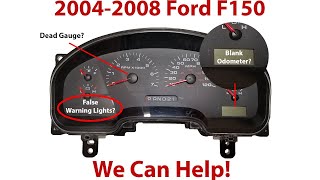
- If you have a 2004-2008 F-150, the instrument cluster is the most likely culprit. Check for dead gauges or a flickering odometer.
- Always try your spare key first. This is the simplest and cheapest diagnostic step.
- Do not immediately assume the PCM is bad. It is more likely that the key, PATS antenna ring, or instrument cluster has failed.
- Repairing this code usually requires professional tools to program keys or modules, making it a difficult DIY fix.
What's Unique About the 2004-2014 Ford F-150
This code is particularly common on the 11th generation F-150 (2004-2008) due to a high failure rate of the instrument cluster, which houses the PATS immobilizer logic. Cracked solder joints on the main connector of the cluster's circuit board are a well-documented weak point, often leading to a misdiagnosis of the PCM or key. While later models (2009-2014) can still experience this code from a bad key or antenna, the instrument cluster itself is a less frequent, though still possible, point of failure.
Generation note: This range covers the 11th generation (2004-2008) and the 12th generation (2009-2014) F-150. The 11th gen is notoriously prone to instrument cluster failures that directly cause PATS issues and this code. While the 12th gen can still have PATS faults, widespread cluster failure is less commonly reported as the primary cause for this specific code, though communication issues and internal faults can still occur.
Symptoms You May Notice
- Engine will not crank or cranks but will not start.
- Rapidly flashing 'theft' or key icon light on the dashboard when trying to start.
- Complete or intermittent loss of power to the instrument cluster gauges and lights (common with cluster failure).
- In some cases, the engine may start and then immediately stall.
- Odometer display shows dashes ('-------') instead of mileage.
- Replacing the PCM when the instrument cluster is the actual point of failure, especially on 2004-2008 models.
- Replacing the ignition switch when the problem is the separate PATS transceiver ring or the key itself.
- Replacing the fuel pump, as the PATS fault prevents the fuel pump from being enabled, mimicking a fuel delivery problem.
Most Likely Causes
- Faulty Instrument Cluster 🔴 High Probability → Shop Instrument Cluster On the 2004-2008 F-150, the PATS module is integrated into the instrument cluster. Cracked solder joints on the cluster's main circuit board connector from heat cycles and vibration are extremely common, causing communication loss with the PCM.
How to confirm: Check for other symptoms of cluster failure like dead/erratic gauges, flickering odometer, or loss of communication with the cluster using an advanced scan tool (like FORScan). Tapping on the dash may cause the cluster to temporarily work, confirming a bad connection. Often accompanied by U-series communication codes.
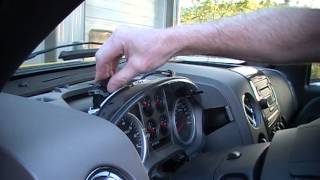
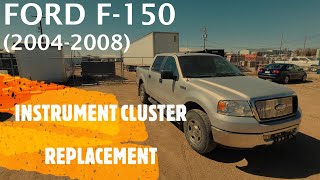
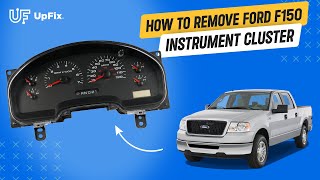
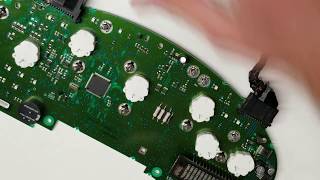
Typical fix: The instrument cluster must be removed and sent to a specialized service for rebuilding the solder joints, or replaced with a new/rebuilt unit. A replacement often requires programming to the vehicle. A rebuild of the original cluster avoids reprogramming. 🎬 See: How to remove the instrument cluster
Est. part cost: $150-$400 for a rebuild service, $400-$800 for a replacement unit. - Defective or Unprogrammed Ignition Key 🟡 Medium Probability → Shop Ignition Switch The transponder chip inside the key can be damaged from being dropped or from normal wear and tear, rendering it unreadable.
How to confirm: The simplest test is to try starting the vehicle with a known-good spare key. If the spare key works, the original key's internal transponder chip is faulty. If you only have one key, a locksmith can test its signal.
Typical fix: A new key must be purchased, cut, and programmed to the vehicle by a Ford dealer or a qualified automotive locksmith with the proper equipment.
Est. part cost: $75-$250 for a new key and programming. - Faulty PATS Transceiver (Antenna Ring) 🟡 Medium Probability The plastic tabs holding the transceiver ring around the ignition cylinder can break, or the internal coil can fail over time, preventing it from energizing and reading the key chip.
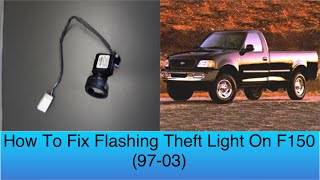
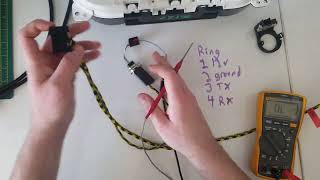
How to confirm: Visually inspect the transceiver ring for damage or loose connections. A diagnostic tool may show a specific code for the transceiver (like B1681 or B1600). A locksmith can test the signal from the ring. The part is located directly behind the ignition lock cylinder. 🎬 Watch: How to troubleshoot the transponder ring
Typical fix: Replace the PATS transceiver ring. This part is typically located around the ignition lock cylinder and is often a separate component from the ignition switch itself. It is a relatively simple replacement.
Est. part cost: $40-$100 - Wiring or Connection Issues ⚪ Low Probability Corrosion or physical damage to the wiring harness between the PCM, instrument cluster, and steering column can interrupt the PATS communication.
How to confirm: Inspect the wiring harness and connectors at the instrument cluster, steering column, and PCM for any signs of damage, corrosion, or loose pins. A wiring diagram is necessary to check for continuity and voltage on the CAN bus lines.
Typical fix: Repair the damaged section of the wiring harness or clean/tighten the affected connectors.
Est. part cost: $5-$50 for wiring supplies.
Rare But Worth Checking
- Faulty Powertrain Control Module (PCM): This is rarely the cause. The PCM should only be suspected after all other possibilities (key, transceiver, cluster, wiring) have been thoroughly ruled out. Misdiagnosing a PCM is a costly mistake.
Diagnosis Steps
- Attempt to start the truck with a known-good spare key. If it starts, the primary key is faulty.
- Observe the dashboard 'theft' light. A rapidly flashing light (about once per second) during cranking confirms a PATS-related fault.
- If you have a 2004-2008 model, check for other signs of instrument cluster failure: Are the gauges working? Is the odometer display on? Flickering or dead gauges strongly suggest the cluster is the root cause. Try tapping the top of the dashboard; if the cluster flickers or comes to life, it almost certainly has bad solder joints.
- Inspect the PATS transceiver ring around the ignition cylinder. Ensure it is securely mounted and its connector is tight.
- Check fuses related to the instrument cluster and ignition system in the passenger compartment fuse panel (check owner's manual for specific fuse numbers, often F21).
- Using a capable scan tool (like FORScan), check for communication with the Instrument Cluster (IC) and look for related DTCs like U1900, B1681, or B1600.
- If all else fails, the issue may be a faulty PCM, but this is uncommon. Professional diagnosis with a Ford-specific scan tool is recommended at this stage.
Parts You'll Likely Need
- Instrument Cluster Repair Service — This is the most common failure on 2004-2008 models. The internal PATS logic fails due to bad solder joints. A repair service is often more reliable and cost-effective than a used cluster.
Trusted brands: Circuit Board Medics, ISS Automotive, UpFix
OEM price range: $500-$800 for new
Aftermarket price range: $150-$400 for repair service - Transponder Key — The chip inside the key can fail, preventing it from communicating with the PATS system.
Trusted brands: Motorcraft, Ilco
OEM price range: $100-$180
Aftermarket price range: $50-$90 - PATS Transceiver Antenna Ring
(OEM #2L1Z-15607-AA (2004-2008) or 8G1Z-15607-A (2009-2014))— This component reads the key chip. If it fails, the PATS system cannot authorize the key.
Trusted brands: Motorcraft
OEM price range: $60-$100
Aftermarket price range: $40-$70
Related Codes That Often Appear With This One
- U1900 — This code indicates a CAN bus communication failure, which is often triggered when the instrument cluster (a major network module) fails and stops communicating with the PCM.
- B1681 — This code specifically indicates the PATS transceiver signal is not received. It helps pinpoint the issue to the key or the antenna ring, rather than a general cluster failure.
- B1600 — Similar to B1681, this code means the PATS ignition key transponder signal was not received, pointing directly to a key or antenna issue.
- P1260 — This code indicates 'Theft Detected, Vehicle Immobilized'. It is often set in conjunction with P1614 as it confirms the PATS system has actively disabled the engine.
Platform-Specific Known Issues
- On 2004-2008 models, a failing instrument cluster can cause numerous other electrical issues beyond the no-start, such as intermittent power to the radio, power windows, and dome light, or cause the brake warning light to stay on. This is due to the cluster being a central node on the vehicle's communication network.
- Some owners on forums report that extreme temperature changes can exacerbate the instrument cluster solder joint issue, with the problem being more frequent on very hot or very cold days.
Mechanic-Grade Diagnostic Values
- Voltage at PATS Transceiver Connector C2007 Pin 1 (RD/YE wire) — expected: Greater than 10 volts with key in ON or OFF position. Failure: Voltage below 10V indicates a power supply issue to the transceiver.
- Resistance at PATS Transceiver Connector C2007 Pin 2 (BK wire) to chassis ground — expected: Less than 5 ohms. Failure: Resistance greater than 5 ohms indicates a bad ground connection for the transceiver.
- Resistance of PATS communication lines (e.g., WH/LG and GY/OG wires) to ground — expected: Greater than 10,000 ohms with modules disconnected. Failure: Low resistance indicates a short to ground in the communication wiring between the transceiver, cluster, and PCM.
Scan Tool Commands That Help
- FORScan / Ford IDS: PATS Parameter Reset — This is required after replacing the Instrument Cluster (IC), Body Control Module (BCM), or Powertrain Control Module (PCM). It forces the modules to re-establish a security handshake. This process involves a mandatory 10-minute security wait and requires two unique, programmed keys to complete.
- FORScan / Ford IDS: Ignition Keys Erase & Program — Used to erase all stored keys from the vehicle's memory and program new ones. This is necessary when you suspect a faulty key or have lost a key. You must have at least two keys available to complete the programming process.
- FORScan / Ford IDS: Read PID Data (Live Data) — Monitor PIDs like 'Number of Stored Keys' (PATS_KEY_CNT) to see how many keys the system recognizes. This can quickly confirm if a key has been properly programmed or if the system has lost its memory.
- FORScan / Ford IDS: Instrument Cluster (IC) Module Reset — After performing other PATS functions or if the cluster is acting erratically, a module reset can force a reboot of the cluster's internal processor, sometimes clearing communication glitches without a full power cycle.
Wiring & Ground Locations
- G200 / G203 — Behind the driver's side (G200) and passenger's side (G203) plastic kick panels, near the floor.. These are primary interior ground points for multiple modules, including the instrument cluster on some models. Corrosion or looseness at these points can cause intermittent cluster power loss and PATS communication failures.
- Instrument Cluster Connector (C220a/C220b for 2004-2008) — The two main connectors on the rear of the instrument cluster.. These connectors are the direct interface for the PATS system housed within the 11th gen cluster. The solder joints for the pins on the cluster's circuit board are a known failure point, causing P1614.
- PATS Transceiver Connector (C252 or C2007) — A 4-pin connector attached to the PATS transceiver ring around the ignition cylinder.. This is where you perform voltage and resistance tests for the transceiver. The key pins are Pin 1 (Power, RD/YE), Pin 2 (Ground, BK), Pin 3 (Receive, WH/LG), and Pin 4 (Transmit, GY/OG).
- Body Control Module (BCM) Ground (2009-2014) — Typically located near the passenger side kick panel, grounded to the chassis nearby.. On 12th gen trucks, the BCM is more involved in PATS communication. A poor ground can cause network errors that mimic PATS failures.
Real Owner Repair Stories
- Ford Truck Enthusiasts Forum User (2002 Ford F-150 (similar PATS system)) — Crank no start, flashing theft light, PATS code P1614 present.
❌ Tried (didn't work) Replaced fuel pump, Replaced PATS transceiver ring, Attempted to reprogram keys
✅ What actually fixed it The user removed an aftermarket, dealer-installed security system that was spliced into the PATS wiring. After removing the module and splicing the original factory wires back together, the factory PATS system functioned correctly and the truck started. - YouTube Repair Video Comment Section (2005 Ford F-150) — Intermittent no-start with flashing theft light. Gauges would sometimes go dead. Code P1614 and U1900.
❌ Tried (didn't work) Replacing the battery, Trying the spare key
✅ What actually fixed it The owner discovered a corroded ground connection behind the driver's side kick panel (G200). After removing the bolt, cleaning the terminals and the chassis contact point with a wire brush, and re-securing the connection, all symptoms disappeared.
OEM Part Supersession History
2L1Z-15607-AA→8L3Z-15607-A, then 8G1Z-15607-A— Part consolidation and minor design updates.
Heads up: The later part numbers are generally backward compatible for the 2004-2008 models, but always verify with the dealer using your VIN. The key difference is often the connector angle or mounting tabs, but the electronic function is the same.
Model Year Variations Within This Range
- 2004-2008 (11th Gen): The PATS control logic is integrated directly into the Instrument Panel Cluster (IPC). A failure of the cluster's internal circuit board is the most common cause of P1614 on these years. The system is a three-way marriage between the key, the IPC, and the PCM.
- 2009-2014 (12th Gen): The PATS logic is more closely tied to the Body Control Module (BCM), though the Instrument Cluster still plays a critical role in the communication chain to the PCM. While cluster failure is less common, BCM failures or communication issues on the HS-CAN bus can also trigger P1614. Replacing the BCM requires a PATS Parameter Reset.
Diagnostic Flowchart
Other Known Issues on This Vehicle
Issues unrelated to this code that are worth knowing about as an owner of this generation:
- Ford 5.4L 3-Valve Cam Phaser Failure 🔴 High — Extremely common on 2004-2010 models with the 5.4L 3V Triton engine, often starting around 70,000-100,000 miles. Causes a 'diesel-like' ticking or knocking sound at idle. (Ref: TSB 06-19-8 addresses the noise and provides diagnostic procedures.)
- Spark Plug Breakage/Ejection (5.4L 3V) 🔴 High — A notorious issue on 2004-2008 models with the 5.4L 3V engine. The two-piece spark plug design can cause the lower portion to seize in the cylinder head and break off during removal, requiring a special extraction tool.
- Fuel Pump Driver Module (FPDM) Corrosion 🔴 High — Common on 2004-2008 models. The module is mounted directly to the steel frame above the spare tire, causing galvanic corrosion that cracks the aluminum housing, allowing water intrusion and failure. This leads to a crank-no-start or stalling. (Ref: Ford issued a Customer Satisfaction Program for this, but not a full recall. The updated part includes standoffs to prevent direct contact with the frame.)
- Integrated Wheel End (IWE) System Failure 🟠 Medium — Affects 4x4 models from 2004 onwards. The vacuum-operated system for engaging the front hubs is prone to leaks from the solenoid, lines, or actuators, causing a grinding or clicking noise from the front wheels that often goes away in 4WD.
- Power Window Regulator Failure 🟡 Low — A very common complaint across the 2004-2014 model years. The window may become slow, stop working, or fall into the door due to a failed regulator motor or cable.
Used vs. New Parts: Buying Guide for This Vehicle
When a used part is the smart pick: A used PATS transceiver (antenna ring) is a safe bet as it's a simple coil and does not require programming. Buying a used ignition lock cylinder with its matching key and transceiver from the same donor vehicle can sometimes be a cost-effective bundle.
Donor-vehicle mileage cap: roughly under 150000 miles for the part to have meaningful remaining life.
What to inspect on the donor part:
- For an Instrument Cluster: Ask the seller for a video of the cluster powered up in the donor vehicle, showing the odometer lit and gauges sweeping during startup. Avoid clusters with visible water damage, sun-faded plastics, or cracked lenses.
- For a Transceiver: Ensure the plastic housing is not cracked and the connector pins are clean and straight.
- Check for matching part numbers. Do not rely on visual similarity alone.
OEM-only on this vehicle (don't cheap out):
- Instrument Cluster: While a used OEM cluster can work, it's risky. It will show the donor's mileage and may require reprogramming with FORScan to match your vehicle's options. A professional rebuild of your ORIGINAL cluster is the safest and most recommended path, as it avoids all programming and mileage issues.
- Transponder Keys: Do not buy used keys. The transponder chips are one-time-programmable to a vehicle and cannot be reliably cleared and reused for a different truck.
Aftermarket brands forum-validated for this vehicle:
- Instrument Cluster Repair: Circuit Board Medics, ISS Automotive, UpFix are well-regarded services.
- Keys: Ilco is a reputable brand for aftermarket keys that locksmiths frequently use.
Brands owners have reported issues with on this vehicle:
- Unbranded 'plug and play' instrument clusters from online marketplaces are a major gamble. They often have compatibility issues or fail quickly.
- Cheap key cloning tools and blank keys can have weak transponder signals that lead to intermittent starting problems.
Real Owner Stories
Aggregated from forums and TSBs cited above. Mileages and costs reflect what owners reported in those sources.
2004-2008 Ford F-150
Symptoms: The truck experienced a no-start issue accompanied by a dead instrument cluster or a rapidly flashing theft light. Owners noted that the problem was often exacerbated by extreme temperature changes, occurring more frequently on very hot or very cold days.
What fixed it: The instrument cluster was removed and sent to a specialized service to have the main circuit board connector solder joints rebuilt.
Cost: $150-$400
Source hint: f150forum.com: Multiple threads corroborated that a faulty instrument cluster is a primary cause of PATS-related no-start issues on 2004-2008 models
Related OBD-II Codes
Frequently Asked Questions
Why does my 2004-2008 F-150 odometer show dashes ('-------') and the truck won't start?
Can I fix the P1614 code on my F-150 by just tapping on the dashboard?
Will replacing the PATS transceiver ring require me to reprogram my keys?
Is there a TSB for the 'diesel-like' ticking noise on my 2004-2010 F-150 5.4L engine?
My 2005 F-150 has a rapidly flashing 'theft' light and won't crank. Is it the fuel pump?
Can I avoid reprogramming costs if I replace my faulty instrument cluster?
Helpful Videos
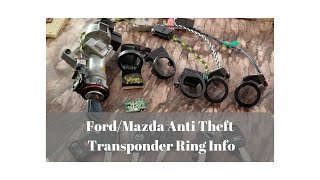
We Have This Part in Stock

The information in this article is provided for general reference and educational purposes only. Vehicle specifications, procedures, and part compatibility can vary by production date, trim level, and region. Always consult your vehicle's factory service manual and verify part numbers before purchasing or performing repairs. Safety-critical components such as airbags, seat belts, and braking systems should be installed by a qualified professional.
- Ford F-150:
- 🧭 Diagnostic Flowchart
- 🎬 Helpful Videos
- 🛍️ Shop This Part
- What's Unique About the 2004-2014 Ford F-150
- Symptoms You May Notice
- Most Likely Causes
- Rare But Worth Checking
- Diagnosis Steps
- Parts You'll Likely Need
- Related Codes That Often Appear With This One
- Platform-Specific Known Issues
- Mechanic-Grade Diagnostic Values
- Scan Tool Commands That Help
- Wiring & Ground Locations
- Real Owner Repair Stories
- OEM Part Supersession History
- Model Year Variations Within This Range
- Other Known Issues on This Vehicle
- Used vs. New Parts: Buying Guide for This Vehicle
- Real Owner Stories
- 2004-2008 Ford F-150
- Related OBD-II Codes
- Frequently Asked Questions
- 🎟️ Get 5% Off