

P1614 on 2008-2012 Ford Kuga: Immobilizer Fault Causes and Fixes
On a 2008-2012 Ford Kuga, code P1614 almost always means the car won't start due to an anti-theft system error. First, try your spare key. If that doesn't work, the most likely cause is a well-known instrument cluster failure due to bad solder joints, which requires a rebuild or replacement. This is a very common issue on this platform.
- P1614 on a 2008-2012 Kuga means the anti-theft system has prevented the car from starting.
- Always try your spare key first to rule out a simple key failure.
- The most likely cause is a faulty instrument cluster due to a known issue with bad solder joints on this platform.
- A temporary 'fix' of hitting the dashboard above the cluster can help confirm the diagnosis.
- Repair typically involves sending the instrument cluster to a specialist for a rebuild or having a locksmith program a new key.
What's Unique About the 2008-2012 Ford Kuga
The 2008-2012 Ford Kuga (Mk1) is built on the same C1 platform as the Ford Focus Mk2 and shares a critical design flaw: the immobilizer security functions are integrated directly into the Visteon-made instrument cluster. This platform is notoriously prone to the instrument cluster's main connector pins developing cracked or 'dry' solder joints on the printed circuit board (PCB) over time. This is attributed to the use of more brittle, lead-free solder combined with years of thermal cycles (heating and cooling) that cause the joints to fracture. This internal failure disrupts communication on the car's CAN bus network, preventing the key's security data from reaching the engine computer and triggering P1614, often along with U1900. This makes a faulty instrument cluster the most probable cause for this code on this specific vehicle, far beyond a simple key issue.
Symptoms You May Notice
- Engine will not start (no-crank or crank-no-start)
- Rapidly flashing red immobilizer/theft warning light on the dashboard
- Engine starts and then immediately stalls
- Warning messages on the instrument cluster display like 'Engine Malfunction' or 'Immobiliser active'
- Instrument cluster gauges (speedo, tach) may behave erratically, drop to zero, or sweep randomly while driving (if the fault is intermittent)
- All dashboard warning lights illuminate like a 'Christmas tree'
- Complete loss of power to the instrument cluster display
- Replacing the starter motor. The starter is often disabled by the PATS system; it is not the root cause of the no-start.
- Replacing the fuel pump. Like the starter, the fuel pump is disabled by the PATS system as a security measure.
- Replacing the Powertrain Control Module (PCM). While a PCM failure is theoretically possible, it is far less common than a faulty key or the instrument cluster on this platform.
Most Likely Causes
- Faulty Instrument Cluster 🔴 High Probability → Shop Instrument Cluster The Kuga Mk1 shares its platform and cluster design with the Focus Mk2, which has a widely documented issue with cracked solder joints on the instrument cluster's main connector. The immobilizer is integrated into the cluster, so this physical board failure breaks the security communication chain.
How to confirm: With the ignition on during a no-start event, a firm tap or whack on the top of the dashboard above the instrument cluster may temporarily restore the connection and allow the car to start. If this works, the cluster is almost certainly the fault. A scan tool will also likely show CAN bus communication errors like U1900 or U0155 along with P1614.
Typical fix: The instrument cluster must be removed and sent to a specialist for the circuit board's connector pins to be re-soldered. This is a permanent fix. Alternatively, it can be replaced with a new or used unit, but this requires programming to the vehicle with tools like FORScan.
Est. part cost: $150-$400 for a professional rebuild service. - Defective or Unprogrammed Ignition Key 🟡 Medium Probability → Shop Ignition Switch
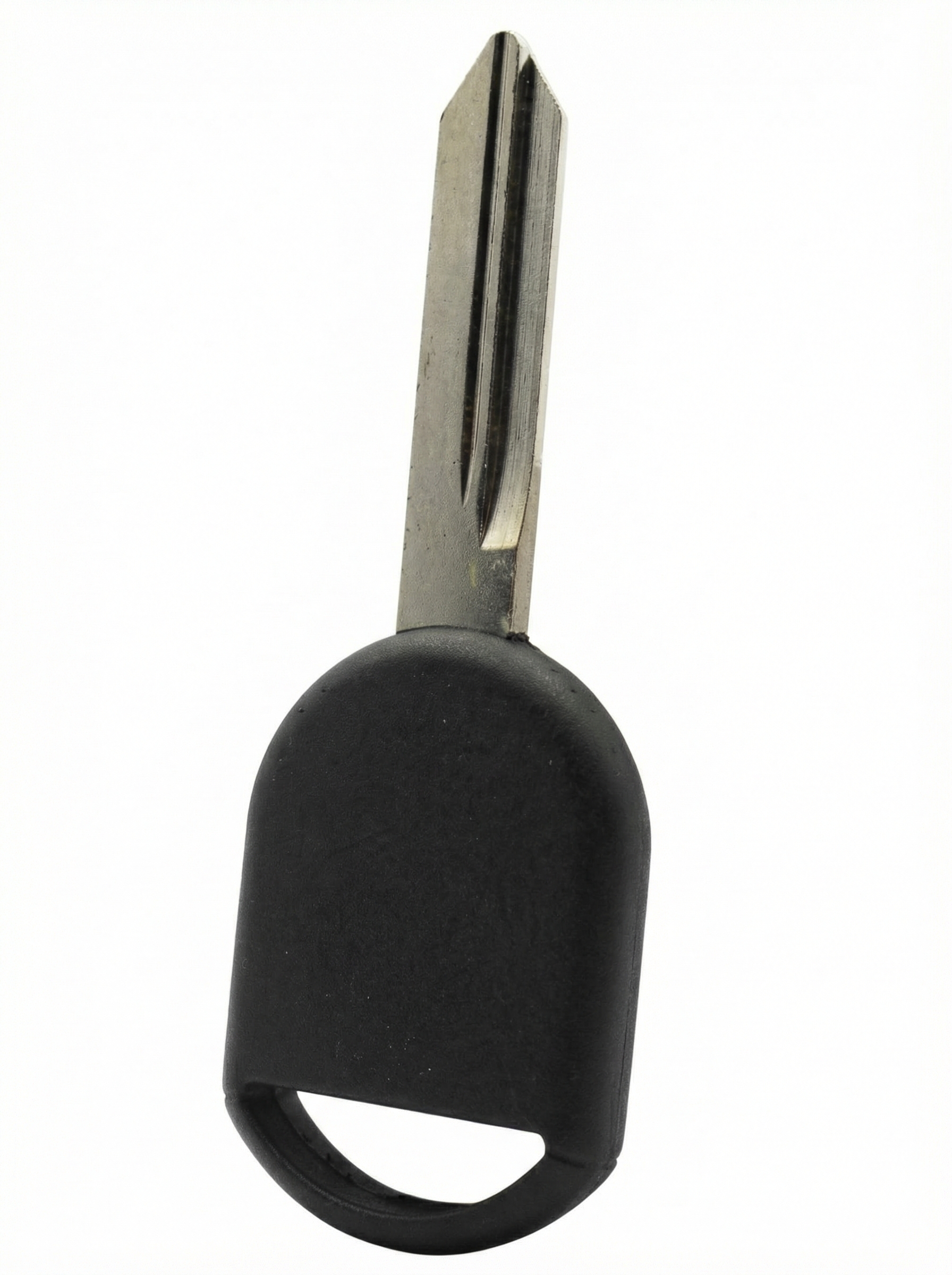
How to confirm: Try starting the vehicle with your spare key. If the spare key works, the transponder chip in the primary key is damaged, the key's battery is dead (on some keyless models), or it has lost its programming.
Typical fix: A new key must be purchased, cut, and programmed to the vehicle by an automotive locksmith or a Ford dealership.
Est. part cost: $100-$300 for a new key and programming. - Weak or Dead Vehicle Battery ⚪ Low Probability → Shop Vehicle Battery
How to confirm: Test the vehicle's 12V battery with a multimeter. A reading below 12.4 volts indicates a weak battery that can cause unpredictable electronic failures, including PATS communication errors and other module glitches.
Typical fix: Charge the existing battery fully or replace it if it can no longer hold a charge.
Est. part cost: $150-$250 for a new battery. - Faulty Immobilizer Antenna Ring ⚪ Low Probability → Shop Antenna
How to confirm: This requires more advanced diagnostics. A scan tool may show specific PATS flash codes. A technician may also check for a signal from the antenna when the key is turned. This is a less common failure point than the cluster itself.
Typical fix: Replace the immobilizer antenna ring located around the ignition cylinder.
Est. part cost: $50-$100
Rare But Worth Checking
- Corroded PCM/ECU Ground Connection: A poor ground connection for the Powertrain Control Module (PCM) can cause a host of communication issues, including PATS faults. This can mimic other faults but is worth checking if the common causes are ruled out.
- Damaged Wiring or Connector: A break, short, or pushed-back pin in the wiring between the immobilizer antenna, instrument cluster, and PCM can cause a communication failure. This is uncommon but can happen due to previous repairs, rodent damage, or chafing.
Diagnosis Steps
- Check for a flashing anti-theft light. A rapid flash (about once per second) indicates the PATS system is active and has detected a fault.
- Try to start the car with a spare key. If it starts, the original key is faulty.
- If the spare key does not work, check the vehicle's main 12V battery. Ensure it has at least 12.4 volts and that the terminals are clean and tight.
- Perform the 'tap test': With the ignition on, firmly hit the top of the dashboard directly above the instrument cluster. Attempt to start the vehicle again. If it now starts or the cluster lights/gauges flicker back to life, this strongly indicates a faulty instrument cluster with bad solder joints.
- Scan the vehicle for codes using a capable OBD-II scanner (ideally one that can read Ford-specific codes, like FORScan). Look for other codes like U1900 or U0155 that point to a communication or cluster issue.
- If the cluster seems okay, inspect the wiring to the immobilizer antenna ring around the ignition switch and the main connector at the back of the instrument cluster for any visible damage or looseness.
- If the issue persists, professional diagnosis is recommended to test the immobilizer antenna and instrument cluster circuits.
Parts You'll Likely Need
- Instrument Cluster Rebuild Service
(OEM #8V4T-10849-xx (multiple suffixes like GK, MJ, HK, LM exist))— This is the most common fix for the 2008-2012 Kuga due to the high failure rate of the cluster's internal solder joints, which control the immobilizer system.
Trusted brands: ECU Testing, Cluster Repairs UK, Autotronics, Remanx
OEM price range: $600-$1000 for a new unit
Aftermarket price range: $150-$400 for a rebuild service - Transponder Key — If the spare key works, the original key's internal transponder chip has failed.
Trusted brands: Motorcraft
OEM price range: $150-$250
Aftermarket price range: $75-$150
Related Codes That Often Appear With This One
- U1900 — This code means 'CAN Communication Bus Fault - Receive Error'. It is the hallmark code that appears with P1614 on these Fords because the root cause (a faulty instrument cluster) is disrupting the entire vehicle communication network.
- U0155 — This code means 'Lost Communication With Instrument Panel Cluster (IPC) Control Module'. It directly points to the instrument cluster being offline, which is the central hub for the immobilizer on this vehicle.
- U0140 — This code means 'Lost Communication With Body Control Module (BCM)'. The BCM is also part of the PATS communication chain and can be affected by the network disruption from the cluster.
Platform-Specific Known Issues
- The instrument cluster on the first-generation Kuga is a known weak point that serves as the gateway for the PATS immobilizer system. Internal solder joint failure on the main connector is extremely common and is the primary cause of P1614 when accompanied by communication codes like U1900.
Mechanic-Grade Diagnostic Values
- PATS Transceiver Power Supply Voltage — expected: Greater than 10 volts with key ON. Failure: Voltage below 10V indicates a power supply issue, possibly from the Smart Junction Box (SJB) fuse.
- PATS Transceiver Ground Circuit Resistance — expected: Less than 5 ohms. Failure: Resistance greater than 5 ohms indicates a poor ground connection.
- PATS Transceiver TX/RX Circuit Resistance to Ground — expected: Greater than 10,000 ohms (with modules disconnected). Failure: Resistance less than 10,000 ohms indicates a short to ground in the communication wiring between the transceiver and the instrument cluster.
Hidden / Shadow Codes Worth Checking
- PATS Flash Codes (e.g., 1:3, 1:6, 2:1): Before setting a hard P-code, the PATS system flashes two-digit codes via the dashboard theft light. For example, Code 13 means 'Unprogrammed key or no chip', Code 16 means 'Problem of data transmission or incorrect calibration of the PCM', and Code 21 means 'Fewer than the minimum required keys are programmed'. (see via Turn the ignition from OFF to ON. The theft light will illuminate for 3 seconds and then go out. If a fault is present, it will then begin to flash. Note the sequence of flashes before and after the pause (e.g., one flash, pause, three flashes = Code 13).)
- B1600, B1681, B2139: These are Body (B-prefix) codes often stored alongside P1614. B1600 indicates the key transponder signal was not received. B1681 indicates the transceiver signal was not detected. B2139 indicates a PCM ID mismatch between the cluster and PCM. These codes provide more specific clues about the PATS failure. (see via Requires a scan tool capable of reading Ford-specific Body codes, such as FORScan or Ford's IDS.)
Scan Tool Commands That Help
- FORScan / Ford IDS: PATS Programming — This function is required to add new keys, erase all keys, or reprogram existing keys. It involves a security access delay (typically 10 minutes) to enter the programming mode.
- FORScan / Ford IDS: PATS Parameter Reset — This is a critical step when replacing the Instrument Cluster (IPC) or Powertrain Control Module (PCM). It synchronizes the security data between the modules. Failing to perform a parameter reset after replacing a cluster will result in a no-start, as the PCM will not recognize the new PATS module.
- FORScan / Ford IDS: Module Initialization / As-Built Data Configuration — When installing a new or used instrument cluster, the vehicle's 'As-Built' data must be written to it. This configures the cluster for the specific options on the vehicle (engine type, transmission, etc.). FORScan can save the As-Built data from the old cluster and write it to the replacement.
- FORScan / Ford IDS: Read PID: NUMKEYS — This live data parameter (PID) shows how many keys are programmed to the vehicle's immobilizer. The system requires a minimum of two programmed keys to function correctly after a key erase procedure.
Wiring & Ground Locations
- C90 — Large multi-pin connector located in the engine bay fuse box (also known as the Battery Junction Box).. This is a primary connector linking the engine bay wiring harness (including PCM signals) to the main vehicle body harness. A poor connection, bent pin, or corrosion here can disrupt the CAN bus and PATS communication between the PCM and the instrument cluster, causing P1614 and U1900.
- C809 — The main 32-pin electrical connector on the rear of the instrument cluster itself.. This is the direct connection point for the instrument cluster. The infamous cracked solder joints occur where the pins for this connector are soldered to the cluster's circuit board. All power, ground, and CAN bus signals for the immobilizer pass through this connector.
- Main Battery Ground Point — On the chassis, located to the right of the battery near the engine compartment fuse box.. A poor main ground connection can cause low voltage and unpredictable behavior in multiple electronic modules, including the instrument cluster and PCM, leading to communication faults.
Real Owner Repair Stories
- Ford Owners Club user 'simcor' (Ford Focus (platform mate)) — Car was immobilized with PATS error code 16 (faulty link between PATS and PCM) after the C90 connector was disconnected and reconnected.
❌ Tried (didn't work) Checking all fuses, cleaning the C90 connector with contact cleaner.
✅ What actually fixed it The C90 connector was not seating properly. The user removed the connector, reseated it firmly, and the car started and ran again, clearing the immobilizer fault. - Ford Focus Club user (Ford Focus 1.6 TDCI (platform mate)) — PATS error 16 (faulty link from PATS to ECM) after removing C90 connector to test glow plugs.
❌ Tried (didn't work) Bending individual socket pins in the connector to make better contact.
✅ What actually fixed it The user suspected the red plastic insert within the C90 connector was preventing a fully seated connection. After removing the red insert and re-plugging the connector, the connection was more positive and the car started immediately.
OEM Part Supersession History
8V4T-10849-xx→Multiple revisions exist (e.g., -GK, -HK, -LM, -LF, -MJ)— Revisions for manufacturing changes, software updates, or bug fixes.
Heads up: Clusters must be matched by fuel type (petrol/diesel) and display type (small/large LCD). A cluster from a diesel car will not work correctly in a petrol car. When replacing, the replacement unit must be programmed with the vehicle's As-Built data using a tool like FORScan to ensure all gauges and features work correctly.
Diagnostic Flowchart
Other Known Issues on This Vehicle
Issues unrelated to this code that are worth knowing about as an owner of this generation:
- Powershift Transmission Faults 🔴 High — Common on models equipped with the 6DCT450 'wet clutch' automatic transmission. Issues include jerky shifts, hesitation, and complete failure. (Ref: Various TSBs exist for software updates and clutch replacements, though not a formal recall for this generation. Poor ground connections are also a known cause of electrical transmission faults.)
- Diesel Particulate Filter (DPF) Clogging 🟠 Medium — Frequent on 2.0 TDCi diesel models, especially those used for short, urban trips. Leads to 'Engine Malfunction' warnings and limp mode.
- Haldex AWD System Malfunction 🟠 Medium — The 'AWD Malfunction' warning is common, often caused by a clogged filter and subsequent pump failure in the Haldex coupling due to a lack of a specified service interval from Ford.
- Premature Clutch Wear (Manual) 🟠 Medium — Some owners of manual transmission models report premature wear of the clutch and pressure plate, sometimes failing under 60,000 miles.
- Electrical Issues (Battery Drain/Alternator) 🟡 Low — Reports of unexplained battery drain and alternator failures are noted, which can cause a variety of seemingly unrelated electronic glitches.
Used vs. New Parts: Buying Guide for This Vehicle
When a used part is the smart pick: A used instrument cluster can be a cost-effective option, but ONLY if you have access to FORScan (with an extended license) and a compatible OBD adapter, or are willing to pay a specialist for programming. The immobilizer data is stored in the cluster, so a used unit is not 'plug and play'.
Donor-vehicle mileage cap: roughly under 120000 miles for the part to have meaningful remaining life.
What to inspect on the donor part:
- Verify the part number (e.g., 8V4T-10849-xx) matches your original cluster's fuel type (petrol/diesel) and screen size.
- Ask the seller if the donor vehicle was running before being dismantled, to reduce the chance of buying a faulty unit.
- Inspect the rear connector for any physical damage or signs of excessive heat.
- Preferably source from a vehicle of a similar or newer year to potentially get a later hardware revision.
OEM-only on this vehicle (don't cheap out):
- For this specific repair, a professional rebuild of the ORIGINAL OEM cluster is often the best path. It avoids all programming and compatibility issues, as the original immobilizer data and mileage are retained.
Aftermarket brands forum-validated for this vehicle:
- For cluster repair, services like ECU Testing, Autotronics, and ACTRONICS are well-regarded for providing permanent fixes to the solder joint issue.
Brands owners have reported issues with on this vehicle:
- There are no complete aftermarket instrument clusters available; the only options are OEM (new or used) or a rebuild service for the original unit.
Real Owner Stories
Aggregated from forums and TSBs cited above. Mileages and costs reflect what owners reported in those sources.
2009 Ford Kuga
Symptoms: The owner experienced a cluster problem where the immobilizer became active and prevented the car from starting.
What fixed it: The issue was identified as a cluster fault, a known weak point on the first-generation Kuga where internal solder joints fail.
Source hint: mhhauto.com thread titled 'Ford Kuga 2009 cluster problem'
Ford Kuga Mk1
Symptoms: The dashboard displayed 'Immobiliser active' and the car would not start.
What fixed it: The instrument cluster required removal and repair of the circuit board's connector pins.
Source hint: kugaownersclub.co.uk thread titled 'Immobiliser active'
Ford C-Max (Platform Mate)
Symptoms: The vehicle demonstrated a total cluster fault leading to a non-start condition and immobilizer errors.
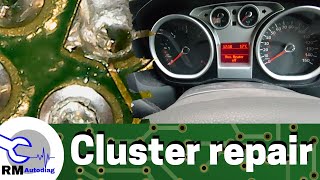
What fixed it: A professional rebuild of the instrument cluster to repair cracked solder joints on the main connector pins.
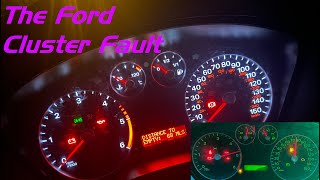
Source hint: YouTube video demonstrating the cluster fault and repair on a platform-mate C-Max
Related OBD-II Codes
Frequently Asked Questions
Why does hitting my dashboard make my Ford Kuga start when the immobilizer light is flashing?
Can I just buy a used instrument cluster from a scrapyard to fix the P1614 code?
Is the P1614 code on my Kuga related to the 'Engine Malfunction' message on my screen?
Could a weak battery be the reason my Kuga shows an immobilizer fault?
Is this immobilizer issue common to other Ford models?
Helpful Videos





We Have This Part in Stock

The information in this article is provided for general reference and educational purposes only. Vehicle specifications, procedures, and part compatibility can vary by production date, trim level, and region. Always consult your vehicle's factory service manual and verify part numbers before purchasing or performing repairs. Safety-critical components such as airbags, seat belts, and braking systems should be installed by a qualified professional.
- Ford Kuga:
- 🧭 Diagnostic Flowchart
- 🎬 Helpful Videos
- 🛍️ Shop This Part
- What's Unique About the 2008-2012 Ford Kuga
- Symptoms You May Notice
- Most Likely Causes
- Rare But Worth Checking
- Diagnosis Steps
- Parts You'll Likely Need
- Related Codes That Often Appear With This One
- Platform-Specific Known Issues
- Mechanic-Grade Diagnostic Values
- Hidden / Shadow Codes Worth Checking
- Scan Tool Commands That Help
- Wiring & Ground Locations
- Real Owner Repair Stories
- OEM Part Supersession History
- Other Known Issues on This Vehicle
- Used vs. New Parts: Buying Guide for This Vehicle
- Real Owner Stories
- 2009 Ford Kuga
- Ford Kuga Mk1
- Ford C-Max (Platform Mate)
- Related OBD-II Codes
- Frequently Asked Questions
- 🎟️ Get 5% Off