

P1614 on 2005-2014 Ford Mustang: PATS Anti-Theft Failure Causes and Fixes
This code means your Mustang's anti-theft system (PATS) can't recognize your key, preventing the engine from starting. The most common fix is trying your spare key, as the original key's internal transponder has likely failed. If that doesn't work, check the main car battery for weakness. A less common but notable cause on this platform is water leaking into the passenger footwell and damaging the Smart Junction Box (SJB).
- P1614 means your Mustang's anti-theft system has been triggered and has disabled the engine.
- ALWAYS try your spare key first. This is the most common and cheapest fix.
- Ensure your car's main battery is fully charged (above 12.4V) before diving into more complex diagnostics.
- The vehicle is not drivable with this code active, as it will not start or is at risk of stalling.
- If a new key is needed, it must be programmed to your specific vehicle by a dealer or qualified locksmith.
What's Unique About the 2005-2014 Ford Mustang
On the S197 Mustang, the PATS system is a robust but sensitive security feature. Unlike some other Ford models from the same era (like the Focus) where a faulty instrument cluster with bad solder joints is the primary culprit for PATS communication errors, the Mustang is more likely to suffer from simpler issues. The most frequent causes are a failed transponder in the key itself or a weak vehicle battery causing communication glitches. A unique and well-documented issue for the S197 Mustang is water intrusion into the passenger footwell, which can corrode the Smart Junction Box (SJB), a critical module in the PATS communication chain, leading to this code and other bizarre electrical problems.
Generation note: The 2005-2014 year range covers the entire S197 generation of the Ford Mustang. This includes the pre-facelift (2005-2009) and post-facelift (2010-2014) models. The PATS system design and common failure points for code P1614 are consistent across this entire generation, though some part numbers for components like the transceiver may differ between early and late models. For later models (approx. 2010+), the Instrument Panel Cluster (IPC) takes a more central role in PATS communication, similar to other Fords of the era.
Symptoms You May Notice
- Engine cranks but will not start
- Engine does not crank at all
- Rapidly flashing anti-theft or security light on the instrument cluster
- Engine starts and immediately stalls
- Remote key fob functions (lock/unlock) may work, but the car still won't start
- Replacing the starter motor when the engine doesn't crank. The PATS system can disable the starter relay, mimicking a failed starter.
- Replacing the fuel pump when the engine cranks but won't start. PATS disables the fuel system, so the pump won't run, but the pump itself is likely fine.
Most Likely Causes
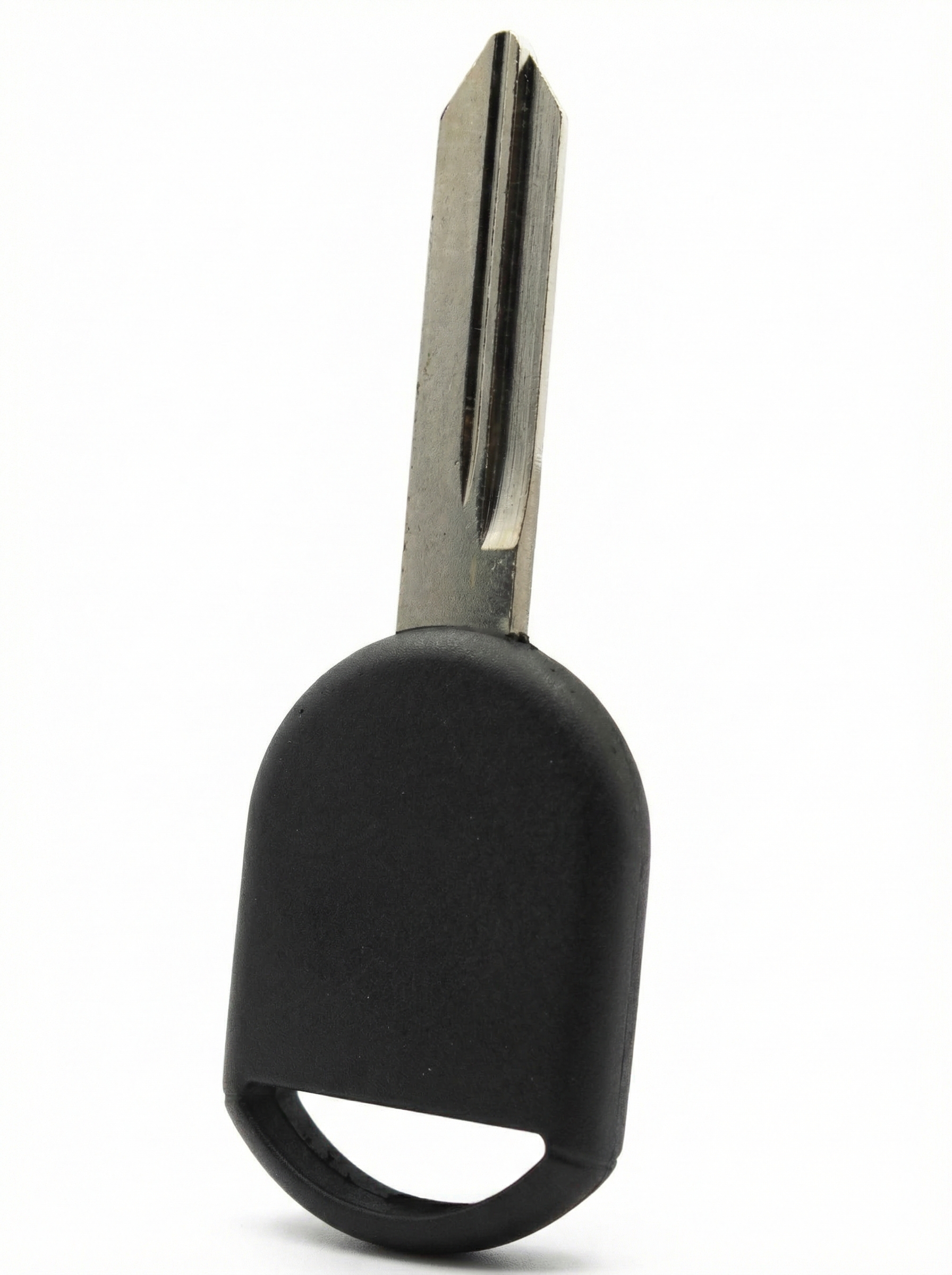
- Defective or Unprogrammed Ignition Key 🔴 High Probability → Shop Ignition Switch The transponder chip inside the key fob (Texas 4D 63 80 Bit) can be damaged by being dropped, by moisture, or simply fail with age. Using a non-transponder (clone) key will also trigger this code.
How to confirm: The easiest test is to try starting the vehicle with a known-good spare key. If the spare key works, the original key is faulty. If you have two working keys, you can program a third yourself.
Typical fix: A new key must be purchased, cut, and programmed to the vehicle by a dealership or an automotive locksmith with the proper equipment. If you lose all keys, the situation is more complex and expensive.
Est. part cost: $75-$250 - Low Vehicle Battery Voltage 🟡 Medium Probability → Shop Vehicle Battery Modern vehicles require stable voltage for all modules to communicate. A weak or dying battery can cause voltage to drop below the required threshold during cranking, leading to communication errors in the PATS system. The S197 Mustang is also known for parasitic battery drains, often from the factory stereo, which can exacerbate this issue.
How to confirm: Test the battery voltage with a multimeter with the engine off. A healthy battery should read above 12.4 volts. If it's lower, or if the voltage drops significantly (below 10V) during a crank attempt, the battery is weak.
Typical fix: Recharge or replace the vehicle's main 12V battery. Ensure battery terminals are clean and tight.
Est. part cost: $150-$250 - Faulty PATS Transceiver (Antenna Ring) 🟡 Medium Probability The transceiver is an antenna coil that sits around the ignition cylinder. Its wiring can become loose or the coil itself can fail, preventing it from reading the key's transponder chip.
How to confirm: After ruling out the key and battery, inspect the transceiver's wiring connector under the steering column cover for a secure fit. A professional may need to test the transceiver's signal output with an oscilloscope or a specialized scan tool.
Typical fix: Replace the PATS transceiver ring. The part itself is relatively inexpensive, but accessing it requires removing the steering column shrouds. OEM part numbers vary by year; examples include 2S6Z-15607-BA for 2005-2008 models and 6E5Z-15607-AA for 2009-2011 models.
Est. part cost: $40-$80 - Water Damage to Smart Junction Box (SJB) ⚪ Low Probability A well-documented design flaw allows water to leak into the passenger footwell, directly onto the SJB (Ford's term for the Body Control Module). This is often caused by clogged cowl drains or failed cowl grommet seals under the windshield. The resulting corrosion on the SJB's circuit board or connectors disrupts communication, which can trigger a P1614 among many other electrical gremlins.
How to confirm: Check for dampness or signs of water staining on the passenger-side carpet and kick panel area. Inspect the SJB and its connectors for green or white corrosion. Multiple, seemingly unrelated electrical issues (faulty lights, windows, locks) are a strong indicator of a compromised SJB.
Typical fix: The water leak MUST be fixed first by cleaning the cowl drains or replacing the grommets per TSB 08-26-7. Then, the SJB must be replaced. The new SJB must be programmed to the vehicle's VIN and PATS system by a dealer or a properly equipped independent shop.
Est. part cost: $300-$500
Rare But Worth Checking
- Faulty Instrument Cluster: → Shop Instrument Cluster While a very common cause on other Fords of this era (like the Focus and Mondeo), it's less common on the Mustang for this specific code. Symptoms often include multiple other electrical issues happening at once, such as erratic gauges, warning lights, and A/C problems. The cluster is an integral part of the PATS communication chain.
- Aftermarket Accessory Interference: Poorly installed remote starters, alarms, or even some auxiliary audio adapters plugged into the stereo have been known to create electrical interference that disrupts PATS communication.
- Faulty Powertrain Control Module (PCM): This is the least likely cause. The PCM is the final link in the chain, and an internal failure can prevent it from validating the key signal. This should only be considered after all other possibilities have been exhausted.
Diagnosis Steps
- Try to start the vehicle with a known-good spare key. If it starts, the primary key is the problem.
- If the spare key doesn't work, check for a rapidly flashing theft light on the dash. This confirms a PATS issue.
- Using a multimeter, check the vehicle's battery voltage. It should be above 12.4V. Charge or replace the battery if it is low.
- Inspect the passenger-side floor and kick panel for any signs of moisture or water damage. A wet Smart Junction Box (SJB) is a likely culprit.
- Inspect all fuses related to the PCM, instrument cluster (IPC), and anti-theft system in both the under-hood fuse box and the interior Smart Junction Box. For 2005-2009 models, check SJB fuse #19 (5A) for PATS and IPC fuse #16 (5A).
- Remove the steering column shrouds and inspect the electrical connector for the PATS transceiver ring around the ignition cylinder. Ensure it is plugged in securely.
- Check for any aftermarket electronics (remote start, alarm, audio adapters) and temporarily disconnect them to see if the interference is removed.
- If the issue persists, a professional scan tool is needed to check for communication between the PATS module, instrument cluster, and PCM to pinpoint the faulty component.
Parts You'll Likely Need
- Transponder Ignition Key
(OEM #164-R8073 (example))— The transponder chip inside the key is the most common point of failure in the PATS system.
Trusted brands: Motorcraft, Strattec
OEM price range: $100-$200
Aftermarket price range: $50-$100 - PATS Transceiver Antenna
(OEM #2S6Z-15607-BA (2005-08), 6E5Z-15607-AA (2009-11))— This antenna reads the key chip. If it fails, no signal is sent, triggering the code. It's a common failure point after the key itself.
Trusted brands: Motorcraft
OEM price range: $60-$90
Aftermarket price range: $40-$70 - Smart Junction Box (SJB) — This module is a central hub for body electronics and PATS communication. It is highly susceptible to failure from water intrusion in the passenger footwell, a known S197 Mustang issue.
Trusted brands: Motorcraft
OEM price range: $300-$500
Aftermarket price range: $200-$400 (Remanufactured)
Related Codes That Often Appear With This One
- U0155 — Lost Communication With Instrument Panel Cluster (IPC) Control Module. This code often appears with P1614 if the instrument cluster itself is the source of the communication breakdown.
- B1600 — PATS Ignition Key Transponder Signal Is Not Received. This is a Body Control Module (BCM/SJB) code that specifically points to the key signal not being read, often appearing alongside the PCM's P1614 code.
- U0140 — Lost Communication With Body Control Module (BCM). This is a critical code that points towards a faulty Smart Junction Box (SJB), often due to water damage, which is a known issue on S197 Mustangs.
Technical Service Bulletins (TSBs) & Recalls
- TSB 08-26-7: Addresses water leaks into the front floor area, a known cause of SJB failure which can lead to PATS communication errors. The fix involves sealing cowl grommets and other potential entry points.
Platform-Specific Known Issues
- The S197 Mustang is highly susceptible to water leaks in the passenger footwell, which directly damages the Smart Junction Box (SJB). This is a primary cause of complex electrical issues, including PATS faults. TSB 08-26-7 was issued to address this leak. Owners report this issue frequently on forums like MustangForums and S197Forum.com.
Mechanic-Grade Diagnostic Values
- PATS Transceiver Power Supply Voltage — expected: Greater than 10 volts at connector C2007, pin 1 (RD/YE wire) with key ON.. Failure: Voltage below 10V indicates a problem with the power feed from the SJB (fuse) or wiring.
- PATS Transceiver Ground Resistance — expected: Less than 5 ohms between connector C2007, pin 2 (BK wire) and a known good chassis ground.. Failure: Resistance higher than 5 ohms indicates a poor ground connection, which is a common failure point.
- PATS Transceiver Communication Lines (TX/RX) Resistance to Ground — expected: Greater than 10,000 ohms between the transmit (GY/OG) and receive (WH/LG) wires and chassis ground.. Failure: Low resistance indicates a short to ground in the wiring harness between the transceiver and the PCM/IPC.
Scan Tool Commands That Help
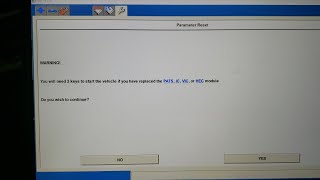
- Ford IDS / FORScan: PATS Parameter Reset — This is a mandatory step when replacing the PCM, Instrument Cluster (IC), or Smart Junction Box (SJB). It re-links the security modules together. Failing to perform this reset will result in a no-start condition even with correctly programmed keys.
- Ford IDS / FORScan: Ignition Key Code Erase — Used when all keys are lost or when you need to ensure only a specific set of keys will work. This function erases all keys from the module's memory. A minimum of two keys must be programmed immediately after to start the vehicle.
- Ford IDS / FORScan: Read Number of Programmed Keys — A quick diagnostic step to verify how many keys the vehicle currently recognizes. If it shows '0' or a number less than expected, it points to a programming or memory issue. The system requires a minimum of two keys to be programmed to enable starting.
- Ford IDS: Programmable Module Installation (PMI) — When replacing the SJB, this function should be used to copy the as-built data and configuration from the old module to the new one. If the old module is non-responsive, 'As-Built' data can be downloaded from Ford's servers using the VIN.
Wiring & Ground Locations
- G201 — Behind the right side of the dash, near the Smart Junction Box (SJB).. This is a primary ground point for several dash components. A loose or corroded G201 can cause intermittent communication issues for the PATS system and other modules controlled by the SJB.
- SJB (Smart Junction Box) — In the passenger side kick panel area.. The SJB is a central node in the PATS communication chain. It is notoriously vulnerable to water damage from clogged cowl drains, which can directly cause P1614 and other electrical faults.
- PATS Transceiver Connector (C2007) — On the PATS transceiver ring, located under the steering column shrouds, around the ignition lock cylinder.. This is the direct connection point for the antenna that reads the key. A loose or corroded connector here will prevent the key signal from ever being received, directly causing a B1600/P1614 code.
- Engine Ground Strap — Multiple locations, but a key one runs from the back of the driver's side cylinder head to the firewall.. While not a direct part of the PATS circuit, a poor engine-to-chassis ground can introduce electrical noise and voltage fluctuations that disrupt sensitive module communications, including the PATS handshake between the PCM and other modules.
Real Owner Repair Stories
- Mustang Forums user (2006 Mustang) — No start, flashing theft light, horn not working.
❌ Tried (didn't work) Initial diagnosis pointed to a simple PATS issue.
✅ What actually fixed it The Smart Junction Box (SJB) had corroded and broken terminals due to a long-term water leak from clogged wiper cowl drains. Replacing the SJB and programming it to the vehicle resolved all issues.
Model Year Variations Within This Range
- 2005-2009: In early S197 models, the PATS communication path is primarily Key -> Transceiver -> SJB -> PCM. The SJB is a very common point of failure, especially due to water intrusion.
- 2010-2014: In the facelifted models, the Instrument Panel Cluster (IPC) plays a more integral role in PATS validation, similar to other Fords of the era. The path is often Key -> Transceiver -> IPC -> PCM. While SJB issues can still occur, a faulty IPC becomes a more probable cause for PATS communication errors on these later models.
Diagnostic Flowchart
Other Known Issues on This Vehicle
Issues unrelated to this code that are worth knowing about as an owner of this generation:
- Passenger Footwell Water Leak / SJB Failure 🔴 High — Very common, especially on 2005-2009 models. Caused by clogged cowl drains or failed cowl grommet seals. Leads to catastrophic failure of the Smart Junction Box. (Ref: TSB 08-26-7)
- Spark Plug Breakage (4.6L 3V V8) 🔴 High — Extremely common on 2005-2008 GT models. The original two-piece spark plug design allows carbon buildup, causing the plug to break apart in the cylinder head during removal.
- Alternator Failure 🟠 Medium — Alternators are known to fail prematurely, often before 100,000 miles, leading to battery charging issues and potential stalling.
- Paint Bubbling/Corrosion on Aluminum Hood 🟠 Medium — Common across all years. Contamination under the paint on the leading edge of the aluminum hood causes bubbling and corrosion.
- Parasitic Battery Drain from Shaker Audio System 🟡 Low → Shop Vehicle Battery — Reported frequently; the factory Shaker 500/1000 stereo system can fail to shut down properly, causing a parasitic drain that kills the battery over a few days.
- Faulty Fuel Level Sender 🟡 Low — The fuel gauge can behave erratically or read incorrectly due to a faulty fuel level sender in the tank, sometimes triggering code P0463.
- Takata Airbag Inflator Recalls 🔴 High — Affects all 2005-2014 models. Part of the massive global Takata recall, the driver and passenger airbag inflators can rupture during deployment, causing serious injury or death. (Ref: Multiple Recalls (e.g., 14V343000, 15V319000))
Used vs. New Parts: Buying Guide for This Vehicle
When a used part is the smart pick: A used PATS transceiver is a good option as it is not a coded part and is a simple electrical coil. A used Smart Junction Box (SJB) can be a cost-effective choice, but ONLY if you can find one with the exact same part number and have access to a tool like FORScan or Ford IDS to perform the necessary programming and parameter reset.
Donor-vehicle mileage cap: roughly under 150000 miles for the part to have meaningful remaining life.
What to inspect on the donor part:
- For an SJB, inspect the connectors for any signs of white or green corrosion, which indicates past water damage.
- Ensure the part number on a used SJB matches your original part number exactly.
- Verify the donor vehicle was not involved in a flood or fire.
OEM-only on this vehicle (don't cheap out):
- Transponder Keys: While aftermarket keys exist, OEM Motorcraft keys are recommended for the highest probability of successful programming and long-term reliability.
Aftermarket brands forum-validated for this vehicle:
- FORScan (Software): A powerful, near-dealer-level diagnostic tool that is highly recommended by the community for diagnosing and programming modules like the SJB.
- Strattec: A common and reliable manufacturer of aftermarket keys that often supplies OEM parts.
Brands owners have reported issues with on this vehicle:
- Cheap, unbranded remote start or alarm systems: These are a frequent source of RFI (Radio Frequency Interference) that can disrupt PATS communication and cause this code.
Real Owner Stories
Aggregated from forums and TSBs cited above. Mileages and costs reflect what owners reported in those sources.
2005-2009 Mustang
Symptoms: Water leaking into the driver and passenger footwell; discovered faulty cowl retainer grommets after checking for clogged drains.
What fixed it: Replaced faulty cowl retainer grommets (Ford part #9R3Z-63517C58-A) as per TSB 08-26-07.
Source hint: reddit.com/r/Mustang - Thread 'Finally fixed leaking in driver and passenger footwell! 05-09 Mustang'
2005-2014 Ford Mustang
Symptoms: Water leak leading to a failed Smart Junction Box (SJB), causing electrical failures and requiring diagnosis of the junction box.
What fixed it: Replacement of the Smart Junction Box (SJB) after addressing the water leak.
Source hint: themustangsource.com - Thread 'Smart Junction Box Replacement'
2005-2009 Mustang
Symptoms: Passenger footwell water leak resulting in damage to the Smart Junction Box and various electrical problems.
What fixed it: Fixed the cowl leak referenced in TSB 07-14-6 (superseded by 08-26-7) to prevent further SJB failure.
Source hint: s197forum.com - Thread 'How to fix the Water Leak on the Passenger floor'
Related OBD-II Codes
Frequently Asked Questions
My 2005 Mustang has water in the passenger footwell and won't start. Is there a technical service bulletin for this?
Can I program a new transponder key for my 2005-2014 Mustang myself if I only have one working key?
What specific transponder chip does my Mustang key use, and can it fail?
Is the P1614 code on my Mustang related to the factory stereo draining the battery?
What is the part number for a replacement PATS transceiver ring on a 2010 Mustang?
Could an aftermarket remote start system cause a P1614 code on my Mustang?
Helpful Videos

Used OEM Parts in Stock
New Aftermarket Parts Available


The information in this article is provided for general reference and educational purposes only. Vehicle specifications, procedures, and part compatibility can vary by production date, trim level, and region. Always consult your vehicle's factory service manual and verify part numbers before purchasing or performing repairs. Safety-critical components such as airbags, seat belts, and braking systems should be installed by a qualified professional.
- Ford Mustang:
- 🧭 Diagnostic Flowchart
- 🎬 Helpful Videos
- 🛍️ Shop This Part
- What's Unique About the 2005-2014 Ford Mustang
- Symptoms You May Notice
- Most Likely Causes
- Rare But Worth Checking
- Diagnosis Steps
- Parts You'll Likely Need
- Related Codes That Often Appear With This One
- Technical Service Bulletins (TSBs) & Recalls
- Platform-Specific Known Issues
- Mechanic-Grade Diagnostic Values
- Scan Tool Commands That Help
- Wiring & Ground Locations
- Real Owner Repair Stories
- Model Year Variations Within This Range
- Other Known Issues on This Vehicle
- Used vs. New Parts: Buying Guide for This Vehicle
- Real Owner Stories
- 2005-2009 Mustang
- 2005-2014 Ford Mustang
- 2005-2009 Mustang
- Related OBD-II Codes
- Frequently Asked Questions
- 🎟️ Get 5% Off