

P1621 on 2010-2015 Hyundai Tucson: Immobilizer Communication Error Causes and Fixes
On a 2010-2015 Tucson, P1621 most likely indicates an immobilizer communication failure, causing a 'crank, no start' issue. The most common fix is replacing the immobilizer antenna coil around the ignition switch, which costs about $50-$100 for the part and is a straightforward DIY repair. The likely OEM part number for this coil is 95440-2S000.
- P1621 on a 2010-2015 Tucson almost certainly means there's a problem with the anti-theft (immobilizer) system, not a fuel valve.
- The primary symptom will be an engine that cranks over but refuses to start, often accompanied by a flashing immobilizer light on the dash.
- Before attempting any expensive repairs, try all of your spare keys. If one works, the problem is isolated to the non-working key.
- The most likely part to have failed is the immobilizer antenna coil (Part # 95440-2S000) around the ignition switch, which is a relatively cheap and easy part to replace.
- Replacing the antenna coil does not require any special programming, making it a DIY-friendly job.
What's Unique About the 2010-2015 Hyundai Tucson
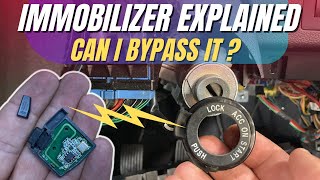
The 2010-2015 Tucson uses Hyundai's SMARTRA immobilizer system. While generally reliable, a common point of failure with age is the antenna coil that surrounds the ignition lock cylinder. This component is responsible for energizing the transponder chip 🎬 Watch: How the immobilizer and transponder chip work together. in the key and reading its signal. When it fails, communication is lost, triggering the P1621 code and a no-start condition, which can sometimes be intermittent, especially in cold weather or due to vibrations causing a temporary break in the coil's internal wiring.
Symptoms You May Notice
- Engine cranks but does not start.
- Immobilizer warning light on the dashboard (a car symbol with a key inside) is flashing, or does not illuminate at all when the key is turned to 'ON'.
- The engine may start and run briefly (for 1-2 seconds) before stalling.
- The issue may be intermittent, working sometimes and failing at other times. Some owners report that jiggling the key in the ignition can temporarily resolve the issue, pointing towards the antenna coil.
- In some cases, the vehicle may stall while driving, though this is less common than a no-start.
- Replacing the starter motor. A bad starter typically results in a 'no crank' or 'single click' condition, whereas with P1621 the engine will usually crank over normally. 🎬 See how to fix a Tucson crank-no-start condition.
- Replacing the fuel pump. While a no-start can be a fuel pump issue, the presence of P1621 specifically points to the anti-theft system as the reason fuel delivery is disabled by the ECM.
Most Likely Causes
- Faulty Immobilizer Antenna Coil 🔴 High Probability → Shop Antenna This component is a known failure point in many Hyundai/Kia models of this era. Over time, the coil's internal wiring can develop micro-fractures from heat cycles and vibration, leading to a weak or non-existent signal.
How to confirm: Visually inspect the wiring leading to the antenna coil for breaks. A more definitive test involves measuring the coil's resistance with a multimeter (specifications are often hard to find, but you are looking for an open or short circuit). Given the high failure rate and low part cost, replacement is a common diagnostic step. A service manual for a similar system suggests a resistance of approximately 8.5 Ω. 🎬 Watch this walkthrough on diagnosing Hyundai immobilizer antenna issues.
Typical fix: Replace the immobilizer antenna coil. This part is a ring that fits around the ignition lock cylinder and is accessible after removing the steering column shrouds. It is typically held by one or two screws and a single electrical connector. This repair does not require programming.
Est. part cost: $50-$100 - Defective Key Transponder 🟡 Medium Probability Key fobs can be damaged by being dropped, exposure to moisture, or simple electronic failure of the internal transponder chip.
How to confirm: Try starting the vehicle with all available spare keys. If the vehicle starts and runs normally with a spare key, the original key's internal transponder chip is likely the issue. Also, check the key fob battery, as a very weak battery can sometimes cause communication issues, though it's less common for the immobilizer chip which is passively powered by the antenna coil.
Typical fix: Replace the faulty key. A new key will need to be cut and programmed to the vehicle by a dealership or an automotive locksmith with the proper equipment.
Est. part cost: $150-$300 - Wiring or Connector Issue ⚪ Low Probability
How to confirm: Visually inspect the wiring harness and connectors between the immobilizer antenna coil, the SMARTRA module, and the ECM. Check for loose connections, corrosion in the pins, or damaged wires. A multimeter can be used to check for continuity and proper voltage on the signal and power wires according to the vehicle's service manual. In some Hyundai models, a connector for a headlight dimmer switch is identical to the SMARTRA module connector and can be mistakenly swapped during dash repairs, causing a no-start.
Typical fix: Repair the damaged section of the wiring harness or clean/replace the faulty connector.
Est. part cost: $5-$50 - Low Battery Voltage ⚪ Low Probability → Shop Vehicle Battery
How to confirm: A weak or failing vehicle battery can cause voltage drops during cranking that are significant enough to disrupt communication between modules, including the immobilizer system. Test the battery voltage; it should be above 12.4V with the engine off. Check the voltage during cranking; if it drops below 9.6V, the battery is suspect.
Typical fix: Charge or replace the vehicle's 12V battery.
Est. part cost: $100-$250
Rare But Worth Checking
- Failed SMARTRA Module: While less common than the antenna coil, the SMARTRA control unit itself can fail. This is a more complex and expensive repair, as a new module must be programmed to the vehicle's keys and ECM. Diagnosis typically requires a dealer-level scan tool to check for communication with the module.
- Failed Engine Control Module (ECM): → Shop Engine Control Module (ECM) In very rare cases, the fault may lie within the ECM's immobilizer circuit. This is the least likely cause and should only be considered after all other possibilities have been exhausted and confirmed with advanced diagnostics.
Diagnosis Steps
- Observe the immobilizer warning light (a car symbol with a key inside) on the dashboard when you turn the ignition to 'ON'. Note if it flashes, stays on, or doesn't light up at all. A flashing light during a crank-no-start is a classic symptom.
- Scan the vehicle for any other fault codes. Codes like P1690 or B1688 can help confirm an immobilizer system fault.
- Try starting the vehicle with all available spare keys. If a spare key works, the problem is with the original key.
- Check the vehicle's main battery voltage. Ensure it is above 12.4V and does not drop below 9.6V during cranking. A low voltage condition can cause various communication errors.
- If no keys work and the battery is healthy, the next step is to inspect the immobilizer antenna coil. Remove the plastic shrouds around the steering column to access the ignition cylinder.
- Visually inspect the antenna coil and its connector for any signs of damage, loose wires, or corrosion. Ensure the connector is fully seated.
- If the wiring looks good, the most common and cost-effective next step is to replace the immobilizer antenna coil (OEM Part Number likely 95440-2S000).
- If a new antenna coil does not resolve the issue, the problem likely lies with the wiring between the coil and the SMARTRA module, or the module itself. This may require professional diagnosis with advanced scan tools to check for live data and communication signals.
Parts You'll Likely Need
- Immobilizer Antenna Coil
(OEM #95440-2S000)— This is the most frequent failure point in the Hyundai immobilizer system that causes a P1621 code and a no-start condition. It is a relatively inexpensive and easy part to replace.
Trusted brands: Hyundai (Genuine OEM)
OEM price range: $50-$100
Aftermarket price range: $40-$80
Related Codes That Often Appear With This One
- P1690 — This code also relates to a SMARTRA error ('No Response from Smartra') and can appear alongside P1621, indicating a definite problem within the immobilizer system.
- B1688 — This is another Hyundai-specific code for 'SMARTRA Antenna Error', pointing directly to a faulty antenna coil.
- P1623 — This code for 'Immobilizer Code Word/ID Number Write Failure' can also appear in conjunction with P1621, suggesting a deeper communication or programming issue between modules.
Technical Service Bulletins (TSBs) & Recalls
- NHTSA Campaign 13V113000: Recall for faulty brake light switch affecting multiple Hyundai models, including the Tucson.
- NHTSA Recall 17V226000: Recall related to Theta II engine bearing wear.
- TSB 21-01-023H-1: Describes the Knock Sensor Detection System (KSDS) software update campaign for detecting abnormal engine bearing noise.
Mechanic-Grade Diagnostic Values
- Immobilizer Antenna Coil Resistance — expected: Approximately 8.5 Ω. Failure: A reading of infinity (open circuit) or near zero (short circuit).
- SMARTRA Module Signal Voltage (to ECM) — expected: Approximately 5.48V with ignition ON. Failure: Significantly lower voltage or no voltage, indicating a wiring or module issue.
- SMARTRA Module Power Supply — expected: Full battery voltage (approx. 12V) on the main power wire (often red).. Failure: Low or no voltage indicates a blown fuse or wiring fault before the module.
- SMARTRA Module Ground — expected: Near-zero resistance to chassis ground on the ground wire (often black).. Failure: High resistance indicates a poor ground connection, a common source of electronic issues.
Scan Tool Commands That Help
- Hyundai GDS (Global Diagnostic System): Immobilizer Key Teaching — Required after replacing the SMARTRA module or ECM, or when adding new keys. This function registers the transponder IDs to the vehicle. A PIN code is required.
- Hyundai GDS (Global Diagnostic System): Neutralize ECM / Neutralize SMARTRA — This function puts the module into a 'virgin' state, erasing all previously learned key data. It is a necessary step before programming a used module from another vehicle (if compatible) or after losing all keys. This requires a valid PIN code.
- Hyundai GDS (Global Diagnostic System): Live Data Monitoring (ECU, KEY, Smartra STATUS) — During diagnosis, a technician can monitor the status of the key, SMARTRA module, and ECM to see which component is not 'learnt' or recognized, helping to pinpoint the communication failure.
Wiring & Ground Locations
- SMARTRA Module — Typically mounted behind the instrument cluster, on a metal cross-bar of the dashboard support structure.. This is the control unit that processes the signal from the key and antenna. Accessing its connector is necessary for voltage and continuity tests of the immobilizer circuit.
- SMARTRA Connector — Plugged into the SMARTRA module behind the instrument cluster.. Technician videos show the wire functions are typically: Red (Main Power), Black (Ground), and two wires (often in a twisted pair) for the antenna coil. The remaining wire is the communication line to the ECM (often a white wire with a black stripe).
- Antenna Coil Connector — A small connector attached to the antenna coil ring around the ignition lock cylinder, accessible after removing the steering column shrouds.. This is the primary point for testing the resistance of the antenna coil itself.
Real Owner Repair Stories
- YouTube video by AL Ansari Automobile (Hyundai Verna (shares similar SMARTRA system)) — Crank no-start, security light flashing, communication error codes.
❌ Tried (didn't work) The video notes that customers often replace keys or have them reprogrammed multiple times without success.
✅ What actually fixed it The technician discovered that the connector for the headlight dimmer/leveler switch was identical to the SMARTRA module connector. A previous repairer had swapped them. Plugging the correct harness into the SMARTRA module resolved the no-start condition instantly.
OEM Part Supersession History
95440-2S000→N/A— This part number appears to be specific to the 2010-2015 Tucson with a standard key. While other Hyundai models use similar antenna coils, the part numbers change for different generations and for smart key systems.
Heads up: Part number 95440-2S500 is for the smart key system and is not compatible. Part number 95401-C1000 is for a 2019+ Tucson and is not compatible.
Model Year Variations Within This Range
- 2010-2015: The 2010-2015 Tucson (LM generation) with a standard 'turn-key' ignition was part of a group of Hyundai/Kia vehicles that did not have an engine immobilizer as standard equipment in some markets/trims, leading to high theft rates. However, if the vehicle is logging a P1621 code, it *does* have the SMARTRA immobilizer system. This is a key distinction, as the widely publicized theft issue and subsequent software update do not apply to vehicles already equipped with this hardware.
Diagnostic Flowchart
Other Known Issues on This Vehicle
Issues unrelated to this code that are worth knowing about as an owner of this generation:
- Theta II Engine Failure 🔴 High — Widespread across multiple model years, particularly affecting the 2.4L GDI engine. Problems can arise at any mileage but often appear between 60,000 and 120,000 miles. (Ref: Multiple recalls (e.g., NHTSA Recall 15V568000, 17V226000) and a class-action lawsuit settlement providing lifetime warranty coverage for the engine short block for qualifying vehicles that received a Knock Sensor Detection System (KSDS) software update.)
- Spontaneously Shattering Panoramic Sunroof 🟠 Medium — Reported across many vehicles equipped with the panoramic sunroof. Can occur without any impact, often described as a loud 'explosion'. (Ref: A class-action lawsuit resulted in a settlement that extended the warranty for the panoramic sunroof to 10 years/120,000 miles and provided reimbursement for past repairs.)
- Excessive Oil Consumption 🟠 Medium — Common on the 2.0L and 2.4L engines, often related to piston ring or cylinder wall issues. Can lead to low oil levels and potential engine damage if not monitored. (Ref: Hyundai has issued TSBs like 21-EM-002H to provide guidelines for dealers to perform an oil consumption test and subsequent repairs, which can range from software updates to engine replacement.)
- Faulty Brake Light Switch 🟡 Low — Very common across many Hyundai/Kia models of this era, affecting a large number of vehicles. (Ref: Subject to a major recall (NHTSA Campaign 13V113000). A faulty switch can cause brake lights to fail, the ESC light to illuminate, and prevent the vehicle from shifting out of Park.)
Used vs. New Parts: Buying Guide for This Vehicle
When a used part is the smart pick: A used Immobilizer Antenna Coil from a junkyard is a very reasonable choice. It is a simple, non-wearing electronic component that either works or doesn't. Given the low cost of a new part, the savings may be minimal, but it is a safe part to source used.
Donor-vehicle mileage cap: roughly under 150000 miles for the part to have meaningful remaining life.
What to inspect on the donor part:
- Ensure the connector is not damaged or corroded.
- Check that the plastic ring is not cracked or broken.
- If possible, get the part from a vehicle that was not in a frontal collision to reduce the chance of unseen damage.
OEM-only on this vehicle (don't cheap out):
- SMARTRA Module
- Engine Control Module (ECM)
Brands owners have reported issues with on this vehicle:
- Unbranded 'emulator' modules from non-reputable online sellers should be avoided. While they claim to bypass the immobilizer, they can cause other CAN bus communication issues and are often a last resort rather than a proper fix.
Real Owner Stories
Aggregated from forums and TSBs cited above. Mileages and costs reflect what owners reported in those sources.
2010-2015 Hyundai Tucson (LM)
Symptoms: Intermittent no-start issues where the engine would crank but fail to fire; the problem was sometimes bypassed by jiggling the key in the ignition.
What fixed it: Replacement of the immobilizer antenna coil.
Source hint: hyundai-forums.com: Numerous threads in the Tucson (LM) section
2016 Kia Sportage (SL)
Symptoms: Sudden stall and immobilizer engagement while operating the vehicle.
What fixed it: Diagnosis of the SMARTRA immobilizer system (platform mate sharing the same antenna coil design).
Source hint: reddit.com/r/kia
2010-2015 Hyundai Tucson
Symptoms: Engine starts and runs for 1-2 seconds before stalling; immobilizer warning light (car with key symbol) does not illuminate when the key is turned to 'ON'.
What fixed it: Inspecting and ensuring the SMARTRA module connector was not mistakenly swapped with the identical headlight dimmer switch connector during dashboard repairs.
Source hint: Article Context - Wiring or Connector Issue
Related OBD-II Codes
Frequently Asked Questions
My 2012 Tucson won't start and the car icon with a key inside is flashing. Is this related to the Theta II engine recall?
I heard there is a recall for the brake light switch on the 2010-2015 Tucson; could that cause my P1621 code?
Can I fix the intermittent no-start on my Tucson by jiggling the key, or do I need to replace parts?
Does the repair for the immobilizer antenna coil require expensive dealer programming?
Could my Tucson's no-start be caused by a simple battery issue?
Is there a risk of the car stalling while I am driving with this code?
Helpful Videos

Used OEM Parts in Stock
New Aftermarket Parts Available

The information in this article is provided for general reference and educational purposes only. Vehicle specifications, procedures, and part compatibility can vary by production date, trim level, and region. Always consult your vehicle's factory service manual and verify part numbers before purchasing or performing repairs. Safety-critical components such as airbags, seat belts, and braking systems should be installed by a qualified professional.
- Hyundai Tucson:
- 🧭 Diagnostic Flowchart
- 🎬 Helpful Videos
- 🛍️ Shop This Part
- What's Unique About the 2010-2015 Hyundai Tucson
- Symptoms You May Notice
- Most Likely Causes
- Rare But Worth Checking
- Diagnosis Steps
- Parts You'll Likely Need
- Related Codes That Often Appear With This One
- Technical Service Bulletins (TSBs) & Recalls
- Mechanic-Grade Diagnostic Values
- Scan Tool Commands That Help
- Wiring & Ground Locations
- Real Owner Repair Stories
- OEM Part Supersession History
- Model Year Variations Within This Range
- Other Known Issues on This Vehicle
- Used vs. New Parts: Buying Guide for This Vehicle
- Real Owner Stories
- 2010-2015 Hyundai Tucson (LM)
- 2016 Kia Sportage (SL)
- 2010-2015 Hyundai Tucson
- Related OBD-II Codes
- Frequently Asked Questions
- 🎟️ Get 5% Off