

P1622 on 1994-1998 Saab 900: A/C Relay Circuit Fault Causes and Fixes
On a 1994-1998 Saab 900, code P1622 almost always means there is an electrical fault in the A/C compressor relay circuit, causing the air conditioning to not work. The most common fixes are replacing the A/C relay or repairing the wiring between the relay and the engine control unit.
- P1622 on a 1994-1998 Saab 900 means your A/C isn't working due to an electrical fault in the compressor relay's circuit.
- The car is perfectly safe to drive, but you won't have air conditioning until it's fixed.
- The most likely cause is a simple, inexpensive A/C relay failure. Try swapping the A/C relay with the horn relay to quickly diagnose the problem.
- If the relay is not the issue, the problem is likely a damaged wire or corroded pin between the relay and the engine computer.
What's Unique About the 1994-1998 Saab 900
It is critical to know that this P1622 definition is specific to Saabs with the Motronic fuel injection system, like the NG900. On later Saabs with Trionic 7 (T7) engines (e.g., a 2007 Saab 9-5), P1622 indicates a much more serious 'No Bus Data' communication failure that can cause a no-start condition and multiple system failures. On other GM vehicles, P1622 can mean 'Cylinder Select' or other unrelated issues. For the 1994-1998 900, however, this code is exclusively related to the A/C system and is much less severe.
Generation note: The 1994-1998 year range covers the 'New Generation' Saab 900 (NG900), which was based on the GM2900 platform. This is distinct from the 'Classic' Saab 900 which ended production in 1993 (with some convertibles in early 1994). This P1622 code applies specifically to the OBD-II equipped NG900 models.
Symptoms You May Notice
- Air conditioning (A/C) does not work; the compressor clutch will not engage.
- The 'CHECK ENGINE' light is illuminated.
- A/C light on the climate control panel may blink or not illuminate.
- Replacing the A/C compressor
- Recharging the A/C system with refrigerant
- Replacing the climate control unit (ACC/MCC)
Most Likely Causes
- Faulty A/C Compressor Relay 🔴 High Probability → Shop A/C Compressor Relays are electromechanical switches that wear out over time from repeated use and can fail internally. Given the age of the vehicle, this is a very common failure point.
How to confirm: Locate the A/C relay in the fuse box in the engine compartment. On the NG900, it's a standard black relay. A simple test is to swap it with an identical relay from a non-critical system (like the horn). If the A/C starts working and the horn stops working, the relay is bad.
Typical fix: Replace the faulty relay with a new one. This is a simple plug-and-play repair.
Est. part cost: $10-$25 - Open or Short in the A/C Relay Control Circuit Wiring 🟡 Medium Probability Over decades, wiring insulation can become brittle and crack, or wires can rub against chassis components, causing a short or an open circuit. This is especially common in the engine bay where wires are exposed to heat and vibration. Forum users have noted that wiring near the ECU, often located under the wheel arch, can be susceptible to corrosion and damage.
How to confirm: Visually inspect the wiring harness between the engine control module (ECU) and the A/C relay socket for any signs of damage, chafing, or corrosion. Use a multimeter to check for continuity from the specific ECU pin to the corresponding terminal on the relay socket. The control wire is often Yellow/White. The specific ECU pin is pin 40 on Motronic 2.8.1 (approx. 1994-1995) and pin 33 on Motronic 2.10.2 (approx. 1996-1998). Also check for a short to ground or 12V.
Typical fix: Repair the damaged section of wire using a butt connector and heat shrink tubing for a durable, weather-resistant fix.
Est. part cost: $5-$15 - Poor Connection at Relay or ECU ⚪ Low Probability Corrosion can build up on the relay terminals or the ECU connector pins over time, leading to high resistance or an intermittent connection. The ECU connector, sometimes located in a spot exposed to moisture like a wheel well, can be a specific point of failure.
How to confirm: Remove the A/C relay and inspect its pins and the socket terminals for green or white corrosion. Disconnect the ECU connector (with the battery disconnected) and inspect the specific pin for the A/C circuit (pin 40 or 33) for any signs of corrosion or damage.
Typical fix: Clean the corroded terminals using a small wire brush or electrical contact cleaner. Apply a small amount of dielectric grease before reconnecting to prevent future corrosion.
Est. part cost: $5-$10
Rare But Worth Checking
- Faulty Engine Control Module (ECU): → Shop Engine Control Module (ECM) This is very rare. The internal driver circuit in the ECU that grounds the relay can fail. This should only be considered after all wiring and the relay itself have been proven to be good.
Diagnosis Steps
- Verify that the only symptom is that the A/C is not working. If other unrelated electrical issues are present, the problem may be broader.
- Scan for codes and confirm P1622 (or P1621) is present.
- Locate the A/C relay in the main fuse box under the hood. The fuse box lid should have a diagram.
- As a simple first test, swap the A/C relay with an identical relay for a different function (e.g., the horn relay). If the A/C now works, the original relay has failed and needs to be replaced.
- If the relay swap does not work, inspect the relay's socket terminals and the relay pins for corrosion. Clean as necessary.
- With the relay removed, use a multimeter to check for 12V power at terminal 30 and terminal 86 of the relay socket when the key is on.
- Check the control circuit wiring for continuity between the ECU connector pin and terminal 85 on the relay socket. Refer to the SAAB WIS for the correct pin number for your specific year and engine (Pin 40 for Motronic 2.8.1, Pin 33 for Motronic 2.10.2).
- While checking continuity, also check if the control wire (often Yellow/White) is shorted to ground or to a 12V source.
- If wiring and the relay are confirmed to be good, the fault may lie within the Engine Control Module, which is a rare failure.
Parts You'll Likely Need
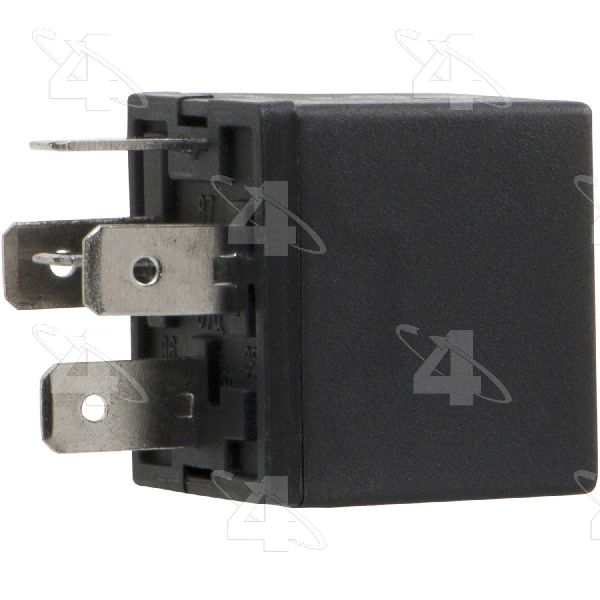
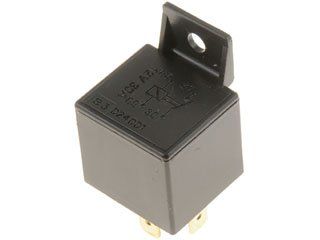
- A/C Compressor Relay
(OEM #4109070)— This is the most common failure point for this code. It's an inexpensive and easy part to replace.
Trusted brands: Bosch (e.g., 0332019151), Hella, Standard Motor Products, Genuine Saab
OEM price range: $20-$40
Aftermarket price range: $10-$25
Related Codes That Often Appear With This One
- P1621 — P1621 is the companion code for the same A/C relay circuit. One code may indicate a short to ground while the other indicates a short to positive or an open circuit. Seeing either code points to the same set of potential electrical issues.
Platform-Specific Known Issues
- Owner Experience: Simple Relay Swap Fix: An owner on a popular Saab forum reported resolving a P1622 code and inoperative A/C in minutes. They swapped the A/C relay with the identical horn relay in the engine bay fuse box. The A/C immediately began working, confirming the relay was the sole cause of the problem. A new relay, costing around $15, permanently fixed the issue.
- Owner Experience: Corroded ECU Pin: After confirming the relay was good, another owner traced the fault to the ECU connector. They found green corrosion on the specific pin for the A/C relay control circuit (pin 33 on their 1997 model). Cleaning the pin with electrical contact cleaner and applying dielectric grease restored the connection and resolved the P1622 code.
Mechanic-Grade Diagnostic Values
- A/C Relay Coil Resistance — expected: 50 - 200 Ohms. Failure: A reading of 'OL' (Open Line) indicates a broken internal coil. A very low resistance (near 0 Ohms) indicates a shorted coil. In either case, the relay is bad.
- Voltage at A/C Relay Socket, Pin 85 (Control) — expected: Near 0V (Ground) when A/C is commanded ON by ECU.. Failure: If voltage remains at battery voltage (~12V) when A/C is requested, it means the ECU is not providing the ground signal to activate the relay. This points to a wiring issue, a bad ECU driver, or a problem with the A/C request signal reaching the ECU.
- Voltage at A/C Relay Socket, Pin 86 (Coil Power) — expected: ~12V with ignition ON.. Failure: 0V indicates a problem upstream of the relay, such as a blown fuse or a break in the power supply wire.
Scan Tool Commands That Help
- Saab Tech 2 / ISAT Scan Tool: ACTIVATE -> AC RELAY — This is a powerful diagnostic step. Use this command to force the ECU to ground the A/C relay. If you hear the relay click, it confirms the ECU driver, wiring from the ECU to the relay, and the relay coil itself are all functional. The fault would then be on the high-current side of the relay (pins 30/87) or the compressor itself. If it does not click, the fault is in the control circuit.
Wiring & Ground Locations
- Motronic ECU — Located under the plastic scuttle panel (the cover below the windscreen wipers) in the engine bay.. This is the source of the control signal for the A/C relay. The connector here is a critical test point, but can be prone to water intrusion and corrosion if the scuttle panel seals are degraded.
- G31 — Grounding point on the right structural member, on the right-hand side of the engine bay.. This is a major engine bay ground point. While not the direct ground for the ECU's control signal, a poor connection here can cause floating grounds and unpredictable electrical behavior in multiple systems, including the ECU.
- G7P / G7S — Engine ground points, typically on a metal bracket at the rear of the engine.. These are the primary Power (G7P) and Signal (G7S) grounds for the Motronic ECU. A compromised connection at these specific points can directly impact the ECU's ability to properly ground circuits, including the A/C relay driver.
OEM Part Supersession History
4109070→N/A - Still a valid number for cross-reference.— This is a standard 4-pin ISO mini relay. While Saab may no longer produce it, numerous manufacturers produce direct cross-compatible replacements.
Heads up: Ensure the replacement is a 'Normally Open' relay, which is standard for this application. Using a 'Normally Closed' relay would cause the A/C compressor to run constantly and potentially cause damage.
Model Year Variations Within This Range
- approx. 1994-1995: Models with the Motronic 2.8.1 or early 2.10.2 system use Pin 40 on the ECU connector for the A/C relay control circuit.
- approx. 1996-1998: Models with the later Motronic 2.10.2 system use Pin 33 on the ECU connector for the A/C relay control circuit. This change is critical for accurate continuity testing at the ECU.
Diagnostic Flowchart
Other Known Issues on This Vehicle
Issues unrelated to this code that are worth knowing about as an owner of this generation:
- Bulkhead (Firewall) Cracking 🔴 High — Common on NG900 and first-gen 9-3. Flexing from the steering rack mount causes cracks, leading to popping noises and vague steering. Often requires a reinforcement plate to be welded in.
- SID (Saab Information Display) Pixel Failure 🟡 Low — Extremely common across all 1994-2002 Saabs. The ribbon cable connecting the LCD to the circuit board delaminates, causing lines of pixels or the whole display to become unreadable.
- Direct Ignition Cassette (DIC) Failure 🔴 High — A notorious failure item on turbocharged models. The red (T5) cassette can fail suddenly, causing misfires under boost, rough idle, stalling, or a no-start condition. Many owners carry a spare in the trunk.
- Neutral Safety Switch (PNP Switch) Failure 🟠 Medium — Common on automatic transmission models. Failure causes no-start conditions, incorrect gear display on the SID, and can force the transmission into limp-home mode.
- Oil Leaks 🟡 Low — Common with age. Leaks from the valve cover gasket, distributor O-ring (on applicable models), and oil pump cover seal are frequently reported.
Used vs. New Parts: Buying Guide for This Vehicle
When a used part is the smart pick: A used Engine Control Module (ECU) is a sensible choice if the original is diagnosed as faulty, as new units are unavailable. A used relay is not recommended as they are inexpensive to buy new and are a common wear item.
Donor-vehicle mileage cap: roughly under 150000 miles for the part to have meaningful remaining life.
What to inspect on the donor part:
- For an ECU, ensure the part number matches and it comes from the correct model year range (1994-95 vs 1996-98) due to the pinout change.
- Inspect the ECU connector pins for any signs of green or white corrosion or physical damage.
- Ask for a photo of the donor vehicle's instrument cluster with the ignition on to check for unrelated warning lights, if possible.
- Avoid parts from vehicles with obvious signs of flood or fire damage.
Aftermarket brands forum-validated for this vehicle:
- For the A/C Relay: Bosch, Hella, Standard Motor Products.
Brands owners have reported issues with on this vehicle:
- Unnamed, no-brand 'white box' relays from online marketplaces often have high failure rates and may not meet OEM current-handling specifications.
Real Owner Stories
Aggregated from forums and TSBs cited above. Mileages and costs reflect what owners reported in those sources.
1994-1998 Saab 900
Symptoms: P1622 code was present and the A/C was inoperative.
What fixed it: The owner swapped the A/C relay with the identical horn relay, which immediately fixed the A/C. A new relay, costing around $15, was installed as a permanent fix.
Cost: $10-$25
Source hint: Owner Experience: Simple Relay Swap Fix
1997 Saab 900
Symptoms: P1622 code was present after confirming the A/C relay was functioning correctly.
What fixed it: The owner found green corrosion on pin 33 of the ECU connector. Cleaning the pin with electrical contact cleaner and applying dielectric grease restored the connection and cleared the code.
Source hint: Owner Experience: Corroded ECU Pin
Related OBD-II Codes
Frequently Asked Questions
Where is the A/C relay located on my 1994-1998 Saab 900?
My Saab has a P1622 code and the A/C isn't working. What's the easiest first thing to check?
I have a 1997 Saab 900. Where should I check for a wiring issue causing P1622?
What about a 1994 or 1995 model? Is the ECU pin for the A/C relay the same?
Does the P1622 code on my Saab 900 mean the same thing as on an Opel Vectra from the same era?
I've confirmed the A/C relay is good. What is the next most likely cause for P1622?
Is it possible for a bad ECU to cause the P1622 code?
We Have This Part in Stock


The information in this article is provided for general reference and educational purposes only. Vehicle specifications, procedures, and part compatibility can vary by production date, trim level, and region. Always consult your vehicle's factory service manual and verify part numbers before purchasing or performing repairs. Safety-critical components such as airbags, seat belts, and braking systems should be installed by a qualified professional.
- Saab 900:
- 🧭 Diagnostic Flowchart
- 🛍️ Shop This Part
- What's Unique About the 1994-1998 Saab 900
- Symptoms You May Notice
- Most Likely Causes
- Rare But Worth Checking
- Diagnosis Steps
- Parts You'll Likely Need
- Related Codes That Often Appear With This One
- Platform-Specific Known Issues
- Mechanic-Grade Diagnostic Values
- Scan Tool Commands That Help
- Wiring & Ground Locations
- OEM Part Supersession History
- Model Year Variations Within This Range
- Other Known Issues on This Vehicle
- Used vs. New Parts: Buying Guide for This Vehicle
- Real Owner Stories
- 1994-1998 Saab 900
- 1997 Saab 900
- Related OBD-II Codes
- Frequently Asked Questions
- 🎟️ Get 5% Off