

P1629 on 2003-2011 Saab 9-3: Immobilizer Failure, Causes, and Fixes
On a 2003-2011 Saab 9-3, code P1629 indicates an immobilizer system failure, almost always causing a no-start condition. The most common causes are a faulty Steering Column Lock (SCL), a bad Ignition Switch Module (ISM), or a failing Column Integration Module (CIM), often triggered by a weak battery which causes the security handshake to fail.
- P1629 on a 2003-2011 Saab 9-3 means the car is immobilized and will not start.
- Before any other diagnosis, ensure the car's battery is fully charged and healthy, as low voltage is a primary trigger for this fault.
- The problem is almost always one of three modules: the Ignition Switch Module (ISM), the Steering Column Lock (SCL), or the Column Integration Module (CIM).
- Diagnosing the correct failed part requires a Saab-specific scan tool (Tech 2). Guessing can be expensive.
- Replacing the ISM is a DIY-friendly first step, but replacing the SCL or CIM requires professional tools for programming.
What's Unique About the 2003-2011 Saab 9-3
Unlike the first-generation Saab 9-3 which used P1629 for a 'Fuel Quantity Solenoid Valve Malfunction', the second-generation (2003-2011) uses it exclusively for the complex, networked immobilizer system. This system relies on CAN bus communication between three key modules: the ISM (key slot), CIM (the system's brain behind the steering wheel), and the SCL (the physical lock). A failure in any one of these components, or even just a weak battery, can cause a cascading failure that bricks the car, often displaying a "Steering Lock Malfunction" message. The system is notoriously sensitive to low voltage, which can corrupt the communication handshake and cause a permanent fault even after the battery is replaced.
Symptoms You May Notice
- Engine will not crank or start.
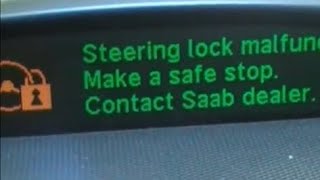
- "Steering Lock Malfunction" message on the Saab Information Display (SID).
- "Immobiliser Failure" message on the SID.
- "Key not recognized" message on the SID.
- Security indicator light is illuminated or flashing.
- Key is stuck in the ignition switch or will not turn.
- No clicking sound from the steering column when the key is inserted into the ignition.
- Replacing the ECM. The ECM is rarely the cause; it is simply reporting that it did not receive the correct security password from the CIM.
- Replacing the starter motor. A no-crank condition is a symptom of the immobilizer fault, not a faulty starter.
Most Likely Causes
- Steering Column Lock (SCL) Failure 🔴 High Probability → Shop Steering Column The SCL contains two small electric motors, gears, and sensors that physically lock the steering column. These mechanical parts wear out, and the unit is highly susceptible to failure during low battery voltage events, where it can get stuck mid-cycle and trigger a permanent fault.
How to confirm: A Saab-specific scan tool (Tech 2) will often show a specific fault code for the SCL (e.g., B3948). A common physical symptom is the key being completely locked and unable to turn. If the lock fails in the engaged position, it cannot be removed without being physically broken off the steering column.
Typical fix: Replace the SCL module. Since new parts are often unavailable, many owners opt for a used part or an SCL emulator/bypass. 🎬 See how to install an emulator to fix steering lock issues. An emulator is an electronic module that mimics a working lock, permanently preventing the mechanical failure from recurring. The old SCL may need to be destructively removed if it failed in the locked position, which can risk damaging the steering column.
Est. part cost: $100-$250 for a used SCL or emulator. - Ignition Switch Module (ISM) Failure 🟡 Medium Probability → Shop Ignition Switch The ISM, where the key fob docks, has internal spring-loaded copper contacts that get dirty, corroded, or wear out, preventing it from reading the key correctly and communicating with the CIM.
How to confirm: Symptoms like the car thinking the key is still inserted after removal, or intermittent starting issues that are resolved by wiggling the key, point to the ISM. Some owners have successfully cleaned the internal contacts with isopropyl alcohol as a temporary fix. Since it's a plug-and-play part, swapping in a known-good used one is a common diagnostic step.
Typical fix: Replace the Ignition Switch Module. This is a popular first step in diagnosis as it is relatively inexpensive and does not require programming with a Tech 2.
Est. part cost: $50-$150 - Column Integration Module (CIM) Failure 🟡 Medium Probability The CIM is the central computer for the immobilizer, steering wheel controls, and turn signals. Internal electronic failure (e.g., cracked solder joints) or data corruption, sometimes triggered by a low voltage event, can cause a total communication loss.
How to confirm: A Tech 2 scanner will show a loss of communication with the CIM or a specific internal fault code like B1000. Other symptoms like a non-working horn, malfunctioning steering wheel buttons, or failing turn signals can also point to the CIM. This is often diagnosed after ruling out the ISM and SCL.
Typical fix: Replace the CIM module. This is an expensive repair that requires a new or a properly 'divorced' used unit to be programmed ('married') to the car using a Tech 2. Alternatively, cloning services are available that can copy the data from the old CIM to a donor unit, avoiding the need for Tech 2 programming.
Est. part cost: $400-$700+ for a new part, or ~$200 for a cloning service plus the cost of a used module. - Weak or Dead Vehicle Battery ⚪ Low Probability Low voltage can corrupt the communication handshake between the security modules, particularly causing the SCL to jam. The fault often appears after jump-starting the car or replacing a dead battery, because the low voltage event has already caused a hard fault in one of the modules. Diesel models are particularly susceptible due to higher electrical loads during starting.
How to confirm: Test the battery voltage; it should be above 12.4V. If the P1629 code appeared immediately after a battery issue, the low voltage was likely the trigger for a module failure.
Typical fix: Charge or replace the battery first. If the fault persists, the low voltage event has likely caused a hard fault in the SCL or CIM, which will now need to be diagnosed and replaced. Simply disconnecting the battery for a few minutes can sometimes reset the system and provide a temporary fix.
Est. part cost: $150-$250
Rare But Worth Checking
- Damaged Key Fob: → Shop Keyless Entry Transmitter The transponder chip inside the key can be damaged from being dropped or getting wet, preventing the ISM from reading it. Try using a spare key to rule this out.
- Wiring or Connector Issues: Corrosion or damage to the wiring between the ISM, CIM, SCL, and ECM can cause intermittent communication loss. This is less common than module failure but should be considered, especially the C-cables connecting the immobilizer components.
Diagnosis Steps
- Check the vehicle's battery. Ensure it is fully charged (above 12.4V) and load-tested. A weak battery is the most common trigger for this entire fault scenario.
- Try a spare key to rule out a faulty key fob transponder.
- Scan the vehicle with a Saab-specific diagnostic tool like a Tech 2. Generic OBD-II readers will only show P1629 and cannot access the required body (B-codes) and network (U-codes) modules for proper diagnosis.
- Check for specific codes related to the SCL (B3948), CIM (B1000), or ISM. A specific code is the best guide to the failed part.
- If symptoms are intermittent (e.g., wiggling key helps), or as a first diagnostic step, try cleaning or replacing the Ignition Switch Module (ISM). It is the easiest and cheapest component to replace and requires no programming.
- If the SCL is suspected and the steering is not locked, consider installing an SCL emulator. This bypasses the mechanical lock and can be installed even with a functioning SCL to prevent future failure.
- If the SCL has failed in the locked position, it must be physically broken off the steering column for removal, a task that carries risk of damaging the column.
- If the ISM and SCL are ruled out, the CIM is the most likely culprit. This requires professional replacement and programming with a Tech 2, or sending the original and a donor unit to a cloning service.
Parts You'll Likely Need
- Ignition Switch Module (ISM)
(OEM #12801010)— A common failure point due to wear on its internal contacts. It's the easiest part of the immobilizer system to replace as it does not require programming.
Trusted brands: Genuine Saab
OEM price range: $100-$150
Aftermarket price range: $50-$100 - Steering Column Lock (SCL) or SCL Emulator
(OEM #12844923 (SCL Module))— This is the most common mechanical and electrical failure point in the system. An emulator is a popular, reliable fix that bypasses the failure-prone mechanical lock.
Related Codes That Often Appear With This One
- B3948 — This is a Saab-specific Body code for 'Steering Lock Malfunction', directly pointing to a fault with the SCL module.
- B1000 36 — This code indicates an internal fault within a control module, and when read from the CIM, it strongly suggests the CIM itself has failed.
- U-codes (e.g., U0100, U0140) — Various 'U' or network codes indicate a loss of communication with a specific module (like the ECM or BCM/CIM), confirming the P1629 is due to a communication breakdown.
Platform-Specific Known Issues
- The entire immobilizer system is very sensitive to low battery voltage. A dying battery can cause the Steering Column Lock (SCL) to jam, creating a hard fault that persists even after the battery is replaced.
- Replacement of the CIM or SCL modules requires 'marrying' the new part to the car using a Saab Tech 2 diagnostic tool. A used part must be 'divorced' from its donor vehicle before it can be programmed to a new one.
Mechanic-Grade Diagnostic Values
- Security LED Indicator Status — expected: When a valid key is inserted into the ISM, the security LED on the dash should give 4 double flashes within 3 seconds to indicate the key transponder was approved.. Failure: If the wrong key is used or the transponder is not read correctly, the LED will not flash at all.
- SCL Emulator LED Status (e.g., Saab Extra SCL) — expected: Blue flashing LED indicates the emulator is operational in the 'unlocked' state. A single green flash upon key insertion confirms it has learned the CIM code.. Failure: If the LED is not lit, there is a power supply problem. If the green light does not flash during the learning process, the CIM is likely faulty and not communicating.
Scan Tool Commands That Help
- Tech 2 with TIS2000/GlobalTIS: Security Access — This is mandatory before performing most immobilizer-related programming. It's a software handshake between the Tech 2 and a PC running TIS/GlobalTIS to unlock programming functions for adding keys, or marrying/divorcing modules like the CIM and SCL.
- Tech 2: Add/Remove > Add Keys — Used to program a new key to the car. Requires security access and the presence of all keys (old and new) that you want to function with the vehicle. The Tech 2 will guide the user through a sequence of inserting and removing the keys.
- Tech 2: Add/Remove > CIM > Add — This function, often called 'marrying', is used to program a new or divorced used CIM to the vehicle. It requires security access and permanently pairs the CIM to the car's VIN and security system.
- Tech 2: Add/Remove > SCL > Add — Used to 'marry' a new or divorced used Steering Column Lock to the CIM. The SCL and CIM are a paired set. This function requires security access.
- Tech 2: Add/Remove > CIM > Remove — This function, known as 'divorcing', is used to un-pair a CIM from a vehicle before it is removed. A divorced CIM can then be installed and married to another vehicle. This is a critical step when sourcing used parts.
Wiring & Ground Locations
- G2 — On the side of the left-hand structure strut by the connector bracket in the engine bay.. This is a primary chassis ground point for the battery and numerous electrical systems. Poor contact here can cause widespread low voltage issues that trigger immobilizer faults.
- G4 — On the center console tunnel, behind the airbag control module.. This ground serves components in the center console area, near the ISM. A fault here could potentially affect the ISM or its related wiring.
- G7 — On the engine control module's top right attachment lug (for Trionic 8 engines).. This grounds the ECM itself. While the ECM is rarely the cause of P1629, a bad ground could cause it to misinterpret signals from the immobilizer system.
- SCL Connector — A 6-pin connector attached to the Steering Column Lock module on the steering column.. This connector carries power, ground, and communication lines between the SCL, CIM, and ISM. Pin 1 is +30 power, Pin 2 is ground, Pin 4 is the communication line to the CIM, and Pin 5 is a Hall sensor signal to the ISM. Checking for power and signal integrity at this connector is a key diagnostic step.
- CIM to OBD Pin 1 — Some SCL emulators require tapping into the green CAN wire at Pin 1 of the vehicle's OBD-II connector.. This provides the emulator with the necessary CAN bus communication link to interact with the CIM and the rest of the vehicle's network, allowing it to properly mimic the original SCL.
Real Owner Repair Stories
- Reddit user post (2003 Saab 9-3) — Car won't always turn over. Gets "Immobilizer failure" message, then after trying again, gets "steering lock malfunction" message. Messing with the key and steering wheel eventually allows it to start. Also had a significant parasitic battery draw (almost 5 amps) traced to fuses for the dashboard and rear electrical centers.
❌ Tried (didn't work) Replacing the battery.
✅ What actually fixed it The user was advised to investigate the known immobilizer components (CIM, ISM, SCL) as the source of both the starting issue and the parasitic draw, as a failing module can stay awake and drain the battery. The combination of both symptoms strongly points to one of these modules failing. - YouTube video by 'Saab Tech' (2003-2011 Saab 9-3) — Intermittent "Key Not Recognised" & "Steering Lock Malfunction" messages, leading to a no-start condition.
❌ Tried (didn't work) Assuming the entire ISM unit needed replacement.
✅ What actually fixed it The internal copper contacts inside the Ignition Switch Module (ISM) were dirty with carbon buildup. The user disassembled the ISM, cleaned the contacts with a fiberglass pen and isopropyl alcohol, and reassembled it, which resolved the problem without needing to replace the part.
OEM Part Supersession History
12760545, 12761345, 12769673, 12777263, 12805558→Multiple revisions exist. A partial list of CIM part numbers includes 12847563, 12805559, 12760547, 12761347, 12769671, 12777261, 12842076, 12779247, 12840278, 12810984, 32021812, 12805196, 12805194, 32021814, 32021813.— Revisions for reliability, feature changes (e.g., with/without ESP), and consolidation over the long production run.
Heads up: It is critical that a replacement CIM has the exact same part number as the original, or is a known compatible/superseded number. Using a module with a different part number, even if it physically fits, can lead to function loss or complete incompatibility. Cloning services require identical part numbers.
Model Year Variations Within This Range
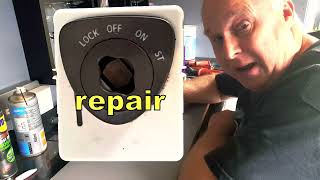
- 2003 only: The Ignition Switch Module (ISM) on 2003 models was illuminated from the factory, with the 'LOCK, OFF, ON, ST' positions lighting up in green. For models from 2004 onwards, the ISM was not illuminated. Swapping in a 2003 ISM is a common cosmetic upgrade for later cars.
- Pre-2007 vs. Post-2007: The software used with the Tech 2 for gaining Security Access differs. TIS2000 is typically used for model years up to 2007/2008. GlobalTIS is used for later models (approx. 2008-2010). 2011 and newer models may require a subscription to TIS2WEB.
Diagnostic Flowchart
Other Known Issues on This Vehicle
Issues unrelated to this code that are worth knowing about as an owner of this generation:
- Intake Valve Carbon Buildup (2.0T) 🟠 Medium — Common on direct-injected 2.0T engines (B207), particularly 2007-2009 models. Symptoms like power loss and rough idle appear over time.
- Rear Coil Spring Failure 🔴 High — Extremely common across all years. The rear coil springs are prone to cracking and breaking, causing the rear of the car to sag and creating noise.
- Convertible Top Hydraulic Leaks 🟠 Medium — Common on convertible models. Hydraulic cylinders, particularly the main lift cylinders or front latch cylinder, develop leaks at their seals, causing fluid loss and failure of the top to operate.
- Front Coil Spring Failure (2003-2006) 🔴 High — Similar to the rear springs, front springs on earlier models were prone to breaking. (Ref: There may have been an extended warranty or service campaign for this issue in some regions.)
- Driver's Seat Belt Retractor Failure (Convertible) 🔴 High — The driver's side front seat belt retractor can break, preventing the belt from retracting properly. This was subject to a recall. (Ref: GM Recall No. 14V318000)
- Oil Sludge Buildup (Petrol Engines) 🟠 Medium — Can occur if oil changes are neglected or incorrect oil is used, leading to sludge formation that can restrict oil flow.
Used vs. New Parts: Buying Guide for This Vehicle
When a used part is the smart pick: For the Ignition Switch Module (ISM), a used part is a very smart and common choice as it's plug-and-play and relatively cheap. For the Steering Column Lock (SCL) and Column Integration Module (CIM), used parts are viable ONLY if you have a plan for programming. A used CIM/SCL must be properly 'divorced' from the donor car with a Tech 2 before removal, or you must use a cloning service to copy your old module's data to the used replacement.
Donor-vehicle mileage cap: roughly under 120000 miles for the part to have meaningful remaining life.
What to inspect on the donor part:
- For a CIM, ensure the clock spring is locked in place with tape to prevent damage during shipping.
- Verify the part number on the used module EXACTLY matches your original part number, especially for the CIM.
- Ask the seller if the CIM or SCL was 'divorced' with a Tech 2 before removal. If they don't know what this means, assume it was not.
- For an ISM, check for smooth key rotation and listen for a solid 'click' at each position.
Aftermarket brands forum-validated for this vehicle:
- Saab Extra SCL (for SCL Emulator).
- Various CIM Cloning Services (e.g., Velectronix, ECU Maverick) are well-regarded for transferring data to a donor module.
Brands owners have reported issues with on this vehicle:
- Unknown, no-name SCL emulators without clear installation instructions or support.
Real Owner Stories
Aggregated from forums and TSBs cited above. Mileages and costs reflect what owners reported in those sources.
2005 Saab 9-3
Symptoms: The owner experienced a 'Steering Lock Malfunction' warning and the key would not turn in the ignition.
What fixed it: After attempts to fix it by replacing the battery and cleaning the ISM failed, the owner used a Tech II scanner to diagnose a B1000 internal CIM fault. The problem was resolved by installing a junkyard CIM with its matching keys.
Source hint: Reddit: 2005 9-3 Steering Lock Malfunction warning - Key won't turn
Saab 9-3
Symptoms: The owner saw 'Key not recognized' and 'Steering lock malfunction' messages on the display.
What fixed it: The issue was ultimately resolved by replacing the Column Integration Module (CIM).
Cost: $800-$900
Source hint: Reddit: Steering Lock Malfunction/ Dead Battery?
Related OBD-II Codes
Frequently Asked Questions
My Saab's battery died and now I have a 'Steering Lock Malfunction' message. Will just replacing the battery fix it?
My key is completely stuck in the ignition and won't turn. What is the most likely cause?
Can I use a second-hand Steering Column Lock (SCL) or Column Integration Module (CIM) from a junkyard?
What is the first part I should check or replace if I don't have a special Saab scanner?
I've heard about an 'SCL emulator'. What is it and is it a reliable fix?
My horn and steering wheel buttons have also stopped working along with the no-start issue. Are these problems related?
Are there cheaper alternatives to a dealer replacing the CIM for over $1,500?
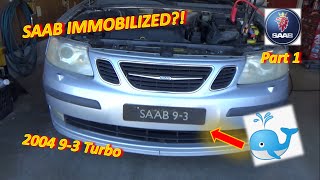
Helpful Videos
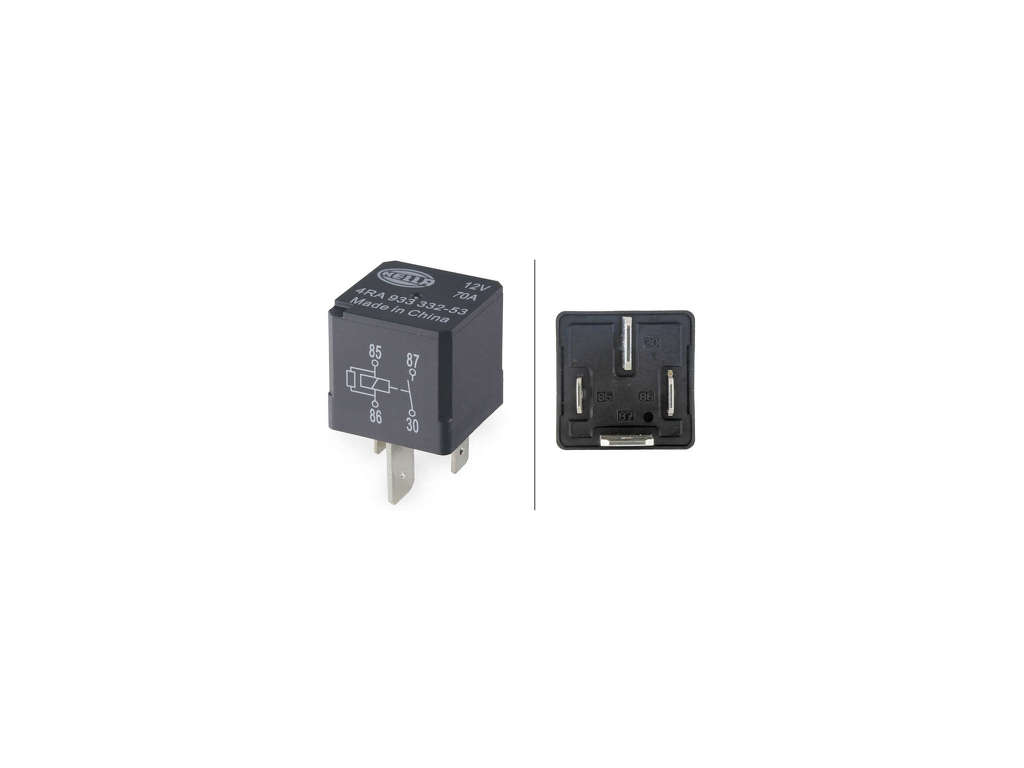
We Have This Part in Stock

The information in this article is provided for general reference and educational purposes only. Vehicle specifications, procedures, and part compatibility can vary by production date, trim level, and region. Always consult your vehicle's factory service manual and verify part numbers before purchasing or performing repairs. Safety-critical components such as airbags, seat belts, and braking systems should be installed by a qualified professional.
- Saab 9-3:
- 🧭 Diagnostic Flowchart
- 🎬 Helpful Videos
- 🛍️ Shop This Part
- What's Unique About the 2003-2011 Saab 9-3
- Symptoms You May Notice
- Most Likely Causes
- Rare But Worth Checking
- Diagnosis Steps
- Parts You'll Likely Need
- Related Codes That Often Appear With This One
- Platform-Specific Known Issues
- Mechanic-Grade Diagnostic Values
- Scan Tool Commands That Help
- Wiring & Ground Locations
- Real Owner Repair Stories
- OEM Part Supersession History
- Model Year Variations Within This Range
- Other Known Issues on This Vehicle
- Used vs. New Parts: Buying Guide for This Vehicle
- Real Owner Stories
- 2005 Saab 9-3
- Saab 9-3
- Related OBD-II Codes
- Frequently Asked Questions
- 🎟️ Get 5% Off