

P1682 on 2008-2009 Pontiac G8: Ignition Power Fault Causes and Fixes
On a 2008-2009 Pontiac G8, code P1682 is most often caused by a poor connection at a relay in the underhood fuse box. Before buying parts, swap the Crank (R73), Powertrain (R74), and Ignition (R75) relays with identical ones to see if the problem is resolved. Wiggling these relays with the key on can also help identify a loose internal fuse box connection, a common GM issue.
- P1682 on a G8 almost always points to a problem with the power supply to the engine computer, not the computer itself.
- The most likely cause is a poor connection in the underhood fuse box. Always check and swap the main ignition-related relays first.
- Do not drive the vehicle. The risk of the engine stalling while driving is high and poses a significant safety hazard.
- A simple relay swap costs very little and can solve the problem or confirm the diagnosis in minutes.
What's Unique About the 2008-2009 Pontiac G8
The Pontiac G8, like many General Motors vehicles from this era, is prone to electrical issues within the underhood fuse box (also called the UBEC). The female terminals that hold the relays can loosen over time from heat cycles and vibration, causing intermittent power loss that triggers the P1682 code. While the ignition switch can fail, investigating the fuse box relays and their connections should always be the first step on a G8. This issue is also common on its platform mate, the Holden Commodore.
Symptoms You May Notice
- Engine will not crank or start. 🎬 See how one owner fixed a common G8 starting problem.
- Engine stalls intermittently, sometimes while driving or at a stop.
- Check Engine Light is on.
- Reduced Engine Power message may appear.
- Other warning lights, such as for the ABS or stability control, may illuminate due to the power discrepancy.
- Engine continues to run after the key is turned off.
- Intermittent clicking noises from the fuse box.
- Replacing the battery without testing it first.
- Replacing the starter motor when the issue is a lack of signal from the crank relay.
- Replacing the ECM when the actual problem is a simple bad relay or loose connection in the fuse box.
Most Likely Causes
- Loose Relay Terminals in Underhood Fuse Box 🔴 High Probability → Shop Fuse Box This is a well-documented issue on many GM platforms of the era. The female pin connectors within the fuse block spread apart from heat cycles and vibration, creating a poor, intermittent connection with the male pins of the relay. This arcing can cause the relay to get hot and further degrade the connection.
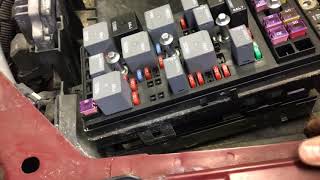
How to confirm: Open the underhood fuse box. Wiggle the Crank (R73), Powertrain (R74), and Ignition (R75) relays. If wiggling a relay causes the vehicle to start or stall, you've found the loose connection. The relay may also feel easier to pull out than others. A user on a Pontiac G6 forum (a similar GM vehicle) confirmed this exact failure mode and fix. 🎬 Watch: This video shows how to diagnose the P1682 ignition circuit code.
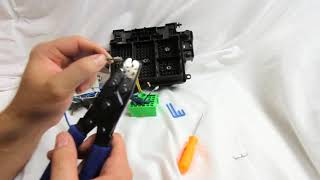
Typical fix: The immediate fix is to swap the suspect relay with a known-good one of the same type (e.g., from the horn or fog lamps). For a permanent fix, you can carefully remove the fuse box, access the terminals from underneath, and use a small pick to gently bend the female terminals for a tighter fit. In severe cases where the terminals are burnt or damaged, the entire underhood fuse box (UBEC) may need to be replaced. 🎬 Watch: Learn how to repair damaged GM fuse box connectors and wiring.
Est. part cost: $0 - $20 for a new relay, $250 - $400 for a replacement fuse box. - Faulty Relay 🟡 Medium Probability Relays are mechanical switches that wear out over time. The Crank, Powertrain, and Ignition relays are critical for engine operation and cycle frequently. Arcing from a loose connection can also damage the relay itself.
How to confirm: Swap the suspect relay with an identical relay from a non-critical circuit (like the Horn Relay, R77) in the same fuse box. If the problem moves to the other circuit or the car starts, the relay is bad.
Typical fix: Replace the faulty relay with a new one. Common part numbers include GM 13500114 or ACDelco D1780C.
Est. part cost: $10 - $25 - Faulty Ignition Switch ⚪ Low Probability → Shop Ignition Switch While less common than the fuse box issue for this specific code, GM vehicles of this vintage had a higher-than-average rate of ignition switch failures. The internal contacts wear out, causing an inconsistent voltage signal to be sent to the ECM.
How to confirm: This requires using a multimeter to back-probe the ignition switch connector (S149) and verify that correct voltage is present on the different circuits ('Run/Crank', 'Accessory') as the key is turned. Specifically, check for low voltage on the Pink wire from the switch when the problem occurs.
Typical fix: Replace the ignition switch. This is typically located on the steering column.
Est. part cost: $20 - $70
Rare But Worth Checking
- Corroded or Loose Ground Wire: A bad ground connection can cause a wide range of unpredictable electrical issues, including voltage drops that could trigger a P1682. Check the main engine and chassis ground points for tightness and corrosion, particularly G102 (chassis rail) and G103/G108 (engine block). One owner fixed a chronic no-start by cleaning the main engine ground connection.
- Damaged Wiring: A wire could be chafed, broken, or corroded somewhere between the ignition switch, the fuse box, and the ECM. This is less common but possible, especially if other work has been done on the car.
- Failing ECM: An internal fault in the Engine Control Module is rare but can cause this code. This should only be considered after all other possibilities have been exhaustively ruled out.
Diagnosis Steps
- Read the code with an OBD-II scanner to confirm P1682.
- Locate the underhood fuse box on the driver's side of the engine bay.
- Identify the 'Crank Relay' (R73), 'Powertrain Relay' (R74), and 'Ignition Main Relay' (R75). Refer to the diagram on the fuse box lid.
- With the key in the 'On' position, gently wiggle each of these relays. Listen for a click or see if the dashboard lights flicker. If wiggling causes a change, you have found a loose connection.
- Swap the 'Crank Relay' (R73) with an identical relay from a non-essential system (e.g., Horn Relay, R77). Attempt to start the vehicle. If it starts, the original relay was bad.
- If swapping the relay doesn't work, inspect the female terminals in the fuse box where the relay plugs in. Look for any that appear spread open, discolored, or corroded.
- Check related fuses, specifically the 'STARTER' fuse (F51, 40A), 'IGNITION ENGINE' fuse (F39, 10A), and 'ECM BATT' fuse (F10, 15A). A loose connection at the fuse terminal itself can also cause this code.
- If relays and connections seem good, inspect main ground connections for the engine and chassis. Key locations are G102 (Right front chassis rail), G103 (Engine block to ABS bracket), and G112 (Left rear of engine block). Ensure they are clean and tight.
- If grounds are good, proceed to test the ignition switch with a multimeter to ensure it is sending the correct voltage signals on the pink wire at connector S149.
- If all else fails, inspect the wiring harnesses for damage before considering a faulty ECM.
Parts You'll Likely Need
- Relay (Multi-Use)
(OEM #13500114 (replaces 92246693))— This is the most common failure point. A faulty relay or swapping relays to diagnose a loose terminal is the first and most likely fix.
Trusted brands: ACDelco, Bosch, Standard Motor Products
OEM price range: $15-$25
Aftermarket price range: $8-$15 - Ignition Switch
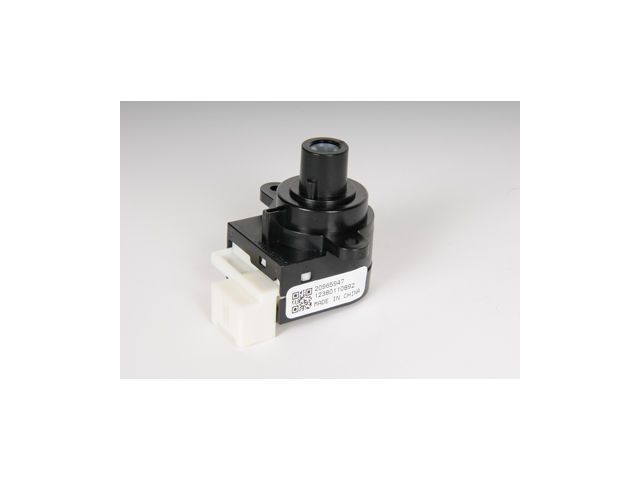
(OEM #20965947)— If the relays and fuse box connections are good, the ignition switch is the next most likely component to have failed.
Trusted brands: ACDelco, Standard Motor Products, Wells
OEM price range: $40-$70
Aftermarket price range: $20-$45 - Underhood Fuse Box (UBEC)
(OEM #92228285)— Required if the internal terminals for the relays are damaged beyond repair (spread or burnt) and can no longer provide a secure connection.
Trusted brands: ACDelco (GM Genuine)
OEM price range: $270-$400
Aftermarket price range: N/A (OEM recommended)
Related Codes That Often Appear With This One
- P0689 — This code relates to the ECM/PCM Power Relay Control Circuit being low. It often appears with P1682 because they both monitor the power supply integrity to the engine computer. Seeing them together strongly points to a fault in the underhood fuse box or its relays.
- P2610 — Stands for 'ECM/PCM Internal Engine Off Timer Performance'. This can be triggered along with P1682 when the ECM loses power unexpectedly due to the ignition circuit fault.
Technical Service Bulletins (TSBs) & Recalls
- GM TSB 08-07-30-021H: While not specifically for P1682, this bulletin addresses widespread issues on the G8's platform (and others) related to 'Loss of High Speed GMLAN Communications, Intermittent No Crank, IP Gage Fluctuation'. It details diagnosing and repairing poor connections and chafed wiring in critical harnesses, which are potential root causes for the voltage discrepancies that trigger P1682.
Platform-Specific Known Issues
- Fuse Box Terminal Fretting: The design of the underhood fuse box on the G8/Commodore platform is susceptible to the female terminals for the relays losing tension over time. This isn't necessarily a manufacturing defect but a consequence of heat, vibration, and design tolerances, leading to the high probability of P1682 being caused by a loose relay rather than a failed part.
Mechanic-Grade Diagnostic Values
- Voltage difference between 'Ignition 1 Signal' and 'Engine Controls Ignition Relay Feedback' scan tool parameters. — expected: Less than 3.0 Volts. Failure: A difference greater than 3.0 Volts for more than 1 second will set the DTC.
- Resistance of ignition voltage circuit through the underhood fuse block. — expected: Less than 5.0 Ohms. Failure: A resistance of 5-6 Ohms or greater can be enough to cause the voltage drop that sets the DTC.
- Voltage at ECM Connector X1, Pin 19 (Pink wire) — expected: Battery Positive Voltage with Key On. Failure: Voltage significantly lower than battery voltage, or 0V, indicates an open or high resistance in the Ignition 1 Voltage circuit.
Wiring & Ground Locations
- Underhood Fuse Block (UBEC) — Driver's side of the engine bay, near the strut tower.. This is the central hub for the relays (Crank, Powertrain, Ignition) and fuses that supply the two voltage signals to the ECM. Loose internal terminals are the most common cause of P1682.
- UBEC Connectors X1, X2, X3 — Large multi-pin connectors on the underhood fuse block.. These connectors are the interface between the main vehicle harnesses and the fuse block. Corrosion or loose pins here can cause this code.
- ECM Connector X1 — On the Engine Control Module (ECM), located on the right side of the engine compartment.. This connector feeds power into the ECM. Pin 19 (Pink wire) is the 'Ignition 1 Voltage' circuit and is a primary test point.
- G102 — On the right front chassis rail in the engine compartment.. This is a major chassis ground. A poor connection here can cause a variety of electrical faults, including voltage discrepancies that may trigger P1682. It is a known failure point on G8s.
- G103 / G108 — Engine block grounds. G103 is from the RH front cylinder head to the ABS bracket; G108 is on the right rear of the engine block.. These are the primary grounds for the engine itself. A poor connection can affect the ECM's ground reference, leading to incorrect voltage readings.
- G112 — From the left rear cylinder head to the engine harness.. This ground is for the engine harness, which directly serves the ECM and its sensors. A bad connection can cause erratic ECM behavior.
Real Owner Repair Stories
- YouTube - 'P1682 Ignition 1 switch circuit 2 [SOLVED]' (GMC Truck (similar GM electrical architecture)) — No start, multiple warning lights on dash, P1682 code present.
❌ Tried (didn't work) Clearing the code (it would return immediately).
✅ What actually fixed it The problem was a loose female terminal in the fuse box for the 'ECM throttle cont 15 ampere' fuse. The fuse itself was not blown. Wiggling the fuse caused the car to start, identifying the loose terminal as the root cause. - CarComplaints.com / G8 Forum User (2009 Pontiac G8, ~94,500 miles) — Sudden failure of windshield wipers, followed by low-beam headlight failure 2 years later. Both events threw numerous, varying error codes.
❌ Tried (didn't work) Two different service stations were unable to diagnose the wiper issue.
✅ What actually fixed it The root cause for the widespread electrical failures was a faulty electrical ground at G102 on the chassis rail. Restoring the ground path with a supplementary wire resolved the issues. While not directly reporting P1682, this is a documented G8 electrical failure that could cause the voltage discrepancies that trigger the code.
When the Usual Fixes Don't Work
- While the most common cause is a loose relay terminal, a loose FUSE terminal can also be the culprit. One owner traced their P1682 to a poor connection at the 'ECM throttle cont' 15A fuse. The diagnostic step of wiggling components should include not just the three main relays, but also the key fuses that supply power to the ECM, such as the 'IGNITION ENGINE' (F39) and 'ECM BATT' (F10) fuses.
OEM Part Supersession History
92246693 (and others)→13500114— Part consolidation and revision over time.
Heads up: 13500114 is the current multi-purpose relay that replaces a long list of previous numbers including 12193606, 15328866, 19116057, and 92199312.92202583→92228285— Updated part for the underhood fuse box (UBEC).
Heads up: Part 92228285 is the correct replacement for the 2008-2009 G8. Note that GM may have discontinued this part, making used units a primary source.
Diagnostic Flowchart
Used vs. New Parts: Buying Guide for This Vehicle
When a used part is the smart pick: A used Underhood Fuse Box (UBEC) is a practical and often necessary choice, as new OEM units can be expensive or discontinued. Relays and ignition switches should be purchased new due to their low cost and wear characteristics.
Donor-vehicle mileage cap: roughly under 80000 miles for the part to have meaningful remaining life.
What to inspect on the donor part:
- Visually inspect for any signs of melting, discoloration, or charring around the relay and fuse sockets.
- Check for green or white corrosion on the terminals, both on top and in the main harness connectors below.
- If possible, insert a relay into the R73/R74/R75 sockets to feel for a snug fit. A loose fit indicates the donor box has the same problem.
- Avoid fuse boxes from vehicles with flood damage, fire damage, or major front-end collisions.
OEM-only on this vehicle (don't cheap out):
- Underhood Fuse Box (UBEC) - While a used OEM part is fine, avoid unbranded, no-name new replacements as their quality is unverified.
Aftermarket brands forum-validated for this vehicle:
- Relays: ACDelco, Bosch, Standard Motor Products (SMP)
Real Owner Stories
Aggregated from forums and TSBs cited above. Mileages and costs reflect what owners reported in those sources.
2008 Pontiac G8
Symptoms: Vehicle had a no-crank condition and was showing a P1682 code.
What fixed it: The problem was traced to an 'ignition crank relay problem' in the underhood fuse box.
Source hint: GRRRR8.net: A user with a 2008 G8 reported a P1682 code along with a no-crank condition, which they linked to an 'ignition crank relay problem'.
Pontiac G8 GT
Symptoms: The owner experienced a crank-no-start condition.
What fixed it: The issue was fixed by addressing a loose relay connection in the underhood fuse box.
Source hint: YouTube - 'Crank No Start Issue FIXED!! G8 GT Comes To Life'
Related OBD-II Codes
Frequently Asked Questions
My 2008 G8 won't crank and has a P1682 code. What is the most likely problem?
How can I quickly check if a relay is the cause of the P1682 code on my G8?
Is there a specific TSB for the P1682 code on the Pontiac G8?
My engine stays on for a few seconds after I turn the key off. Is this related to P1682?
If the relay terminals in the fuse box are loose, do I have to replace the whole thing?
Besides the relays, what fuses should I check for a P1682 code?
Are other GM vehicles like the Chevy Camaro affected by this same P1682 issue?
Helpful Videos

We Have This Part in Stock


The information in this article is provided for general reference and educational purposes only. Vehicle specifications, procedures, and part compatibility can vary by production date, trim level, and region. Always consult your vehicle's factory service manual and verify part numbers before purchasing or performing repairs. Safety-critical components such as airbags, seat belts, and braking systems should be installed by a qualified professional.
- Pontiac G8:
- 🧭 Diagnostic Flowchart
- 🎬 Helpful Videos
- 🛍️ Shop This Part
- What's Unique About the 2008-2009 Pontiac G8
- Symptoms You May Notice
- Most Likely Causes
- Rare But Worth Checking
- Diagnosis Steps
- Parts You'll Likely Need
- Related Codes That Often Appear With This One
- Technical Service Bulletins (TSBs) & Recalls
- Platform-Specific Known Issues
- Mechanic-Grade Diagnostic Values
- Wiring & Ground Locations
- Real Owner Repair Stories
- When the Usual Fixes Don't Work
- OEM Part Supersession History
- Used vs. New Parts: Buying Guide for This Vehicle
- Real Owner Stories
- 2008 Pontiac G8
- Pontiac G8 GT
- Related OBD-II Codes
- Frequently Asked Questions
- 🎟️ Get 5% Off