

P1758 on 1997-2001 Honda CR-V: Lock-Up Solenoid Causes and Fixes
On a 1997-2001 Honda CR-V, code P1758 is most often caused by a faulty lock-up solenoid assembly or a wiring issue at its connector. This is a common issue that causes a flashing 'D4' light and harsh shifting. A new solenoid costs between $60 (aftermarket) and $500 (OEM), and is a relatively simple DIY replacement.
- P1758 on a 1997-2001 CR-V points directly to an issue with the transmission's lock-up solenoid circuit.
- The most common symptoms are a flashing 'D4' light and harsh, erratic shifting.
- Before buying parts, always check the transmission fluid level and inspect the solenoid's electrical connector for corrosion or damage.
- The solenoid assembly is located on top of the transmission and is relatively easy to access and replace, making this a good DIY task.
- A resistance test (12-25 Ohms) is the definitive way to confirm if the solenoid itself has failed electrically.
What's Unique About the 1997-2001 Honda CR-V
For the first-generation Honda CR-V, this is a very common and well-documented issue. The automatic transmissions from this era are known for having solenoid-related problems as they age. The lock-up solenoid assembly is mounted externally on the top of the transmission case, making it much easier to access and replace than on many other vehicles where it is located inside the transmission oil pan. This accessibility makes it a very manageable DIY repair.
Symptoms You May Notice
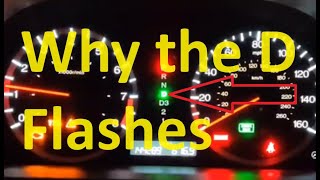
- Flashing 'D' or 'D4' gear indicator light on the dashboard. 🎬 Watch: Why the D light flashes and how to fix it.
- Check Engine Light is on.
- Harsh, jerky, or delayed gear shifts, especially between 1st and 2nd gear.
- Transmission feels like it's slipping or won't shift into the correct gear.
- Transmission may feel stuck in one gear, often 3rd or 4th.
- Vehicle may feel sluggish, especially during acceleration.
- Reduced fuel economy due to the torque converter not locking up.
- Replacing the entire transmission. Some shops may recommend a full rebuild when only the external solenoid is at fault. Always diagnose the solenoid and wiring first, as it's a much cheaper repair.
Most Likely Causes
- Faulty Lock-Up Solenoid Assembly 🔴 High Probability The solenoids are a known wear item on these older Honda transmissions and are prone to electrical failure over time.
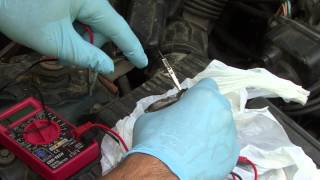
How to confirm: Test the resistance of the two solenoids at the connector pins; it should be between 12-25 ohms. You can also apply 12V power to the solenoid terminals to listen for an audible click, indicating mechanical operation. 🎬 See how to perform a click test on your solenoids. An absence of a click means the solenoid is mechanically failed.
Typical fix: Replace the entire lock-up solenoid assembly. It is held on by three 10mm bolts. 🎬 Watch this walkthrough on replacing the lock-up solenoid assembly. Ensure the gasket and filter screen are also replaced.
Est. part cost: $60-$510 - Damaged Wiring or Connector 🟡 Medium Probability The connector is exposed to engine heat and vibration, which can cause wires to break or pins to corrode over time. On related Honda models, oil from a leaking distributor O-ring directly above can drip onto the solenoid connectors, causing them to short out.
How to confirm: Visually inspect the connector for green corrosion, backed-out pins, or broken wires. Use a multimeter to check for continuity between the PCM and the solenoid connector. One forum user reported yanking a wire during a transmission replacement, which caused the code to appear instantly.
Typical fix: Clean the connector terminals with electrical contact cleaner. If a wire is broken, it will need to be repaired or the connector will need to be repinned. If the distributor O-ring is leaking, it must be replaced to prevent repeat failure.
Est. part cost: $5-$30 - Low or Dirty Transmission Fluid ⚪ Low Probability → Shop Transmission Assembly Neglected maintenance can lead to fluid breakdown and low levels, causing erratic hydraulic pressure and solenoid operation. These transmissions are known to be sensitive to fluid type and condition.
How to confirm: Check the transmission fluid dipstick with the engine off and warm. The level should be correct, and the fluid should be reddish, not brown or black, and not smell burnt.
Typical fix: Perform a transmission fluid drain-and-fill using genuine Honda ATF-DW1, which is the backward-compatible replacement for the original ATF-Z1. Aftermarket equivalents like Valvoline MaxLife or Castrol Transmax Import are also widely used. Multiple drain-and-fills may be needed to replace most of the old fluid.
Est. part cost: $30-$90
Rare But Worth Checking
- Faulty Powertrain Control Module (PCM): This is uncommon, but if the P1758 code returns instantly after clearing, even with a known-good solenoid and wiring, the PCM's driver circuit for the solenoid may have failed. One owner on a forum replaced their transmission for this code, only to have the code persist, leading them to suspect the PCM was the original issue.
Diagnosis Steps
- Check the transmission fluid level and condition. Top off or change if necessary using Honda ATF-DW1 or a compatible fluid.
- Scan for codes. Note if P1758 appears with P0700, which is normal.
- Locate the lock-up solenoid assembly on the top of the transmission case. It will have a gray electrical connector and is held on by three 10mm bolts.
- Disconnect the connector and inspect it thoroughly for corrosion, moisture, or damaged pins/wires. Also inspect the area above the solenoid for oil leaks, particularly from the distributor O-ring.
- Use a multimeter to test the resistance between the terminals on the solenoid itself. The specification is 12-25 Ohms. A reading of 15.1-15.2 Ohms is typical for a good solenoid. If it is outside the specified range, the solenoid is bad.
- To confirm mechanical function, you can carefully apply 12V from the battery to the solenoid's terminals and listen for a distinct 'click'. No click or a weak click suggests a mechanical problem. One user noted a weak click on a failing solenoid.
- If the solenoid tests good, the problem is likely in the wiring harness or the PCM. Check for continuity on the wires running from the solenoid connector to the PCM. A critical ground to inspect is G101, located on the thermostat housing, as it serves as the ECU's power and logic ground. If the code returns instantly upon turning the key to the ON position without starting the engine, it strongly suggests an electrical circuit fault (wiring or PCM).
- If the solenoid is confirmed faulty, replace the assembly. Ensure the mating surface is clean before installing the new part with its new gasket/o-ring.
- After repair, clear the trouble codes and perform a test drive to ensure the 'D4' light does not flash and shifting is normal.
Parts You'll Likely Need
- Automatic Transmission Lock-Up Solenoid Assembly
(OEM #28300-P24-J01)— This is the component that fails most frequently, either electrically or mechanically, causing the P1758 code.
Trusted brands: Genuine Honda (Keihin/Shindengen), Standard Motor Products (SMP), WVE, Dorman, Rostra
OEM price range: $335-$510
Aftermarket price range: $60-$200
Related Codes That Often Appear With This One
- P0700 — P0700 is a generic code that simply means the Transmission Control Module (TCM), which is integrated into the PCM on this vehicle, has requested the Check Engine Light to be turned on. It will almost always be present alongside a more specific transmission code like P1758.
Platform-Specific Known Issues
- Instant Code Return Points to Electrical: An owner on 2CarPros.com reported that after replacing the transmission, the P1758 code would return instantly when the key was turned to position II, even before starting the engine. This behavior strongly indicates an open or short in the electrical circuit (wiring or PCM), not a mechanical transmission issue.
- Distributor O-Ring Leak as a Root Cause: On related Honda platforms like the Civic which share a similar engine bay layout, a very common cause for solenoid failure is a leaking distributor O-ring. The distributor is located directly above the transmission solenoids, and dripping engine oil soaks the electrical connectors, causing shorts and failure. This should be inspected when diagnosing P1758.
Mechanic-Grade Diagnostic Values
- Lock-Up Solenoid Coil Resistance — expected: 12 - 25 Ohms. Failure: A reading outside of this range indicates a failed solenoid coil. Readings of 0 Ohms suggest a short, and infinite resistance (OL) indicates an open circuit.
- Lock-Up Solenoid 'Click Test' — expected: A distinct, audible 'click' when 12V is applied to the solenoid's power and ground terminals.. Failure: No click, or a very weak-sounding click, indicates the solenoid is mechanically stuck or failing. One user reported a 'weak' click from a solenoid that was failing intermittently.
- Solenoid Circuit Voltage Drop — expected: Less than 0.5V, with professional standards citing <0.2V.. Failure: A higher voltage drop reading indicates excessive resistance in the wiring or connectors due to corrosion or damage, a problem a simple continuity test might miss.
Wiring & Ground Locations
- Lock-Up Solenoid 'A' Wire — At the 2-pin gray connector on the lock-up solenoid assembly on top of the transmission.. This wire, identified as Yellow in one video, provides the power or signal for one of the two lock-up solenoids in the assembly.
- Lock-Up Solenoid 'B' Wire — At the 2-pin gray connector on the lock-up solenoid assembly on top of the transmission.. This wire, identified as Green with a Black stripe, provides the power or signal for solenoid 'B', which is directly referenced by code P1758.
- G101 Ground — Bolted to the thermostat housing at the left front of the engine compartment.. This is a primary ground termination point for the PCM (ECU). A poor connection here due to corrosion or looseness can cause a wide range of erratic electrical issues and fault codes, including transmission codes, as the PCM may not have a stable ground reference.
Real Owner Repair Stories
- Honda-Tech user 'zerobacan2' (1997 Honda Accord (similar transmission/solenoid setup)) — Blinking D4 light and P1758 code.
❌ Tried (didn't work) Cleaning the solenoid connector.
✅ What actually fixed it Replacing the lock-up control solenoid assembly with a part from a junkyard for $50 solved the problem. - 2CarPros user 'SOMETHINGHASTLY' (1999 Honda Civic (similar transmission/solenoid setup)) — P1758 code returned instantly after clearing, even with the key in position II (engine off).
❌ Tried (didn't work) Visual inspection of wiring harness., Replacing the transmission and torque converter., Testing the solenoid resistance (it was a good 15 ohms).
✅ What actually fixed it The user eventually found and fixed a loose wire. They suspected the wire was damaged or pulled during the transmission replacement, which caused the electrical fault code. - Honda-Tech user 'Hondacondo' (Honda Accord) — Persistent P1758 code and flashing D4 light.
❌ Tried (didn't work) A transmission shop confirmed the solenoids were working OK., Replacing the entire transmission.
✅ What actually fixed it The code P1758 remained even after a full transmission replacement. The user concluded the fault had to be in the wiring or the computer (PCM), highlighting a common misdiagnosis where the transmission is blamed for an electrical fault.
OEM Part Supersession History
28300-P24-J02, 28300-P24-J03→28300-P24-J01— Part revision by the manufacturer.
Heads up: The listed part numbers are interchangeable, with 28300-P24-J01 being the latest revision commonly sold.
Model Year Variations Within This Range
- 1997-1998 vs 1999-2001: For the 1999 model year, the CR-V received a facelift which included an engine update. The original B20B engine was replaced by the higher-compression B20Z, which increased horsepower from ~126 hp to ~147 hp. While the automatic transmission model (M4RA/B4RA) remained largely the same, the engine change is a key differentiator. The P1758 fault, however, is common across all years of this generation.
Diagnostic Flowchart
Other Known Issues on This Vehicle
Issues unrelated to this code that are worth knowing about as an owner of this generation:
- Burnt or Recessed Exhaust Valves 🔴 High — Common, especially on engines where valve adjustments have been neglected. Recommended adjustment interval is every 30,000 miles. Leads to misfires, rough idle, and loss of compression.
- Rear Differential Groan/Shudder 🟡 Low — Very common. A groaning or shuddering noise from the rear when making tight turns is typically caused by worn-out differential fluid.
- Cracked Rear Trailing Arm Bushings 🟠 Medium — Extremely common as the vehicle ages. The large rubber bushings on the rear suspension crack and fail, causing a 'floating' or unstable feeling from the rear of the car.
- Radiator Failure 🟠 Medium — Common for the plastic end tanks of the original radiators to crack with age, leading to coolant leaks and potential overheating.
- Distributor Oil Leak 🟡 Low — The internal seal and external O-ring on the distributor are very common leak points. Oil can leak internally into the distributor cap or externally down the side of the engine.
- Broken Door Jamb Wiring 🟡 Low — Wires in the rubber boot between the door and the body can break from repeated opening and closing, causing issues with power windows, locks, and speakers.
Used vs. New Parts: Buying Guide for This Vehicle
When a used part is the smart pick: For the lock-up solenoid assembly, a used OEM part from a junkyard (pick-n-pull) is a very common and budget-friendly repair strategy. Since the part is external and easy to access, the labor investment is low if the used part doesn't work. Many owners report success with $30-$50 junkyard solenoids.
Donor-vehicle mileage cap: roughly under 150000 miles for the part to have meaningful remaining life.
What to inspect on the donor part:
- Check the connector pins for any green or white corrosion.
- Inspect the plastic housing for cracks or signs of extreme heat exposure.
- If possible, bring a multimeter and test the resistance on the spot. It should be between 12-25 Ohms.
- Look for a donor vehicle that appears to have been well-maintained and is not at the junkyard due to a severe front-end collision that could have damaged the transmission case.
OEM-only on this vehicle (don't cheap out):
- For critical electronic sensors and solenoids on this generation of Honda, OEM is strongly recommended over aftermarket by many forum veterans. While more expensive, OEM parts have a much lower rate of premature failure.
Aftermarket brands forum-validated for this vehicle:
- Standard Motor Products (SMP) is generally considered a reliable aftermarket brand.
- Rostra is another known manufacturer of transmission solenoids.
Brands owners have reported issues with on this vehicle:
- Dorman: While widely available and inexpensive, some users on Honda forums report high failure rates for Dorman solenoids, with some lasting only a few months before the original problem returns.
- Unbranded/No-name eBay/Amazon parts: These are a significant gamble. While some may work, many fail quickly. A user who bought a cheap Amazon solenoid for a quick fix immediately ordered an OEM part to keep as a spare, expecting the cheap one to fail.
Real Owner Stories
Aggregated from forums and TSBs cited above. Mileages and costs reflect what owners reported in those sources.
1997-2001 Honda CR-V
Symptoms: After replacing the entire transmission, the P1758 code would return instantly when the key was turned to position II, before the engine was even started.
What fixed it: The issue was identified as an open or short in the electrical circuit (wiring or PCM), not the solenoid or transmission itself.
Source hint: 2CarPros.com as cited in vehicle_specific_issues
1997-2001 Honda CR-V
Symptoms: The P1758 code remained even after the transmission was replaced.
What fixed it: The persistent code was traced back to a wiring or ECU fault, which had to be diagnosed and repaired separately from the transmission hardware.
Source hint: Honda-Tech - honda-tech.com
1997-2001 Honda CR-V
Symptoms: The P1758 code appeared instantly after a transmission replacement job.
What fixed it: The cause was a wire that had been accidentally yanked during the transmission replacement. Repairing the broken wire resolved the code.
Source hint: Forum user report cited in common_causes
Related OBD-II Codes
Frequently Asked Questions
Where is the lock-up solenoid located on my 1997-2001 CR-V?
What kind of transmission fluid should I use for a drain-and-fill on my first-gen CR-V?
My 'D4' light is flashing and code P1758 came back instantly after I cleared it, without even starting the engine. What does that mean?
I'm testing the lock-up solenoid with a multimeter. What resistance reading indicates it's good?
Could an oil leak from the distributor cause this transmission code?
I have code P0700 along with P1758. Is this a separate, serious problem?
What other vehicles use the same lock-up solenoid as my CR-V?
Helpful Videos
We Have This Part in Stock

The information in this article is provided for general reference and educational purposes only. Vehicle specifications, procedures, and part compatibility can vary by production date, trim level, and region. Always consult your vehicle's factory service manual and verify part numbers before purchasing or performing repairs. Safety-critical components such as airbags, seat belts, and braking systems should be installed by a qualified professional.
- Honda CR-V:
- 🧭 Diagnostic Flowchart
- 🎬 Helpful Videos
- 🛍️ Shop This Part
- What's Unique About the 1997-2001 Honda CR-V
- Symptoms You May Notice
- Most Likely Causes
- Rare But Worth Checking
- Diagnosis Steps
- Parts You'll Likely Need
- Related Codes That Often Appear With This One
- Platform-Specific Known Issues
- Mechanic-Grade Diagnostic Values
- Wiring & Ground Locations
- Real Owner Repair Stories
- OEM Part Supersession History
- Model Year Variations Within This Range
- Other Known Issues on This Vehicle
- Used vs. New Parts: Buying Guide for This Vehicle
- Real Owner Stories
- 1997-2001 Honda CR-V
- 1997-2001 Honda CR-V
- 1997-2001 Honda CR-V
- Related OBD-II Codes
- Frequently Asked Questions
- 🎟️ Get 5% Off