

P1775 on 1997-2010 Ford Explorer: Worn Servo Bore and Shifting Fixes
On a 1997-2010 Ford Explorer, code P1775 is almost always caused by worn intermediate and overdrive servo bores in the transmission case, leading to pressure loss. The fix is not a new solenoid, but a specialized servo piston kit with O-rings, which costs about $200-$250 and can be installed without removing the transmission.
- P1775 on these Explorers is a mechanical problem, not an electrical one.
- The cause is worn servo bores in the transmission case, leading to a loss of hydraulic pressure.
- Do not replace the solenoid pack; the correct fix is a specialized servo bore repair kit with O-rings.
- This repair can be done in a few hours without removing the transmission, saving thousands over a rebuild.
- Ignoring the issue will lead to severe transmission damage from overheating.
What's Unique About the 1997-2010 Ford Explorer
This code is a classic example of a misleading definition. While it points to a solenoid, the actual problem on this generation of Explorer is almost always mechanical, not electrical. The aluminum case of the 5R55 series transmission is prone to wear in the overdrive and intermediate servo bores. This wear allows hydraulic fluid to leak past the servo pistons, causing a loss of pressure needed to apply the transmission bands, which triggers the code and causes poor shifting. Ford acknowledged this issue in Technical Service Bulletin (TSB) 09-12-12.
Generation note: This issue primarily affects the Third Generation (2002-2005) and Fourth Generation (2006-2010) Ford Explorer, which commonly used the 5R55S and 5R55W transmissions. While the code can appear on late Second Generation models (1997-2001) with similar 5-speed automatics, the worn servo bore issue is most famously associated with the 2002 and newer models, as detailed in Ford's TSB 09-12-12.
Symptoms You May Notice
- Transmission shifts fine when cold, but problems appear after warming up
- Flashing 'O/D OFF' (Overdrive Off) light on the dashboard
- Engine revs up between shifts (shift flare), especially the 2-3 shift
- Slipping out of overdrive (5th gear) under load or on an incline
- Harsh or delayed engagement into Drive or Reverse
- Failure to shift from 1st to 2nd gear unless you let off the accelerator
- Check Engine Light is illuminated
- Loss of 2nd, 3rd, and 5th gears
- Replacing the solenoid pack. Many owners and shops replace the solenoid pack based on the code's definition, only to find the shifting problems persist. The root cause is the mechanical leak at the servos, not an electrical solenoid failure.
- Rebuilding or replacing the entire transmission. This is an unnecessarily expensive repair. The servo bore fix is a well-established, reliable solution that costs a fraction of a full transmission replacement.
Most Likely Causes
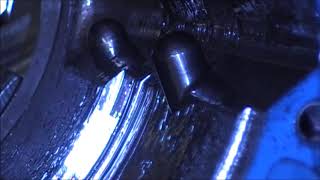
- Worn Overdrive & Intermediate Servo Bores 🔴 High Probability The transmission case is made of aluminum, and the steel servo pistons move within it. 🎬 Watch: Visualizing the transmission case wear problem Over tens of thousands of miles, the harder steel wears away the softer aluminum bore, creating a gap that allows hydraulic pressure to leak. This pressure loss is exacerbated when the transmission fluid heats up and thins out.
How to confirm: The diagnosis is primarily based on the classic symptoms (flashing O/D light, shift flares when warm) combined with code P1775 and often other gear ratio codes. A pressure test at the servo ports could confirm low pressure, but most mechanics proceed with the fix based on the symptomatic evidence and the well-documented nature of this specific failure.
Typical fix: Install an aftermarket servo bore repair kit. These kits include new servo pistons with O-rings machined into them, which effectively seal the worn bores and restore hydraulic pressure. This patented repair (U.S. Patent No. 9,121,418) can be done without removing the transmission.
Est. part cost: $200-$250
Rare But Worth Checking
- Failed Shift Solenoid Pack: → Shop Transmission Valve Body While much less common than the servo bore issue, an electrical failure within the solenoid pack itself can cause shifting problems. However, this should not be the first assumption. A diagnostic check of solenoid resistance should be performed before considering replacement. On related platforms like the Jaguar S-Type, solenoid pack replacement has resolved some shifting issues.
- Low or Burnt Transmission Fluid: → Shop Transmission Assembly Extremely low or degraded fluid can cause pressure issues and poor shifting. Always check the fluid level and condition first. If the fluid is black or smells burnt, more severe internal damage may have occurred.
Diagnosis Steps
- Verify the presence of code P1775 and any other related transmission codes (P0732, P0733, P0735) with an OBD-II scanner.
- Check the transmission fluid level and condition. Ensure it is at the proper level and does not look or smell burnt.
- Observe the symptoms during a test drive. Note if the problems (shift flares, slipping) are worse when the transmission is warm, which is a key indicator of the servo bore leak.
- If the classic symptoms of worn servo bores are present, the most likely cause has been identified.
- As a secondary check, a mechanic can test the resistance of the shift solenoids at the transmission connector to rule out an electrical fault, though this is rarely the cause.
- The definitive, but more involved, diagnosis is to remove the existing servos and inspect the bores for visible wear or scoring.
Parts You'll Likely Need
- Transmission Servo Bore Repair Kit — This is the direct fix for the root cause of the problem. The kit contains modified overdrive and intermediate servo pistons with O-rings that seal the worn bores in the transmission case. This is a patented aftermarket solution as the OEM parts do not have these seals.
Trusted brands: AJ1E Superior Solutions
Aftermarket price range: $200-$250 - Transmission Fluid — You will lose some fluid when removing the servos. It's critical to top off the transmission with the correct type of fluid (e.g., Motorcraft MERCON V) after the repair.
Trusted brands: Motorcraft, Valvoline, Castrol
OEM price range: $8-$12 per quart
Aftermarket price range: $6-$10 per quart
Related Codes That Often Appear With This One
- P0732 — Indicates 'Gear 2 Incorrect Ratio'. This code is often triggered alongside P1775 because the pressure loss from the worn servo bores prevents the bands for 2nd gear from applying correctly.
- P0733 — Indicates 'Gear 3 Incorrect Ratio'. Similar to P0732, this points to a slipping condition in 3rd gear caused by the hydraulic pressure leak.
- P0735 — Indicates 'Gear 5 Incorrect Ratio'. This is very common with the worn servo bore issue, as the overdrive band is one of the primary components affected by the pressure loss.
Technical Service Bulletins (TSBs) & Recalls
- TSB 09-12-12: This technical service bulletin from Ford directly addresses shift concerns, including the loss of 2nd, 3rd, and 5th gears, and incorrect ratio DTCs. It identifies the cause as servo pin case bore wear leading to reduced apply pressure. The TSB provides a procedure for inspecting and repairing the worn bores, confirming this is a known manufacturer issue.
Mechanic-Grade Diagnostic Values
- Shift Solenoid (SSA, SSB, SSC, SSD) Resistance — expected: 20-30 Ohms. Failure: A reading outside this range indicates a faulty solenoid coil.
- Pressure Control (PCA, PCB, PCC) Solenoid Resistance — expected: 3.9-5.5 Ohms. Failure: A reading outside this range points to a failure in the pressure control solenoid.
- Torque Converter Clutch (TCC) Solenoid Resistance — expected: 8.5-11.5 Ohms. Failure: An out-of-spec reading suggests a problem with the TCC solenoid.
Wiring & Ground Locations
- C168 / Transmission Case Connector — On the driver's side of the transmission case, towards the top.. This is the main external connector where a technician can test the resistance of all internal transmission solenoids without dropping the pan. Corroded or missing pins at this connector can mimic solenoid failure.
Real Owner Repair Stories
- FordServoBoreFix.com Customer Feedback (2002 Ford Explorer) — Not shifting properly from 1st to 2nd and 2nd to 3rd, P1775 error code, and a blinking O/D OFF light.
❌ Tried (didn't work) Multiple repair shops quoted a full transmission rebuild for $2,500 to $3,500.
✅ What actually fixed it The owner installed the AJ1E Superior Solutions servo bore kit with O-rings themselves. After installation, the transmission shifted perfectly into all gears, resolving all symptoms and codes. - FordServoBoreFix.com Customer Feedback (2007 Ford Explorer Sport Trac) — Hard shifting, flaring between gears, blinking overdrive light, and check engine light.
❌ Tried (didn't work) A mechanic quoted a rebuilt transmission for $1,888 plus $1,500 for labor.
✅ What actually fixed it The owner purchased the AJ1E servo kit for $211. After installation, all shifting problems and warning lights were gone, saving the vehicle from being scrapped.
OEM Part Supersession History
1L2Z-7G391-AG→9L2Z-7G391-A— Updated design for the 5R55W/S solenoid block pack.
Heads up: The later part number (9L2Z-7G391-A) is generally backward compatible for 2002+ models, but it's crucial to verify fitment by VIN.
Model Year Variations Within This Range
- 2002+: The Ford Explorer in this range primarily used the 5R55S and 5R55W transmissions. The 'S' denotes a synchronous shift design, while the 'W' indicates a wide-ratio gear set. For the purpose of the P1775 code and the worn servo bore issue, the diagnosis and repair are identical as they share the same case design and servo components.
Diagnostic Flowchart
Other Known Issues on This Vehicle
Issues unrelated to this code that are worth knowing about as an owner of this generation:
- 4.0L SOHC V6 Timing Chain Cassette Failure 🔴 High — Very common, often manifests as a rattling noise on startup or between 2000-3000 RPM. Can occur at any mileage but becomes more likely with age. (Ref: TSB 04-15-4)
- Cracked Rear Liftgate Panel (Applique) 🟠 Medium — Extremely common on 2002-2010 models. A crack typically forms vertically near the handle. It's a cosmetic issue that can allow water intrusion. (Ref: Multiple TSBs issued (e.g., 02-25-6, 04-8-5), but no recall. A class-action lawsuit was filed for 2002-2005 models.)
- Failing Wheel Hub Bearings 🟠 Medium — Common across all generations. Symptoms include a humming or grinding noise that gets louder with speed and may change when turning.
- Blend Door Actuator Failure 🟡 Low — A very frequent issue causing a repetitive clicking sound from the dashboard and an inability to change cabin temperature.
- Thermostat Housing Leaks (4th Gen) 🟠 Medium — Common on the 2006-2010 models for the plastic thermostat housing to develop a crack along the seam, leading to coolant leaks.
Used vs. New Parts: Buying Guide for This Vehicle
When a used part is the smart pick: For this specific P1775 issue, buying a used part is almost never a good idea. The primary failure is wear in the transmission case itself, so a used transmission will likely have the same worn servo bores. A used OEM servo piston will not solve the problem as it lacks the necessary O-rings to seal the worn bore.
Donor-vehicle mileage cap: roughly under 50000 miles for the part to have meaningful remaining life.
What to inspect on the donor part:
- If considering a complete used transmission, look for one from a low-mileage, rear-ended vehicle.
- Ask for maintenance records; a transmission that has had regular fluid changes is a better bet.
- Inspect the fluid from the donor transmission. If it is dark, burnt, or contains metal shavings, avoid it at all costs.
OEM-only on this vehicle (don't cheap out):
- While the solenoid pack is rarely the cause, if it is confirmed to be faulty, a new OEM (Bosch) or a quality remanufactured unit (Sonnax) is recommended over a used one due to the risk of installing another failing part.
Aftermarket brands forum-validated for this vehicle:
- AJ1E Superior Solutions: This is the patent holder and primary manufacturer of the aftermarket servo bore repair kit with O-rings, which is the definitive fix for this issue.
Brands owners have reported issues with on this vehicle:
- Unknown/unbranded servo kits without a proven track record. The AJ1E kit is the widely accepted solution.
Real Owner Stories
Aggregated from forums and TSBs cited above. Mileages and costs reflect what owners reported in those sources.
2005 Lincoln LS
Symptoms: Harsh shifting when warm and classic symptoms of worn servo bores.
What fixed it: The repair was performed under warranty per TSB 09-12-12.
Source hint: Lincoln vs Cadillac Forums - '5R55 Tranny Servo Bore Fix'
2000-2008 Jaguar S-Type (5R55N)
Symptoms: Delayed and harsh engagement of gears.
What fixed it: Replaced existing servos with a 'patented improvement version which has o-rings on the shafts' to seal the wear-related leaks.
Source hint: Jag-lovers Forums - 'Automatic Transmission Weak Points? - S-Type'
2005-2009 Ford Mustang (5R55S)
Symptoms: Loss of 2nd, 3rd, and 5th gears; band failure caused by worn servo bores.
What fixed it: Repairing the worn bores as identified in TSB 09-12-12.
Source hint: S197Forum.com - '5R55 Trans TSB 09-12-12'
Related OBD-II Codes
Frequently Asked Questions
Does TSB 09-12-12 apply to my 1997-2010 Ford Explorer regarding the P1775 code?
Can I fix the P1775 code on my Explorer without removing the entire transmission?
Why does my Explorer shift fine when cold but start slipping and flashing the O/D light once it warms up?
Is the P1775 code related to the common 'shift flare' between 2nd and 3rd gear on these Fords?
Should I buy a used transmission from a salvage yard to fix my P1775 error?
Are there any other common Explorer issues I should look out for while fixing the transmission?
Helpful Videos
We Have This Part in Stock

The information in this article is provided for general reference and educational purposes only. Vehicle specifications, procedures, and part compatibility can vary by production date, trim level, and region. Always consult your vehicle's factory service manual and verify part numbers before purchasing or performing repairs. Safety-critical components such as airbags, seat belts, and braking systems should be installed by a qualified professional.
- Ford Explorer:
- 🧭 Diagnostic Flowchart
- 🎬 Helpful Videos
- 🛍️ Shop This Part
- What's Unique About the 1997-2010 Ford Explorer
- Symptoms You May Notice
- Most Likely Causes
- Rare But Worth Checking
- Diagnosis Steps
- Parts You'll Likely Need
- Related Codes That Often Appear With This One
- Technical Service Bulletins (TSBs) & Recalls
- Mechanic-Grade Diagnostic Values
- Wiring & Ground Locations
- Real Owner Repair Stories
- OEM Part Supersession History
- Model Year Variations Within This Range
- Other Known Issues on This Vehicle
- Used vs. New Parts: Buying Guide for This Vehicle
- Real Owner Stories
- 2005 Lincoln LS
- 2000-2008 Jaguar S-Type (5R55N)
- 2005-2009 Ford Mustang (5R55S)
- Related OBD-II Codes
- Frequently Asked Questions
- 🎟️ Get 5% Off