

P1889 on 2015-2020 Audi S3: Coolant Shut-Off Valve Causes and Fixes
On a 2015-2020 Audi S3, code P1889 is almost always caused by a failed thermostat housing. The fix is to replace the entire water pump and thermostat assembly, which typically costs between $250-$500 for parts and is a 3-5 hour labor job.
- P1889 on your S3 is a cooling system problem, not an AWD problem.
- The cause is a very common failure of the plastic thermostat housing assembly.
- The correct repair is to replace the entire water pump and thermostat housing assembly at the same time.
- During repair, it is critical to inspect the electrical connector and wiring for coolant contamination to prevent the code from returning, per TSB 2043381.
- Do not ignore this code, as it can lead to engine overheating and limp mode.
What's Unique About the 2015-2020 Audi S3

The EA888 Gen 3 engine in the 8V S3 uses a complex, electronically controlled water pump and thermostat assembly made largely of plastic. This integrated unit is a notoriously common failure point across the entire VW/Audi MQB platform. While P1889 on other car brands can point to AWD or transmission issues, on this specific Audi platform, it is definitively a cooling system code pointing to the failure of this plastic housing. The failure is so common that many owners consider the replacement a matter of 'when,' not 'if,' with failures often occurring between 30,000 and 80,000 miles. The plastic becomes brittle from constant heat cycles and can crack, or the internal N82 valve shorts out.
Symptoms You May Notice

- Check Engine Light is on
- Cooling fans running at maximum speed, even when the engine is cold or just after startup.
- Engine takes a very long time to reach operating temperature
- No heat or poor heat from the cabin vents, especially during initial warm-up.
- Engine overheating or temperature gauge fluctuating (less common, but possible if a major leak occurs)
- Vehicle may enter a reduced power "limp mode" to protect the engine. 🎬 See how P1889 causes limp mode and how to fix it.
- Visible signs of pink/purple G13/G12 coolant crust or puddles under the vehicle, typically below the intake manifold area.
- Replacing only the coolant temperature sensors. While sensors can fail, the P1889 code specifically points to the N82 valve circuit, not a sensor reading.
- Assuming it is an All-Wheel Drive (AWD) system fault. On many other manufacturers, P1xxx codes in this range relate to the drivetrain, but on modern Audis, P1889 is a cooling system code. The actual Haldex AWD pump failure throws different codes (like 00448).
Most Likely Causes

- Failed Thermostat Housing / Coolant Shut-Off Valve (N82) 🔴 High Probability → Shop Integrated Thermostat Housing Assembly The EA888 Gen 3 engine uses a plastic thermostat housing that is subject to constant, extreme temperature cycles. This leads to the plastic becoming brittle, cracking, or the internal electronic rotary valve (N82) shorting out. The issue is so prevalent that multiple part revisions have been released by VW/Audi to improve durability.
How to confirm: Visually inspect the area under the intake manifold for signs of pink/purple G13 coolant crust. Scan the vehicle; P1889 almost always confirms this failure. If no leak is visible, the failure is likely an internal electrical short within the housing, which is a common failure mode.
Typical fix: Replace the entire water pump and thermostat housing assembly. It is highly recommended to replace both components at the same time as they are serviced together and often fail in close succession. Many owners also replace the adjacent plastic coolant pipes, which become equally brittle.
Est. part cost: $250-$500
Rare But Worth Checking
- Damaged Wiring Harness or Connector: A leaking thermostat housing can allow coolant to seep into the N82 valve's electrical connector. This moisture can 'wick' or migrate down the wiring harness, causing corrosion and short circuits far from the original leak. VW/Audi TSB 2043381 specifically addresses this issue, recommending replacement of the harness section if coolant is found in the connector. Always inspect the connector and visible wiring when replacing the housing.
Diagnosis Steps

- Confirm the presence of code P1889 using an OBD-II scanner with VAG-specific capabilities (like VCDS or OBDeleven) for the most accurate definition.
- Listen for cooling fans running at full speed immediately after starting the car or with the key on, which is the ECU's fail-safe response.
- Remove the engine cover and use a flashlight and inspection mirror to inspect the area underneath the intake manifold for signs of dried or fresh pink/purple coolant leaks. Check the top of the transmission bell housing, as this is where coolant often pools.
- Carefully disconnect and inspect the electrical connector on the thermostat housing (N82 valve) for any signs of moisture, corrosion, or pink/purple residue. This is a key indicator of failure.
- If the connector is contaminated, trace the wiring harness back as far as possible to check for further corrosion or damage, as coolant can wick down the wires.
- If no external leaks or wiring damage are found, the fault is almost certainly internal to the thermostat housing, which requires replacement.
Parts You'll Likely Need
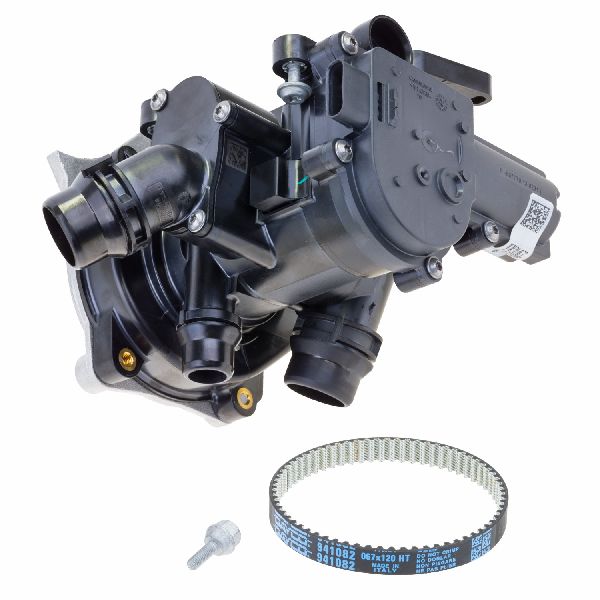
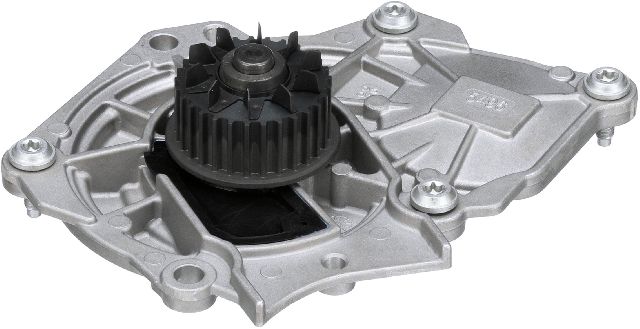
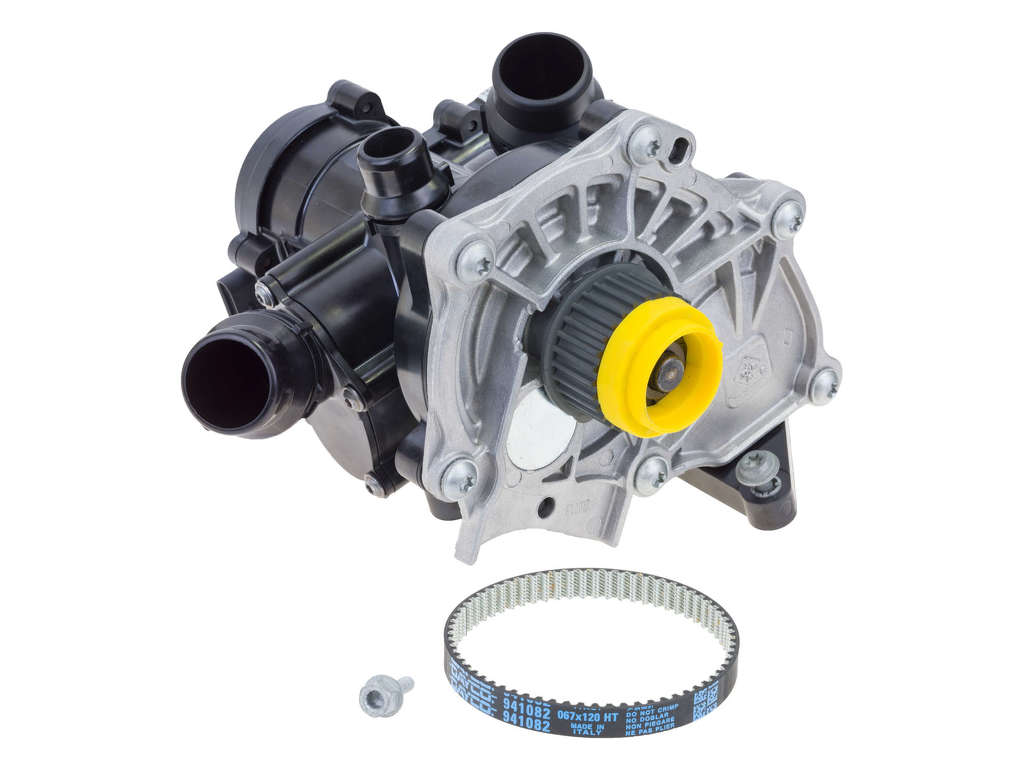
- Water Pump & Thermostat Housing Assembly
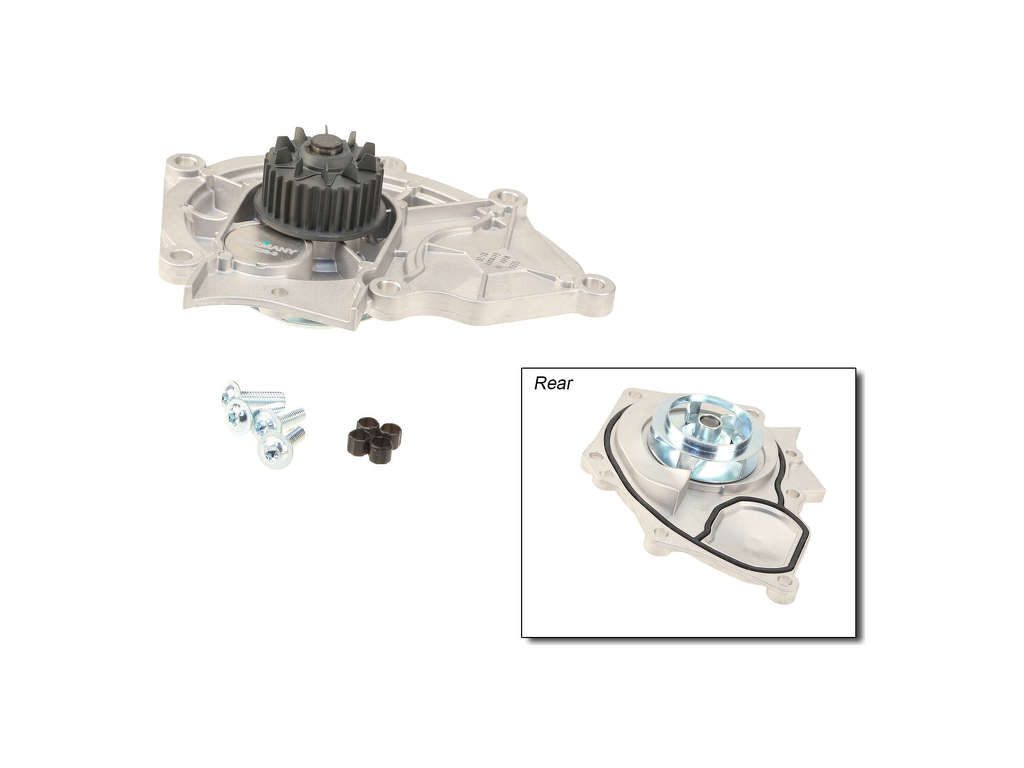
(OEM #06L121111P)— This is the complete assembly that houses the failing N82 valve. It is sold as an integrated unit and is the definitive fix for the P1889 code. Part numbers are frequently revised; other common numbers include 06L121111M, 06L121111L, 06L121111K, 06L121111J, 06L121111H. 'P' is the latest widely available revision with material improvements.
Trusted brands: Genuine Audi/VW, INA, Continental, Bremmen Parts
OEM price range: $350-$500
Aftermarket price range: $250-$400 - Coolant / Antifreeze (G13 or G12 Evo)
(OEM #G013A8J1G)— The system must be drained and refilled during the repair. Use only the specified VW/Audi coolant, typically G13 (purple) or the newer G12 Evo, mixed 50/50 with distilled water.
Trusted brands: Genuine Audi/VW, Pentofrost E
OEM price range: $25-$40 per gallon
Aftermarket price range: $20-$30 per gallon
Related Codes That Often Appear With This One
- P2181 — P2181 ('Cooling System Performance') is often triggered alongside P1889 because the failed N82 valve prevents the engine from regulating its temperature correctly, leading to a performance deviation detected by the ECU.
- P2681 — This code for 'Engine Coolant Bypass Valve Control Circuit/Open' points to a similar function within the same thermal management module, indicating a comprehensive failure of the unit.
- P19A100 — This code for 'Transmission coolant valve, Short circuit to ground' can appear with P1889, as noted in TSB 2043381, indicating a related issue in the thermal management system, potentially caused by the same coolant intrusion into the wiring harness.
Technical Service Bulletins (TSBs) & Recalls
- VW TPI 2043381/1: Pertains to P1889 and P19A200, noting the issue of coolant migrating through the N82 solenoid connector and into the wiring harness. The TSB advises checking the connector for coolant and replacing the affected component and wiring if contamination is found.
Platform-Specific Known Issues
- The plastic construction of the thermostat/water pump assembly is a well-known weak point on all EA888 Gen 3 engines, with failures commonly occurring between 30,000 and 80,000 miles.
- A user on YouTube with a 2017 S3 experienced a water pump and thermostat failure requiring replacement at only 8,300 miles, highlighting that failure can occur very early.
- After replacing the thermostat housing, it is not uncommon for the adjacent brittle plastic coolant lines to crack soon after, necessitating another repair. It is wise to inspect or replace these hoses at the same time.
Mechanic-Grade Diagnostic Values
- Resistance of N82 valve circuit for code P2681 — expected: Less than 200.0 kOhm. Failure: A measurement greater than 200.0 kOhm indicates an open circuit or high resistance fault, triggering code P2681, which often accompanies P1889.
Scan Tool Commands That Help
- VCDS (VAG-COM): Basic Settings - Control for cooling circuit air purge (IDE08087) — After replacing the thermostat/water pump assembly, this guided function is essential to properly bleed air from the complex EA888 cooling system. It cycles various pumps and valves to remove air pockets that cannot be cleared with a traditional vacuum fill alone.
- VCDS (VAG-COM): Output Tests for Coolant Shut-Off Valve (N82) — To functionally test the N82 valve while it is installed in the vehicle. This command attempts to cycle the valve open and closed, which can help confirm if the valve is physically stuck or electrically unresponsive before removal.
Wiring & Ground Locations
- N82 Connector — On the thermostat housing, located underneath the intake manifold on the front of the engine.. This is the primary point of failure. It should be inspected for pink/purple coolant residue, which indicates a leak from the housing has compromised the electrical connection, causing the short circuit or open circuit fault.
Real Owner Repair Stories
- YouTube channel 'TR Hamza' (2017 Audi S3 (facelift) with 8,300 miles) — Recurring low coolant light, requiring top-offs every month or so. No visible leaks on the ground, no overheating, and no noticeable driving issues.
❌ Tried (didn't work) Initially just topping up the coolant.
✅ What actually fixed it The Audi dealership diagnosed a leaking water pump and thermostat. They replaced both the water pump and the thermostat housing assembly under warranty, which resolved the coolant loss. - Reddit user on r/GolfGTI (MK7 GTI (platform-mate)) — Check Engine Light with code P1889, but no heat from the vents.
❌ Tried (didn't work) Purchased a cheap, non-OEM replacement valve from Amazon for under $100 CAD.
✅ What actually fixed it The cheap aftermarket part failed catastrophically, with the top popping off and leaving the user stranded. The user strongly advises buying the OE or OE-supplier part to avoid repeat failure.
OEM Part Supersession History
06L121111H, J, K, L, M→06L121111P— The 'P' revision is the latest version with improved materials and structural reinforcements, such as added internal ribs, to address the common issue of the plastic housing cracking or warping from heat cycles.
Model Year Variations Within This Range
- 2017-2020 (Facelift): While the fundamental water pump and thermostat design remained a failure point, some owners of facelift models (2017+) have reported failures at extremely low mileage (e.g., under 10,000 miles), suggesting the issue was not fully resolved in later production years.
Diagnostic Flowchart
Other Known Issues on This Vehicle
Issues unrelated to this code that are worth knowing about as an owner of this generation:
- Haldex AWD Pump Failure 🟠 Medium — Common issue, especially if fluid service is neglected. The pump's filter screen gets clogged, causing the pump to burn out. Service is recommended every 30-40k miles.
- IS38 Turbo Wastegate Rattle / Failure 🟠 Medium — The wastegate actuator arm or flapper can wear, causing a distinct rattle on deceleration or loss of boost control. Can occur at various mileages. (Ref: While no specific recall exists, repair kits and updated turbochargers are available.)
- PCV Valve Failure 🟡 Low — The PCV valve diaphragm can tear, causing a large vacuum leak, rough idle, and a whistling or honking noise. It's a relatively common but inexpensive and easy fix.
- Carbon Buildup on Intake Valves 🟠 Medium — As a direct-injection-only engine (in North America), carbon deposits build up on the intake valves over time, typically requiring a manual cleaning service every 60,000-100,000 miles to restore performance.
- Upper Timing Cover Oil Leak 🟡 Low — The seals around the upper timing cover can degrade and leak oil. This is less severe than lower cover leaks and the gaskets can be replaced without a major engine-out service. (Ref: TSB 2049299/2 addresses oil leaks from the cylinder head cover area.)
Used vs. New Parts: Buying Guide for This Vehicle
When a used part is the smart pick: For this specific repair, using a salvaged or used thermostat/water pump assembly is NEVER a smart choice. The part has an extremely high failure rate due to a known design and material defect.
What to inspect on the donor part:
- Do not purchase this part used. Even a low-mileage donor part carries a significant risk of premature failure, as failures have been documented on cars with less than 10,000 miles. The cost of labor to replace it a second time far outweighs any initial savings.
OEM-only on this vehicle (don't cheap out):
- Water Pump & Thermostat Housing Assembly
Aftermarket brands forum-validated for this vehicle:
- INA (often the Original Equipment Supplier)
- Continental
Brands owners have reported issues with on this vehicle:
- Unbranded, low-cost parts from online marketplaces like Amazon or eBay. Forum users have reported catastrophic failures of these parts, such as the housing coming apart, leading to sudden and complete coolant loss.
Real Owner Stories
Aggregated from forums and TSBs cited above. Mileages and costs reflect what owners reported in those sources.
2015 Audi S3 — 60000 miles
Symptoms: Owner reported fault codes P1889 and P2681.
What fixed it: The fix was a new thermostat and water pump assembly.
Source hint: Audi-Sport.net - Thread 'S3 Water pump/thermostat housing replacement'
2017 Audi S3 — 8300 miles
Symptoms: Experienced a water pump and thermostat failure requiring replacement at very low mileage.
What fixed it: The water pump and thermostat were replaced.
Source hint: YouTube - TR Hamza, 'My Broken 2017 Audi S3 is Finally FIXED!'
Audi A3 (platform mate) — ~70000 miles
Symptoms: Vehicle was overheating and entered limp mode with code P1889 present.
What fixed it: The thermostat housing was replaced, which the mechanic stated is the fix '98% of the time' for this code.
Source hint: YouTube - The Auto Connect, 'Audi A3 1.8 Engine P1889 Code Overheating and Limp Mode Fix'
Related OBD-II Codes
Frequently Asked Questions
My 2017 S3 has very low miles. Can the thermostat housing really be the cause of my P1889 code?
I have a P1889 code but don't see any pink coolant leaks under my intake manifold. Could it still be the thermostat housing?
Is there an official TSB from Audi/VW for the P1889 code on my S3?
My mechanic is replacing the thermostat housing for P1889. Should I replace the water pump at the same time?
What are the first symptoms I should look for with a P1889 fault on my Audi S3?
I found pink residue on the electrical connector for the thermostat. What does this mean?
Are other cars like the VW Golf R or GTI affected by this same P1889 issue?
Helpful Videos
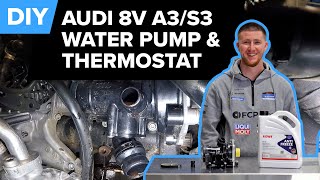
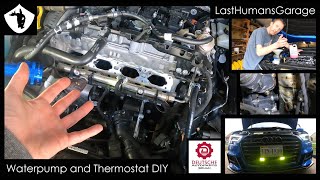
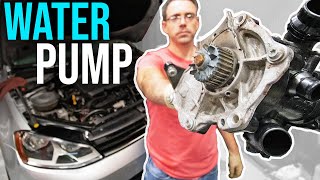
We Have This Part in Stock

The information in this article is provided for general reference and educational purposes only. Vehicle specifications, procedures, and part compatibility can vary by production date, trim level, and region. Always consult your vehicle's factory service manual and verify part numbers before purchasing or performing repairs. Safety-critical components such as airbags, seat belts, and braking systems should be installed by a qualified professional.
- Audi S3:
- 🧭 Diagnostic Flowchart
- 🎬 Helpful Videos
- 🛍️ Shop This Part
- What's Unique About the 2015-2020 Audi S3
- Symptoms You May Notice
- Most Likely Causes
- Rare But Worth Checking
- Diagnosis Steps
- Parts You'll Likely Need
- Related Codes That Often Appear With This One
- Technical Service Bulletins (TSBs) & Recalls
- Platform-Specific Known Issues
- Mechanic-Grade Diagnostic Values
- Scan Tool Commands That Help
- Wiring & Ground Locations
- Real Owner Repair Stories
- OEM Part Supersession History
- Model Year Variations Within This Range
- Other Known Issues on This Vehicle
- Used vs. New Parts: Buying Guide for This Vehicle
- Real Owner Stories
- 2015 Audi S3 — 60000 miles
- 2017 Audi S3 — 8300 miles
- Audi A3 (platform mate) — ~70000 miles
- Related OBD-II Codes
- Frequently Asked Questions
- 🎟️ Get 5% Off