

P1890 on 2002-2010 Ford Explorer: 4WD Mode Select Circuit Failure Causes and Fixes
On a 2002-2010 Ford Explorer, code P1890 almost always points to a failed transfer case shift motor (encoder motor). This part is exposed under the vehicle and its internal position sensor fails from moisture and corrosion. Expect to pay $100-$250 for a new motor, with a DIY difficulty of 3/5.
- P1890 on your Explorer means the 4x4 system's computer didn't get confirmation that a shift command was completed.
- The number one cause is a failed transfer case shift motor, which corrodes due to its location under the truck.
- Always check the shift motor and its wiring for corrosion before suspecting the more expensive control module (TCCM).
- If you also have code P1867, the shift motor is almost certainly the problem.
- You can still drive the vehicle in 2WD, but the 4x4 system will not work.
What's Unique About the 2002-2010 Ford Explorer
On this generation of Explorer, the transfer case shift motor, which contains the critical position sensor, is mounted externally on the transfer case. This location makes it highly susceptible to water, road salt, and debris intrusion. Over time, this exposure leads to corrosion and failure of the motor's internal electronics or its external connector, making it the number one cause of P1890 on this platform. The issue is so common that many owners diagnose it by simply inspecting the motor and its connector for obvious corrosion.
Generation note: This range covers the third (2002-2005) and fourth (2006-2010) generations of the Ford Explorer. The causes and fixes are largely identical. However, the location and removal procedure for the Transfer Case Control Module (TCCM) behind the glove box can differ slightly between the generations. For example, on some 3rd gen models, a 7mm screw on the bottom of the TCCM bracket must be removed to slide the entire assembly out for access.
Symptoms You May Notice
- Four-wheel drive (4WD) system is inoperative
- Cannot switch between 2WD, 4-High, and 4-Low
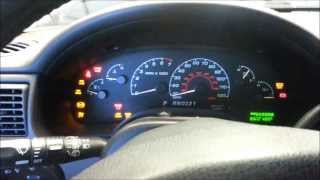
- 4x4 or 4WD warning light is illuminated or flashing on the dashboard
- Indicator lights on the 4WD selector switch do not light up or flash
- A clicking noise may be heard from the transfer case area during attempted shifts, or no noise may be heard at all
- A loud thump may be heard from underneath the vehicle when attempting to shift modes.
- Replacing the TCCM before testing the transfer case shift motor. The motor is a much more common failure point and should be the first component thoroughly checked.
- Replacing the 4WD selector switch. This component is generally very reliable and fails much less frequently than the shift motor or its wiring.
Most Likely Causes
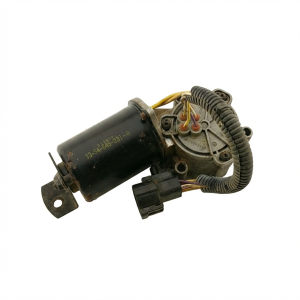
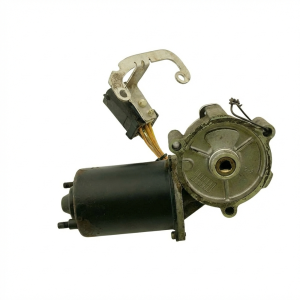
- Failed Transfer Case Shift Motor (Encoder Motor) 🔴 High Probability → Shop Transfer Case Motor The shift motor is mounted on the transfer case, exposing it to moisture, road salt, and impacts which corrode and damage the internal position sensor (encoder) and its electrical connector. The internal electronic contact plate, which tells the TCCM the motor's position, is the most common point of failure.
How to confirm: Visually inspect the motor and its connector for corrosion or damage. With the vehicle in Park and the key on, have a helper operate the 4WD switch while you listen for the motor to attempt to run. If no sound is heard, it points strongly to the motor or its wiring. If code P1867 is also present, the shift motor's internal position sensor is almost certainly the fault.
Typical fix: Replace the entire transfer case shift motor assembly. This is a bolt-on part, typically held by three bolts.
Est. part cost: $100-$250 - Corroded or Damaged Wiring/Connector 🟡 Medium Probability The wiring harness leading to the transfer case shift motor is located under the vehicle and is prone to damage from road debris and corrosion, especially at the connector where water can seep past the seal.
How to confirm: Perform a pin-to-pin continuity and resistance check on the wiring harness between the Transfer Case Control Module (TCCM) and the shift motor connector using a wiring diagram. Visually inspect the connector pins for green or white corrosion, or broken/frayed wires leading into the connector.
Typical fix: Clean the connector terminals with a contact cleaner and a small brush. If corrosion is severe, the connector pigtail may need to be cut off and a new one spliced in. Damaged wires should be repaired with solder and heat shrink tubing.
Est. part cost: $10-$50 - Failed Transfer Case Control Module (TCCM) ⚪ Low Probability → Shop Transfer Case Motor While generally reliable, the TCCM can fail electronically. Water intrusion into the passenger cabin from a leaking windshield or cowl is a rare but possible cause of failure. On some models, a failing shift motor can draw too much current and damage the TCCM driver circuit.
How to confirm: After confirming the shift motor and wiring are good, the TCCM is the next logical suspect. Listen for a 'click' from the module (located behind the glove box) when the 4WD switch is operated. If there is no click and the module has power and ground, it has likely failed. A Ford-specific scan tool can also directly communicate with the module to check for internal faults.
Typical fix: Replace the TCCM. It is located behind the passenger side glove box. It is critical to match the part number exactly, as different modules are not interchangeable and can be damaged if installed incorrectly. 🎬 Watch: How to find and replace the TCCM
Est. part cost: $60-$300 - Failed 4WD Selector Switch ⚪ Low Probability
How to confirm: Test the switch's resistance values at its electrical connector as you move through the different 4WD positions. The values should change according to the service manual specifications. A scan tool can also monitor the switch position PID in real-time.
Typical fix: Replace the switch assembly in the dashboard.
Est. part cost: $30-$70
Rare But Worth Checking
- Contaminated Transfer Case Fluid: → Shop Transfer Case Motor
Diagnosis Steps
- Check all related fuses in the passenger compartment and under-hood fuse boxes.
- Scan the TCCM for any other stored trouble codes, paying close attention to P1867 or P1838.
- Raise the vehicle safely and locate the transfer case shift motor on the side of the transfer case. It is often protected by a small metal shield held on by 10mm bolts.
- Thoroughly inspect the shift motor's electrical connector and the nearby wiring for any signs of corrosion, moisture, or physical damage.
- If the connector looks clean, test for power and ground at the connector with the key on. Refer to a wiring diagram for correct pin locations.
- If power and ground are present, the transfer case shift motor is the most likely failed component. You can remove the motor (typically 3 bolts) and have a helper operate the switch to see if the motor shaft attempts to turn.
- If power or ground is missing, trace the wiring back to the TCCM to find the break in the circuit.
- If the motor and wiring are confirmed good, suspect a faulty TCCM.
- As a final check, inspect the 4WD selector switch in the dash for proper operation using a multimeter to check resistance changes between modes.
Parts You'll Likely Need
- Transfer Case Shift Motor
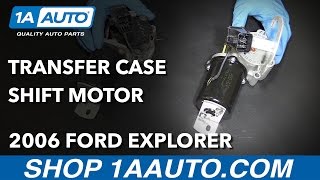
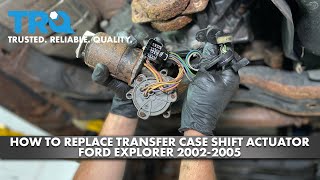
(OEM #Motorcraft: YL8Z-7G360-AA (2002-2005), 6L2Z-7G360-DB (2006-2010). Dorman: 600-927, 600-925.)🎬 See this 2006-2010 shift motor installation walkthrough — This is the most frequent cause of code P1890 due to its exposed location under the vehicle, leading to failure of its internal position sensor.
Trusted brands: Motorcraft, Dorman, Cardone
OEM price range: $200-$350
Aftermarket price range: $100-$250 - Transfer Case Control Module (TCCM)
(OEM #Example P/N: 2C5Z-7E453-A (Verify with VIN, many variations exist).)— This is the secondary cause, replaced only after the shift motor and wiring have been ruled out. Failure is uncommon but does happen.
Trusted brands: Motorcraft, Cardone
OEM price range: $200-$400
Aftermarket price range: $60-$200
Related Codes That Often Appear With This One
- P1867 — This code for 'Transfer Case Contact Plate General Circuit Failure' points specifically to the internal position sensor (encoder) within the shift motor. If you see P1867 with P1890, the shift motor assembly is definitively the problem.
- P1838 — This code indicates a 'Transfer Case Shift Motor Circuit Failure'. It often appears with P1890 and further isolates the problem to the shift motor or its wiring.
- U0102 — This code means 'Lost Communication with Transfer Case Control Module'. If you see this, it indicates a total communication failure (power, ground, or module failure) that must be fixed before diagnosing P1890, which is a more specific circuit fault.
Platform-Specific Known Issues
- Owner Experience: TCCM Replacement Fix: An owner of a 2002 Explorer with no 4x4 function and no lights on the switch diagnosed a bad TCCM. After finding the module behind the glove box, they discovered a hidden 7mm screw on the bottom of the bra
Mechanic-Grade Diagnostic Values
- 4WD Mode Selector Switch (MSS) Resistance — expected: 2WD: 3,705-4,095 Ohms; 4WD HIGH: 1,045-1,155 Ohms; 4WD LOW: 342-378 Ohms.. Failure: Readings are open (infinite resistance), shorted (near zero), or do not change when the switch is moved.
- TCCM Power Supply Voltage — expected: Battery voltage (approx. 12.6V) at the power input pins of the TCCM connector.. Failure: Low or no voltage indicates a problem with the fuse, relay, or the power feed wire.
- Continuity between TCCM and MSS harness connectors — expected: Less than 5 ohms.. Failure: Resistance greater than 5 ohms indicates a break or high resistance in the wiring between the module and the switch.
- Resistance to ground on MSS signal circuits — expected: Greater than 10,000 ohms.. Failure: Low resistance indicates a short to ground on one of the signal wires.
Scan Tool Commands That Help
- Ford IDS (or equivalent): Monitor 4WD_SW PID — Use this to see the switch position as the TCCM sees it in real-time. Cycling the switch should show corresponding changes in the PID value. This is a fast way to confirm if the switch and its immediate wiring to the TCCM are functioning correctly without using a multimeter.
- Ford IDS (or equivalent): TCCM Self-Test — After addressing any primary codes, running a module self-test can help verify that the repair was successful and that no other underlying faults are present within the TCCM's control circuits.
Wiring & Ground Locations
- TCCM Connector C281a (example) — Behind the passenger side glove box, plugged into the Transfer Case Control Module.. This is the main connector for the 4x4 computer. Pin 9 (White/Blue wire) and Pin 2 (White/Brown wire) are the signal and return circuits from the Mode Select Switch. Testing for continuity and voltage at these specific pins is critical for diagnosing P1890.
- MSS Connector C284 (example) — At the back of the 4WD selector switch in the dashboard.. This is where you can directly test the resistance of the mode selector switch. Terminals 2 and 3 are used for the resistance measurement.
- G104 / G105 — On the right-hand side of the engine compartment, towards the rear.. These are major chassis and engine ground points. While not directly for the TCCM (which is grounded inside the cabin), a poor main ground can cause system-wide electrical issues and voltage drops that can affect various modules, including the 4WD system.
- Frame Ground near Transfer Case — On the vehicle's frame rail near the transfer case area.. The wiring harness for the shift motor runs along the frame. A corroded or broken ground wire in this area can interrupt the circuit for the shift motor or its position sensor, directly causing P1890 or related codes.
Real Owner Repair Stories
- YouTube user Nathan Rohrbough, via Go-Parts article (Ford Explorer (mechanically identical to Mountaineer)) — Flashing 4x4 light on the dashboard.
❌ Tried (didn't work) The owner did not report trying other parts first.
✅ What actually fixed it The owner discovered a corroded and broken ground wire on the vehicle's frame. After cleaning the contact point and re-securing the wire with a new connector, the 4WD system was fully restored. - explorerforum.com user, via Go-Parts article (2002 Explorer) — P1890 code, 4x4 lights flashing, unable to switch modes.
❌ Tried (didn't work) Tested the 4WD dash switch and confirmed it was good.
✅ What actually fixed it Replaced the transfer case shift motor (Dorman part 600-912 for that year), which completely resolved the issue.
Model Year Variations Within This Range
- 2002-2005 vs 2006-2010: The transfer case shift motors are different between the 3rd generation (2002-2005) and 4th generation (2006-2010) Explorers. For example, Dorman part 600-912 is listed for the 2002 model, while Dorman 600-927 is for 2006-2010 models. It is critical to verify the part number for the specific year, as they are not interchangeable.
- 2006-2010: The 4th generation introduced a new six-speed automatic transmission for V8 models, while the V6 retained a five-speed. While this doesn't directly affect the P1890 code, the physical layout and harness routing around the transmission bellhousing may differ slightly. Additionally, the A/C evaporator drain tube on some 4th gen models can drip onto a main electrical connector, causing various electrical issues, including potential 4WD faults.
Diagnostic Flowchart
Other Known Issues on This Vehicle
Issues unrelated to this code that are worth knowing about as an owner of this generation:
- Cracked Rear Liftgate Applique Panel 🟠 Medium — Extremely common on both 3rd (2002-2005) and 4th (2006-2010) generations. The crack typically appears near the emblem. This is not just cosmetic; it allows water intrusion, which can damage the liftgate latch and wiring. (Ref: No recall was ever issued, though Ford briefly offered financial assistance for repairs in 2006.)
- 5R55S/W/N Automatic Transmission Failure 🔴 High → Shop Transmission Assembly — Very common, especially in 2002-2006 models. Symptoms include harsh shifting, delayed engagement, slipping, and loss of Overdrive. Often requires a rebuild or replacement between 100k-150k miles. (Ref: Commonly caused by a failed solenoid block pack, a well-documented issue.)
- 4.0L SOHC V6 Timing Chain Rattle 🔴 High — A notorious issue for 1997-2004 models. A rattling noise, especially on acceleration around 2500 RPM, indicates wear on the plastic timing chain guides. If ignored, the guides can break, leading to catastrophic engine failure. The repair is extremely labor-intensive as it requires engine removal. (Ref: Ford issued TSB 04-15-4 for this issue, recommending replacement of tensioners and guides with updated parts.)
- Cracked Plastic Intake Manifold (4.6L V8) 🟠 Medium — The composite intake manifold on the 4.6L 2V V8 engine is prone to cracking at the coolant crossover passage, causing coolant leaks. This was more prevalent on earlier models but can still occur on the 2002-2005 Explorers with this engine. (Ref: A class-action lawsuit led to an extended warranty for this part on some Ford vehicles, but coverage for Explorers may vary.)
- Worn Wheel Bearings / Hub Assemblies 🟠 Medium — Front and rear wheel bearings are a common wear item, often failing and causing a loud humming or grinding noise that changes with speed. Failure is common starting around 90,000 miles.
Used vs. New Parts: Buying Guide for This Vehicle
When a used part is the smart pick: A used Transfer Case Control Module (TCCM) or 4WD Selector Switch from a junkyard can be a cost-effective option. These are typically reliable electronic parts, and failure is uncommon. A used part from a low-mileage vehicle or one from a dry climate can be a smart buy.
Donor-vehicle mileage cap: roughly under 150000 miles for the part to have meaningful remaining life.
What to inspect on the donor part:
- For a TCCM, ensure the part number matches yours exactly. Different part numbers may not be compatible.
- For a shift motor, check the electrical connector pins for any signs of green or white corrosion before buying.
- Ask about the donor vehicle's history; a part from a vehicle in a 'salt belt' state is more likely to have corrosion issues.
- When buying a selector switch, test its resistance values with a multimeter at the junkyard if possible.
Aftermarket brands forum-validated for this vehicle:
- Dorman: Widely used for shift motors (e.g., 600-927) and TCCMs (e.g., 599-251). They are a common and generally accepted replacement.
- Cardone: Offers remanufactured TCCMs and is a well-known aftermarket supplier.
Brands owners have reported issues with on this vehicle:
- Be cautious with unbranded, 'white box' parts from online marketplaces. While cheap, their internal electronics and weather sealing may be of lower quality, leading to premature failure, especially for an exposed part like the shift motor.
Real Owner Stories
Aggregated from forums and TSBs cited above. Mileages and costs reflect what owners reported in those sources.
2002 Ford Explorer
Symptoms: No 4x4 function and no lights appearing on the dashboard selector switch.
What fixed it: Replacement of the Transfer Case Control Module (TCCM) located behind the glove box.
Source hint: vehicle_specific_issues: Owner Experience: TCCM Replacement Fix
2006 Ford Explorer
Symptoms: 4WD binding issue during operation.
What fixed it: Transfer case fluid change.
Source hint: Ford Truck Enthusiasts Forum - Thread 'Transfer case motor troubleshooting' (2006)
2002 Ford Explorer
Symptoms: 4x4 not working; confirmed by a technician as a common failure point on this platform.
What fixed it: Replacement of the TCCM behind the glove box.
Source hint: DoItYourself.com Community Forums - Thread '2002 Ford Explorer 4x4 not working' (2007)
Related OBD-II Codes
Frequently Asked Questions
Where is the Transfer Case Control Module (TCCM) located on my 2002-2010 Explorer?
My 4WD switch lights aren't working and the system won't shift. Is this a common Explorer issue?
Can I use a TCCM from a different Ford model if the part numbers are slightly different?
I hear a clicking noise from behind the glove box when I press the 4WD button, but nothing happens. What does that mean?
Is the 4WD system on my Mercury Mountaineer the same as the Explorer's P1890 diagnostic path?
Could my Explorer's 4WD binding issue be related to maintenance rather than a sensor failure?
Helpful Videos
Used OEM Parts in Stock
New Aftermarket Parts Available


The information in this article is provided for general reference and educational purposes only. Vehicle specifications, procedures, and part compatibility can vary by production date, trim level, and region. Always consult your vehicle's factory service manual and verify part numbers before purchasing or performing repairs. Safety-critical components such as airbags, seat belts, and braking systems should be installed by a qualified professional.
- Ford Explorer:
- 🧭 Diagnostic Flowchart
- 🎬 Helpful Videos
- 🛍️ Shop This Part
- What's Unique About the 2002-2010 Ford Explorer
- Symptoms You May Notice
- Most Likely Causes
- Rare But Worth Checking
- Diagnosis Steps
- Parts You'll Likely Need
- Related Codes That Often Appear With This One
- Platform-Specific Known Issues
- Mechanic-Grade Diagnostic Values
- Scan Tool Commands That Help
- Wiring & Ground Locations
- Real Owner Repair Stories
- Model Year Variations Within This Range
- Other Known Issues on This Vehicle
- Used vs. New Parts: Buying Guide for This Vehicle
- Real Owner Stories
- 2002 Ford Explorer
- 2006 Ford Explorer
- 2002 Ford Explorer
- Related OBD-II Codes
- Frequently Asked Questions
- 🎟️ Get 5% Off