

P2002 on 2013-2019 Ram 2500 6.7L Cummins: DPF Causes, Fixes, and Warranty Info
P2002 means the Diesel Particulate Filter (DPF) has low efficiency. Before replacing the expensive DPF (over $2500), inspect the DPF pressure sensor and its hoses for cracks or melting, as this is the most common and cheapest fix ($50-$250). Soot inside the tailpipe is a definitive sign of a cracked and failed DPF requiring replacement. Also, check with a Ram dealer about emissions warranty extensions (XQ1) and recalls (67A) that may cover the repair for free.
- Always check for recalls and warranty extensions first; this repair may be covered by Ram.
- The most likely cause is NOT the expensive DPF, but the much cheaper DPF pressure sensor or its hoses.
- A simple swipe of the inside of your tailpipe can tell you if the DPF is cracked. If you find black soot, the DPF must be replaced.
- Driving habits matter. Frequent highway driving is necessary to allow the DPF to automatically clean itself (regenerate).
- Do not replace the DPF unless it is confirmed to be cracked (soot in tailpipe) or irreversibly clogged (forced regen fails).
What's Unique About the 2013-2019 Ram 2500
On the 6.7L Cummins, the P2002 code is frequently caused by cheaper, secondary components rather than the DPF itself. The rubber hoses for the DPF pressure sensor are known to melt or crack due to the extreme heat of regeneration cycles (up to 600°C/1112°F), leading to a false code. Furthermore, FCA has issued significant software updates (Recall 67A and TSB 18-130-22 REV. A) and a related emissions warranty extension (XQ1) for these trucks that cover the DPF, SCR catalyst, and sensors, making a dealer visit for a software reflash a critical first step before attempting expensive repairs.
Generation note: This range covers the end of the Fourth Generation Ram HD (2013-2018) and the beginning of the Fifth Generation (2019). An important emissions recall (67A) and associated warranty extension (XQ1) specifically cover 2013-2018 models, though the extension may apply to some 2019s. The fundamental causes of P2002 are similar across these years, though DPF pressure sensor part numbers may differ between generations (e.g., 2014-2018 use Mopar P/N 68085750AB, while 2019-2020 may use 68312096AB).
Symptoms You May Notice
- Check Engine Light (MIL) is on.
- Message on the dashboard, such as "Service Exhaust System" or "Exhaust Filter Full".
- Reduced engine power or the truck entering "limp mode".
- Decreased fuel economy.
- Visible black smoke or soot from the tailpipe (in cases of a cracked DPF).
- Engine may stall or have unstable idle.
- Replacing the entire DPF assembly when only the DPF pressure sensor or its hoses are faulty. This is a very common and expensive mistake.
Most Likely Causes
- Faulty DPF Differential Pressure Sensor or Hoses 🔴 High Probability The rubber hoses connecting the DPF to the pressure sensor are routed near hot exhaust components and are known to crack, split, or melt from extreme heat during regeneration. The sensor itself is also a common failure point from heat and vibration. This is the most frequently cited cause in owner forums.
How to confirm: Visually inspect the entire length of the two hoses running from the DPF to the pressure sensor. Look for any cracks, melting, or loose connections. Blow compressed air through them to ensure they are clear. Test the sensor's voltage output with a scan tool; it should change with engine RPM.
Typical fix: Replace the damaged hoses and/or the DPF pressure sensor. This is the most common misdiagnosis for a failed DPF.
Est. part cost: $50-$150 - Cracked or Internally Failed DPF 🟡 Medium Probability The ceramic filter media inside the DPF can become brittle and crack from thermal stress and vibration over many heat cycles.
How to confirm: The most definitive test is to wipe the inside of the tailpipe with a clean cloth or paper towel. 🎬 See how to diagnose ash and soot buildup in your filters If there is any black soot, the DPF is cracked internally and has failed. A healthy DPF will leave the tailpipe clean.
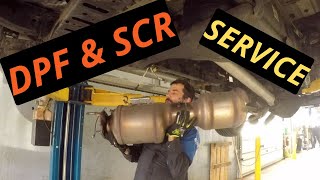
Typical fix: The DPF assembly must be replaced. It cannot be repaired. 🎬 Watch this step-by-step Ram 6.7 Cummins DPF and SCR replacement After replacement, a 'DPF Replacement' diagnostic function may need to be run with a capable scan tool (like AlfaOBD) to reset the ECU.
Est. part cost: $2500-$5000 - Clogged DPF (Soot or Ash) 🟡 Medium Probability Driving habits consisting of frequent short trips or extended idling prevent the exhaust from getting hot enough to perform a passive or active regeneration, leading to soot buildup. High-mileage vehicles accumulate unburnable ash, which also clogs the filter.
How to confirm: Use a capable OBD-II scan tool to view the DPF soot load percentage. If the value is high (e.g., over 80%) and does not decrease after a long highway drive or a forced regeneration, the filter is clogged.
Typical fix: Perform a forced regeneration using a scan tool. If that fails, the DPF must be removed for professional off-vehicle cleaning (baking) or replaced if it's full of ash.
Est. part cost: $200-$600 (for professional cleaning) - Outdated ECM Software 🟡 Medium Probability
How to confirm: Contact a Ram dealership with your vehicle's VIN. They can check if your truck is eligible for emissions recall 67A or other software updates like TSB #18-130-22 REV. A.
Typical fix: The dealer will perform a software update (reflash) of the Engine Control Module (ECM). This is often covered under a recall or extended warranty. TSB 18-130-22 REV. A for 2016 models specifically lists P2002 as a code addressed by a software update.
Est. part cost: $0 (if under recall), $150-$275 (dealer labor) - Exhaust System Leaks ⚪ Low Probability
How to confirm: With the engine running, inspect all exhaust connections, gaskets, and the flex pipe located before the DPF. Listen for hissing sounds and look for black soot streaks, which indicate a leak.
Typical fix: Tighten clamps or replace the leaking gasket or component.
Est. part cost: $20-$500
Rare But Worth Checking
- Faulty NOx or EGT Sensor: The ECM uses Exhaust Gas Temperature (EGT) and NOx sensor readings to properly manage the DPF regeneration process. A failed sensor can prevent regeneration, leading to a clogged DPF and triggering a P2002 code. TSB #18-130-22 REV. A lists P2002 alongside NOx sensor codes (P2201, P229F) as being resolved by a software update.
- Faulty EGR System: A malfunctioning EGR valve or cracked EGR cooler can cause the engine to produce excessive soot, which overloads the DPF's capacity to regenerate and can trigger P2002.
Diagnosis Steps
- Check for any applicable recalls or warranty extensions (like Recall 67A / Extension XQ1) with a Ram dealer using your VIN. A free software update may fix the issue.
- Scan for any other DTCs that may point to a root cause, such as sensor or regeneration frequency codes (e.g., P2201, P2463).
- Perform a tailpipe swipe test. Wipe the inside of the exhaust tip. Any black soot indicates a cracked DPF that must be replaced.
- If the tailpipe is clean, perform a thorough visual inspection of the DPF differential pressure sensor hoses. Check for cracks, melting, or kinks from the DPF to the sensor.
- Inspect the exhaust system upstream of the DPF for any signs of leaks, such as soot streaks at flanges or cracks in the piping.
- If no physical faults are found, use a scan tool to monitor the DPF pressure sensor reading and the calculated soot load.
- Attempt a forced regeneration using the scan tool. This requires the engine to be at operating temperature in a safe, open area. If the regen completes and the code does not return, the issue was likely soot buildup from driving habits.
- If the code returns quickly, and hoses are confirmed to be good, the DPF pressure sensor is the next most likely culprit.
Parts You'll Likely Need
- DPF Pressure Sensor Hoses
(OEM #68064996AB)— These rubber hoses are a very common failure point, frequently cracking or melting and causing a false P2002 code.
Trusted brands: Mopar
OEM price range: $30-$100
Aftermarket price range: $20-$60 - DPF Differential Pressure Sensor
(OEM #68085750AB (for 2013-2018 models))— This sensor provides the pressure reading to the ECM. It can fail from heat and vibration, sending incorrect data and triggering the code.
Trusted brands: Mopar, Bosch, A-Premium
OEM price range: $80-$255
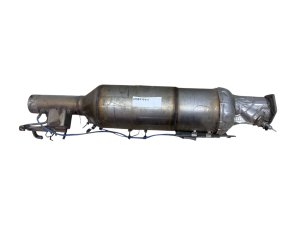
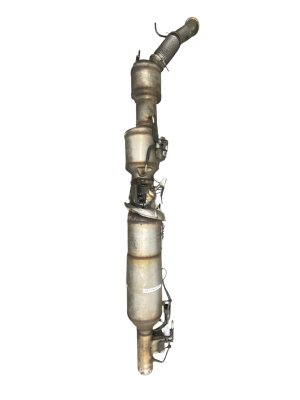
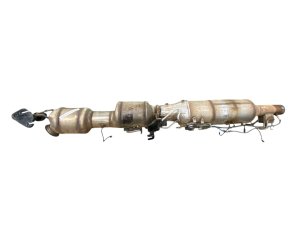
Aftermarket price range: $40-$90 - Diesel Particulate Filter (DPF) Assembly — Required if the internal filter media is cracked (confirmed by soot in the tailpipe) or irreversibly clogged with ash.
Trusted brands: Mopar, AP Exhaust, Dorman
OEM price range: $2500-$5000
Aftermarket price range: $1500-$3000
Related Codes That Often Appear With This One
- P2463 — Indicates a severe DPF restriction due to soot, which is a direct cause of the P2002 efficiency fault.
- P1451 — A general code for 'Diesel Particulate Filter System Performance' that often shares the same root causes as P2002, such as clogged sensor hoses or a failed sensor.
- P20EE — Relates to the SCR (DEF) catalyst system. Ram has issued software updates (TSBs like 18-130-22 REV. A) that address both P2002 and P20EE together, suggesting a linked software logic issue.
- P242F — Indicates 'Diesel Particulate Filter Restriction - Ash Accumulation'. This means the DPF is filled with un-burnable material, requiring professional cleaning or replacement, and causing the P2002 efficiency fault.
Technical Service Bulletins (TSBs) & Recalls
- TSB 18-130-22 REV. A: Released July 20, 2022, for 2016 Ram 2500/3500 with the 6.7L Cummins. It involves a PCM software update to address a list of DTCs including P2002, P20EE, P229F, P2201, and various cylinder misfire codes.
- Recall 67A / Warranty Extension XQ1: A major emissions-related action from FCA covering the DPF, SCR catalyst, and various sensors for 2013-2018 models. A dealer visit is required to check eligibility and receive potential free repairs or software updates.
Platform-Specific Known Issues
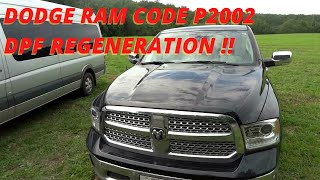
- Owner Experience: Low Mileage DPF Failure: A technician on YouTube documented a 2018 Ram with only 38,000 miles throwing a P2002 code. The first diagnostic step was to attempt a forced (stationary) regeneration with a scan tool, acknowledging that even at low mileage, driving habits or other system malfunctions can cause the DPF to become clogged.
- Owner Experience: Warranty Battle over P2002: A 2010 Ram 3500 owner on Turbo Diesel Register shared their frustration when the dealer, prompted by Ram, wanted to perform injector testing for a P2002 code and suggested the owner might be liable for the cost if the injectors were fine, highlighting potential diagnostic complexities and warranty disputes.
Mechanic-Grade Diagnostic Values
- DPF Differential Pressure Sensor Signal Voltage (KOEO) — expected: Approx. 0.5 Volts. Failure: A reading of 0V or a value significantly different from 0.5V suggests a sensor or wiring fault. Should be very near 0.0 PSI on a scan tool.
- DPF Differential Pressure Sensor 5V Reference Voltage — expected: 4.5 - 5.0 Volts. Failure: Voltage outside this range indicates a problem with the ECM or wiring, not the sensor itself.
- DPF Differential Pressure Sensor Ground Circuit Resistance — expected: Less than 10.0 Ohms. Failure: Resistance above 10.0 ohms between the sensor connector's ground pin and chassis ground indicates a poor ground connection, causing erratic readings.
- DPF Differential Pressure Sensor Harness Resistance — expected: Less than 10.0 Ohms. Failure: Resistance above 10.0 ohms on the signal or supply wires between the sensor and ECM connectors indicates an open or high-resistance wire.
- DPF Differential Pressure at Idle — expected: Under 1.0 PSI. Failure: A high reading at idle when the hoses are known to be clear indicates a clogged DPF. An erratic or stuck reading indicates a faulty sensor.
Scan Tool Commands That Help
- wiTECH, AlfaOBD, Autel, Snap-on: Service Diesel Particulate Filter Regeneration (or Stationary Desoot) — Used to command a forced, stationary regeneration to burn off soot when the DPF is moderately clogged and normal driving cycles are insufficient. This is a primary diagnostic step to see if the code clears after a successful regen.
- wiTECH, AlfaOBD: DPF Replacement (or DPF Parameter Reset) — This function MUST be run after replacing the DPF assembly. It resets the learned values and soot counters in the ECM to prevent damage to the new filter and ensure proper operation.
Wiring & Ground Locations
- DPF Pressure Sensor Connector — Typically mounted on the transmission bellhousing or on a bracket nearby, connected via two rubber hoses to metal pipes running down to the DPF.. The connector and its 3-wire harness (5V reference, ground, signal) are subject to heat and vibration. A poor connection or damaged wire here will directly cause false P2002 codes. Verifying voltage and ground integrity at this connector is a key diagnostic step.
Real Owner Repair Stories
- RamForum.com user (2020 Ram 2500 6.7L Cummins, 125,000 miles) — DPF full message, P2002 code, truck would not perform a regeneration.
❌ Tried (didn't work) Attempting automatic regeneration through driving.
✅ What actually fixed it The user replaced the DPF assembly with an aftermarket unit. However, the critical final step was discovering that the 'DPF Replacement' function in their AlfaOBD scan tool would not work. The fix required purchasing and using a security bypass cable to allow the scan tool to communicate with and reset the ECU on the 2018+ vehicle architecture.
"I Checked Everything" — The Actual Cause
- A common scenario is where the rubber hoses to the DPF pressure sensor pass a visual inspection, but the metal ports they connect to on the DPF itself are clogged with a hard soot deposit. A smoke test may not reveal this blockage. The fix is to remove the hoses and manually clean the ports with a small wire or 1/8" drill bit turned by hand before reattaching the hoses.
- In one documented case on a similar Cummins system, the root cause was not an exhaust leak but a wiring issue. The harness for the DPF pressure sensor was rubbing against a factory ground strap, causing an intermittent short to ground on the signal wire. This sent erratic voltage to the ECM, triggering the fault code, but would pass a simple visual inspection of the exhaust system.
OEM Part Supersession History
68085750AA→68085750AB— Standard part revision and update by Mopar.
Heads up: None. The parts are directly interchangeable for the 2013-2018 model years.
Model Year Variations Within This Range
- 2013-2018: The 2013 model year was the first to add the Selective Catalytic Reduction (SCR) system using Diesel Exhaust Fluid (DEF) on top of the existing DPF and EGR systems. This makes the exhaust and emissions controls more complex than the 2010-2012 generation.
- 2019: 2019 was a split year. The new 5th Generation Ram HD was introduced with a redesigned 6.7L Cummins featuring a different EGR valve and physically larger DPF and DOC components. The older 4th Generation body style was also sold as the 'Ram Classic' and retained the previous emissions system. Parts are not interchangeable between the two 2019 versions.
- 2018+: Starting in 2018, FCA implemented a Security Gateway Module (SGM). This requires a bypass cable or a modern, authorized scan tool to perform bi-directional commands like a forced regeneration or DPF replacement reset. Older or non-professional scan tools will be blocked from making changes.
Diagnostic Flowchart
Other Known Issues on This Vehicle
Issues unrelated to this code that are worth knowing about as an owner of this generation:
- CP4 High-Pressure Fuel Pump Failure (2019-2020 models) 🔴 High — Widespread enough to trigger a major safety recall (Y78 / NHTSA 21V880). Failure can occur without warning, often before 100,000 miles. (Ref: Recall Y78 (NHTSA 21V880))
- 68RFE Transmission Problems 🟠 Medium — Common in trucks used for heavy towing or with performance tunes. Issues include torque converter shudder, slipping clutches, and overheating.
- Water Pump Failure 🟠 Medium — A known weak point. Bearings can fail, causing coolant leaks from the weep hole or pulley wobble that shreds the serpentine belt. Some owners report multiple replacements before 100,000 miles.
- 'Death Wobble' from Worn Steering/Suspension Components 🔴 High — Common on solid front axle trucks as they age. Worn track bar bushings, ball joints, or steering linkages can cause violent, uncontrolled shaking after hitting a bump. Typically occurs after 30,000 miles on stock parts.
- VGT Turbocharger Actuator Failure 🟠 Medium — The electronic actuator on the variable geometry turbo is a common failure point, leading to loss of power and drivability issues.
- Blown Head Gasket 🟠 Medium — More common on the 6.7L than the preceding 5.9L, especially on trucks with performance tunes or those that have been overheated.
Used vs. New Parts: Buying Guide for This Vehicle
When a used part is the smart pick: For this specific repair, using used parts is not recommended. The primary failure components are sensors, rubber hoses, and the DPF filter itself, all of which are wear items with a finite lifespan.
Donor-vehicle mileage cap: roughly under 30000 miles for the part to have meaningful remaining life.
What to inspect on the donor part:
- If considering a used sensor, it should come from a verified low-mileage vehicle that was not involved in a fire or flood.
- Never buy used DPF hoses; they are inexpensive and fail from heat cycles.
- Never buy a used DPF assembly. There is no way to verify its internal condition, remaining ash capacity, or the presence of micro-cracks.
OEM-only on this vehicle (don't cheap out):
- Diesel Particulate Filter (DPF) Assembly: While aftermarket options exist, they have a mixed reputation for longevity and can sometimes trigger efficiency codes even when new. For guaranteed compatibility and performance, the Mopar OEM DPF is the most reliable choice.
Aftermarket brands forum-validated for this vehicle:
- DPF Pressure Sensor: Bosch (often the OEM supplier) is a highly reliable aftermarket alternative to Mopar.
Brands owners have reported issues with on this vehicle:
- Avoid unbranded, 'white box' sensors and DPF assemblies from online marketplaces. The potential for premature failure and repeat labor costs outweighs the initial savings.
Real Owner Stories
Aggregated from forums and TSBs cited above. Mileages and costs reflect what owners reported in those sources.
2018 Ram 2500 6.7L Cummins — 38000 miles
Symptoms: The vehicle was throwing a P2002 code at low mileage.
What fixed it: The technician performed a forced (stationary) regeneration with a scan tool to clear the clogged DPF.
Source hint: vehicle_specific_issues: Owner Experience: Low Mileage DPF Failure (YouTube documentation)
2010 Ram 3500 6.7L Cummins Chassis Cab
Symptoms: The truck triggered a P2002 code, and the owner faced a dispute with the dealer regarding warranty coverage for diagnostic testing.
What fixed it: The dealer suggested injector testing was required to find the root cause of the P2002 code.
Source hint: turbodieselregister.com: A user with a 2010 3500 C&C reported a P2002 code
2019 Ram 3500 6.7L Cummins
Symptoms: A long-term saga involving a persistent P2002 code.
What fixed it: A full exhaust system replacement performed under warranty.
Source hint: DodgeForum.com: A 2019 Ram 3500 owner in Hawaii
Related OBD-II Codes
Frequently Asked Questions
Does TSB 18-130-22 REV. A apply to my 2016 Ram 2500 with the 6.7L Cummins?
Is there a recall or warranty extension for the DPF on my 2013-2018 Ram?
Can I use AlfaOBD to fix a P2002 code after replacing the DPF?
Why does my Ram 2500 dashboard say 'Exhaust Filter Full' along with the P2002 code?
How can I tell if my P2002 code is caused by a cracked DPF or just a sensor issue?
Are the pressure sensor hoses a common failure point on the 6.7L Cummins?
Helpful Videos
Used OEM Parts in Stock
New Aftermarket Parts Available


The information in this article is provided for general reference and educational purposes only. Vehicle specifications, procedures, and part compatibility can vary by production date, trim level, and region. Always consult your vehicle's factory service manual and verify part numbers before purchasing or performing repairs. Safety-critical components such as airbags, seat belts, and braking systems should be installed by a qualified professional.
- Ram 2500:
- 🧭 Diagnostic Flowchart
- 🎬 Helpful Videos
- 🛍️ Shop This Part
- What's Unique About the 2013-2019 Ram 2500
- Symptoms You May Notice
- Most Likely Causes
- Rare But Worth Checking
- Diagnosis Steps
- Parts You'll Likely Need
- Related Codes That Often Appear With This One
- Technical Service Bulletins (TSBs) & Recalls
- Platform-Specific Known Issues
- Mechanic-Grade Diagnostic Values
- Scan Tool Commands That Help
- Wiring & Ground Locations
- Real Owner Repair Stories
- "I Checked Everything" — The Actual Cause
- OEM Part Supersession History
- Model Year Variations Within This Range
- Other Known Issues on This Vehicle
- Used vs. New Parts: Buying Guide for This Vehicle
- Real Owner Stories
- 2018 Ram 2500 6.7L Cummins — 38000 miles
- 2010 Ram 3500 6.7L Cummins Chassis Cab
- 2019 Ram 3500 6.7L Cummins
- Related OBD-II Codes
- Frequently Asked Questions
- 🎟️ Get 5% Off