

P2008 on 2007-2012 Dodge Caliber: Intake Manifold Runner Control Circuit Fixes
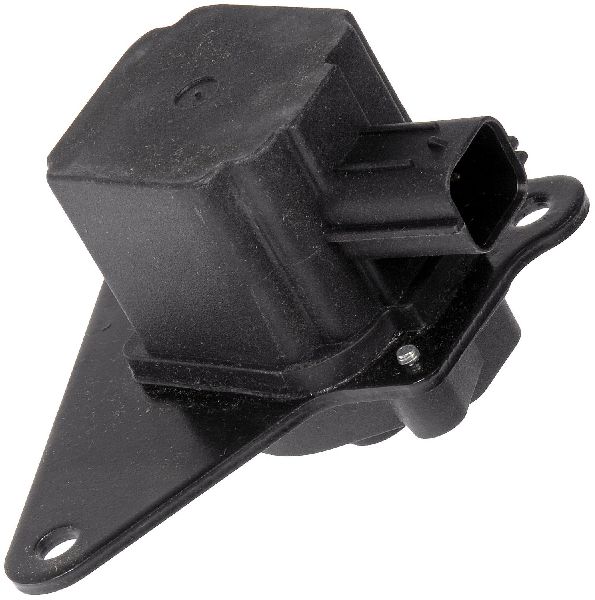
This code indicates an open circuit in the Intake Manifold Runner Control (IMRC) system. The most common fix is replacing the IMRC solenoid/actuator, which costs around $70-$90 for the part. However, a distinct rattling noise from the engine often signals that the plastic runner flaps inside the intake manifold are broken, requiring the entire manifold assembly to be replaced, which is a more expensive repair.
- P2008 on a Dodge Caliber points to an electrical fault in the intake runner control circuit.
- The two most likely causes are a failed external actuator/solenoid or broken plastic flaps inside the intake manifold.
- Before buying parts, inspect the wiring and test the actuator. Try to move the manifold linkage by hand to determine if the entire manifold needs replacement.
- Replacing just the actuator is a simple DIY job (Difficulty: 2/5). Replacing the entire intake manifold is more involved (Difficulty: 4/5).
- This is a very common and well-documented issue on the 1.8L, 2.0L, and 2.4L World Engine.
What's Unique About the 2007-2012 Dodge Caliber
The 1.8L, 2.0L, and 2.4L 'World Engine' used in the Dodge Caliber and its platform mates (Jeep Patriot/Compass, etc.) is notorious for issues with its plastic intake manifold. The runner control flaps and the actuator linkage are made of plastic and are a common failure point; they can become brittle and break or get stuck due to carbon buildup. A tell-tale sign of this mechanical failure is a rattling or 'marbles in a can' sound from the top of the engine. This means that while the code P2008 points to an electrical circuit fault, the root cause is often a mechanical failure of the plastic parts within the manifold, which then causes the actuator motor to fail or bind.
Symptoms You May Notice
- Check Engine Light is on
- A distinct rattling, buzzing, or 'marbles in a can' noise from the intake manifold area, especially at idle or low RPMs.
- Reduced engine power and poor acceleration, especially at low RPMs
- Rough or stumbling idle
- Decreased fuel economy
- Engine hesitation
- Replacing only the IMRC actuator when the internal manifold flaps are broken. A common owner experience is to replace the actuator, have the code return, and then discover the manifold linkage arm is loose, indicating the manifold itself was the root cause all along.
- Replacing the throttle body. While throttle body issues can cause similar symptoms like a rough idle, they typically set different trouble codes.
Most Likely Causes
- Failed Intake Manifold Runner Control (IMRC) Solenoid/Actuator 🔴 High Probability → Shop Engine Intake Manifold The actuator is exposed to significant heat and vibration, which can lead to internal electrical failure over time. It's a common replacement part for this engine and is often sold as Dorman part 911-902.
How to confirm: With the engine off and key on, use a scan tool to command the actuator on and off; listen for a clicking sound. You can also test for power and ground at the connector with a multimeter. If power and ground are present but the actuator doesn't work, it has failed.
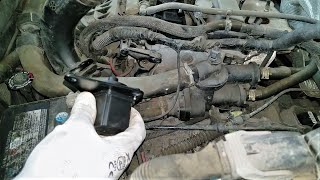
Typical fix: Replace the IMRC solenoid/actuator. 🎬 Watch: A quick guide to replacing the IMRC actuator. This is an external part bolted to the intake manifold.
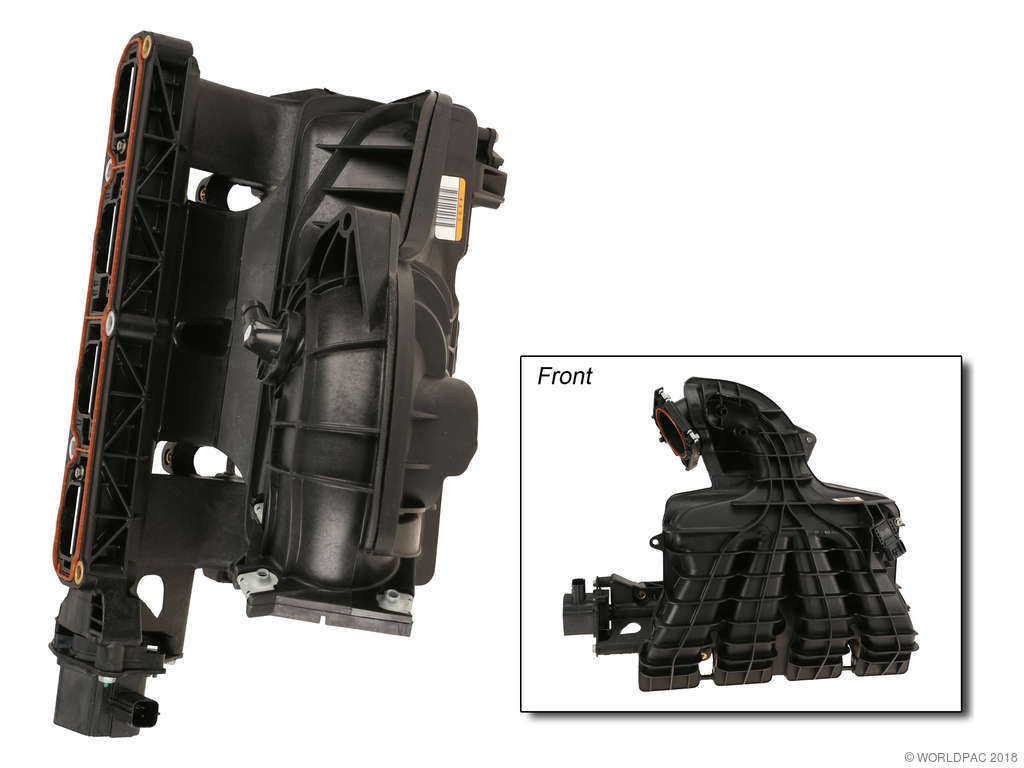
Est. part cost: $70-$175 - Broken or Stuck Intake Manifold Runner Flaps/Linkage 🔴 High Probability → Shop Engine Intake Manifold The internal flaps and linkage are made of plastic and are a well-documented weak point on the World Engine. They become brittle from heat cycles and can break or get stuck with carbon buildup, often creating a rattling sound.
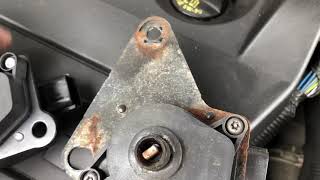
How to confirm: Listen for a rattling noise from the top of the engine. After removing the IMRC actuator, try to move the runner linkage arm by hand. If it's excessively loose (wiggles freely), won't move, or feels gritty, the internal mechanism has failed. This confirms the entire manifold needs replacement.
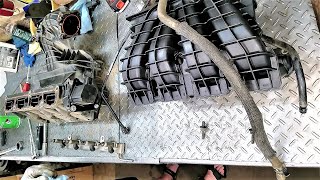
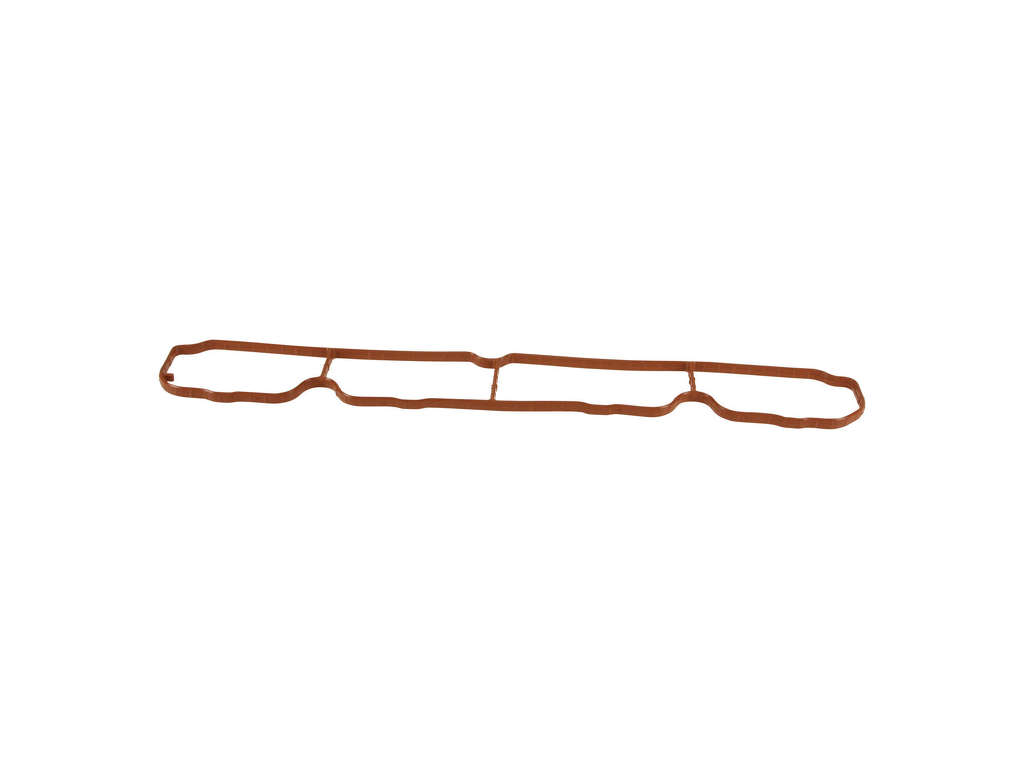
Typical fix: Replace the entire intake manifold assembly. The flaps are not sold separately. The Dorman replacement is part number 615-270. 🎬 See this step-by-step intake manifold replacement walkthrough.
Est. part cost: $150-$300 - Damaged Wiring or Connector 🟡 Medium Probability The wiring harness is located in a hot, tight area of the engine bay, making it susceptible to corrosion, fraying from vibration, or damage during other repairs. The power supply wire is often Dark Green/Light Green, and the control wire from the PCM is often Brown/Dark Green.
How to confirm: Visually inspect the wiring harness leading to the IMRC actuator for any signs of damage, melting, or corrosion at the connector pins. Perform a continuity test with a multimeter from the PCM connector to the actuator connector to find any breaks in the wire.
Typical fix: Repair the broken section of wire or replace the damaged connector pigtail.
Est. part cost: $10-$30
Rare But Worth Checking
- Failed Powertrain Control Module (PCM): → Shop Engine Control Module (ECM) This is the least likely cause. The PCM's internal driver for the IMRC circuit can fail, but all other possibilities like wiring and the actuator itself should be exhaustively ruled out before condemning the PCM. A recall was issued for some 2009 models for a PCM manufacturing defect.
Diagnosis Steps
- Read the code with an OBD-II scanner to confirm P2008 is present. Note any other codes like P2004 or P2017. 🎬 Watch: How to diagnose and fix P2004 and P2017 codes.
- Start the engine and listen carefully for a rattling or plastic-like buzzing noise from the top of the intake manifold. This sound is a strong indicator of broken internal flaps.
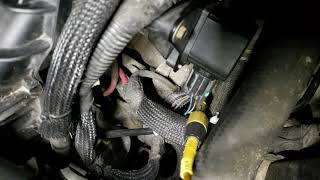
- Visually inspect the IMRC actuator's electrical connector and wiring harness for obvious damage, corrosion, or loose connections.
- Using a capable scan tool, command the IMRC actuator to open and close. Listen for a click or buzzing sound from the actuator, indicating it is trying to work.
- If no sound is heard, disconnect the actuator. Use a multimeter to check for battery voltage on the power supply wire (often Dark Green/Light Green) and for a good ground on the control wire (often Brown/Dark Green) at the connector (with the key on, engine off).
- If power and ground are good, test the resistance of the actuator itself. An out-of-spec or infinite resistance reading indicates a failed actuator.
- If the actuator tests good, remove it from the intake manifold (typically held by a few bolts).
- With the actuator removed, attempt to manually move the plastic linkage arm on the manifold. It should move smoothly with some resistance. If it is broken, wiggles loosely with no resistance, or is completely stuck, the intake manifold has failed internally and must be replaced.
- If the linkage moves freely and the actuator and wiring test good, the fault may be an intermittent connection or a rare PCM failure.
Parts You'll Likely Need
- Intake Manifold Runner Control Actuator / Solenoid
(OEM #4884549AD)— This is the most common point of electrical failure for the P2008 code and is relatively easy to replace.
Trusted brands: Mopar, Dorman (p/n 911-902), Standard Motor Products
OEM price range: $90-$120
Aftermarket price range: $70-$100 - Intake Manifold Assembly
(OEM #04884495AF (superseded by 04884495AG, 04884495AH, 4884495AK))— Required when the internal plastic runner flaps or linkage break, which is a very common mechanical failure on this engine. The flaps are not serviced separately.
Trusted brands: Mopar, Dorman (p/n 615-270)
OEM price range: $250-$350
Aftermarket price range: $150-$250
Related Codes That Often Appear With This One
- P2004 — This code means 'Intake Manifold Runner Control Stuck Open'. It often appears alongside or instead of P2008 when the failure is mechanical (stuck or broken flaps) rather than purely electrical.
- P2017 — This code means 'Intake Manifold Runner Position Sensor/Switch Circuit High'. It points to a problem with the position sensor side of the IMRC system, which is integrated into the same actuator assembly. It is very common to see this code with P2004 and P2008.
- P2009 / P2010 — These codes indicate a 'Circuit Low' or 'Circuit High' condition for the same IMRC solenoid, pointing to different types of electrical faults (shorts to ground or power) within the same system.
Technical Service Bulletins (TSBs) & Recalls
- No specific Technical Service Bulletin (TSB) for P2008 on this platform is widely cited. The issue is so common it is treated as a pattern failure, with the diagnosis and repair being well-documented in repair manuals and owner forums.
- Manufacturer TSB Bulletin #18-012-14 and Bulletin #1810016 for other Dodge models note that P2008 relates to the Short Runner Valve (SRV) Control Circuit, often appearing alongside P1004 and P2016.
- Manufacturer TSB Bulletin #9001645 cautions technicians not to replace the intake manifold for SRV faults like P2008 without first following specific service procedures to investigate the P-codes.
Platform-Specific Known Issues
- The plastic construction of the intake manifold's internal runner flaps is a significant weak point, leading to frequent mechanical failures that can also trigger electrical codes like P2008. A rattling sound from the manifold is the key symptom of this failure.
- A recall (H33) was issued for some 2009 Dodge Caliber models due to a potential defect in the Powertrain Control Module (PCM) that could cause a circuit board to break.
Mechanic-Grade Diagnostic Values
- IMRC Position Sensor Voltage (Flaps Closed) — expected: ~1.69 V. Failure: Voltage significantly different, or stuck at a high value (e.g., 5V) indicating an internal sensor fault or wiring issue.
- IMRC Position Sensor Voltage (Flaps Open) — expected: ~3.8 V. Failure: Voltage does not reach this level when commanded open, or is stuck high/low. A reading over ~4.5V can trigger a P2017 'Circuit High' code.
- IMRC Position Sensor Signal Wire Bias Voltage — expected: ~5 V. Failure: If voltage is not ~5V with the actuator connector unplugged (key on), it indicates a problem with the wiring back to the PCM or the PCM itself.
- IMRC Actuator Motor Control Wire Voltage — expected: Toggling between 0V and ~12V (pulsed). Failure: No voltage or constant voltage when commanded by a scan tool indicates a failed PCM driver or a break in the wire.
Scan Tool Commands That Help
- Professional Scan Tool (e.g., Snap-On, Autel, Witech): Intake Manifold Tuner Control State / Functional Test — Use this bidirectional command to 'toggle' the actuator motor on and off. This allows you to listen for mechanical noise (clicking/buzzing) from the actuator and watch live data from the position sensor to see if it responds. It confirms if the PCM can control the motor and if the flaps are physically moving.
Wiring & Ground Locations
- IMRC Actuator Connector (C1) — On the IMRC actuator itself, located on the driver's side of the intake manifold, below the air intake tube.. This is the primary connection point for all power, ground, and sensor signals. Corrosion or damage here is a common cause of failure. The position sensor uses 3 pins (5V supply: Brown/Light Green; Sensor Ground: Dark Blue/Dark Green; Signal: Yellow/Dark Blue). The motor uses 2 pins (one is a constant ground, the other is the control wire from the PCM).
- G100 — On the left side of the engine.. Wiring diagrams indicate the Manifold Flow Valve (IMRC) is grounded at this location. A poor connection here can cause intermittent or total failure of the actuator.
- G301 — Behind the left kick panel inside the cabin.. This is a major data line ground point. While not a direct ground for the actuator motor, poor grounding here can cause various PCM and data communication issues.
- PCM (Powertrain Control Module) — Located in the left rear of the engine compartment.. This is the source of the control signal and the destination for the position sensor feedback. Back-probing the PCM connector is the final step to confirm if the module's driver has failed.
Real Owner Repair Stories
- Reddit user on r/JeepPatriot (2016 Jeep Patriot 2.4L, 100,000 miles) — Check Engine Light with codes P2004, P2008, P2017.
❌ Tried (didn't work) Replacing only the IMRC actuator (Dorman brand from AutoZone).
✅ What actually fixed it Replacing the entire intake manifold assembly with an OEM Mopar part. The mechanic determined the original manifold was 'too gunked up' for the flaps to rotate, which likely caused the replacement actuator to fail as well. - YouTube video by Jorge in the tube (2008 Jeep Patriot, 140,000 miles) — Check Engine Light with codes P2004, P2017.
❌ Tried (didn't work) Cleaning the original sensor (worked temporarily for 10 months)., Replacing only the sensor., Removing, gutting, and cleaning the original intake manifold.
✅ What actually fixed it Replacing the entire intake manifold with a new assembly. The owner noted that any drag or lack of smooth movement when turning the runner linkage by hand indicates the manifold itself has failed and needs replacement. - YouTube video by Rust Belt Auto (2009 Jeep Patriot) — Initially P2004, later P2004 and P2017.
❌ Tried (didn't work) Replacing only the IMRC actuator.
✅ What actually fixed it Replacing the entire intake manifold with a Mopar part. The initial actuator replacement only worked for 3 weeks because the root cause was the binding butterfly flaps inside the manifold, which were getting stuck.
OEM Part Supersession History
4884549AC→4884549AD— Standard part revision and improvement by the manufacturer.04884495AF→04884495AG, 04884495AH, 4884495AK— Multiple revisions to the intake manifold assembly over its production life.
Diagnostic Flowchart
Used vs. New Parts: Buying Guide for This Vehicle
When a used part is the smart pick: A used part is generally not recommended for this repair. A used IMRC actuator is a gamble, and a used intake manifold is highly likely to have the same internal wear/damage as the part being replaced. Given the high labor cost to replace the manifold, a new part is a much safer investment.
Donor-vehicle mileage cap: roughly under 50000 miles for the part to have meaningful remaining life.
What to inspect on the donor part:
- For a used actuator: Manually turn the actuator arm. It must snap back to its home position without hesitation. If it moves freely or sticks, it is bad.
- For a used manifold: The part must be off the vehicle for inspection. Shake it and listen for any rattling, which indicates broken internal flaps. Manually move the linkage arm; it should move smoothly with some resistance but no grittiness or binding.
- Avoid any manifold that shows signs of heavy oil or carbon buildup in the ports.
OEM-only on this vehicle (don't cheap out):
- Intake Manifold Assembly
Aftermarket brands forum-validated for this vehicle:
- Dorman (911-902 for actuator, 615-270 for manifold) is a widely available and often-used budget alternative, but user experiences are mixed. Some report success while others claim premature failure or incompatibility.
- Standard Motor Products (IMRC4) is another known aftermarket supplier for the actuator.
Brands owners have reported issues with on this vehicle:
- Unbranded, exceptionally cheap parts from marketplaces like eBay or Amazon are frequently reported to fail quickly.
- Some users have reported issues with Dorman actuators, suggesting an OEM part is worth the extra cost.
Real Owner Stories
Aggregated from forums and TSBs cited above. Mileages and costs reflect what owners reported in those sources.
Dodge Caliber
Symptoms: Getting a check engine code and poor fuel economy.
What fixed it: Replaced the intake manifold controller motor with a new part from eBay.
Cost: $30
Source hint: YouTube comment by Joe Kurzawski on 'Dodge Caliber Manifold Runner Control Replacement.'
Dodge Caliber
Symptoms: Getting both P2004 and P2008 codes simultaneously.
What fixed it: A full intake manifold replacement due to worn internal flap bushings.
Source hint: caliberforumz.com - Thread: 'P2004 and P2008...'
Dodge Caliber
Symptoms: The P2008 code returned after replacing only the IMRC actuator.
What fixed it: Replacing the entire intake manifold after discovering the control arm on the manifold was loose.
Source hint: allpar.com Forums - Thread: 'Dodge Caliber P2008, P2004, P2017 codes'
Jeep Patriot (World Engine)
Symptoms: Codes P2004, P2008, and P2017 were present, even after the external actuator was replaced.
What fixed it: A shop confirmed the internal flaps were 'gunked up' and not rotating, requiring an intake manifold replacement.
Source hint: reddit.com/r/JeepPatriot - Thread: 'P2004, P2008, P2017'
Documented NHTSA Reports
Dodge Avenger (Platform Reference)
Symptoms: An owner reported that the runner flap assembly on the intake manifold used cheap components, causing code P2008 and P2017. They noted the flap sticks open, which can increase horsepower without the intent of the driver.
Source hint: NHTSA ODI #11220772
Related OBD-II Codes
Frequently Asked Questions
I hear a rattling noise from my Caliber's engine. Is this related to the P2008 code?
My mechanic wants to replace the whole intake manifold for a P2008 code. Is that really necessary?
What specific replacement parts are recommended for the P2008 issue on my Dodge Caliber?
Is there a recall for the P2008 code on my 2009 Dodge Caliber?
My Jeep Patriot has a P2008 code. Is the problem the same as on the Dodge Caliber?
How can I test the IMRC actuator on my Caliber myself?
Helpful Videos
We Have This Part in Stock


The information in this article is provided for general reference and educational purposes only. Vehicle specifications, procedures, and part compatibility can vary by production date, trim level, and region. Always consult your vehicle's factory service manual and verify part numbers before purchasing or performing repairs. Safety-critical components such as airbags, seat belts, and braking systems should be installed by a qualified professional.
- Dodge Caliber:
- 🧭 Diagnostic Flowchart
- 🎬 Helpful Videos
- 🛍️ Shop This Part
- What's Unique About the 2007-2012 Dodge Caliber
- Symptoms You May Notice
- Most Likely Causes
- Rare But Worth Checking
- Diagnosis Steps
- Parts You'll Likely Need
- Related Codes That Often Appear With This One
- Technical Service Bulletins (TSBs) & Recalls
- Platform-Specific Known Issues
- Mechanic-Grade Diagnostic Values
- Scan Tool Commands That Help
- Wiring & Ground Locations
- Real Owner Repair Stories
- OEM Part Supersession History
- Used vs. New Parts: Buying Guide for This Vehicle
- Real Owner Stories
- Dodge Caliber
- Dodge Caliber
- Dodge Caliber
- Jeep Patriot (World Engine)
- Documented NHTSA Reports
- Dodge Avenger (Platform Reference)
- Related OBD-II Codes
- Frequently Asked Questions
- 🎟️ Get 5% Off