

P2008 on 2006-2010 Ford Explorer 4.6L V8: IMRC/CMCV Actuator & Wiring Guide
Code P2008 on a 2006-2010 Ford Explorer with the 4.6L 3V V8 is most often caused by a failed Intake Manifold Runner Control (IMRC) actuator motor, also called the Charge Motion Control Valve (CMCV) motor. This part is located on the back of the intake manifold against the firewall and is difficult to access, often requiring removal of the entire intake manifold for replacement. Expect to pay $150-$300 for the part.
- P2008 on your Explorer indicates an electrical failure in the control circuit for the intake manifold runner on the passenger side (Bank 1).
- The most likely cause is a failed Charge Motion Control Valve (CMCV) actuator motor, a known issue covered by Ford TSB 06-7-10.
- Diagnosis and repair are complicated by the actuator's location at the rear of the engine, which typically requires removing the entire intake manifold for access.
- Before replacing the entire intake manifold, the actuator should be tested, and the internal flaps should be checked for binding, as you may only need to replace the actuator motor.
- Driving with this code will result in poor performance and fuel economy, and should be addressed to prevent potential long-term issues.
What's Unique About the 2006-2010 Ford Explorer
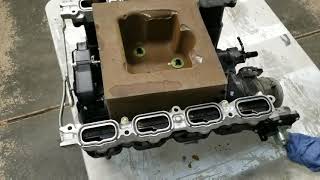
On the 4.6L 3V engine, Ford calls this system the Charge Motion Control Valve (CMCV). Failures are common enough that Ford issued a Technical Service Bulletin (TSB 06-7-10) for the 2006 Explorer 🎬 Watch this diagnostic walkthrough for the P2004 code, among other models, that covers this exact code and related faults (P2004-P2008, P151A, P2015, P2020). The primary issue is often the CMCV actuator motor itself, which is located in a hard-to-reach spot at the rear of the intake manifold against the firewall, making diagnosis and replacement more labor-intensive than on other vehicles where the part is more accessible. The TSB outlines a procedure that requires removing the intake manifold to properly inspect the flaps and replace the actuator.
Symptoms You May Notice
- Check Engine Light is on
- Reduced engine power, especially at lower RPMs
- Hesitation during acceleration
- Rough or surging idle
- Decreased fuel economy
- Replacing the intake manifold when only the actuator motor is bad. The TSB specifies checking the flaps for binding before replacing the whole manifold.
- Replacing just the actuator when the manifold flaps are also binding. This can cause the new actuator to fail prematurely.
Most Likely Causes
- Failed Charge Motion Control Valve (CMCV) Actuator Motor 🔴 High Probability The actuator is a known failure point on this engine, as documented by Ford's own TSB 06-7-10. Its location at the rear of the manifold exposes it to significant heat, which can lead to internal electrical failure.
How to confirm: With a capable scan tool, attempt to command the IMRC/CMCV system on and off. If there is no response from the Bank 1 actuator, and power/ground are confirmed at the connector, the motor has failed. Definitive confirmation requires removing the intake manifold per TSB 06-7-10 to access the actuator.
Typical fix: Replace the CMCV actuator motor. This almost always requires removing the intake manifold to access the part. The TSB procedure involves un-clipping the actuator from the runner linkages on the underside of the manifold.
Est. part cost: $150-$300 - Damaged Wiring or Connector 🟡 Medium Probability The wiring harness is routed near the back of the engine where it can be exposed to heat and chafing against the cylinder head or other components. Rodent damage is also a possibility.
How to confirm: Visually inspect the wiring harness leading to the CMCV actuator at the back of the intake manifold for any signs of melting, chafing, or breaks. Check the connector for corrosion or loose pins. Use a multimeter to check for continuity between the PCM and the actuator connector. A known chafe point is where the harness passes the rear of the cylinder head.
Typical fix: Repair the damaged section of the wiring harness or replace the connector pigtail. The Motorcraft pigtail is part number WPT-1716.
Est. part cost: $20-$50 - Stuck or Binding CMCV Linkage/Flaps ⚪ Low Probability While P2008 is an electrical code, a mechanically stuck linkage can sometimes cause the actuator motor to strain and fail, leading to an open circuit. Carbon and oil buildup from the PCV system can cause the flaps to bind.
How to confirm: This can only be confirmed by removing the intake manifold. Once removed, TSB 06-7-10 instructs to manually rotate the shafts for the flaps by hand to check for smooth operation. If they stick or bind, the manifold must be replaced.
Typical fix: If the flaps are binding, the entire intake manifold assembly usually needs to be replaced. 🎬 See how to replace a damaged intake manifold
Est. part cost: $300-$600
Rare But Worth Checking
- Powertrain Control Module (PCM) Failure: → Shop Engine Control Module (ECM) This is extremely rare. The PCM should only be considered after all other possibilities, including wiring and the actuator itself, have been exhaustively tested and ruled out. A failed driver circuit inside the PCM can mimic an open circuit externally.
Diagnosis Steps
- Connect an OBD-II scanner and confirm that P2008 is the active code. Note any other codes present, especially P2004, P2006, or P2015.
- Visually inspect the area around the intake manifold, especially at the rear near the firewall. Look for any obvious damage to wiring, unplugged connectors, or vacuum lines. Pay close attention to the harness where it might chafe against the engine.
- Using a capable scan tool, perform an active test to command the IMRC/CMCV actuator for Bank 1. Listen for a clicking sound from the actuator at the back of the manifold. No sound suggests a dead circuit or failed motor.
- If the actuator does not respond, you must test the circuit. Accessing the actuator connector at the rear of the intake manifold is difficult and may require removing other components for access.
- With the key on, engine off, check for 12V power on the control wire and check for a good ground at the connector. If power and ground are missing, trace the wiring back to the PCM to find the break in the circuit.
- If power and ground are present but the actuator doesn't move, the actuator motor is the confirmed culprit.
- Due to the difficult access, the most practical diagnostic approach for both DIY and professional repair is to follow the procedure in TSB 06-7-10, which involves removing the intake manifold for definitive testing of the actuator and flap movement, followed by replacement of the faulty component(s).
Parts You'll Likely Need
- Charge Motion Control Valve (CMCV) Actuator Kit
(OEM #8L3Z-9E928-A)— This electric motor is the most common failure point for code P2008 on this engine, as documented by Ford's TSB 06-7-10.
Trusted brands: Motorcraft (OEM), Dorman (911-906)
OEM price range: $100-$150
Aftermarket price range: $70-$120 - Intake Manifold Assembly
(OEM #7L2Z-9424-B)— Required only if the internal flaps or linkage are broken or seized, which can be confirmed after removing the manifold per TSB 06-7-10.
Trusted brands: Motorcraft (OEM), Dorman
OEM price range: $450-$600
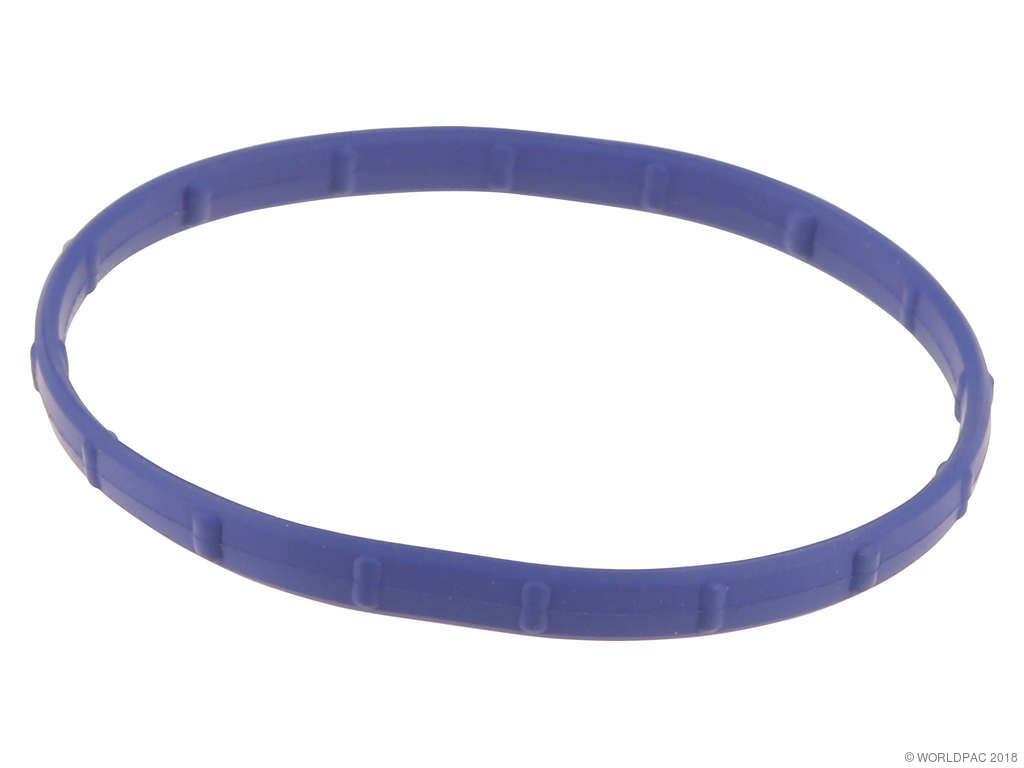
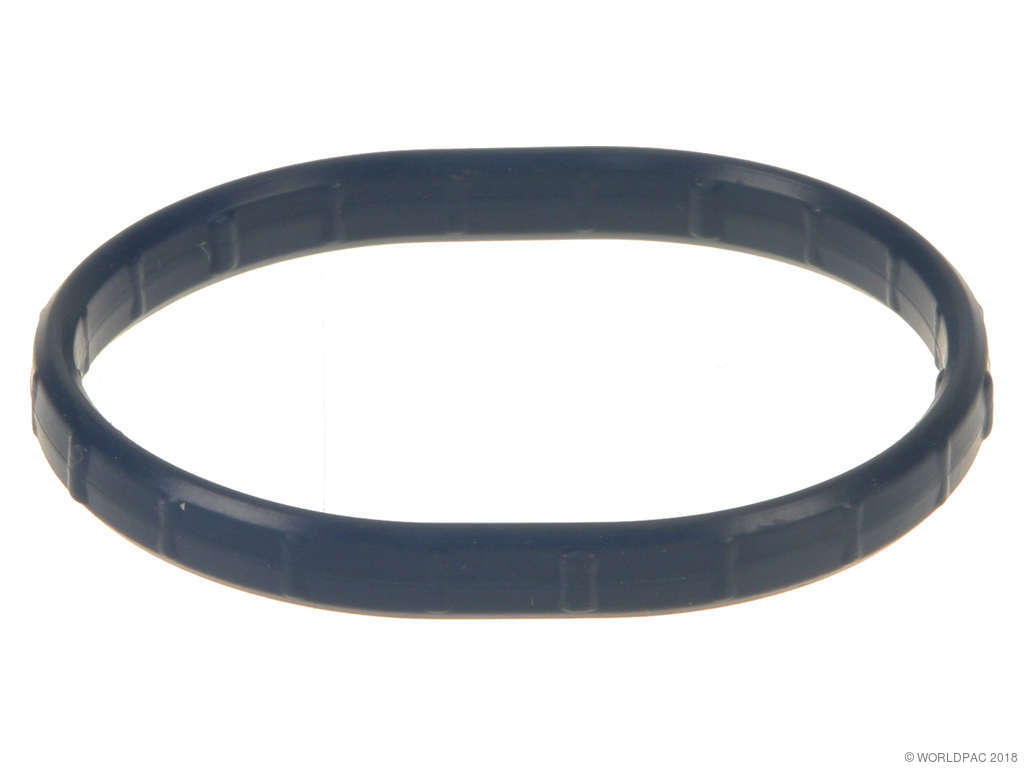
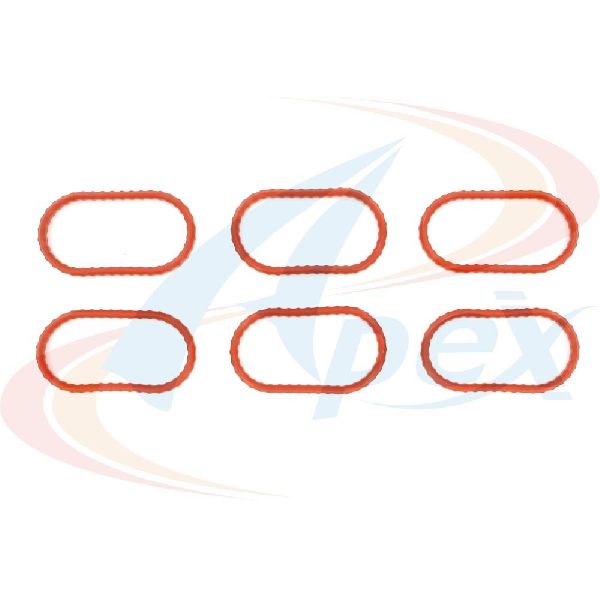
Aftermarket price range: $300-$500 - Intake Manifold Gasket Set
(OEM #3L3Z-9439-BA)— These are single-use and must be replaced anytime the intake manifold is removed for service to prevent vacuum leaks.
Trusted brands: Fel-Pro, Motorcraft
OEM price range: $40-$60
Aftermarket price range: $25-$40
Related Codes That Often Appear With This One
- P2004 — Indicates 'Intake Manifold Runner Control Stuck Open Bank 1'. A mechanical failure can lead to an electrical one, or vice-versa, so these codes can appear together. This code is also covered by TSB 06-7-10.
- P2006 — Indicates 'Intake Manifold Runner Control Stuck Closed Bank 1'. Similar to P2004, this points to a mechanical issue that is often related to the P2008 electrical fault and is part of the same TSB.
- P2015 — Indicates 'Intake Manifold Runner Position Sensor/Switch Circuit Range/Performance Bank 1'. This code is also covered by the same Ford TSB and points to a failure in the same system, often triggered by the same root cause.
- P151A — A Ford-specific code for the IMRC system also listed in TSB 06-7-10, indicating a fault within the same CMCV components.
Technical Service Bulletins (TSBs) & Recalls
- TSB 06-7-10: MIL ON WITH DTC P2004 THROUGH P2008, P151A, P2015, P2020—4.6L 3V. This bulletin details the official diagnostic procedure for CMCV faults, which involves removing the intake manifold to inspect the linkage and flaps for binding, then replacing either the actuator motor or the entire manifold assembly.
Platform-Specific Known Issues
- Ford TSB 06-7-10 was issued specifically to address DTCs P2004 through P2008, P151A, P2015, and P2020 on the 2006 Explorer and other vehicles with the 4.6L 3V engine, indicating a known issue with the CMCV system.
- The diagnostic procedure in TSB 06-7-10 requires the removal of the intake manifold to properly inspect the CMCV flaps for binding before deciding whether to replace just the actuator or the entire manifold.
Mechanic-Grade Diagnostic Values
- CMCV Actuator Connector Voltage - Power Wire — expected: 12V with Key On, Engine Off. Failure: 0V indicates a problem with the power supply, likely Fuse #42 or the PCM power relay.
- CMCV Actuator Connector Voltage - Ground Wire — expected: 0V (Good ground continuity). Failure: Voltage reading above 0V indicates a poor ground connection at G106.
- CMCV Actuator Connector Voltage - Command Wire — expected: Switches between ~12V (OFF command) and ~0V (ON command) when activated by a scan tool.. Failure: No voltage change when commanded indicates a broken wire to the PCM or a failed PCM driver.
- CMCV Actuator Connector Voltage - Monitor/Feedback Wire — expected: Voltage should change in response to actuator movement when commanded by a scan tool.. Failure: No change in voltage despite actuator movement (or vice-versa) suggests a fault in the actuator's internal position sensor or wiring.
Hidden / Shadow Codes Worth Checking
- P151A: A Ford-specific code for 'Intake Manifold Runner Control Input Signal Error'. (see via This code is often stored alongside the generic P200x codes and is visible with most professional scan tools. It is specifically mentioned in TSB 06-7-10 as being related to this fault.)
Scan Tool Commands That Help
- Ford IDS (Integrated Diagnostic System): Output State Control / Output Test Mode — This function allows a technician to command all PCM outputs ON and OFF, which will cycle the CMCV actuator. It's a way to verify the entire circuit's function, from the PCM to the actuator motor, while listening for mechanical noise and watching monitor PIDs.
- Professional Scan Tool (e.g., Snap-on, Autel): IMRC or CMCV Bidirectional Test (On/Off) — This is a more specific test that directly commands the Bank 1 IMRC/CMCV actuator on and off. It is the preferred method to confirm if the actuator motor responds to a command from the PCM, which helps isolate the problem to the actuator itself or the wiring/PCM.
Wiring & Ground Locations
- Fuse F42 (Engine Compartment) — In the Battery Junction Box (fuse box) in the engine compartment.. This 10A fuse provides power to the Charge Motion Control Valve (CMCV) actuator. If this fuse is blown, the actuator will have no power, causing code P2008.
- CMCV Actuator Connector — At the rear of the intake manifold, on the passenger (Bank 1) side, near the firewall.. This 4-pin connector is the primary test point for the actuator circuit. Wire colors are typically: Pin 1: Red/Yellow (12V Power), Pin 2: Black (Ground), Pin 3: Brown or Dark Blue/Light Green (PCM Command), Pin 4: Orange/White or Dark Blue/Yellow (Position Monitor Signal).
- Splice S108 — In the engine control sensor harness, near the breakout to the CMCV valve.. This splice connects the ground circuit for the CMCV with other sensors. Corrosion or a break in this splice can cause an open circuit or poor ground, leading to P2008.
- Ground G106 — On the right (passenger) side of the engine compartment.. This is a primary grounding point for the engine harness, including the CMCV actuator via splice S108. A loose or corroded connection here can cause intermittent or persistent open circuit codes.
Real Owner Repair Stories
- S197Forum.com user 'TruckinGT09' (2010 Ford Mustang GT 4.6L 3V (same engine family)) — Check Engine Light with code P2008 immediately after installing an aftermarket Ford Racing intake manifold and loading a new tune.
❌ Tried (didn't work) Loading the tune provided by the vendor for the new manifold., Checking for vacuum leaks or loose hoses.
✅ What actually fixed it The discussion concluded that the tune did not properly account for the deletion of the CMCV plates. Although the user reported the light stayed off after clearing the code, the root cause is that the PCM is looking for an actuator circuit that is no longer there, requiring a specific tune that disables the P2008 diagnostic test.
"I Checked Everything" — The Actual Cause
- A key detail for technicians is that a small amount of smoke escaping from around the IMRC/CMCV actuator shafts during a smoke test is considered normal by Ford. The PCM calibrations are designed to account for this slight leakage. A technician might mistakenly try to seal this 'leak' when it is not the cause of any fault code.
Model Year Variations Within This Range
- 2006 vs 2007+: A Ford Racing installation manual for the 4.6L 3V engine family notes that when installing their control pack on a 2005-2006 engine, the entire engine wiring harness must be replaced with a 2007-2009 version. This strongly implies a significant change in the engine wiring harness between the 2006 and 2007 model years that could affect diagnostics or part compatibility for the CMCV system.
Diagnostic Flowchart
Other Known Issues on This Vehicle
Issues unrelated to this code that are worth knowing about as an owner of this generation:
- Automatic Transmission Failure (6R60) 🔴 High — Common, especially in the 2006 model year. Issues include harsh shifting, slipping, and complete failure, sometimes requiring a rebuild or replacement before 100,000 miles.
- Variable Camshaft Timing (VCT) Solenoid Failure 🟠 Medium — A frequent cause of rough idle, poor acceleration, and rattling noises. Often triggered by dirty oil or sludge. Codes P0011, P0012, P0021, P0022 are common. (Ref: TSB 21574 (notes some ticking is normal))
- Radiator and Thermostat Housing Leaks 🟠 Medium — The plastic thermostat housing is prone to cracking and leaking coolant. Radiator failures are also frequently reported, leading to overheating risks.
- Two-Piece Spark Plug Breakage 🔴 High — A notorious issue for all Ford 3-valve engines of this era. Carbon buildup can cause the spark plugs to seize in the cylinder head, breaking during removal. This turns a simple maintenance job into a difficult and costly repair. (Ref: TSB 08-7-6 (details a specific removal procedure))
- Wheel Bearing Failure 🟡 Low — Front wheel bearings, particularly on the driver's side, are reported to fail prematurely, causing a humming or grinding noise that changes with vehicle speed.
Used vs. New Parts: Buying Guide for This Vehicle
When a used part is the smart pick: A used OEM intake manifold from a junkyard can be a smart choice if the flaps are confirmed to be in good working order, as the new OEM part is expensive. However, buying a used CMCV actuator motor is not recommended due to its high failure rate from heat exposure.
Donor-vehicle mileage cap: roughly under 100000 miles for the part to have meaningful remaining life.
What to inspect on the donor part:
- For a used intake manifold, manually operate the runner linkage by hand. It must move smoothly from stop-to-stop with no binding, sticking, or gritty feeling.
- Inspect the plastic manifold housing for any cracks, especially around bolt holes and seams.
- Check the donor vehicle's history for any signs of overheating, which could warp the plastic manifold.
OEM-only on this vehicle (don't cheap out):
- While not strictly 'OEM-only', the Motorcraft CMCV actuator is generally considered to have higher reliability than aftermarket alternatives due to the harsh heat conditions it operates in. Technicians often prefer OEM for critical electronic components to avoid premature failure.
Aftermarket brands forum-validated for this vehicle:
- Dorman (part #911-906) is a widely available aftermarket replacement for the CMCV actuator and is a common choice for DIY repair.
Brands owners have reported issues with on this vehicle:
- No specific brands were consistently cited as problematic in repair forums, but general caution is advised. Some users have noted casting flaws or slight performance differences in aftermarket intake manifolds compared to OEM.
Real Owner Stories
Aggregated from forums and TSBs cited above. Mileages and costs reflect what owners reported in those sources.
2006 Ford Explorer 4.6L 3V V8
Symptoms: Check Engine Light on with code P2008; the CMCV actuator at the back of the intake is a known failure point that is difficult to access.
What fixed it: Followed TSB 06-7-10 procedure to remove the intake manifold and replace the failed CMCV actuator motor.
Source hint: ExplorerForum.com general discussion on 4.6L 3V CMCV failures
2005-2010 Ford Mustang GT (4.6L 3V V8)
Symptoms: Error code 2008 (P2008) triggered on the 4.6L 3V engine.
What fixed it: Used TSB 06-7-10 to diagnose the CMCV system, which required checking the actuator and linkages by removing the intake manifold.
Source hint: MustangForums.com thread titled 'error 2008'
Related OBD-II Codes
Frequently Asked Questions
Does Ford TSB 06-7-10 apply to my 2006 Explorer with the 4.6L 3V engine?
Can I replace the CMCV actuator on my Explorer without removing the intake manifold?
Is there a specific replacement part for a damaged wiring connector on the CMCV system?
Why does the 4.6L 3V engine frequently suffer from P2008 electrical failures?
Should I just replace the actuator, or do I need a whole new intake manifold?
Are there other common issues I should look out for while my Explorer is in the shop for P2008?
Helpful Videos

We Have This Part in Stock


The information in this article is provided for general reference and educational purposes only. Vehicle specifications, procedures, and part compatibility can vary by production date, trim level, and region. Always consult your vehicle's factory service manual and verify part numbers before purchasing or performing repairs. Safety-critical components such as airbags, seat belts, and braking systems should be installed by a qualified professional.
- Ford Explorer:
- 🧭 Diagnostic Flowchart
- 🎬 Helpful Videos
- 🛍️ Shop This Part
- What's Unique About the 2006-2010 Ford Explorer
- Symptoms You May Notice
- Most Likely Causes
- Rare But Worth Checking
- Diagnosis Steps
- Parts You'll Likely Need
- Related Codes That Often Appear With This One
- Technical Service Bulletins (TSBs) & Recalls
- Platform-Specific Known Issues
- Mechanic-Grade Diagnostic Values
- Hidden / Shadow Codes Worth Checking
- Scan Tool Commands That Help
- Wiring & Ground Locations
- Real Owner Repair Stories
- "I Checked Everything" — The Actual Cause
- Model Year Variations Within This Range
- Other Known Issues on This Vehicle
- Used vs. New Parts: Buying Guide for This Vehicle
- Real Owner Stories
- 2006 Ford Explorer 4.6L 3V V8
- 2005-2010 Ford Mustang GT (4.6L 3V V8)
- Related OBD-II Codes
- Frequently Asked Questions
- 🎟️ Get 5% Off