

P2008 on 2003-2008 Honda Pilot: Intake Manifold Runner Control Circuit Causes and Fixes
P2008 on a first-generation Honda Pilot indicates an electrical fault with the Intake Manifold Runner Control (IMRC) solenoid for Bank 1. The most common fix is replacing the IMRC solenoid assembly, which can be difficult to access on the rear cylinder bank. This is a purely electrical code, not a mechanical 'stuck flap' issue.
- P2008 is an electrical problem, not a mechanical one. Focus your diagnosis on the wiring and the solenoid itself.
- The faulty component is on Bank 1, which is the rear cylinder bank on a Honda Pilot, making it harder to access.
- The most likely cause is a failed IMRC solenoid. Testing it with a multimeter for resistance is a definitive way to confirm failure.
- Always check for simple issues first, like a disconnected plug, blown fuse, or rodent-chewed wires, before ordering parts.
- Verify the exact part number for your vehicle's VIN before purchasing, but 17120-RCA-A01 is the likely candidate.
What's Unique About the 2003-2008 Honda Pilot
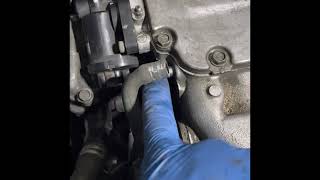
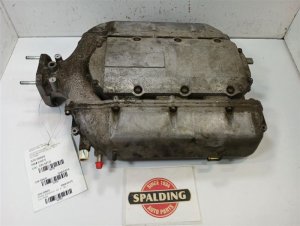
On the transversely mounted J35A V6 engine in the first-generation Pilot, Bank 1 is the cylinder bank located near the firewall. 🎬 See how to remove the intake manifold for easier access This makes accessing the IMRC solenoid for inspection and replacement more challenging than for Bank 2, which is at the front of the vehicle. The issue is almost always electrical, not a mechanical problem with the runner flaps themselves, which would set a different code.
Symptoms You May Notice
- Check Engine Light is on
- Rough or uneven idle
- Hesitation or stumbling during acceleration
- Noticeable loss of power and torque, especially at lower RPMs
- Reduced fuel economy
- Rattling noises from the intake manifold area as the component fails.
- Replacing the Bank 2 (front) IMRC solenoid when the code is for Bank 1 (rear).
- Replacing the intake manifold gaskets, assuming a vacuum leak is causing the performance issue, without first diagnosing the electrical circuit.
- Assuming the intake runner flaps are mechanically stuck, which would typically set a different code (like P2004 or P2006).
Most Likely Causes
- Faulty Intake Manifold Runner Control (IMRC) Solenoid 🔴 High Probability → Shop Engine Intake Manifold The solenoid is exposed to significant heat and vibration at the back of the engine, which can lead to internal coil failure over time, causing an electrical open circuit.
How to confirm: After locating the solenoid on the rear of the intake manifold, disconnect its electrical connector. Use a multimeter set to Ohms (Ω) to measure the resistance between the two pins on the solenoid itself. A reading of infinite resistance or 'OL' indicates an open circuit and confirms the solenoid has failed. A healthy solenoid should have a specific resistance, typically in the range of 6-40 Ω. Alternatively, a bidirectional scan tool can command the solenoid to activate; if no 'click' is heard, the solenoid is likely dead.
Typical fix: Replace the IMRC solenoid assembly. On the J35A engine, this is often sold as a complete 'Rotary Valve Assembly'.
Est. part cost: $150-$250 - Damaged Wiring Harness or Connector 🟡 Medium Probability The wiring harness is in a location where it can be damaged by heat, vibration, or rodents chewing on the wires. Connectors can also become corroded or dislodged during other engine service, like spark plug changes.
How to confirm: Visually inspect the entire length of the wiring harness leading to the IMRC solenoid for any signs of fraying, melting, or chewing. Check that the connector is securely plugged in and that the pins inside are clean and free of corrosion. Use a multimeter to check for battery voltage at the connector with the key on, engine off.
Typical fix: Repair the damaged section of wire or clean the connector pins. If the connector itself is damaged, it may need to be replaced.
Est. part cost: $5-$50
Rare But Worth Checking
- Powertrain Control Module (PCM) Failure: → Shop Engine Control Module (ECM) This is very rare. Before suspecting the PCM, all other possibilities, including the solenoid and wiring, must be exhaustively tested and ruled out. A failed output driver in the PCM can prevent it from sending the signal to the solenoid.
- Blown Fuse: The IMRC circuit is protected by a fuse. If there was a short circuit in the wiring, the fuse may have blown. Check the fuse panel for fuses related to 'Engine Management' or 'Emission Control'.
Diagnosis Steps
- Verify the code with an OBD-II scanner and check for any other related codes.
- Locate the IMRC solenoid for Bank 1 on the rear of the intake manifold, near the firewall.
- Inspect the electrical connector for a secure fit and check for any signs of corrosion or damage.
- Inspect the wiring harness leading to the solenoid for any visible damage, such as cuts, burns, or signs of rodent activity.
- If you have a bidirectional scan tool, perform an 'Active Test' to command the solenoid on and off. Listen for an audible click. If it clicks, the solenoid and wiring are likely okay. If it does not, proceed with electrical testing.
- Disconnect the solenoid connector. Turn the ignition to 'ON' (engine off). Use a multimeter to verify that one of the pins in the connector is receiving battery voltage (approx. 12V).
- With the connector still unplugged, switch the multimeter to measure resistance (Ohms) and test the two pins on the solenoid itself. A reading of infinite resistance (OL) confirms the solenoid's internal coil is broken and the part needs replacement.
- If voltage is present at the connector and the solenoid has correct resistance but does not activate, there may be an issue with the ground side of the circuit or the PCM driver.
- Check the associated fuse for the emissions or engine control system in the vehicle's fuse box.
Parts You'll Likely Need
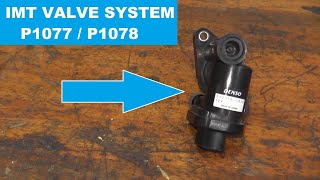
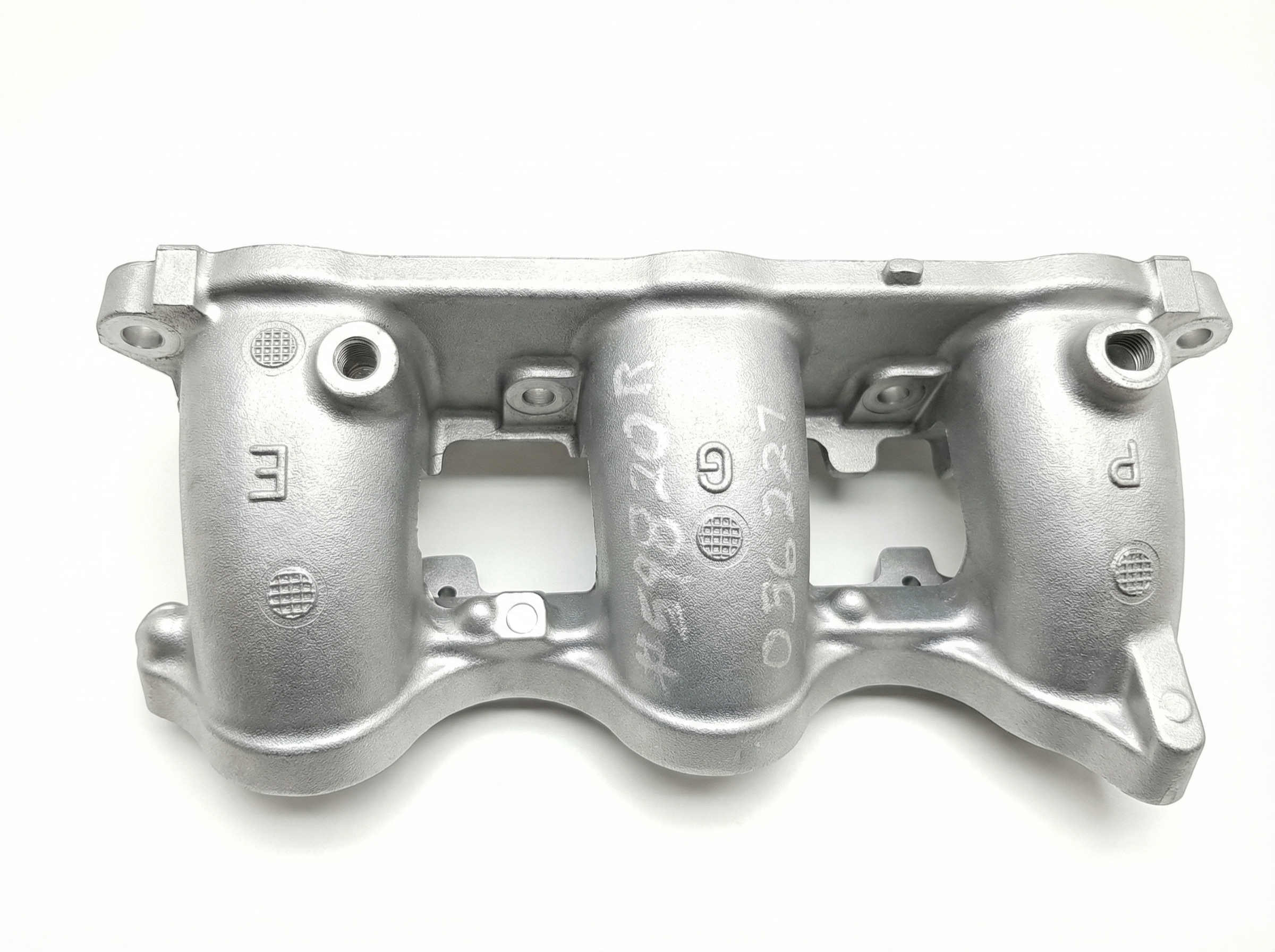
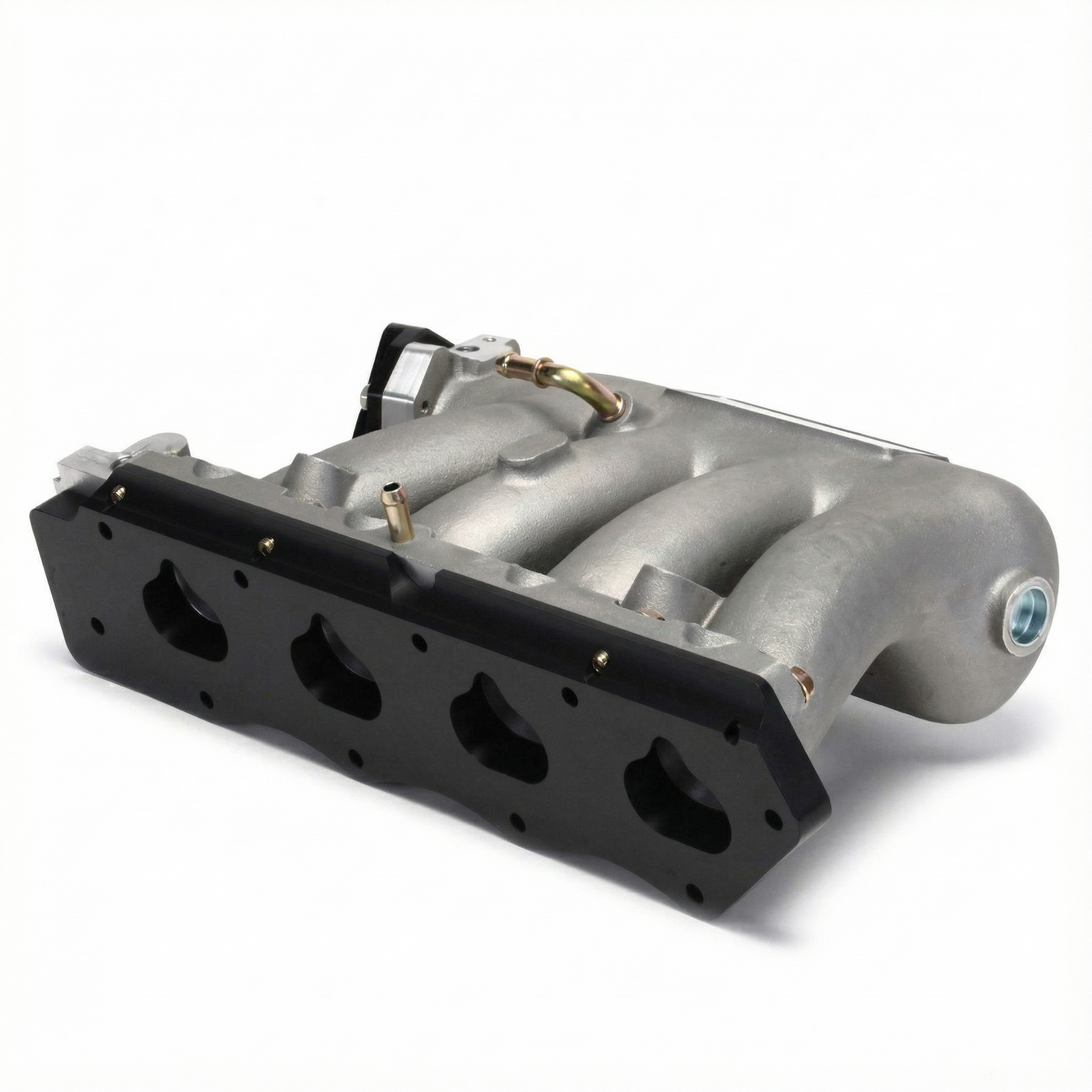
- Intake Manifold Runner Control Valve Assembly
(OEM #17120-RCA-A01)— This is the most common point of failure for a P2008 code, as the internal solenoid coil breaks, creating an open circuit. This part is also referred to as a 'Rotary Valve Assembly'.
Trusted brands: Honda (Genuine OEM), Standard Motor Products, Dorman
OEM price range: $200-$300
Aftermarket price range: $150-$220
Related Codes That Often Appear With This One
- P2006 — If the P2008 electrical fault is ignored, the PCM may later detect that the IMRC flaps are not opening as commanded, logging a P2006 (Intake Manifold Runner Control Stuck Closed Bank 1) code as a secondary result.
Platform-Specific Known Issues
- Owner Experience with P1078 (Honda-specific IMRC code): A user on the Honda-Tech forum with an '04 Accord V6 (sharing the J-series engine) dealt with a similar IMRC code (P1078). Their experience highlights the diagnostic process of checking the actuator, wiring, and considering the mechanical state of the runner flaps, which is relevant to the P2008 fault on the Pilot. URL: https://honda-tech.com/forums/honda-accord-crosstour-2003-2012-118/04-accord-j-series-imrc-code-3356980/
Mechanic-Grade Diagnostic Values
- IMRC Solenoid Connector Voltage — expected: Approximately 12V (battery voltage) on the power wire with key on, engine off.. Failure: 0V indicates a problem with the power supply from the PCM or a blown fuse.
- IMRC Solenoid Ground Circuit — expected: The PCM provides a ground to activate the solenoid. With the key on, engine off, this wire should show continuity to ground when commanded ON by a scan tool.. Failure: No continuity to ground when commanded indicates a broken wire or a failed PCM driver.
Scan Tool Commands That Help
- Honda HDS (Honda Diagnostic System) or equivalent bidirectional scanner: IMRC Test or Actuation Test — This is the primary diagnostic step after checking for codes. It directly commands the PCM to activate the IMRC solenoid. Listening for an audible 'click' from the solenoid during this test quickly confirms if the solenoid coil and its wiring circuit are capable of functioning.
- Honda HDS (Honda Diagnostic System): Idle Learn Procedure / Reset ECM — After replacing the IMRC assembly or performing any significant work on the intake system, an idle relearn procedure is recommended. This allows the PCM to recalibrate its baseline settings for idle control with the new/repaired component in place.
Wiring & Ground Locations
- IMRC Solenoid Connector (Bank 1) — On the IMRC rotary valve assembly, located on the rear of the intake manifold, near the firewall.. This is the connection point for all electrical testing. It has two pins: one for 12V power from the PCM relay and one for the ground signal provided by the PCM to activate the solenoid. Wire colors can vary but are often a colored wire for power and a black/yellow wire for the ground.
- G101 — Typically located on or near the thermostat housing at the rear of the engine.. This is a primary engine harness ground point. A loose or corroded G101 ground can cause a variety of intermittent electrical issues for sensors and actuators controlled by the PCM, including the IMRC solenoid. While not a direct cause of an 'open circuit' code, a poor ground can lead to erratic behavior and other faults.
Real Owner Repair Stories
- Odyclub.com forum user (2007 Honda Odyssey EX-L (J35A V6)) — Check Engine Light with code P2008.
❌ Tried (didn't work) Initial visual inspection did not reveal the problem.
✅ What actually fixed it The user discovered that rodents had chewed through the two wires leading to the IMRC solenoid connector on the rear bank. The fix was to solder the wires back together and protect them with heat shrink tubing. The code was cleared and did not return.
Diagnostic Flowchart
Other Known Issues on This Vehicle
Issues unrelated to this code that are worth knowing about as an owner of this generation:
- Automatic Transmission Failure / Harsh Shifting 🔴 High — Very common on 2003-2004 models, less so on 2005-2008 but still a concern. A recall (04V176) was issued to install an oil jet kit to improve lubrication to 2nd gear. (Ref: NHTSA Recall 04V176)
- Torn Front Lower Control Arm Compliance Bushings 🟠 Medium — Extremely common across all years. Causes clunking noises over bumps, vibration while braking, and loose steering feel.
- Variable Cylinder Management (VCM) Issues 🟠 Medium — Affects 2006-2008 2WD models. Can cause excessive oil consumption, fouled spark plugs, and engine vibrations. Many owners install a 'VCM Muzzler' device to disable the system. (Ref: Subject of a class-action lawsuit for later models.)
- Failing Low Beam Headlights 🟡 Low — Common on 2003-2005 models due to an overheated wiring harness at the combination light switch, causing premature bulb failure or inoperable low beams. (Ref: Honda Service Bulletins 12-023 and 12-056)
- Takata Airbag Inflator Recall 🔴 High — Affects all model years (2003-2008). Part of the massive, industry-wide Takata recall. Inflators can rupture, sending metal shrapnel into the cabin. This is a critical safety recall. (Ref: Multiple NHTSA Recalls)
- Transmission Fluid Contamination (2005) 🔴 High — Specific to the 2005 model year, where an internal radiator failure could cause coolant to mix with the transmission fluid, leading to rapid transmission failure.
Used vs. New Parts: Buying Guide for This Vehicle
When a used part is the smart pick: A used OEM IMRC valve assembly from a reputable auto recycler is a viable option for this repair. Since the failure is typically the internal solenoid coil, the mechanical components (the valve body and linkage) are usually in good condition. A used part can offer significant cost savings over a new OEM part.
Donor-vehicle mileage cap: roughly under 120000 miles for the part to have meaningful remaining life.
What to inspect on the donor part:
- Verify the donor vehicle's mileage; lower is always better.
- Inspect the electrical connector for any cracks, brittleness, or broken locking tabs.
- Check the vacuum nipple (if applicable to the specific design) to ensure it's not broken or cracked.
- If possible, test the resistance of the solenoid on the used part before purchase. It should not be 'Open Loop' (infinite resistance).
Aftermarket brands forum-validated for this vehicle:
- Standard Motor Products (SMP)
- Dorman (often listed as part 911-906, though cross-referencing is critical)
Brands owners have reported issues with on this vehicle:
- Unnamed, no-brand parts from online marketplaces should be avoided, as their internal coil quality and durability can be questionable.
Real Owner Stories
Aggregated from forums and TSBs cited above. Mileages and costs reflect what owners reported in those sources.
2004 Honda Accord V6 (J-series)
Symptoms: Owner dealt with an IMRC-related fault code and focused on checking the actuator, wiring, and the mechanical state of the runner flaps.
What fixed it: Diagnostic process involving checking the actuator and wiring (relevant to J-series IMRC faults).
Source hint: Honda-Tech Forum Thread on J-series IMRC code: https://honda-tech.com/forums/honda-accord-crosstour-2003-2012-118/04-accord-j-series-imrc-code-3356980/
Related OBD-II Codes
Frequently Asked Questions
Is there a recall for the IMRC solenoid on my 2003-2008 Honda Pilot?
Can I use a part from an Acura MDX to fix the P2008 code on my Pilot?
I'm seeing P2008 but also heard about 'VCM' issues. Are they related?
The shop wants to replace a 'Rotary Valve Assembly' for my P2008 code. Is that correct?
Can I buy a used IMRC valve to save money on this repair?
Why did my IMRC solenoid fail on the Pilot's V6 engine?
Helpful Videos
We Have This Part in Stock

The information in this article is provided for general reference and educational purposes only. Vehicle specifications, procedures, and part compatibility can vary by production date, trim level, and region. Always consult your vehicle's factory service manual and verify part numbers before purchasing or performing repairs. Safety-critical components such as airbags, seat belts, and braking systems should be installed by a qualified professional.
- Honda Pilot:
- 🧭 Diagnostic Flowchart
- 🎬 Helpful Videos
- 🛍️ Shop This Part
- What's Unique About the 2003-2008 Honda Pilot
- Symptoms You May Notice
- Most Likely Causes
- Rare But Worth Checking
- Diagnosis Steps
- Parts You'll Likely Need
- Related Codes That Often Appear With This One
- Platform-Specific Known Issues
- Mechanic-Grade Diagnostic Values
- Scan Tool Commands That Help
- Wiring & Ground Locations
- Real Owner Repair Stories
- Other Known Issues on This Vehicle
- Used vs. New Parts: Buying Guide for This Vehicle
- Real Owner Stories
- 2004 Honda Accord V6 (J-series)
- Related OBD-II Codes
- Frequently Asked Questions
- 🎟️ Get 5% Off