

P2008 on 2014-2019 Ram 3500 5.7L HEMI: Short Runner Valve Circuit Causes and Fixes
On a 5.7L HEMI, P2008 almost always means the wiring to the Short Runner Valve (SRV) actuator is broken or the actuator itself has failed. The wiring harness is notoriously short and brittle, making it the most common failure point. Inspect the harness at the back of the intake manifold before buying parts. In rare cases, a blown M21 fuse can be the cause.
- P2008 on a Ram 3500 5.7L HEMI points to an electrical issue with the Short Runner Valve (SRV) system.
- Before buying any parts, ALWAYS inspect the wiring harness at the back of the intake manifold. A broken wire is the most common cause due to a short factory harness.
- If the wiring is intact, the SRV actuator (Mopar Part #53022137AL) is the next most likely component to have failed.
- Driving with this code will result in poor performance and fuel economy, but it is unlikely to leave you stranded.
What's Unique About the 2014-2019 Ram 3500
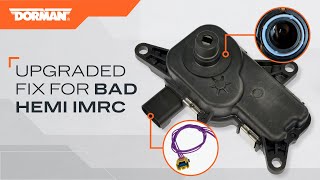
The 5.7L HEMI in this generation of Ram trucks is known for having a very short wiring harness leading to the SRV actuator, which is located at the back of the intake manifold. This design flaw, acknowledged by Chrysler TSB 18-003-10, makes the wires susceptible to breaking from engine heat and vibration over time, causing an open circuit. As a result, a broken wire is a more frequent cause for P2008 on this specific truck than a failed actuator, a detail many owners and even some shops overlook initially. Dorman has released an OE FIX kit (p/n 911-933) 🎬 Watch: How to restore damaged IMRC wiring with this kit. with a longer pigtail specifically to address this common failure.
Generation note: The 2014-2019 Ram 3500 models are all part of the fourth Ram generation (DS/DJ/D2). The Heavy Duty trucks did not move to the fifth generation platform until the 2019 model year for the 1500, so information regarding this fault is consistent across the specified year range. This issue is also common on the Ram 1500 and other Chrysler products with the 5.7L HEMI.
Symptoms You May Notice
- Check Engine Light is on
- Reduced engine power and torque, especially at low RPMs
- Hesitation or stumbling during acceleration
- Rough or uneven idle
- Decreased fuel economy
- A ticking or clicking noise from the actuator as it tries to reset its position when the engine is turned off
- Replacing the entire intake manifold when only the external SRV actuator or its wiring is faulty. A TSB specifically warns against this.
- Replacing the SRV actuator without first thoroughly inspecting the wiring harness, which is the more common point of failure.
- Replacing the PCM when the actual problem is a simple broken wire in the engine harness.
Most Likely Causes
- Damaged Wiring Harness or Connector 🔴 High Probability The factory wiring harness to the SRV actuator is notoriously short and can become brittle and break from engine vibration and heat cycles. Rodent damage to the soy-based wiring insulation is also a common issue on trucks.
How to confirm: Visually inspect the wiring harness and connector leading to the SRV actuator at the rear of the intake manifold. Gently tug on the wires to check for breaks inside the insulation, which often occurs right at the connector. Use a multimeter to test for continuity between the PCM and the connector.
Typical fix: Repair the broken wire(s) by splicing in a new section of wire and heat-shrinking the connection. Pigtail connectors or wiring repair kits, such as Dorman 911-933 which includes a longer harness, are available and recommended for a durable repair.
Est. part cost: $15-$70 - Failed Short Runner Valve (SRV) Actuator 🟡 Medium Probability → Shop Engine Intake Manifold The actuator (solenoid) is an electronic component that can fail over time due to heat and vibration. The internal coil can develop an open circuit.
How to confirm: If the wiring is confirmed to be good, test the actuator. Use a bidirectional scan tool to command the SRV on and off; listen for a click. You can also test the resistance of the solenoid with a multimeter to see if it's within spec or open. Manually move the linkage arm on the intake to ensure the flaps themselves are not seized before condemning the actuator.
Typical fix: Replace the SRV actuator. It is bolted to the rear of the intake manifold. The Mopar part is 53022137AL.
Est. part cost: $250-$370 - Blown Fuse ⚪ Low Probability A short in the SRV wiring can cause the associated fuse to blow. This is not a design flaw but a consequence of wiring failure.
How to confirm: Check the M21 (20A) fuse in the underhood fuse box (TIPM). If it is blown, it indicates a short circuit in the SRV system that needs to be located.
Typical fix: Replace the blown fuse after finding and repairing the short circuit that caused it to blow. Simply replacing the fuse without fixing the short will result in the new fuse blowing as well.
Est. part cost: $1-$5
Rare But Worth Checking
- Sticking Intake Runner Flaps: While P2008 is an electrical code, severe carbon buildup inside the intake manifold can cause the runner flaps to bind. This can put excessive strain on the actuator, leading to an electrical failure. This is more likely on higher-mileage engines. Before installing a new actuator, it's wise to manually check that the flap linkage moves freely.
- Faulty Powertrain Control Module (PCM): → Shop Engine Control Module (ECM) This is very rare. The internal driver circuit in the PCM can fail, but this should only be considered after the wiring, fuse, and SRV actuator have been definitively ruled out as the cause.
Diagnosis Steps
- Verify the P2008 code is active using an OBD-II scanner.
- Inspect the M21 (20A) fuse in the underhood fuse box. A blown fuse indicates a short circuit that must be found.
- Perform a thorough visual inspection of the engine bay, focusing on the rear of the intake manifold where the SRV actuator is located.
- Carefully inspect the wiring harness and connector for the SRV actuator. Look for chafed, broken, or melted wires. Check for signs of rodent damage. Gently tug each wire at the connector, as breaks often occur inside the insulation.
- If no visible damage is found, use a multimeter to check for voltage and ground at the SRV connector with the key on.
- Use a scan tool with bidirectional control to command the SRV actuator on and off. Listen for an audible click from the actuator.
- If the actuator does not respond but has power and ground, the actuator itself has likely failed.
- If there is no power or ground at the connector, trace the circuit back to the PCM, checking for breaks or shorts in the wiring.
- Before replacing the actuator, manually operate the runner flap linkage on the intake manifold to ensure it moves freely without binding.
- If both the wiring and actuator are confirmed to be good, check for any available Technical Service Bulletins (TSBs) related to PCM software updates for this code, such as TSB 18-054-13.
Parts You'll Likely Need
- Short Runner Valve (SRV) Actuator
(OEM #53022137AL)— This is the solenoid that controls the intake runners. It is the second most common part to fail after the wiring harness.
Trusted brands: Mopar
OEM price range: $250-$360
Aftermarket price range: $150-$250 - SRV Actuator Connector Pigtail — If the connector itself is damaged or if you are repairing a broken wire right at the connector, a new pigtail makes for a more reliable repair. The short factory harness makes this a very common repair.
Trusted brands: Dorman (p/n 645-531 or OE FIX kit 911-933), Mopar
OEM price range: $30-$60
Aftermarket price range: $15-$70
Related Codes That Often Appear With This One
- P1004 — This is a Ram-specific code for 'Short Runner Valve Control Performance'. Seeing it with P2008 strongly suggests the PCM has detected both an electrical open circuit and a mechanical performance issue, pointing directly at the SRV actuator or its wiring.
- P2009 — This code is for 'Intake Manifold Runner Control Circuit Low', indicating a short circuit. If you see both P2008 and P2009, it points to an intermittent wiring issue that is alternating between an open and a short.
- P2017 — This code for 'Intake Manifold Runner Position Sensor Circuit High' relates to the position sensor, which is integrated into the SRV actuator assembly. Seeing both codes together strongly points to a failure of the actuator unit itself or its shared connector/wiring.
- P2016 — This code is for 'Intake Manifold Runner Position Sensor Circuit Low'. Similar to P2017, its presence with P2008 points to a fault within the SRV actuator assembly or its wiring.
Technical Service Bulletins (TSBs) & Recalls
- Chrysler Star case S1308000002: Opened for a 2013 Ram 5.7L with P2008. The official fix was to repair a bad wiring connector by splicing in a new one, confirming the wiring as a primary failure point.
- Chrysler TSB 18-003-10: Referenced by Dorman, this TSB instructs technicians to lengthen the original IMRC harness, acknowledging the factory design is too short and prone to failure.
- Chrysler TSB 18-054-13: A potential PCM software update that may address this code, which should be checked for applicability to your VIN.
Platform-Specific Known Issues
- The wiring harness for the SRV actuator is a known weak point due to being too short from the factory, leading to frequent wire breaks near the actuator connector. This was acknowledged in Chrysler TSB 18-003-10.
Mechanic-Grade Diagnostic Values
- (F344) ASD Relay Output Circuit Voltage — expected: Battery voltage (approx. 12V) at the SRV connector with the ignition on.. Failure: Low or no voltage points to an issue with the power supply from the Auto Shutdown (ASD) relay or a blown fuse.
- (K238) SRV Control Circuit Resistance — expected: Less than 5.0 Ohms between the SRV connector and the PCM connector.. Failure: A reading higher than 5.0 Ohms (or OL) indicates an open or high resistance in the control wire.
- (Z908) SRV Ground Circuit Resistance — expected: Less than 5.0 Ohms between the SRV connector and a known good chassis ground.. Failure: A reading higher than 5.0 Ohms indicates a poor ground connection.
- (K238) SRV Control Circuit Resistance to Ground — expected: Greater than 100 Ohms with the PCM and SRV actuator disconnected.. Failure: A reading less than 100 Ohms indicates a short to ground in the control circuit.
Scan Tool Commands That Help
- wiTECH or equivalent bidirectional scanner: SRV Solenoid Control State — After verifying power and ground, use this command to toggle the SRV actuator on and off with the engine off. A lack of an audible click from the actuator, when wiring is known to be good, confirms a failed actuator.
Wiring & Ground Locations
- SRV Actuator Connector — At the rear of the intake manifold, near the firewall, often tucked under the engine cover and difficult to access.. This is the primary connection point for all power, ground, and control signals to the actuator. The short, strained factory harness makes this connector and the wires leading to it the most common failure point for P2008.
- (K238) SRV Control Circuit — Wire running from a pin on the Powertrain Control Module (PCM) to a pin on the SRV actuator connector.. This is the signal wire the PCM uses to command the actuator. An open or short on this specific wire is what the PCM detects to set code P2008.
- (Z908) SRV Ground Circuit — Wire running from a pin on the SRV actuator connector to a chassis or engine block ground.. A faulty ground connection will prevent the actuator's solenoid from energizing, causing an open circuit condition even if the power and control wires are intact.
- (F344) ASD Relay Output Circuit — Wire running from the Auto Shutdown (ASD) relay (typically in the underhood fuse box) to a pin on the SRV actuator connector.. This circuit supplies the 12V power to the actuator. A break in this wire or a failed ASD relay will prevent the actuator from having power to operate.
Real Owner Repair Stories
- RamForum.com user 'Hemi395' (2013 Ram 1500 5.7L Hemi) — Check Engine Light came on, code P2008. Cleared code but it returned within 2 miles. Later, a second code appeared.
❌ Tried (didn't work) Clearing the code with a reader.
✅ What actually fixed it The dealer found a bad wiring connector at the short intake runner valve. The fix was to splice in a new connector from a new harness. The dealer opened Chrysler STAR case S1308000002 for the issue, noting it was the first time they had seen this specific failure. - RamForum.com user 'lesmir300' (2011 Dodge Ram 5.7L Hemi) — Persistent P2008 and P2017 codes immediately on startup after a camshaft and lifter replacement.
❌ Tried (didn't work) Replacing the IMRC (SRV) actuator., Cleaning the intake manifold with carb cleaner., Resetting codes with three different scanners.
✅ What actually fixed it The user reported that a blown 20A M21 fuse was the ultimate cause. This highlights that an underlying short circuit can present as a component failure and that fuse checks are critical even when other causes seem more likely.
OEM Part Supersession History
53022137AE, AF, AG, AH, AI, AJ, AK→53022137AL— Successive revisions by Mopar to improve the reliability and longevity of the SRV actuator.
Heads up: All previous versions are superseded. While an older version might physically fit, installing the latest 'AL' part number is strongly recommended to get the most durable version available.
Diagnostic Flowchart
Other Known Issues on This Vehicle
Issues unrelated to this code that are worth knowing about as an owner of this generation:
- MDS Lifter and Camshaft Failure (Hemi Tick) 🔴 High — Common, especially on engines with prolonged idle time or poor oil maintenance. Unofficial failure window is often cited as 70k-130k miles. (Ref: No official recall, but a widely known issue. A class-action lawsuit has been filed. The problem is due to lubrication issues with the roller lifters, which can seize and destroy the camshaft.)
- Broken Exhaust Manifold Bolts 🟠 Medium — Extremely common. Often presents as a ticking noise on a cold start that quiets down as the engine warms and the manifold expands. (Ref: No recall. The issue is caused by the cast iron manifolds expanding/contracting at a different rate than the aluminum cylinder heads, causing the steel bolts (especially the rear ones) to shear off.)
- Water Pump Failure 🟠 Medium — A common failure item, often occurring after 100,000 miles, leading to coolant leaks.
- Electronic Power Steering (EPS) Issues 🟠 Medium — Some owners report intermittent stiffening of the steering wheel. This is sometimes caused by a binding U-joint in the steering shaft rather than a full rack failure. (Ref: No recall, but a known complaint where dealers may suggest a full rack replacement when a simpler fix might suffice.)
Used vs. New Parts: Buying Guide for This Vehicle
When a used part is the smart pick: For this repair, a used part is generally not recommended for the electronic actuator due to the high failure rate from heat and vibration. However, a used wiring pigtail from a junkyard vehicle can be a cost-effective source for a connector repair if you can't find a new one. A complete used intake manifold is a viable option if the internal flaps are mechanically damaged, which is rare for a P2008 code.
Donor-vehicle mileage cap: roughly under 70000 miles for the part to have meaningful remaining life.
What to inspect on the donor part:
- For a wiring pigtail: ensure the connector locking tab is intact, there are no signs of melting or corrosion on the pins, and there is at least 6 inches of flexible, uncracked wire attached.
- For a used actuator: check that the plastic housing has no cracks, the connector pins are clean and straight, and there is no visible heat damage.
- For a used intake manifold: manually move the runner linkage arm to ensure the internal flaps move smoothly without binding or excessive play.
OEM-only on this vehicle (don't cheap out):
- Short Runner Valve (SRV) Actuator: While aftermarket options exist, forum consensus and mechanic experience suggest the Mopar OEM part (53022137AL) offers the best reliability and longevity, making it worth the extra cost to avoid a repeat repair.
Aftermarket brands forum-validated for this vehicle:
- Dorman (OE FIX Kit 911-933): Specifically for this repair, Dorman's kit is well-regarded not just for the actuator but because it includes a longer wiring harness, which directly addresses the root cause of the most common failure (the short factory wiring).
Brands owners have reported issues with on this vehicle:
- Unbranded, low-cost actuators from online marketplaces are a significant gamble. They often fail prematurely, sometimes within months, due to lower quality internal electronics and materials that cannot withstand the high heat environment at the back of the engine.
Real Owner Stories
Aggregated from forums and TSBs cited above. Mileages and costs reflect what owners reported in those sources.
2013 Ram 1500 5.7L HEMI
Symptoms: The Check Engine Light came on with code P2008 and would return immediately after being cleared.
What fixed it: The dealer diagnosed a bad wiring connector at the SRV and resolved the issue by splicing in a new connector as per STAR Case S1308000002.
Source hint: RamForum.com - Thread 'Check Engine Light P2008'
2014-2019 Ram 5.7L HEMI
Symptoms: Persistent P2008 and P2017 codes appearing after a major engine service (lifter/cam job).
What fixed it: Found and replaced a blown 20A M21 fuse in the underhood fuse box.
Source hint: RamForum.com - Thread '5.7 Hemi P2017 p2008 Persistent Codes'
Related OBD-II Codes
Frequently Asked Questions
Is there a specific TSB for the short wiring harness issue on my Ram 3500?
Which fuse should I check if I have a P2008 code on my 5.7L HEMI?
What is the specific Mopar part number for the SRV actuator if I need to replace it?
Are there any software updates for the PCM that might fix the P2008 code?
Is there a recommended aftermarket repair kit for the brittle wiring connector?
Could my P2008 code be related to the 'Hemi Tick' or exhaust manifold issues?
Helpful Videos
We Have This Part in Stock


The information in this article is provided for general reference and educational purposes only. Vehicle specifications, procedures, and part compatibility can vary by production date, trim level, and region. Always consult your vehicle's factory service manual and verify part numbers before purchasing or performing repairs. Safety-critical components such as airbags, seat belts, and braking systems should be installed by a qualified professional.
- Ram 3500:
- 🧭 Diagnostic Flowchart
- 🎬 Helpful Videos
- 🛍️ Shop This Part
- What's Unique About the 2014-2019 Ram 3500
- Symptoms You May Notice
- Most Likely Causes
- Rare But Worth Checking
- Diagnosis Steps
- Parts You'll Likely Need
- Related Codes That Often Appear With This One
- Technical Service Bulletins (TSBs) & Recalls
- Platform-Specific Known Issues
- Mechanic-Grade Diagnostic Values
- Scan Tool Commands That Help
- Wiring & Ground Locations
- Real Owner Repair Stories
- OEM Part Supersession History
- Other Known Issues on This Vehicle
- Used vs. New Parts: Buying Guide for This Vehicle
- Real Owner Stories
- 2013 Ram 1500 5.7L HEMI
- 2014-2019 Ram 5.7L HEMI
- Related OBD-II Codes
- Frequently Asked Questions
- 🎟️ Get 5% Off