

P2015 on 2005-2011 Audi A6 2.7/3.0 TDI: Intake Runner Sensor Causes and Fixes
On 2.7L and 3.0L TDI engines in the Audi A6, Q7, and VW Touareg, P2015 is almost always caused by a worn plastic stop on the intake manifold actuator motor, causing it to over-rotate. The most common and permanent fix is a simple, inexpensive metal repair bracket that limits the motor's movement, costing around $20-$80.
- P2015 on your TDI A6 is most likely due to a simple mechanical wear issue, not a major sensor failure.
- Before spending hundreds on a new intake manifold or actuator, you should attempt the fix using a widely available metal repair bracket, which costs under $80.
- The repair bracket is a simple DIY job for most owners, typically requiring only a T30 Torx driver and about 30 minutes of time.
- If the repair bracket does not solve the issue, the next step is to inspect for heavy carbon buildup inside the intake manifold, which can cause the flaps to stick.
- If you replace the manifold or actuator, the new component may need to be calibrated to the ECM using a diagnostic tool (a process called 'basic settings' or 'adaptation').
What's Unique About the 2005-2011 Audi A6
On the V6 TDI engines in the C6 generation A6 and its platform mates (Q7, Touareg), this code is exceptionally common due to a specific design flaw. The fault isn't usually with the sensor or the motor itself, but with a small plastic stop on the actuator motor assembly that wears down over time. This wear allows the motor to rotate past its intended limit, triggering the 'range/performance' error. This has led to a widespread, cost-effective DIY fix using a simple metal bracket, which has become the go-to solution in the owner community over a costly manifold replacement.
Symptoms You May Notice
- Check Engine Light (CEL) illuminated
- Flashing glow plug light
- Reduced engine power and sluggish acceleration
- Rough or unstable idle
- Decreased fuel efficiency
- Vehicle may enter 'limp mode' with significantly reduced power.
- Replacing the entire intake manifold when only the repair bracket is needed. Dealers and some shops may recommend replacing the whole manifold at a cost of over $800, when the $40 bracket would have solved the issue.
- Replacing the actuator motor when the linkage stop is the actual problem. The motor is often functioning correctly but is allowed to travel out of range.
Most Likely Causes
- Worn Actuator Motor Linkage Stop 🔴 High Probability The original actuator assembly uses a plastic limiter for the swirl flap motor's range of motion. This plastic piece wears down or breaks, allowing the motor to over-rotate and send an out-of-range signal to the ECU.
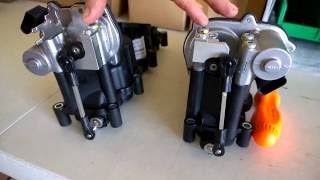
How to confirm: Visually inspect the actuator motor on the side of the intake manifold. The code P2015 (Bank 1) or P2020 (Bank 2) being present is a very strong indicator of this specific failure. Videos online clearly show the excessive play.
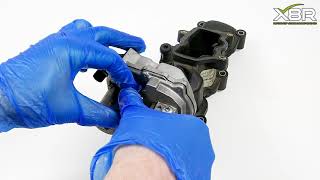
Typical fix: Install an aftermarket metal repair bracket onto the actuator motor. This bracket provides a new, durable physical stop, preventing over-rotation. 🎬 Watch: Step-by-step guide to installing the actuator bracket This is a very common, inexpensive, and permanent repair that can be done in under 30 minutes.
Est. part cost: $20-$80 - Seized or Sticking Intake Manifold Swirl Flaps 🟡 Medium Probability → Shop Engine Intake Manifold TDI engines, due to their Exhaust Gas Recirculation (EGR) system, are highly susceptible to heavy carbon buildup within the intake manifold. This sticky soot can cause the delicate swirl flaps to bind or seize, preventing the actuator motor from moving them correctly.
How to confirm: This is harder to confirm without disassembly. If the repair bracket does not solve the code, or if the linkage arm feels very stiff, carbon buildup is the next logical cause. Removal of the intake manifold is required for a definitive visual inspection.
Typical fix: The intake manifold must be removed and manually cleaned (often via media blasting, like walnut blasting) to remove the carbon deposits and free the flaps. In severe cases where the flaps are damaged, the manifold itself may need replacement.
Est. part cost: $300-$800 for a new manifold, cleaning costs vary. 🎬 See how to clean carbon from the intake manifold
- Broken Swirl Flap Linkage ⚪ Low Probability The plastic linkage arms connecting the actuator motor to the swirl flap rod can become brittle over time, causing them to break or pop off the ball joint.
How to confirm: Visually inspect the linkage arms that run from the actuator motor to the intake manifold. Check if they are disconnected, cracked, or broken. In one documented case, the arm had simply popped off its ball joint.
Typical fix: Replace the broken linkage arm. Some repair kits are available, but often this requires replacing the entire intake manifold assembly if the pivot points on the manifold are damaged.
Est. part cost: $50-$800
Rare But Worth Checking
- Failed Intake Runner Actuator Motor: While the motor itself is generally reliable, it is an electronic component that can fail internally. This should be considered only after the more common linkage stop and carbon issues have been ruled out.
Diagnosis Steps
- Scan the ECM for fault codes using an OBD-II scanner. Note if P2015 is present alone or with P2020 (for Bank 2).
- Important First Step: Call an Audi dealer with your VIN to check if your vehicle is covered under the TDI Extended Emissions Warranty. This repair may be covered at no cost.
- Open the hood and locate the two intake manifold runner actuator motors. They are black electronic boxes on the side of each silver intake manifold.
- Visually inspect the linkages. Check for any obvious signs of damage, such as a disconnected plastic arm.
- With the engine off, try to wiggle the linkage arm on the motor. If there is significant play before it engages the flaps, the internal stop has worn out. This confirms the need for the repair bracket.
- If the linkage seems intact and tight, the next most likely cause is sticking flaps due to carbon buildup. This requires removing the intake manifold for inspection and cleaning.
- If the flaps move freely and the linkage is intact, the issue could be a faulty actuator motor or a wiring problem, which would require electrical testing.
Parts You'll Likely Need
- Intake Manifold Actuator Repair Bracket — This is the most common and cost-effective fix. It installs on the existing actuator motor to limit its travel, preventing the over-rotation that causes the P2015 code.
Trusted brands: X8R, Diesel Geek
OEM price range: N/A (OEM does not offer a bracket)
Aftermarket price range: $20-$80 - Intake Manifold Assembly
(OEM #059129711CL (Left side, example, many variants exist))— Required if the internal swirl flaps are broken, the linkage rod itself is damaged, or if carbon buildup is so severe that it cannot be cleaned effectively. Variants include 059129711AG, 059129711AL, 059129711BQ, etc.
Trusted brands: Audi Genuine, Pierburg
OEM price range: $600-$900
Aftermarket price range: $300-$500 - Intake Manifold Runner Actuator Motor
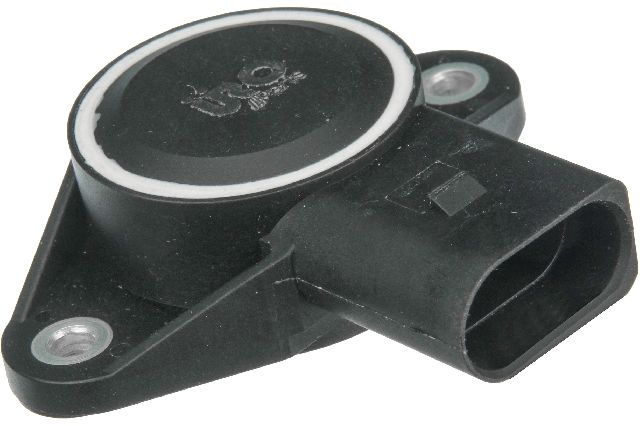
(OEM #059129086 (variants: J, L, G, K, D, M, E))— Needed only if the motor itself has failed electronically, which is less common than the mechanical linkage stop failing.
Trusted brands: Audi Genuine, Bosch, VDO
OEM price range: $250-$400
Aftermarket price range: $150-$250
Related Codes That Often Appear With This One
- P2020 — P2020 is the identical 'Intake Manifold Runner Position Sensor/Switch Circuit Range/Performance' code but for Bank 2. Since the V6 TDI engine has two cylinder banks and two intake manifolds/actuators, it's common for both to fail in a similar manner, causing both codes to appear. 🎬 Watch: Quick fix for P2015 and P2016 codes
- P2008, P2016, P2017 — These are other related codes for the intake manifold runner control system, indicating circuit open, low, or high faults. The mechanical failure causing P2015 can sometimes trigger these electrical-related codes as well.
Technical Service Bulletins (TSBs) & Recalls
- While no specific TSB for this exact failure on the V6 TDI is widely cited, Audi has released TSBs for similar intake flap issues on other engines (e.g., TSB 2044003 for gasoline engines), indicating a pattern of issues with this system design across the brand. The most relevant action for an owner is to check for warranty coverage rather than a specific TSB.
- Manufacturer TSB Bulletin #A0124312072273_2 provides information for cases where the MIL is on with codes including P2004, P2006, P2014, and P2015, specifically referencing the electric changeover valve N316.
Platform-Specific Known Issues
- The primary issue is the failure of the plastic actuator stop, which is a well-documented design weakness on the 2.7L and 3.0L TDI engines of this era. Aftermarket repair brackets are widely considered a permanent solution to this specific flaw.
- Owners should always check with an Audi dealer if their vehicle's VIN is covered by the TDI Extended Emissions Warranty from the 'Dieselgate' settlement, as this repair may be performed for free.
Mechanic-Grade Diagnostic Values
- Intake Runner Position Sensor Signal Voltage — expected: Approx. 0.5 Volts to 4.5 Volts through its range of motion.. Failure: A voltage reading below ~0.3-0.5V indicates the flap has traveled past its intended lower limit, triggering the P2015 fault code.
- VCDS - Intake Flap Motor Status (Live Data) — expected: The specified and actual position values (often shown as a percentage) should closely match as the ECU commands movement.. Failure: When the fault is active, the 'actual' value will be outside the specified range, often showing 'ADP. O.K.' changing to 'ADP. ERROR'.
Hidden / Shadow Codes Worth Checking
- 008213: This is the VAG-specific fault code number that corresponds to the generic OBD-II code P2015. It means 'Intake Manifold Flap Position Sensor (G336): Implausible Signal'. (see via VCDS (VAG-COM) or other professional VAG diagnostic tools.)
Scan Tool Commands That Help
- VCDS (VAG-COM): Engine -> Basic Settings -> Group 142 (for some TDI models) — To run the intake manifold flap adaptation. The ECU will cycle the flaps from fully open to fully closed to relearn the end-stop positions. This should be performed after replacing a manifold or actuator motor. A failure to complete this adaptation successfully points to a mechanical or electrical issue.
- VCDS (VAG-COM): Engine -> Adaptation -> Channel 01 -> Save — Some users report using this function to reset all adaptation values after a repair, which can sometimes help the ECU recognize a new component.
Wiring & Ground Locations
- Actuator Motor Connector (5-pin) — The electrical connector on the intake manifold runner actuator motor (V157 or V275).. This is where electrical tests are performed. Pin 1: 5V Reference, Pin 2: Position Signal to ECU, Pin 3: Sensor Ground, Pin 4: Motor Ground, Pin 5: Motor Power. Testing for 5V at Pin 1 and a changing signal at Pin 2 can confirm sensor function.
- T17c Connector — A 17-pin white connector located at the coupling station in the electronics box, in the plenum chamber (under the windshield cowl) on the left side.. This is a major junction for engine wiring. A corroded or loose pin in this connector could interrupt the signal between the actuator motor and the ECU (J248).
- Engine Block Ground — There are several main ground points on the engine block. One commonly missed during service is a small ground wire attached to a bolt on the oil filter housing.. A poor or missing ground connection for the engine sensors can cause floating voltages and implausible signal faults like P2015.
Real Owner Repair Stories
- Audi Owners Club (UK) forum (Audi A6 C6 (year not specified) with P2015) — Persistent P2015 code that returns every 3-4 starts.
❌ Tried (didn't work) Installing the aftermarket repair bracket., Replacing the entire intake manifold with a new flap controller.
✅ What actually fixed it The thread concluded without a definitive fix, but highlighted a critical conflict in advice: one user stated an adaptation via VCDS was mandatory after replacement, while the owner countered that for the all-electric flaps, no adaptation function exists. This story serves as a caution that even replacing all common parts may not solve the issue if a deeper electrical or software problem exists. - Reddit user in r/Audi (Audi A6 C6) — Emission light with code P1018 (Intake Manifold Runner Bank 2 - Lower limit not reached), the counterpart to P2015.
❌ Tried (didn't work) Initial research suggested replacing the entire intake manifold and/or actuator motor for several hundred to over a thousand dollars.
✅ What actually fixed it After extensive research, the owner discovered the root cause was wear in the internal plastic gears of the actuator motor, causing excessive play. Instead of replacing parts, they found a video of a DIY fix involving bolting a screw into the gear to act as a new physical stop, which permanently solved the code. This confirms the principle behind the widely available repair brackets. - NHTSA ODI #11542990 — An owner of a similar Audi model reported an emissions failure with code P2015 and noted that technical service bulletins exist detailing how the repair should be covered under extended warranty.
When the Usual Fixes Don't Work
- In at least one documented case, the common fixes did not resolve the P2015 code. An owner installed the aftermarket repair bracket, which did not work. They then replaced the entire intake manifold and actuator motor assembly, and the code still returned intermittently. This suggests that while the mechanical stop is the cause in the vast majority of cases, the fault can occasionally be rooted in more complex electrical or ECU logic issues that are not solved by replacing the hardware.
OEM Part Supersession History
059129086D→059129086M— Component revision by the manufacturer.Multiple (e.g., 059129711AG, AL, BQ)→059129711CL (and other variants)— VAG frequently updates manifold assemblies due to design changes or supplier shifts. There are over a dozen compatible part numbers for the left-side manifold.
Heads up: It is critical to verify the correct part number for your specific engine code (e.g., ASB, CCWA) and model year, as flap design and actuator compatibility can differ.
Model Year Variations Within This Range
- 2005-2008 (Pre-Facelift): These models typically use engine codes such as BKN, BPP, BSG, and ASB. The associated actuator motor part numbers are often 059129086D or its successor 059129086M.
- 2009-2011 (Facelift): Facelift models use updated engine codes like CANA, CAPA, and CCWA. These may use different actuator motors, such as 059129086L. While the failure mode (worn stop) and the bracket fix are the same, the specific OEM part numbers for the motor and manifold assembly may be different from earlier years.
Diagnostic Flowchart
Other Known Issues on This Vehicle
Issues unrelated to this code that are worth knowing about as an owner of this generation:
- Upper Timing Chain Tensioner Rattle 🔴 High — Common, especially on pre-2008 models with over 100,000 miles. Presents as a rattling noise from the rear of the engine for a few seconds on a cold start. Failure to address can lead to the chain jumping a tooth, causing catastrophic engine damage. The full chain service requires engine removal. (Ref: The issue with the tensioner was reportedly improved in post-2008 models.)
- High-Pressure Fuel Pump (HPFP) Failure 🔴 High — Can occur at various mileages. Symptoms include a low fuel rail pressure code (P0087), engine hesitation, stalling, and difficulty starting. A sudden failure can cause the engine to shut off while driving.
- MMI Infotainment System Failure 🟠 Medium — A frequent complaint where the MMI screen may go black, flicker, or fail to operate. The cause can be a failed control module, issues with the fiber optic loop, or water damage to components located in the trunk.
- Oil Leaks from Gaskets 🟠 Medium — Common as the vehicle ages. The valve cover gaskets and oil cooler seals are frequent culprits, leading to oil drips under the car or a burning oil smell.
- Piezo Fuel Injector Failure 🟠 Medium → Shop Fuel Injector — More common on higher-mileage vehicles. Can cause rough idling, misfires, increased smoke, and poor fuel economy.
Used vs. New Parts: Buying Guide for This Vehicle
When a used part is the smart pick: A complete, used intake manifold assembly can be a cost-effective option if the primary issue is heavy carbon buildup that can be cleaned, or if your manifold is physically cracked. A used actuator motor is also a reasonable choice, as the failure is typically the simple plastic stop, not the motor itself.
Donor-vehicle mileage cap: roughly under 80000 miles for the part to have meaningful remaining life.
What to inspect on the donor part:
- Ask the seller if the donor car had P2015/P2020 codes.
- Manually operate the linkage arm; it should move smoothly without binding or gritty feedback.
- Inspect the pivot point where the linkage arm enters the manifold. Heavy, wet soot indicates failing internal seals.
- Check the plastic housing of the actuator motor and manifold for cracks or heat damage.
OEM-only on this vehicle (don't cheap out):
- Intake Manifold Assembly: Due to the complexity of the internal flap mechanism, it is strongly recommended to use a Genuine Audi part or one from the OEM supplier, Pierburg. Low-quality aftermarket manifolds can have poorly fitted flaps that fail quickly.
Aftermarket brands forum-validated for this vehicle:
- Repair Bracket: X8R, Diesel Geek.
- Actuator Motor: VDO, Bosch (often the OEM suppliers).
- Intake Manifold: Pierburg (OEM supplier).
Brands owners have reported issues with on this vehicle:
- Unbranded, generic intake manifolds and actuator motors from online marketplaces. These often use inferior materials for the flaps and electronic components, leading to premature failure.
Real Owner Stories
Aggregated from forums and TSBs cited above. Mileages and costs reflect what owners reported in those sources.
2005-2011 Audi A6 3.0 TDI
Symptoms: The owner experienced a fault code P2015 and P2016. During inspection, they noted the actuator motor was over-rotating and also found a disconnected linkage arm.
What fixed it: Installation of a repair bracket to provide a hard stop for the actuator and reconnecting the linkage arm.
Source hint: YouTube - Auto Fix Guru: Easy Fix Error Code P2015 and P2016 on Audi A6 V6 3.0 TDI
2005-2011 Audi A6 3.0 TDI
Symptoms: The vehicle's intake manifold runner motor was over-rotating because the original plastic limiter wore down, sending an out-of-range signal to the ECU.
What fixed it: Installed an aftermarket metal repair bracket onto the actuator motor to provide a durable physical stop.
Source hint: YouTube - X8R Ltd: Install Guide for P2015 Repair Bracket
Related OBD-II Codes
Frequently Asked Questions
Will the TDI Extended Emissions Warranty cover the P2015 repair on my 2005-2011 Audi A6?
Does TSB 2044003 apply to my 3.0L TDI engine?
Can I fix the P2015 code without replacing the entire intake manifold?
How can I tell if my P2015 code is caused by carbon buildup instead of a worn stop?
Is the P2015 code related to the rattling noise I hear on cold starts?
What is the estimated cost for parts to fix the P2015 error on an Audi A6 TDI?
Helpful Videos

We Have This Part in Stock



The information in this article is provided for general reference and educational purposes only. Vehicle specifications, procedures, and part compatibility can vary by production date, trim level, and region. Always consult your vehicle's factory service manual and verify part numbers before purchasing or performing repairs. Safety-critical components such as airbags, seat belts, and braking systems should be installed by a qualified professional.
- Audi A6:
- 🧭 Diagnostic Flowchart
- 🎬 Helpful Videos
- 🛍️ Shop This Part
- What's Unique About the 2005-2011 Audi A6
- Symptoms You May Notice
- Most Likely Causes
- Rare But Worth Checking
- Diagnosis Steps
- Parts You'll Likely Need
- Related Codes That Often Appear With This One
- Technical Service Bulletins (TSBs) & Recalls
- Platform-Specific Known Issues
- Mechanic-Grade Diagnostic Values
- Hidden / Shadow Codes Worth Checking
- Scan Tool Commands That Help
- Wiring & Ground Locations
- Real Owner Repair Stories
- When the Usual Fixes Don't Work
- OEM Part Supersession History
- Model Year Variations Within This Range
- Other Known Issues on This Vehicle
- Used vs. New Parts: Buying Guide for This Vehicle
- Real Owner Stories
- 2005-2011 Audi A6 3.0 TDI
- 2005-2011 Audi A6 3.0 TDI
- Related OBD-II Codes
- Frequently Asked Questions
- 🎟️ Get 5% Off