

P2015 on 2009-2020 Dodge Journey 2.4L: Intake Runner Causes and Fixes
On a 2.4L Dodge Journey, code P2015 almost always means the intake manifold has failed internally. The plastic runner flaps get stuck or the actuator breaks. The most reliable fix is replacing the entire intake manifold assembly, which costs between $150-$300 for the part. The most common aftermarket part is Dorman 911-902.
- P2015 on a 2.4L Journey is almost certainly a mechanical problem inside the intake manifold, not just a bad sensor.
- The most reliable and common repair is to replace the entire intake manifold assembly. A popular aftermarket option is the Dorman 911-902.
- Before buying any parts, remove the actuator (3x T20/T25 screws) and manually check if the runner flap linkage is stuck or broken.
- This repair is manageable for a DIYer with moderate experience, as the intake manifold is relatively accessible.
- Check for related codes like P2004 and P2017, as they confirm the diagnosis of a faulty runner system.
What's Unique About the 2009-2020 Dodge Journey
The 2.4L 'World Engine' used in the Dodge Journey and its platform mates (Caliber, Avenger, Compass, etc.) is notorious for this specific failure. Unlike some vehicles where P2015 might be a simple sensor swap, on this platform it almost always points to a mechanical failure inside the plastic intake manifold itself. The plastic linkage and bushings for the swirl flaps are a common failure point; they wear out, break, or get gummed up with carbon deposits. This causes the flaps to bind, which in turn burns out the actuator motor or breaks the linkage. The position sensor that triggers the code is just accurately reporting this mechanical problem.
Symptoms You May Notice
- Check Engine Light is on
- Reduced engine power and sluggish acceleration
- Rough or unstable idle
- Decreased fuel economy
- Hesitation when accelerating
- In rare cases, a crank-no-start condition
- Replacing only the IMRC actuator when the internal manifold flaps are the actual cause of the binding, leading to a repeat failure.
- Replacing the throttle body, as some drivability symptoms can seem similar.
- Attempting to clean the intake manifold when the plastic linkage components are already broken or worn beyond repair.
Most Likely Causes
- Internal Intake Manifold Failure (Sticking/Broken Runner Flaps) 🔴 High Probability → Shop Engine Intake Manifold The internal flaps and linkage are made of plastic and are susceptible to failure from heat, age, and carbon buildup, which causes them to bind or break. This is a widely documented failure on the 2.4L World Engine.
How to confirm: With the engine off, remove the intake manifold runner control actuator (typically held by three T20 or T25 Torx screws 🎬 Watch: How to test and fix common runner control codes). Try to manually move the linkage for the flaps (a small plastic nub inside the actuator's mounting port). It should rotate smoothly about 90 degrees with some spring resistance and return on its own. If it is stuck, very stiff, gritty, or moves with no resistance (indicating it's broken internally), the manifold has failed and must be replaced.
Typical fix: Replace the entire intake manifold assembly. The sensor and actuator are often part of the new manifold. Cleaning is not a reliable long-term fix if parts are worn or broken. The most common aftermarket replacement is the Dorman 911-902 assembly. 🎬 See this walkthrough for replacing the intake manifold
Est. part cost: $150 - $350 - Faulty Intake Manifold Runner Control (IMRC) Actuator 🟡 Medium Probability → Shop Engine Intake Manifold The electric motor in the actuator is a known weak point and can burn out, especially when it is straining to move flaps that are beginning to stick. Often, replacing the actuator is a temporary fix because the binding manifold will cause the new actuator to fail as well.
How to confirm: Use a bi-directional scan tool to command the IMRC actuator to open and close while monitoring the position sensor voltage. If the actuator does not respond or makes grinding noises, it has likely failed. This diagnosis is only valid if the flaps themselves are confirmed to move freely first.
Typical fix: Replace the IMRC actuator. However, this should only be done after confirming the manifold's internal flaps are not the root cause, otherwise the new actuator may fail prematurely.
Est. part cost: $50 - $100 - Wiring or Connector Issue ⚪ Low Probability
How to confirm: Visually inspect the wiring harness and connector going to the IMRC actuator for any signs of damage, corrosion, or loose pins. Check for chafing where the harness may rub against the engine. Use a multimeter to check for proper voltage and ground at the connector according to the factory service manual.
Typical fix: Repair the damaged section of the wiring harness or clean/replace the connector.
Est. part cost: $10 - $50
Rare But Worth Checking
- Aftermarket Linkage Repair Kit Failure:
Diagnosis Steps
- Use an OBD-II scanner to confirm P2015 is present and check for other related codes like P2004 or P2017.
- Perform a visual inspection of the intake manifold area, focusing on the IMRC actuator and its electrical connector. Look for obvious damage, loose wires, or oil contamination.
- The key diagnostic step: Remove the IMRC actuator, which is typically held on by three T20 or T25 Torx screws.
- Attempt to manually actuate the plastic runner control linkage on the manifold itself. It should rotate smoothly with some spring tension and snap back to its original position. If it's stuck, gritty, or feels disconnected, the intake manifold is faulty and must be replaced.
- If the linkage moves freely, the problem may be the actuator itself. If you have a bi-directional scanner, you can command the actuator (while it's plugged in but removed from the manifold) to see if it operates.
- If the actuator and manifold linkage both seem okay, check the wiring harness for 5V reference, ground, and signal continuity back to the PCM.
- Based on overwhelming evidence for this vehicle and its platform mates, the most likely outcome of this diagnosis is a failed intake manifold assembly.
Parts You'll Likely Need
- Intake Manifold Assembly
(OEM #4884495AK, 4884495AJ, 4884495AD (numbers supersede each other))— This is the most common failure point. The internal plastic flaps or linkage break or seize, and the entire assembly must be replaced. New manifolds typically include a new actuator and sensor.
Trusted brands: Mopar, Dorman (p/n 911-902 or 615-902), SKP, APA/URO Parts
OEM price range: $250-$400
Aftermarket price range: $150-$250
Related Codes That Often Appear With This One
- P2004 — This code means 'Intake Manifold Runner Control Stuck Open'. It is very common to see with P2015 as they both point to the same fundamental mechanical failure of the runner system.
- P2017 — This code means 'Intake Manifold Runner Position Sensor/Switch Circuit High'. It is another range/performance code related to the same sensor and system, often appearing with P2015 or P2016.
- P200A — This is a generic 'Intake Manifold Runner Performance' code, which is another indicator that the flaps are not operating as commanded by the PCM.
Technical Service Bulletins (TSBs) & Recalls
- TSB #18-014-15 REV. A (September 25, 2015): 'Flash: 3.6L Or 2.4L Diagnostic and System Improvements'. This TSB involves a PCM software update. However, it addresses other DTCs like P0441, P0456, and P0116, and does NOT fix the mechanical failure that causes P2015. It is not a solution for this code.
Platform-Specific Known Issues
- The 2.4L engine in the Dodge Journey has a high rate of intake manifold failure related to the runner control system, making P2015 a very common code for this model.
- The failure is so common that aftermarket companies like Dorman have produced a complete, redesigned replacement manifold (p/n 911-902) that is a popular choice for repair.
Mechanic-Grade Diagnostic Values
- IMRC Position Sensor Voltage (Live Data) — expected: Should sweep smoothly from a low voltage (approx. 0.5V - 1.7V) at idle to a high voltage (approx. 3.8V - 4.5V) when the engine is revved past 3,000 RPM.. Failure: A voltage reading that is stuck, erratic, or does not change when the engine RPM changes. A reading stuck high (near 5V) may trigger P2017, while one stuck low (near 0V) may trigger P2016.
- IMRC Actuator/Solenoid Internal Resistance — expected: Typically between 20-50 Ohms, but refer to the specific vehicle service manual.. Failure: A multimeter reading of 'OL' (Over Limit / Open Loop) indicates a broken internal coil, meaning the actuator is faulty. A reading near zero indicates a short circuit.
- IMRC Sensor Connector Pin Voltages (Key On, Engine Off, Connector Unplugged) — expected: 1. A 5-volt reference wire from the PCM. 2. A ground wire with near 0 volts. 3. A signal wire (may show ~5V when unplugged).. Failure: If the 5V reference is missing, there is an open in the wiring or a PCM issue. If reference and ground are good but the signal wire is shorted to ground, it will read 0V.
Hidden / Shadow Codes Worth Checking
- Mode $06, TID $XX: While not a specific 'shadow code', Chrysler vehicles use Mode $06 diagnostics to show test results for non-continuously monitored systems like the IMRC. A technician can view the raw hexadecimal test data for the intake runner system to see if it has passed or failed its last self-test, sometimes before a full-blown DTC is set. (see via An advanced OBD-II scan tool capable of displaying Mode $06 data.)
Scan Tool Commands That Help
- Professional Bi-Directional Scan Tool (e.g., Witech, Autel, Snap-on): IMRC Actuator Command / Intake Runner Control Test — This is a critical diagnostic step. After confirming the manifold linkage is not seized, this command directly tests the actuator motor. The tool commands the actuator to move, and the technician can observe its physical movement and the corresponding change in the position sensor's live data to confirm if the actuator is working.
- Professional Bi-Directional Scan Tool: IMRC Relearn / Adaptation Reset — After replacing the intake manifold assembly or the actuator, this function may be required. It allows the PCM to learn the new sensor's closed and open stop points, ensuring accurate position reading and control.
Wiring & Ground Locations
- IMRC Actuator Connector — On the side of the intake manifold, plugged into the runner control actuator motor.. This connector and its wiring are the primary electrical interface for the system. Checking for 5V reference, ground, and signal continuity at this connector's pins is a key step in ruling out a wiring fault as the cause of P2015.
Real Owner Repair Stories
- Dodge Journey Forum (2009 Dodge Journey 2.4L) — Check Engine Light with codes P2004 and P2015.
❌ Tried (didn't work) Replacing only the IMRC actuator/motor.
✅ What actually fixed it The problem returned shortly after replacing only the actuator. The final, successful repair was replacing the entire intake manifold assembly. Other users in the same thread confirmed this is the correct fix. - YouTube channel 'TRQ' (2007-2017 Jeep Patriot 2.4L (platform mate with same engine/manifold)) — P2004, P2017 codes.
✅ What actually fixed it The video demonstrates the entire process of replacing the intake manifold assembly to resolve the codes. It visually confirms the location of the actuator and the process of removing the manifold, reinforcing that this is a component-level failure requiring full replacement.
OEM Part Supersession History
4884495AD, 4884495AF, 4884495AG, 4884495AH, 4884495AI, 4884495AJ→4884495AK— Parts are revised over time by the manufacturer to address weaknesses, improve durability, or streamline production. The long list of superseded numbers for this manifold indicates multiple revisions have been made.
Heads up: All previous part numbers are replaced by the latest 'AK' revision, which should be used for all repairs.
Diagnostic Flowchart
Used vs. New Parts: Buying Guide for This Vehicle
When a used part is the smart pick: For this specific repair, a used part is STRONGLY DISCOURAGED. The failure is due to wear and tear of internal plastic components. A used manifold from a junkyard has a very high probability of either being already broken or failing soon after installation, wasting both time and money.
What to inspect on the donor part:
- Even if testing a used part, manually actuating the linkage nub is not a guarantee of internal integrity. The internal flaps can be gummed with carbon or have hairline cracks not visible externally.
- There is no reliable way to inspect the internal condition of a used manifold without disassembly, making it a significant gamble.
Aftermarket brands forum-validated for this vehicle:
- Dorman (p/n 911-902): This is the most widely cited aftermarket replacement. Dorman claims their 'OE FIX' version includes a redesigned, more durable IMRC shaft to prevent the common failure.
- SKP
- APA/URO Parts
Brands owners have reported issues with on this vehicle:
- While some mechanics have general negative opinions about certain aftermarket brands, no specific brand was consistently reported to be problematic for this particular intake manifold replacement on the Dodge Journey.
Real Owner Stories
Aggregated from forums and TSBs cited above. Mileages and costs reflect what owners reported in those sources.
Dodge Journey 2.4L
Symptoms: Owner experienced codes P2004 and P2015.
What fixed it: Replacing the entire intake manifold solved the problem after attempts to replace just the actuator failed. The owner noted success with the Dorman replacement part.
Source hint: dodgejourneyforum.com - Thread: 'P2004 and P2015'
Related OBD-II Codes
Frequently Asked Questions
I have a P2015 code on my Dodge Journey. Will replacing just the IMRC actuator fix it?
What is the most common fix for P2015 on the 2.4L Journey?
Is there a recommended aftermarket intake manifold for this repair?
How can I test my intake manifold to be sure it's the problem?
I found a TSB (#18-014-15 REV. A) for my Journey's engine. Does this software update fix the P2015 code?
Is it a good idea to buy a used intake manifold from a junkyard to save money?
Helpful Videos
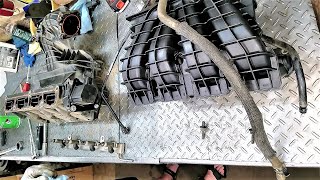
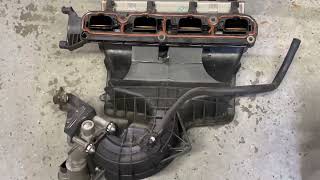
We Have This Part in Stock

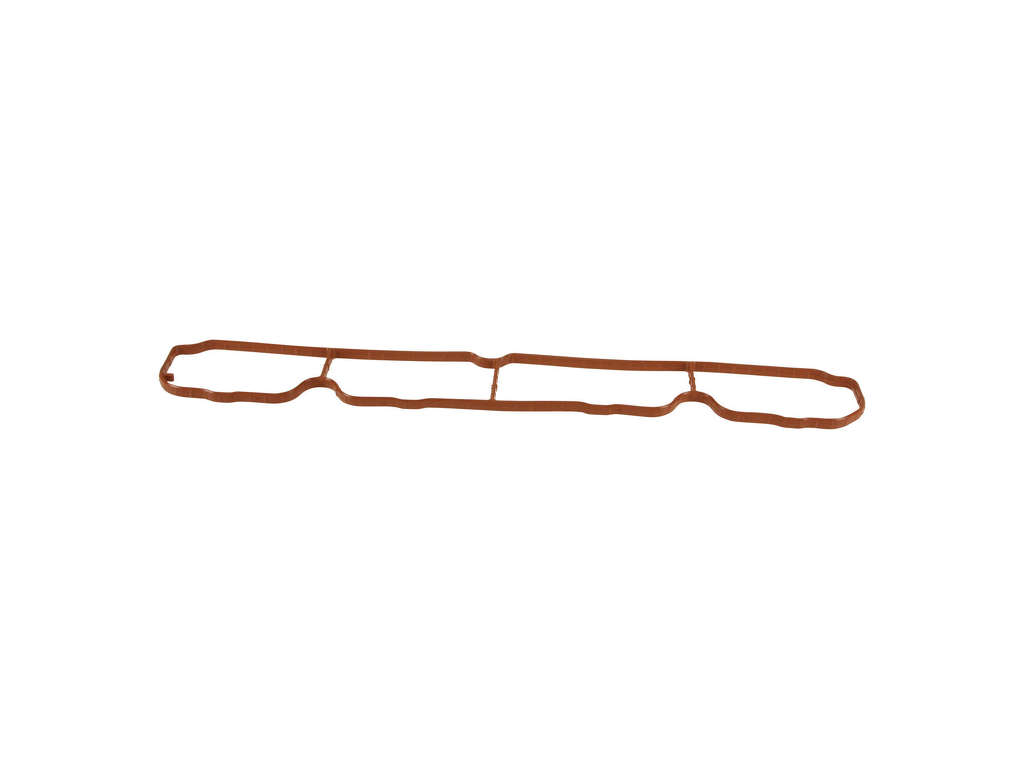

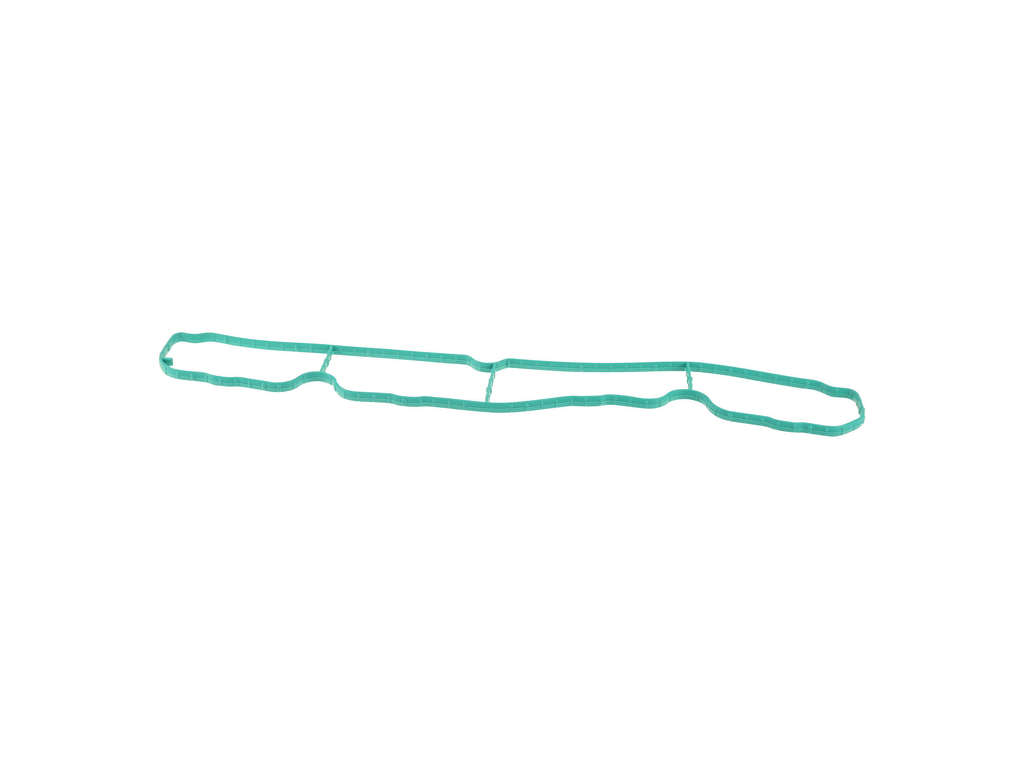


The information in this article is provided for general reference and educational purposes only. Vehicle specifications, procedures, and part compatibility can vary by production date, trim level, and region. Always consult your vehicle's factory service manual and verify part numbers before purchasing or performing repairs. Safety-critical components such as airbags, seat belts, and braking systems should be installed by a qualified professional.
- Dodge Journey:
- 🧭 Diagnostic Flowchart
- 🎬 Helpful Videos
- 🛍️ Shop This Part
- What's Unique About the 2009-2020 Dodge Journey
- Symptoms You May Notice
- Most Likely Causes
- Rare But Worth Checking
- Diagnosis Steps
- Parts You'll Likely Need
- Related Codes That Often Appear With This One
- Technical Service Bulletins (TSBs) & Recalls
- Platform-Specific Known Issues
- Mechanic-Grade Diagnostic Values
- Hidden / Shadow Codes Worth Checking
- Scan Tool Commands That Help
- Wiring & Ground Locations
- Real Owner Repair Stories
- OEM Part Supersession History
- Used vs. New Parts: Buying Guide for This Vehicle
- Real Owner Stories
- Dodge Journey 2.4L
- Related OBD-II Codes
- Frequently Asked Questions
- 🎟️ Get 5% Off