

P2015 on 2013-2019 Ford Escape 2.0L EcoBoost: Intake Manifold Runner Fault Causes and Fixes
On the 2.0L EcoBoost Escape, code P2015 almost always points to a failed component inside the intake manifold. Because the position sensor and actuator are typically integrated, the most common fix is replacing the entire intake manifold assembly. Carbon buildup can also cause the runner flaps to stick. Expect to pay $600-$1000 for a professional repair.
- P2015 on your Escape most likely means you will need to replace the entire intake manifold assembly.
- Before buying an expensive manifold, it is worth checking the cheaper, external IMRC control solenoid and its vacuum lines first.
- Because this is a direct-injection (GDI) engine, carbon buildup can cause the runner flaps to stick. While the manifold is off, it's a good time to have the intake ports and valves cleaned.
- This repair requires removing several components to access the intake manifold and can be complex. DIY difficulty is high (4/5).
What's Unique About the 2013-2019 Ford Escape
The key issue for the 2.0L EcoBoost engine is that the IMRC position sensor is not sold as a separate component; it is integrated into the plastic intake manifold assembly. This means that a failure of this small sensor, or the internal flap mechanism it monitors, requires the replacement of the entire manifold. Furthermore, as a Gasoline Direct Injection (GDI) engine, the intake valves are not cleaned by fuel spray, making them susceptible to carbon buildup which can cause the runner flaps to bind or stick, leading to this fault code.
Symptoms You May Notice
- Check Engine Light illuminated
- Reduced engine power, especially at low or high RPMs
- Hesitation or stumbling during acceleration
- Rough or unstable idle
- Decreased fuel economy
- Audible clicking or tapping from the intake manifold area as the actuator tries to move the flaps
- Replacing only the IMRC vacuum control solenoid when the actual fault is an internally failed sensor or stuck flaps within the manifold.
Most Likely Causes
- Failed Intake Manifold Assembly 🔴 High Probability → Shop Engine Intake Manifold The position sensor and/or actuator linkage are integrated into the manifold and are not serviced separately. Wear and tear or failure of these internal plastic components is the most common cause, necessitating replacement of the entire assembly.
How to confirm: Using a diagnostic scan tool, monitor the commanded IMRC position (IMRC_CMD) versus the actual position (IMRC_F). If the actual position does not match the commanded position and external components (solenoid, wiring) are functional, the fault is internal to the manifold. You may also hear a clicking sound from the actuator on the side of the manifold.
Typical fix: Replace the entire intake manifold assembly.
Est. part cost: $150-$400 - Carbon Buildup on Intake Runner Flaps 🟡 Medium Probability As a GDI engine, oil vapors from the PCV system can bake onto the intake runners and flaps, creating hard deposits that restrict movement and cause the flaps to stick.
How to confirm: This requires removing the intake manifold for visual inspection of the runner flaps. If they are coated in carbon and do not move freely, this is the cause.
Typical fix: Remove the intake manifold and manually clean the carbon from the runners and flaps. This is often called 'walnut blasting'. Since the manifold is already removed, many choose to replace it rather than risk a future mechanical failure of the integrated sensor/actuator.
Est. part cost: $20-$50 for cleaning supplies - Faulty IMRC Vacuum Control Solenoid ⚪ Low Probability The solenoid controls the vacuum supply to the IMRC actuator. It can fail electrically or become clogged over time, preventing the actuator from moving the flaps.
How to confirm: Test the solenoid for proper operation. With the engine running, command the IMRC system open and closed with a scan tool and check for vacuum at the output port of the solenoid. You can also test the solenoid's resistance with a multimeter.
Typical fix: Replace the IMRC control solenoid. This is an inexpensive and accessible part to replace before condemning the entire manifold.
Est. part cost: $30-$60 - Damaged Wiring or Electrical Connector ⚪ Low Probability Wiring can become brittle from heat cycles or damaged from chafing, leading to a poor connection at the IMRC position sensor or solenoid. The signal return splice is a known weak point on this platform.
How to confirm: Visually inspect the wiring harness leading to the intake manifold sensor and the control solenoid for any signs of cracking, melting, or corrosion. Check for a secure connection at the sensor plug. Check for continuity and voltage at the sensor connector pins.
Typical fix: Repair the damaged section of wiring or replace the connector pigtail. If the signal return splice is faulty, it must be located in the harness and repaired.
Est. part cost: $15-$45 for a connector pigtail
Diagnosis Steps
- Connect an OBD-II scanner and check for any other accompanying codes, such as P2004, P2006, or P2017.
- Use the scanner's live data function to monitor the commanded IMRC position (IMRC_CMD) and the actual IMRC position (IMRC_F). Command the flaps open and closed to see if the actual position follows.
- If the position does not change, listen for a clicking or ticking sound from the driver's side of the intake manifold, which indicates the actuator is trying to move but is stuck or broken.
- Inspect the vacuum lines running to the IMRC actuator on the manifold for any cracks, leaks, or loose connections.
- Locate the IMRC control solenoid and test it. Check that it is receiving power and ground, and test its function by applying voltage or using the scanner's actuator test mode.
- Inspect the electrical connector and wiring going to the IMRC position sensor on the intake manifold for any visible damage. Test for proper voltage and ground at the connector.
- If the external wiring and solenoid are good, but the sensor reading is still incorrect or the flaps do not move, the fault is internal to the intake manifold.
- The final step is to remove the intake manifold to inspect for heavy carbon buildup on the flaps or a physically broken internal linkage/actuator.
Parts You'll Likely Need
- Engine Intake Manifold
(OEM #CJ5Z-9424-E)— This is the most common fix because the position sensor, actuator, and flap linkage are integrated into the assembly and are not sold separately by Ford. A failure of any internal component requires replacing the entire manifold.
Trusted brands: Motorcraft (Ford OEM), Dorman, A-Premium
OEM price range: $250-$400
Aftermarket price range: $150-$250 - Intake Manifold Gasket Set — This is required whenever the intake manifold is removed and replaced. The OEM Ford manifold often includes new gaskets.
Trusted brands: Fel-Pro, Mahle, Victor Reinz
OEM price range: $30-$50
Aftermarket price range: $15-$30 - Intake Manifold Runner Control Solenoid
(OEM #1S7G-9J559-BB)— This is a less common but possible point of failure. It is an external component that controls vacuum to the IMRC actuator and is worth testing before replacing the entire manifold.
Trusted brands: Motorcraft, Standard Motor Products
OEM price range: $40-$70
Aftermarket price range: $25-$50
Related Codes That Often Appear With This One
- P2004 — This code indicates 'Intake Manifold Runner Control Stuck Open', which is a specific failure state of the same IMRC system.
- P2006 — This code indicates 'Intake Manifold Runner Control Stuck Closed', another specific failure of the same IMRC system.
- P2017 — This code for 'Intake Manifold Runner Position Sensor/Switch Circuit High' points to an electrical fault in the same sensor circuit.
Technical Service Bulletins (TSBs) & Recalls
- TSB 13-09-07: While for the Focus ST, this TSB is relevant as it addresses wiring splice issues (splices S132 and S133) on the same 2.0L EcoBoost platform from 2013-2014 that can cause various drivability codes and rough running. A faulty signal return splice could be a rare cause for P2015 if it affects the IMRC sensor circuit.
Platform-Specific Known Issues
- Owner Experience with Aftermarket Manifolds: Some owners on forums have reported mixed results with aftermarket intake manifolds like those from Dorman. While often more affordable, there are anecdotal reports of lower build quality or even performance loss compared to the OEM Ford part. Some Dorman manifolds for other platforms have been found to have casting flash partially obstructing vacuum ports, requiring inspection and cleaning before installation.
Mechanic-Grade Diagnostic Values
- IMRC Position Sensor Signal Voltage — expected: Typically 0.5V (closed) to 4.5V (open). The voltage should change smoothly as the IMRC is commanded to move.. Failure: Voltage is stuck, flat, erratic, or outside the 0.5V-4.5V range. A reading near 5.0V may indicate a circuit high fault (P2017).
- IMRC Position Sensor Reference Voltage — expected: Approximately 5.0V at the sensor connector.. Failure: Significantly lower or no voltage indicates a wiring or PCM issue.
- IMRC Position Sensor Resistance — expected: Typically in the 1 kΩ to 10 kΩ range, but this can vary. Check OEM specifications.. Failure: Infinite resistance (open) or zero resistance (short) when measured across the appropriate pins.
Hidden / Shadow Codes Worth Checking
- Mode $06: Mode $06 data can reveal if the IMRC monitor has run and passed, failed, or is borderline. It provides the raw test values from the PCM's self-test before a full-blown DTC is set. This can help identify an intermittent or emerging problem with the IMRC system. (see via A professional-grade OBD-II scan tool with Mode $06 capability is required. The specific Test ID (TID) and Component ID (CID) for the IMRC monitor must be referenced from the vehicle's service information.)
Scan Tool Commands That Help
- Ford IDS, FORScan, or equivalent professional scanner: IMRC Actuator Command / Output State Control — This bidirectional control allows the technician to command the IMRC flaps open and closed while observing the IMRC position sensor PID (IMRC_F) on the scan tool. If the command is sent but the position does not change, it confirms a mechanical (stuck flap, broken linkage) or actuator failure, assuming wiring is intact.
- FORScan: Reset All Adaptations (PCM/TCM) — While not always required for an intake manifold replacement, resetting adaptations can be a useful step after a major repair to force the PCM to relearn parameters. It is more commonly associated with transmission repairs but can be part of a comprehensive post-repair procedure.
Wiring & Ground Locations
- IMRC Position Sensor Connector — On the intake manifold assembly, typically on the driver's side of the engine.. This is the primary electrical connection for the sensor providing the position feedback to the PCM. A poor connection, corrosion, or damaged wires at this connector will directly cause P2015 or related codes.
- PCM Grounds — Multiple ground points exist for the PCM and engine harness. Key grounds are typically located on the engine block, chassis near the battery, and firewall. Specific diagrams for the 2013-2019 Escape are needed for exact locations.. A poor PCM ground can cause erratic sensor readings and unpredictable behavior across multiple systems, including the IMRC. A recent TSB for newer models (24-2384) highlights the importance of checking all PCM ground circuitry for misfire conditions, which can be related to sensor data integrity.
OEM Part Supersession History
CJ5Z-9424-A/B/C/D→CJ5Z-9424-E— Incremental design updates and revisions by Ford. The -E revision is the most current OEM part number specified for the entire 2013-2019 generation.
Heads up: While earlier revisions may physically fit, it is always recommended to use the latest available part number (CJ5Z-9424-E) to benefit from any design improvements.
Model Year Variations Within This Range
- 2017-2019: For the 2017 model year, the Ford Escape 2.0L EcoBoost was updated to a twin-scroll turbo design. While the P2015 code and the fundamental IMRC issue remain the same, technicians should be aware that some surrounding engine components and procedures may differ slightly from the 2013-2016 single-scroll turbo engine. Always verify part numbers with the vehicle's VIN.
Diagnostic Flowchart
Other Known Issues on This Vehicle
Issues unrelated to this code that are worth knowing about as an owner of this generation:
- 2.0L EcoBoost Coolant Intrusion 🔴 High — Common on 2017-2019 models, but can occur on earlier years. A design flaw in the open-deck engine block can cause a crack to form between cylinders, allowing coolant to leak into the combustion chamber. (Ref: TSB 19-2346 (supersedes 19-2208) advises a long block replacement for affected vehicles exhibiting symptoms like low coolant, white smoke, and misfire codes (P0300-P0304).)
- 6F35 Transmission Failure 🔴 High — Widespread across the 2013-2019 generation. Symptoms include harsh shifting, shuddering, slipping, and complete failure, sometimes at relatively low mileage (under 100k miles). Subject of multiple class-action lawsuits. (Ref: No specific recall, but numerous TSBs exist for various symptoms. The underlying issues are considered design flaws by many.)
- AWD Power Transfer Unit (PTU) Failure 🟠 Medium — Common on AWD models, often occurring between 60,000-90,000 miles. The unit is located next to the hot exhaust, causing the gear oil to break down and cook. Ford designated the fluid as 'lifetime,' leading to lack of servicing and premature failure. (Ref: No recall. Symptoms include a strong burning oil/sulfur smell, whining or grinding noises that change with speed. The only prevention is regular (e.g., every 30,000 miles) draining and filling of the PTU fluid.)
Used vs. New Parts: Buying Guide for This Vehicle
When a used part is the smart pick: A used intake manifold from a junkyard can be a cost-effective option, but it carries significant risk. It only makes sense if the donor vehicle is low-mileage and there is a clear history or ability to inspect the part. Given the high failure rate of the internal components, a used part may have limited life remaining or could be faulty from the start.
Donor-vehicle mileage cap: roughly under 50000 miles for the part to have meaningful remaining life.
What to inspect on the donor part:
- Verify the donor vehicle's mileage is low.
- Inspect the actuator arm on the side of the manifold. It should move smoothly with some spring resistance and not be loose or broken.
- Look inside the intake ports for signs of excessive carbon buildup. Heavy deposits suggest the flaps may be prone to sticking.
- Check the plastic housing for any cracks, especially around mounting points and the actuator area.
- Ensure all vacuum nipples and electrical connector housings are intact and not broken.
OEM-only on this vehicle (don't cheap out):
- Engine Intake Manifold
Aftermarket brands forum-validated for this vehicle:
- Motorcraft (OEM)
Brands owners have reported issues with on this vehicle:
- Dorman: While a popular and affordable option, some users across various platforms report quality control issues, such as casting flash inside vacuum ports that must be cleared before installation to prevent other drivability problems.
Real Owner Stories
Aggregated from forums and TSBs cited above. Mileages and costs reflect what owners reported in those sources.
2013-2019 Ford Escape 2.0L EcoBoost
Symptoms: Tell-tale 'clicking' noise from the driver's side of the engine bay.
What fixed it: Intake manifold replacement was the definitive fix.
Source hint: fordescape.org forum threads
2013-2014 Ford Escape 2.0L EcoBoost
Symptoms: Drivability codes and rough running.
What fixed it: Repairing the signal return splice (S132 or S133) in the wiring harness.
Source hint: TSB 13-09-07
2013-2019 Ford Escape 2.0L EcoBoost
Symptoms: P2015 and related IMRC codes.
What fixed it: Internal manifold failure required replacement; suggested checking rockauto.com or tascaparts.com for OEM parts.
Source hint: Reddit r/fordescape
Related OBD-II Codes
Frequently Asked Questions
Does TSB 13-09-07 apply to my 2013-2014 Ford Escape 2.0L EcoBoost?
I hear a clicking sound from the driver's side of my engine bay; is this related to P2015?
Can I just replace the IMRC position sensor or actuator on my 2.0L EcoBoost?
Should I use a Dorman aftermarket intake manifold to fix this code?
Is the P2015 code related to the common coolant intrusion issue on 2017-2019 Escapes?
Can carbon buildup cause P2015 on the Ford Escape?
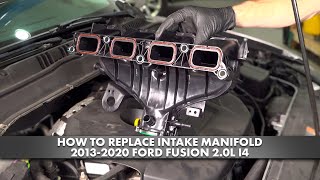
Helpful Videos

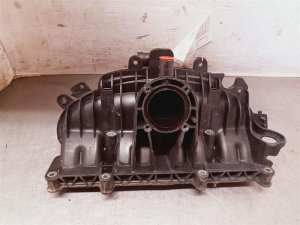
Used OEM Parts in Stock
New Aftermarket Parts Available


The information in this article is provided for general reference and educational purposes only. Vehicle specifications, procedures, and part compatibility can vary by production date, trim level, and region. Always consult your vehicle's factory service manual and verify part numbers before purchasing or performing repairs. Safety-critical components such as airbags, seat belts, and braking systems should be installed by a qualified professional.
- Ford Escape:
- 🧭 Diagnostic Flowchart
- 🎬 Helpful Videos
- 🛍️ Shop This Part
- What's Unique About the 2013-2019 Ford Escape
- Symptoms You May Notice
- Most Likely Causes
- Diagnosis Steps
- Parts You'll Likely Need
- Related Codes That Often Appear With This One
- Technical Service Bulletins (TSBs) & Recalls
- Platform-Specific Known Issues
- Mechanic-Grade Diagnostic Values
- Hidden / Shadow Codes Worth Checking
- Scan Tool Commands That Help
- Wiring & Ground Locations
- OEM Part Supersession History
- Model Year Variations Within This Range
- Other Known Issues on This Vehicle
- Used vs. New Parts: Buying Guide for This Vehicle
- Real Owner Stories
- 2013-2019 Ford Escape 2.0L EcoBoost
- 2013-2014 Ford Escape 2.0L EcoBoost
- 2013-2019 Ford Escape 2.0L EcoBoost
- Related OBD-II Codes
- Frequently Asked Questions
- 🎟️ Get 5% Off