

P2015 on 2006-2007 Ford Explorer 4.6L: Intake Runner Control Sensor/Actuator Fixes
On the 4.6L 3V V8, code P2015 usually points to a failed Intake Manifold Runner Control (IMRC) actuator on the back of the intake manifold or sticking runner flaps inside it. This is a known issue covered by a Ford TSB. The fix often requires removing the intake manifold to replace the actuator or service the flaps, making it a labor-intensive job.
- P2015 on your Explorer points to a problem with the Intake Manifold Runner Control (IMRC) system for Bank 1.
- The most likely cause is a failed actuator motor on the back of the intake manifold, a known issue covered by a Ford TSB.
- A binding or broken flap inside the manifold is the second most likely cause.
- Repair is labor-intensive as the entire intake manifold must be removed to access the actuator or inspect the flaps.
- When performing the repair, it is wise to replace the intake manifold gaskets and thoroughly clean the manifold interior.
What's Unique About the 2006-2007 Ford Explorer
The Ford 4.6L 3V engine, also known as the Modular V8, has a well-documented history with its IMRC system, which Ford sometimes calls Charge Motion Control Valves (CMCV). Ford issued Technical Service Bulletin (TSB) 06-7-10 specifically for this issue on the 2006 Explorer, indicating a known pattern of failure. The problem often isn't just a bad sensor, but a faulty actuator motor or internal flaps that get stuck from carbon buildup, requiring significant labor to access at the rear of the intake manifold, near the firewall.
Symptoms You May Notice
- Check Engine Light is on
- Lack of power, especially during acceleration or at higher RPMs
- Rough or unstable idle
- Hesitation when accelerating
- Reduced fuel economy
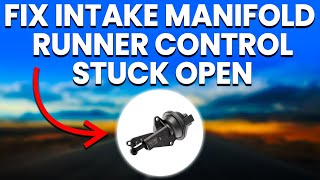
- Audible clicking or buzzing from the rear of the intake manifold as the actuator attempts to move 🎬 Watch: A helpful breakdown of IMRC symptoms and diagnostic steps.
- Replacing only the position sensor when it is integrated into the actuator assembly.
- Replacing the intake manifold when only the external actuator motor has failed.
- Mistaking the issue for a transmission problem due to poor acceleration and hesitation.
Most Likely Causes
- Failed IMRC Actuator / Motor 🔴 High Probability This is the most common failure and is specifically addressed in Ford TSB 06-7-10. The actuator is an electric motor located in a high-heat area on the back of the intake manifold, and it works frequently to adjust the runner flaps. The plastic gears inside can strip, or the motor can burn out.
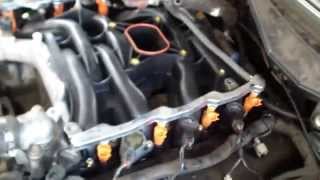
How to confirm: Using a bi-directional scan tool, command the IMRC actuator (often listed as CMCV) to open and close. If you hear no movement from the actuator, or if the position sensor PID does not change, the actuator is likely faulty. This assumes the wiring is intact. A YouTube video by 'Haze Gray and Underway' shows the location of the actuator and the process of replacing it. 🎬 See this walkthrough for removing and replacing the intake manifold.
Typical fix: Replace the IMRC actuator motor. This requires removing the entire intake manifold to access the actuator on the rear of the assembly. The actuator is often sold as a kit.
Est. part cost: $150-$280 - Sticking or Binding Intake Runner Flaps 🟡 Medium Probability PCV system vapors can cause oil and carbon to build up inside the intake manifold, causing the delicate butterfly flaps to stick or move slowly. The plastic linkage connecting the actuator to the flaps can also break or pop off.
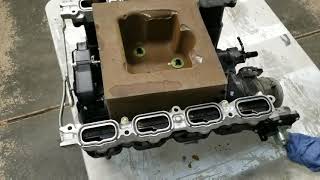
How to confirm: After removing the intake manifold, manually rotate the runner flap shafts by hand as described in TSB 06-7-10. They should move freely without sticking. Visually inspect the linkage for breakage. In a video for a P2004/P2005 code, the user 'Haze Gray and Underway' shows these flaps inside the removed manifold. 🎬 Watch: See the internal runner flaps and how they stick.
Typical fix: If flaps are sticking due to carbon, the intake manifold must be thoroughly cleaned. If the flaps or shaft are broken, the entire intake manifold assembly must be replaced as the flaps are typically not sold separately.
Est. part cost: $300-$600 for a new intake manifold - Wiring Harness or Connector Damage ⚪ Low Probability The wiring harness to the IMRC actuator is routed behind the engine near the firewall and can be susceptible to heat damage, chafing, or damage during other engine repairs. The connector itself can also fail.
How to confirm: Visually inspect the wiring and 4-pin connector for any signs of melting, corrosion, or broken wires. Perform a continuity and voltage test at the connector with a multimeter to ensure the actuator is receiving the correct power, ground, and command signal from the PCM.
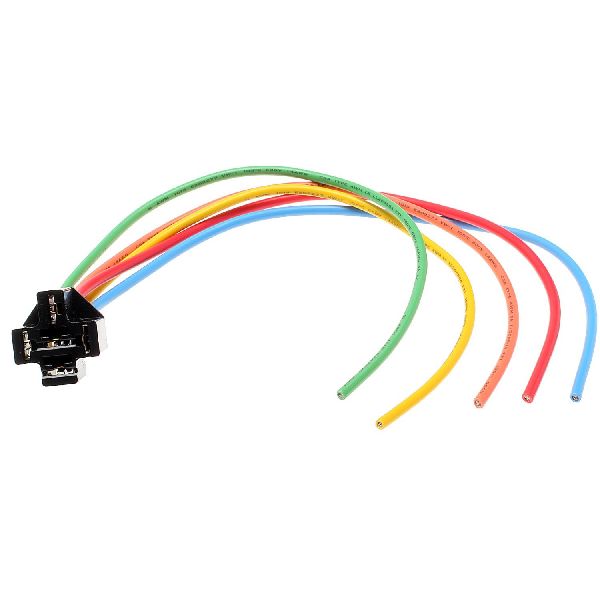
Typical fix: Repair the damaged section of the wiring harness or replace the connector pigtail. Standard Motor Products S-2033 is an example of a replacement pigtail.
Est. part cost: $20-$50
Rare But Worth Checking
- Faulty Powertrain Control Module (PCM): This is extremely rare. The PCM should only be considered after all other possibilities, including the actuator, flaps, and wiring, have been definitively ruled out.
Diagnosis Steps
- Connect an OBD-II scanner and confirm that P2015 is present. Check for any other IMRC-related codes (P2004, P2006, P2007, P2008).
- Use the scanner's live data function to monitor the IMRC position sensor PID for Bank 1 (sometimes labeled CMCV1).
- Command the IMRC actuator open and closed using the scanner's bi-directional controls. Observe if the actuator makes noise and if the sensor PID value changes smoothly between its open and closed values.
- If the actuator does not move or make any sound, the problem is likely the actuator motor or its wiring/power supply.
- If the actuator makes noise but seems to struggle, or if you have 'stuck' codes (P2004/P2006), the problem is likely mechanical binding inside the manifold.
- If the actuator moves but the PID value is erratic, does not change, or stays at one end of the range, the sensor component of the assembly is likely bad.
- Visually inspect the wiring harness and 4-pin connector at the rear of the intake manifold for any obvious damage, melting, or corrosion.
- If the actuator or flaps are suspected, the intake manifold must be removed for further diagnosis. This is a significant job involving draining coolant and disconnecting fuel lines.
- With the manifold off, test the flap movement by hand. They should rotate freely without any binding.
- Based on these findings, replace the faulty component, which could be the actuator motor, or the entire intake manifold if the internal flaps are damaged or seized.
Parts You'll Likely Need
- Intake Manifold Runner Control (IMRC) Actuator
(OEM #6L2Z-9E928-A (Actuator Kit))— This is the most common failure point for code P2015 on this engine, as documented by TSBs and owner experiences.
Trusted brands: Motorcraft, Dorman
OEM price range: $250-$300
Aftermarket price range: $150-$250 - Intake Manifold Assembly
(OEM #6L2Z-9424-A (superseded by 7L2Z-9424-B))— Required if the internal runner flaps or their connecting shaft are broken or seized, as they are not typically serviced separately.
Trusted brands: Motorcraft, Dorman
OEM price range: $450-$600
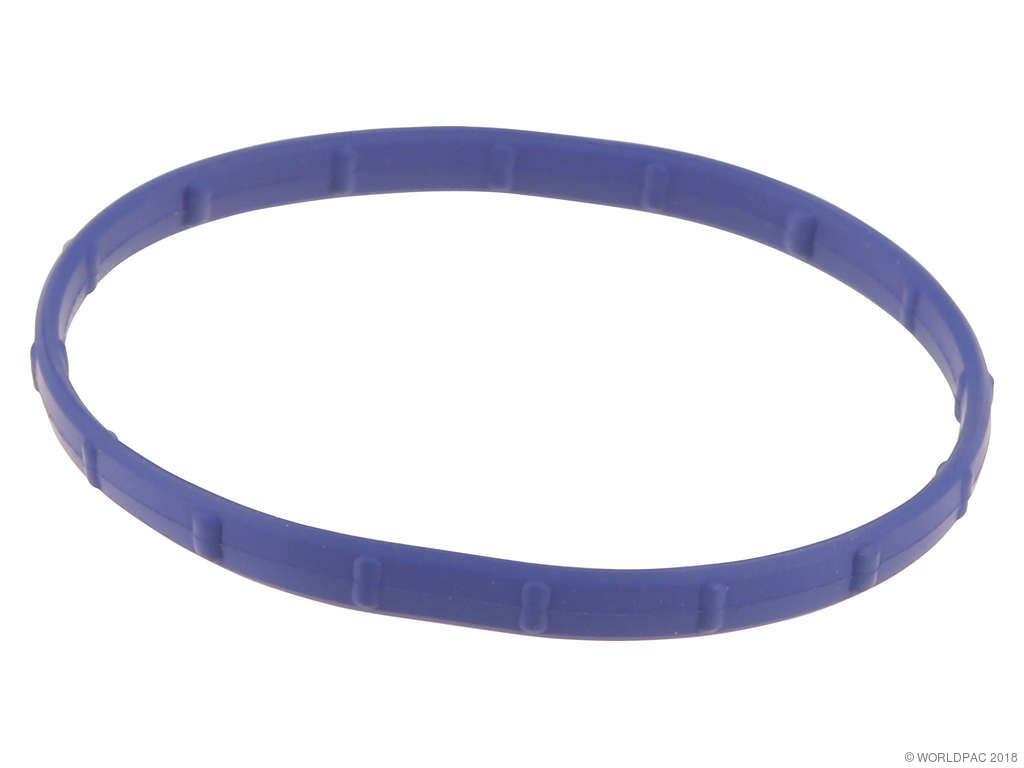
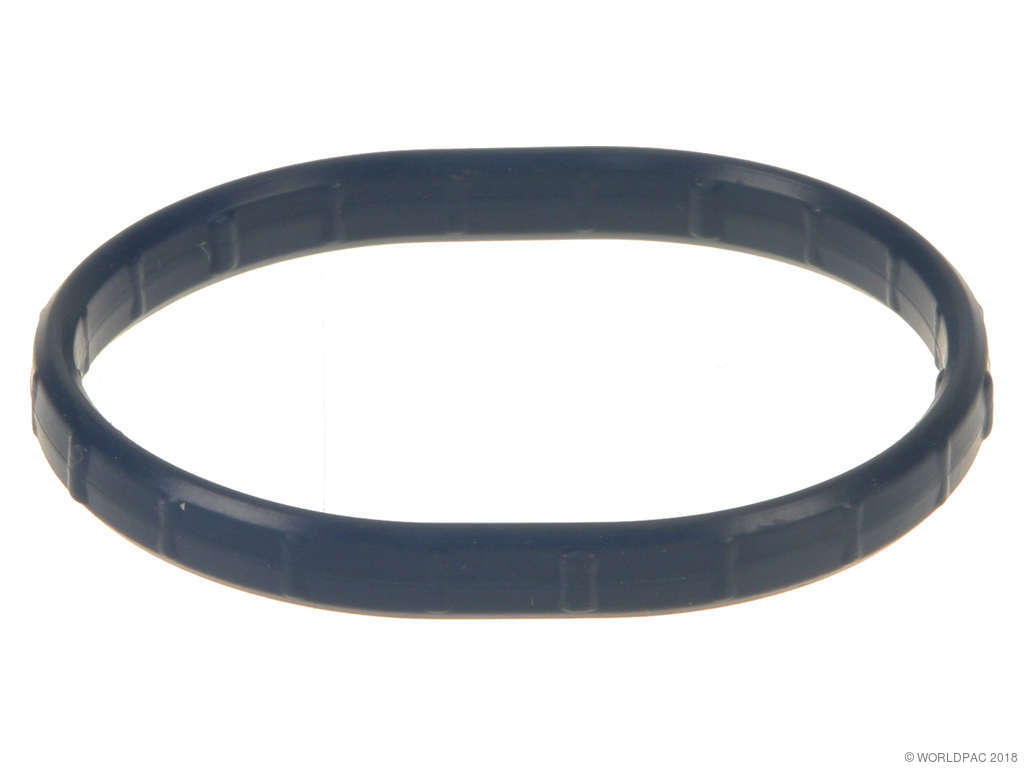
Aftermarket price range: $300-$500 - Intake Manifold Gasket Set
(OEM #4R3Z-9439-AA (Upper to Lower Manifold Gaskets))— These are single-use gaskets and must be replaced anytime the intake manifold is removed for service.
Trusted brands: Fel-Pro, Motorcraft
OEM price range: $40-$60
Aftermarket price range: $25-$40
Related Codes That Often Appear With This One
- P2004 — This code means 'Intake Manifold Runner Control Stuck Open (Bank 1)', indicating a mechanical problem with the flaps or linkage, which is a common root cause for the P2015 performance code.
- P2006 — This code means 'Intake Manifold Runner Control Stuck Closed (Bank 1)', which also points to a mechanical jam or actuator failure preventing movement.
- P2008 — This code indicates an 'Intake Manifold Runner Control Circuit/Open (Bank 1)', pointing more specifically to an electrical issue like a broken wire or failed actuator motor, which would also cause the P2015 performance code.
- P2007 — This code means 'Intake Manifold Runner Control Stuck Closed (Bank 2)'. While P2015 is for Bank 1, a failure of the IMRC system can sometimes trigger codes for both banks if the issue is severe.
Technical Service Bulletins (TSBs) & Recalls
- TSB 06-7-10: MIL ON WITH DTC P2004 THROUGH P2008, P151A, P2015, P2020—4.6L 3V. This bulletin provides diagnostic procedures for IMRC faults, including checking for binding flaps and linkage issues. It was superseded by TSB 07-10-06 but the diagnostic information remains relevant.
Platform-Specific Known Issues
- Ford TSB 06-7-10 was issued to address this code and related IMRC faults on the 2006 Explorer 4.6L 3V, indicating a recognized pattern of failure with the IMRC system.
- The placement of the IMRC actuator on the rear of the intake manifold, near the firewall, is the primary reason for the high labor cost of this repair. The entire intake manifold must be removed to gain access.
Mechanic-Grade Diagnostic Values
- IMRC/CMCV Position Sensor Voltage — expected: A smooth transition between approximately 0.5V (closed) and 4.5V (open) when commanded by a scan tool.. Failure: Voltage that is stuck, flat, erratic, or does not change when the actuator is commanded to move.
- IMRC Actuator Motor Resistance — expected: 100 - 10,000 ohms between the IMRC terminal and the VPWR (Voltage Power) terminal at the actuator connector.. Failure: Resistance outside of the 100-10,000 ohm range indicates a faulty actuator motor.
- IMRC Monitor Power Ground Resistance — expected: Less than 100 ohms between the PWR GND terminal at the actuator connector and a good chassis ground.. Failure: Resistance greater than 100 ohms indicates a poor ground connection, which can cause erratic operation.
Scan Tool Commands That Help
- Ford IDS (Integrated Diagnostic System) or equivalent professional scanner: Active Command: Intake Manifold Runner Control (IMRC or CMCV) On/Off or Open/Close — This bidirectional control is the primary method to test the IMRC system. It allows the technician to command the actuator motor to move the flaps while observing the corresponding position sensor voltage PID (IMRCM) to see if the system is responding correctly. Failure of the voltage to change smoothly indicates a mechanical or electrical fault in the actuator or sensor.
- Ford IDS (Integrated Diagnostic System): Datalogger: Monitor IMRC/CMCV PIDs — During a test drive, monitoring the IMRC command and position PIDs can reveal if the PCM is commanding movement at the correct RPM (typically above ~2000-3000 RPM under load) and if the actuator is responding as expected under real-world conditions.
Wiring & Ground Locations
- IMRC/CMCV Actuator Connector — Rear of the intake manifold, near the firewall, on the Bank 1 (passenger) side.. This 4-pin connector provides power, ground, and the command/position signals for the actuator. It is in a high-heat area and is a common point for wiring damage, melting, or corrosion.
- G102 / G103 — Engine compartment, right (passenger) side.. A forum post referencing wiring diagrams indicates that the ground for the IMRC module is shared with other critical sensors via splice S108, which traces back to grounds G102 and G103. A poor ground at this location could cause a range/performance code like P2015 due to an unstable signal.
- IMRC Actuator Connector Pinout (General 4.6L 3V) — At the actuator itself.. A schematic for a similar 4.6L 3V application shows the following pins: Pin 1 (VT/OG) - Control, Pin 2 (GY/RD) - Monitor (position signal), Pin 3 (YE/LG) - 5V Reference, Pin 4 (BK/WH) - Signal Return (Ground). This allows for targeted voltage and continuity checks at the connector to isolate a wiring fault from a component failure.
Real Owner Repair Stories
- YouTube video by Hunter Wilson (2015-2017 Ford F-150 5.0L (Note: Different engine but identical IMRC system failure mode and diagnosis)) — Check engine light with IMRC codes (P2004, P2005, P2006, P2015 mentioned), poor engine performance, surging idle.
❌ Tried (didn't work) Initially replacing only the intake manifold (with a Dorman unit) did not solve the problem. The codes and performance issues returned.
✅ What actually fixed it The final fix required replacing the IMRC actuators on the back of the manifold as well. The owner concluded that when the plastic components inside the manifold fail, it often damages the actuators, and both should be replaced together. The total cost after a dealer diagnosis and a second repair at another shop was around $2,000.
OEM Part Supersession History
6L2Z-9E928-A→6L2Z9B989D (Motorcraft)— Part number update/consolidation.
Heads up: While 6L2Z-9E928-A is the actuator kit, some parts lookups show 6L2Z9B989D as a related throttle position sensor, which can be confusing. The actuator (CMCV motor) is the relevant part for the P2015 mechanical/electrical fault. Ensure you are ordering the actuator motor kit, not just a sensor.
Diagnostic Flowchart
Other Known Issues on This Vehicle
Issues unrelated to this code that are worth knowing about as an owner of this generation:
- 6R60 Automatic Transmission Failure 🔴 High — Very common in 2006-2008 models, often appearing between 90k-150k miles. Symptoms include harsh/erratic shifting, 'bump' on downshifts, and complete failure. (Ref: Multiple TSBs were issued for shift quality, but major failures often relate to the internal mechatronic (valve body) unit.)
- Leaking Plastic Thermostat Housing 🟠 Medium — Extremely common failure point. The plastic housing can warp or crack, leading to significant coolant leaks and potential for overheating. (Ref: No specific TSB, but it is a widely documented problem in owner forums and repair videos.)
- Two-Piece Spark Plug Breakage During Removal 🔴 High — A notorious issue on all Ford 3-Valve engines of this era (4.6L, 5.4L). Carbon buildup causes the plug's lower electrode shield to seize in the head, breaking off during removal. (Ref: TSB 08-7-6 was issued with a specific, complex removal procedure.)
- Corroded Fuel Pump Driver Module (FPDM) 🟠 Medium — Common issue where the aluminum module, mounted to the steel frame near the spare tire, corrodes and fails, causing no-start or stalling conditions. (Ref: No recall, but a well-known design flaw across many Ford trucks and SUVs of the era.)
Used vs. New Parts: Buying Guide for This Vehicle
When a used part is the smart pick: A used part is generally NOT recommended for this repair. The primary failure modes are wear and tear on plastic components (actuator gears, internal flaps) and heat-cycle fatigue of the electronic motor. A used part carries a high risk of having the same wear or being near failure.
Donor-vehicle mileage cap: roughly under 60000 miles for the part to have meaningful remaining life.
What to inspect on the donor part:
- If buying a used intake manifold, manually actuate the runner flaps by hand. They must move smoothly with no binding or sticking.
- Visually inspect the plastic linkage arms for any stress marks, cracks, or signs of previous repair.
- For a used actuator, inspect the connector for any signs of melting, corrosion, or broken pins.
OEM-only on this vehicle (don't cheap out):
- Intake Manifold Runner Control (IMRC) Actuator
Aftermarket brands forum-validated for this vehicle:
- Dorman (for Intake Manifold): Multiple forum users and videos report successful installations of the Dorman intake manifold assembly, noting it's a viable alternative to the more expensive OEM part.
Brands owners have reported issues with on this vehicle:
- Dorman (for other electronics): While the Dorman intake manifold is generally accepted, some users express caution about other Dorman electronic parts like cam phasers, suggesting a case-by-case evaluation of their products.
Real Owner Stories
Aggregated from forums and TSBs cited above. Mileages and costs reflect what owners reported in those sources.
2006 Ford Explorer 4.6L 3V
Symptoms: Check engine light for P2004/P2005 (stuck open codes) and visible issues with the manifold runner control.
What fixed it: Complete removal of the intake manifold to replace the IMRC actuator motor.
Cost: $280-$280
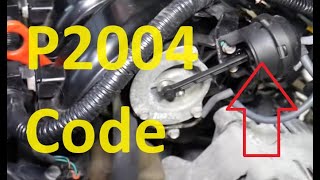
Source hint: YouTube video by 'Haze Gray and Underway' titled 'P2004 / P2005 Code, Manifold Runner Control Stuck Open 2006 Ford Explorer 4.6L'
Related OBD-II Codes
Frequently Asked Questions
Is there a technical service bulletin for P2015 on my 2006 Ford Explorer 4.6L 3V?
Can I replace the IMRC actuator on my Explorer without removing the intake manifold?
Why does my Explorer make a clicking or buzzing sound from the back of the engine when I turn it on?
If my intake runner flaps are sticking, can I buy just the flaps for my 4.6L 3V engine?
What is the estimated cost for the IMRC actuator part for a 2007 Explorer?
Are there any other common issues I should look out for while repairing the IMRC system on my 4.6L 3V?
Helpful Videos

We Have This Part in Stock


The information in this article is provided for general reference and educational purposes only. Vehicle specifications, procedures, and part compatibility can vary by production date, trim level, and region. Always consult your vehicle's factory service manual and verify part numbers before purchasing or performing repairs. Safety-critical components such as airbags, seat belts, and braking systems should be installed by a qualified professional.
- Ford Explorer:
- 🧭 Diagnostic Flowchart
- 🎬 Helpful Videos
- 🛍️ Shop This Part
- What's Unique About the 2006-2007 Ford Explorer
- Symptoms You May Notice
- Most Likely Causes
- Rare But Worth Checking
- Diagnosis Steps
- Parts You'll Likely Need
- Related Codes That Often Appear With This One
- Technical Service Bulletins (TSBs) & Recalls
- Platform-Specific Known Issues
- Mechanic-Grade Diagnostic Values
- Scan Tool Commands That Help
- Wiring & Ground Locations
- Real Owner Repair Stories
- OEM Part Supersession History
- Other Known Issues on This Vehicle
- Used vs. New Parts: Buying Guide for This Vehicle
- Real Owner Stories
- 2006 Ford Explorer 4.6L 3V
- Related OBD-II Codes
- Frequently Asked Questions
- 🎟️ Get 5% Off