

P2015 on 2007-2017 Jeep Compass: Intake Manifold Runner Sensor Causes and Fixes
On a 2007-2017 Jeep Compass, code P2015 is most often caused by carbon buildup making the intake runner flaps stick, or a failed actuator motor. Cleaning the flaps may work, but replacing the intake manifold assembly is the most common and permanent fix. The issue is widespread across vehicles with the 2.4L World Engine, including the Jeep Patriot and Dodge Caliber.
- P2015 on a 2007-2017 Jeep Compass usually points to a mechanical problem with the intake manifold, not just a bad sensor.
- The most likely cause is that the runner flaps inside the plastic manifold are stuck with carbon, which may have also damaged the actuator motor.
- Diagnosis involves using a scan tool to command the actuator and physically checking if the flaps can move after removing the actuator motor.
- While replacing just the actuator is possible, the most reliable, long-term repair is often replacing the entire intake manifold assembly (OEM Part # 4884495AK).
- This is a very common issue shared with platform-mates like the Jeep Patriot and Dodge Caliber with the 2.4L World Engine.
What's Unique About the 2007-2017 Jeep Compass

The first-generation Jeep Compass, particularly with the 2.4L 'World Engine', is known for issues with its plastic intake manifold. Unlike many vehicles where this code points to a simple sensor failure, on the Compass it's frequently a mechanical problem. The runner flaps inside the manifold become clogged with carbon and oil deposits from the PCV system, causing them to bind or stick. This strain then leads to the position sensor reporting an incorrect value or the actuator motor failing entirely.
Symptoms You May Notice
- Check Engine Light is on
- Reduced engine power and poor acceleration, especially at higher RPMs
- Rough or unstable idle
- Decreased fuel economy
- Hesitation when accelerating
- Whistling or hissing sounds from the engine bay, indicating a possible vacuum leak from a cracked manifold
- In rare cases, a crank-no-start condition
- Replacing the position sensor first. The sensor is integrated into the actuator motor assembly. While the code names the sensor, the root cause on this Jeep is almost always mechanical (stuck flaps) or a failed actuator motor, not an independently faulty sensor.
- Replacing only the actuator motor when the flaps are seized. If the new motor is installed without freeing the flaps, it will quickly burn out, and the code will return.
Most Likely Causes

- Stuck/Binding Intake Manifold Runner Flaps 🔴 High Probability → Shop Engine Intake Manifold The 2.4L World Engine is notorious for heavy carbon and oil buildup inside the plastic intake manifold, which causes the runner flaps to seize. This is the most common root cause for P2015 on this platform.
How to confirm: Remove the runner control actuator motor (held by three screws). Attempt to move the flap linkage manually with a tool where the actuator engages. If it is very stiff, gritty, or won't move, the flaps are stuck. A visual inspection after removing the manifold will show heavy carbon deposits.
Typical fix: Thoroughly clean the intake manifold and flaps. However, cleaning is often a temporary solution. The most permanent fix is to replace the entire intake manifold assembly, which includes new flaps.
Est. part cost: $200-$450 for a new manifold assembly - Faulty Intake Manifold Runner Control (IMRC) Actuator 🟡 Medium Probability → Shop Engine Intake Manifold The actuator motor can burn out from the strain of trying to move stuck runner flaps, or it can fail internally on its own. It is often replaced as a precaution even if the flaps are the primary issue.
How to confirm: Use a bidirectional scan tool to command the actuator on and off. Listen for a buzzing sound and watch live data. If there is no sound or movement, test the connector for power (5V reference on Yellow/Pink wire), ground (Dark Blue/Dark Green wire), and the PWM signal from the PCM (Brown/Violet wire). If power and ground are present but the motor doesn't work, it has failed.
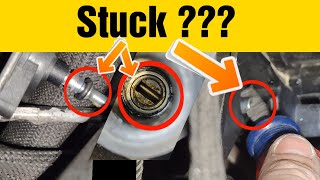
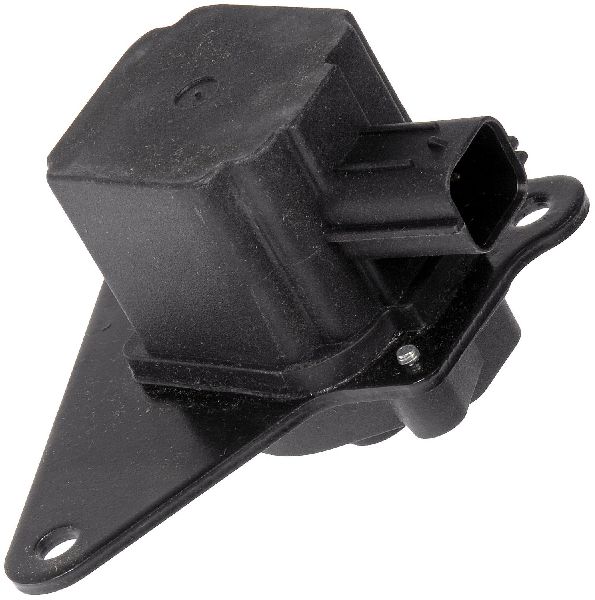
Typical fix: Replace the IMRC actuator motor. Common aftermarket part is Dorman 911-902. 🎬 Watch: How to replace the runner control actuator motor
Est. part cost: $50-$150 - Cracked or Failed Intake Manifold ⚪ Low Probability → Shop Engine Intake Manifold The plastic intake manifolds on this platform are known to develop cracks over time due to heat cycles and vibration, causing vacuum leaks that can affect runner operation or throw other codes.
How to confirm: Perform a visual inspection for cracks, especially around the seams and mounting points. A smoke test is the most definitive way to identify vacuum leaks from the manifold body or gaskets.
Typical fix: Replace the entire intake manifold assembly.
Est. part cost: $200-$450 - Wiring or Connector Issue ⚪ Low Probability
How to confirm: Visually inspect the wiring harness and connector going to the IMRC actuator for signs of damage, corrosion, or loose pins. The connector has a red locking tab that can become brittle. Use a multimeter to check for 5V reference, good ground (<50mV), and signal voltage at the connector pins.
Typical fix: Repair the damaged section of the wiring harness or replace the connector pigtail.
Est. part cost: $10-$50
Rare But Worth Checking
- A weak or failing battery can cause transient, erroneous codes to be stored during startup, including P2015. One owner on Reddit reported the code disappeared after replacing a faulty battery.
- In very rare instances, a faulty Powertrain Control Module (PCM) can be the cause, especially if there is no spark and other related codes are present.
Diagnosis Steps

- Scan the vehicle for any other stored trouble codes to get a full picture of the issue. Note codes like P2004, P2006, or P2017.
- Connect a bidirectional scan tool. Navigate to the IMRC actuator test or view live data for the IMRC position sensor.
- Command the runner flaps to open and close. Watch the live data for the position sensor percentage and listen for the actuator motor buzzing.
- If the motor buzzes but the sensor position doesn't change or changes slowly, the flaps are likely stuck or the linkage is broken. Proceed to physically inspect the manifold.
- If no sound is heard from the motor, check the electrical connector. Disconnect it and check for 5V reference on the Yellow/Pink wire and good ground (less than 50mV) on the Dark Blue/Dark Green wire with the key on.
- If power and ground are good, the actuator motor has likely failed and needs replacement.
- To confirm stuck flaps, remove the actuator motor (typically held by two 10mm and one 8mm screws). This requires removing the airbox for access. Insert a screwdriver or pick into the slot on the manifold where the actuator engages and try to rotate the flaps manually. If they are seized, the manifold must be cleaned or replaced.
- If the manifold is removed, inspect it carefully for cracks, especially around mounting points and seams. A smoke test is recommended if a vacuum leak is suspected.
Parts You'll Likely Need

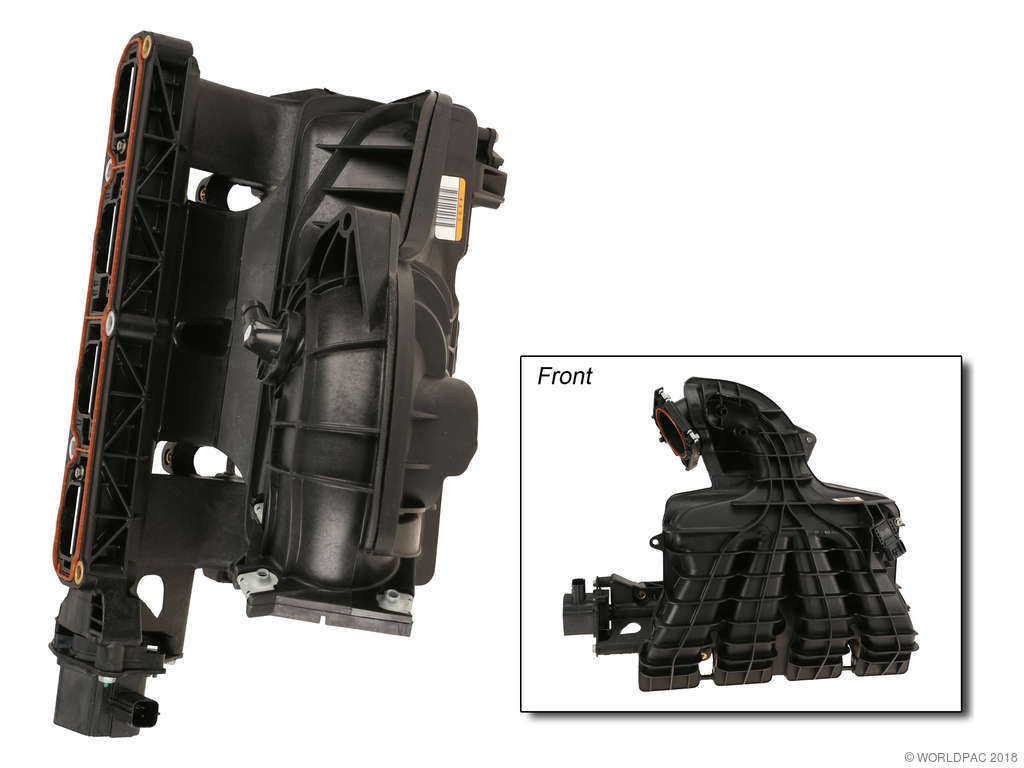
- Intake Manifold Assembly
(OEM #4884495AK)— This is the most common and permanent fix, as it replaces the manifold housing, the problematic internal flaps, actuator motor, and sensor all at once. The OEM part has been superseded multiple times (from 4884495AD, AF, AG, AH, AI, AJ), indicating revisions to the design.
Trusted brands: Mopar, Dorman (615-801), SKP (SK615116)
OEM price range: $350-$470
Aftermarket price range: $180-$300 - Intake Manifold Runner Control Actuator
(OEM #4884549AD)— If diagnosis confirms the flaps move freely but the motor is dead, replacing only the actuator is a cost-effective repair. However, some owners report aftermarket versions failing prematurely.
Trusted brands: Mopar, Dorman (911-902), Standard Motor Products (IMRC4)
OEM price range: $100-$180
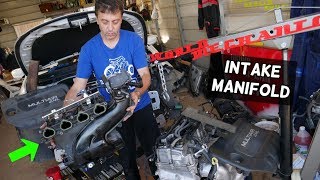
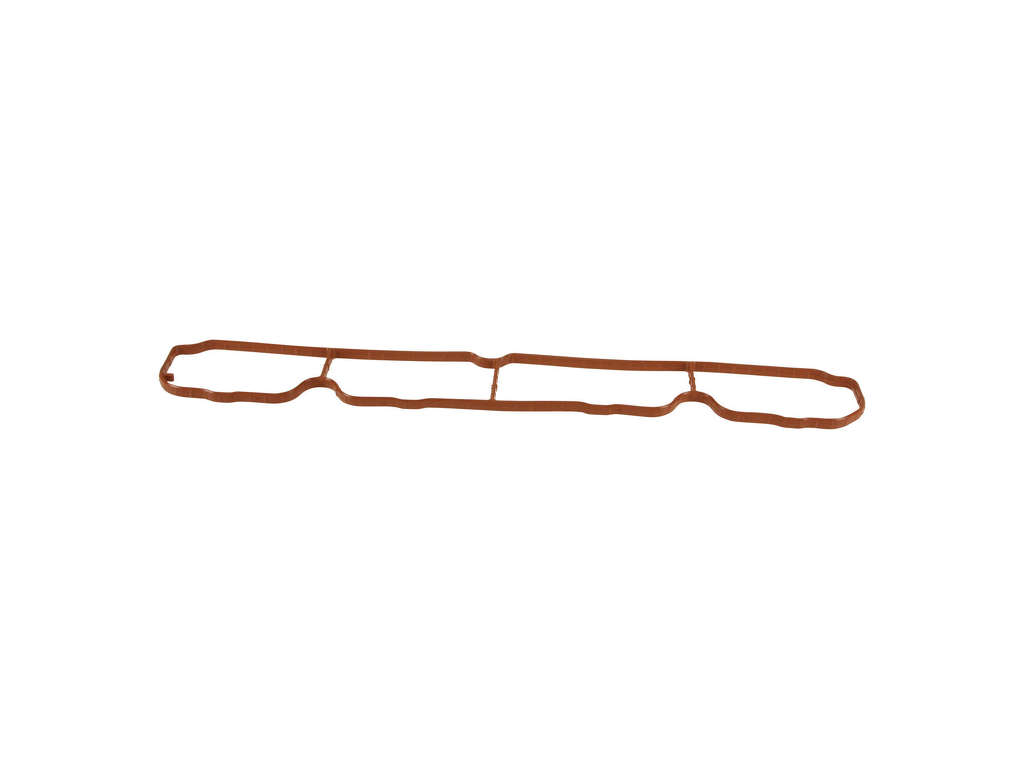
Aftermarket price range: $60-$100 - Intake Manifold Gasket Set — These must be replaced any time the intake manifold is removed to ensure a proper seal and prevent vacuum leaks. 🎬 See this step-by-step intake manifold and gasket replacement
Trusted brands: Fel-Pro (MS 97400 or MS 96840), Mahle, Mopar
OEM price range: $20-$40
Aftermarket price range: $9-$25
Related Codes That Often Appear With This One
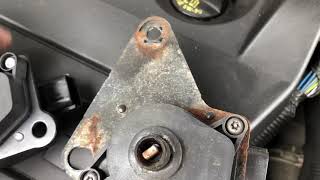
- P2004 — This code means 'Intake Manifold Runner Control Stuck Open'. It often appears with P2015 because the underlying mechanical issue—stuck flaps—can cause the system to be stuck in the open position. 🎬 Watch: How to repair P2004 and P2006 runner codes
- P2006 — This code means 'Intake Manifold Runner Control Stuck Closed'. It can appear alongside P2015 if the flaps are seized in the closed position.
- P2017 — This code for 'Intake Manifold Runner Position Sensor/Switch Circuit High' can also accompany P2015, pointing to the same set of electrical or mechanical faults within the IMRC system.
Technical Service Bulletins (TSBs) & Recalls
- While no specific TSB for the Jeep Compass and P2015 was found, Volkswagen Group issued TSB 24-17-04 for a similar issue on their 2.0T engines, citing DTCs P2014 and P2015. Their diagnostic procedure involves checking for vacuum line restrictions and internal separation of the manifold
Platform-Specific Known Issues
- The 2.4L World Engine used in the Compass, Patriot, and Dodge Caliber is widely known for having intake runner flaps that get stuck due to carbon buildup.
- Some owners in cold climates have reported the P2015 code appearing after disconnecting and reconnecting the battery in freezing temperatures, suggesting the flaps may become temporarily stuck due to the cold. The code sometimes cleared after the engine warmed up and was revved past 4000 RPM several times.
Mechanic-Grade Diagnostic Values
- IMRC Actuator Connector - Sensor 5V Reference — expected: 5.0 volts. Failure: Significantly lower or no voltage indicates a PCM or wiring issue.
- IMRC Actuator Connector - Sensor Ground — expected: Less than 50 mV. Failure: Higher voltage indicates a bad ground connection.
- IMRC Actuator Connector - Signal Wire (unplugged, key on) — expected: Approximately 5.0 volts. Failure: No voltage may indicate a wiring or PCM issue.
- IMRC Position Sensor Live Data (Scan Tool) — expected: Voltage should sweep smoothly, for example from ~0.5V to ~4.5V, as the flaps are commanded to move.. Failure: Voltage is stuck, does not change, or changes erratically, indicating a stuck flap or failed sensor/actuator.
Scan Tool Commands That Help
- JScan / High-End Aftermarket Scanners: IMRC Actuator Test / Intake Runner Control Test — Use this bidirectional command to force the actuator motor to cycle. This allows you to listen for motor operation and watch live data for the position sensor's response simultaneously, helping to isolate the failure to the motor, sensor, or mechanical flap linkage.
Wiring & Ground Locations

- IMRC Actuator Connector Pinout — On the IMRC actuator motor, located on the side of the intake manifold.. Knowing the pinout is critical for testing the electrical integrity of the circuit. The pins are: Yellow/Pink (5V reference), Dark Blue/Dark Green (sensor ground), Yellow/Dark Blue (signal), Brown/Violet (motor power), and Black/White (motor ground).
- Engine Ground Strap — A common ground strap location on Jeeps is from the engine block or motor mount to the chassis/frame rail in the engine bay.. A corroded or broken main engine ground strap can cause a variety of electrical issues and erroneous sensor readings, including P2015. The IMRC actuator's ground circuit relies on a solid engine-to-chassis ground. A visual inspection of these straps for integrity is a wise preliminary check for any electrical fault code.
Real Owner Repair Stories
- Reddit user Sweet_Tour83 on r/JeepPatriot (2012 Jeep Patriot Sport) — P2015 code and Check Engine Light appeared immediately after reinstalling the battery. The car would not start on its own prior to this.
❌ Tried (didn't work) Charging the old battery.
✅ What actually fixed it Replacing the weak/failing battery with a new one. After the new battery was installed, the Check Engine Light and the P2015 code both cleared without any further intervention. - NHTSA ODI #11497786 — An owner of a related model reported that the intake manifold flow valve and the manifold itself were replaced, but the vehicle threw code P2015 for the same issue just one month later. The owner replaced the valve again three days later, suspecting a faulty part.
Model Year Variations Within This Range
- 2011-2017: The Jeep Compass received a facelift in 2011, but the 2.0L and 2.4L World Engines and associated intake manifold design remained largely the same through 2017, meaning the P2015 issue is common across the entire 2007-2017 generation.
Diagnostic Flowchart
Used vs. New Parts: Buying Guide for This Vehicle
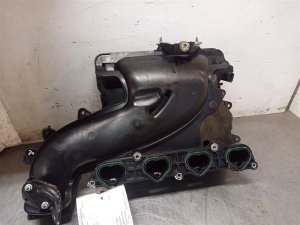
When a used part is the smart pick: A used intake manifold is generally NOT recommended for this repair. The primary failure mode is internal wear and carbon buildup, which will likely be present in a used part from a junkyard. A used part should only be considered if it is from a very low-mileage, verified donor vehicle and can be thoroughly inspected for flap movement before purchase.
Donor-vehicle mileage cap: roughly under 30000 miles for the part to have meaningful remaining life.
What to inspect on the donor part:
- Verify the donor vehicle's mileage is low.
- Manually actuate the runner flap linkage through the actuator port; it must move smoothly with no binding or gritty feeling.
- Inspect the actuator mounting points for cracks.
- Look inside the intake ports for excessive oil and carbon buildup.
OEM-only on this vehicle (don't cheap out):
- While not strictly 'OEM-only', the complete intake manifold assembly is the most reliable fix. Using a high-quality aftermarket assembly from a reputable brand is a viable alternative to Mopar.
Aftermarket brands forum-validated for this vehicle:
- Dorman (615-801 for manifold, 911-902 for actuator)
- SKP
- Fel-Pro (for gaskets)
Brands owners have reported issues with on this vehicle:
- Unbranded, no-name parts from online marketplaces should be avoided, as their internal components may be of poor quality and lead to premature failure.
Real Owner Stories
Aggregated from forums and TSBs cited above. Mileages and costs reflect what owners reported in those sources.
2016 Patriot 2.4L
Symptoms: Codes P2004, P2008, and P2017 returned shortly after replacing the IMRC actuator.
What fixed it: A mechanic diagnosed the root cause as a 'gunked up' intake manifold that prevented the flaps from moving. The recommended fix was a full intake manifold replacement.
Cost: $900-$900
Source hint: Reddit r/JeepPatriot - 'P2004, P2008, P2017'
Jeep with 2.4L World Engine
Symptoms: Code P2015 appeared after reconnecting the vehicle's battery in very cold weather (-25C).
What fixed it: The owner drove the vehicle until it was fully warmed up and then revved the engine above 4000 RPM multiple times, which forced the flaps to cycle and cleared the code without parts replacement.
Source hint: JEEP4X4CLUB - 'Ошибка 2015' (Error 2015)
2013 Compass
Symptoms: The vehicle had a crank-no-start condition and was also storing code P2015.
What fixed it: The P2015 code was a secondary issue. The no-start condition was ultimately traced to a lack of spark, indicating a potential PCM failure, not a problem with the intake manifold runner.
Source hint: 2CarPros.com - 'Code P2015, Crank No Start?'
Related OBD-II Codes
Frequently Asked Questions
What is the most common reason for a P2015 code on my 2.4L Jeep Compass?
I replaced the IMRC actuator motor, but the check engine light for P2015 came back. What should I check next?
Can cold weather cause the P2015 code to appear on my Compass?
Is cleaning the intake manifold a permanent fix for P2015?
My Compass has a P2015 code and a crank-no-start condition. Are they related?
What is a common aftermarket part number for the IMRC actuator on this vehicle?
Helpful Videos
Used OEM Parts in Stock
New Aftermarket Parts Available


The information in this article is provided for general reference and educational purposes only. Vehicle specifications, procedures, and part compatibility can vary by production date, trim level, and region. Always consult your vehicle's factory service manual and verify part numbers before purchasing or performing repairs. Safety-critical components such as airbags, seat belts, and braking systems should be installed by a qualified professional.
- Jeep Compass:
- 🧭 Diagnostic Flowchart
- 🎬 Helpful Videos
- 🛍️ Shop This Part
- What's Unique About the 2007-2017 Jeep Compass
- Symptoms You May Notice
- Most Likely Causes
- Rare But Worth Checking
- Diagnosis Steps
- Parts You'll Likely Need
- Related Codes That Often Appear With This One
- Technical Service Bulletins (TSBs) & Recalls
- Platform-Specific Known Issues
- Mechanic-Grade Diagnostic Values
- Scan Tool Commands That Help
- Wiring & Ground Locations
- Real Owner Repair Stories
- Model Year Variations Within This Range
- Used vs. New Parts: Buying Guide for This Vehicle
- Real Owner Stories
- 2016 Patriot 2.4L
- Jeep with 2.4L World Engine
- 2013 Compass
- Related OBD-II Codes
- Frequently Asked Questions
- 🎟️ Get 5% Off