

P2096 on 2011-2018 Ram 2500 5.7L/6.4L HEMI: Exhaust Leak & O2 Sensor Causes
On a 2011-2018 Ram 2500 with a HEMI engine, P2096 is almost always caused by an exhaust leak from broken exhaust manifold bolts, known as the 'Hemi tick'. Before replacing any parts, inspect the passenger side exhaust manifold for leaks. If no leak is found, the next most likely cause is a faulty downstream oxygen sensor. For some model years, a dealer software update (TSB) is the required fix.
- Always check for an exhaust leak at the passenger side manifold first. Listen for a 'tick' when the engine is cold.
- Broken exhaust manifold bolts are the most common cause of P2096 on this truck.
- Before replacing any parts, check with a dealer to see if a PCM software update (TSB) is available for your VIN.
- If you replace the O2 sensor, use a quality OEM or OE-equivalent brand like Mopar, NTK, or Denso to avoid compatibility issues.
- Do not replace the expensive catalytic converter unless all other possibilities (leaks, sensors, software) have been completely ruled out.
What's Unique About the 2011-2018 Ram 2500
For this generation of Ram HD trucks, the P2096 code is exceptionally common and has two very platform-specific causes. First, the 5.7L and 6.4L HEMI engines are notorious for breaking exhaust manifold bolts, particularly the ones closest to the firewall. This happens because the cast iron exhaust manifolds expand and contract at a different rate than the steel bolts threaded into the aluminum cylinder heads, causing the bolts to shear from thermal stress. This creates an exhaust leak that pulls in fresh air, tricking the O2 sensor and causing the code. Secondly, Ram has issued several Technical Service Bulletins (TSBs) indicating the original PCM software was too sensitive, requiring a dealer-performed software update to resolve the issue, especially on 6.4L models.
Generation note: The 2011-2018 year range primarily covers the fourth-generation Ram truck. However, the underlying causes, particularly the tendency for HEMI exhaust manifold bolts to break, are consistent across this period. TSBs for software updates are specific to certain model years within this range, such as TSB 18-066-16 for 2011 5.7L engines and TSB 18-096-16 for 2014 6.4L engines.
Symptoms You May Notice
- Check Engine Light is on
- Audible 'ticking' noise from the engine bay, especially when cold (the 'Hemi tick'), that may quiet down as the engine warms.
- Reduced fuel economy
- Rough or unstable idle
- Possible exhaust fumes in the cabin if the leak is severe.
- Replacing the oxygen sensor before checking for exhaust leaks. This is the most common mistake, as a new sensor will still report a lean condition if a leak is present.
- Replacing the upstream (Bank 1, Sensor 1) O2 sensor instead of the downstream (Bank 1, Sensor 2) sensor that this code relates to.
- Replacing the catalytic converter when the actual problem is a simple leak, a bad sensor, or a software issue.
- Confusing the 'Hemi tick' with a valvetrain or lifter noise, delaying the correct exhaust leak diagnosis.
Most Likely Causes
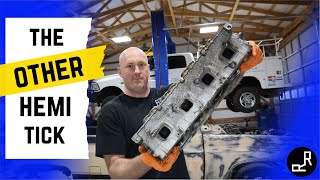
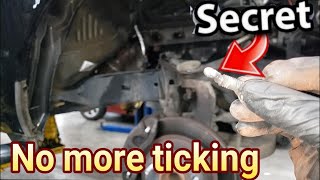
- Exhaust Leak (Broken Manifold Bolts) 🔴 High Probability The cast iron exhaust manifolds on HEMI engines expand and contract at a different rate than the steel bolts, causing the bolts (especially the rearmost ones on the passenger side) to shear off over time. This is a widely documented design issue. 🎬 Watch: Identifying the most common Hemi tick cause and fix.
How to confirm: Listen for a ticking noise from the passenger side wheel well on a cold start; it may quiet down as the engine warms and the metal expands. Visually inspect the exhaust manifold bolts, particularly the ones nearest the firewall, for missing heads or rust trails. Black soot around the manifold-to-head mating surface also indicates a leak. A definitive method is a smoke test, or spraying soapy water on the cold manifold while introducing air into the tailpipe and looking for bubbles.
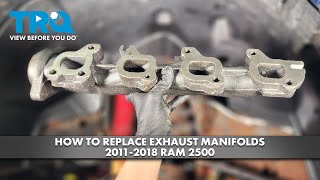
Typical fix: Replace the broken exhaust manifold bolts and the manifold gasket. It is highly recommended to replace all bolts on that bank, not just the broken one. If the manifold is warped from heat, it must be replaced or resurfaced. Extracting broken bolt shafts may require drilling and tapping. 🎬 See this full walkthrough for replacing 6.4L Hemi exhaust manifolds.
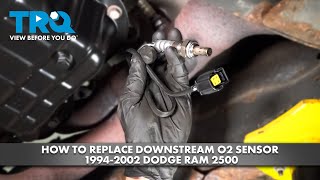
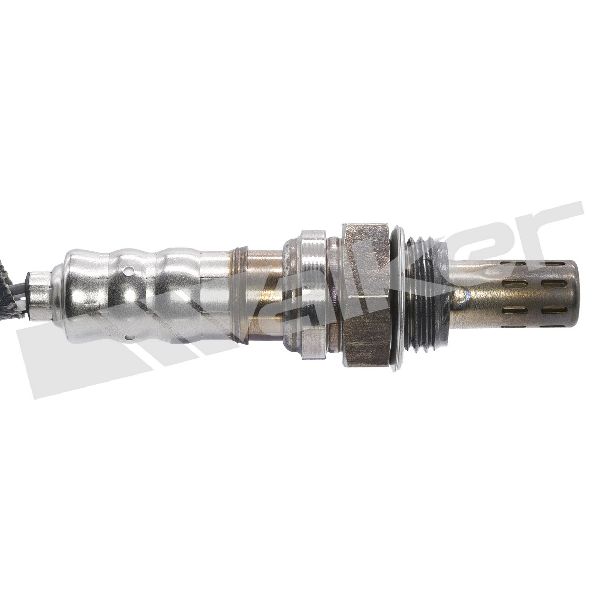
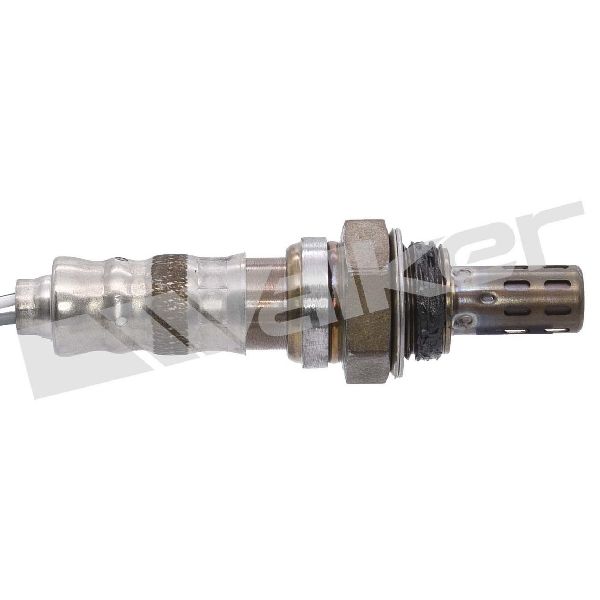
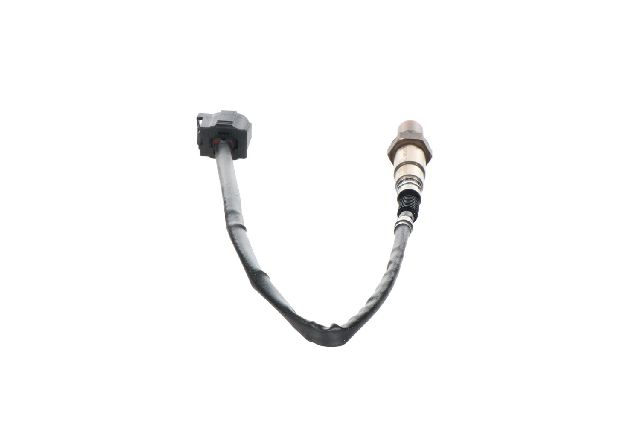
Est. part cost: $40-$850 - Faulty Downstream Oxygen (O2) Sensor 🟡 Medium Probability → Shop Oxygen Sensor O2 sensors are wear items and eventually fail. They can become 'lazy' or biased, sending inaccurate lean signals to the PCM. Wiring can also become damaged from heat or road debris.
How to confirm: Use a scan tool to monitor the voltage of the Bank 1, Sensor 2. A healthy downstream sensor should show a relatively stable voltage, typically between 0.5V and 0.8V on a warm engine. If it's stuck low (e.g., below 0.2V) or fluctuates rapidly like the upstream sensor, it is likely faulty (assuming no exhaust leak). Swapping the Bank 1 and Bank 2 downstream sensors and seeing if the code changes to P2098 (for Bank 2) can also confirm a bad sensor.
Typical fix: Replace the Bank 1, Sensor 2 (downstream, passenger side) oxygen sensor. Using high-quality OEM (Mopar) or OE-supplier brands like NTK or Denso is highly recommended, as these trucks can be sensitive to aftermarket sensors.
Est. part cost: $50-$150 - PCM Software Update Required ⚪ Low Probability Ram issued TSBs because the original PCM software was overly sensitive and could falsely trigger P2096. This is particularly noted for 2014 6.4L engines and 2011 5.7L engines. Manufacturer service bulletins such as TSB Bulletin #18-096-16 and TSB Bulletin #18-042-15 explicitly identify P2096 as a code that can be falsely set on DD/DP vehicle platforms.
How to confirm: Contact a Ram dealership with your vehicle's VIN and ask them to check if TSB #18-096-16 (for 2014 6.4L), #18-042-15 (for 2014 6.4L), or #18-066-16 REV. A (for 2011 5.7L) apply and have not been performed.
Typical fix: A Ram dealer must reprogram the Powertrain Control Module (PCM) with the updated software using their proprietary wiTECH scan tool. This may cost one hour of shop labor if not covered by warranty.
Est. part cost: $0-$200
Rare But Worth Checking
- Clogged or Failing Catalytic Converter: → Shop Catalytic Converter While a failing converter can cause this code, it's far less common than exhaust leaks or sensor failure. A symptom could be the converter glowing red after running. This should only be considered after all other possibilities are ruled out.
- Fuel Delivery Issues: A weak fuel pump or clogged injector could cause a true lean condition, but this would typically trigger other codes first, such as P0171 (System Too Lean Bank 1).
- Vacuum Leak: A significant vacuum leak in the intake system can introduce unmetered air, but like fuel issues, this usually sets an upstream lean code (P0171) before or alongside P2096.
Diagnosis Steps
- Check for TSBs: Contact a Ram dealer with your VIN to see if any software updates (like TSB 18-096-16, 18-042-15, or 18-066-16) are pending for your truck.
- Inspect for Exhaust Leaks: Perform a thorough visual and auditory inspection of the exhaust system on Bank 1 (passenger side). Listen for a 'ticking' sound on a cold start, using a mechanic's stethoscope or a long hose to pinpoint the source near the manifold. Look for broken manifold bolts or black soot trails near gaskets. A smoke test is the most effective way to find a leak.
- Analyze O2 Sensor Data: Use a scan tool to view live data for the Bank 1 Sensor 2 (downstream). The voltage should be relatively stable and above 0.5V on a fully warmed-up engine. If it's stuck low (below 0.2V), the sensor is reading lean.
- Test the O2 Sensor: If a leak is ruled out, consider swapping the downstream O2 sensors between Bank 1 and Bank 2. Clear the codes and drive the vehicle. If the code returns as P2098 (Bank 2), the sensor is confirmed to be faulty.
- Check Fuel System & Vacuum: If no leaks or sensor issues are found, check fuel pressure and inspect for vacuum leaks using a smoke machine or by carefully spraying carburetor cleaner around the intake manifold gaskets. These are less likely causes for an isolated P2096 code.
Parts You'll Likely Need
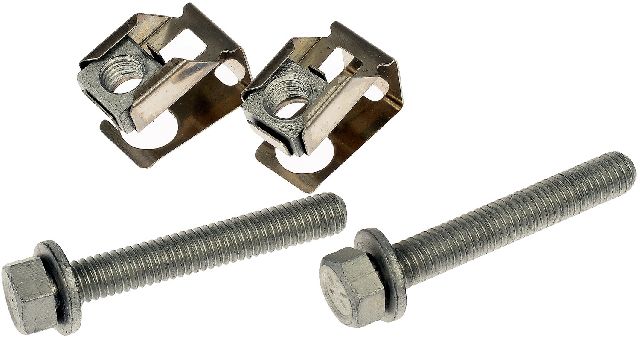
- Exhaust Manifold Gasket & Bolt Kit
(OEM #Gasket: 5045496AA; Bolts: 6507746AA or 6510140AA)— This is the most common repair due to the high frequency of broken exhaust manifold bolts on HEMI engines causing leaks.
Trusted brands: Mopar, Fel-Pro, Dorman
OEM price range: $70-$120
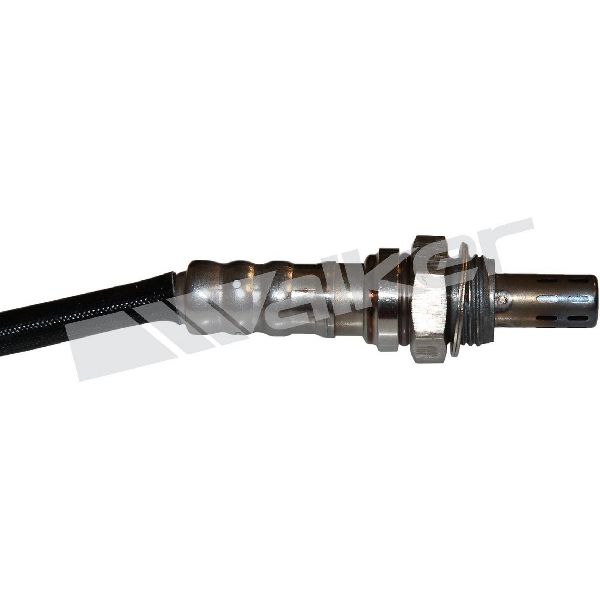
Aftermarket price range: $40-$80 - Downstream Oxygen Sensor (Bank 1, Sensor 2)
(OEM #56029049AA, 68090640AB (replaces 68090640AA))— If no exhaust leak is present, a failed O2 sensor is the next most likely cause. This is the sensor located on the passenger side, after the catalytic converter.
Trusted brands: Mopar, NTK, Denso
OEM price range: $80-$150
Aftermarket price range: $50-$100
Related Codes That Often Appear With This One
- P2098 — This is the same 'Post Catalyst Fuel Trim Too Lean' code but for Bank 2 (driver's side). If both appear, it points to a systemic issue like low fuel pressure, a major vacuum leak, or exhaust leaks on both manifolds. TSB 18-096-16 also lists both codes as 🎬 Watch: Understanding the relationship between P2096 and P2098 lean codes. being fixed by a software update.
- P0171 — This code means 'System Too Lean (Bank 1)' as detected by the *upstream* sensor. If you have both P0171 and P2096, it points more strongly towards a true lean condition (like a vacuum or fuel delivery problem) rather than just an exhaust leak fooling the downstream sensor.
- P0300 — This is a random misfire code. TSB #18-096-16 specifically links P0300 with P2096, suggesting the PCM software update is intended to address both issues, as an exhaust leak can sometimes be misinterpreted by the PCM.
Technical Service Bulletins (TSBs) & Recalls
- 18-096-16 — FLASH: 6.4L Diagnostic And System Improvements — This TSB involves a PCM software update for 2014 Ram trucks (DD/DP platforms) with the 6.4L engine. It specifically addresses falsely set P2096 and P2098 codes, along with other issues like cold idle misfires (P0300). This is an optional update to be performed if a customer complains of the specific symptoms.
- 18-042-15 — FLASH: Powertrain Diagnostic and System Improvements — An earlier version of the software update for 2014 Ram 2500/3500/4500/5500 trucks with the 6.4L engine. It also lists P2096 and P2098 as codes that can be resolved with the PCM reflash.
- 18-066-16 REV. A — Flash: Powertrain Diagnostic And System Enhancements — This TSB applies to 2011 Ram 2500/3500 models with the 5.7L engine. It involves reprogramming the PCM to correct a list of issues, including falsely set P2096, P2097, P2098, and P2099 codes.
Platform-Specific Known Issues
- HEMI Tick: The common term for the noise made by an exhaust leak from broken manifold bolts on 5.7L and 6.4L HEMI engines. This is a primary cause of P2096.
- Sensitive PCM Logic: Ram has issued multiple TSBs to update PCM software that was too sensitive and could trigger P2096 without a significant mechanical fault.
Mechanic-Grade Diagnostic Values
- Downstream O2 Sensor (1/2) Voltage at PCM Connector (Sensor Disconnected) — expected: 4.1 - 5.0 volts. Failure: Voltage outside this range indicates a problem with the PCM or wiring.
- Downstream O2 Sensor (1/2) Voltage at PCM Connector (Signal and Return Jumpered) — expected: Drops to 2.5 volts. Failure: Voltage does not drop, indicating a wiring issue between the connector and the PCM.
- Downstream O2 Sensor (1/2) Live Data at Idle (Warm Engine) — expected: Steady voltage between 0.45V and 0.8V.. Failure: Voltage stuck low (below 0.3V) or fluctuating rapidly like an upstream sensor.
- Fuel Pressure (5.7L HEMI) — expected: 57-58 PSI at the fuel rail.. Failure: Pressure significantly below this range indicates a weak fuel pump, clogged filter, or faulty regulator.
- O2 Sensor Heater Element Resistance — expected: Typically 3 to 25 Ohms when cold. A common NTK sensor for Dodge vehicles measures around 4.5 Ohms at 70°F.. Failure: An open circuit (infinite resistance) or a dead short (near zero resistance) indicates a failed heater element.
Scan Tool Commands That Help
- Professional Scan Tool (e.g., wiTECH): PCM VERIFICATION TEST — This is a post-repair function run to confirm that the fault has been rectified and the system is operating correctly.
- N/A - Manual Procedure: Repair Verification Drive Cycle — After a repair, drive the vehicle at a steady 50-60 mph for at least 10 minutes, then turn the ignition off for 5 seconds and repeat the drive cycle. This helps the PCM run its monitors and confirm the fix.
Wiring & Ground Locations
- PCM Ground Circuits — Multiple grounds connect to the PCM. A key ground wire runs from the harness below the PCM, along the passenger side fender. Other major grounds are located near the battery negative terminal.. A poor PCM ground can cause erratic sensor readings and incorrect fault codes. Technicians are warned not to probe PCM connectors directly to avoid damage; a special breakout box (Miller #8815) is required for proper testing.
- G304 — Listed as 'CENTER BODY' in service documents.. Body grounds are critical for the proper operation of various electronic modules, including the PCM which processes O2 sensor signals.
- O2 Sensor Connector (Bank 1, Sensor 2) — On the passenger side of the vehicle, on the exhaust pipe after the catalytic converter.. This connector and its wiring are exposed to heat and road debris, making them prone to damage. Wiggle-testing the harness while monitoring sensor voltage can reveal intermittent connections. The key circuits are the O2 Sensor Signal (K141) and O2 Return Downstream (K904).
OEM Part Supersession History
68090640AA→68090640AB— Part revision or manufacturer change.
Heads up: The new part number 68090640AB is the correct replacement for 68090640AA.
Diagnostic Flowchart
Used vs. New Parts: Buying Guide for This Vehicle
When a used part is the smart pick: An exhaust manifold is a good candidate for a used part. Since the failure mode is warping from heat cycles or cracks, a visually inspected, straight manifold from a lower-mileage donor vehicle is a viable, cost-effective alternative to a new OEM part.
Donor-vehicle mileage cap: roughly under 80000 miles for the part to have meaningful remaining life.
What to inspect on the donor part:
- Check for flatness across the cylinder head mating surface using a certified straight edge.
- Inspect for hairline cracks, especially around bolt holes.
- Ensure no broken-off studs are seized within the manifold.
- Prefer donors from regions without heavy road salt use to minimize corrosion and material fatigue.
OEM-only on this vehicle (don't cheap out):
- Oxygen Sensor: These trucks are notoriously sensitive to the calibration and heater characteristics of O2 sensors. Using non-OEM or cheap aftermarket sensors often fails to fix the code or causes new codes to appear.
- Catalytic Converter: While rarely the cause of P2096, if a replacement is needed, aftermarket converters can have different flow characteristics or catalyst materials that fail to meet the PCM's efficiency monitoring standards, leading to other codes like P0420.
Aftermarket brands forum-validated for this vehicle:
- O2 Sensors: NTK, Denso (These are often the original equipment suppliers to Mopar).
- Gaskets/Bolts: Fel-Pro, Dorman.
Real Owner Stories
Aggregated from forums and TSBs cited above. Mileages and costs reflect what owners reported in those sources.
2014 Ram 2500 6.4L HEMI V8 — ~75000 miles
Symptoms: Check Engine Light was on with code P2096. The owner also complained of a cold idle misfire.
What fixed it: A Ram dealer reprogrammed the Powertrain Control Module (PCM) with updated software as per the TSB.
Cost: $0-$200
Source hint: TSB 18-096-16
2013 Ram 2500 5.7L HEMI V8 — ~110000 miles
Symptoms: Owner heard the classic 'Hemi tick' from the passenger side of the engine bay, which was loudest on a cold start and quieted down as the truck warmed up. The Check Engine Light was also on.
What fixed it: Replaced broken exhaust manifold bolts and the manifold gasket on the passenger side (Bank 1).
Source hint: vehicle_specific_issues: HEMI Tick
2011 Ram 2500 5.7L HEMI V8 — ~95000 miles
Symptoms: The Check Engine Light illuminated, and a scan tool revealed code P2096 with no other obvious symptoms.
What fixed it: The dealer performed a PCM reflash according to the TSB to correct overly sensitive diagnostic logic.
Source hint: TSB 18-066-16 REV. A
2015 Ram 2500 5.7L HEMI V8 — ~125000 miles
Symptoms: Check Engine Light on, rough idle, and reduced fuel economy. No audible ticking was present.
What fixed it: After confirming no exhaust leaks, the Bank 1 Sensor 2 (downstream) oxygen sensor was replaced with an OEM Mopar part.
Source hint: common_causes: Faulty Downstream Oxygen (O2) Sensor
Related OBD-II Codes
Frequently Asked Questions
I hear a ticking noise from my HEMI engine on cold starts. Is this related to the P2096 code?
My 2014 Ram 2500 6.4L has a P2096 code but no obvious exhaust leak. What should I check first?
Does the P2096 code on my 2011 5.7L HEMI have a specific TSB I should know about?
How can I be sure my downstream O2 sensor is bad before replacing it?
The code points to Bank 1. Where is that on my Ram's HEMI engine?
If I replace the O2 sensor, does the brand matter?
Helpful Videos
We Have This Part in Stock


The information in this article is provided for general reference and educational purposes only. Vehicle specifications, procedures, and part compatibility can vary by production date, trim level, and region. Always consult your vehicle's factory service manual and verify part numbers before purchasing or performing repairs. Safety-critical components such as airbags, seat belts, and braking systems should be installed by a qualified professional.
- Ram 2500:
- 🧭 Diagnostic Flowchart
- 🎬 Helpful Videos
- 🛍️ Shop This Part
- What's Unique About the 2011-2018 Ram 2500
- Symptoms You May Notice
- Most Likely Causes
- Rare But Worth Checking
- Diagnosis Steps
- Parts You'll Likely Need
- Related Codes That Often Appear With This One
- Technical Service Bulletins (TSBs) & Recalls
- Platform-Specific Known Issues
- Mechanic-Grade Diagnostic Values
- Scan Tool Commands That Help
- Wiring & Ground Locations
- OEM Part Supersession History
- Used vs. New Parts: Buying Guide for This Vehicle
- Real Owner Stories
- 2014 Ram 2500 6.4L HEMI V8 — ~75000 miles
- 2013 Ram 2500 5.7L HEMI V8 — ~110000 miles
- 2011 Ram 2500 5.7L HEMI V8 — ~95000 miles
- 2015 Ram 2500 5.7L HEMI V8 — ~125000 miles
- Related OBD-II Codes
- Frequently Asked Questions
- 🎟️ Get 5% Off