

P2097 on 2014-2018 Chevrolet Silverado 1500 6.2L: Rich Fuel Trim Causes and Fixes
On the 2014-2018 Silverado 6.2L, code P2097 is almost always caused by an exhaust leak from broken exhaust manifold bolts on the driver's side. Before buying parts, check for a 'ticking' noise on cold starts. This is a widely documented issue for this engine platform. The second most likely cause is a bad downstream O2 sensor. A software anomaly is also a possible cause, requiring a dealer visit for an ECM update.
- Before buying any parts, thoroughly inspect the driver's side exhaust manifold for broken bolts and listen for a ticking noise when the engine is cold. This is the most likely cause.
- Do not replace the catalytic converter. It is almost certainly not the cause of this code, but a potential victim of it if left unresolved.
- The second most likely cause is a bad downstream oxygen sensor on the driver's side (Bank 1, Sensor 2).
- If you have recently installed aftermarket air or exhaust parts, they may be the cause of the code.
- In rare cases, a software update from a Chevrolet dealer may be required to fix a false code.
What's Unique About the 2014-2018 Chevrolet Silverado 1500
While P2097 is a generic code, its most common cause on the K2XX platform Silverado is highly specific. The EcoTec3 V8 engines (both 5.3L and 6.2L) are notorious for the rearmost exhaust manifold bolts, particularly on the driver's side, stretching and breaking due to heat cycles. This creates a small exhaust leak right before the Bank 1 oxygen sensors. This well-documented issue makes an exhaust leak the number one suspect, often more probable than a faulty sensor itself. A distinct ticking sound from the driver's side of the engine bay, especially when cold, is a classic symptom of this specific failure and is frequently mentioned by owners on forums.
Symptoms You May Notice
- Check Engine Light illuminated
- A 'ticking' or exhaust leak sound from the driver's side engine bay, especially noticeable on a cold start
- Decreased fuel economy
- Rough or erratic idle
- Engine hesitation or stumbling during acceleration
- Strong smell of fuel or black smoke from the exhaust
- Replacing the catalytic converter. A rich condition can damage a converter over time, but it is rarely the root cause of the P2097 code. Always rule out exhaust leaks and sensor failures first, as this is a very expensive and unnecessary repair in most cases.
Most Likely Causes
- Exhaust Leak from Broken Manifold Bolts 🔴 High Probability The L86 and L83 engines in this K2XX generation are widely known for the rearmost exhaust manifold bolts stretching and snapping due to heat cycles, particularly the one closest to the firewall on the driver's side. This is the most frequently cited cause in owner forums for P2097.
How to confirm: Listen for a ticking noise from the driver's side of the engine when it's cold. The sound may diminish as the engine warms up and the metal expands. Visually inspect the exhaust manifold bolts, focusing on the one nearest the firewall. A missing bolt head or black soot trails on the cylinder head are clear indicators. A smoke test is the most definitive way to find a small leak.
Typical fix: The broken bolt must be extracted and replaced. This often requires drilling out the old bolt, which can be difficult if it breaks flush with the head. The exhaust manifold gasket should also be replaced. Many owners and shops recommend replacing all bolts, not just the broken one. Special drill templates and clamp-style repair brackets are available specifically for this repair.
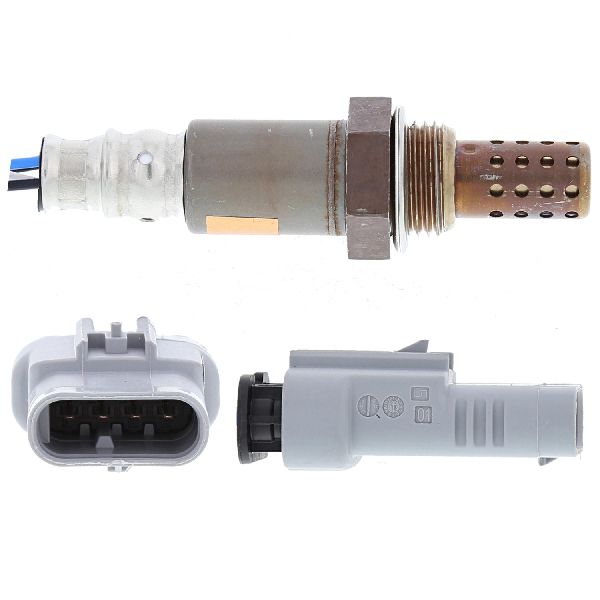
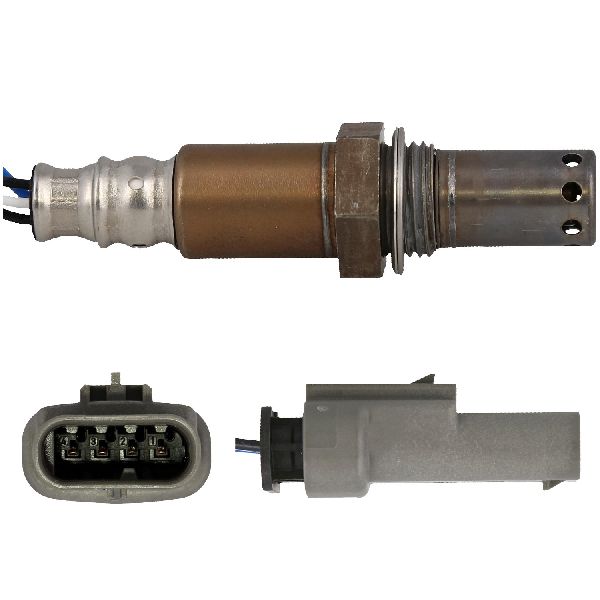
Est. part cost: $25-$75 for new bolts and an ACDelco gasket. - Faulty Downstream Oxygen Sensor (Bank 1, Sensor 2) 🟡 Medium Probability → Shop Oxygen Sensor Oxygen sensors are consumable parts that degrade over time. GM trucks can be sensitive to aftermarket sensors, so using a quality OEM brand like ACDelco or Denso is often recommended by forum users to avoid persistent issues.
How to confirm: After confirming there are no exhaust leaks, use a scan tool to monitor the live data for the Bank 1 Sensor 2 voltage. When the engine is warm and at a steady RPM, this sensor's voltage should be relatively stable and steady. If it is fluctuating wildly similar to the upstream sensor, or is stuck at a high voltage (above 0.8v), the sensor is likely faulty.
Typical fix: Replace the Bank 1, Sensor 2 oxygen sensor. This is located on the driver's side, after the catalytic converter.
Est. part cost: $50-$150 - Faulty Upstream Oxygen Sensor (Bank 1, Sensor 1) ⚪ Low Probability → Shop Oxygen Sensor
How to confirm: A faulty upstream (pre-catalyst) sensor can incorrectly tell the ECM the engine is lean, causing the ECM to add too much fuel (commanding a rich mixture). The downstream sensor then correctly reports this rich condition, triggering P2097. Use a scan tool to watch fuel trims and sensor data. If short-term fuel trims are highly negative as the ECM tries to pull fuel, the upstream sensor may be the cause.
Typical fix: Replace the Bank 1, Sensor 1 oxygen sensor, located on the driver's side exhaust manifold before the catalytic converter.
Est. part cost: $50-$150
Rare But Worth Checking
- ECM Software Anomaly: GM has issued Technical Service Bulletin 19-NA-017 for other models like the Malibu, where a software glitch can cause a false P2097 code. While this TSB doesn't explicitly list the Silverado, a dealer ECM update is a known potential fix for unexplained P2097 codes on this platform as well.
- Leaking Fuel Injector: → Shop Fuel Injector A fuel injector stuck open on Bank 1 can dump excess fuel into a cylinder. This is more likely if code P0172 (System Too Rich Bank 1) is also present. Given the L86 has a high-pressure direct injection system, this is a possibility.
- Aftermarket Components: The post-catalyst fuel trim diagnostic is very sensitive. The use of non-OE parts like oxygen sensors, aftermarket air filters, or modified air induction systems can sometimes trigger this code to set.
Diagnosis Steps
- Confirm the code using an OBD-II scanner.
- On a cold engine, start the truck and listen carefully for a 'ticking' or hissing sound from the driver's side exhaust manifold.
- Visually inspect the driver's side exhaust manifold bolts, especially the one closest to the firewall. Look for missing bolt heads or black soot trails indicating a leak.
- If no obvious leak is found, warm the engine to operating temperature.
- Use a scan tool to monitor live data. Observe the voltage for the Bank 1, Sensor 2 (downstream) O2 sensor. It should be relatively steady. If it's fluctuating rapidly or stuck high (above 0.8V), suspect the sensor.
- Observe the short-term and long-term fuel trims for Bank 1. High negative numbers indicate the ECM is trying to remove fuel, confirming a rich condition.
- If no cause is found, perform an exhaust smoke test to find hard-to-see leaks.
- Only after confirming no exhaust leaks should you replace the oxygen sensor(s). Start with the downstream (Sensor 2) unless data points to the upstream (Sensor 1). Use a quality brand like ACDelco.
- If all else fails, consult a dealer about potential ECM software updates. While TSB 19-NA-017 is for other vehicles, a software update has been noted as a fix for this platform.
Parts You'll Likely Need
- Exhaust Manifold Gasket
(OEM #12657093 or 12617944)— This is required for the most common repair: fixing an exhaust leak caused by broken manifold bolts.
Trusted brands: ACDelco, Fel-Pro, Mahle
OEM price range: $20-$40
Aftermarket price range: $15-$30 - Exhaust Manifold Bolt Set
(OEM #11547323 or 11546582)— The original bolts are prone to stretching and breaking. It is best practice to replace all of them when repairing a leak.
Trusted brands: ACDelco, Dorman, ARP
OEM price range: $30-$50
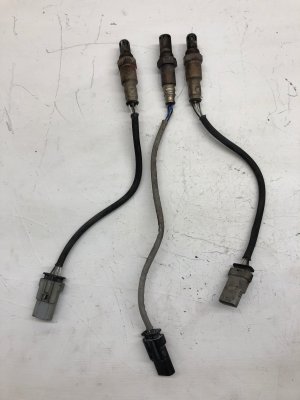
Aftermarket price range: $20-$40 - Downstream Oxygen Sensor (Bank 1, Sensor 2)
(OEM #12665162 or 12677895)— This is the second most common failure point. It is the sensor that provides the reading that triggers the code.
Trusted brands: ACDelco, Denso, Bosch, NTK
OEM price range: $100-$150
Aftermarket price range: $50-$80
Related Codes That Often Appear With This One
- P0172 — This code for 'System Too Rich (Bank 1)' is detected by the upstream sensor. Seeing both codes together strongly points to a true rich condition (like a leaking injector) rather than just an exhaust leak or downstream sensor issue.
- P0420 — This code for 'Catalyst System Efficiency Below Threshold (Bank 1)' can appear if the chronic rich condition from P2097 has overheated and damaged the catalytic converter over time.
- P2099 — This is the same code but for Bank 2 (passenger side). If both P2097 and P2099 are present, it indicates a problem affecting the entire engine, such as a MAF sensor issue, fuel pressure problem, or a vacuum leak, rather than a localized Bank 1 leak.
Technical Service Bulletins (TSBs) & Recalls
- TSB 19-NA-017: While officially for the 2016-2017 Chevrolet Malibu, this TSB identifies a software anomaly that can cause a false P2097 code, which is resolved by an ECM update. This type of software issue has been reported as a potential fix for the Silverado as well.
Platform-Specific Known Issues
- The rearmost exhaust manifold bolts on the EcoTec3 V8 engines are well-known for breaking due to heat cycle stress, causing an exhaust leak that is a primary trigger for code P2097.
Mechanic-Grade Diagnostic Values
- Low-Pressure Fuel System Pressure (In-tank pump) — expected: 65 - 75 PSI with key on, engine off (KOEO).. Failure: Pressure below this range points to a weak in-tank fuel pump, not an issue with the high-pressure system.
- High-Pressure Fuel System Pressure (Direct Injection) — expected: 500 - 900 PSI at idle; up to 2,500-2900 PSI at wide-open throttle (WOT).. Failure: Pressure significantly lower than 500 PSI at idle or not responding to load can indicate a failing High Pressure Fuel Pump (HPFP).
- Downstream O2 Sensor (HO2S B1S2) Voltage — expected: Relatively stable voltage between 0.45V and 0.7V on a warm, running engine at steady RPM.. Failure: Voltage stuck high (above 0.8V) or fluctuating rapidly like an upstream sensor indicates a faulty sensor or a true, persistent rich condition.
- O2 Sensor Heater Element Resistance — expected: Between 3 and 25 Ohms when tested cold across the two heater circuit pins (often the two same-colored wires).. Failure: An 'OL' (Open Loop/Infinite) reading indicates a broken heater element, requiring sensor replacement. A reading outside the typical range can also indicate a fault.
Scan Tool Commands That Help
- GDS2 (GM Global Diagnostic System 2): Fuel Injector Balance Test — If a leaking injector is suspected (especially if P0172 is also present), this bidirectional test allows a technician to individually disable injectors while monitoring fuel pressure drop or engine RPM change to isolate a faulty injector.
- GDS2 (GM Global Diagnostic System 2): Throttle/Idle Learn Reset — After cleaning or replacing the throttle body, this procedure is required to reset learned values. One owner reported that a P2097 was resolved after a dealer performed this relearn procedure, which a previous shop had failed to do after a throttle body cleaning.
- GDS2 (GM Global Diagnostic System 2): Fuel Trim Reset — After a repair is completed (like fixing an exhaust leak or replacing an O2 sensor), resetting the fuel trims will force the ECM to relearn the fuel delivery strategy immediately, which can help confirm the fix and extinguish the check engine light faster.
Wiring & Ground Locations
- G103 / G104 — Main engine-to-chassis ground straps. Typically located on the front or side of the cylinder heads, connecting to the frame or firewall. On the K2XX platform, there is a key ground from the negative battery cable to the passenger side cylinder head and another from the body to the driver's side cylinder head.. A poor ground connection can cause incorrect or noisy readings from sensors, including the oxygen sensors. While not a primary cause, checking that these grounds are clean and tight is a crucial step in diagnosing any electronic fault.
- ECM/PCM Connectors (X1/X2) — The Engine Control Module is typically located in the engine bay. The O2 sensor signals run directly to pins on these main connectors.. When diagnosing a sensor that appears faulty despite being replaced, technicians may need to perform a continuity or voltage test directly at the ECM pin to rule out a wiring issue (break, short, or corrosion) between the sensor and the module.
Real Owner Repair Stories
- Reddit user Alone-Supermarket-93 (2017 Chevrolet Silverado) — Check engine light with P2097, engine went into limp mode ('Engine Power Reduced'), then returned to normal.
❌ Tried (didn't work) Initial diagnosis was unclear.
✅ What actually fixed it The dealer determined that a previous throttle body cleaning service was performed without the mandatory electronic 'relearn' procedure. Performing the Throttle/Idle Learn reset with a scan tool resolved the issue and improved throttle response. - Aggregated from GM-Trucks.com forum (2014 Chevrolet Silverado 5.3L (similar L83 engine)) — Persistent P2097 code, audible 'ticking' from driver's side engine bay when cold.
❌ Tried (didn't work) Replacing the downstream O2 sensor (sometimes multiple times), Replacing the catalytic converter, Cleaning the MAF sensor
✅ What actually fixed it The consistent root cause was a broken rearmost exhaust manifold bolt on the driver's side. The fix required extracting the broken bolt and replacing the exhaust manifold gasket.
Documented NHTSA Reports
- A manufacturer service bulletin (TSB 19-NA-017) notes that a software anomaly can cause a false P2097 code. NHTSA ODI #11364226 describes a case where this code kept popping up even after a certified shop ran extensive tests.
- In a cross-manufacturer reference for the same make, NHTSA ODI #11581909 reports that after a vehicle stuttered and lost power with codes P0131, P2097, and P0171, the root cause was found to be loose intake bolts.
- NHTSA ODI #11255637 reports a check engine light with P2097 on a vehicle with only 500 miles, noting decreased engine power when pressing the gas pedal and stalling on start.
- NHTSA ODI #11414085 describes a check engine light for P2097 where the vehicle experienced hesitation when accelerating.
- NHTSA ODI #11221744 notes an ongoing issue where P2097 appeared alongside multiple sensor codes and required the replacement of the accelerator pedal and throttle harness.
"I Checked Everything" — The Actual Cause
- In some cases, the exhaust manifold leak caused by a broken bolt can be intermittent. It may only leak when the engine is cold and seal up as the manifold heats up and expands. A smoke test performed on a warm engine might not reveal the leak, leading to a misdiagnosis. The key symptom is the 'ticking' noise specifically on a cold start that goes away after a few minutes.
OEM Part Supersession History
12657188→12665162, 12677895— Standard part evolution, potential improvements in materials or manufacturing.
Heads up: The listed part numbers are generally interchangeable for the 2014-2018 model years for the downstream sensor. Always verify fitment with a VIN at the dealership or parts supplier.
Model Year Variations Within This Range
- 2014-2018: The core design of the L86 engine and its emissions components remained largely consistent throughout this period. There are no significant known variations within this range that would alter the primary causes or diagnostic approach for P2097. The main issue of breaking exhaust manifold bolts applies to the entire generation.
Diagnostic Flowchart
Other Known Issues on This Vehicle
Issues unrelated to this code that are worth knowing about as an owner of this generation:
- AFM/DFM Lifter Failure 🔴 High — Common issue, often occurring between 80,000 and 120,000 miles. Can happen earlier with poor maintenance.
- 8L90 Transmission Shudder / Hard Shifting ('Chevy Shake') 🟠 Medium — Widespread issue on 2015-2019 models with the 8-speed transmission. Shudder is often felt at light throttle between 35-70 mph. (Ref: TSB 18-NA-355 (recommends fluid flush with Mobil 1 Blue Label ATF), TSB 16-NA-175 (addresses shudder))
- Torque Converter Failure 🔴 High — Related to the transmission shudder; if a fluid flush doesn't resolve the issue, the torque converter often requires replacement. (Ref: TSB 18-NA-355, TSB 20-NA-142)
- High-Pressure Fuel Pump (HPFP) Failure 🟠 Medium — The direct-injected EcoTec3 engines can experience HPFP failures, which can sometimes leak fuel into the crankcase, causing various fuel system and drivability issues.
- Driveshaft Vibration ('Chevy Shake') 🟠 Medium — Separate from the transmission shudder, some 2014-2019 trucks experienced a persistent vibration at highway speeds attributed to driveshaft imbalance. (Ref: GM has issued bulletins for diagnosis but a single definitive TSB for the fix is elusive.)
Used vs. New Parts: Buying Guide for This Vehicle
When a used part is the smart pick: For this repair, used parts are generally not recommended. The primary failure items are consumable (O2 sensors, gaskets, bolts) or prone to wear and should be purchased new. A used exhaust manifold could be considered if the original is cracked, but this is a rare failure mode compared to the bolts.
Donor-vehicle mileage cap: roughly under 50000 miles for the part to have meaningful remaining life.
What to inspect on the donor part:
- If sourcing a used exhaust manifold, inspect it on a flat surface to ensure it is not warped.
- Check for any hairline cracks, especially around the bolt holes and collector.
OEM-only on this vehicle (don't cheap out):
- Catalytic Converter: Aftermarket catalytic converters for this platform are widely reported to cause recurring efficiency codes (P0420) and may not meet emissions standards. If a replacement is necessary, a genuine GM part is strongly advised.
- High-Pressure Fuel Pump (HPFP): Given the high pressures and critical function, only a new OEM (ACDelco) pump should be used if it is found to be the cause.
Aftermarket brands forum-validated for this vehicle:
- Oxygen Sensors: Denso and NTK are the original equipment manufacturers for many GM vehicles and are considered equivalent or superior to the ACDelco-branded part. Bosch is also a reputable alternative.
- Exhaust Manifold Bolts: For a permanent repair, many mechanics and owners recommend upgrading to ARP (Automotive Racing Products) stainless steel bolts, which are stronger and more resistant to heat cycle fatigue than the OEM bolts.
Brands owners have reported issues with on this vehicle:
- Unbranded 'White-Box' Oxygen Sensors: Generic, no-name sensors often use different heater resistances or sensor technologies that are not calibrated for the GM ECM, leading to persistent codes or poor performance right out of the box.
Real Owner Stories
Aggregated from forums and TSBs cited above. Mileages and costs reflect what owners reported in those sources.
2014 Chevy Silverado 1500 5.3L V8 — 112000 miles
Symptoms: Initially had issues with Fuel tank sensor; later received advice regarding a bad O2 sensor or an exhaust leak as the cause for P2097.
What fixed it: The context suggests the fix involves either replacing the O2 sensor or repairing an exhaust leak, though the specific resolution for this user was not finalized in the snippet.
Source hint: GM-Trucks.com - Thread 'P2097 CODE'
Related OBD-II Codes
Frequently Asked Questions
I hear a ticking sound from the driver's side on cold starts; could this be related to P2097 on my Silverado?
Does TSB 19-NA-017 apply to my 2014-2018 Silverado 1500?
Should I use aftermarket oxygen sensors to fix this code?
How can I confirm if a broken manifold bolt is the cause without taking the engine apart?
Is there a specific repair kit for the broken manifold bolts on the EcoTec3 6.2L?
Helpful Videos

![How to Fix P2097 Engine Code in 4 Minutes [2 DIY Methods / Only $9.84]](https://img.youtube.com/vi/rCwtzRmhMwY/mqdefault.jpg)
Used OEM Parts in Stock
New Aftermarket Parts Available


The information in this article is provided for general reference and educational purposes only. Vehicle specifications, procedures, and part compatibility can vary by production date, trim level, and region. Always consult your vehicle's factory service manual and verify part numbers before purchasing or performing repairs. Safety-critical components such as airbags, seat belts, and braking systems should be installed by a qualified professional.
- Chevrolet Silverado 1500:
- 🧭 Diagnostic Flowchart
- 🎬 Helpful Videos
- 🛍️ Shop This Part
- What's Unique About the 2014-2018 Chevrolet Silverado 1500
- Symptoms You May Notice
- Most Likely Causes
- Rare But Worth Checking
- Diagnosis Steps
- Parts You'll Likely Need
- Related Codes That Often Appear With This One
- Technical Service Bulletins (TSBs) & Recalls
- Platform-Specific Known Issues
- Mechanic-Grade Diagnostic Values
- Scan Tool Commands That Help
- Wiring & Ground Locations
- Real Owner Repair Stories
- Documented NHTSA Reports
- "I Checked Everything" — The Actual Cause
- OEM Part Supersession History
- Model Year Variations Within This Range
- Other Known Issues on This Vehicle
- Used vs. New Parts: Buying Guide for This Vehicle
- Real Owner Stories
- 2014 Chevy Silverado 1500 5.3L V8 — 112000 miles
- Related OBD-II Codes
- Frequently Asked Questions
- 🎟️ Get 5% Off