

P2097 on 2011-2019 Ford Explorer 3.5L EcoBoost: Rich Fuel Trim Causes and Fixes
On the 3.5L EcoBoost Explorer, P2097 often points to an exhaust leak near an O2 sensor or a failing oxygen sensor itself. A less common but notable cause is a leaking fuel injector. Always check for exhaust leaks before replacing parts.
- P2097 means the exhaust is too rich on Bank 1 (firewall side).
- Always check for exhaust leaks between the engine and the rear O2 sensor before buying any parts.
- The problem could be the upstream O2 sensor causing an incorrect fuel mixture, not just the downstream sensor reporting it.
- On 2016 models specifically, be aware that a PCM software update might be the required fix per a Ford TSB.
- Do not replace the expensive catalytic converter unless all other possibilities have been exhausted.
What's Unique About the 2011-2019 Ford Explorer
For some 2016 Explorers with the 3.5L EcoBoost engine, Ford issued Technical Service Bulletin TSB 16-0042, acknowledging that P2097 (and related codes) could be triggered by incorrect software calibration values in the PCM. This means the code could appear due to a logic error rather than a physical part failure. Additionally, as a Gasoline Direct Injection (GDI) engine, the 3.5L EcoBoost can be more susceptible to issues like leaking fuel injectors, which is a known cause of rich conditions. A failing high-pressure fuel pump (HPFP) can also leak fuel into the crankcase, which then gets ingested by the PCV system, causing a rich condition.
Symptoms You May Notice
- Check Engine Light is on
- Reduced fuel economy
- Rough or erratic idle
- Engine hesitation or stumbling during acceleration
- A noticeable smell of fuel or 'rotten eggs' from the exhaust
- Dark smoke from the tailpipe
- Replacing the downstream (post-catalyst) O2 sensor when the upstream (pre-catalyst) sensor is actually the cause of the incorrect fuel mixture.
- Replacing the catalytic converter before thoroughly checking for exhaust leaks, sensor faults, or fuel system issues. This is an expensive and often unnecessary repair.
Most Likely Causes
- Exhaust leak before or near the Bank 1 oxygen sensors 🔴 High Probability → Shop Oxygen Sensor The factory exhaust manifolds are a known weak point, prone to warping and breaking studs due to a design that doesn't use all available mounting points, creating uneven clamping pressure. This, along with corrosion at gaskets and flex pipes, can cause leaks that throw off O2 sensor readings.
How to confirm: Perform a visual inspection of the exhaust manifold and downpipe for black soot marks indicating a leak. A professional smoke test is the most effective way to find small leaks. A ticking noise when the engine is cold that disappears as it warms up is a classic 🎬 Watch: Everything you need to know about broken manifold studs. sign of a warped manifold leak.
Typical fix: Repair the leak. This may involve replacing a gasket (e.g., exhaust manifold gasket), welding a crack, or replacing the entire warped manifold. Upgraded aftermarket manifolds are available that address the design flaw.
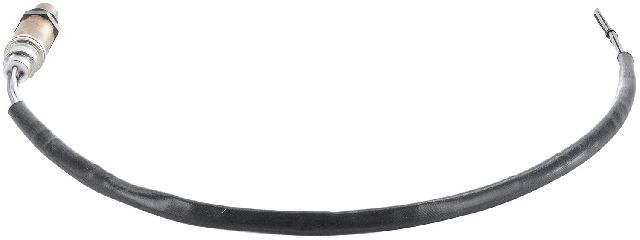
Est. part cost: $15-$400 - Faulty Upstream Oxygen Sensor (Bank 1, Sensor 1) 🟡 Medium Probability → Shop Oxygen Sensor The upstream sensor is a primary input for fuel control. If it sends an inaccurate 'lean' signal, the PCM will add too much fuel, which the downstream sensor then correctly reports as a rich mixture, triggering P2097.
How to confirm: Use a scan tool to monitor the live data for the B1S1 voltage. A healthy sensor will fluctuate rapidly between approximately 0.1V and 0.9V. A lazy or biased sensor will not respond correctly to changes in engine conditions.
Typical fix: Replace the Bank 1, Sensor 1 (upstream) oxygen sensor. The Motorcraft part number is typically DY-1178 for this application. 🎬 See this walkthrough for replacing your upstream O2 sensors.
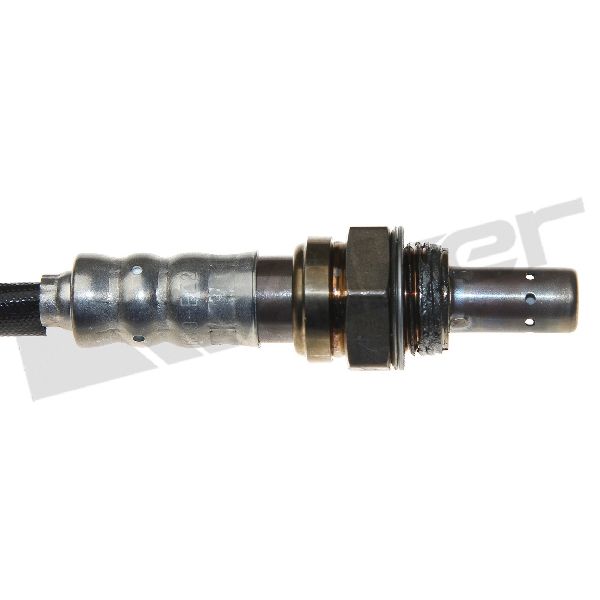
Est. part cost: $50-$150 - Faulty Downstream Oxygen Sensor (Bank 1, Sensor 2) 🟡 Medium Probability → Shop Oxygen Sensor While often a symptom, the downstream sensor can fail and send a false rich signal (stuck high voltage).
How to confirm: With the engine warm and at a steady RPM, the downstream O2 sensor voltage (B1S2) should be relatively stable and typically above 0.5V. If it is stuck high (e.g., above 0.8V) or fluctuating wildly like the upstream sensor, it may be faulty or indicating a separate issue like a failing catalytic converter.
Typical fix: Replace the Bank 1, Sensor 2 (downstream) oxygen sensor. The Motorcraft part number is typically DY-1173 for this application.
Est. part cost: $50-$150 - Leaking Fuel Injector(s) on Bank 1 ⚪ Low Probability → Shop Fuel Injector Direct injection systems operate under very high pressure, and injectors can sometimes leak fuel directly into a cylinder after shutoff or stick open during operation, causing a persistent rich condition on that bank.
How to confirm: This is more complex to diagnose. It may involve checking fuel rail pressure after shutdown to see if it drops, or removing the spark plugs on Bank 1 to check for signs of being 'fuel-washed' (wet with gasoline and black). Misfire codes (P0301, P0302, P0303) may accompany P2097 if an injector is leaking badly.
Typical fix: Replace the faulty fuel injector(s) and potentially the spark plugs on the affected cylinders.
Est. part cost: $70-$200 per injector
Rare But Worth Checking
- Failing Catalytic Converter: → Shop Catalytic Converter This is more often the *result* of a long-term rich condition rather than the cause. The excess fuel can overheat and damage the converter, leading to efficiency problems. Do not replace 🎬 Watch: A complete overview of P2097 causes and fixes. the converter unless all other causes have been ruled out.
- PCM Software Calibration Issue: Ford TSB 16-0042 for 2016 models suggests the PCM may incorrectly set this code. A dealer may need to check if a software update is available, especially if no physical faults can be found.
- Faulty Mass Airflow (MAF) Sensor: A dirty or failing MAF sensor can provide incorrect airflow readings to the PCM, causing it to miscalculate the fuel mixture and potentially lead to a rich condition. This is less common but should be considered if other diagnoses are inconclusive.
- Failing High-Pressure Fuel Pump (HPFP): The GDI high-pressure fuel pump can fail internally, leaking raw fuel into the crankcase. This contaminates the engine oil and gets drawn into the intake via the PCV system, creating a rich condition across both banks. A strong smell of gasoline on the oil dipstick is a key indicator.
- Stuck Open EVAP Purge Valve: If the EVAP purge valve sticks open, it can allow unmetered fuel vapors from the charcoal canister to be drawn into the engine, creating a rich condition that the PCM struggles to compensate for.
Diagnosis Steps
- Scan for any other DTCs. Address any misfire, fuel pressure, or upstream sensor codes first.
- Visually inspect the entire exhaust system for Bank 1 (firewall side) from the engine to the downstream O2 sensor. Look for black soot, cracks, or rust holes indicating a leak. Pay close attention to the exhaust manifold-to-head flange.
- Use a scan tool to monitor live data. Watch the short-term and long-term fuel trims for Bank 1. A strong negative number (e.g., -15% or more) confirms the PCM is trying to correct a rich condition.
- Observe the voltage of the upstream (B1S1) and downstream (B1S2) oxygen sensors. B1S1 should fluctuate rapidly. B1S2 should be relatively steady. If B1S2 is stuck high (e.g., >0.8V), it points towards a rich condition or a bad sensor.
- If an exhaust leak is suspected but not visible, perform a smoke test to pinpoint its location.
- If sensors and exhaust are confirmed to be good, investigate the fuel system. Check for leaking fuel injectors or incorrect fuel pressure.
- For 2016 models, if no physical fault is found, consult a dealer regarding TSB 16-0042 for a potential PCM reflash.
Parts You'll Likely Need
- Upstream Oxygen Sensor (Bank 1, Sensor 1)
(OEM #Motorcraft DY-1178)— This sensor is a primary input for fuel control. A faulty one can cause the PCM to create a rich condition that triggers P2097 downstream.
Trusted brands: Motorcraft, Bosch, Denso
OEM price range: $100-$180
Aftermarket price range: $50-$120 - Downstream Oxygen Sensor (Bank 1, Sensor 2)
(OEM #Motorcraft DY-1173)— This sensor directly reports the condition that triggers the code. It may have failed and be sending a false rich signal.
Trusted brands: Motorcraft, Bosch, Denso
OEM price range: $90-$160
Aftermarket price range: $50-$110 - Exhaust Manifold Gasket — A common source of exhaust leaks that can skew O2 sensor readings and cause this code, especially due to manifold warping.
Trusted brands: Motorcraft, Fel-Pro
OEM price range: $30-$60
Aftermarket price range: $15-$40
Related Codes That Often Appear With This One
- P0420 — If the rich condition persists, it can damage the catalytic converter, leading to a P0420 'Catalyst System Efficiency Below Threshold' code.
- P0301, P0302, P0303 — If a leaking fuel injector is the cause, it can foul the spark plug and lead to misfire codes on the cylinders of Bank 1.
- P0016 — If timing chain stretch is severe, it can affect valve timing enough to contribute to poor combustion and fuel trim issues, potentially appearing alongside codes like P0016 'Crankshaft Position - Camshaft Position Correlation Bank 1 Sensor A'.
- P0172 — This code for 'System Too Rich Bank 1' indicates the upstream sensor is also detecting a rich condition, which can be a precursor or companion to P2097.
Technical Service Bulletins (TSBs) & Recalls
- TSB 16-0042: For some 2016 Ford Explorer vehicles with 3.5L GTDI engine, DTCs P2096, P2097, P2098, and/or P2099 may be present due to a PCM calibration concern. Dealers are advised to run specific self-tests and, if no other faults are found, reprogram the PCM to the latest calibration.
Platform-Specific Known Issues
- A Ford TSB (16-0042) indicates that on some 2016 models with the 3.5L GTDI engine, this code can be set due to a PCM calibration error, potentially requiring a software update rather than a part replacement.
- The Bank 1 sensors (both upstream and downstream) are on the firewall side of the engine, making them significantly harder to access than the Bank 2 sensors.
Mechanic-Grade Diagnostic Values
- Long Term Fuel Trim (Bank 1) — expected: Close to 0%, within +/- 10%. Failure: A strong negative value, such as -15% or more, indicates the PCM is commanding a major reduction in fuel to combat a rich condition.
- Downstream O2 Sensor (B1S2) Voltage — expected: Relatively stable voltage, typically between 0.5V and 0.8V, on a warm engine at steady RPM.. Failure: Voltage stuck high (above 0.8V) indicates a persistent rich condition. Voltage fluctuating rapidly similar to the upstream sensor suggests a failing catalytic converter.
- Upstream Air/Fuel Ratio Sensor (B1S1) Current — expected: On wideband sensors used in these vehicles, you monitor current, not just voltage. The reading should fluctuate around 0 mA at stoichiometry.. Failure: A consistently positive current reading indicates the sensor is seeing a lean condition and commanding more fuel, which could lead to a rich condition downstream if the sensor is biased or faulty.
Scan Tool Commands That Help
- Ford IDS / FORScan: Power Balance Test — To identify which specific cylinder is contributing least (or not at all) when a rich condition is suspected to be caused by a leaking injector. This can help pinpoint the problematic cylinder without pulling all spark plugs initially.
- Ford IDS / FORScan: Clear/Reset Keep Alive Memory (KAM) — After replacing a major fuel or air system component like an O2 sensor, fuel injector, or MAF sensor. This forces the PCM to discard old adaptive learning values and relearn fuel trims from scratch with the new component, preventing the old faulty data from influencing the new part's operation.
Wiring & Ground Locations
- G104 — Located on the right side of the engine compartment, often on the firewall or inner fender structure.. This is a primary chassis and PCM ground. High resistance or a loose connection here can cause erratic voltage signals for multiple sensors, including the oxygen sensors, leading to incorrect readings and phantom codes.
- G105 — Located at the top right side of the engine itself, providing a direct engine block ground.. The PCM and its sensors rely on a solid ground path through the engine block. A compromised G105 can affect sensor reference voltages and cause inaccurate readings, mimicking a component failure.
- O2 Sensor Harness — Runs from the sensors on the exhaust pipes up to the main engine harness. The Bank 1 (firewall side) harness is particularly susceptible to heat.. The wiring for both upstream and downstream sensors can become brittle, melt, or chafe from proximity to hot exhaust components, causing shorts or open circuits that trigger sensor codes. A visual inspection for damaged wiring is crucial before replacing a sensor.
Real Owner Repair Stories
- ExplorerForum.com (2016 Ford Explorer Sport 3.5L EcoBoost) — Check Engine Light with codes P2097 and P2099 (both banks rich).
❌ Tried (didn't work) Initial diagnosis did not reveal any exhaust leaks or obvious sensor failures.
✅ What actually fixed it The dealer performed a PCM reflash according to Technical Service Bulletin TSB 16-0042, which resolved the codes. The issue was determined to be a software calibration error.
"I Checked Everything" — The Actual Cause
- In cases where a smoke test reveals no exhaust leaks, the cause often shifts to the sensors themselves or the fuel system. A biased upstream O2 sensor can command too much fuel, or a leaking fuel injector can introduce excess fuel that the exhaust system cannot account for. For 2016 models specifically, a clean smoke test strongly points towards the PCM calibration issue outlined in TSB 16-0042.
OEM Part Supersession History
BL3Z-9F472-A→Motorcraft DY-1178— Standard part lifecycle update and potential minor revisions.
Heads up: DY-1178 is the correct service part for a wide range of Ford 3.5L applications, but always verify fitment with VIN as connector types can vary. It is cross-referenced by Denso as 234-5038.
Model Year Variations Within This Range
- 2013-2016: Starting in 2013, the 3.5L EcoBoost received updates including larger turbochargers and an electronic blow-off valve, which altered some engine characteristics compared to the 2011-2012 models. This can slightly change diagnostic paths, though the fundamental causes of P2097 remain similar.
- 2016: This specific model year is subject to TSB 16-0042, where the P2097 code can be caused by a PCM software error, a problem not officially documented for other years in the range.
- 2017-2019: These models feature the second-generation 3.5L EcoBoost, which has a significantly different fuel system (port and direct injection) and engine design compared to the first generation (2011-2016). While the code's meaning is the same, the likelihood of certain causes (like carbon buildup on intake valves) is reduced, and some parts are not interchangeable.
Diagnostic Flowchart
Other Known Issues on This Vehicle
Issues unrelated to this code that are worth knowing about as an owner of this generation:
- Internal Water Pump Failure 🔴 High — Common after 80,000-100,000 miles. Failure can be catastrophic.
- Power Transfer Unit (PTU) Overheating and Failure 🔴 High — Can occur as early as 60,000-70,000 miles, especially if fluid is not changed. (Ref: TSB 19-2017 for fluid leaks.)
- Timing Chain Stretch and Phaser Rattle 🟠 Medium — More common on earlier (2011-2015) models, often noticeable as a startup rattle around 75,000-100,000 miles. (Ref: P0016 is a common related code.)
- Warped/Cracked Exhaust Manifolds 🟠 Medium → Shop Exhaust Manifold — Common on vehicles used for towing or under heavy load, but can happen on any model.
- Electronic Throttle Body Failure 🟡 Low — Can happen at various mileages, was subject to an extended warranty program. (Ref: Ford offered an extended warranty (10 years/150,000 miles).)
Used vs. New Parts: Buying Guide for This Vehicle
When a used part is the smart pick: Used parts are generally not recommended for the key components related to this code. O2 sensors and fuel injectors are wear items with a finite lifespan, making a used part a significant gamble. A used exhaust manifold could be a viable option if it comes from a low-mileage, non-corroded vehicle and is inspected thoroughly for cracks or warping.
Donor-vehicle mileage cap: roughly under 60000 miles for the part to have meaningful remaining life.
What to inspect on the donor part:
- For an exhaust manifold, check mating surfaces for flatness with a straight edge.
- Look for hairline cracks, especially around the collector and stud holes.
- Ensure all studs are intact and not stripped or broken off in the manifold.
- Avoid parts from regions with heavy road salt usage, as corrosion will be advanced.
OEM-only on this vehicle (don't cheap out):
- Catalytic Converter: Aftermarket converters for EcoBoost engines are notorious for failing to meet efficiency standards, often causing a P0420/P0430 code to appear shortly after installation. Sticking with an OEM Ford part is highly advised if a replacement is necessary.
- High-Pressure Fuel Pump (HPFP): Given the critical nature of this part and the potential for catastrophic engine damage if a low-quality unit fails, OEM or a top-tier OE supplier is the only safe choice.
Aftermarket brands forum-validated for this vehicle:
- Oxygen Sensors: Bosch, NTK, and Denso are the original equipment manufacturers for most automakers, including Ford. These brands are widely trusted and considered equivalent to Motorcraft parts.
- Exhaust Gaskets: Fel-Pro is a highly respected brand for gaskets and seals and is a reliable alternative to OEM.
Brands owners have reported issues with on this vehicle:
- Unbranded/"White-box" Sensors: Avoid generic, no-name oxygen sensors from online marketplaces. They often have high failure rates, incorrect calibration, and can cause more diagnostic headaches than they solve.
Real Owner Stories
Aggregated from forums and TSBs cited above. Mileages and costs reflect what owners reported in those sources.
2016 Ford Explorer Sport 3.5L EcoBoost
Symptoms: The vehicle was throwing both P2097 and P2099 codes, indicating a post-catalyst rich condition on both banks.
What fixed it: The dealer performed a PCM reflash per TSB 16-0042 after confirming there were no physical hardware faults.
Source hint: ExplorerForum.com - P2097 and P2099 Post Catalyst Fuel Trim Too Rich Bank 1 and 2
Related OBD-II Codes
Frequently Asked Questions
I have a 2016 Explorer Sport with the 3.5L EcoBoost; is there a software fix for P2097?
Why is the Bank 1 sensor so much harder to replace on my Explorer than Bank 2?
I hear a ticking noise when my Explorer is cold that goes away later. Could this cause P2097?
Which specific Motorcraft oxygen sensors should I buy for my 2011-2019 3.5L EcoBoost?
Can a failing water pump cause fuel trim codes like P2097 on this engine?
Why are the exhaust manifolds on the Explorer 3.5L EcoBoost prone to leaking?
Helpful Videos

We Have This Part in Stock


The information in this article is provided for general reference and educational purposes only. Vehicle specifications, procedures, and part compatibility can vary by production date, trim level, and region. Always consult your vehicle's factory service manual and verify part numbers before purchasing or performing repairs. Safety-critical components such as airbags, seat belts, and braking systems should be installed by a qualified professional.
- Ford Explorer:
- 🧭 Diagnostic Flowchart
- 🎬 Helpful Videos
- 🛍️ Shop This Part
- What's Unique About the 2011-2019 Ford Explorer
- Symptoms You May Notice
- Most Likely Causes
- Rare But Worth Checking
- Diagnosis Steps
- Parts You'll Likely Need
- Related Codes That Often Appear With This One
- Technical Service Bulletins (TSBs) & Recalls
- Platform-Specific Known Issues
- Mechanic-Grade Diagnostic Values
- Scan Tool Commands That Help
- Wiring & Ground Locations
- Real Owner Repair Stories
- "I Checked Everything" — The Actual Cause
- OEM Part Supersession History
- Model Year Variations Within This Range
- Other Known Issues on This Vehicle
- Used vs. New Parts: Buying Guide for This Vehicle
- Real Owner Stories
- 2016 Ford Explorer Sport 3.5L EcoBoost
- Related OBD-II Codes
- Frequently Asked Questions
- 🎟️ Get 5% Off