

P2097 on 2008-2016 GMC Acadia: Causes and Fixes for Rich Fuel Trim
On a first-generation GMC Acadia, P2097 is most often caused by leaking fuel injectors or an exhaust leak, not a bad oxygen sensor. A GM Technical Service Bulletin (TSB) specifically directs technicians to perform a fuel injector balance test before replacing other parts. Another common cause is a cracked exhaust pipe or flange weld before the downstream O2 sensor.
- Do not automatically replace the oxygen sensor; it is likely not the root cause on this vehicle.
- The most probable causes are leaking fuel injectors or an exhaust leak.
- Follow GM's diagnostic advice: perform a fuel injector balance test early in your diagnosis.
- Ignoring this code can lead to costly damage to the catalytic converter.
- Check if your vehicle's ECM software is up to date, as a reprogram may be the required fix.
What's Unique About the 2008-2016 GMC Acadia
For the first-generation GMC Acadia and its platform mates (Chevrolet Traverse, Buick Enclave, Saturn Outlook), this code is frequently not an oxygen sensor issue, which is a common misdiagnosis. General Motors has issued Technical Service Bulletins (like PIP4964F) that point specifically to faulty or leaking fuel injectors as a primary cause. Another common issue on this platform is an exhaust leak, often at a flange or a failed factory weld on the intermediate pipe (Y-pipe), which can trick the downstream O2 sensor into reporting a rich condition.
Symptoms You May Notice
- Check Engine Light is on
- Decreased fuel economy
- Rough or erratic idling
- Engine hesitation or stumbling during acceleration
- A strong fuel odor from the exhaust
- Engine misfires in some cases
- Replacing the downstream oxygen sensor without first testing for fuel injector leaks or exhaust leaks.
- Replacing the catalytic converter. The converter is almost always the victim of the rich condition, not the cause of it. A prolonged rich condition can damage it, but replacing it won't fix the root cause.
Most Likely Causes
- Leaking or Faulty Fuel Injectors 🔴 High Probability → Shop Fuel Injector A known issue highlighted in GM Technical Service Bulletin PIP4964F, which specifically identifies fuel injector problems as a top concern for this code on this platform. Forum users frequently confirm this is the fix after misdiagnosing other parts.
How to confirm: Perform a fuel injector balance test or an Active Fuel Injector Test (AFIT) using a GM-specific scan tool (like a Tech 2 or GDS2). This measures fuel pressure drop for each injector to identify leaks. The test may not be available on all 2009 models.
Typical fix: Replace the faulty fuel injector(s). It is often recommended to replace all injectors on the affected bank (Bank 1) at the same time.
Est. part cost: $40-$160 per injector - Exhaust System Leak 🟡 Medium Probability Gaskets and flex pipes can degrade over time. A very common failure point on the Lambda platform is a cracked factory weld on the flange of the intermediate pipe (Y-pipe) where it connects to the Bank 1 catalytic converter. This leak occurs just before the downstream O2 sensor, allowing air to enter and skew the readings.
How to confirm: Visually inspect the exhaust system for cracks, rust, or broken flanges, particularly around the Bank 1 catalytic converter and Y-pipe. A smoke test or applying low-pressure air (5-8 psi) to the tailpipe and spraying soapy water on joints and welds can help locate small leaks, as suggested in TSB PIP4964F.
Typical fix: Replace the leaking gasket or have the cracked exhaust pipe section re-welded. In some cases, the entire intermediate pipe may need replacement.
Est. part cost: $20-$100 for gaskets or small pipe sections - Engine Control Module (ECM) Software Issue ⚪ Low Probability → Shop Engine Control Module (ECM) GM released service updates (like TSB 18-NA-047, which superseded #17058) acknowledging that a software anomaly can cause the post-O2 trim diagnostic to fail falsely, causing P2097 to set without a mechanical problem.
How to confirm: A dealer or qualified shop can check the current software calibration number against GM's database to see if an update is available. This is done using the Service Programming System (SPS).
Typical fix: Reprogram the ECM with the latest software calibration. This must be done by a dealer or a shop with a J2534 pass-thru tool. The labor time is typically around 0.5 hours.
Est. part cost: $0 (parts), but labor for reprogramming applies
Rare But Worth Checking
- Faulty Downstream Oxygen Sensor (Bank 1, Sensor 2): → Shop Oxygen Sensor While a common cause on many vehicles, on the Acadia it is more often a misdiagnosis. The sensor is frequently replaced when the actual problem is injectors or an exhaust leak. Rule out all other causes before replacing the sensor.
- Mechanical Valvetrain Concern: A very rare cause mentioned in TSB PIP4964 is a sticking valve or a lifter follower issue, which may or may not cause a misfire but can affect exhaust gas composition.
- High Fuel Pressure: A failing fuel pressure regulator can cause a system-wide rich condition, potentially triggering P2097 and likely P2099 for the other bank as well.
- Faulty Mass Airflow (MAF) Sensor: A dirty or failing MAF sensor can provide incorrect airflow data to the ECM, leading to an improper fuel mixture and potentially causing a P2097 code.
Diagnosis Steps
- Read the code using an OBD-II scanner and check for any other accompanying codes. Note freeze frame data.
- Check GM Technical Service Bulletins (TSBs), specifically PIP4964F, 18-NA-047, and #17058, for manufacturer-specific diagnostic advice.
- Perform a fuel injector balance test or Active Fuel Injector Test (AFIT) as recommended by TSB PIP4964F. This is the most critical step for this platform.
- Thoroughly inspect the exhaust system for leaks, paying close attention to the flange and welds around the Bank 1 catalytic converter and intermediate pipe. Use a smoke machine or soapy water with low-pressure air for best results.
- Using a scan tool, monitor the live data from the Bank 1 Sensor 2 (downstream) oxygen sensor. A healthy sensor should show a relatively steady voltage (typically 0.6-0.8V). If it is stuck high (above 0.8V), it confirms a rich condition, but does not identify the cause.
- Check for pending ECM software updates with a dealer or qualified shop, referencing TSB 18-NA-047.
- Inspect the air intake system for any unmetered air leaks after the MAF sensor and ensure the air filter is clean.
- Only after ruling out injectors, exhaust leaks, and software issues should you consider replacing the downstream oxygen sensor.
Parts You'll Likely Need
- Fuel Injector
(OEM #12638530 (superseded by 12669384))— This is the most common cause of P2097 on the 3.6L V6, as documented in GM service bulletins.
Trusted brands: ACDelco, Bosch, Standard Motor Products
OEM price range: $100-$160
Aftermarket price range: $40-$100 - Exhaust Gasket (Catalytic Converter Outlet)
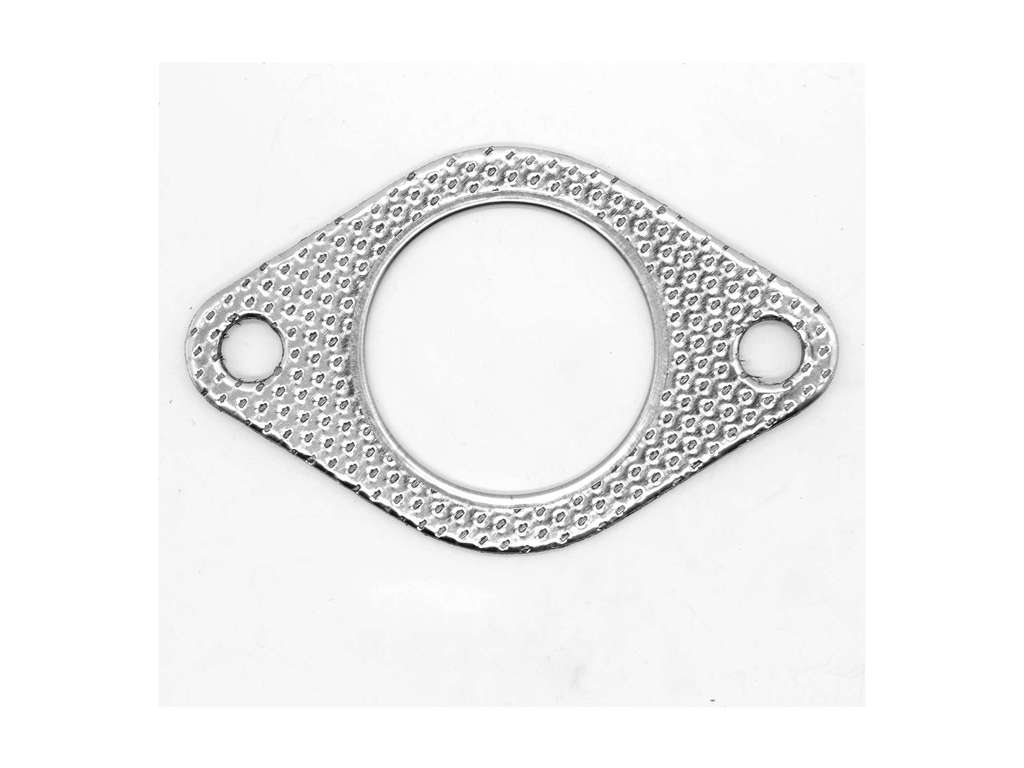
(OEM #15276331)— If an exhaust leak is found at the flange between the converter and intermediate pipe, this gasket will need to be replaced.
Trusted brands: ACDelco, Fel-Pro, Walker Exhaust
OEM price range: $25-$40
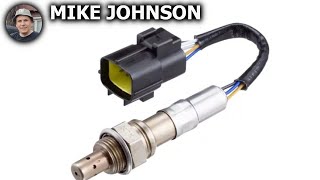
Aftermarket price range: $10-$25 - Downstream Oxygen Sensor (Bank 1 Sensor 2)
(OEM #213-4229 (ACDelco))— This sensor triggers the code. While often not the root cause, it can fail and should be replaced only after injectors and leaks are ruled out.
Trusted brands: ACDelco, Denso, NGK/NTK
OEM price range: $60-$90
Aftermarket price range: $40-$70
Related Codes That Often Appear With This One
- P2099 — This is the same code for Bank 2. If both are present, it points to a systemic issue affecting the whole engine, like a fuel pressure problem, MAF sensor issue, or an ECM software glitch.
- P0172 — This code means 'System Too Rich Bank 1' and is detected by the upstream O2 sensor. If both are present, it strongly indicates a significant rich condition, like a badly leaking fuel injector.
- P0300-P0306 — These are misfire codes. A severely leaking injector can foul a spark plug and cause a misfire on that specific cylinder (e.g., P0301, P0303, P0305 for Bank 1).
- P0420 — This code for 'Catalyst System Efficiency Below Threshold' can appear with P2097 if an exhaust leak exists between the two O2 sensors, or if the long-term rich condition has damaged the catalytic converter.
Technical Service Bulletins (TSBs) & Recalls
- PIP4964F: Service Engine Soon Lamp on, DTC P2097 or P2099 set. Points to fuel injector balance test and exhaust leak diagnosis. According to Bulletin #PIP4964F, technicians must perform an injector balance or Active Fuel Injector Tester (AFIT) prior to proceeding with further repairs.
- 18-NA-047: Successor to #17058. Addresses a software anomaly causing false P2096/P2097 codes, fixed by an ECM reprogram.
- 11340C: Special Cove
Platform-Specific Known Issues
- GM TSB PIP4964F specifically directs technicians to check for leaking fuel injectors via a balance test as a primary diagnostic step for P2097.
- GM Service Update #17058 and its successor TSB 18-NA-047 address a software anomaly that can cause a false P2097 code, requiring an ECM reprogram.
- Exhaust leaks at the flange weld between the catalytic converter and the intermediate pipe are a common failure point leading to this code on the Lambda platform.
Mechanic-Grade Diagnostic Values
- Downstream O2 Sensor (Bank 1 Sensor 2) Voltage — expected: A steady reading around 0.45V on a healthy, warm engine.. Failure: When a true rich condition exists, the voltage will be steady and high (above 0.7V). If it fluctuates rapidly like the upstream sensor, the catalytic converter may be failing.
- Upstream O2 Sensor (Bank 1 Sensor 1) Voltage — expected: Rapidly switching between approximately 0.1V (lean) and 0.9V (rich) in closed loop operation.. Failure: A sensor that is slow to respond, is stuck at a specific voltage, or does not switch is likely faulty.
- Fuel Injector Coil Resistance (LLT/LFX Engine) — expected: Approximately 11-14 ohms when the engine coolant temperature is between 50-90°F (10-32°C).. Failure: A reading significantly outside this range, or a variance of more than 3 ohms between injectors, points to a faulty injector.
- Mass Airflow (MAF) Sensor Reading at Idle — expected: The ECM must see a mass airflow sensor output of more than 8 g/sec as one of the conditions to run the diagnostic that sets P2097.. Failure: While not a direct failure value, if this condition isn't met, the code may not set even if a fault exists. A MAF sensor reading incorrectly high can cause a rich condition.
Scan Tool Commands That Help
- GDS2 (GM Global Diagnostic System 2): Injector Test / Active Fuel Injector Test (AFIT) — This is the primary diagnostic step recommended by GM TSB PIP4964F. It pressurizes the fuel rail and measures the pressure drop for each injector to accurately identify a leaking or over-fueling injector, which is the most common cause of P2097 on this engine.
- GDS2 (GM Global Diagnostic System 2): Fuel Trim Reset — After replacing a fuel injector, O2 sensor, or repairing an exhaust leak, this function must be used to clear the ECM's long-term learned fuel trim values. This allows the ECM to relearn the new parameters and confirms the fix has worked.
Wiring & Ground Locations
- G113 — Located on the left side of the engine, at the engine-to-transmission stud.. This is a major engine block ground. A loose or corroded connection here can create unstable sensor readings for components grounded to the block, potentially including the O2 sensors, leading to incorrect fuel trim calculations.
- G110 — Located on the right front of the engine, mounted to the cylinder head.. As a primary cylinder head ground, this ensures the ECM and its sensors have a stable reference voltage. A poor connection can cause erratic sensor data, contributing to fuel control faults like P2097.
- G103 — Located on the left side of the engine compartment, on the left inner fender panel or cowl area above the brake booster.. This is a critical ground point for the Engine Control Module (ECM) and Body Control Module (BCM). Corrosion or looseness at G103 can cause a wide range of unpredictable electrical issues, including false sensor readings and incorrect diagnostic trouble codes.
- Fuel Injector Wiring Harness — Routed over the intake plenum and along the cylinder heads.. GM TSB PIP4924D notes that this harness is prone to chafing against the intake, valve cover bolts, and fuel lines. While this TSB is for injector circuit codes, a short in the harness could potentially affect fuel delivery and contribute to a rich condition.
Real Owner Repair Stories
- acadiaforum.net user (2011 GMC Acadia) — P2097 and P0420 codes were present.
❌ Tried (didn't work) Replacing the Bank 1 Sensor 2 (downstream) oxygen sensor.
✅ What actually fixed it The owner discovered a cracked flex pipe on the Bank 1 (rear) exhaust. An exhaust shop welded and repaired the cracked pipe, which resolved both codes.
OEM Part Supersession History
12638530→12669384— Standard part evolution for improved reliability and performance. The LLT and LFX engines had known issues with early direct injectors.
Heads up: The new part number 12669384 replaces older numbers 12611545, 12632255, and 12638530, and is the correct service replacement.
Model Year Variations Within This Range
- 2008-2011 (LLT) vs 2012-2016 (LFX): The engine was updated from the LLT to the LFX around 2012. The LFX features integrated exhaust manifolds within the cylinder heads, lighter-weight components, and a different intake manifold. While the primary causes for P2097 (injectors, exhaust leaks) remain the same, specific parts like exhaust gaskets and manifolds are not interchangeable between the two engine versions.
Diagnostic Flowchart
Other Known Issues on This Vehicle
Issues unrelated to this code that are worth knowing about as an owner of this generation:
- Premature Timing Chain Stretch 🔴 High — Very common on 2007-2012 models (LY7/LLT engines), typically between 70k-120k miles. Less common but still occurs on later LFX engines. Often caused by extended oil change intervals. (Ref: TSB #12-06-01-009F, Special Coverage Adjustment #11340C)
- 6T75 Transmission 3-5-R Wave Plate Failure 🔴 High — Common on 2007-2009 models, often occurring before 100,000 miles. Results in loss of 3rd, 5th, and Reverse gears and requires a transmission rebuild or replacement. (Ref: TSB #14404B (Special Coverage Adjustment))
- Power Steering Pump/Rack Leaks or Failure 🟠 Medium — Common across all first-generation model years. Can manifest as fluid leaks from the pump or high-pressure lines, or a sudden loss of power assist, sometimes after driving through water. (Ref: Recall #14152 (for pump wear))
- Water Leaks into Cabin 🟠 Medium — Frequent complaints of water leaking into the front passenger footwell, often caused by a clogged or detached sunroof drain tube or a poorly sealed seam near the firewall.
- Stretched Throttle Body Service Light 🟡 Low — Owners report 'Service Stabilitrak', 'Traction Control Off', and 'Reduced Engine Power' messages, often caused by carbon buildup in the throttle body, requiring cleaning.
Used vs. New Parts: Buying Guide for This Vehicle
When a used part is the smart pick: Used exhaust components like the intermediate pipe (Y-pipe) can be a cost-effective option if sourced from a dry-climate, low-mileage donor vehicle and inspected thoroughly for cracks or heavy rust. Other electronic components are not recommended.
Donor-vehicle mileage cap: roughly under 75000 miles for the part to have meaningful remaining life.
What to inspect on the donor part:
- For exhaust pipes, check for rust perforation, especially at welds and flanges.
- Ensure all mounting tabs and hangers are intact and not bent.
- Avoid parts with visible impact damage or signs of being heavily scraped.
OEM-only on this vehicle (don't cheap out):
- Fuel Injectors: While professionally remanufactured OEM injectors are a good option, cheap, unbranded new aftermarket injectors are a significant risk. It is highly recommended to use new OEM (ACDelco) or reputable remanufactured OEM injectors to avoid repeat failures.
- Engine Control Module (ECM): If the ECM is diagnosed as faulty, a replacement must be a new or remanufactured unit correctly programmed to the vehicle's VIN. A used module from a junkyard will not work due to anti-theft programming.
Aftermarket brands forum-validated for this vehicle:
- O2 Sensors: Denso, NGK/NTK, Bosch
- Exhaust Gaskets: Fel-Pro, Walker Exhaust
- Remanufactured Fuel Injectors: Companies specializing in ultrasonic cleaning and flow-matching of OEM injectors can be a reliable alternative to new OEM.
Brands owners have reported issues with on this vehicle:
- No-name, unbranded fuel injectors and oxygen sensors from online marketplaces. These often have high failure rates and do not perform to OEM specifications, leading to persistent codes and poor performance.
Real Owner Stories
Aggregated from forums and TSBs cited above. Mileages and costs reflect what owners reported in those sources.
2011 GMC Acadia 3.6L V6
Symptoms: Check engine light on with codes P2097 and P0172.
What fixed it: The dealer performed an injector test and found two leaking injectors on Bank 1. Replacing the faulty injectors resolved the issue.
Source hint: AcadiaForum.net: Real-world P2097 fix confirmed as leaking injectors
2011 Chevrolet Traverse 3.6L V6
Symptoms: Vehicle displayed P0420 and P2097 codes simultaneously.
What fixed it: Repairing a significant exhaust leak at the flange located just before the Bank 1 downstream O2 sensor.
Source hint: TraverseForum.com: P2097 and P0420 caused by exhaust leak
2007-2009 GMC Acadia 3.6L V6 — ~95000 miles
Symptoms: Loss of 3rd, 5th, and Reverse gears.
What fixed it: Transmission rebuild or replacement due to 6T75 transmission 3-5-R wave plate failure.
Source hint: BobIsTheOilGuy.com: Discussion on Acadia Wave Plate and Timing Chain Issues
Related OBD-II Codes
Frequently Asked Questions
My 2011 Acadia has P2097 and P0172; could this be the fuel injectors mentioned in TSB PIP4964F?
Is there a software update for the P2097 code on the GMC Acadia?
I suspect an exhaust leak is causing my P2097 code; where is the most common failure point on the Acadia?
Does the timing chain issue on the 3.6L LLT engine relate to P2097?
Can I use a standard OBD-II scanner to perform the injector test recommended by GM?
Helpful Videos
![How to Fix P2097 Engine Code in 4 Minutes [2 DIY Methods / Only $9.84]](https://img.youtube.com/vi/rCwtzRmhMwY/mqdefault.jpg)

Used OEM Parts in Stock
New Aftermarket Parts Available


The information in this article is provided for general reference and educational purposes only. Vehicle specifications, procedures, and part compatibility can vary by production date, trim level, and region. Always consult your vehicle's factory service manual and verify part numbers before purchasing or performing repairs. Safety-critical components such as airbags, seat belts, and braking systems should be installed by a qualified professional.
- GMC Acadia:
- 🧭 Diagnostic Flowchart
- 🎬 Helpful Videos
- 🛍️ Shop This Part
- What's Unique About the 2008-2016 GMC Acadia
- Symptoms You May Notice
- Most Likely Causes
- Rare But Worth Checking
- Diagnosis Steps
- Parts You'll Likely Need
- Related Codes That Often Appear With This One
- Technical Service Bulletins (TSBs) & Recalls
- Platform-Specific Known Issues
- Mechanic-Grade Diagnostic Values
- Scan Tool Commands That Help
- Wiring & Ground Locations
- Real Owner Repair Stories
- OEM Part Supersession History
- Model Year Variations Within This Range
- Other Known Issues on This Vehicle
- Used vs. New Parts: Buying Guide for This Vehicle
- Real Owner Stories
- 2011 GMC Acadia 3.6L V6
- 2011 Chevrolet Traverse 3.6L V6
- 2007-2009 GMC Acadia 3.6L V6 — ~95000 miles
- Related OBD-II Codes
- Frequently Asked Questions
- 🎟️ Get 5% Off