

P2097 on 2018-2026 GMC Terrain 1.5L: Rich Fuel Trim Causes and Fixes
On a 2018-2026 GMC Terrain with the 1.5L Turbo, code P2097 is often caused by a faulty upstream (Position 1) oxygen sensor or a leaking fuel injector, as noted in GM service bulletins. Before replacing the downstream sensor, investigate these other possibilities to avoid a misdiagnosis.
- For a 2018-2026 GMC Terrain, do not automatically assume P2097 is the downstream O2 sensor. GM bulletins strongly suggest investigating the upstream O2 sensor (especially on 2023+ models) and leaking fuel injectors first.
- Check for companion codes like P0172, P0300, and P2251, as they provide strong clues pointing towards a genuine rich condition or a specific upstream sensor fault.
- A persistent rich condition can cause expensive catalytic converter damage, so addressing the root cause promptly is important for long-term vehicle health.
What's Unique About the 2018-2026 GMC Terrain
While a P2097 code on many vehicles points to the downstream O2 sensor, on this specific GM platform, the cause is often different. General Motors has issued technical service bulletins (TSBs) that guide technicians to investigate other causes first. For instance, TSB PIP6071A for 2023-2026 models suggests a prematurely failing *upstream* (Position 1) oxygen sensor is a common culprit. Other bulletins for similar GM engines, like PIP5534A and PIP4964F, point towards leaking fuel injectors as a known issue that can trigger this code and recommend performing an injector balance test early in the diagnosis. TSB PIP5534A also advises checking the EVAP system for a stuck-open purge valve before proceeding with other diagnostics. Manufacturer service bulletin TSB Bulletin #PIP5534A specifically provides these additional diagnostics to assist technicians in repairing the P2097 trouble code.
Symptoms You May Notice
- Check Engine Light is on
- Reduced fuel economy
- Rough or unstable idle
- Engine hesitation, stumbling, or surging during acceleration
- Fuel odor in some cases
- Difficulty starting the engine when hot
- Black smoke from the exhaust in extreme cases
- Replacing the downstream oxygen sensor without first checking for upstream O2 sensor faults, fuel injector leaks, or exhaust leaks.
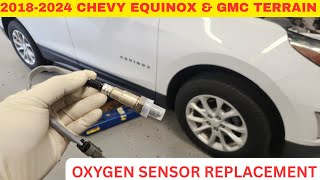
- Replacing the catalytic converter, which is almost never the root cause 🎬 See this breakdown of common P2097 causes and fixes. of a rich condition code.
Most Likely Causes
- Failing Upstream Oxygen Sensor (Position 1) 🔴 High Probability → Shop Oxygen Sensor GM Preliminary Information Bulletin PIP6071A specifically identifies the upstream (Position 1) O2 sensor as wearing out prematurely on 2023-2026 models with the 1.5L engine, causing false readings. This bulletin applies to vehicles built before May 27th, 2025.
How to confirm: Use a scan tool to monitor live data for the upstream O2 sensor (Sensor 1). If its readings are erratic, slow to respond, or biased, it is likely faulty. The bulletin instructs dealers to replace the sensor and inspect the catalyst bed for degradation.
Typical fix: Replace the upstream oxygen sensor (Bank 1, Sensor 1).
Est. part cost: $50-$150 - Leaking Fuel Injector(s) 🟡 Medium Probability → Shop Fuel Injector GM has issued TSBs (like PIP5534A and PIP4964F) for similar engines that highlight leaking fuel injectors as a root cause for rich conditions. This causes excess fuel to enter the cylinder, which is then detected downstream. TSB PIP5534A even suggests that if a single faulty injector cannot be found, all four may need replacement. TSB Bulletin #PIP4964F notes that technicians should perform an injector balance or Active Fuel Injector Tester (AFIT) procedure when a vehicle presents with a Malfunction Indicator Lamp for P2097.
How to confirm: A fuel injector balance test (AFIT) should be performed by a technician, as recommended by GM. Another sign can be the presence of misfire codes (P0300-P0304) along with P2097. You can also inspect the spark plugs; a plug that is significantly darker or soot-covered points to a rich condition in that specific cylinder.
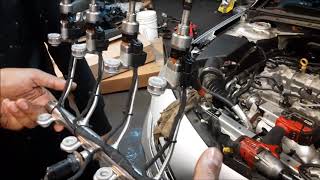
Typical fix: Identify and replace the faulty fuel injector(s). It is often recommended to replace them as a set. 🎬 Watch: How to access and replace the fuel rail and injectors.
Est. part cost: $90-$150 per injector - Exhaust System Leak 🟡 Medium Probability
How to confirm: Visually inspect the exhaust system from the engine manifold to the catalytic converter for any cracks, holes, or gasket leaks. A 'smoke test' can be performed to pinpoint hard-to-see leaks. A leak before the downstream sensor can draw in air, tricking the upstream sensor into enriching the fuel mixture.
Typical fix: Repair the leak by replacing the damaged pipe section, gasket, or sealing it with exhaust putty for minor leaks.
Est. part cost: $20-$200 - Failing Downstream Oxygen Sensor (Position 2) ⚪ Low Probability → Shop Oxygen Sensor
How to confirm: With a scan tool, observe the downstream O2 sensor voltage. It should be relatively stable. If it is stuck high (above 0.8v) or fluctuating rapidly like the upstream sensor, it may be faulty. This should be checked only after confirming the upstream sensor and fuel system are okay, as it's a common misdiagnosis.
Typical fix: Replace the downstream oxygen sensor (Bank 1, Sensor 2). The OEM part number for the 1.5L engine is cited as 12701634.
Est. part cost: $40-$120
Rare But Worth Checking
- Failing Catalytic Converter: → Shop Catalytic Converter This is rarely the cause of a P2097 code. The rich condition is what damages the converter, not the other way around. Only consider this after all other possibilities have been exhausted.
- High Fuel Pressure: A faulty fuel pressure regulator or high-pressure fuel pump can cause a system-wide rich condition. This should be tested with a fuel pressure gauge if codes P2097 and P0172 are present.
- Driving Style: TSB PIP5534A notes that certain driving habits, such as heavy stop-and-go traffic or rapid acceleration followed by coasting ('digital driving'), can induce a P2097 code on some GM engines without a true component fault.
- Stuck-Open EVAP Purge Valve: GM TSB PIP5534A specifically directs technicians to check the EVAP system. A purge valve stuck open allows unmetered fuel vapors into the intake manifold, creating a rich condition that can trigger P2097.
- Excessive Carbon Buildup on Valves: Per GM bulletin 16-NA-383, heavy carbon deposits on intake valves can cause misfires and improper combustion, potentially leading to rich exhaust readings. This is more likely on engines with over 5,000 miles and may be related to fuel quality.
Diagnosis Steps
- Scan for all DTCs. Note if other codes like P0172, P0300, P2251, or P223C are present, as they provide critical diagnostic clues.
- Referencing TSB PIP6071A (especially for 2023+ models), inspect the upstream O2 sensor's live data. Check for slow response or biased readings.
- Thoroughly inspect the exhaust system for any leaks between the cylinder head and the downstream O2 sensor. Pay close attention to gaskets and flex pipes.
- If no exhaust leaks are found and the upstream sensor seems okay, investigate the fuel system. Check fuel trim values (Short Term and Long Term). High negative values (e.g., -10% or more) confirm the ECM is removing fuel to combat a rich condition.
- Per TSBs PIP5534A and PIP4964F, consider having a professional perform a fuel injector balance test (AFIT) to check for leaking injectors, a known issue on these platforms. TSB Bulletin #PIP4964F emphasizes performing this test prior to further diagnostic steps.
- As a final step, test the downstream O2 sensor. Its voltage should be steady. If it's stuck high or fluctuating wildly after confirming the upstream systems are working correctly, it may have failed.
Parts You'll Likely Need
- Upstream Oxygen Sensor (Bank 1, Sensor 1)
(OEM #12690351)— A known issue of premature failure on this platform, as documented in GM service bulletin PIP6071A for 2023-2026 models.
Trusted brands: ACDelco, Denso, Bosch
OEM price range: $100-$180
Aftermarket price range: $50-$120 - Fuel Injector
(OEM #12672368 (Note: This part may be discontinued and superseded by 12684125 or 12684128).)— Leaking fuel injectors are a documented cause of rich conditions on modern GM engines, per TSBs PIP5534A and PIP4964F.
Trusted brands: ACDelco, GM Genuine
OEM price range: $90-$150
Aftermarket price range: $60-$110 - Downstream Oxygen Sensor (Bank 1, Sensor 2)
(OEM #12701634)— While less common to be the root cause, the sensor that triggers the code can fail. It is often replaced unnecessarily.
Trusted brands: ACDelco, Denso, Bosch
OEM price range: $80-$140
Aftermarket price range: $40-$100
Related Codes That Often Appear With This One
- P0172 — 'System Too Rich Bank 1' is detected by the upstream O2 sensor. Seeing both codes together strongly suggests a genuine rich condition (like a leaking injector) rather than just a sensor fault.
- P0300 — This is a 'Random/Multiple Cylinder Misfire' code. A severely leaking injector can foul a spark plug or disrupt combustion, causing misfires. This code is specifically mentioned alongside P2097 in TSB PIP6071A.
- P2251 — 'O2 Sensor Negative Current Control Circuit/Open Bank 1 Sensor 1'. This code is specifically mentioned in TSB PIP6071A alongside P2097 as pointing to a faulty upstream O2 sensor.
- P223C — 'O2 Sensor Signal Circuit Shorted to Heater Circuit Bank 1 Sensor 1'. Also mentioned in TSB PIP6071A as a companion code pointing to a faulty upstream O2 sensor.
Technical Service Bulletins (TSBs) & Recalls
- PIP6071A: Addresses engine misfires, hesitation, and various trouble codes including P2097, pointing to a faulty upstream O2 sensor on 2023-2026 Terrain/Equinox 1.5L models.
- PIP5534A: Mentioned in relation to P2097 diagnostics on other GM engines, advising technicians to check for leaking fuel injectors and noting that driving style can sometimes induce the code. TSB Bulletin #PIP5534A communicates additional diagnostics to assist in repairing this specific code.
- PIP4964F: Also points to leaking fuel injectors as a primary cause for P2097 and P2099 on related GM platforms. TSB Bulletin #PIP4964F advises that technicians will need to perform an injector balance or Active Fuel Injector Tester prior to going further.
Platform-Specific Known Issues
- GM Preliminary Information Bulletin PIP6071A notes that 2023-2026 Terrain and Equinox models with the 1.5L engine built before May 27, 2025, may have a faulty upstream (Position 1) oxygen sensor that causes codes P2097, P0300, P2251, and P223C.
- TSB PIP5534A, applicable to similar GM engines, provides advanced diagnostics for P2097, noting that causes can be elusive and can even be induced by specific driving styles ('digital driver') without a component fault.
Mechanic-Grade Diagnostic Values
- Long-Term Fuel Trim (LTFT) — expected: -10% to +10%. Failure: Consistently negative values below -10%, with the P2097 code often triggering when values exceed -20% to -25%.
- Downstream O2 Sensor (Sensor 2) Voltage — expected: Relatively stable voltage, typically between 0.6V and 0.8V on a warm engine at steady RPM.. Failure: Voltage is stuck high (e.g., >0.8V) or fluctuating rapidly like the upstream sensor.
- High-Pressure Fuel System Pressure — expected: 2,000 to 2,900 PSI (138 to 200 bar) under operation for the 1.5L LYX engine. The LSD engine variant features a higher-pressure 35MPa (5076 PSI) system.. Failure: Pressure that is significantly below or above the specified range, which may indicate a failing high-pressure fuel pump.
Scan Tool Commands That Help
- GM GDS2: EVAP Purge/Seal — As per TSB PIP5534A, this command should be used early in the diagnosis to command the EVAP purge solenoid valve open and closed to test for a stuck-open condition, which can cause a false rich reading.
- GM GDS2 (with AFIT tool): Fuel Injector Balance Test — As recommended by TSBs PIP5534A and PIP4964F, this test should be run if a leaking fuel injector is suspected. It measures pressure drop for each injector to identify leaks.
OEM Part Supersession History
12672368→12684125— Part discontinued by manufacturer.
Heads up: 12672368 was a 'Nominal Flow' injector. While 12684125 is the replacement, it's critical to ensure all injectors are replaced as a matched set to avoid fuel balance issues.N/A→12682079 (Fuel Pump)— Customer Satisfaction Program N182199610 was issued for certain 2019 Terrain models where the original high-pressure fuel pump could crack and leak.
Heads up: Vehicles under this program require replacement of the fuel pump, insulator, and fuel feed pipe to resolve the potential leak.
Model Year Variations Within This Range
- 2022: The 2022 model year received a mid-cycle refresh with updated styling, but the 1.5L LYX powertrain remained the same as prior years.
- 2023-2026: Models built before May 27, 2025, are subject to TSB PIP6071A, which identifies a potentially faulty upstream O2 sensor as a primary cause for P2097.
Diagnostic Flowchart
Other Known Issues on This Vehicle
Issues unrelated to this code that are worth knowing about as an owner of this generation:
- Brake Vacuum Pump Failure 🔴 High — A widespread and well-documented problem for 2018-2022 models. Failure can be sudden, resulting in a hard brake pedal and loss of power assist. (Ref: TSB #PIP5835 has been issued for diagnosis, but no safety recall exists as of early 2026.)
- Missing Bolts on Start/Stop Accumulator 🟠 Medium — Subject of a recall for 2018-2020 models. Missing bolts can cause a transmission fluid leak, leading to loss of propulsion or, in rare cases, fire risk. (Ref: GM Recall N202313380 (October 2020))
- Insufficient Coating on Rear Brake Caliper Pistons 🟠 Medium — A recall was issued for 2018-2019 models. The defect can cause gas to form in the brake fluid, leading to a spongy pedal and reduced braking performance. (Ref: GM Recall N192272020)
- Carbon Buildup on Intake Valves 🟡 Low — A common issue with many direct-injection engines, including the 1.5L Turbo. Can lead to rough idle, hesitation, and reduced power over time, especially with frequent short trips.
- Hesitation from 9-Speed Automatic Transmission 🟡 Low — Some owners report delayed or complex gear changes, particularly in stop-and-go traffic. This is often related to software calibration rather than a mechanical failure.
Used vs. New Parts: Buying Guide for This Vehicle
When a used part is the smart pick: Used parts are generally not recommended for fixing a P2097 code on this vehicle due to the nature of the common failures. Electronic sensors and precision fuel components have a finite lifespan.
Donor-vehicle mileage cap: roughly under 60000 miles for the part to have meaningful remaining life.
What to inspect on the donor part:
- For O2 sensors, avoid parts from vehicles with known oil consumption or coolant leak issues, as contamination ruins the sensor.
- For fuel injectors, only consider a complete, matched set from a low-mileage, running donor vehicle with no fuel system codes.
- Verify the part numbers on the donor part match the required OEM number or a known compatible supersession.
OEM-only on this vehicle (don't cheap out):
- High-Pressure Fuel Pump: Due to the high pressures and a specific recall campaign (N182199610), using a new OEM pump is critical for safety and reliability.
- Fuel Injectors: While remanufactured injectors from reputable sources are an option, cheap aftermarket or used injectors often cause persistent performance issues. New OEM injectors guarantee correct flow rates and compatibility.
Aftermarket brands forum-validated for this vehicle:
- Oxygen Sensors: Denso, Bosch, and NTK (NGK) are highly regarded OEM suppliers and trusted aftermarket brands for this application.
Brands owners have reported issues with on this vehicle:
- Unbranded or 'white-box' oxygen sensors and fuel injectors from online marketplaces are frequently cited as failing quickly or being dead-on-arrival.
Real Owner Stories
Aggregated from forums and TSBs cited above. Mileages and costs reflect what owners reported in those sources.
2023 GMC Terrain 1.5L
Symptoms: Engine misfires, hesitation, and the Check Engine Light appearing with code P2097.
What fixed it: Replacement of the upstream (Position 1) oxygen sensor and inspection of the catalyst bed as per Bulletin PIP6071A.
Source hint: GM Preliminary Information Bulletin PIP6071A
2018 GMC Terrain 1.5L
Symptoms: The vehicle was throwing a P2097 code; advice was given to check for carbon buildup and oil in the intake which can foul sensor readings.
What fixed it: Checking O2 sensors and inspecting for carbon buildup/oil contamination in the intake system.
Source hint: GM-Trucks.com - 'P2097 CODE - Troubleshooting & Recalls'
Related OBD-II Codes
Frequently Asked Questions
I have a 2024 GMC Terrain 1.5L with a P2097 code; is there a specific bulletin for this?
Can a leaking fuel injector cause the P2097 code on my Terrain?
The dealer mentioned a 'digital driver' style could cause my P2097 code. Is that possible?
What is the specific part number for the downstream oxygen sensor on the 1.5L engine?
Could my P2097 code be related to the brake vacuum pump issues on my 2019 Terrain?
Should I replace all my fuel injectors if only one is failing?
Helpful Videos

![How to Fix P2097 Engine Code in 4 Minutes [2 DIY Methods / Only $9.84]](https://img.youtube.com/vi/rCwtzRmhMwY/mqdefault.jpg)

The information in this article is provided for general reference and educational purposes only. Vehicle specifications, procedures, and part compatibility can vary by production date, trim level, and region. Always consult your vehicle's factory service manual and verify part numbers before purchasing or performing repairs. Safety-critical components such as airbags, seat belts, and braking systems should be installed by a qualified professional.
- GMC Terrain:
- 🧭 Diagnostic Flowchart
- 🎬 Helpful Videos
- What's Unique About the 2018-2026 GMC Terrain
- Symptoms You May Notice
- Most Likely Causes
- Rare But Worth Checking
- Diagnosis Steps
- Parts You'll Likely Need
- Related Codes That Often Appear With This One
- Technical Service Bulletins (TSBs) & Recalls
- Platform-Specific Known Issues
- Mechanic-Grade Diagnostic Values
- Scan Tool Commands That Help
- OEM Part Supersession History
- Model Year Variations Within This Range
- Other Known Issues on This Vehicle
- Used vs. New Parts: Buying Guide for This Vehicle
- Real Owner Stories
- 2023 GMC Terrain 1.5L
- 2018 GMC Terrain 1.5L
- Related OBD-II Codes
- Frequently Asked Questions
- 🎟️ Get 5% Off