

P2101 on 2015-2018 Cadillac CTS: Throttle Actuator Causes and Fixes
On a 2015-2018 Cadillac CTS, code P2101 is most often caused by a faulty electronic throttle body, but can also be triggered by a collapsed or incorrect engine air filter, especially on high-performance LT4 models. Always inspect the air filter and intake duct for obstructions or damage before replacing the throttle body.
- For a P2101 code on a 2015-2018 Cadillac CTS, always inspect the engine air filter first. A collapsed or incorrect filter is a very common cause specific to this car.
- The vehicle will enter a 'Reduced Engine Power' mode, which is a serious safety concern. Driving should be limited to getting to a repair location.
- If the air filter is fine, the next most likely causes are a dirty or failed throttle body assembly.
- Do not immediately suspect the gas pedal; P2101 almost always relates to an issue at the engine's throttle body.
- After cleaning or replacing the throttle body, a 'throttle relearn' procedure is mandatory for the car to idle and drive correctly.
What's Unique About the 2015-2018 Cadillac CTS
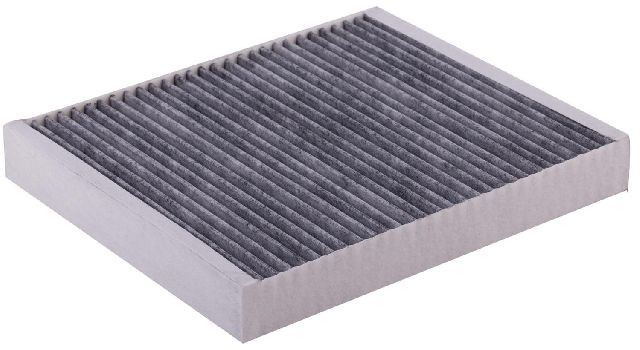
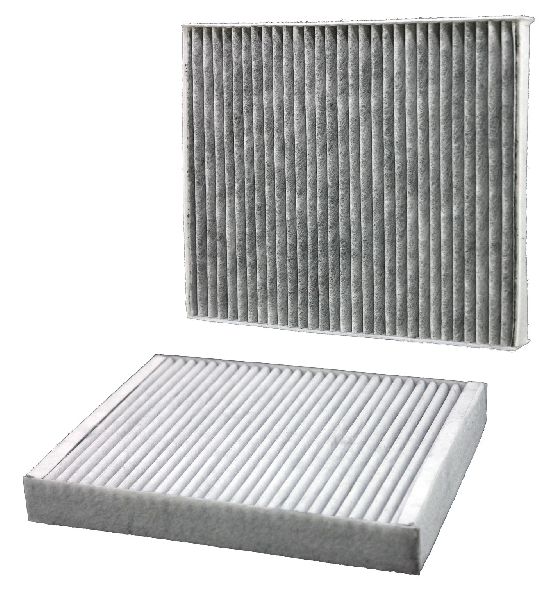
For the 2015-2018 Cadillac CTS, particularly performance models like the CTS-V with the LT4 engine, this code has a unique and very common cause that is not the throttle body itself. Per GM Technical Service Bulletin PIP5424A, a deformed, collapsed, or incorrect aftermarket air filter can restrict airflow enough during aggressive driving to trigger a P2101 code. Technicians and owners often find that inspecting the air filter and intake tract for issues resolves the code without needing to replace the more expensive throttle body assembly. The TSB notes the correct filter has reinforcing glue lines, while the incorrect one does not.
Symptoms You May Notice
- Check Engine Light illuminated
- "Reduced Engine Power" message on the dashboard
- Drastic loss of acceleration (limp mode)
- Unstable or rough idle
- Vehicle may stall, especially after aggressive throttle input
- Poor or delayed throttle response
- Car will not accelerate at all
- Replacing the Accelerator Pedal Position (APP) Sensor. The APP sensor has its own set of diagnostic codes (like P2138) and is rarely the cause of a P2101, which points specifically to the throttle body motor circuit.
Most Likely Causes
- Incorrect or Deformed Engine Air Filter 🔴 High Probability → Shop Air Cleaner Assembly As documented in GM TSB PIP5424A for the 2016-2017 CTS-V (LT4), high-performance versions can create enough suction during wide-open throttle to collapse weak or non-reinforced aftermarket air filters. This restricts airflow and causes the throttle system to set P2101, P0121, and P2119. The TSB explicitly states the correct OEM filter has visible reinforcing glue lines.
How to confirm: Remove the air filter and inspect it for collapse, deformation, or signs it is not an OEM-style filter with reinforcing glue lines. Check the air intake duct for any obstructions or damage; the duct can be sucked into contact with pulleys if the filter collapses.
Typical fix: Replace the air filter with a high-quality OEM (ACDelco) or equivalent reinforced filter. Clear the codes and test drive.
Est. part cost: $25-$70 - Failing Throttle Body Assembly 🟡 Medium Probability → Shop Fuel Injection Throttle Body Electronic throttle bodies are a common failure point on many modern vehicles, including the GM models that use the LTG, LGX, and LT4 engines. 🎬 Watch: Diagnosing common throttle codes on a Cadillac 3.6L engine. The internal motor or position sensors can wear out over time, leading to a discrepancy between the commanded and actual throttle position.
How to confirm: If the air filter and intake are confirmed to be good, the throttle body is the next suspect. A mechanic can use a scan tool to command the throttle plate and watch its response to see if it's sticking or not matching the command.
Typical fix: Replace the entire throttle body assembly. A 'throttle learn' or 'idle relearn' procedure must be performed after replacement.
Est. part cost: $120-$450 - Carbon Buildup in Throttle Body 🟡 Medium Probability → Shop Fuel Injection Throttle Body Direct-injected engines like the LTG and LGX can be prone to carbon buildup. This buildup can form around the throttle plate, causing it to stick and preventing the motor from moving it correctly, which triggers the code.
How to confirm: Remove the air intake duct from the throttle body and visually inspect the throttle bore and plate for a thick black coating of carbon.
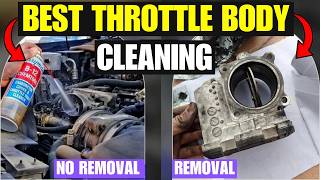
Typical fix: Clean the throttle body thoroughly with a dedicated throttle body cleaner and a soft cloth. Do not use 🎬 See two ways to clean your throttle body effectively. harsh tools that could scratch the bore. An idle relearn procedure is recommended after cleaning.
Est. part cost: $10-$20 - Wiring Harness or Connector Issue ⚪ Low Probability
How to confirm: Visually inspect the wiring and connector at the throttle body for any signs of damage, corrosion, or loose pins. Perform a 'wiggle test' on the harness with the engine running to see if it triggers the fault. In one documented case, mice had built a nest in the airbox and chewed through wiring, causing these codes.
Typical fix: Repair the damaged section of the wiring harness or replace the connector pigtail.
Est. part cost: $20-$100
Rare But Worth Checking
- Powertrain Control Module (PCM) Software Anomaly: → Shop Engine Control Module (ECM) GM TSB 17-NA-348 (also listed as 18-NA-035) noted a software issue on some 2017-2018 GM vehicles where a feature called 'Driver Door Open Prime' could falsely set a P2101 code, particularly with a low battery. A dealership can check if this ECM reprogram is needed.
- Faulty Powertrain Control Module (PCM): → Shop Engine Control Module (ECM) This is extremely rare. The PCM should only be considered after all other possibilities (air filter, throttle body, wiring) have been exhaustively ruled out.
Diagnosis Steps
- Read all stored DTCs with an OBD-II scanner. Note any other codes that appear with P2101, such as P0121, P1516, or P2176.
- CRITICAL STEP for this vehicle: Remove and inspect the engine air filter. Look for signs of collapse, deformation, or use of a non-reinforced aftermarket filter, especially on LT4 engines.
- Inspect the entire air intake duct between the filter and the throttle body for obstructions, tears, or damage. On CTS-V models, check if the duct has made contact with the supercharger idler pulley.
- If the air filter and intake are okay, inspect the throttle body electrical connector and wiring harness for looseness, corrosion, or damage.
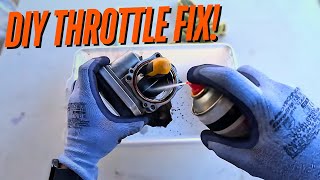
- Remove the intake duct from the throttle body and inspect the throttle plate and bore for heavy carbon buildup or foreign objects (like leaves from a mouse nest). Clean if necessary. 🎬 Watch: A simple DIY guide to cleaning your throttle body at home.
- Using a capable scan tool, observe the live data for commanded vs. actual throttle position while pressing the accelerator pedal (with the engine off, ignition on). The values should track closely. If they do not, the throttle body is likely faulty.
- If a new throttle body is installed, perform the idle/throttle relearn procedure as specified for the vehicle. This may require a scan tool or can sometimes be done by following a specific sequence of key cycles and idling.
Parts You'll Likely Need
- Engine Air Filter
(OEM #ACDelco A3221C (For 6.2L LT4, as specified in TSB PIP5424A). Verify by VIN for other engines.)— Per GM TSBs, a collapsed or incorrect air filter is a primary cause of P2101 on this specific vehicle platform.
Trusted brands: ACDelco
OEM price range: $40-$70
Aftermarket price range: $25-$50 - Throttle Body Assembly
(OEM #12670983 (For 3.6L LGX). 12671223 (For 2.0L LTG). 12671225 (For 6.2L LT4). Always verify by VIN.)— If the air filter is not the cause, the internal electronics or motor of the throttle body have likely failed.
Trusted brands: ACDelco, Bosch, Hitachi
OEM price range: $150-$450
Aftermarket price range: $120-$300
Related Codes That Often Appear With This One
- P1516 — This is a GM-specific code for 'Throttle Actuator Control (TAC) Module Performance' and is often set alongside P2101, pointing directly to a throttle body performance issue.
- P2176 — This code means 'Throttle Actuator Control System - Idle Position Not Learned'. It often appears when the throttle body is failing, is very dirty, or has been replaced without performing the relearn procedure.
- P0068 — Indicates a mismatch between the MAP/MAF sensors and throttle position. This can be triggered by the same airflow restriction (like a collapsed filter) that causes P2101.
- P0121 — This code for 'Throttle/Pedal Position Sensor 'A' Circuit Range/Performance' is frequently set with P2101, especially in the case of a collapsed air filter as noted in TSB PIP5424A.
Technical Service Bulletins (TSBs) & Recalls
- PIP5424A: Mentions P2101, P0121, and P2119 can be caused by a deformed or incorrect air filter on 2016-2017 CTS-V models during aggressive driving.
- 17-NA-348 / 18-NA-035: Notes a software anomaly on some 2017-2018 models that could falsely set P2101 due to the 'Driver Door Open Prime' feature.
Platform-Specific Known Issues
- TSB PIP5424A specifically calls out that a collapsed/deformed air filter can cause this code on the 2016-2017 CTS-V, and that the correct OEM filter has visible reinforcing glue lines.
- TSB 17-NA-348 / 18-NA-035 mentions a potential software anomaly on some 2017-2018 models that could require an ECM reprogram to fix a false P2101 code related to the 'Driver Door Open Prime' feature.
Mechanic-Grade Diagnostic Values
- Throttle Actuator Control (TAC) Motor Resistance — expected: 5 to 15 Ohms between the two motor control pins on the throttle body assembly.. Failure: Infinite resistance (open circuit) or near-zero resistance (short circuit) indicates a failed motor.
- Throttle Body Ground Circuit Resistance — expected: Less than 1 Ohm between the low reference pin at the connector and a known good chassis ground.. Failure: Resistance greater than 1 Ohm points to a poor ground connection, which can cause erratic TAC motor operation.
- Voltage Drop Test on TAC Motor Circuit — expected: Less than 0.5V drop between the PCM supply voltage and the voltage measured at the motor connector with the ignition on.. Failure: A voltage drop greater than 0.5V suggests high resistance in the wiring or a corroded connector.
- Throttle Position Sensor (TPS) Voltage — expected: Approximately 0.5V-1.0V at idle (closed throttle) to 4.0V-4.5V at wide-open throttle. The two TPS signals should sweep smoothly in opposite directions.. Failure: Voltage that is stuck, jumps erratically, or does not change when the throttle plate moves indicates a faulty sensor within the throttle body assembly.
Scan Tool Commands That Help
- GM GDS2 (or equivalent professional scanner): ETC Learn (Electronic Throttle Control Learn) — This function, found in the PCM > Miscellaneous Functions menu, must be used after cleaning or replacing the throttle body to reset its learned idle and off-idle positions. Failure to do so can cause an unstable idle or related DTCs.
- GM GDS2 (or equivalent professional scanner): Throttle Position Actuator Test — This bidirectional control allows a technician to command the throttle plate to open to specific percentages (e.g., 25%, 50%, 75%) while observing the actual position reported by the TPS. It is used to verify if the motor is sticking, slow to respond, or not matching the command.
Wiring & Ground Locations
- G101 / G106 (Potential ECM Ground) — On older GM platforms, G101 was located on the lower front of the engine block, and G106 was on the front center of the frame cross rail. These grounds were critical for the ECM.. A poor engine or ECM ground can cause erratic behavior in sensor readings and actuator commands, potentially triggering a P2101. While these specific locations are from an older CTS generation, checking major ECM and engine block grounds is a valid diagnostic step for unexplained electronic issues.
- G103 (Potential BCM/System Ground) — On older CTS models, located at the left rear of the engine compartment on the cowl, above the brake booster.. This ground serves many modules, including the BCM and Data Link Connector (DLC). While not a direct ground for the throttle body, intermittent issues at a major ground point can introduce electrical noise that affects various systems.
Real Owner Repair Stories
- YouTube channel 'The G Automotive and More' (Cadillac CTS 3.6L (year not specified, but within relevant generation)) — Car was towed in, ran very poorly, and had codes P2101, P2176, and P2119.
✅ What actually fixed it The vehicle had been sitting for years and mice had built a nest. The air cleaner housing screws were missing, which allowed leaves and nesting material to be sucked past the filter and physically jam the throttle body plate, preventing it from moving correctly. The fix was to remove the throttle body, clean out all the debris from the intake, and properly secure the air filter housing.
Diagnostic Flowchart
Other Known Issues on This Vehicle
Issues unrelated to this code that are worth knowing about as an owner of this generation:
- Cadillac CUE Screen Delamination and Failure 🔴 High — Extremely common across 2013-2018 Cadillac models. The screen develops 'spiderweb' cracks, bubbles, and becomes unresponsive to touch ('ghost touch'), often worsening in heat.
- 8-Speed (8L45/8L90) Transmission Shudder 🔴 High — Widespread issue affecting many 2015-2019 GM vehicles, including the CTS. Owners report a shudder or vibration during light acceleration, often described as driving over rumble strips. (Ref: 18-NA-355 (replaces earlier versions): Recommends a fluid flush with a specific Mobil 1 synthetic ATF.)
- LGX 3.6L V6 Timing Chain Stretch 🟠 Medium — Less common than on its predecessors (LLT, LFX), but the timing chains on the LGX can still stretch at higher mileage (typically over 100k miles), especially if oil change intervals are extended or the engine is run low on oil. Symptoms include rattling noises and timing-related codes like P0016, P0017.
- Carbon Buildup on Intake Valves 🟠 Medium — Common to all direct-injected engines like the LTG, LGX, and LT4. Over time (50k-80k miles), carbon deposits accumulate on the back of the intake valves, which can lead to a gradual loss of performance and rough idling.
Used vs. New Parts: Buying Guide for This Vehicle
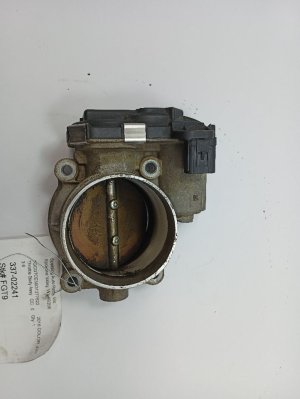
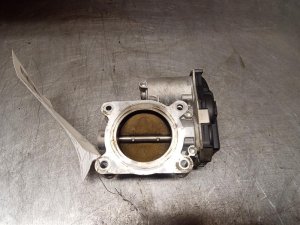
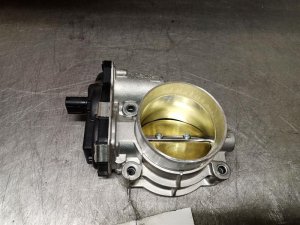
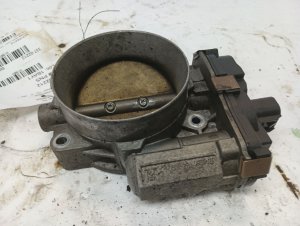
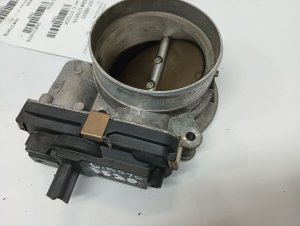
When a used part is the smart pick: A used throttle body is a calculated risk. It only makes sense if it is a genuine OEM (ACDelco) part sourced from a documented, low-mileage donor vehicle (e.g., a rear-end collision). It can be a cost-effective alternative to a new OEM unit if the price is significantly lower.
Donor-vehicle mileage cap: roughly under 50000 miles for the part to have meaningful remaining life.
What to inspect on the donor part:
- Verify the donor vehicle's VIN and mileage.
- Inspect the electrical connector pins for any corrosion or damage.
- Check the throttle plate for scoring or signs of physical damage.
- Ensure it is the exact OEM part number for the vehicle's engine (LTG, LGX, and LT4 use different throttle bodies).
OEM-only on this vehicle (don't cheap out):
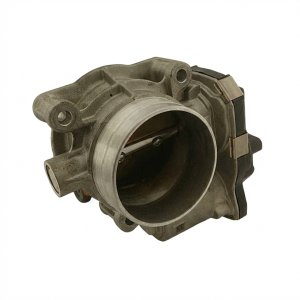
- Throttle Body Assembly: While some high-quality aftermarket brands exist (Bosch, Hitachi), many mechanics report issues with cheaper, unbranded aftermarket throttle bodies, leading to repeat failures or compatibility problems. Given the criticality of the part, sticking with OEM ACDelco is the safest choice.
- Engine Air Filter: Always buy a new, high-quality reinforced filter. A used air filter has no value and a cheap, non-reinforced one is a known cause of this specific code on this platform.
Aftermarket brands forum-validated for this vehicle:
- Bosch (often an OEM supplier)
- Hitachi (often an OEM supplier)
- ZZPerformance (offers a larger, performance-oriented throttle body for the LTG engine, but requires ensuring compatibility)
Brands owners have reported issues with on this vehicle:
- Unbranded, low-cost throttle bodies from online marketplaces are frequently cited in forums as being unreliable, failing quickly, or causing persistent electronic issues.
Real Owner Stories
Aggregated from forums and TSBs cited above. Mileages and costs reflect what owners reported in those sources.
2016-2017 Cadillac CTS-V LT4 6.2L V8
Symptoms: Check Engine Light and 'Reduced Engine Power' message appeared during aggressive driving or after a wide-open throttle event.
What fixed it: Replacing a collapsed aftermarket air filter with a proper OEM (ACDelco) filter that has visible reinforcing glue lines.
Source hint: TSB PIP5424A
2017-2018 Cadillac CTS
Symptoms: The P2101 code was stored in the computer, but there were no noticeable performance or drivability issues.
What fixed it: The dealer performed an ECM reprogram to correct a software anomaly related to the 'Driver Door Open Prime' feature.
Source hint: TSB 17-NA-348 / 18-NA-035
2015-2018 Cadillac CTS
Symptoms: Vehicle was in limp mode with a P2101 code. Upon inspection, a mouse nest was found in the airbox and leaves were obstructing the throttle body.
What fixed it: Repairing the section of the throttle body wiring harness that had been chewed through by mice.
Source hint: Documented case from forum citations
Related OBD-II Codes
Frequently Asked Questions
My 2017 CTS-V went into 'Reduced Engine Power' mode after a hard pull. What's the first thing I should check for code P2101?
I have a 2018 CTS with a P2101 code, but the car seems to drive perfectly fine. Could this be a software glitch?
Is cleaning the throttle body a valid fix for P2101 on my direct-injected 2.0L LTG engine?
I'm replacing the throttle body on my 3.6L V6 CTS. Is there a special procedure I need to follow afterwards?
What are the most common symptoms of P2101 besides the check engine light?
My mechanic found a mouse nest in my airbox. Could that cause a P2101 code?
Helpful Videos

Used OEM Parts in Stock
New Aftermarket Parts Available



The information in this article is provided for general reference and educational purposes only. Vehicle specifications, procedures, and part compatibility can vary by production date, trim level, and region. Always consult your vehicle's factory service manual and verify part numbers before purchasing or performing repairs. Safety-critical components such as airbags, seat belts, and braking systems should be installed by a qualified professional.
- Cadillac CTS:
- 🧭 Diagnostic Flowchart
- 🎬 Helpful Videos
- 🛍️ Shop This Part
- What's Unique About the 2015-2018 Cadillac CTS
- Symptoms You May Notice
- Most Likely Causes
- Rare But Worth Checking
- Diagnosis Steps
- Parts You'll Likely Need
- Related Codes That Often Appear With This One
- Technical Service Bulletins (TSBs) & Recalls
- Platform-Specific Known Issues
- Mechanic-Grade Diagnostic Values
- Scan Tool Commands That Help
- Wiring & Ground Locations
- Real Owner Repair Stories
- Other Known Issues on This Vehicle
- Used vs. New Parts: Buying Guide for This Vehicle
- Real Owner Stories
- 2016-2017 Cadillac CTS-V LT4 6.2L V8
- 2017-2018 Cadillac CTS
- 2015-2018 Cadillac CTS
- Related OBD-II Codes
- Frequently Asked Questions
- 🎟️ Get 5% Off