

P2111 on 2013-2019 Ford Explorer 3.5L EcoBoost: Throttle Body Failure Causes and Fixes
On a 2013-2019 Explorer with the 3.5L EcoBoost, code P2111 is almost always caused by a failed electronic throttle body, putting the vehicle into a low-power 'limp mode'. The standard fix is to replace the entire throttle body assembly, which is a common DIY repair costing between $100 and $250 for the part. This is a well-documented issue across many Ford models with similar engines.
- P2111 on a 2013-2019 Explorer almost certainly means you need a new electronic throttle body.
- The vehicle will enter a 'limp mode' with very limited power, which is a safety feature but makes the vehicle unsafe to drive in traffic.
- The repair is relatively simple for a DIYer, requiring basic tools (typically an 8mm socket) and about an hour of time.
- After replacing the throttle body, a simple 'relearn' procedure is recommended and can be done without special tools.
- Do not waste time or money trying to clean the old throttle body; the fault is electronic and internal.
What's Unique About the 2013-2019 Ford Explorer
This is a notoriously common problem on Ford vehicles from this era using the 3.5L engine, including the EcoBoost variant. The failure is so widespread that Ford issued several Technical Service Bulletins (TSBs) and a Customer Satisfaction Program (13N03) that extended the warranty on the electronic throttle body (ETB). The root cause is typically contamination of the internal motor contacts within the ETB, leading to an intermittent electrical connection and loss of control. For this specific vehicle, a P2111 code, especially when accompanied by a wrench light and limp mode, is a near-definitive diagnosis of a failed throttle body.
Symptoms You May Notice
- Sudden and drastic loss of engine power (Limp Mode)
- Wrench warning light illuminated on the dashboard
- Check Engine Light illuminated
- Rough or unstable idle
- Engine stalling, especially when coming to a stop
- Hesitation or sluggish acceleration
- Inability to accelerate or unresponsive throttle pedal
- Service AdvanceTrac or Hill Start Assist Not Available 🎬 Watch: How a P2111 code can feel like a transmission failure. messages may appear
- Replacing the accelerator pedal position (APP) sensor. A faulty pedal sensor would generate its own specific set of codes (e.g., P2135, P2138). P2111 points specifically to a problem at the throttle body itself.
Most Likely Causes
- Failed Electronic Throttle Body (ETB) 🔴 High Probability → Shop Fuel Injection Throttle Body The original equipment throttle bodies are known to fail due to contamination of the internal electronic motor contacts, causing a poor electrical connection. This was the subject of Ford's Customer Satisfaction Program 13N03 and multiple TSBs.
How to confirm: Scan for code P2111 and/or P2112. Given the extremely high failure rate on this platform, the presence of these codes combined with limp mode symptoms is a near-certain diagnosis. Cycling the ignition may temporarily restore function.
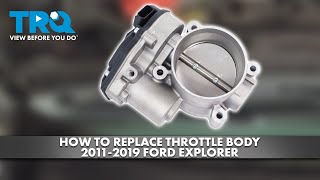
Typical fix: Replace the entire electronic throttle body assembly. 🎬 Watch: Step-by-step guide to replacing the throttle body yourself. Cleaning is not considered a permanent or reliable repair for this internal electronic fault. The replacement is a plug-and-play part and does not require special programming.
Est. part cost: $100-$250
Rare But Worth Checking
- Wiring Harness Issue: While the throttle body itself is the most likely culprit, it is always wise to inspect the wiring harness and connector for any visible damage, corrosion, or loose pins before replacing parts.
- Powertrain Control Module (PCM) Fault: → Shop Engine Control Module (ECM) This is extremely rare. The PCM should only be considered a potential cause after the throttle body and wiring have been definitively ruled out. A PCM fault is more likely to be accompanied by other unrelated codes.
Diagnosis Steps
- Confirm the presence of code P2111 (and possibly P2112) using an OBD-II scanner.
- Cycle the ignition off and on. If throttle response returns temporarily, it further points to an intermittent electronic fault within the throttle body.
- Visually inspect the electrical connector at the throttle body. Check for any bent pins, corrosion, or damage. Ensure the red locking tab is secure and pull gently on the wires to check for looseness.
- Inspect the wiring harness leading to the throttle body for any signs of chafing, melting, or other damage.
- Given the high probability of failure, if no obvious wiring issues are found, the next step is to replace the electronic throttle body assembly.
- After replacement, perform a throttle body relearn procedure. This can often be done without a scan tool by turning the ignition to 'ON' (engine off), slowly pressing the accelerator pedal to the floor and holding for a few seconds, then slowly releasing it. Another method involves simply letting the vehicle idle for several minutes. 🎬 See how to perform the critical throttle calibration procedure.
Parts You'll Likely Need
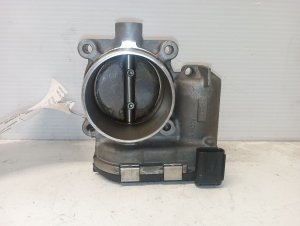
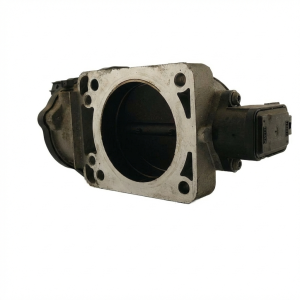
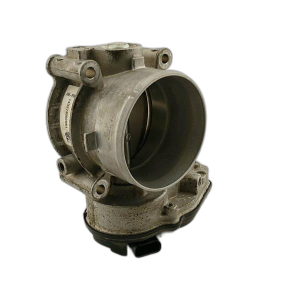
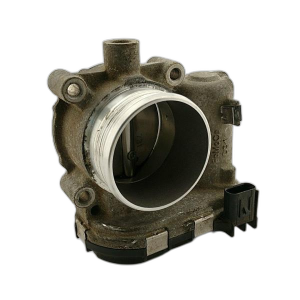
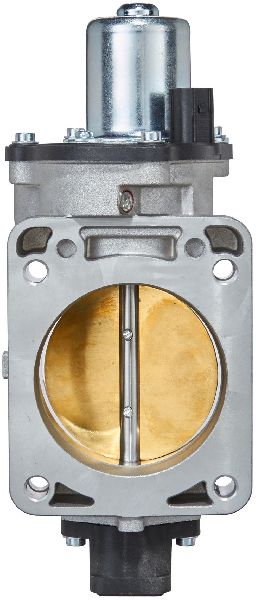
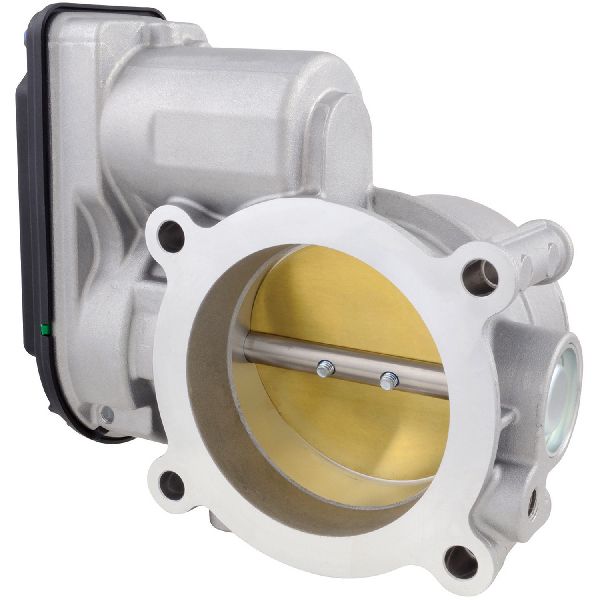
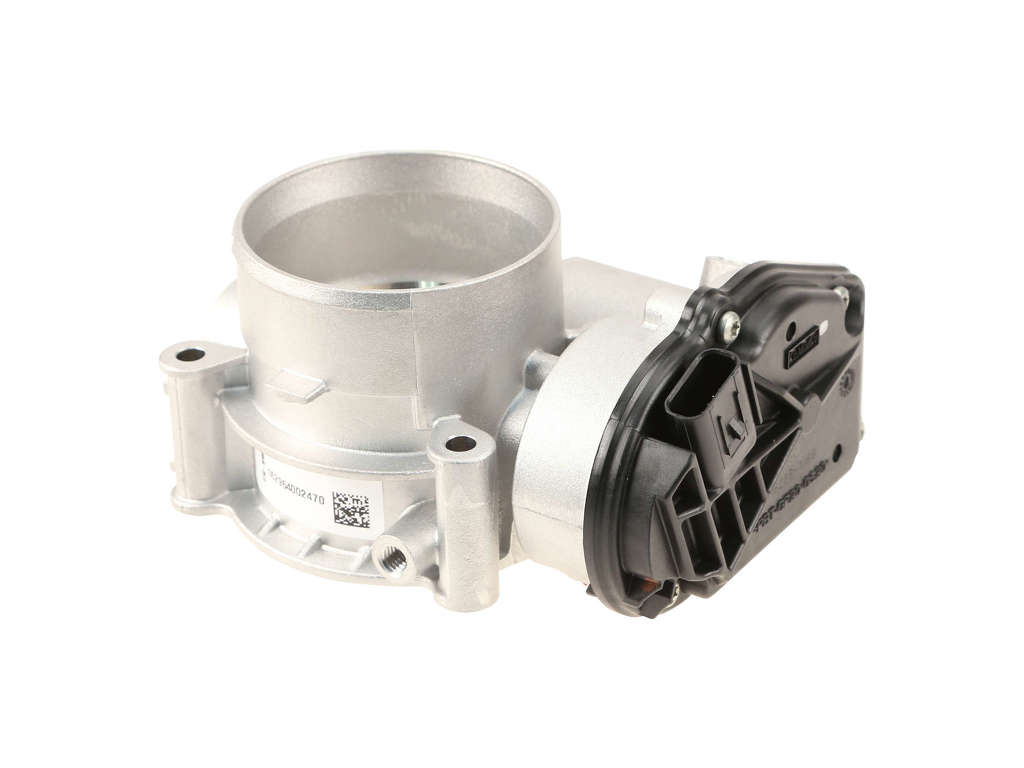
- Electronic Throttle Body Assembly
(OEM #BL3Z-9E926-B)— This is the definitive fix for the P2111 code on this vehicle, as the failure is internal to the unit. The 3.5L EcoBoost (turbo) engine uses a different throttle body than the naturally aspirated 3.5L engine. BL3Z-9E926-B is the correct part for the EcoBoost, while AT4Z-9E926-B is for the naturally aspirated version. Always verify with your VIN.
Trusted brands: Motorcraft, Hitachi, Dorman, Spectra Premium
OEM price range: $150-$250
Aftermarket price range: $100-$180
Related Codes That Often Appear With This One
- P2112 — This code means 'Throttle Actuator Control System - Stuck Closed' and is the direct companion to P2111. Both codes are triggered by the same internal electronic failure of the throttle body and are often listed together in Ford's service literature.
- P2119 — This code for 'Throttle Actuator Control Throttle Body Range/Performance' is also listed in Ford's TSB 16-0139 alongside P2111 and P2112, pointing to the same root cause.
Technical Service Bulletins (TSBs) & Recalls
- TSB 16-0139: Supersedes earlier bulletins. Addresses wrench light, intermittent power loss, and DTCs P2111, P2112, and P2119 on 2015-2016 models by recommending throttle body replacement. It covers a wide range of Ford/Lincoln vehicles with various gasoline engines.
- TSB 10-21-6: An earlier bulletin covering 2010-2011 models (including Flex/Taurus with the 3.5L engine) for DTCs P2111 and P2112, also recommending throttle body replacement for idle fluctuation issues.
- Bulletin #TSB 16-0139: Notes that vehicles may exhibit an intermittent loss of power and/or an illuminated powertrain malfunction (wrench) lamp with DTCs P2111, P2112, and/or P2119 stored in the PCM memory.
Platform-Specific Known Issues
- Ford issued Customer Satisfaction Program 13N03, extending the warranty on the electronic throttle body to 10 years or 150,000 miles from the warranty start date. For vehicles already past those limits, the program provided coverage through January 31, 2015. While this program has expired for all 2013-2019 models, it documents the widespread nature of the problem.
- NHTSA ODI #10910652 describes a scenario where a dealer identified codes P2111 and P2112 and performed recall 16B32, which involved reprogramming the PCM.
Mechanic-Grade Diagnostic Values
- Throttle Actuator Control (TAC) Motor Resistance — expected: Between 2 and 25 Ohms (check specific manual for exact spec). Failure: Resistance is too high (open circuit) or too low (short circuit).
- Throttle Position Sensor (TP) Reference Voltage at ETB Connector — expected: ~5V with key on, engine off.. Failure: Significantly lower or no voltage indicates a wiring or PCM issue.
- Scan Tool Live Data: Commanded vs. Actual Throttle Position — expected: The actual throttle position percentage should closely match the commanded position percentage.. Failure: A significant discrepancy, such as a commanded position of 5% while the actual position reads 22%, indicates the throttle plate is physically stuck or the sensor is failing.
Scan Tool Commands That Help
- Ford IDS, Forscan, or equivalent professional scanner: Actuator Test Mode / Output State Control — Use this before replacing the part to confirm a failure. It allows the technician to directly command the throttle plate to specific angles (e.g., 10%, 25%, 50%) and observe if it responds accurately on live data. If it fails to move as commanded, and wiring is confirmed good, the throttle body is faulty.
- Ford IDS, Forscan, or equivalent professional scanner: Reset KAM (Keep Alive Memory) — This should be performed immediately after installing a new throttle body. It clears the PCM's learned fuel trims and idle strategies that were adapted to the old, failing part. Failing to do this can result in a high or unstable idle after the repair.
Wiring & Ground Locations
- C175E — One of the main connectors at the Powertrain Control Module (PCM), located in the engine bay, typically near the firewall or battery.. This connector contains the critical pins for the throttle control system, including the Throttle Actuator Motor (TACM+, TACM-) and the dual Throttle Position sensors (TP1, TP2). Any corrosion or damage here can directly cause P2111.
- G103 / G104 — G103 is a battery support ground, while G104 is a primary engine support ground, both located in the engine compartment.. The PCM and its related sensors rely on clean ground connections. A corroded or loose engine or battery ground can cause erratic electronic behavior, including faults in the throttle control system. Checking these grounds is a crucial step if other electrical gremlins are present.
Real Owner Repair Stories
- Ford F150 Forum (2016 Ford F-150 with 10k miles) — Sudden loss of power while driving, multiple error messages on the dash. After restart, truck drove 15 feet and lost power again.
❌ Tried (didn't work) Restarting the vehicle only provided a very temporary fix.
✅ What actually fixed it The Ford dealer diagnosed a bad throttle body and replaced it, which resolved the issue. The owner noted this is a very common problem. - Reddit r/f150ecoboost (2014 Ford F-150 3.5L EcoBoost) — Intermittent complete loss of power with a 'wrench' light on the dash. Pulling over and restarting the truck would temporarily fix it.
❌ Tried (didn't work) Removing and cleaning the throttle body., Cleaning all 3 MAP/MAF sensors., Performing a system reset and idle relearn procedure.
✅ What actually fixed it The problem returned on the next drive after cleaning, confirming the issue was an internal electronic failure, not just carbon buildup. The next step and presumed fix was a full replacement of the throttle body assembly. - NHTSA ODI #11210366 — An owner reported the vehicle went into limp mode, and an independent mechanic retrieved code P2111, indicating the throttle actuator control system was stuck open.
- NHTSA ODI #11548348 — A driver experienced a yellow warning wrench and check engine light in the middle of a 4-lane highway, with error code P2111 stating the throttle body was stuck open.
- NHTSA ODI #11467804 — An owner described a recurring issue where the vehicle set a P2111 code, indicating a dangerous situation involving the throttle actuator system while driving.
When the Usual Fixes Don't Work
- While P2111 almost always points to the throttle body, there are rare documented cases where the symptoms of sudden power loss and limp mode were caused by a failing accelerator pedal assembly. In one instance on a similar Ford truck platform, a user spent months chasing the issue, and the final fix was a new accelerator pedal, not the throttle body. This is an important, though unlikely, alternative to consider if a new throttle body does not resolve the issue.
OEM Part Supersession History
BL3Z-9E926-A→BL3Z-9E926-B— The original part was prone to internal electronic failure. The supersession is an updated, more reliable version intended to fix the widespread issue.
Model Year Variations Within This Range
- 2013-2019: The 3.5L EcoBoost engine underwent a significant redesign, moving from 'Gen 1' to 'Gen 2' around the 2017 model year, which included changes to the fuel system, timing components, and turbochargers. However, this specific P2111 failure, caused by the electronic throttle body, is a common problem across both Gen 1 and Gen 2 engines within this vehicle's model range. The replacement part and repair procedure remain consistent.
Diagnostic Flowchart
Other Known Issues on This Vehicle
Issues unrelated to this code that are worth knowing about as an owner of this generation:
- Internal Water Pump Failure 🔴 High — Commonly occurs between 80,000 and 150,000 miles. Failure is critical as it is internally chain-driven. A weep hole may leak coolant externally, but an internal seal failure will mix coolant directly into the engine oil, leading to catastrophic engine damage if not caught immediately.
- Power Transfer Unit (PTU) Overheating/Failure 🔴 High — The PTU (on AWD models) is located near the hot exhaust with no drain plug and is filled with 'lifetime' fluid that often degrades, thickens into sludge, and leads to bearing/gear failure. Symptoms include grinding/binding on turns and a sulfur/propane-like smell from the vent. Failure requires costly replacement.
- Intake Valve Carbon Buildup 🟠 Medium — As a direct-injection engine, fuel does not wash over the intake valves. This allows oil and carbon deposits from the PCV system to bake onto the valves over time. This can lead to rough idle, hesitation, and misfires, typically becoming noticeable after 60,000-100,000 miles. The only effective cleaning method is invasive walnut shell blasting.
- Exhaust Odor / Carbon Monoxide In Cabin 🔴 High — Affects 2011-2017 models. Cracks or unsealed seams in the rear of the vehicle could allow exhaust fumes to be drawn into the cabin, particularly during hard acceleration or with the HVAC on recirculate. Ford issued service programs to address the issue but no formal recall. (Ref: Ford Customer Satisfaction Program 17N03)
- Timing Chain Stretch (Early 1st Gen) 🟠 Medium — Primarily affects earlier (pre-2015) 3.5L EcoBoost engines. The primary timing chain can stretch, causing rattling noises on startup and eventually leading to timing-related DTCs. Less common on the later models in this range but still possible with poor maintenance. (Ref: TSB 15-0131)
Used vs. New Parts: Buying Guide for This Vehicle
When a used part is the smart pick: Buying a used throttle body for this repair is highly discouraged. The part has a known design defect causing a high failure rate, so a used part is likely to fail in the same way. It should only be considered as a last resort for an extreme budget constraint, and only from a very low-mileage donor vehicle.
Donor-vehicle mileage cap: roughly under 40000 miles for the part to have meaningful remaining life.
What to inspect on the donor part:
- Verify the part number is the updated BL3Z-9E926-B, not the older 'A' version.
- Inspect the electrical connector pins for any signs of corrosion or oil contamination.
- Ask for the VIN of the donor car to verify mileage and check for accident history.
- Ensure there is no physical damage to the housing or connector.
OEM-only on this vehicle (don't cheap out):
- Electronic Throttle Body: Due to the high failure rate of the original design, using a new OEM (Motorcraft) part is the most reliable option to ensure a long-term fix.
Aftermarket brands forum-validated for this vehicle:
- Hitachi: Mentioned in forums as a reputable OEM-level manufacturer for throttle bodies.
- Dorman OE FIX: This specific Dorman line (part 977-593) claims to address the original failure mode by using a non-contact Hall effect sensor and improved seals, making it a potentially superior option to the original design.
Brands owners have reported issues with on this vehicle:
- Generic/unbranded parts: Many technicians report that cheap, no-name electronic parts and sensors are unreliable and often lead to repeat repairs. Sticking with OEM or a top-tier aftermarket brand is a safer investment.
Real Owner Stories
Aggregated from forums and TSBs cited above. Mileages and costs reflect what owners reported in those sources.
2013 Ford Explorer Limited 3.5L
Symptoms: Randomly going into limp mode or something similar while driving; code P2111 indicating throttle stuck open.
What fixed it: Changing the throttle body.
Source hint: r/FordExplorer - Thread 'Got a code P2111...'
2015-2016 Ford Explorer 3.5L EcoBoost
Symptoms: Wrench light, intermittent power loss, and DTCs P2111, P2112, and P2119.
What fixed it: Throttle body replacement as per TSB recommendations.
Source hint: TSB 16-0139
2011-2016 Ford F-150 3.5L EcoBoost
Symptoms: Sudden power loss and illuminated wrench lamp.
What fixed it: Replacement of the electronic throttle body (ETB).
Source hint: Ford F150 Forum - Community of Ford Truck Fans - Thread '3.5L - Illuminated Wrench Lamp ***TSB 16-0139***'
2010-2011 Ford Flex/Taurus 3.5L
Symptoms: Idle fluctuation issues and codes P2111 and P2112.
What fixed it: Throttle body replacement.
Source hint: TSB 10-21-6
Related OBD-II Codes
Frequently Asked Questions
Does Ford Customer Satisfaction Program 13N03 still cover my 2013-2019 Explorer's throttle body replacement?
My 2015 Explorer is showing a wrench light and P2111; is there a specific TSB for this?
Does the new throttle body require special programming by a Ford dealer?
Can I just clean the throttle body to fix the P2111 code on my 3.5L EcoBoost?
Is the throttle body covered under the Ford powertrain warranty?
What other major issues should I look out for on my 2013-2019 Explorer 3.5L EcoBoost?
Helpful Videos
Used OEM Parts in Stock
New Aftermarket Parts Available


The information in this article is provided for general reference and educational purposes only. Vehicle specifications, procedures, and part compatibility can vary by production date, trim level, and region. Always consult your vehicle's factory service manual and verify part numbers before purchasing or performing repairs. Safety-critical components such as airbags, seat belts, and braking systems should be installed by a qualified professional.
- Ford Explorer:
- 🧭 Diagnostic Flowchart
- 🎬 Helpful Videos
- 🛍️ Shop This Part
- What's Unique About the 2013-2019 Ford Explorer
- Symptoms You May Notice
- Most Likely Causes
- Rare But Worth Checking
- Diagnosis Steps
- Parts You'll Likely Need
- Related Codes That Often Appear With This One
- Technical Service Bulletins (TSBs) & Recalls
- Platform-Specific Known Issues
- Mechanic-Grade Diagnostic Values
- Scan Tool Commands That Help
- Wiring & Ground Locations
- Real Owner Repair Stories
- When the Usual Fixes Don't Work
- OEM Part Supersession History
- Model Year Variations Within This Range
- Other Known Issues on This Vehicle
- Used vs. New Parts: Buying Guide for This Vehicle
- Real Owner Stories
- 2013 Ford Explorer Limited 3.5L
- 2015-2016 Ford Explorer 3.5L EcoBoost
- 2011-2016 Ford F-150 3.5L EcoBoost
- 2010-2011 Ford Flex/Taurus 3.5L
- Related OBD-II Codes
- Frequently Asked Questions
- 🎟️ Get 5% Off