

P2111 on 2010-2019 Ford Taurus SHO 3.5L EcoBoost: Throttle Body Failure Causes and Fixes
On a 2010-2019 Taurus SHO, code P2111 almost always means the electronic throttle body has failed, causing a sudden and dangerous loss of power ('limp mode'). The only reliable fix is to replace the entire throttle body assembly. Expect to pay ~$100-$250 for an aftermarket part or more for OEM Motorcraft.
- Code P2111 on a Taurus SHO is a critical safety issue that should be addressed immediately.
- The cause is almost certainly a failed electronic throttle body; do not waste time or money on cleaning it.
- The repair is straightforward for a DIYer with basic tools and can prevent a dangerous on-road failure.
- Ensure you purchase the correct throttle body, as the 3.5L EcoBoost (SHO) part is different from the one for the standard 3.5L engine. The Motorcraft part number is typically 8S4Z-9E926-B.
- A throttle relearn procedure is mandatory after replacement to ensure proper idle and performance.
What's Unique About the 2010-2019 Ford Taurus
This is an extremely common and well-documented failure across the Ford lineup from this era using drive-by-wire throttle systems. The failure is so frequent that Ford issued Technical Service Bulletins (TSBs) like 10-21-6 and 16-0139 for numerous models with this issue. While TSB 10-21-6 explicitly excludes the 3.5L GTDI (EcoBoost) engine, the failure mode is identical. The issue is typically not carbon buildup that can be cleaned, but rather an internal electronic failure within the throttle body assembly itself, often due to contamination of the internal circuitry. For the Taurus SHO, this problem can turn a powerful car into one that can barely move, creating a significant safety hazard.
Symptoms You May Notice
- Sudden and severe loss of engine power (entering 'limp mode')
- Wrench warning light illuminated on the dashboard
- Check Engine Light illuminated
- Vehicle will not accelerate, or has extremely sluggish response
- Engine RPM is limited (often to around 900 RPM)
- Rough or unstable idle
- Engine may stall when coming to a stop
- Error message on the information display
- Replacing the Accelerator Pedal Position (APP) Sensor. A faulty pedal sensor would set its own specific trouble codes (e.g., P2138). Code P2111 points specifically to a problem at the throttle body itself.
- Cleaning a Failed Throttle Body. While cleaning a dirty throttle body can solve some idling issues, it will not fix the internal electronic failure that typically causes P2111 on this platform. Owners on forums and Reddit frequently report that cleaning provides no relief or the problem returns almost immediately.
Most Likely Causes
- Defective Electronic Throttle Body (ETB) Assembly 🔴 High Probability → Shop Fuel Injection Throttle Body The original equipment electronic throttle bodies on these models are known to be susceptible to internal electronic failure. Contamination from oil and moisture from the PCV system can seep into the sealed electronic components, causing shorts and erratic behavior of the actuator motor and position sensor.
How to confirm: Confirm the presence of code P2111 (often accompanied by P2112 or P2104). The primary symptom of sudden limp mode with the wrench light is the strongest indicator. While wiring should be checked, the throttle body itself is the cause in the vast majority of cases on this platform.
Typical fix: Replace the entire electronic throttle body assembly. Cleaning the old unit is not an effective long-term repair for this specific internal electronic failure. A throttle relearn procedure is required after replacement.
Est. part cost: $100-$450
Rare But Worth Checking
- Wiring Harness or Connector Issue: While less common than outright throttle body failure, it's possible for the wiring or connector to the throttle body to become damaged, corroded, or loose. Always perform a quick visual inspection of the harness for chewed wires or loose pins before replacing parts. NHTSA ODI #10747002 describes a case where a dealer attempted to fix the issue by performing maintenance to the connector after reproducing the P2111 fault.
- Powertrain Control Module (PCM) Fault: → Shop Engine Control Module (ECM) This is extremely rare. The PCM is a robust component. Do not consider replacing the PCM unless all other possibilities, especially the throttle body and wiring, have been definitively ruled out by a professional.
Diagnosis Steps
- Confirm the presence of code P2111 using an OBD-II scanner.
- Note any other codes present, such as P2112 or P2104.
- Interview the driver about symptoms. Ask specifically about sudden power loss or the 'wrench light'.
- Inspect the wiring harness and connector leading to the electronic throttle body. Look for any signs of damage, corrosion, or loose pins.
- Given the extremely high failure rate, if P2111 is present with limp mode symptoms on this vehicle, the most logical and time-saving step is to replace the electronic throttle body assembly.
- After replacement, clear all codes and perform the throttle body relearn procedure. This can often be done without a scan tool by disconnecting the battery for 15 minutes, or by turning the key to 'ON' (not start), slowly pressing the accelerator pedal to the floor, slowly releasing it, then turning the key 'OFF'.
- Test drive the vehicle to ensure the issue is resolved.
Parts You'll Likely Need
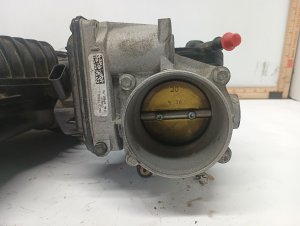
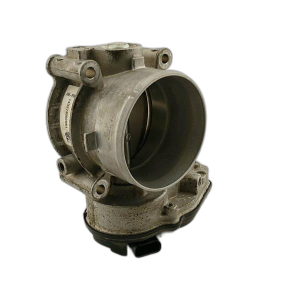
- Electronic Throttle Body Assembly
(OEM #8S4Z-9E926-B (Motorcraft))— This is the root cause of code P2111 in the vast majority of cases for the 2010-2019 Taurus SHO due to a common internal electronic failure. This part number is widely referenced for the 3.5L EcoBoost application.
Trusted brands: Motorcraft, Dorman (OE FIX), Hitachi, Standard Motor Products
OEM price range: $350-$450
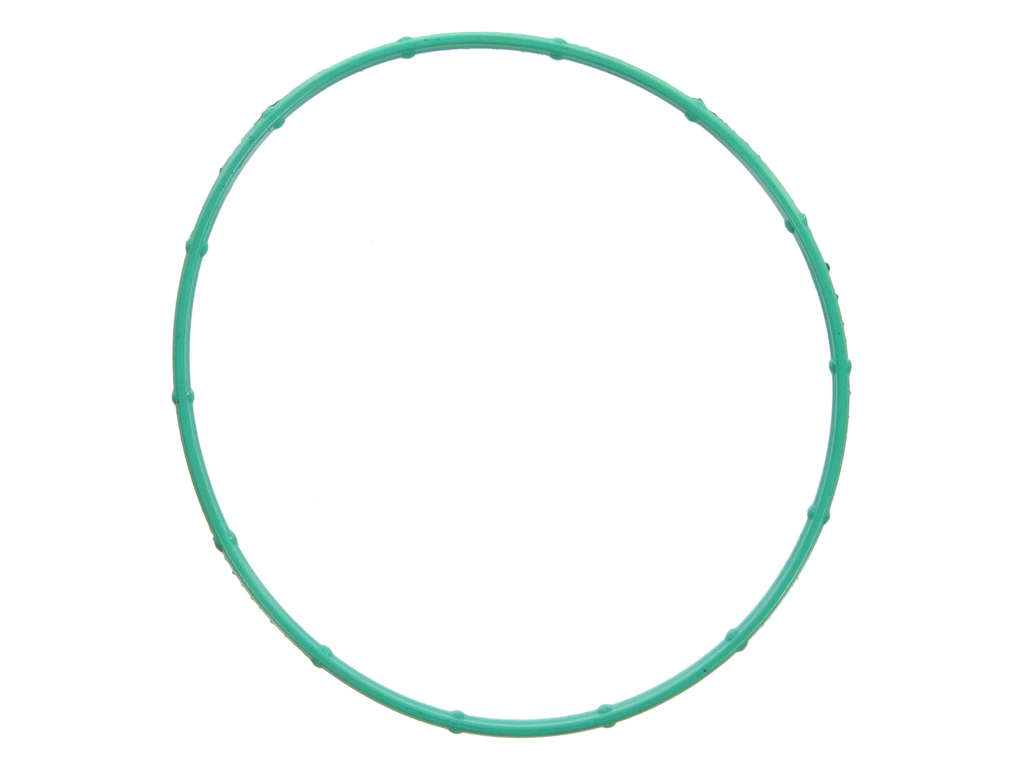
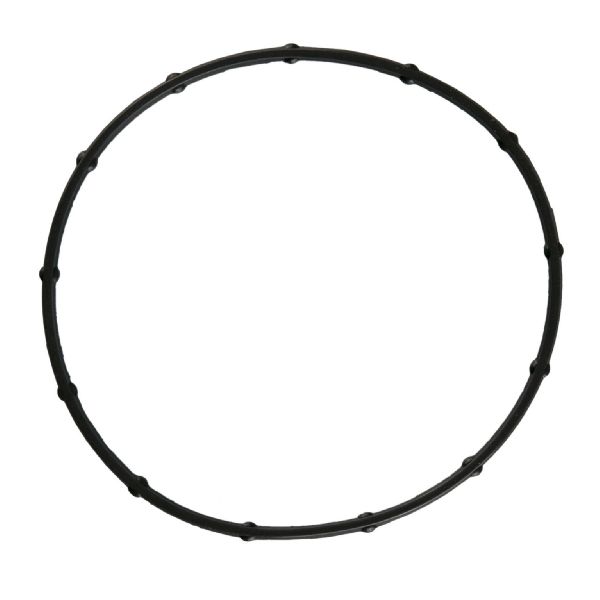
Aftermarket price range: $100-$250 - Throttle Body Gasket
(OEM #7T4Z-9E936-A)— The gasket should be replaced anytime the throttle body is removed to ensure there are no vacuum leaks. Most new throttle bodies come with a new gasket, but it's good practice to have one on hand.
Trusted brands: Fel-Pro, Mahle, Motorcraft
OEM price range: $10-$20
Aftermarket price range: $5-$15
Related Codes That Often Appear With This One
- P2112 — This code for 'Throttle Actuator Control System - Stuck Closed' is the counterpart to P2111. They often point to the same root cause: a failing electronic throttle body. TSBs 10-21-6 and 16-0139 address both codes together.
- P2104 — This code for 'Throttle Actuator Control System - Forced Idle' indicates the PCM has actively put the vehicle into limp mode due to detecting a critical fault, such as P2111. It is a result of the problem, not a separate fault.
Technical Service Bulletins (TSBs) & Recalls
- TSB 10-21-6: Addresses DTCs P2111 and P2112 on 2010-2011 Taurus (and other models) with the 3.5L non-GTDI engine, recommending throttle body replacement. While not explicitly for the SHO's EcoBoost engine, it highlights the known issue with the part family during this period.
- TSB 16-0139: A later TSB covering 2015-2016 Taurus (and many other models) for P2111, P2112, and P2119, again pointing to throttle body issues. This confirms the problem continued on later models. The bulletin notes vehicles may exhibit an intermittent loss of power and/or an illuminated powertrain malfunction (wrench) lamp.
Platform-Specific Known Issues
- A widespread and well-documented issue with electronic throttle bodies on many Ford platforms of this era, including the 3.5L EcoBoost, leading to sudden 'limp mode'.
- The failure is often caused by oil/moisture intrusion into the throttle body's electronics from the PCV system.
- Ford issued TSB 16-0139 for 2015-2016 models (including Taurus) for DTCs P2111 and P2112, indicating the problem persisted through the model years.
Mechanic-Grade Diagnostic Values
- Throttle Position Sensor (TPS) Signal Voltage — expected: Approx. 0.5V - 1.0V at closed throttle, sweeping smoothly to approx. 4.5V at wide-open throttle.. Failure: Voltage is jumpy, has dropouts, or does not change smoothly when the throttle is moved.
- Throttle Actuator Control (TAC) Motor Resistance — expected: Between 2 and 25 ohms across the two motor pins.. Failure: A reading outside this range, or an open circuit, indicates a failed internal motor.
- Power Feed Voltage at Throttle Body Connector — expected: Steady 12 Volts with key on, engine off.. Failure: No voltage or intermittent voltage suggests a problem with the wiring or PCM power supply.
- Reference Voltage at Throttle Body Connector — expected: Approximately 5.0V on the VREF pin.. Failure: Significantly lower or no voltage indicates a wiring or PCM fault.
Scan Tool Commands That Help
- Ford IDS (or equivalent): Actuator Test Mode / Output State Control — To command the throttle plate to open and close while monitoring its position sensor data (TP1, TP2). This directly tests the functionality of the throttle motor and sensors, confirming if it is physically sticking or failing to respond electronically.
- Ford IDS (or equivalent): Graph APP vs. TP Voltages — Graph the two Accelerator Pedal Position sensor voltages (APP1, APP2) against the two Throttle Position sensor voltages (TP1, TP2). When the pedal is pressed, the APP voltage should change smoothly and the TP voltage should follow. Glitches or a lack of response in the TP traces while APP traces are smooth confirms a faulty throttle body.
- Ford IDS (or equivalent): Clear PCM Adaptive Memory / KAM Reset — This must be performed after replacing the throttle body. It clears the learned values and trim adjustments from the old, faulty part, which is essential before starting the relearn procedure to prevent driveability issues.
Wiring & Ground Locations
- G104 — On the right side of the engine for the 3.5L Turbo model.. This is a primary ground point for the Powertrain Control Module (PCM). A poor connection at this ground can cause erratic behavior and fault codes for various engine sensors and actuators, including the electronic throttle body.
- Throttle Body Connector — Directly on the electronic throttle body assembly, where the engine wiring harness connects.. This 6-pin connector provides power, ground, and signal lines for the throttle position sensors and the actuator motor. The pins should be tested for correct voltage, ground, and signal integrity. Pigtail replacements are available if the connector or its wiring is damaged.
- PCM (Powertrain Control Module) — Located in the engine compartment, at the rear.. The PCM is the source of the command signals and reference voltages for the throttle body. All wiring from the throttle body ultimately terminates at the PCM.
Real Owner Repair Stories
- YouTube comment on 'Causes and Fixes P2111 Code' video (2007 Ford Mustang GT (similar electronic throttle control system)) — Check engine light with codes P2111, P2112, and P2104.
❌ Tried (didn't work) Checked voltages to the Throttle Position Sensor (TPS) and Accelerator Pedal Position (APP) sensor, which were normal., Tested the DC motor in the throttle body, and it worked.
✅ What actually fixed it Replacing the entire throttle body assembly resolved all codes. - NHTSA ODI #10750352 — An owner reported that their vehicle dropped to a very rough idle on four separate occasions. Their engine analyzer confirmed code P2111, indicating throttle body trouble.
OEM Part Supersession History
8S4Z-9E926-A→8S4Z-9E926-B— Part revision/update by Ford. This is common for parts with known failure modes.
Heads up: The new part number (8S4Z-9E926-B) is the correct replacement for the original.
Diagnostic Flowchart
Other Known Issues on This Vehicle
Issues unrelated to this code that are worth knowing about as an owner of this generation:
- Internal Water Pump Failure 🔴 High — Common after 80,000-120,000 miles. A leak can contaminate the engine oil with coolant, leading to catastrophic engine failure if not caught immediately. Repair costs are very high ($2,000-$4,000+) due to the pump being driven by the timing chain, requiring extensive labor.
- Power Transfer Unit (PTU) Overheating and Failure 🔴 High — The PTU (on AWD models) is prone to overheating due to its small fluid capacity and lack of a drain plug. Fluid breaks down, leading to gear and bearing failure. Owners recommend proactive fluid changes every 20,000-30,000 miles to prevent failure. (Ref: Ford's official stance is that no regular maintenance is required, which is widely disputed by owners and independent shops.)
- Timing Chain Stretch and Phaser Rattle 🟠 Medium — Primarily on earlier 2010-2015 models, the primary timing chain can stretch, causing a loud rattle on cold startups that lasts for a few seconds. If ignored, it can lead to jumped timing and engine damage. (Ref: TSB 18-2305 (supersedes earlier versions) was issued for the F-150 with the same engine, recommending replacement of the timing chain and all four VCT phasers to resolve the issue.)
Used vs. New Parts: Buying Guide for This Vehicle
When a used part is the smart pick: For this specific failure, buying a used electronic throttle body is strongly discouraged. The part has a very high failure rate due to an internal electronic design flaw, not simple wear. A used part from a donor vehicle is highly likely to have the same defect and fail soon after installation.
What to inspect on the donor part:
- Not applicable, as used parts are not recommended.
OEM-only on this vehicle (don't cheap out):
- While not strictly 'OEM-only', using a new Motorcraft (OEM) part is the safest bet for longevity. However, reputable aftermarket brands are a viable, cost-effective alternative.
Aftermarket brands forum-validated for this vehicle:
- Dorman (specifically their 'OE FIX' line)
- Hitachi
- Standard Motor Products (SMP)
Brands owners have reported issues with on this vehicle:
- Unnamed, no-brand, or white-box parts sold on marketplaces at exceptionally low prices should be avoided, as their quality control and internal electronics are questionable.
Real Owner Stories
Aggregated from forums and TSBs cited above. Mileages and costs reflect what owners reported in those sources.
2015 Ford Taurus 3.5L
Symptoms: Intermittent wrench light, loss of acceleration ('no hay aceleración'), and the transmission not shifting properly, accompanied by a jolt ('Trancazo') when accelerating hard.
What fixed it: Replacement of the electronic throttle body ('es bien común la El Troll bary').
Source hint: YouTube comment from El-Panin Auto Diagnostics
2011 Ford Taurus 3.5L
Symptoms: Vehicle threw codes P2111 and P2104; the issue persisted even after initial replacement until a proper relearn procedure was addressed.
What fixed it: Replacing the throttle body and ensuring the post-replacement relearn procedure was completed.
Source hint: Reddit (r/TaurusSHO, r/MechanicAdvice)
2010-2019 Ford Taurus SHO
Symptoms: Sudden power loss while merging onto a highway, creating a dangerous situation; confirmed as a standard failure for the platform.
What fixed it: Throttle body replacement (described as a DIY-friendly fix).
Source hint: SHO Forum (shoforum.com)
Documented NHTSA Reports
NHTSA ODI #10747002
Symptoms: The vehicle experienced issues three times on the way to work. A dealer reproduced the issue and read diagnostic code P2111.
What fixed it: The dealer attempted to fix the issue by performing maintenance to the connector.
Related OBD-II Codes
Frequently Asked Questions
Does TSB 16-0139 apply to my 2016 Ford Taurus SHO?
Can I just clean the throttle body on my 3.5L EcoBoost to fix the P2111 code?
Is a software flash or programming required after I replace the throttle body on my Taurus?
My 2011 Taurus is showing P2111 and P2104; why did the issue persist after I replaced the part?
Does the 2010-2011 Taurus SHO fall under TSB 10-21-6?
Why does my Taurus SHO enter 'limp mode' specifically during hard acceleration?
Helpful Videos

Used OEM Parts in Stock
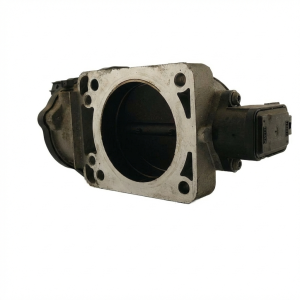
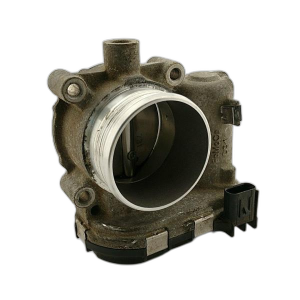
New Aftermarket Parts Available

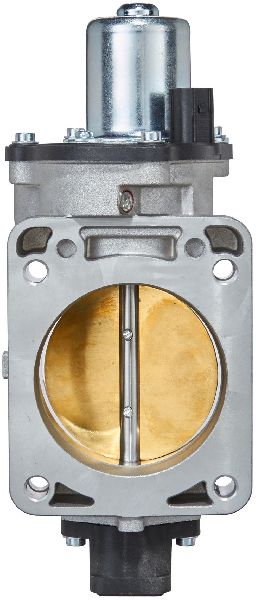
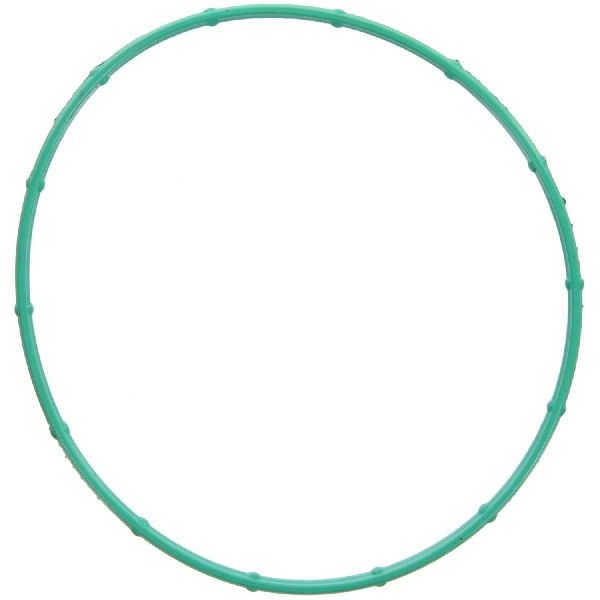

The information in this article is provided for general reference and educational purposes only. Vehicle specifications, procedures, and part compatibility can vary by production date, trim level, and region. Always consult your vehicle's factory service manual and verify part numbers before purchasing or performing repairs. Safety-critical components such as airbags, seat belts, and braking systems should be installed by a qualified professional.
- Ford Taurus:
- 🧭 Diagnostic Flowchart
- 🎬 Helpful Videos
- 🛍️ Shop This Part
- What's Unique About the 2010-2019 Ford Taurus
- Symptoms You May Notice
- Most Likely Causes
- Rare But Worth Checking
- Diagnosis Steps
- Parts You'll Likely Need
- Related Codes That Often Appear With This One
- Technical Service Bulletins (TSBs) & Recalls
- Platform-Specific Known Issues
- Mechanic-Grade Diagnostic Values
- Scan Tool Commands That Help
- Wiring & Ground Locations
- Real Owner Repair Stories
- OEM Part Supersession History
- Other Known Issues on This Vehicle
- Used vs. New Parts: Buying Guide for This Vehicle
- Real Owner Stories
- 2015 Ford Taurus 3.5L
- 2011 Ford Taurus 3.5L
- 2010-2019 Ford Taurus SHO
- Documented NHTSA Reports
- NHTSA ODI #10747002
- Related OBD-II Codes
- Frequently Asked Questions
- 🎟️ Get 5% Off