

P2111 on 2007-2016 Toyota Avalon: Throttle Body Stuck Open Causes and Fixes
On a 2007-2016 Toyota Avalon, code P2111 almost always means the throttle body is sticking due to carbon buildup. A thorough cleaning of the throttle body bore and plate will often fix it. If cleaning doesn't work, the entire throttle body assembly needs to be replaced.
- P2111 means your Avalon's throttle is stuck open, triggering a 'limp mode' for safety.
- The most likely cause is carbon buildup. Start by thoroughly cleaning the throttle body, which costs very little and often solves the problem.
- If cleaning doesn't work, the entire throttle body assembly needs to be replaced.
- After cleaning or replacing the part, you must perform an idle relearn procedure, which usually just involves letting the car idle for several minutes after reconnecting the battery.
- Do not manually force the throttle plate open on the electronic throttle body; use the accelerator pedal with the ignition on (engine off) to open it for cleaning.
What's Unique About the 2007-2016 Toyota Avalon
The 2GR-FE V6 engine used across the Toyota and Lexus lineup is generally very reliable, but like most modern engines with electronic throttle bodies, it is susceptible to carbon buildup. This buildup can make the throttle plate sticky, preventing it from closing smoothly, which is the primary trigger for a P2111 code. While no specific TSB for the Avalon was found, a NHTSA document for a 2006 model confirms this exact code can be caused by something as simple as a piece of debris getting lodged in the throttle body. The fix is consistent across both the third (2007-2012) and fourth (2013-2016) generations of the Avalon covered here.
Generation note: This guide covers the third generation (2007-2012) and fourth generation (2013-2016) of the Toyota Avalon. Both generations use the 2GR-FE 3.5L V6 engine, and the causes, diagnostic steps, and fixes for code P2111 are consistent between them.
Symptoms You May Notice
- Check Engine Light is on
- Vehicle enters a reduced power "limp mode"
- Poor, delayed, or no acceleration.
- Engine idle speed is higher than normal.
- Engine may stall, especially when coming to a stop.
- VSC (Vehicle Stability Control) and/or TRAC (Traction Control) warning lights may also be illuminated.
- Subtle early symptom: Car maintains speed for a moment after letting off the accelerator pedal.
- Replacing the Accelerator Pedal Position (APP) Sensor. The APP sensor tells the ECM what your foot is doing, but P2111 specifically indicates a problem at the other end of the system—the throttle body itself is not responding as commanded. An APP sensor failure would typically set different trouble codes.
Most Likely Causes
- Dirty or Sticking Throttle Body 🔴 High Probability → Shop Fuel Injection Throttle Body Over time, carbon and oil vapor from the PCV (Positive Crankcase Ventilation) system can bake onto the throttle body bore and the edges of the throttle plate, causing it to bind and not close properly. This is the most common cause by a wide margin.
How to confirm: Remove the air intake duct from the throttle body and visually inspect the throttle plate and bore for a layer of black carbon buildup. The plate may feel sticky or slow to move when commanded open (via the gas pedal with key-on, engine-off).
Typical fix: Thoroughly clean the throttle body bore and plate with a dedicated throttle body cleaner and a soft cloth or brush. After cleaning, perform an idle relearn procedure by disconnecting the battery for a few minutes or simply letting the car idle for 5-10 minutes.
Est. part cost: $10-$20 for cleaner - Failed Throttle Body Assembly 🟡 Medium Probability → Shop Fuel Injection Throttle Body If a thorough cleaning does not resolve the code, the internal electric motor or the integrated throttle position sensor has likely failed. This is an electronic or mechanical failure within the sealed unit.
How to confirm: If the P2111 code returns immediately or soon after a proper cleaning and idle relearn, the assembly itself is condemned. A professional scan tool like Toyota's Techstream can command the throttle open and close to test its function, but failure after cleaning is a strong indicator.
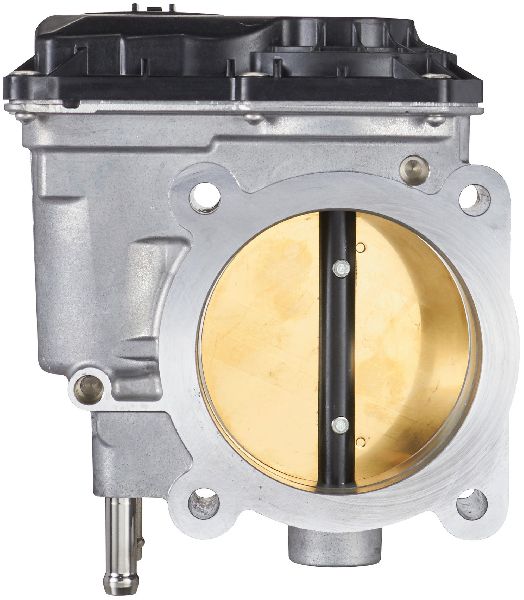
Typical fix: Replace the entire throttle body assembly. This is a bolt-on part that includes the motor and sensor. Always replace the throttle body gasket at the same time.
Est. part cost: $100-$550
Rare But Worth Checking
- Foreign Object Obstruction: A NHTSA report for a 2006 Avalon with this engine documented a P2111 code caused by a small piece of plastic getting stuck under the throttle plate, preventing it from closing. Always check for debris when inspecting the throttle body.
- Wiring or Connector Issue: While uncommon, damage to the wiring harness or corrosion in the connector at the throttle body can interrupt the signal between the ECM and the throttle motor. Visually inspect the harness during diagnosis.
- Engine Control Module (ECM) Fault: → Shop Engine Control Module (ECM) This is extremely rare. The ECM itself could have a software glitch or internal failure. This should only be considered after all other possibilities have been exhausted.
- Intake Manifold Icing (Cold Climates): → Shop Engine Intake Manifold While more documented on other Toyota engines like in the Prius via TSB T-SB-0103-12, it's theoretically possible in extreme cold. Moisture in the intake can freeze, causing the throttle plate to stick and trigger P2111, often with a P0A0F (Engine Failed to Start) code. Manufacturer Bulletin #T-SB-0050-15 notes that some vehicles may exhibit P2111 and/or P0A0F specifically after a cold soak.
Diagnosis Steps
- Read the trouble codes with an OBD-II scanner to confirm P2111 is present.
- Disconnect the air intake duct from the throttle body.
- Visually inspect the throttle bore and plate for heavy carbon buildup or any foreign objects.
- CRITICAL: To clean, have an assistant turn the ignition to 'ON' (engine OFF) and press the accelerator pedal to open the throttle plate. DO NOT force the plate open by hand, as this can damage the internal gears.
- Spray a dedicated throttle body cleaner on a rag and wipe the bore and both sides of the plate until clean. A soft brush can be used for heavy deposits.
- Reassemble the intake duct.
- Disconnect the negative battery terminal for at least 60 seconds to clear the ECM's learned values and reset the system.
- Reconnect the battery, start the engine, and let it idle for 5-10 minutes to allow the ECM to perform an idle relearn. A short test drive may also be required.
- If the code returns, the throttle body assembly is likely faulty and needs to be replaced.
- If the problem still persists after replacement, inspect the wiring harness and connector for damage before suspecting a rare ECM fault.
Parts You'll Likely Need
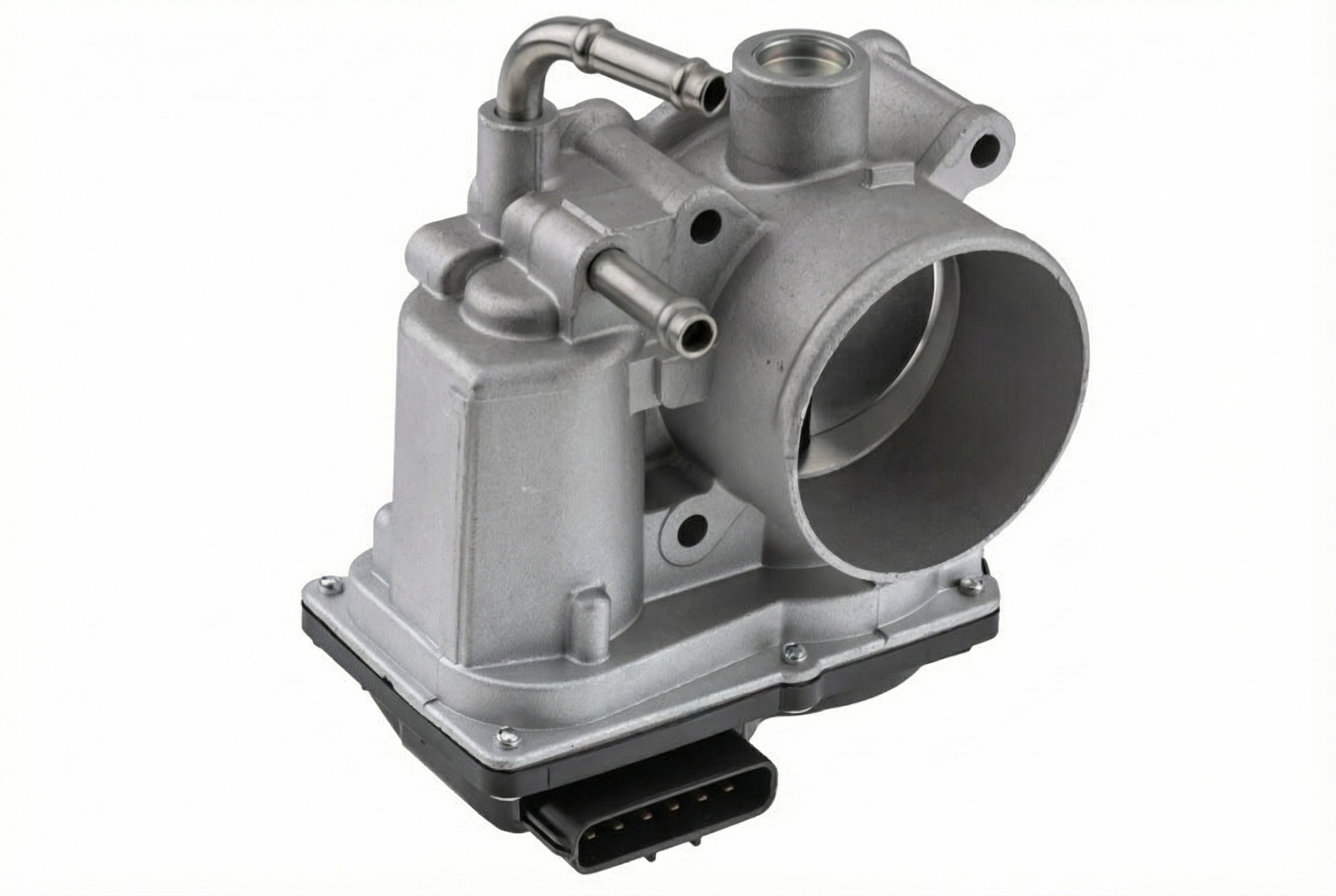
- Throttle Body Assembly
(OEM #22030-0P050)— This is the complete unit that fails if cleaning does not solve the problem. It includes the throttle plate, actuator motor, and position sensor. Part number 22030-0P050 is listed for the 2005-2018 Avalon and supersedes the earlier 22030-31030.
Trusted brands: Toyota (Genuine OEM), Aisin, Denso, Hitachi
OEM price range: $416-$704
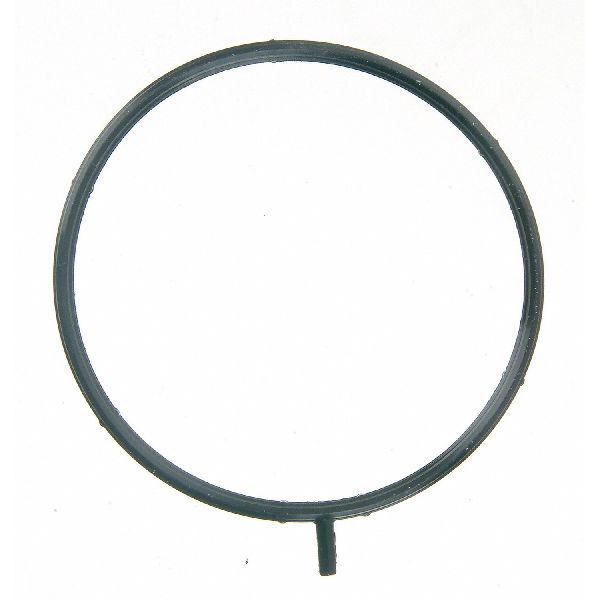
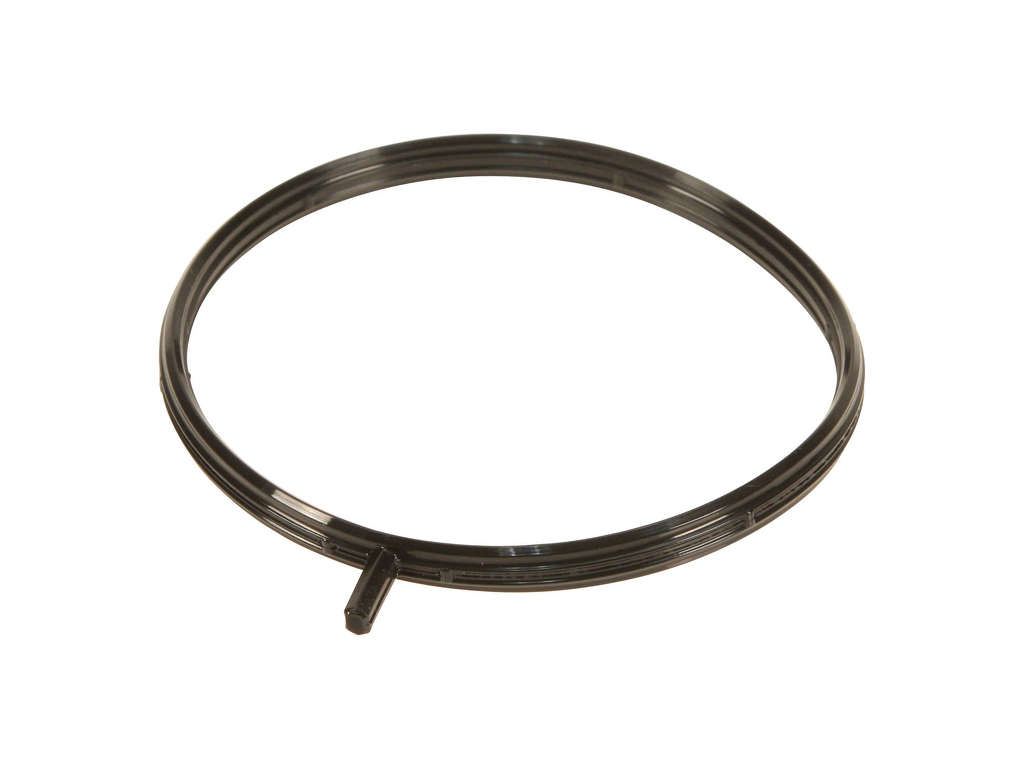
Aftermarket price range: $100-$250 - Throttle Body Gasket
(OEM #22271-0P020)— This gasket seals the throttle body to the intake manifold. It should always be replaced when the throttle body is removed for cleaning or replacement to prevent vacuum leaks. This part number supersedes the older 22271-31040.
Trusted brands: Toyota (Genuine OEM)
OEM price range: $6-$10
Aftermarket price range: $3-$8 - Throttle Body Cleaner — This is required for the most common and first-step fix: cleaning the existing throttle body of carbon buildup.
Trusted brands: CRC, Berryman, WD-40 Specialist
Aftermarket price range: $10-$20
Related Codes That Often Appear With This One
- P2112 — This code means "Throttle Actuator Control System - Stuck Closed." Seeing both P2111 and P2112 can indicate an intermittent or complete failure of the throttle body motor, as it's getting stuck in both directions.
- P0A0F — This "Engine Failed to Start" code can appear with P2111, particularly in very cold weather where intake icing may be the root cause, as documented in TSBs for other Toyota models.
Technical Service Bulletins (TSBs) & Recalls
- T-SB-0012-16: While for the Lexus HS250h (2AZ-FXE engine), this TSB addresses a P2111 code and stall condition, showing a pattern of Toyota addressing this code via ECU logic updates and part changes (PCV valve) on related platforms. This bulletin also notes a possible engine stall condition while the vehicle is stopped accompanied by the MIL "ON" and DTC P2111.
- T-SB-0103-12 Rev2: Pertains to the Prius but is highly relevant as it details a known issue where P2111 and P0A0F are triggered by moisture freezing in the intake manifold in temperatures below 23°F (-5°C). The fix is an updated intake manifold.
- T-SB-0050-15: This bulletin notes that some vehicles may exhibit a MIL "ON" condition with DTC P2111 and/or P0A0F after a cold soak.
Mechanic-Grade Diagnostic Values
- Throttle Control Motor Resistance — expected: 0.3 to 100 ohms at 68°F (20°C). Failure: Resistance outside of the specified range, or an open/short circuit. Intermittent failures may only show up when the engine is hot.
- Throttle Position Sensor Live Data (Techstream) — expected: With the ignition ON and engine OFF, the 'Throttle Pos' value should be 60% or more when the accelerator pedal is fully depressed.. Failure: A value less than 60% at wide-open throttle indicates a faulty throttle body assembly.
- ECM Power Supply to Throttle Position Sensor (VTA1/VTA2) — expected: Approximately 5V at the VCPA/VCP2 pins on the ECM connector with ignition ON.. Failure: No voltage or incorrect voltage points to an ECM or wiring issue, not a throttle body failure.
Scan Tool Commands That Help
- Toyota Techstream: Active Test: 'Control the Throttle Actuator' — This command allows the technician to directly open and close the throttle plate via software. It's used to confirm if the throttle motor is physically responding to commands from the ECM, which helps isolate a mechanical problem (sticking plate) from an electrical one (bad motor or wiring).
- Toyota Techstream: Data List: 'Throttle Pos', 'Throttle Position Command' — This allows for monitoring the commanded throttle angle versus the actual throttle angle reported by the sensors in real-time. A discrepancy where the 'Throttle Pos' does not match the 'Throttle Position Command' is a direct confirmation of the fault condition described by P2111.
- Toyota Techstream: Utility: 'All Readiness' — After a repair, this function can be used to check the DTC judgment result for P2111 without extensive driving. It helps confirm if the fix was successful by checking if the system monitor runs and passes.
Wiring & Ground Locations
- Throttle Body Connector — On the throttle body assembly, located at the top rear of the engine.. This 6-pin connector provides power and control signals to the throttle motor (M+, M-) and receives position data from the dual throttle position sensors (VTA1, VTA2, VC, E2). Corrosion or damage here is a primary point of failure.
- ECM Connector (e.g., A9 on some diagrams) — Behind the right side of the dashboard, near the glove box on earlier models.. Specific pins for the throttle control system (VPA, VPA2, VCPA, VCP2, EPA, EPA2) are located here. Technicians can back-probe these pins to test for correct voltage signals from the accelerator pedal and to the throttle body, confirming wiring integrity between the components.
- Engine Harness Ground — There are multiple key grounds for the engine harness. One is on the side of the cylinder head directly underneath the throttle body. Another is on the front head.. A poor or missing ground can cause erratic sensor readings and incorrect operation of the electronic throttle control system, potentially leading to a P2111 code.
Real Owner Repair Stories
- YouTube video by 'guitarmageddonm' (Vehicle with electronic throttle control, symptoms consistent with P2111.) — Check engine light on, vehicle in limp mode, will only drive at 10 mph.
❌ Tried (didn't work) Initial resistance test of the throttle body passed, suggesting it was good.
✅ What actually fixed it The throttle body was failing intermittently, especially when hot. A second resistance test when the component was hot (or had completely failed) showed it was out of specification. Replacing the entire throttle body assembly resolved all symptoms without needing a programming/relearn procedure.
OEM Part Supersession History
22030-31030→22030-0P050— Standard part evolution for improved reliability or manufacturing efficiency. The 2GR-FE engine had some known issues in early models, and part updates were common.
Heads up: The parts are interchangeable; 22030-0P050 is the correct and current service part for vehicles that originally came with 22030-31030.
Model Year Variations Within This Range
- 2007-2010: Early 2GR-FE engines (until 2010) were subject to a recall for a rubber VVT-i oil line that could leak or burst. While not directly causing P2111, a significant oil leak could lead to low oil pressure, affecting overall engine health and potentially the performance of oil-pressure-sensitive systems. The fix was a redesigned all-metal oil line.
- Early vs. Late Models: The location of the Engine Control Module (ECM) was moved from inside the glovebox area on early models to the engine bay in later years. This can affect diagnostic time when physical access to the ECM for pin testing is required.
Diagnostic Flowchart
Used vs. New Parts: Buying Guide for This Vehicle
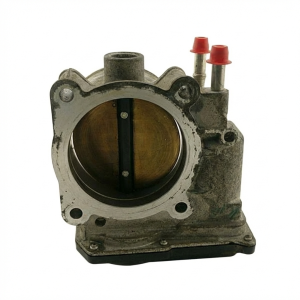
When a used part is the smart pick: A used OEM throttle body from a reputable salvage yard is a very reasonable choice for this repair. The part is not a high-wear item, and a low-mileage used unit can offer significant cost savings over a new OEM part with good reliability.
Donor-vehicle mileage cap: roughly under 100000 miles for the part to have meaningful remaining life.
What to inspect on the donor part:
- Verify the part number matches your original or its supersession (22030-0P050 or 22030-31030).
- Inspect the electrical connector pins for any signs of corrosion, moisture, or damage.
- Look inside the throttle bore. A thin, dry layer of carbon is normal, but avoid units with heavy, caked-on gunk or any scoring/scratches on the bore walls.
- Ensure the throttle plate (if it can be moved by hand on the bench) moves smoothly without binding.
OEM-only on this vehicle (don't cheap out):
- Engine Control Module (ECM)
Aftermarket brands forum-validated for this vehicle:
- Aisin (Often the original OEM supplier for Toyota).
- Denso
- Hitachi
Brands owners have reported issues with on this vehicle:
- Unbranded, 'white-box' parts from online marketplaces should be avoided due to inconsistent quality control.
Real Owner Stories
Aggregated from forums and TSBs cited above. Mileages and costs reflect what owners reported in those sources.
Toyota Tacoma with 2GR-FE 3.5L V6
Symptoms: The owner experienced trouble code P2111.
What fixed it: After the dealer first suggested an expensive cleaning, the issue was resolved with a full throttle body replacement, which confirmed the internal actuator had failed.
Source hint: Tacoma World - 'Engine Knock to Throttle Body Replacement to... What's next? P2111'
2015 Toyota Camry SE
Symptoms: The owner reported a sudden onset of the Check Engine Light and a complete lack of throttle response, which is characteristic of the P2111 fail-safe mode.
What fixed it: The source forum post describes the symptoms but does not state the final repair.
Source hint: Reddit r/MechanicAdvice - 'P2111 code 2015 Toyota Camry SE'
Lexus with 2GR-FSE engine
Symptoms: The owner described classic P2111 symptoms, including the vehicle going into limp mode and a subtle early symptom where the car would maintain speed for a moment after lifting off the accelerator pedal.
What fixed it: The source thread discusses the owner's decision-making process between cleaning and replacing the throttle body but does not specify the ultimate fix.
Source hint: ClubLexus - 'P2111 Code (Throttle Actuator) & CEL, please help.'
Related OBD-II Codes
Frequently Asked Questions
My Avalon went into 'limp mode' and the VSC and TRAC lights came on with the Check Engine light. Is this normal for a P2111 code?
Should I just replace the throttle body on my 2011 Avalon for a P2111, or is cleaning it enough?
What is the correct way to clean the throttle body on my 3.5L V6 to avoid damage?
Is there a special reset procedure required after cleaning the throttle body?
I noticed my car seems to coast for a moment after I let off the gas. Could this be an early sign of a P2111 issue?
If I have to replace the throttle body, are aftermarket parts okay, or should I stick with Toyota OEM?
I saw a TSB for a Prius about P2111 in freezing weather. Does that apply to my Avalon?
Used OEM Parts in Stock
New Aftermarket Parts Available


The information in this article is provided for general reference and educational purposes only. Vehicle specifications, procedures, and part compatibility can vary by production date, trim level, and region. Always consult your vehicle's factory service manual and verify part numbers before purchasing or performing repairs. Safety-critical components such as airbags, seat belts, and braking systems should be installed by a qualified professional.
- Toyota Avalon:
- 🧭 Diagnostic Flowchart
- 🛍️ Shop This Part
- What's Unique About the 2007-2016 Toyota Avalon
- Symptoms You May Notice
- Most Likely Causes
- Rare But Worth Checking
- Diagnosis Steps
- Parts You'll Likely Need
- Related Codes That Often Appear With This One
- Technical Service Bulletins (TSBs) & Recalls
- Mechanic-Grade Diagnostic Values
- Scan Tool Commands That Help
- Wiring & Ground Locations
- Real Owner Repair Stories
- OEM Part Supersession History
- Model Year Variations Within This Range
- Used vs. New Parts: Buying Guide for This Vehicle
- Real Owner Stories
- Toyota Tacoma with 2GR-FE 3.5L V6
- 2015 Toyota Camry SE
- Lexus with 2GR-FSE engine
- Related OBD-II Codes
- Frequently Asked Questions
- 🎟️ Get 5% Off