

P2111 on 2007-2012 Toyota RAV4 3.5L V6: Throttle Stuck Open Causes and Fixes
On a 2007-2012 RAV4 V6, code P2111 is almost always caused by a dirty, sticking throttle body due to carbon buildup. A thorough cleaning often resolves the issue and is the recommended first step. If cleaning doesn't work, the entire throttle body assembly needs to be replaced. Expect to pay ~$150-$350 for an aftermarket part or ~$400-$600 for an OEM part (Part No. 22030-0P050 or its predecessor 22030-31030).
- P2111 on your RAV4 V6 means the throttle is stuck open and the vehicle will go into a low-power 'limp mode' for safety.
- The most likely cause is carbon buildup. Start by thoroughly cleaning the throttle body, which is a low-cost, high-success-rate first step.
- If cleaning doesn't fix it, the entire throttle body assembly needs to be replaced. This is a DIY-friendly job for many home mechanics.
- This guide only applies to the 2006-2012 RAV4 V6, not later models which did not have the V6 engine.
What's Unique About the 2007-2012 Toyota RAV4
The 3.5L 2GR-FE V6 engine was used widely across the Toyota and Lexus lineup, including in the Camry, Highlander, Sienna, and Lexus ES350/RX350. This means the issue of carbon buildup causing a sticky throttle plate and triggering code P2111 is a well-documented problem across this entire engine family. While Toyota issued Technical Service Bulletins (TSBs) for this exact issue on other models like the Highlander (TSB T-SB-0050-15) and Prius V (TSB T-SB-0103-12 Rev2), no specific TSB for the RAV4 V6 has been widely published. However, the cause and fix are identical due to the shared powertrain components, specifically the throttle body assembly.
Generation note: The user-provided year range of 2007-2016 spans two RAV4 generations. However, the specified 2GR-FE 3.5L V6 engine was only available in the third generation (XA30) from the 2006 to 2012 model years. The fourth generation (XA40), which began in 2013, did not offer a V6 option. Therefore, this guide is only applicable to the 2006-2012 Toyota RAV4 V6.
Symptoms You May Notice
- Vehicle enters 'limp mode' or 'fail-safe mode' with drastically reduced engine power.
- Check Engine Light is illuminated, often accompanied by VSC (Vehicle Stability Control) light.
- Unresponsive or sluggish accelerator pedal.
- Engine idles higher than normal, sometimes fluctuating.
- Hesitation or stumbling on acceleration.
- Engine may stall when coming to a stop.
- Vehicle may surge forward without driver input.
- Replacing the Accelerator Pedal Position Sensor (APPS). P2111 specifically indicates a failure of the throttle body to respond to the ECM's command, not an issue with the command being sent from the pedal sensor. A faulty APPS would typically set different trouble codes.
Most Likely Causes
- Dirty or Sticking Throttle Body 🔴 High Probability → Shop Fuel Injection Throttle Body The 2GR-FE engine's PCV (Positive Crankcase Ventilation) system can allow oil vapor and carbon to accumulate in the intake tract over time. This gummy residue builds up around the throttle plate and bore, causing it to bind and not close properly.
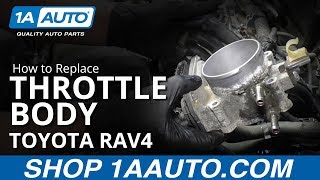
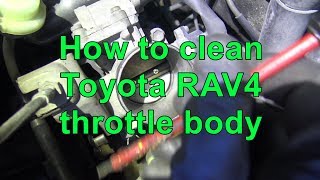
How to confirm: Remove the air intake hose from the throttle body and visually inspect the throttle plate and bore 🎬 Watch: Full service guide for the RAV4 throttle body and intake. for a layer of black carbon or gummy residue. Check if the plate moves smoothly (with the key on, engine off, and an assistant pressing the pedal). If the code returns quickly after cleaning, the issue is likely mechanical failure.
Typical fix: Thoroughly clean the throttle body bore and both sides of the throttle plate using a dedicated throttle body cleaner and a soft, lint-free cloth. An idle relearn procedure may be required after cleaning, which often involves letting the car idle until fully warm or driving for several miles.
Est. part cost: $5-$15 - Failed Throttle Body Assembly 🟡 Medium Probability → Shop Fuel Injection Throttle Body The internal electric motor or plastic gears within the throttle actuator can wear out or fail, preventing the throttle plate from being controlled accurately. This failure can be intermittent and often worsens when the engine is hot. This is the next logical step if cleaning does not resolve the code.
How to confirm: If the P2111 code returns shortly after a thorough cleaning, and the wiring is confirmed to be good, the throttle body assembly itself is faulty. A multimeter test across the motor terminals (pins M+ and M-) may show resistance outside the manufacturer's spec (typically 0.3 to 100 ohms at 68°F/20°C), confirming an internal fault.
Typical fix: Replace the entire throttle body assembly with a new unit. Always use a new gasket upon installation. The replacement part is often an updated design.
Est. part cost: $150-$600 - Wiring or Connector Issue ⚪ Low Probability
How to confirm: Visually inspect the wiring harness and connector going to the throttle body for any signs of damage, corrosion, or loose pins. With a multimeter, check for proper voltage and ground at the connector according to the factory service manual.
Typical fix: Repair the damaged section of wiring or replace the connector pigtail.
Est. part cost: $10-$50
Rare But Worth Checking
- Powertrain Control Module (PCM) Failure: → Shop Engine Control Module (ECM) This is extremely rare. The PCM should only be considered after all other possibilities, including the throttle body and wiring, have been definitively ruled out. In some cases, a failing PCM can incorrectly trigger a P2111 code.
Diagnosis Steps
- Read all diagnostic trouble codes (DTCs) with an OBD-II scanner. Address any other codes before P2111.
- Disconnect the negative battery terminal using a 10mm wrench.
- Remove the engine cover and the air intake duct connected to the throttle body.
- Visually inspect the throttle plate and bore for heavy carbon buildup.
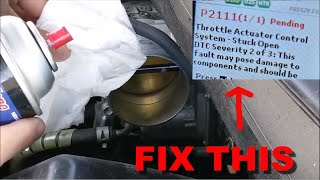
- If dirty, clean it thoroughly. Spray throttle body cleaner onto a rag, not directly into the bore. To open the plate for cleaning, reconnect the battery, turn the ignition to 'ON' (engine off), and have an assistant press the gas pedal. Do not force the plate open by hand, as this can damage the internal plastic gears.
- Reassemble the intake ducting and reconnect the battery.
- Start the engine. The idle may be high initially. An 'idle relearn' may be required. This can sometimes be achieved by letting the car idle until it's fully warm, or by driving for several miles. Some scan tools also have a relearn function. 🎬 See how to fix high RPM issues after cleaning your throttle body.
- If the code returns, inspect the throttle body electrical connector and wiring for damage.
- If wiring is intact and cleaning did not fix the issue, test the resistance between the two motor pins on the throttle body (M+ and M-). If it is out of specification (0.3 to 100 Ω at 20°C/68°F), the throttle body has failed internally.
- If the above steps fail, the throttle body assembly is the point of failure and should be replaced.
Parts You'll Likely Need
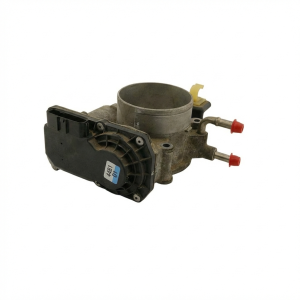
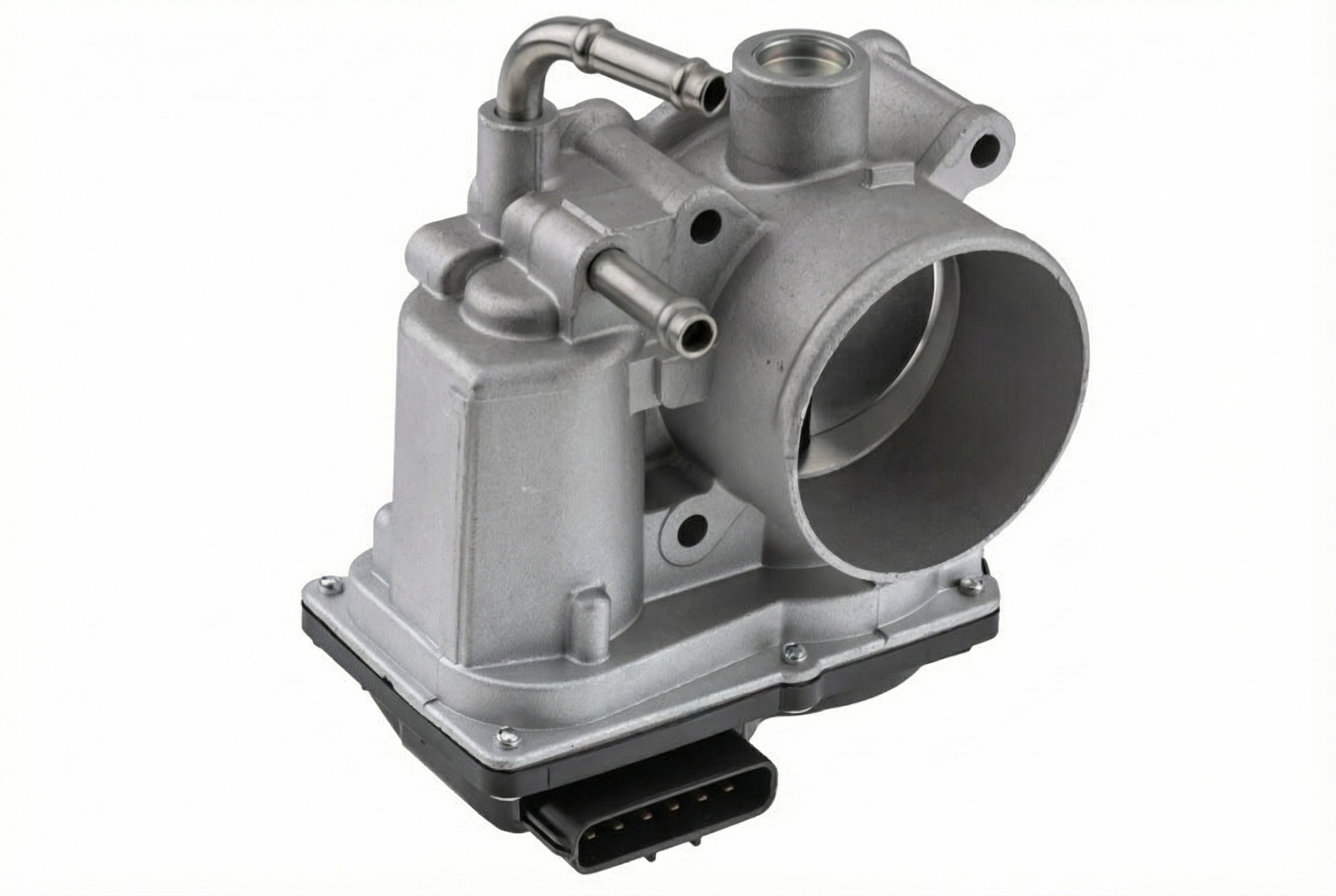
- Throttle Body Assembly
(OEM #22030-0P050, 22030-31030, 22030-31040)— This is the complete unit that fails, either by sticking due to carbon or internal electronic/mechanical failure. It is the definitive fix if cleaning does not work. Part number 22030-31030 was superseded by 22030-0P050, which is the current service part for the RAV4 V6 and many other 2GR-FE applications. Always verify fitment with your vehicle's VIN.
Trusted brands: Denso (OEM Manufacturer), Aisin, Hitachi
OEM price range: $400-$600
Aftermarket price range: $150-$350 - Throttle Body Gasket
(OEM #22271-0V010)— The gasket should always be replaced when the throttle body is removed to prevent vacuum leaks.
Trusted brands: Fel-Pro, Mahle, Denso
OEM price range: $10-$20
Aftermarket price range: $5-$15
Related Codes That Often Appear With This One
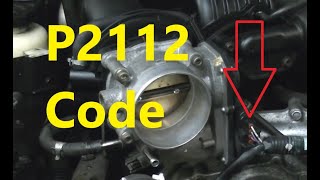
- P2112 — This code means 'Throttle Actuator Control System - Stuck Closed'. It's the opposite of P2111 but points to the same failing component—the throttle body assembly.
- P2102 — This code indicates 'Throttle Actuator Control Motor Circuit Low'. It can appear alongside P2111 if there is an electrical fault within the throttle body's motor or its circuit.
- P0A0F — This code for 'Engine Failed to Start' can appear with P2111, particularly in cold weather on some Toyota models where intake manifold issues can exacerbate the throttle problem.
Technical Service Bulletins (TSBs) & Recalls
- T-SB-0050-15: While not for the RAV4 specifically, this TSB for the 2011-2015 Highlander with the same 2GR-FE/FXE engine addresses P2111. It confirms the throttle body assembly as the failing component, especially after a cold start.
- L-SB-0006-10: A Lexus service bulletin that also addresses throttle body issues on the 2GR-FE engine, further confirming the widespread nature of this problem on the engine platform.
Platform-Specific Known Issues
- Intermittent Failure When Hot: Some owners report the P2111 code and limp mode only appear after the engine has reached full operating temperature. The throttle body tests fine when cold, but fails when hot, indicating an internal electronic component is breaking down under heat.
- Updated Throttle Body Design: → Shop Fuel Injection Throttle Body A video guide for a RAV4 notes that the updated replacement throttle body may eliminate one of the vacuum ports found on the original part. If so, the corresponding vacuum line must be removed and the port on the intake manifold must be capped with a 7/32" vacuum boot.
Mechanic-Grade Diagnostic Values
- Throttle Control Motor Resistance — expected: 0.3 to 100 Ω at 20°C (68°F). Failure: A reading outside this range indicates an internal fault in the throttle body motor.
- Throttle Position Sensor Voltage (VTA1) — expected: 0.5 - 1.1 V at idle (closed throttle), rises smoothly with pedal depression.. Failure: Voltage that is erratic, stuck, or does not correspond to the pedal position indicates a faulty sensor within the throttle body assembly.
- Throttle Position Sensor Voltage (VTA2) — expected: 1.2 - 2.0 V at idle (closed throttle), rises smoothly with pedal depression.. Failure: VTA2 is a redundant sensor. A failure is indicated if its readings do not correlate with VTA1.
- Techstream Live Data: Throttle Position — expected: Should show a low percentage at idle (e.g., ~15-20%) and increase smoothly to over 60% at wide-open throttle.. Failure: A value that is stuck high, does not change with pedal input, or jumps erratically points to a throttle body failure.
Scan Tool Commands That Help
- Toyota Techstream: Active Test: Control the Throttle Actuator — This bidirectional command allows the technician to directly command the throttle motor to open and close. If the throttle plate does not respond as commanded while watching it visually (with the intake removed) or monitoring the 'THROTTLE POS' data PID, it confirms a failure in the throttle body or its circuit.
- Toyota Techstream: Data List -> THROTTLE POS — Use this to monitor the throttle valve opening percentage in real-time. It is essential for confirming if the throttle plate is physically stuck or not responding correctly to pedal input.
Wiring & Ground Locations
- Throttle Body Connector (B26 on some diagrams) — The 6-pin electrical connector on the throttle body assembly itself.. This is the single point of connection for power and control signals to the throttle motor (Pins M+ and M-) and the dual throttle position sensors (VTA1, VTA2, VC, E2). Corrosion or damage here is a primary point of failure.
- Engine Ground (A1/A2) — On the 2GR-FE, a primary engine harness ground point is located on the side of the cylinder head, directly underneath the throttle body area.. A poor ground at this location can cause erratic behavior in all engine sensors, including the throttle body, leading to incorrect readings and fault codes.
- ECM Ground (E1/E01/E02) — The main grounds for the Engine Control Module (ECM) are typically bolted directly to the vehicle body near where the ECM is mounted (in the RAV4, this is in the engine bay).. The ECM relies on a solid ground reference to accurately control the throttle motor. A compromised ECM ground can lead to a variety of faults, including P2111.
Real Owner Repair Stories
- YouTube channel 's-R_N9a2h_A' (Toyota Highlander with same 2GR-FE engine) (Toyota Highlander V6 (2GR-FE)) — P2111 code appeared and idle RPM was stuck above 1000 immediately after cleaning the throttle body.
❌ Tried (didn't work) Waiting for the car to warm up., Clearing the code with a scanner (it returned immediately).
✅ What actually fixed it Performing an ECU 'relearn' procedure by driving the vehicle. The owner drove for approximately 2.6 miles, including maintaining 50 mph, accelerating hard to 4,000 RPM, and then holding a speed between 65-75 mph for 5 seconds. This forced the ECU to adapt to the newly cleaned throttle plate position.
OEM Part Supersession History
22030-31030→22030-0P050— Part update/revision by Toyota. The new part is the standard service replacement.
Heads up: The parts are directly interchangeable. 22030-0P050 is the correct and current part to order for this vehicle.
Diagnostic Flowchart
Used vs. New Parts: Buying Guide for This Vehicle
When a used part is the smart pick: A used throttle body is a significant gamble and generally not recommended. The failure is due to electronic wear and carbon buildup over time. A used part from a donor vehicle may have the same issues or fail soon after installation. It only makes sense if the budget is extremely tight and the donor part is from a very low-mileage vehicle with a known history.
Donor-vehicle mileage cap: roughly under 50000 miles for the part to have meaningful remaining life.
What to inspect on the donor part:
- Verify the donor vehicle's mileage is low.
- Inspect the throttle bore and plate for excessive carbon buildup before purchase.
- Ensure there is no physical damage to the housing or electrical connector.
- Check for smooth, unrestricted movement of the throttle plate (if possible to test).
OEM-only on this vehicle (don't cheap out):
- While not strictly 'OEM-only', using a Denso (OEM manufacturer) or Aisin (Toyota-affiliated company) part is highly recommended for longevity and proper function. Cheap, unbranded aftermarket units are known to fail prematurely or have calibration issues.
Aftermarket brands forum-validated for this vehicle:
- Aisin
- Denso (Original Equipment Manufacturer)
- Hitachi
Brands owners have reported issues with on this vehicle:
- Unbranded or 'white-box' parts from online marketplaces should be avoided due to a high likelihood of poor quality control, incorrect calibration, and premature failure.
Real Owner Stories
Aggregated from forums and TSBs cited above. Mileages and costs reflect what owners reported in those sources.
2011 Toyota RAV4 2GR-FE 3.5L V6
Symptoms: The vehicle would suddenly enter limp mode with the Check Engine and VSC lights on, but only after driving for a while and reaching full operating temperature. The throttle body would test fine when the engine was cold.
What fixed it: Replacing the entire throttle body assembly resolved the issue, as an internal electronic component was failing under heat.
Source hint: vehicle_specific_issues: Intermittent Failure When Hot
2013 Toyota Highlander 2GR-FE 3.5L V6
Symptoms: The vehicle set a P2111 trouble code, particularly after a cold start, and entered fail-safe mode with reduced power.
What fixed it: The issue was resolved by replacing the throttle body assembly, as confirmed by the manufacturer's service bulletin for this specific problem.
Source hint: tsbs_cited: T-SB-0050-15
Related OBD-II Codes
Frequently Asked Questions
My RAV4 went into limp mode with a P2111 code only after it was fully warmed up. Is this a known issue?
I cleaned the throttle body on my 2010 RAV4, but now the idle is really high. Did I do something wrong?
Can I just pry the throttle plate open with a screwdriver to clean it?
My mechanic is replacing the throttle body. Should I be concerned if the new part looks slightly different?
I have a 2014 Highlander with the same 3.5L V6 engine and a P2111 code. Is this the same problem?
Is it okay to buy a used throttle body from a junkyard to save money?
Helpful Videos

We Have This Part in Stock

The information in this article is provided for general reference and educational purposes only. Vehicle specifications, procedures, and part compatibility can vary by production date, trim level, and region. Always consult your vehicle's factory service manual and verify part numbers before purchasing or performing repairs. Safety-critical components such as airbags, seat belts, and braking systems should be installed by a qualified professional.
- Toyota RAV4:
- 🧭 Diagnostic Flowchart
- 🎬 Helpful Videos
- 🛍️ Shop This Part
- What's Unique About the 2007-2012 Toyota RAV4
- Symptoms You May Notice
- Most Likely Causes
- Rare But Worth Checking
- Diagnosis Steps
- Parts You'll Likely Need
- Related Codes That Often Appear With This One
- Technical Service Bulletins (TSBs) & Recalls
- Platform-Specific Known Issues
- Mechanic-Grade Diagnostic Values
- Scan Tool Commands That Help
- Wiring & Ground Locations
- Real Owner Repair Stories
- OEM Part Supersession History
- Used vs. New Parts: Buying Guide for This Vehicle
- Real Owner Stories
- 2011 Toyota RAV4 2GR-FE 3.5L V6
- 2013 Toyota Highlander 2GR-FE 3.5L V6
- Related OBD-II Codes
- Frequently Asked Questions
- 🎟️ Get 5% Off