

P2112 on 2013-2016 Ford Escape 2.0L: Throttle Body Stuck Closed Causes and Fixes
On a 2013-2016 Ford Escape 2.0L, code P2112 almost always means the electronic throttle body has failed, causing a sudden loss of power ('limp mode') and illuminating the wrench light. The fix is to replace the throttle body assembly, which costs around $80-$200 for the part and is a DIY-friendly repair. This was a known issue that led Ford to issue Customer Satisfaction Program 13N03, extending the warranty on this part.
- P2112 on a 2013-2016 Escape 2.0L is a critical code that makes the vehicle unsafe to drive due to a severe loss of power.
- The cause is almost certainly a failed electronic throttle body, a defect so common Ford issued an extended warranty program (13N03) for it.
- Cleaning the throttle body is not an effective repair; the entire assembly must be replaced.
- Replacing the throttle body is a relatively simple and affordable DIY job for most home mechanics, but a relearn procedure must be performed afterward.
What's Unique About the 2013-2016 Ford Escape
The 2.0L engine in the third-generation Ford Escape shares its electronic throttle body design with other Ford models from this era, like the Focus and Fusion, which are widely known for throttle body failures. The failure is so common that Ford initiated Customer Satisfaction Program 13N03, which extended the warranty on the throttle body to 10 years or 150,000 miles due to contamination on the internal motor contacts causing intermittent electrical connectivity. While some vehicles get this code from simple carbon buildup, on this platform the failure is almost always internal to the throttle body's electronics or motor. Owners often experience a sudden and alarming loss of power while driving, which can be a significant safety concern.
Symptoms You May Notice
- Sudden and severe loss of engine power (Limp Mode)
- Check Engine Light and/or Wrench Light are illuminated
- Vehicle will not accelerate or has very poor acceleration
- Engine may stall, especially when trying to accelerate from a stop
- Unresponsive gas pedal
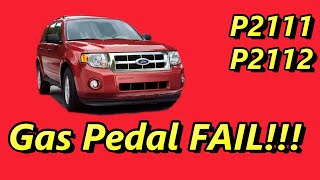
- Rough or fluctuating idle 🎬 Watch: Diagnosing a Ford Escape wrench light and loss of throttle response
- Replacing the Accelerator Pedal Position (APP) sensor. The P2112 code points specifically to a problem at the throttle body, not the pedal that commands it.
- Cleaning a non-responsive throttle body. While cleaning is good maintenance, it will not fix the internal electronic failure that typically causes this code on a Ford Escape. Many owners and technicians have confirmed that cleaning does not resolve the limp mode issue.
Most Likely Causes
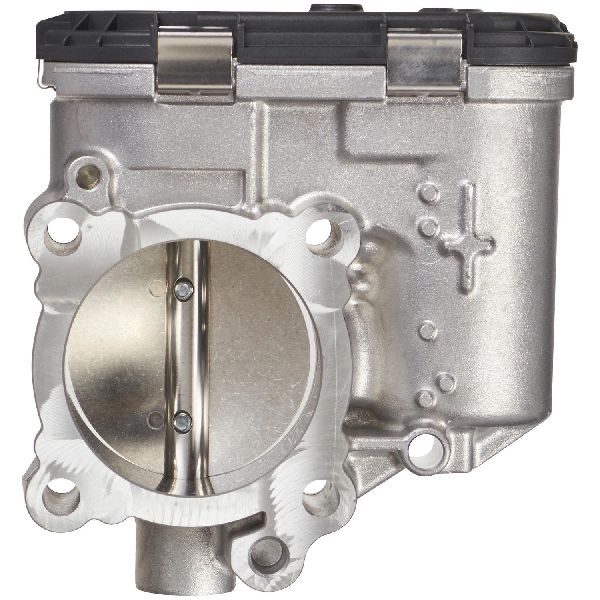
- Failed Electronic Throttle Body Assembly 🔴 High Probability → Shop Fuel Injection Throttle Body The electronic components (motor, position sensors) within the throttle body assembly are a common failure point on this generation of Ford vehicles, often due to contamination of the internal motor contacts. This was acknowledged by Ford through an extended warranty program (13N03).
How to confirm: After confirming no wiring issues, this is the most likely cause. A scan tool may show the commanded throttle position vs. the actual position, revealing a discrepancy. Often, both P2111 (stuck open) and P2112 (stuck closed) will be present, which is a classic sign of electronic failure within the unit.
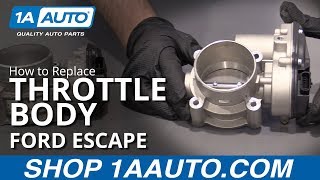
Typical fix: Replace the entire throttle body assembly. Cleaning the old unit is unlikely to resolve the issue as the failure is typically electronic, not due to carbon buildup. After replacement, a throttle body relearn procedure is required. 🎬 See this step-by-step throttle body replacement walkthrough
Est. part cost: $80-$200 - Wiring or Connector Issues ⚪ Low Probability While less common than throttle body failure, wiring harnesses can be subject to chafing or damage over time, leading to open or shorted circuits. A poor connection at the throttle body connector can also cause this code.
How to confirm: Visually inspect the wiring harness leading to the throttle body for any signs of damage, chafing, or corrosion at the connector. Wiggle the connector with the engine running to see if it induces the symptom.
Typical fix: Repair the damaged section of the wiring harness or replace the connector.
Est. part cost: $10-$50
Rare But Worth Checking
- Powertrain Control Module (PCM) Failure: This is extremely rare. The PCM should only be considered after all other possibilities, including the throttle body and wiring, have been definitively ruled out.
Diagnosis Steps
- Scan the PCM for any other stored trouble codes to get a full picture of the issue. Note if P2111 is also present.
- Visually inspect the wiring harness and connector going to the electronic throttle body. Look for any signs of chafing, breaks, or corrosion.
- Using a scan tool with live data, observe the commanded throttle position (TP_CMD) versus the actual throttle position sensors (TP1, TP2). If the actual position does not respond correctly to the commanded position, the throttle body is likely faulty.
- If wiring is intact and the throttle body is unresponsive, the most probable cause is the throttle body assembly itself.
- Replace the throttle body assembly.
- After replacement, perform a throttle body relearn procedure. This typically involves disconnecting the negative battery terminal for at least 5 minutes, reconnecting it, turning the ignition to 'ON' (without starting) for a few minutes, then starting the engine and letting it idle for 10-15 minutes to relearn idle trims. Driving the vehicle for 10-15 miles can complete the process.
Parts You'll Likely Need
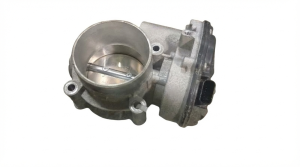
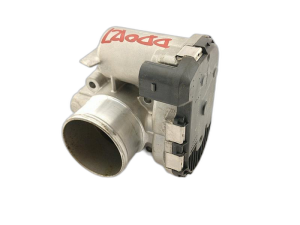
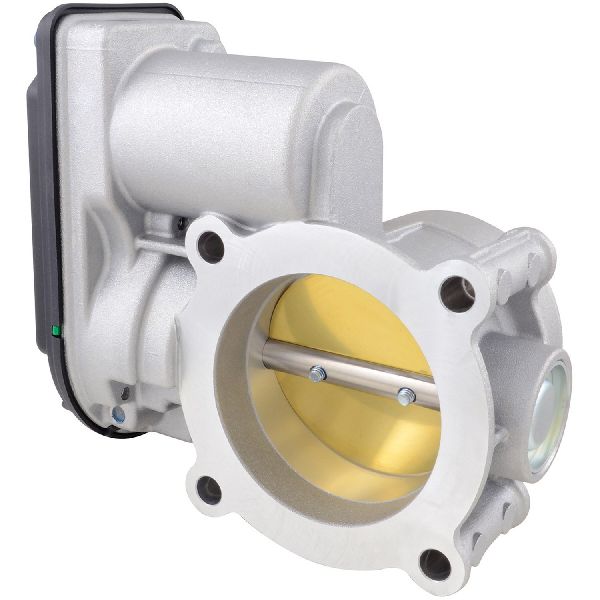
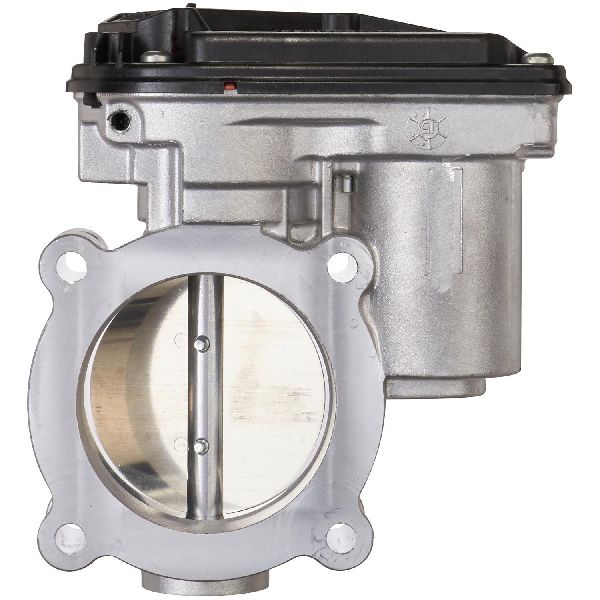
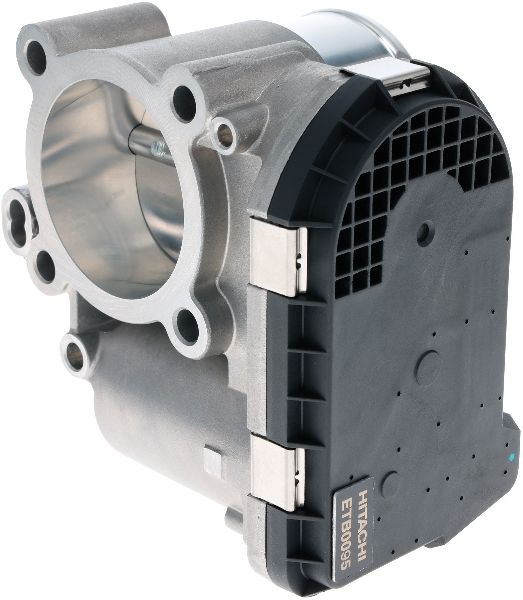
- Electronic Throttle Body Assembly
(OEM #DS7Z-9E926-D (Motorcraft Part# TB-3))— This is the most common failure point for code P2112 on this vehicle. The internal electronics fail, causing the throttle plate to become stuck.
Trusted brands: Motorcraft, Bosch, Hitachi, Standard Motor Products (SMP)
OEM price range: $150-$250
Aftermarket price range: $80-$180
Related Codes That Often Appear With This One
- P2111 — This code for 'Throttle Actuator Control System - Stuck Open' is the sister code to P2112. It's common to see both codes logged together as the throttle body's internal electronics fail erratically.
- P2135 — This code indicates a voltage correlation issue between the two throttle position sensors inside the throttle body, pointing directly to an internal failure of the assembly. Ford Special Service Message (SSM) 47752 links this code to ETB failures.
- P2119 — This code indicates a general 'Throttle Body Range/Performance' issue and often appears with P2111 or P2112, further confirming a faulty throttle body. Ford TSB 16-0139 also references this code in relation to ETB failures.
Technical Service Bulletins (TSBs) & Recalls
- Customer Satisfaction Program 13N03: Not a TSB, but a Ford program extending the warranty coverage for the throttle body on certain 2009-2013 models, including the Escape, to 10 years/150,000 miles due to potential contamination on internal motor contacts.
- SSM 47752: While not directly for P2112, this Special Service Message addresses intermittent electronic throttle body (ETB) concerns on 2016-2018 Fords, including the Escape, that result in codes like P2111, P2112, and P2135, instructing technicians to replace the ETB if diagnosis points to it.
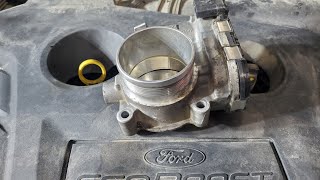
- TSB 16-0139: Addresses intermittent loss of power with codes P2111, P2112, and P2119 on various 2015-2016 Ford models, including the Escape 2.0L. The fix is to replace the electronic throttle body. 🎬 Watch: Replacing a failed throttle body on Ford 2.0 EcoBoost engines Bulletin #TSB 16-0139 notes that vehicles may exhibit an illuminated powertrain malfunction (wrench) lamp alongside these codes.
Platform-Specific Known Issues
- Ford's Customer Satisfaction Program 13N03: Ford acknowledged the high failure rate of these throttle bodies and issued program 13N03, extending the warranty to 10 years or 150,000 miles. This program covered the replacement of the throttle body free of charge if it failed within the extended period. While this program has likely expired for most vehicles by now, it serves as official acknowledgment of the defect.
- Owner Experience of Sudden Failure: A common story on forums involves driving at highway speeds when the vehicle suddenly loses all power and the wrench light comes on, forcing the driver to navigate to the shoulder in a dangerous situation. Restarting the car sometimes temporarily clears the issue, but it always returns.
Mechanic-Grade Diagnostic Values
- 5V Reference Voltage (VREF) at Throttle Body Connector C139 — expected: ~5.0 volts with Key On, Engine Off (KOEO).. Failure: Voltage significantly lower than 5.0V or absent, which points to a wiring or PCM problem, not the throttle body itself.
- Ground Circuit at Throttle Body Connector C139 — expected: Less than 5 ohms of resistance to chassis ground.. Failure: High resistance or an Open Line (OL) reading indicates a bad ground connection.
- Throttle Actuator Control (TAC) Motor Resistance — expected: Between 2 and 25 Ohms across the two motor pins at connector C139.. Failure: A reading of OL (Open circuit) or a value significantly outside the expected range indicates a failed internal motor.
- Ford-Specific P2112 Trigger Condition — expected: The actual throttle angle reported by the sensors should be within 6 degrees of the commanded angle from the PCM.. Failure: When the measured throttle angle is more than 6 degrees lower than the PCM's commanded angle, the code is set and limp mode is triggered.
Scan Tool Commands That Help
- Ford IDS (or high-end equivalent like FORScan): Live Data Graphing (PIDs: TP_CMD, TP1, TP2) — This is the definitive diagnostic step. Graphing the Commanded Throttle Position against the two Actual Throttle Position sensors makes it easy to visually confirm if the throttle plate is lagging, sticking, or not responding to PCM commands, which confirms a faulty throttle body.
- Ford IDS (or high-end equivalent): Throttle Plate Sweep Test / Actuator Test — This bidirectional command allows the technician to manually command the throttle plate through its full range of motion using the scan tool. It is used to definitively confirm if the throttle motor is physically sticking or has dead spots, isolating the failure to the throttle body assembly.
- Ford IDS / FORScan: PCM -> Reset All Adaptations / Clear PCM Adaptive Memory — This is a critical step to perform *after* installing a new throttle body. It performs a Keep Alive Memory (KAM) reset, forcing the PCM to clear all old learned values and immediately begin the calibration and relearn process for the new part.
Wiring & Ground Locations
- C139 — The 6-pin electrical connector located directly on the electronic throttle body assembly at the front of the engine.. This is the single point of connection for all power, ground, and sensor signals for the throttle body. Corrosion, bent pins, or a loose connection here is a primary point of failure to check before replacing the throttle body.
- G104 / G105 — At the left front corner of the engine compartment, near the battery junction box (BJB).. These are primary engine compartment ground points. While not exclusive to the throttle body, a loose or corroded connection here can cause a host of seemingly unrelated electronic issues, including erratic sensor readings that could contribute to throttle control faults.
Real Owner Repair Stories
- Reddit user on r/fordescape (2013 Ford Escape SE 2.0L) — Sudden loss of power/stalling, vehicle would not accelerate from a stop, throwing P2112 code.
❌ Tried (didn't work) Dealer initially found codes P0122/P2135 and replaced the throttle pedal assembly., Four days later, the same symptoms returned with codes P2111/P2112, and the dealer then replaced a wire assembly.
✅ What actually fixed it After the pedal and wiring replacements failed to solve the issue, the dealer finally replaced the entire throttle body assembly, which resolved the problem. The issue later returned after two years, suggesting even the replacement part can fail. - NHTSA ODI #11620225 — An owner reported that the car stalled while driving on the roads and a local Ford service center retrieved the P2112 code during several visits, eventually approving a throttle body replacement.
- NHTSA ODI #11432322 — One owner noted the vehicle hesitated to respond; an independent mechanic retrieved code P2112 (Throttle Actuator Stuck Closed), though the local dealer did not initially diagnose or repair the unit.
- NHTSA ODI #10892299 — A driver reported a message center warning to contact the dealer after the vehicle required a restart in park; a scan tool confirmed code P2112 was stored in memory.
OEM Part Supersession History
9L8Z-9E926-A→DS7Z-9E926-A— Part number update and potential design revision by Ford.DS7Z-9E926-A→DS7Z-9E926-D— This is the latest revised part number from Ford, intended to improve reliability and address the known failure modes.
Heads up: When replacing, always use the latest part number (DS7Z-9E926-D) to ensure you have the most updated design.
Diagnostic Flowchart
Other Known Issues on This Vehicle
Issues unrelated to this code that are worth knowing about as an owner of this generation:
- 2.0L EcoBoost Coolant Intrusion 🔴 High — Common on 2017-2019 models, but can occur on earlier years. A design flaw in the open-deck engine block can lead to cracks between cylinders, allowing coolant to leak into the combustion chamber. (Ref: TSB 19-2346)
- 6F35 Transmission Shudder/Failure 🟠 Medium — Reported frequently across the 2013-2016 generation. Symptoms include harsh shifting, shuddering, or complete failure. Regular fluid changes are critical.
- AWD PTU (Power Transfer Unit) Failure 🟠 Medium — The PTU on AWD models contains fluid that Ford initially described as 'lifetime,' but it can overheat and break down, leading to failure. Preventive fluid changes are recommended.
- Shift Cable Bushing Degradation 🔴 High — The bushing that attaches the shifter cable to the transmission can detach, preventing the vehicle from being placed in the correct gear or causing it to roll away. (Ref: NHTSA Recall 22V413000)
Used vs. New Parts: Buying Guide for This Vehicle
When a used part is the smart pick: For this specific failure, buying a used throttle body from a junkyard is NOT recommended. The issue is a well-documented electronic failure due to an internal design flaw. A used part is highly likely to have the same defect or fail shortly after installation, negating any initial cost savings.
What to inspect on the donor part:
- Not applicable, as a used part is not advised for this repair.
OEM-only on this vehicle (don't cheap out):
- Electronic Throttle Body Assembly
Aftermarket brands forum-validated for this vehicle:
- Motorcraft (OEM)
- Bosch
- Hitachi
- Standard Motor Products (SMP)
Brands owners have reported issues with on this vehicle:
- Ultra-low-cost, unbranded parts from online marketplaces should be avoided, as their internal electronics and calibration may not meet OEM standards, leading to premature failure or other drivability issues.
Real Owner Stories
Aggregated from forums and TSBs cited above. Mileages and costs reflect what owners reported in those sources.
2013 Ford Escape 2.0L
Symptoms: Recurring P2112 and P2111 codes. The dealer initially replaced a wire assembly, but the problem returned just four days later.
What fixed it: Full electronic throttle body replacement.
Cost: $700-$800
Source hint: reddit.com/r/fordescape/comments/hje9b9/13_escape_se_2l_w_p2112_trouble_code_again/
2010 Ford Escape
Symptoms: Sudden engine cutout while accelerating into traffic, creating a dangerous driving situation.
What fixed it: Throttle body replacement under Customer Satisfaction Program 13N03.
Source hint: fordtruckenthusiasts.com/forums/threads/2009-12-extended-throttle-body-warranty-may-be-useless.1408139/
2013-2016 Ford Escape
Symptoms: Driving at highway speeds when the vehicle suddenly loses all power and the wrench light comes on, forcing a dangerous navigation to the shoulder. Restarting the car temporarily clears the issue.
What fixed it: Replacement of the electronic throttle body assembly.
Source hint: vehicle_specific_issues: Owner Experience of Sudden Failure
Related OBD-II Codes
Frequently Asked Questions
Does Ford's Customer Satisfaction Program 13N03 cover my 2013-2016 Ford Escape?
Can I just clean the throttle body on my 2.0L EcoBoost to fix P2112?
Is there a specific TSB for the 2015-2016 Escape 2.0L regarding P2112?
What is the 'wrench light' I see on my dashboard along with P2112?
Does SSM 47752 apply to my 2016 Ford Escape?
What is the required procedure after I replace the throttle body on my Escape?
Helpful Videos
Used OEM Parts in Stock
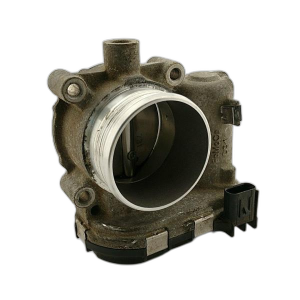
New Aftermarket Parts Available


The information in this article is provided for general reference and educational purposes only. Vehicle specifications, procedures, and part compatibility can vary by production date, trim level, and region. Always consult your vehicle's factory service manual and verify part numbers before purchasing or performing repairs. Safety-critical components such as airbags, seat belts, and braking systems should be installed by a qualified professional.
- Ford Escape:
- 🧭 Diagnostic Flowchart
- 🎬 Helpful Videos
- 🛍️ Shop This Part
- What's Unique About the 2013-2016 Ford Escape
- Symptoms You May Notice
- Most Likely Causes
- Rare But Worth Checking
- Diagnosis Steps
- Parts You'll Likely Need
- Related Codes That Often Appear With This One
- Technical Service Bulletins (TSBs) & Recalls
- Platform-Specific Known Issues
- Mechanic-Grade Diagnostic Values
- Scan Tool Commands That Help
- Wiring & Ground Locations
- Real Owner Repair Stories
- OEM Part Supersession History
- Other Known Issues on This Vehicle
- Used vs. New Parts: Buying Guide for This Vehicle
- Real Owner Stories
- 2013 Ford Escape 2.0L
- 2010 Ford Escape
- 2013-2016 Ford Escape
- Related OBD-II Codes
- Frequently Asked Questions
- 🎟️ Get 5% Off