

P2112 on 2011-2019 Ford Explorer 3.5L V6: Throttle Body Failure Causes and Fixes
On a 2011-2019 Ford Explorer with the 3.5L V6, code P2112 almost always means the electronic throttle body has failed. This is a very common problem that puts the vehicle into 'limp mode'. The fix is to replace the entire throttle body assembly, which costs about $100-$250 for the part and is a DIY-friendly repair.
- P2112 on a 2011-2019 Explorer 3.5L almost certainly means the electronic throttle body has failed internally.
- This is a well-known issue acknowledged by Ford through TSBs and a warranty extension program (13N03).
- Replacement of the entire throttle body assembly (Part No. AT4Z-9E926-B) is the only reliable fix; cleaning is ineffective for this specific failure.
- The vehicle will enter a dangerous, low-power 'limp mode,' making it unsafe to drive until repaired.
What's Unique About the 2011-2019 Ford Explorer
The 3.5L Cyclone V6 used in this generation of Ford Explorer is notorious for premature electronic throttle body (ETB) failures. The problem was so widespread across the Ford lineup that it prompted Ford to issue Customer Satisfaction Program 13N03, which extended the warranty on the ETB to 10 years or 150,000 miles for this exact issue. The failure is typically due to contamination of the internal electronic motor contacts, not just carbon buildup, which is why simply cleaning the unit is not a permanent fix for this code on this vehicle.
Symptoms You May Notice
- Sudden and severe loss of engine power (Limp Mode)
- Wrench warning light illuminated on the dashboard
- Check Engine Light illuminated
- Unresponsive or sluggish accelerator pedal
- Engine may stall or fail to start
- Rough or unstable idle
- Error messages like 'Hill Descent Control Fault' may appear simultaneously
- Replacing the Accelerator Pedal Position (APP) Sensor. The APP sensor tells the computer what the driver wants, but P2112 indicates the throttle body failed to respond to the command, not that the command was wrong.
- Cleaning a Dirty Throttle Body. While carbon buildup can cause other issues, it does not cause the internal electronic failure that triggers P2112 on this engine. Owners and technicians confirm cleaning will not fix the limp mode problem.
Most Likely Causes
- Failed Electronic Throttle Body (ETB) Assembly 🔴 High Probability → Shop Fuel Injection Throttle Body This is a well-documented design flaw acknowledged by Ford's Customer Satisfaction Program 13N03. Internal electronic motor contacts become contaminated, leading to increased electrical resistance and intermittent failure to open the throttle plate.
How to confirm: Scan for codes P2112 and its common companion code, P2111. Given the extremely high failure rate on this platform, if the code is present, the throttle body is almost certainly the cause. Cycling the key may temporarily clear the fault, but it will return under load.
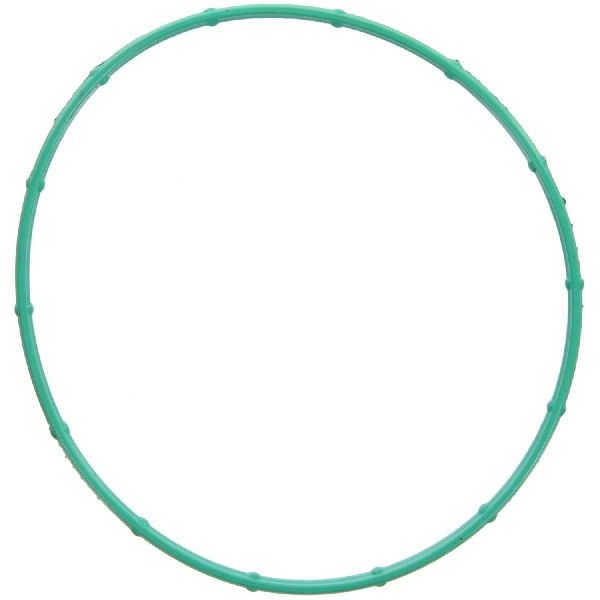
Typical fix: Replace the entire electronic throttle body assembly and its gasket. Cleaning the old unit is not a reliable or long-term solution for this specific internal electronic failure mode.
Est. part cost: $100-$280
Rare But Worth Checking
- Wiring Harness Issue: Check the wiring harness and 6-pin connector at the throttle body for any signs of damage, corrosion, or loose pins. While less common than ETB failure, a poor connection can cause the same code. Ensure the red locking tab on the connector is fully seated after inspection or replacement.
- Powertrain Control Module (PCM) Fault: This is extremely rare. The PCM should only be considered as a potential cause after the throttle body has been replaced with a known-good part and the wiring has been thoroughly checked and confirmed to be intact.
Diagnosis Steps
- Use an OBD-II scanner to confirm P2112 is the active code. Note any other codes present, such as P2111 or P2104.
- Given the extremely high probability of throttle body failure on this vehicle, the most direct and common 'diagnostic step' is to replace the throttle body assembly.
- Before replacement, perform a quick visual inspection. Check the wiring harness and 6-pin connector at the throttle body for obvious damage, corrosion, or loose pins. Ensure the connector is fully seated.
- With the key off, you can remove the intake air duct to inspect the throttle plate. Check for any obvious physical obstructions that would prevent it from moving (this is rare). Do not force the throttle plate by hand.
- Replace the electronic throttle body and gasket. This typically involves removing four mounting bolts.
- After replacement, it is recommended to perform a Keep Alive Memory (KAM) reset. This can be done by disconnecting the negative battery terminal for at least 15 minutes.
- After reconnecting the battery, start the vehicle and let it idle for several minutes to allow the PCM to relearn the new throttle body's idle and off-idle positions. A short drive cycle with varied speeds may also be required.
Parts You'll Likely Need
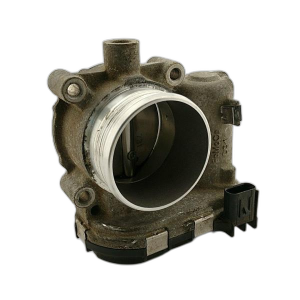
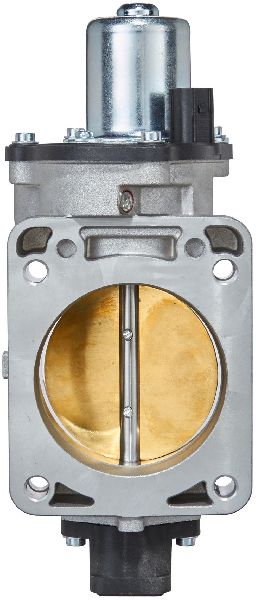
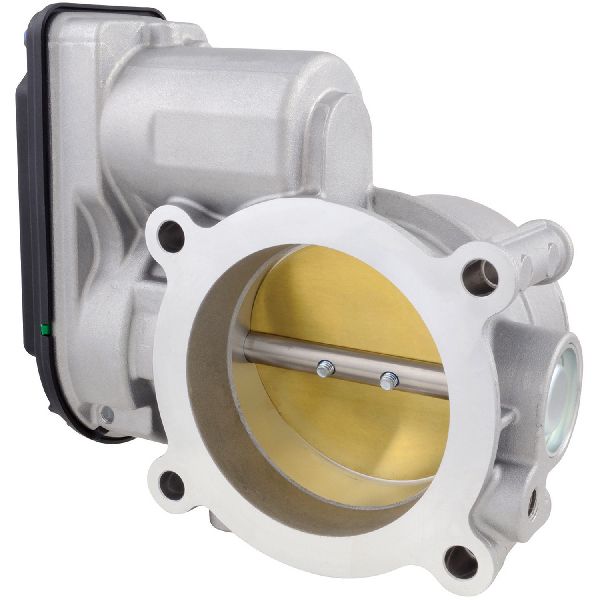
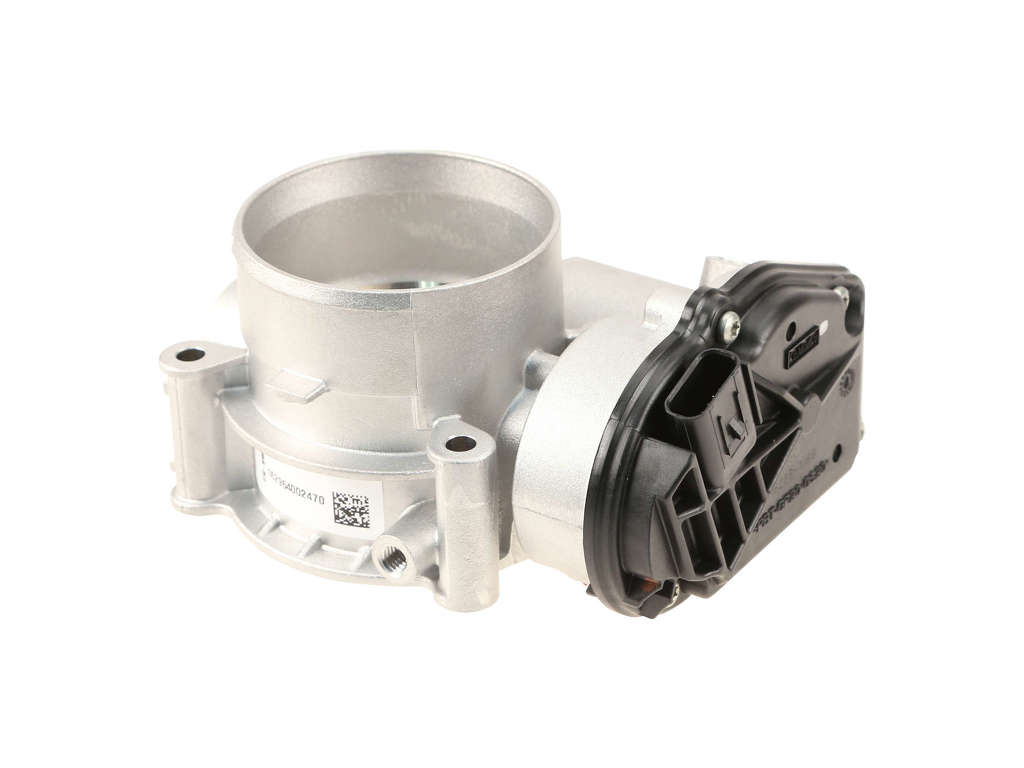
- Electronic Throttle Body Assembly
(OEM #AT4Z-9E926-B)— This is the definitive cause of code P2112 on this vehicle in over 99% of cases due to a known design flaw with the internal electronics. The original part AT4Z-9E926-A was superseded by this -B revision.
Trusted brands: Motorcraft, Bosch, Hitachi, Dorman OE Fix
OEM price range: $200-$300
Aftermarket price range: $100-$200
Related Codes That Often Appear With This One
- P2111 — This code for 'Throttle Actuator Control System - Stuck Open' points to the same failing component. Both P2111 and P2112 are cited in Ford's TSBs and customer satisfaction programs for this issue.
- P2104 — This is a companion code meaning 'Throttle Actuator Control System - Forced Idle'. It doesn't indicate a separate fault, but rather confirms the PCM has detected a critical throttle error (like P2112) and has initiated limp mode as a result.
- P2119 — This code for 'Throttle Actuator Control Throttle Body Range/Performance' is also mentioned in Ford's TSB 16-0139 as being related to the same throttle body fault.
Technical Service Bulletins (TSBs) & Recalls
- TSB 16-0139: Addresses intermittent power loss and DTCs P2111/P2112/P2119 for 2016 Explorers and other models built on or before May 31, 2016, recommending throttle body replacement.
- TSB 10-21-6: An earlier bulletin that also addressed DTCs P2111/P2112 and idle speed fluctuations, pointing towards a throttle body issue on 2010-2011 models.
- Customer Satisfaction Program 13N03 / 16B32: Acknowledged the widespread ETB failures due to internal electronic contamination and extended warranty coverage to 10 years/150,000 miles.
- Bulletin #TSB 16-0139: Confirms that vehicles may exhibit an intermittent loss of power and/or an illuminated wrench lamp with DTCs P2111, P2112, and/or P2119 stored in the PCM memory.
Platform-Specific Known Issues
- Ford issued Customer Satisfaction Program 13N03, extending the warranty on the electronic throttle body to 10 years or 150,000 miles due to this known issue. While this program has likely expired for most vehicles based on age, it confirms the widespread nature of the defect.
- Ford also released Technical Service Bulletin TSB 16-0139, which covers 2016 Explorers (among other models) for DTCs P2111, P2112, and P2119 causing intermittent power loss, recommending throttle body replacement.
- NHTSA ODI #10910652 describes an occurrence where a dealer found codes P2111 and P2112 and followed instructions for recall 16B32 to reprogram the PCM and clear codes.
Mechanic-Grade Diagnostic Values
- Throttle Position Sensor (TP) Voltage Sweep — expected: Using a multimeter to back-probe the two TP signal wires, voltage should sweep smoothly and inversely. For example, TP1 sweeps from ~0.5V to ~4.5V, while TP2 sweeps from ~4.5V to ~0.5V.. Failure: Any sudden voltage drops, spikes, glitches, or dead spots during the sweep indicates a faulty sensor within the throttle body assembly.
- Throttle Actuator Control (TAC) Motor Resistance — expected: Generally between 2 and 25 ohms when measured across the two motor pins on the throttle body itself.. Failure: A reading of OL (open circuit/infinite resistance) or a value far outside the expected range indicates a failed internal motor.
- Reference Voltage (VREF) at ETB Connector — expected: Approximately 5.0 volts with Key On, Engine Off (KOEO) at the VREF pin.. Failure: Significantly lower or no voltage points to a wiring issue or a problem with the PCM's 5V reference circuit, not the throttle body itself.
- Sensor Ground at ETB Connector — expected: Should show good continuity to a known-good chassis ground (less than 1 ohm).. Failure: High resistance or an open circuit on the ground wire will cause incorrect sensor readings and trigger faults.
Scan Tool Commands That Help
- FORScan / Ford IDS: PCM Reset / Clear Keep Alive Memory (KAM) — This function should be performed after replacing the electronic throttle body. It clears the PCM's learned adaptive strategies, including the old throttle plate's learned idle and off-idle positions, forcing it to relearn with the new part. This is more thorough than just disconnecting the battery.
- FORScan / Ford IDS: Live Data PIDs: TP_CMD (Commanded Throttle Position) vs. TP_ACT (Actual Throttle Position) — During diagnosis, monitoring these two PIDs while pressing the accelerator pedal can confirm the fault. If TP_CMD changes but TP_ACT does not respond or lags significantly, it confirms the throttle body is not responding to the PCM's command. The P2112 code sets when the difference exceeds a calibrated value (e.g., 6 degrees).
- Ford IDS: Throttle Actuator Control Test — This is a bidirectional test that allows a technician to directly command the throttle motor to specific angles (e.g., 10%, 25%, 50%) with the engine off. If the throttle plate fails to move to the commanded position, it definitively proves the throttle body or its circuit is faulty.
Wiring & Ground Locations
- C175B — This is the main 70-pin connector for the Powertrain Control Module (PCM) on the 3.5L V6 model. The PCM itself is located in the engine bay on the passenger side, near the firewall.. All wiring for the electronic throttle body (power, ground, and sensor signals) terminates at this connector. Any continuity or voltage tests of the harness must be performed between the throttle body connector and the corresponding pins at C175B.
- G103 / G104 — These are primary engine bay ground points. G103 is located on the left front corner of the engine compartment, and G104 is on the right side of the engine compartment.. The PCM and its related sensors rely on clean, secure grounds to function correctly. A corroded or loose connection at G103 or G104 can introduce electrical noise or voltage drops, potentially causing erratic behavior and codes like P2112, although this is a rare cause.
- ETB Connector Pins — The 6-pin connector directly on the electronic throttle body assembly.. This is the primary point for testing. A technician would back-probe these pins to measure reference voltage, sensor signal voltages, motor control signals, and ground integrity without disconnecting the component.
Real Owner Repair Stories
- YouTube channel 'Jimmy, Making it work' (Ford F-150 (platform mate with similar electronics)) — Vehicle went into limp mode with code P2112.
❌ Tried (didn't work) Initial scan tool data showed glitchy but somewhat functional throttle position sensor readings, making the diagnosis slightly ambiguous without a scope.
✅ What actually fixed it The problem was resolved by replacing the entire electronic throttle body assembly. After replacement, a scan tool showed clean, smooth voltage signals from the new TP sensors, and the glitches were gone. - NHTSA ODI #11551127 — An owner reported sudden deceleration due to the P2112 code, noting the electronic throttle body was stuck closed.
- NHTSA ODI #11030745 — A driver experienced a lack of power, vibration, and a sudden jerk backwards while driving 45 MPH, with codes P2111 and P2112 stored.
OEM Part Supersession History
AT4Z-9E926-A→AT4Z-9E926-B— The -A revision was the original part known for high failure rates. The -B revision is the updated part intended to address the internal electronic contamination issue.
Model Year Variations Within This Range
- 2016: Models built on or before May 31, 2016, are specifically called out in TSB 16-0139 for this issue. While the part and failure mode are the same for the entire generation, this TSB provides specific documentation for the 2016 model year, suggesting a potential batch of particularly failure-prone parts during that production period.
Diagnostic Flowchart
Other Known Issues on This Vehicle
Issues unrelated to this code that are worth knowing about as an owner of this generation:
- Internal Water Pump Failure 🔴 High — Commonly occurs after 80,000-120,000 miles. Failure can cause coolant to mix with engine oil, leading to catastrophic engine damage if not caught immediately via a weep hole.
- Power Transfer Unit (PTU) Failure 🔴 High — The PTU fluid overheats due to proximity to the exhaust, leading to seal leaks and eventual gear failure, resulting in loss of AWD. Often occurs before 100,000 miles. The unit is not considered 'serviceable' by Ford as it lacks a drain plug.
- Exhaust Odor / CO Leak Into Cabin 🔴 High — Widespread issue on 2011-2017 models where exhaust fumes could enter the cabin during heavy acceleration or with the HVAC on recirculate. (Ref: Multiple TSBs issued (e.g., 16-0166, 17-0029, 17-0044) and a Ford service program to seal body gaps and reprogram HVAC.)
- Cracked A-Pillar Trim / Water Leaks 🟡 Low — The exterior plastic trim pieces on the A-pillars are prone to cracking and flying off at highway speeds. This can also lead to water leaks into the cabin.
- Steering Rack / EPAS Failure 🟠 Medium — Failures of the electronic power assisted steering (EPAS) rack are common, leading to a loss of power steering. Several recalls were issued for related components. (Ref: Multiple recalls for steering components (e.g., rear suspension toe links, power steering gear motor).)
Used vs. New Parts: Buying Guide for This Vehicle
When a used part is the smart pick: For this specific repair, buying a used throttle body is STRONGLY DISCOURAGED. The original part has a very high, well-documented failure rate due to a design defect. A used part from a salvage yard is highly likely to be the same failure-prone -A revision and may fail shortly after installation, causing the same dangerous limp-mode situation.
Donor-vehicle mileage cap: roughly under 15000 miles for the part to have meaningful remaining life.
What to inspect on the donor part:
- If you must buy used, only consider a part from a very recent, low-mileage (under 15k miles) wrecked vehicle.
- Visually confirm the part number is the updated AT4Z-9E926-B revision. Do not buy the -A revision.
- Inspect the connector pins for any corrosion or damage.
- Ensure the throttle bore is relatively clean, as a very dirty unit may indicate high mileage or poor maintenance.
OEM-only on this vehicle (don't cheap out):
- While not strictly 'OEM-only', using a Motorcraft or a reputable OEM-supplier like Bosch is highly recommended over generic, unbranded parts to avoid premature failure.
Aftermarket brands forum-validated for this vehicle:
- Motorcraft (OEM)
- Bosch
- Hitachi
- Dorman OE Fix (Specifically look for their redesigned versions if available, as they sometimes address the original failure mode.)
Brands owners have reported issues with on this vehicle:
- Unbranded, 'white box' parts from online marketplaces with no warranty or brand reputation. Owners frequently report these failing within months.
Real Owner Stories
Aggregated from forums and TSBs cited above. Mileages and costs reflect what owners reported in those sources.
2012 Ford Explorer 3.5L V6 — 37000 miles
Symptoms: Dashboard reported a TMS fault, then AWD off. The car became unresponsive to the accelerator, slowed down rapidly, and displayed a 'wrench' service indicator.
What fixed it: Dealer confirmed code P2112 (throttle body stuck closed) and replaced the throttle body. This incident was also documented in NHTSA ODI #10621906, where the owner noted the vehicle slowed down rapidly after the wrench light appeared.
Source hint: CarComplaints.com report regarding Silvia Franco lawsuit
2012 Ford F-150 3.5L V6
Symptoms: The vehicle stalled 7 times on the freeway before finally throwing a P2112 code.
What fixed it: Replacement of the electronic throttle body assembly.
Source hint: Ford F150 Forum - 'Illuminated Wrench Lamp ***TSB 16-0139***'
2016 Ford F-150 3.5L V6
Symptoms: Vehicle entered limp mode and displayed a 'downhill asst not working' message.
What fixed it: Installation of a new throttle body.
Source hint: Ford Truck Enthusiasts Forums - 'Code P2112 Throttle acuator'
2013-2019 Ford Explorer 3.5L V6
Symptoms: Limp mode experience where the engine shuts off if RPMs go above 900.
What fixed it: Throttle body replacement under Consumer Satisfaction Program 13N03.
Source hint: Reddit r/Ford - 'Does anyone here have experience with Consumer Satisfaction Program 13N03?'
Related OBD-II Codes
Frequently Asked Questions
Does TSB 16-0139 apply to my 2016 Ford Explorer with the 3.5L V6?
Is there a warranty extension for the throttle body on my 2011-2019 Explorer?
Can I just clean the throttle body to fix the P2112 code?
Why did my Explorer display a 'Hill Descent Control Fault' along with the P2112 code?
What is the estimated part cost for a new throttle body on the 3.5L Cyclone V6?
Is there a specific procedure I need to follow after replacing the throttle body?
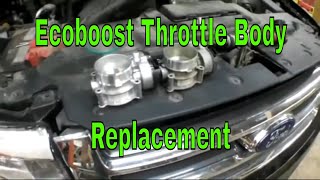
Helpful Videos

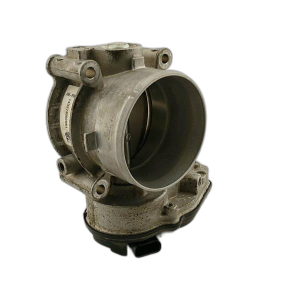
Used OEM Parts in Stock
New Aftermarket Parts Available


The information in this article is provided for general reference and educational purposes only. Vehicle specifications, procedures, and part compatibility can vary by production date, trim level, and region. Always consult your vehicle's factory service manual and verify part numbers before purchasing or performing repairs. Safety-critical components such as airbags, seat belts, and braking systems should be installed by a qualified professional.
- Ford Explorer:
- 🧭 Diagnostic Flowchart
- 🎬 Helpful Videos
- 🛍️ Shop This Part
- What's Unique About the 2011-2019 Ford Explorer
- Symptoms You May Notice
- Most Likely Causes
- Rare But Worth Checking
- Diagnosis Steps
- Parts You'll Likely Need
- Related Codes That Often Appear With This One
- Technical Service Bulletins (TSBs) & Recalls
- Platform-Specific Known Issues
- Mechanic-Grade Diagnostic Values
- Scan Tool Commands That Help
- Wiring & Ground Locations
- Real Owner Repair Stories
- OEM Part Supersession History
- Model Year Variations Within This Range
- Other Known Issues on This Vehicle
- Used vs. New Parts: Buying Guide for This Vehicle
- Real Owner Stories
- 2012 Ford Explorer 3.5L V6 — 37000 miles
- 2012 Ford F-150 3.5L V6
- 2016 Ford F-150 3.5L V6
- 2013-2019 Ford Explorer 3.5L V6
- Related OBD-II Codes
- Frequently Asked Questions
- 🎟️ Get 5% Off