

P2112 on 2010-2019 Ford Flex 3.5L: Throttle Body Stuck Closed Causes and Fixes
On a 2010-2019 Ford Flex with the 3.5L V6, code P2112 almost always means the electronic throttle body has failed due to internal contamination. The vehicle will enter a dangerous low-power 'limp mode.' The only reliable fix is to replace the entire throttle body assembly, which costs around $100-$250 for the part and is a common DIY repair.
- Code P2112 on a 2010-2019 Ford Flex is a critical fault that will put the vehicle into a low-power 'limp mode,' making it unsafe to drive.
- The cause is almost certainly a failed electronic throttle body, a very common and well-documented issue for this vehicle due to internal electronic contamination.
- Do not waste time or money cleaning the throttle body; the failure is internal and electronic, requiring a full replacement of the assembly.
- The repair is straightforward for a DIYer and requires a throttle relearn procedure after installation.
What's Unique About the 2010-2019 Ford Flex
The electronic throttle body (ETB) on the 3.5L V6 used in the Ford Flex and many other Ford models of this era is a notoriously common failure point. The issue was so widespread that Ford issued multiple Technical Service Bulletins (TSBs) and a Customer Satisfaction Program (13N03) that extended the warranty on the part to 10 years or 150,000 miles. This program has since expired for most vehicles, but it confirms the high failure rate is due to a design flaw, specifically contamination on the internal motor contacts which causes intermittent electrical connectivity. Owners should be aware that this is a well-documented problem, not a random part failure.
Symptoms You May Notice
- Sudden and severe loss of engine power (entering 'limp mode')
- Wrench light illuminated on the dashboard
- Check Engine Light illuminated
- Unresponsive or sluggish throttle pedal
- Engine may stall, especially when coming to a stop
- Rough or unstable idle
- Vehicle unable to accelerate past a very low speed (e.g., 20 mph)
- Additional dashboard warnings such as "hill start assist not available" or "hill descent control fault" as noted in NHTSA ODI #11436665.
- Replacing the accelerator pedal position (APP) sensor. While the APP sensor is part of the drive-by-wire system, the P2112 code specifically points to a problem at the throttle body actuator, not the pedal.
- Attempting to clean the throttle body. While cleaning can resolve issues related to carbon buildup (like a rough idle), it will not fix the internal electronic fault that triggers P2112 and limp mode.
Most Likely Causes
- Failed Electronic Throttle Body (ETB) Assembly 🔴 High Probability → Shop Fuel Injection Throttle Body This is a well-documented, high-failure part on many Ford vehicles from this era. Ford's Customer Satisfaction Program 13N03 was created specifically to address this widespread issue, which is caused by contamination building up on the internal electronic motor contacts, leading to intermittent electrical connectivity and incorrect position readings.
How to confirm: Scan for codes P2112, P2111, or others related to throttle control. Given the extremely high failure rate of this part, if the code is present and symptoms match, the throttle body is the most likely culprit. A diagnostic scan tool can also monitor the commanded vs. actual throttle position to confirm the discrepancy. 🎬 Watch: Diagnosing a P2112 throttle actuator stuck closed code. On Ford vehicles, this code often sets if the actual throttle plate angle is more than 6 degrees lower than the commanded angle.
Typical fix: Replace the entire electronic throttle body assembly. Cleaning the old unit is not an effective fix for the internal electronic failure that causes this code.
Est. part cost: $100-$250
Rare But Worth Checking
- Wiring Harness or Connector Issue: While less common than a failed throttle body, damage or corrosion to the wiring or connector pins leading to the throttle body can mimic a failed component. It's worth inspecting the harness for any visible damage, especially if a new throttle body does not resolve the issue. A broken locking tab on the connector is a common point of failure. NHTSA ODI #11324912 highlights a case where a technician found damaged wiring behind the accelerator pedal that contributed to a P2112 code.
- Environmental Contamination: Manufacturer Bulletin #SSM 50597 notes that for some Ford models, codes P2111, P2112, and P2119 may be triggered by water or ice buildup in the intake manifold behind the throttle body.
- Powertrain Control Module (PCM) Failure: In very rare cases, the PCM itself can be the source of the problem. This should only be considered after the throttle body and wiring have been definitively ruled out, as it is an expensive and uncommon failure. One owner of a 2012 Taurus reported that replacing the throttle body did not fix the issue, but a used PCM did.
Diagnosis Steps
- Confirm the presence of code P2112 using an OBD-II scanner.
- Check for other related codes, such as P2111, P2119, or P2104, which further solidify the diagnosis of a failed throttle body.
- Visually inspect the wiring harness and electrical connector at the throttle body. Look for any signs of damage, corrosion, or loose pins. Ensure the connector is fully seated.
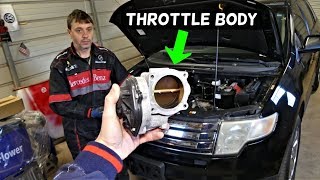
- Given the overwhelming probability, the next step for most DIYers is to replace the electronic throttle body assembly. The repair typically involves removing the air intake tube, disconnecting the electrical connector, and unbolting four 8mm bolts. 🎬 See this step-by-step throttle body removal and replacement guide.
- After replacement, perform a throttle body relearn procedure. A common method is: Turn the key to the 'ON' position (engine off), wait for all chimes to stop, slowly press the accelerator pedal to the floor over 10 seconds, then slowly release it over 10 seconds. Turn the key 'OFF', wait a minute, then start the engine and let it idle for 10-15 minutes to fully relearn idle trims. 🎬 Watch: How to perform the electronic throttle body calibration.
- Clear all codes with the OBD-II scanner and perform a test drive to ensure the issue is resolved.
Parts You'll Likely Need
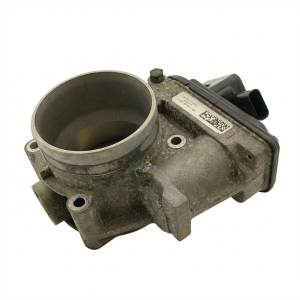
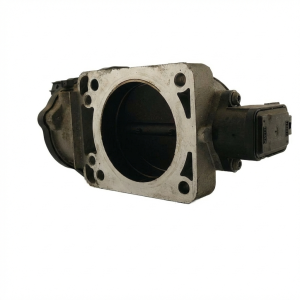
- Electronic Throttle Body Assembly
(OEM #AT4Z-9E926-B (Superseded by 7T4Z-9E926-FA for some applications))— This is the root cause of code P2112 on the Ford Flex in the vast majority of cases due to a known high failure rate.
Trusted brands: Motorcraft, Bosch, Hitachi, Dorman
OEM price range: $150-$250
Aftermarket price range: $100-$180
Related Codes That Often Appear With This One
- P2111 — This is the sister code for 'Throttle Actuator Control System - Stuck Open.' Both codes point to the same failing electronic throttle body, just indicating a different failure mode. They are often listed together in Ford's TSBs and owner complaints.
- P2119 — This code for 'Throttle Actuator Control Throttle Body Range/Performance' is also associated with a failing throttle body and is mentioned in TSB 16-0139 alongside P2111 and P2112.
- P2104 — This code, 'Throttle Actuator Control System - Forced Idle,' indicates the PCM has put the car in a fail-safe mode as a result of the throttle body fault.
- P2135 — This code, 'Throttle/Pedal Position Sensor/Switch 'A'/'B' Voltage Correlation,' points to a disagreement between the two internal throttle position sensors. When it appears with P2112, it strongly confirms the internal electronics of the throttle body assembly have failed and require replacement.
Technical Service Bulletins (TSBs) & Recalls
- TSB 10-21-6: DTC P2111 OR P2112, OR LOWER THAN DESIRED ENGINE IDLE SPEED, ENGINE IDLE SPEED FLUCTUATES WITH OR WITHOUT DTCS
- TSB 16-0139: Wrench Lamp Illuminated With DTCs P2111, P2112 and/or P2119
- Bulletin #SSM 50597: Notes that P2111, P2112, and/or P2119 may be due to water or ice buildup in the intake manifold behind the throttle body.
Platform-Specific Known Issues
- Ford Customer Satisfaction Program 13N03: This was an extended warranty (10 years/150,000 miles) for the electronic throttle body due to high failure rates. While now expired for nearly all vehicles, it officially documents the problem's widespread nature and cause (internal contamination).
- TSB 10-21-6: Issued for 2010-2011 Flex models (with the 3.5L non-EcoBoost engine built between 3/1/2010-8/3/2010) for codes P2111 and P2112, along with idle fluctuation issues, recommending throttle body replacement.
- TSB 16-0139: Issued for 2015-2016 Flex models (built on or before 31-May-2016) for codes P2111, P2112, and P2119, recommending throttle body replacement.
Mechanic-Grade Diagnostic Values
- Throttle Position Sensor (TPS) Voltage Range — expected: Approximately 0.5V at closed throttle to 4.5V at wide-open throttle.. Failure: Voltage that is stuck, erratic, or has dead spots when the throttle is slowly opened. A discrepancy of more than 6 degrees between the commanded and actual throttle angle will trigger the code on a Ford.
- Throttle Actuator Control Motor (TACM) Supply Voltage — expected: Battery voltage (typically 11V-13V) should be present at the power pin with the key on.. Failure: Low or no voltage indicates a wiring, fuse, or PCM supply issue, not necessarily a failed throttle body.
Scan Tool Commands That Help
- Ford IDS (Integrated Diagnostic System): All CMDTCs (Continuous Memory Diagnostic Trouble Codes) & Freeze Frame Data — This is the initial step to retrieve all stored faults and the engine operating conditions at the moment the P2112 code was set, which can provide crucial diagnostic clues.
- Ford IDS (Integrated Diagnostic System) or high-end bidirectional scanner: Active Command: Throttle Plate Control — With the key on and engine off, a technician can command the throttle plate to open and close. This directly tests the functionality of the throttle motor and sensors, confirming if it's physically stuck or electronically unresponsive.
- Ford IDS (Integrated Diagnostic System) or capable bidirectional scanner: PCM Reset / Keep Alive Memory (KAM) Reset — This function must be performed after replacing the throttle body. It clears the old learned adaptive values related to idle and throttle position, allowing the PCM to learn the parameters of the new component.
Wiring & Ground Locations
- Throttle Body Connector — Directly on the electronic throttle body assembly, where the engine air intake tube connects.. This 6-pin connector is the single point for all power, ground, and signal wires (TP1, TP2, TACM+, TACM-) for the throttle body. Corrosion, backed-out pins, or harness damage here is a direct cause of P2112.
- G104 / G105 — For the 3.5L engine family, G104 is often located at the rear of the right (passenger side) cylinder head, and G105 is on the left (driver side) of the engine block or head.. These are primary engine ground points for the PCM and its sensors. A loose or corroded ground can cause unstable voltages and erratic signals throughout the engine control system, potentially mimicking a throttle body failure.
Real Owner Repair Stories
- Ford F150 Forum user (2016 Ford F-150 3.5L EcoBoost, 48,000 miles) — Sudden loss of power while pulling into traffic, engine would only idle forward. Check engine light came on.
✅ What actually fixed it Scanned the P2112 code. Replaced the entire throttle body assembly and gasket with new OEM parts. The repair took 15 minutes and resolved the issue completely. - NHTSA ODI #11523404 — An owner reported the wrench light appeared on the dash and the vehicle lost power. After restarting, the code cleared but the issue recurred four more times over two months before finally throwing P2112. Replacing the throttle body was the chosen fix.
- NHTSA ODI #11436665 — A driver experienced a sequence of faults including "hill start assist not available" and the service wrench icon approximately 15 times before receiving code P2112 for a throttle body stuck shut.
OEM Part Supersession History
AT4Z-9E926-A→AT4Z-9E926-B— Part revision by the manufacturer, likely to improve reliability and address the known failure modes.
Heads up: AT4Z-9E926-B is the correct replacement for vehicles that originally used AT4Z-9E926-A.
Model Year Variations Within This Range
- 2013-2019: The Ford Flex received a significant facelift for the 2013 model year. While the throttle body issue persists across the entire range, the standard (non-EcoBoost) 3.5L V6 received a power increase from 263 hp to 288 hp, indicating some engine calibration changes.
Diagnostic Flowchart
Other Known Issues on This Vehicle
Issues unrelated to this code that are worth knowing about as an owner of this generation:
- Internal Timing-Chain-Driven Water Pump Failure 🔴 High — Common after 80,000-100,000 miles. Failure allows coolant to mix with engine oil, which can lead to catastrophic engine failure if not caught immediately.
- Power Transfer Unit (PTU) Overheating and Failure (AWD Models) 🔴 High — The 'lifetime' fluid breaks down from heat radiated by the nearby exhaust, leading to gear failure. Symptoms include a burning smell and grinding noises. Preventative fluid changes every 30,000 miles are recommended. (Ref: TSB 19-2017)
- Timing Chain Stretch (Primarily 3.5L EcoBoost) 🟠 Medium — More common on early (pre-2015) EcoBoost models, often presenting as a rattling noise on cold starts around 100,000 miles. Can cause performance issues and eventually engine damage. (Ref: Multiple TSBs address related timing DTCs, e.g., SSM 49821.)
- Rear Suspension Toe Link Fracture 🔴 High — Affects 2013-2018 models, can cause a sudden loss of steering control. A recall was issued (NHTSA Campaign ID: 20V077000). (Ref: Recall 20V077000)
Used vs. New Parts: Buying Guide for This Vehicle
When a used part is the smart pick: For this specific repair, buying a used throttle body is strongly discouraged. The part has a well-documented high failure rate due to an internal design flaw. A used part from a donor vehicle is highly likely to have the same defect or fail shortly after installation.
What to inspect on the donor part:
- Not applicable, as used parts are not recommended for this failure.
OEM-only on this vehicle (don't cheap out):
- Electronic Throttle Body Assembly
Aftermarket brands forum-validated for this vehicle:
- Motorcraft (OEM)
- Bosch
Brands owners have reported issues with on this vehicle:
- Unnamed or 'white-box' brands from online marketplaces have been reported by owners to be defective out of the box or fail quickly. It is recommended to stick with the OEM Motorcraft part or a reputable Tier 1 supplier like Bosch.
Real Owner Stories
Aggregated from forums and TSBs cited above. Mileages and costs reflect what owners reported in those sources.
2012 Ford F-150 3.5L V6 — 62000 miles
Symptoms: The truck stalled out 7 times on the freeway in a single day, with the final instance illuminating the check engine light and throwing code P2112.
What fixed it: Replacement of the electronic throttle body assembly.
Source hint: Ford F150 Forum - Truck stalled out 7 times on freeway today, the last one with cel P2112
2013 Ford Taurus 3.5L V6
Symptoms: Experienced multiple losses of acceleration while driving; a parts shop read codes P2111 and P2112.
What fixed it: DIY replacement of the throttle body followed by a specific pedal relearn procedure.
Source hint: CarComplaints.com - 2013 Ford Taurus Owner Complaint
2016 Ford Flex 3.5L V6
Symptoms: Wrench lamp illuminated on the dashboard along with DTCs P2111, P2112, and/or P2119.
What fixed it: Throttle body replacement as per the manufacturer's recommendation.
Source hint: TSB 16-0139
2016 Ford Expedition
Symptoms: An owner reported a terrifying incident where the vehicle lost power while driving, nearly causing a collision. A scan revealed code P2112 for a stuck closed throttle actuator.
What fixed it: The owner referenced TSB 16-0139 as the relevant guide for the repair.
Source hint: NHTSA ODI #11549005
Related OBD-II Codes
Frequently Asked Questions
My 2011 Ford Flex is idling roughly and showing a wrench light; does TSB 10-21-6 apply to me?
Is there a recall or extended warranty for the throttle body on my 2014 Flex?
I have a 2016 Ford Flex with a P2112 code; is there a specific technical service bulletin for this year?
Can I just clean the throttle body on my 3.5L V6 to fix the P2112 code?
What is the 'pedal relearn' procedure I should follow after replacing the part on my Flex?
Should I buy a used throttle body from a salvage yard to save money?
Helpful Videos


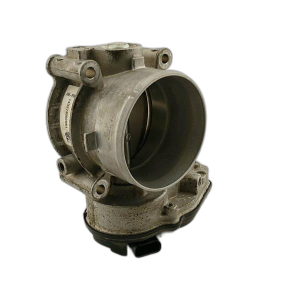
Used OEM Parts in Stock
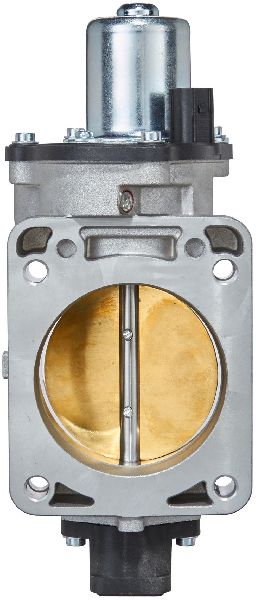
New Aftermarket Parts Available


The information in this article is provided for general reference and educational purposes only. Vehicle specifications, procedures, and part compatibility can vary by production date, trim level, and region. Always consult your vehicle's factory service manual and verify part numbers before purchasing or performing repairs. Safety-critical components such as airbags, seat belts, and braking systems should be installed by a qualified professional.
- Ford Flex:
- 🧭 Diagnostic Flowchart
- 🎬 Helpful Videos
- 🛍️ Shop This Part
- What's Unique About the 2010-2019 Ford Flex
- Symptoms You May Notice
- Most Likely Causes
- Rare But Worth Checking
- Diagnosis Steps
- Parts You'll Likely Need
- Related Codes That Often Appear With This One
- Technical Service Bulletins (TSBs) & Recalls
- Platform-Specific Known Issues
- Mechanic-Grade Diagnostic Values
- Scan Tool Commands That Help
- Wiring & Ground Locations
- Real Owner Repair Stories
- OEM Part Supersession History
- Model Year Variations Within This Range
- Other Known Issues on This Vehicle
- Used vs. New Parts: Buying Guide for This Vehicle
- Real Owner Stories
- 2012 Ford F-150 3.5L V6 — 62000 miles
- 2013 Ford Taurus 3.5L V6
- 2016 Ford Flex 3.5L V6
- 2016 Ford Expedition
- Related OBD-II Codes
- Frequently Asked Questions
- 🎟️ Get 5% Off