

P2112 on 2008-2019 Ford Taurus 3.5L: Throttle Body Stuck Closed Causes and Fixes
On a 2008-2019 Ford Taurus with the 3.5L V6, code P2112 is almost always caused by a failed electronic throttle body (ETB). This is a widespread, well-documented defect that Ford acknowledged with Customer Satisfaction Program 13N03. The failure triggers a dangerous 'limp mode' with no acceleration. The only reliable fix is to replace the entire throttle body assembly, costing about $80-$270 for the part, as cleaning the unit is ineffective against the internal electronic fault.
- P2112 on a 3.5L Taurus is a critical code that makes the vehicle unsafe to drive due to sudden, severe power loss ('limp mode').
- The cause is almost certainly a failed electronic throttle body (ETB), a known, widespread problem for this vehicle.
- Do not waste time or money cleaning the throttle body; the problem is an internal electronic fault that requires full replacement of the unit.
- After replacement, a KAM reset and idle relearn procedure are necessary for the fix to be complete.
What's Unique About the 2008-2019 Ford Taurus
The Ford Taurus from this era, along with many other Ford models using the 3.5L engine, is notorious for a high rate of electronic throttle body (ETB) failures. The issue was so widespread that Ford issued Technical Service Bulletins (like TSB 10-21-6) and a Customer Satisfaction Program (13N03) which extended the warranty on the part to 10 years or 150,000 miles. Ford's official reason for the failures was contamination on the internal motor contacts of the throttle body, leading to intermittent electrical connectivity. Unlike many other vehicles where this code might be caused by carbon buildup, on the Taurus 3.5L, the cause is almost always an internal electronic or mechanical failure of the throttle body unit itself, making simple cleaning an ineffective repair.
Generation note: This issue affects both the fifth generation (2008-2009) and sixth generation (2010-2019) Ford Taurus models equipped with the 3.5L V6 engine. The electronic throttle body failure is a known problem across this entire year range and is shared with many other Ford and Lincoln vehicles using the 3.5L and 3.7L Cyclone engines. The Taurus received a major facelift for the 2013 model year, which may result in slight differences in wiring harness routing, but the fundamental cause and repair for P2112 remain the same.
Symptoms You May Notice
- Sudden and severe loss of engine power (Limp Mode / Fail-Safe Mode)
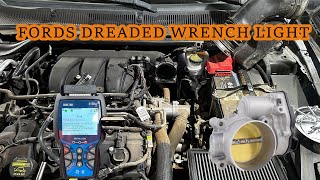
- Wrench warning light illuminated on the dashboard
- Check Engine Light on
- Little to no throttle response when pressing the accelerator pedal
- Vehicle may be stuck at idle RPM (approx. 900 RPM) and unable to accelerate
- Engine may stall or fail to start
- Unstable or low idle speed
- Replacing the Accelerator Pedal Position (APP) sensor. Codes P2111 and P2112 point specifically to a fault at the throttle body, not the pedal sensor.
- Cleaning a throttle body that has an internal electronic failure. While cleaning can fix issues caused by carbon buildup, it will not resolve the common electronic fault (contaminated motor contacts) that triggers P2112 on this vehicle. Some owners have also confirmed that cleaning was ineffective because the internal plastic gears were stripped.
Most Likely Causes
- Failed Electronic Throttle Body (ETB) Assembly 🔴 High Probability → Shop Fuel Injection Throttle Body This is a well-documented, widespread component failure on this platform, acknowledged by Ford through TSBs and an extended warranty program (13N03). The failure is typically internal, caused by contamination on the motor contacts which creates high electrical resistance, not by external dirt or carbon.
How to confirm: With a scan tool, observe the 'Commanded Throttle Angle' and 'Actual Throttle Angle' PIDs. When the accelerator is pressed, the values should track each other. With P2112, the 'Actual' angle will not respond or will lag significantly behind the 'Commanded' angle. The presence of code P2112 on this specific vehicle is, by itself, a very strong indicator of ETB failure.
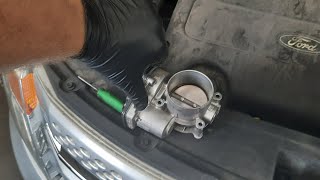
Typical fix: Replace the entire electronic throttle body assembly and the associated gasket. Cleaning the old unit is not a reliable fix for this internal electronic fault.
Est. part cost: $80-$270
Rare But Worth Checking
- Wiring Harness or Connector Damage: While less common than outright ETB failure, check the wiring harness and connector (C134) going to the throttle body for any signs of corrosion, chafing, or broken wires. A poor electrical connection can mimic a failed component. NHTSA ODI #11324912 notes a similar case where a roadside service technician found damaged wiring behind the accelerator pedal for a P2112 code.
- Powertrain Control Module (PCM) Fault: In very rare instances, the PCM itself can fail, but this should only be considered after the throttle body and wiring have been definitively ruled out as the cause. A failing PCM will typically present with multiple, unrelated error codes.
- Environmental Factors: Manufacturer Bulletin #SSM 50597 suggests that for some Ford models, P2112 may be due to water or ice buildup in the intake manifold behind the throttle body.
Diagnosis Steps
- Confirm the presence of code P2112 using an OBD-II scanner. Check for other related codes like P2111 or P2104.
- Visually inspect the wiring harness and connector at the electronic throttle body for any obvious damage, corrosion, or loose connections. As noted in NHTSA ODI #11360094, some owners found that unplugging the wiring and erasing the code provided a temporary fix, though the throttle stuck again shortly after.
- Given the extremely high failure rate of the ETB on this platform, if no wiring issues are found, the most direct and time-effective step is to replace the electronic throttle body assembly.
- After replacing the throttle body, clear all DTCs with the scan tool.
- Perform a Keep Alive Memory (KAM) reset. The most thorough method is to disconnect the negative battery terminal and place a jumper wire between the disconnected negative cable end and the positive battery terminal for 2-5 minutes. This drains all residual power from the PCM's capacitors. Then reconnect the battery.
- Perform the throttle body relearn procedure. Turn the ignition to the 'ON' position (engine off) and wait for dash lights to settle. Start the engine and let it idle without touching the accelerator for 10-15 minutes as it reaches full operating temperature. The PCM will learn the new throttle body's idle and off-idle positions.
- Conduct a short test drive with varied throttle inputs (gentle acceleration, coasting) to allow the PCM to complete the learning process across different RPM ranges.
Parts You'll Likely Need
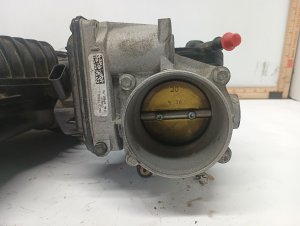
- Electronic Throttle Body Assembly
(OEM #7T4Z-9E926-FA (This part number is widely cited for the 3.5L/3.7L engines and supersedes 7T4Z-9E926-EA. Always verify by VIN.))— This is the component that almost always fails, causing code P2112 on this specific vehicle due to internal electronic or mechanical faults.
Trusted brands: Motorcraft, Bosch, Hitachi, Standard Motor Products
OEM price range: $150-$270
Aftermarket price range: $80-$180 - Throttle Body Gasket
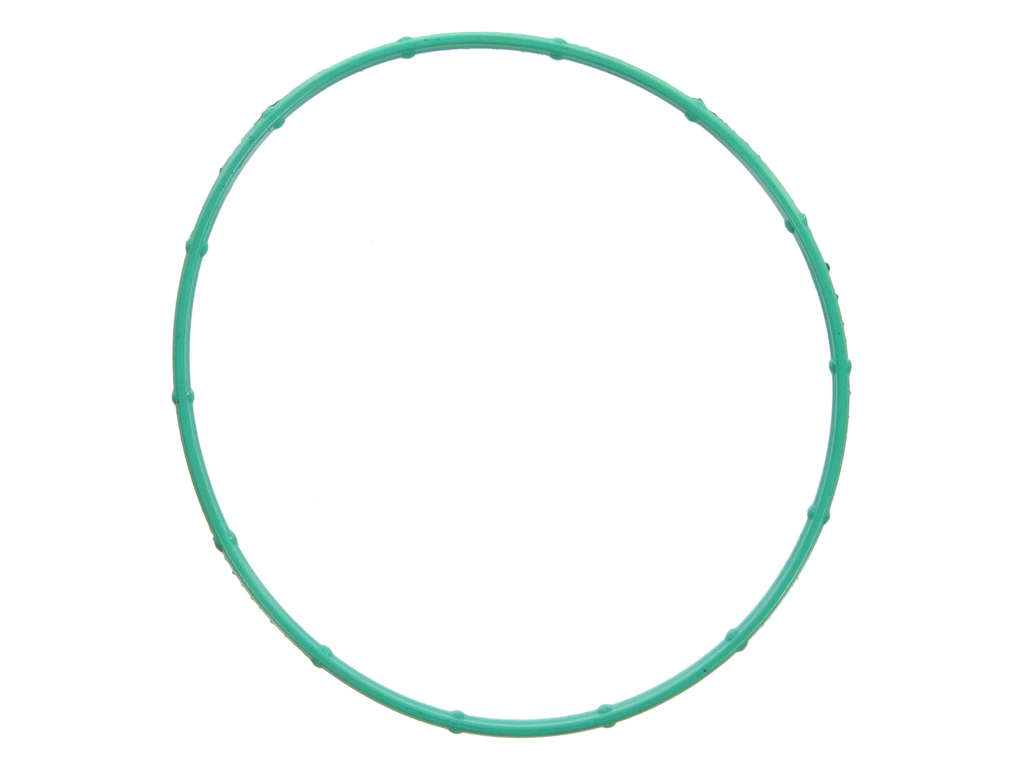
(OEM #Included with some new throttle bodies, but verify.)— The gasket should always be replaced when the throttle body is removed to prevent vacuum leaks. Some replacement throttle bodies include a new gasket.
Trusted brands: Motorcraft, Fel-Pro, Mahle
OEM price range: $5-$15
Aftermarket price range: $3-$10
Related Codes That Often Appear With This One
- P2111 — This is the companion code for 'Throttle Actuator Control System - Stuck Open'. Both codes point to the same root cause: a failing electronic throttle body assembly.
- P2104 — This code for 'Throttle Actuator Control System - Forced Idle' indicates the PCM has detected a critical throttle fault (like P2112) and has initiated 'limp mode' as a safety response.
Technical Service Bulletins (TSBs) & Recalls
- TSB 10-21-6: Addresses DTCs P2111 or P2112, or idle speed fluctuations, by replacing the throttle body on 2010-2011 Ford Taurus 3.5L models, among others.
- Customer Satisfaction Program 13N03: Not a TSB, but an extended warranty program covering the ETB for 10 years/150,000 miles due to internal contact contamination.
- TSB 16-0139: An owner reported in NHTSA ODI #11549005 that this bulletin also relates to the P2112 "Throttle Actuator Control System - Stuck Closed" condition.
- Bulletin #SSM 50597: Notes that P2111, P2112, and P2119 may be triggered by water or ice buildup in the intake manifold behind the throttle body.
Platform-Specific Known Issues
- Ford issued Customer Satisfaction Program 13N03, which extended the warranty coverage for the electronic throttle body on certain vehicles, including the Taurus, to 10 years or 150,000 miles due to a high number of failures. While this program has expired for all covered model years, it confirms the widespread nature of the problem.
- Ford TSB 10-21-6 was released for 2010-2011 Taurus and other models with the 3.5L engine, addressing codes P2111 and P2112 by recommending the replacement of the throttle body for vehicles within a specific engine build date range.
- The intermittent nature of the failure sometimes made it difficult for owners to get a warranty repair, as the fault code and wrench light could clear after restarting the engine, preventing the dealer from verifying the issue.
Mechanic-Grade Diagnostic Values
- Ford-Specific P2112 Trigger Condition — expected: The actual throttle plate angle should be within 6 degrees of the commanded angle.. Failure: Code P2112 sets when the actual angle is more than 6 degrees lower than the commanded angle.
- Throttle Actuator Control (TAC) Motor Resistance — expected: 2 to 25 Ohms between the two motor control pins on the throttle body.. Failure: A reading of OL (Over Limit/open circuit) or a value significantly outside the expected range indicates a failed motor.
- Throttle Position Sensor (TPS) Supply Voltage (VREF) — expected: Approximately 5V at the VREF pin on the throttle body connector with Key On, Engine Off.. Failure: Low or no voltage points to a wiring issue or a problem with the PCM's 5V reference circuit.
- Throttle Actuator Supply Voltage — expected: 11-13 Volts (Battery Voltage) at the power supply pin on the throttle body connector with Key On, Engine Off.. Failure: Low or no voltage indicates a fault in the power supply circuit, fuse, or wiring, not necessarily the throttle body itself.
- Throttle Position Sensor (TPS) Voltage Sweep — expected: A smooth voltage increase from approximately 0.5V (closed throttle) to 4.5V (wide-open throttle) as the pedal is pressed.. Failure: Voltage that is erratic, jumps, has dead spots, or does not sweep through the full range.
Scan Tool Commands That Help
- Ford IDS (Integrated Diagnostic System): Clear KAM (Keep Alive Memory) / Reset All Adaptations — This function must be performed after replacing the electronic throttle body to erase the old learned values from the PCM and force it to relearn the new part's characteristics.
- Ford IDS (Integrated Diagnostic System): Datalogger with PID Trigger — To diagnose an intermittent P2112, a technician can set up the datalogger to automatically begin recording key PIDs (like commanded vs. actual throttle angle) the moment the DTC is set, capturing the fault event for later analysis.
Wiring & Ground Locations
- C134 — The electrical connector at the electronic throttle body itself.. This is the primary connection point for all power, ground, and signal wires to the throttle body. Corrosion, moisture, or loose pins here can directly cause P2112.
- G104 / G105 — Main chassis ground points in the engine bay, typically on or near the driver's side frame rail or inner fender/strut tower. For a 2013 Taurus, G104 is at the left front of the engine compartment and G105 is at the rear of the engine compartment.. These are primary grounds for the PCM and various engine sensors. A loose or corroded connection at these points can cause erratic voltage and communication faults throughout the engine management system, potentially mimicking a throttle body failure.
Real Owner Repair Stories
- Repair Database Documentation (2012 Ford Taurus 3.5L) — Codes P2112, P2100, P2104, P2110, P2111.
❌ Tried (didn't work) Replacing the electronic throttle body assembly.
✅ What actually fixed it The issue was resolved by replacing and programming a used Powertrain Control Module (PCM). This is a rare but possible cause when a new throttle body does not fix the problem. - Forum User Report (Ford F-150 with 3.7L V6 (same engine family and ETB issue)) — P2112 code and limp mode.
❌ Tried (didn't work) Cleaning the throttle body.
✅ What actually fixed it Replacing the throttle body. The user confirmed that cleaning was ineffective because the internal plastic gears of the original throttle body were stripped, which is a mechanical failure that cleaning cannot address. - NHTSA ODI #11491580 — An owner reported experiencing no warning lights until the vehicle suddenly failed. After restarting and reaching a safe place, a code reader confirmed P2112 (Throttle actuator stuck shut). The issue was resolved by a dealer replacing the Electronic Throttle Body for approximately $714.
- NHTSA ODI #11360094 — One owner described a violent engine shake and a total loss of throttle response where pressing the gas pedal to the floor did nothing. The diagnostic returned P2112, and while unplugging the wiring and erasing the code worked temporarily, the throttle stuck again after only 4 miles.
OEM Part Supersession History
7T4Z-9E926-EA→7T4Z-9E926-FA— Standard part revision by the manufacturer.
Model Year Variations Within This Range
- 2010-2012 vs 2013-2019: The Ford Taurus received a significant facelift for the 2013 model year. While the 3.5L engine and the fundamental throttle body failure pattern remained the same, some wiring harness routing and connector locations may vary between the pre-facelift (2010-2012) and post-facelift (2013-2019) models. The diagnostic approach for P2112 is identical.
Diagnostic Flowchart
Other Known Issues on This Vehicle
Issues unrelated to this code that are worth knowing about as an owner of this generation:
- Internal Water Pump Failure 🔴 High — Very common, typically between 80,000 and 150,000 miles. The pump is driven by the timing chain and can leak coolant directly into the engine oil, leading to catastrophic engine failure.
- Power Transfer Unit (PTU) Failure (AWD Models) 🔴 High — Common on All-Wheel Drive models, often after 70,000 miles. The unit is non-serviceable from the factory, lacks a drain plug, and is located near the hot exhaust, causing fluid to break down and leading to bearing failure and leaks. (Ref: TSB 09-25-7, TSB 16-0043 (related))
- Timing Chain Stretch / Rattle on Cold Start 🟠 Medium — Often a direct consequence of a leaking internal water pump contaminating the oil, but can also occur from extended oil change intervals. Leads to timing codes (e.g., P0018) and requires a major repair.
Used vs. New Parts: Buying Guide for This Vehicle
When a used part is the smart pick: Buying a used OEM throttle body is highly discouraged for this vehicle. The original part has a well-documented design flaw leading to a high failure rate. A used part carries a significant risk of failing in the same manner as the original. It should only be considered if it is from a verifiably very low-mileage donor vehicle.
Donor-vehicle mileage cap: roughly under 30000 miles for the part to have meaningful remaining life.
What to inspect on the donor part:
- Verify donor vehicle mileage is extremely low.
- Inspect the electrical connector pins for any signs of corrosion or moisture.
- Check for any physical damage to the housing or connector.
Aftermarket brands forum-validated for this vehicle:
- Dorman (specifically the OE FIX version, part number 977-592, which claims an improved design with a non-contact Hall effect sensor and better seals to prevent the original failure mode).
- Bosch
- Standard Motor Products
Brands owners have reported issues with on this vehicle:
- Unbranded or exceptionally cheap 'white box' parts should be avoided. Some technicians have reported issues with lower-quality remanufactured units, recommending new OEM or high-quality new aftermarket parts instead.
Real Owner Stories
Aggregated from forums and TSBs cited above. Mileages and costs reflect what owners reported in those sources.
2011 Ford Taurus 3.5 Liter — 120000 miles
Symptoms: Car goes into limp mode randomly with wrench light and check engine. Once the car is restarted it drives again just fine. Owner found carbon build up and tried cleaning it, but the wrench light and limp mode returned.
What fixed it: The context indicates cleaning failed; the recommended fix for this specific vehicle and code is replacement of the entire electronic throttle body assembly.
Source hint: Reddit r/AskMechanics
2010 Ford Taurus
Symptoms: Sudden loss of power with the wrench light illuminated. Restarting the car temporarily fixed the issue, but it reoccurred. The dealer could not replicate the fault codes because they disappeared after the engine restart.
What fixed it: Replacement of the Electronic Throttle Body (ETB) assembly as per Customer Satisfaction Program 13N03 and TSB 10-21-6.
Source hint: Ford-Trucks.com forum thread regarding Program 13N03
Documented NHTSA Reports
NHTSA ODI #11549005
Symptoms: An owner reported a dangerous situation where the vehicle lost power while driving, though the engine remained running. A diagnostic scan revealed code P2112, "Throttle Actuator Control System - Stuck Closed."
Context: The report mentions that Technical Service Bulletin #TSB 16-0139 addresses this specific failure mode.
NHTSA ODI #11324912
Symptoms: After experiencing a P2112 code for the throttle actuator control system being stuck closed, a roadside service technician investigated the vehicle.
What fixed it: The technician identified damaged wiring behind the accelerator pedal as the root cause of the fault.
Related OBD-II Codes
Frequently Asked Questions
Does TSB 10-21-6 apply to my 2010 Ford Taurus 3.5L?
Is my 2015 Taurus covered under the 13N03 Extended Warranty for the throttle body?
Can I just clean the carbon off my Taurus throttle body to fix P2112?
Why does my Taurus lose power and show a wrench light, but the code disappears after I restart the car?
What is the 'Keep Alive Memory' (KAM) reset mentioned for the Taurus after an ETB replacement?
Are there other major issues I should watch for on my 3.5L Taurus besides the throttle body?
Helpful Videos

Used OEM Parts in Stock
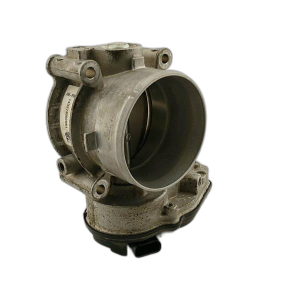
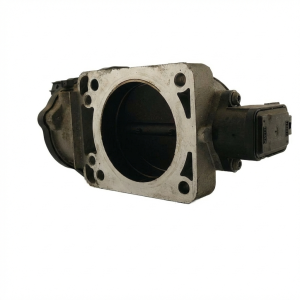
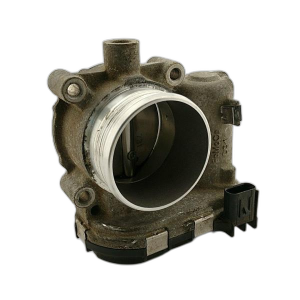
New Aftermarket Parts Available
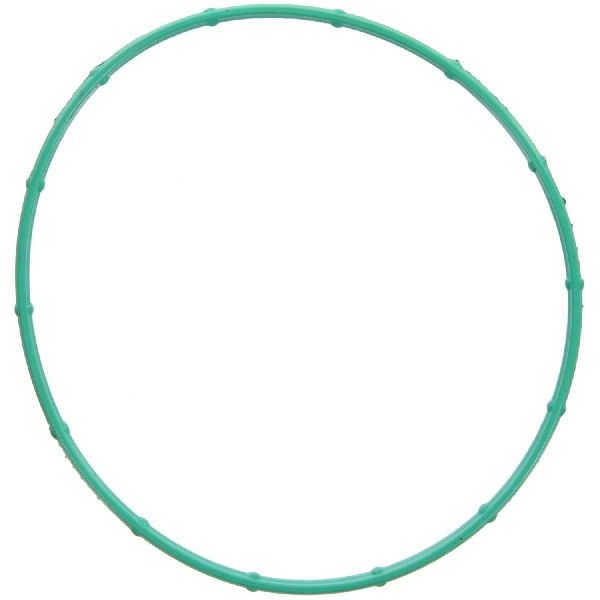

The information in this article is provided for general reference and educational purposes only. Vehicle specifications, procedures, and part compatibility can vary by production date, trim level, and region. Always consult your vehicle's factory service manual and verify part numbers before purchasing or performing repairs. Safety-critical components such as airbags, seat belts, and braking systems should be installed by a qualified professional.
- Ford Taurus:
- 🧭 Diagnostic Flowchart
- 🎬 Helpful Videos
- 🛍️ Shop This Part
- What's Unique About the 2008-2019 Ford Taurus
- Symptoms You May Notice
- Most Likely Causes
- Rare But Worth Checking
- Diagnosis Steps
- Parts You'll Likely Need
- Related Codes That Often Appear With This One
- Technical Service Bulletins (TSBs) & Recalls
- Platform-Specific Known Issues
- Mechanic-Grade Diagnostic Values
- Scan Tool Commands That Help
- Wiring & Ground Locations
- Real Owner Repair Stories
- OEM Part Supersession History
- Model Year Variations Within This Range
- Other Known Issues on This Vehicle
- Used vs. New Parts: Buying Guide for This Vehicle
- Real Owner Stories
- 2011 Ford Taurus 3.5 Liter — 120000 miles
- 2010 Ford Taurus
- Documented NHTSA Reports
- NHTSA ODI #11549005
- NHTSA ODI #11324912
- Related OBD-II Codes
- Frequently Asked Questions
- 🎟️ Get 5% Off