

P2135 on 2008-2014 Dodge Avenger 2.4L: Throttle Body Failure Causes and Fixes
On a 2008-2014 Dodge Avenger with the 2.4L engine, code P2135 is almost always caused by a failed electronic throttle body. The internal sensors wear out, causing a voltage correlation error. The fix is to replace the entire throttle body assembly, which costs around $100-$200 for an aftermarket part. This is a common, well-documented failure point for this engine and its platform-mates.
- P2135 on your 2008-2014 Avenger 2.4L almost certainly means you need a new throttle body.
- Symptoms include the red 'lightning bolt' light, severe lack of power (limp mode), and possible stalling.
- Do not waste time or money on cleaning the throttle body or replacing the gas pedal; the fault is an internal electronic failure within the throttle body assembly itself.
- This is a DIY-friendly repair for many, typically taking less than an hour with basic hand tools (10mm socket, screwdriver).
- After replacing the part, a throttle relearn procedure is necessary. This usually involves a simple key-on, pedal-press sequence and does not require a special scan tool.
What's Unique About the 2008-2014 Dodge Avenger
The 2.4L 'World Engine' used in the Avenger and other Chrysler/Dodge/Jeep products of this era is notorious for electronic throttle body failures. The internal electronic sensors and plastic actuator gears wear out over time, leading to correlation errors like P2135. While the engine itself is generally considered dependable, the throttle body is a widely documented weak point that many owners will eventually have to replace. This issue is so common that it affects a wide range of vehicles sharing this powertrain.
Symptoms You May Notice
- Electronic Throttle Control (ETC) 'lightning bolt' light is on or flashing
- Check Engine Light is on
- Vehicle enters 'limp mode' with drastically reduced engine power and RPM limit
- Hesitation, surging, or no response when pressing the gas pedal
- Engine stalls, especially when coming to a stop
- Rough or unstable idle
- Audible clicking or buzzing from the engine bay when the key is turned on
- Inability to accelerate past a low speed (e.g., 20-30 mph)
- Traction control and/or 4WD warning lights may illuminate simultaneously
- Replacing the Accelerator Pedal Position (APP) Sensor. While the pedal sensor can cause similar symptoms, P2135 specifically points to a correlation fault within the throttle body itself. The pedal sensor will typically set its own distinct codes (e.g., P2122, P2127).
- Cleaning a dirty throttle body. While cleaning a carbon-fouled throttle plate can solve idle and sticking issues (which may cause codes like P2111/P2112), it will not fix the internal electronic sensor failure that causes a P2135 correlation code. The failure is electrical, not due to dirt on the throttle plate.
Most Likely Causes
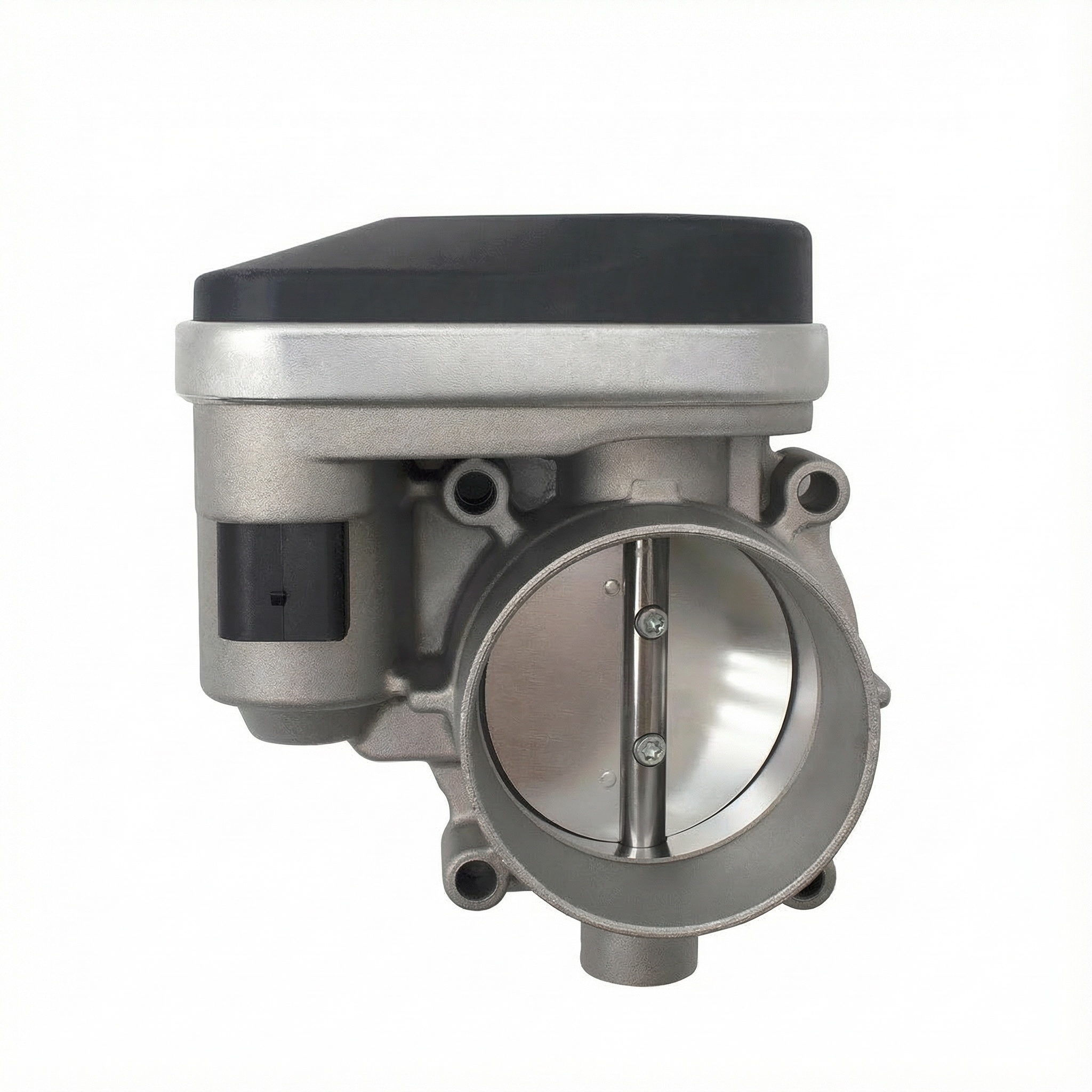
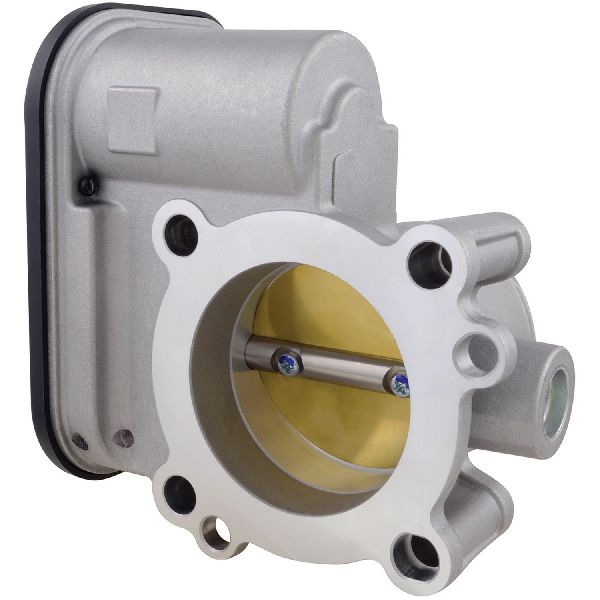
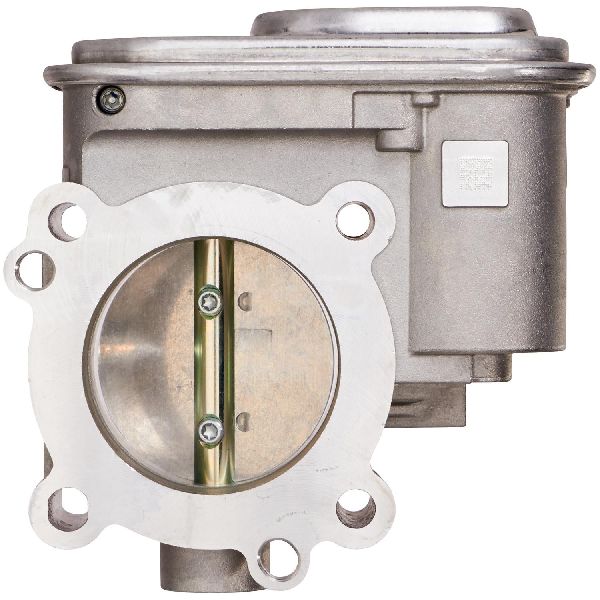
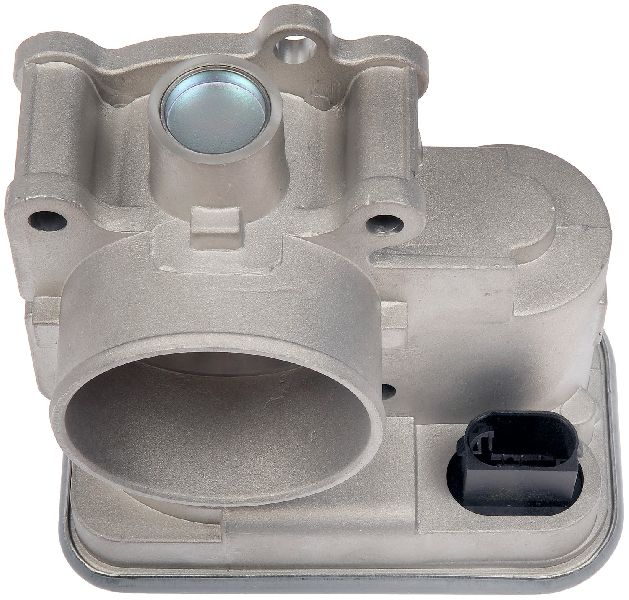
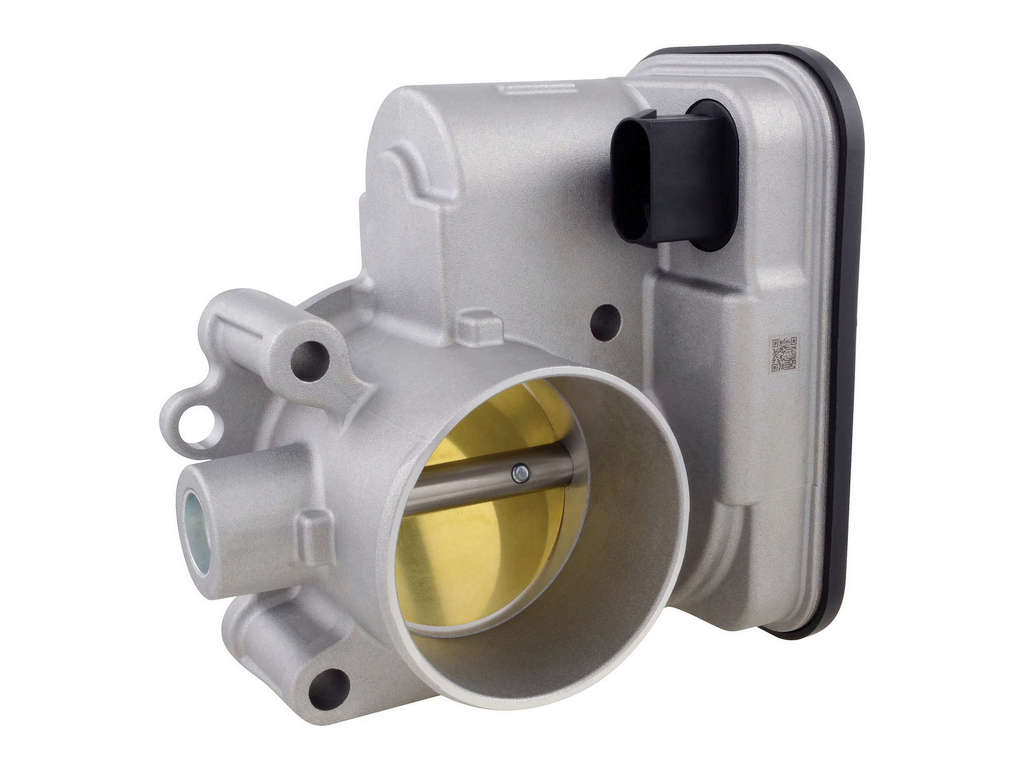
- Faulty Electronic Throttle Body Assembly 🔴 High Probability → Shop Fuel Injection Throttle Body The throttle body used on the 2.4L World Engine is a well-documented, high-failure item. The internal sensors and plastic gears are known to wear out, causing erratic signals. Aftermarket replacements like the Dorman 977-025 have been designed with improved internal seals and Hall effect sensors to address these original failure modes.
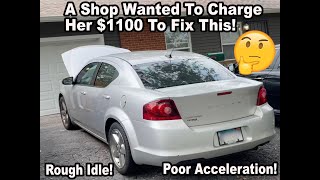
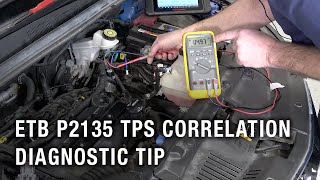
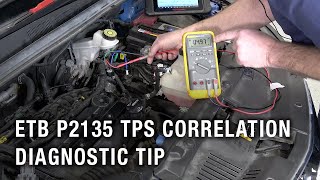
How to confirm: Use a scan tool to monitor live data for TPS1 and TPS2. If the voltage readings are erratic, jumpy, or do not move in a smooth, inverse relationship when the pedal is pressed, the throttle body is faulty. A clicking/buzzing noise from the unit at key-on is also a strong indicator of failure. A definitive test involves back-probing the signal wires; if the wiring and PCM are confirmed good, the throttle body is the culprit. 🎬 Watch: Diagnostic tips for troubleshooting the P2135 correlation code
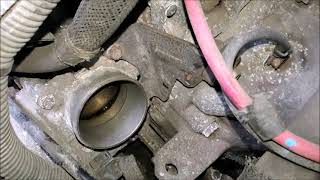
Typical fix: Replace the entire throttle body assembly and perform a throttle relearn procedure. The repair involves removing the air intake duct, disconnecting one electrical connector, and removing four 10mm bolts.
Est. part cost: $100-$200 - Wiring or Connector Issue ⚪ Low Probability
How to confirm: Visually inspect the wiring harness and the 6-pin connector at the throttle body for any signs of damage, corrosion, or loose pins. While monitoring live sensor data on a scan tool, perform a 'wiggle test' on the harness to see if it causes the voltage to drop out. Check for 5V reference and ground at the connector to ensure the PCM is supplying power correctly.
Typical fix: Repair the damaged section of the wiring harness or clean/replace the connector. In some cases, a new pigtail connector may need to be spliced in.
Est. part cost: $10-$50
Rare But Worth Checking
- Faulty Powertrain Control Module (PCM): → Shop Engine Control Module (ECM) This is very rare and should only be considered after definitively ruling out the throttle body and wiring. PCM failure can cause a wide range of codes and symptoms, and other codes like U0401 ('Invalid Data Received From ECM/PCM') might be present if the PCM is the issue.
Diagnosis Steps
- Scan for trouble codes. Confirm P2135 is present and check for any other related codes like P0221, P0122, or P0222.
- Turn the ignition to the 'ON' position (engine off) and listen for any abnormal clicking or buzzing from the throttle body area.
- Visually inspect the throttle body electrical connector and wiring harness for any obvious damage, corrosion, or looseness.
- Using a scan tool with live data capability, graph the voltage of Throttle Position Sensor 1 (TPS1) and Throttle Position Sensor 2 (TPS2).
- With the engine off and key on, slowly press the accelerator pedal to the floor and release it. The two sensor voltage readings should be smooth, without any spikes or dropouts. They typically operate inversely (one goes from low to high, the other from high to low).
- If a sensor's voltage jumps, drops out, or is flat, the throttle body has failed and needs replacement.
- If the data looks good, perform a 'wiggle test' by shaking the wiring harness for the throttle body while watching the live data. If this causes the signal to drop, a wiring repair is needed.
- If the wiring and connector are confirmed good, and the live data shows a correlation fault, replace the throttle body assembly.
- After replacement, perform the throttle body relearn procedure.
Parts You'll Likely Need
- Electronic Throttle Body Assembly
(OEM #04891735AC)— This is the most common cause of code P2135 on this vehicle. The internal sensors are integrated into the assembly and are not sold separately, requiring replacement of the entire unit. The original part is known to fail due to wear on internal electronics and plastic gears.
Trusted brands: Mopar, Hitachi, Bosch, Dorman (OE FIX)
OEM price range: $180-$250
Aftermarket price range: $105-$180
Related Codes That Often Appear With This One
- P0221 — This code ('Throttle/Pedal Position Sensor/Switch 'B' Circuit Range/Performance') often appears with P2135 as it also indicates a problem with one of the sensors inside the throttle body.
- P0122 — This code ('Throttle/Pedal Position Sensor/Switch 'A' Circuit Low') can be logged alongside P2135, pointing to a low voltage reading from one of the internal sensors that contributes to the correlation fault.
- P0222 — Similar to P0122, this code ('Throttle/Pedal Position Sensor/Switch 'B' Circuit Low') indicates a low voltage reading from the second internal sensor, often triggering the P2135 fault.
Technical Service Bulletins (TSBs) & Recalls
- While no specific TSB for P2135 on the Avenger was found, GM TSB 12-06-04-003A and 11-06-04-007A address the exact same P2135 code and symptoms on their vehicles, describing the cause as the difference between TP Sensor 1 and 2 exceeding a calibrated value for over 2 seconds. This corroborates the failure mechanism.
Platform-Specific Known Issues
- The electronic throttle body on the 2.4L World Engine is a known high-failure item across multiple Dodge, Jeep, and Chrysler platforms that use this engine, including the Caliber, Journey, Patriot, Compass, and Chrysler 200/Sebring.
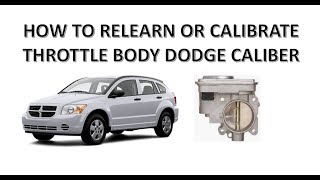
- After replacing the throttle body, a 'relearn' procedure is required. A common method is: turn the key to 'ON' (engine off), wait for dash lights to settle, slowly press the gas pedal to the floor, slowly release it, turn the key 'OFF', then start the engine. Some vehicles may require disconnecting the battery for 30 minutes or using a scan tool for the relearn. 🎬 Watch: How to calibrate and relearn the throttle body
Mechanic-Grade Diagnostic Values
- 5V Reference Voltage at Throttle Body Connector — expected: 4.5V to 5.2V (Key On, Engine Off). Failure: Voltage significantly below 4.5V points to a wiring or PCM issue.
- TPS Signal Voltage (TPS1 or TPS2) — expected: Smoothly sweeps from ~0.5V at closed throttle to ~4.5V at wide-open throttle.. Failure: Any glitch, spike, dropout, or non-linear movement during the sweep indicates a failed sensor.
- Sensor Ground Circuit Resistance — expected: Less than 5.0 ohms between the ground pin at the connector and a known good chassis ground.. Failure: High resistance indicates a bad ground connection, which can cause erratic sensor readings.
- Throttle Body Connector Pinout (2.4L) — expected: Pin 1: TP Signal 1, Pin 2: 5 Volt Supply, Pin 3: ETC Motor (+), Pin 4: TP Signal 2, Pin 5: ETC Motor (-), Pin 6: TP Sensor Ground.. Failure: Incorrect voltages or continuity at these specific pins helps isolate the fault.
Scan Tool Commands That Help
- Professional Scan Tool (e.g., WiTech, Autel, Snap-on): Throttle Body Relearn / ETC Relearn — This function is used after replacing the throttle body to force the PCM to learn the new sensor's closed, open, and partial positions. It is often required if the manual pedal-press relearn procedure does not resolve an erratic idle post-repair.
- Professional Scan Tool (e.g., WiTech, Autel, Snap-on): Graph Live Data: TPS1 vs TPS2 — This is the primary diagnostic step. Graphing both sensor voltages simultaneously while operating the pedal makes it easy to spot any dropouts or glitches in one sensor's signal that would cause the P2135 correlation fault.
Wiring & Ground Locations
- Throttle Body Connector (C1) — Directly on the electronic throttle body assembly, where the engine wiring harness connects.. This 6-pin connector is the single point for all power, ground, and signal wires for the throttle's dual position sensors. Corrosion, moisture, or a loose pin here is a direct cause of signal correlation faults like P2135.
- G300 — Under the driver's seat (2011+) or on the center floor, to the right of the transmission tunnel (pre-2011 models).. This is a major chassis ground point. While not directly for the throttle body sensor ground (which is provided by the PCM), a poor main ground can introduce electrical noise and voltage offsets that may contribute to sensor correlation issues.
Real Owner Repair Stories
- YouTube video comment (Dodge/Chrysler vehicle with P2135) — Persistent P2135 code and limp mode for years.
❌ Tried (didn't work) Spending thousands of dollars on diagnostics and parts replacements.
✅ What actually fixed it The owner finally fixed the issue by unplugging, cleaning with compressed air, and firmly reseating every wiring harness connector between the throttle body and the gas pedal, including the two main plugs on the ECM. The fix took 10 minutes. - Personal experience blog post (2013 Dodge Avenger SE, 2.4L, failed at 98,000 miles) — Erratic idle, hesitation during light acceleration, and a persistent P0122 code (often seen with P2135).
❌ Tried (didn't work) Initial diagnosis pointed towards common throttle body failure.
✅ What actually fixed it Replaced the original throttle body with a non-OEM unit from AliExpress. The replacement part resolved all symptoms and codes, and the car ran without issue for over 1,200 miles post-repair.
OEM Part Supersession History
4891735AA, 4891735AB→04891735AC, 4891735AD— Revisions to address the common internal electronic failures and improve reliability.
Heads up: All part numbers (AA, AB, AC, AD) are generally interchangeable for the 2008-2014 2.4L Avenger and its platform mates. The later revisions are considered more desirable.
Model Year Variations Within This Range
- 2011-2014: The Dodge Avenger received a significant facelift for the 2011 model year, primarily affecting the interior and exterior. However, the 2.4L World Engine and the electronic throttle body assembly (P/N 04891735AC) remained the same. The failure pattern and repair for P2135 are identical across the entire 2008-2014 range.
Diagnostic Flowchart
Other Known Issues on This Vehicle
Issues unrelated to this code that are worth knowing about as an owner of this generation:
- Alternator Failure 🔴 High — Common, especially around 80,000-120,000 miles. Often presents with a whining/grinding noise, battery light, and eventual no-start condition.
- TIPM (Totally Integrated Power Module) Failure 🔴 High — A known issue across many Chrysler products of this era. Can cause a wide range of bizarre electrical problems, including horn going off randomly, lights not working, fuel pump issues, and no-start conditions.
- Intake Manifold Runner Control Failure (P2015) 🟠 Medium — The plastic intake manifold's internal flaps or linkage can break, causing a P2015 code, poor performance, and a rattling noise. Often requires full manifold replacement.
- Automatic Transmission Shifting Problems 🟠 Medium — Owners report erratic shifting, getting stuck in gear, or harsh engagement, particularly in 2008 models around 93,000 miles.
- HVAC Blend Door Actuator Failure 🟡 Low — Very common. Results in a loud, repetitive clicking/knocking sound from behind the dashboard when changing temperature or vent settings. The part is cheap but labor can be intensive depending on which of the three actuators fails.
- Front Subframe Rust/Corrosion 🔴 High — Common in rust belt states. The front crossmember can rust severely, potentially leading to structural failure. A recall (NHTSA #14V354000) was issued for platform mates (Caliber, Patriot, Compass) but not officially for the Avenger, though the issue is present. (Ref: NHTSA Campaign ID: 14V354000 (on platform mates))
Used vs. New Parts: Buying Guide for This Vehicle
When a used part is the smart pick: Buying a used throttle body for this specific vehicle is NOT recommended. The part is a known high-failure item due to internal wear of electronic components. A used part from a junkyard is likely to have significant wear and could fail soon after installation, repeating the original problem.
Donor-vehicle mileage cap: roughly under 30000 miles for the part to have meaningful remaining life.
What to inspect on the donor part:
- If buying used is unavoidable, source from the lowest-mileage donor vehicle possible.
- Inspect the connector pins for any signs of corrosion or damage.
- Ensure the throttle plate moves freely without any binding or gritty feeling (though this does not guarantee electronic integrity).
Aftermarket brands forum-validated for this vehicle:
- Dorman OE FIX (specifically mentions improved design with Hall effect sensors and better seals)
- Hitachi
- Bosch
- Standard Motor Products (SMP)
Brands owners have reported issues with on this vehicle:
- Unnamed, no-brand units from online marketplaces can be a gamble. While some owners report success, others experience premature failure. Prioritize brands with a warranty and a reputation in the aftermarket space.
Real Owner Stories
Aggregated from forums and TSBs cited above. Mileages and costs reflect what owners reported in those sources.
2008-2014 Dodge Avenger 2.4L
Symptoms: Owners confirmed 'limp mode' and the 'lightning bolt' light illuminating on the dashboard.
What fixed it: Replacing the throttle body assembly, with many specifically using the Dorman aftermarket part.
Source hint: avengerforumz.com: Multiple threads discuss the P2135 code
2008 Dodge Avenger SXT 2.4L
Symptoms: P2135 code and associated throttle issues.
What fixed it: Replacing the 2.4L throttle body using a 10mm socket and a flathead screwdriver; the job took under an hour.
Source hint: dodge-avenger.com: A user named 'AvengerSXT' posted a detailed DIY
2007-2017 Jeep Patriot 2.4L
Symptoms: Getting codes P0122, P0222, and P2135 simultaneously with a crank but no start condition.
What fixed it: Replacing the throttle body assembly, as these codes often appear together on this platform.
Source hint: Reddit r/JeepPatriot - 'Crank But No Start'
2008 Dodge Avenger 2.4L — ~100000 miles
Symptoms: Whining/grinding noise, battery light, and eventual no-start condition (sometimes confused with throttle issues).
What fixed it: Testing and potentially replacing the alternator if charging voltage is not between 13.7-14.7V.
Source hint: Reddit r/MechanicAdvice - '2008 Dodge Avenger Alternator Issues'
Related OBD-II Codes
Frequently Asked Questions
Is there a specific TSB for the P2135 code on my 2008-2014 Dodge Avenger?
My Avenger is in 'limp mode' with a lightning bolt light; can I just replace the sensors?
Is there a recommended aftermarket part for the Dodge Avenger throttle body?
How do I perform the throttle relearn procedure on my Avenger after a repair?
Could my Avenger's alternator be causing the P2135 throttle code?
Are there other Dodge or Jeep vehicles that have this same throttle body issue?
Helpful Videos
Used OEM Parts in Stock
New Aftermarket Parts Available



The information in this article is provided for general reference and educational purposes only. Vehicle specifications, procedures, and part compatibility can vary by production date, trim level, and region. Always consult your vehicle's factory service manual and verify part numbers before purchasing or performing repairs. Safety-critical components such as airbags, seat belts, and braking systems should be installed by a qualified professional.
- Dodge Avenger:
- 🧭 Diagnostic Flowchart
- 🎬 Helpful Videos
- 🛍️ Shop This Part
- What's Unique About the 2008-2014 Dodge Avenger
- Symptoms You May Notice
- Most Likely Causes
- Rare But Worth Checking
- Diagnosis Steps
- Parts You'll Likely Need
- Related Codes That Often Appear With This One
- Technical Service Bulletins (TSBs) & Recalls
- Platform-Specific Known Issues
- Mechanic-Grade Diagnostic Values
- Scan Tool Commands That Help
- Wiring & Ground Locations
- Real Owner Repair Stories
- OEM Part Supersession History
- Model Year Variations Within This Range
- Other Known Issues on This Vehicle
- Used vs. New Parts: Buying Guide for This Vehicle
- Real Owner Stories
- 2008-2014 Dodge Avenger 2.4L
- 2008 Dodge Avenger SXT 2.4L
- 2007-2017 Jeep Patriot 2.4L
- 2008 Dodge Avenger 2.4L — ~100000 miles
- Related OBD-II Codes
- Frequently Asked Questions
- 🎟️ Get 5% Off