

P2135 on 2007-2012 Hyundai Santa Fe: Throttle Position Sensor Causes and Fixes
For 2007-2009 V6 models, P2135 is usually a failed throttle position sensor (TPS) that can be replaced separately, costing ~$30-$80 for the part. For 2010-2012 models, the sensor is integrated, requiring full throttle body replacement ($150-$450+). In both cases, the car will likely enter a dangerous low-power 'limp mode'. A mandatory ECM software update is required for the 2007-2009 repair.
- P2135 will cause a dangerous loss of power ('limp mode') and should be addressed immediately.
- The fix depends on your Santa Fe's year and engine. 2007-2009 V6 models can often replace just the sensor, while 2010-2012 models must replace the entire throttle body.
- For 2007-2009 models, an ECM software update by a dealer or qualified shop is a required step after replacing the sensor to prevent the issue from returning.
- Before replacing any parts, always inspect the wiring connector at the throttle body and consider cleaning any heavy carbon buildup from the throttle plate.
What's Unique About the 2007-2012 Hyundai Santa Fe
The key difference on the 2007-2012 Santa Fe (CM generation) depends on the model year and engine. For the 2007-2009 models with the 2.7L and 3.3L V6 engines, the throttle position sensor (TPS) is often a separate, replaceable part, which is a less expensive fix. For the 2010-2012 models with the 2.4L I4 and 3.5L V6, the TPS is integrated into the electronic throttle body and is not sold separately, requiring the replacement of the entire assembly. Hyundai issued a Technical Service Bulletin (TSB 10-FL-010) for the earlier models that recommends replacing the TPS and performing a mandatory software update to prevent recurrence.
Symptoms You May Notice
- Sudden and severe loss of engine power (Limp Mode)
- Check Engine Light is on
- ESC OFF light is illuminated
- Hesitation or stumbling during acceleration
- Engine may stall
- Erratic or fluctuating RPMs
- Inability to accelerate past 2,000 RPM
- Replacing the accelerator pedal assembly. While the pedal has its own sensors (and can cause code P2138), code P2135 specifically points to a correlation error between the two sensors located on the engine's throttle body.
Most Likely Causes
- Faulty Throttle Position Sensor (TPS) 🔴 High Probability → Shop Fuel Injection Throttle Body This is a well-documented failure point for 2007-2009 models with the 2.7L and 3.3L V6 engines. Hyundai released TSB 10-FL-010 (superseding 09-FL-003) to address this specific issue, which also affects other Hyundai models with these engines.
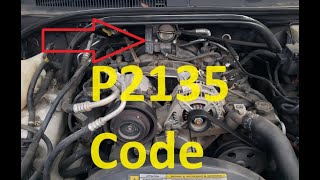
How to confirm: Scan tool data will show erratic or non-correlating voltage between TPS1 and TPS2. The part is physically located on the side of the throttle body. The TSB explicitly states this is the primary repair action. 🎬 Watch this video to see a real-world Hyundai P2135 diagnosis.
Typical fix: Replace the separate throttle position sensor and perform an ECM software update as recommended by the TSB. The update is mandatory for a permanent fix.
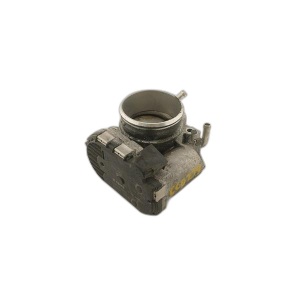
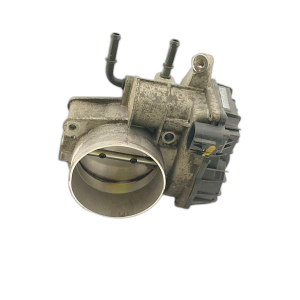
Est. part cost: $30-$80 - Faulty Electronic Throttle Body Assembly 🔴 High Probability → Shop Fuel Injection Throttle Body For 2010-2012 models (2.4L I4 and 3.5L V6), the TPS sensors are integrated into the throttle body and are not serviceable separately. Failure of the internal sensor requires replacing the whole unit. This is also a known issue on these later models.
How to confirm: Diagnosis is the same as a separate TPS, but since the sensor cannot be bought alone, the entire assembly is implicated. Confirm the part number for your specific engine.
Typical fix: Replace the entire electronic throttle body assembly and its gasket. Perform a throttle relearn procedure afterward.
Est. part cost: $150-$450 - Dirty or Binding Throttle Body ⚪ Low Probability → Shop Fuel Injection Throttle Body
How to confirm: Visually inspect the throttle bore and plate for heavy carbon buildup that could restrict movement. Manually check if the plate moves smoothly (with the engine off).
Typical fix: Clean the throttle body bore and plate thoroughly with a dedicated throttle body cleaner and a soft brush. This is sometimes recommended before replacement but often does not fix a correlation code.
Est. part cost: $5-$15 - Damaged Wiring or Poor Connection ⚪ Low Probability
How to confirm: Inspect the wiring harness and connector going to the throttle body for any signs of corrosion, bent pins, or frayed wires. Wiggle the connector with the engine running (or while graphing sensor data with key-on, engine-off) to see if it affects sensor voltage readings.
Typical fix: Repair the damaged section of wiring or replace the connector pigtail.
Est. part cost: $15-$50
Rare But Worth Checking
- Faulty Powertrain Control Module (PCM): → Shop Engine Control Module (ECM) This is very rare. The PCM should only be considered after all other possibilities, including the throttle body, sensor, and wiring, have been definitively ruled out.
Diagnosis Steps
- Read all fault codes using an OBD-II scanner. Note any accompanying codes like P2106, P1295, or P0638, which strongly point to a throttle body issue.
- Turn the ignition off. Inspect the electrical connector and wiring harness at the throttle body for damage, corrosion, or loose connections.
- Remove the air intake hose from the throttle body. Inspect the throttle plate and bore for heavy carbon buildup. While cleaning is a good maintenance step, it is unlikely to resolve a P2135 correlation fault.
- Using a scan tool with live data capability, graph the voltages of TPS1 and TPS2. With the key on and engine off, slowly press the accelerator pedal. The two voltage signals should move smoothly in opposite directions. A jump, drop, or flat line in one sensor's reading confirms a sensor fault.
- Determine your vehicle's engine and model year to identify the correct part to replace.
- For 2007-2009 V6 models: Replace the separate Throttle Position Sensor (TPS). This usually requires removing the throttle body for access.
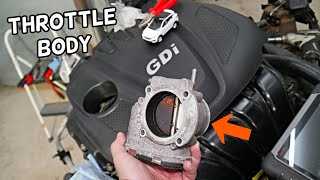
- For 2010-2012 models: Replace the entire electronic throttle body assembly. 🎬 See this step-by-step throttle body replacement walkthrough.
- After replacement, clear all fault codes. For 2007-2009 models, it is CRITICAL to have a dealer or qualified shop perform the ECM software update specified in TSB 10-FL-010. Skipping this step will likely cause the code to return.
- Perform a throttle relearn procedure. This can often be done by turning the key to the 'ON' position for 10 seconds, then 'OFF' for 10 seconds, and then starting the engine. Some models may require a specific procedure driven by a scan tool.
Parts You'll Likely Need
- Throttle Position Sensor (TPS)
(OEM #35107-3C100NFFF (for 3.3L), 35107-3E100NFFF (for 2.7L))— This is the most common fix for 2007-2009 Santa Fe models with the 3.3L or 2.7L V6 engines, as specified by Hyundai TSB 10-FL-010.
Trusted brands: Hyundai (OEM), Standard Motor Products
OEM price range: $60-$100
Aftermarket price range: $30-$80 - Electronic Throttle Body Assembly
(OEM #35100-3C200 (3.3L), 35100-3E100 (2.7L), 35100-2G700 (2.4L), 35100-3C400 (3.5L))— This is the required fix for 2010-2012 Santa Fe models, as the TPS is integrated and not sold separately.
Trusted brands: Hyundai (OEM), Bosch, Cardone
OEM price range: $350-$500
Aftermarket price range: $150-$250 - Throttle Body Gasket — It is best practice to replace the gasket whenever the throttle body is removed to prevent vacuum leaks.
Trusted brands: Fel-Pro, Mahle
OEM price range: $10-$20
Aftermarket price range: $5-$10
Related Codes That Often Appear With This One
- P2106 — This code means 'Throttle Actuator Control System - Forced Limited Power'. It is an informational code that confirms the ECM has put the vehicle into 'Limp Mode' as a direct result of the P2135 fault.
- P1295 — This is another manufacturer-specific code for 'ETC System Malfunction - Power Management' that often accompanies P2135, indicating the power management safety mode has been activated.
- P0638 — This code for 'Throttle Actuator Control Range/Performance' is specifically mentioned in the same Hyundai TSB as P2135, indicating they share the same root cause and repair procedure.
Technical Service Bulletins (TSBs) & Recalls
- 10-FL-010 / 09-FL-003-2: Addresses DTC P2135 and P0638 on 2007-2009 Santa Fe (and other models with 2.7L, 3.3L, 3.8L engines), recommending replacement of the TPS and a mandatory ECM software update.
- NHTSA ODI #10633373 notes that vehicles may experience a Malfunction Indicator Lamp with ETC system related DTC P2135 (Forced Limited Power) or DTC P0638 (Power Management).
Platform-Specific Known Issues
- A Technical Service Bulletin (TSB 10-FL-010) was issued for 2007-2009 models with 2.7L and 3.3L V6 engines, indicating that a separate TPS replacement and an ECM software update are the correct repair for P2135. Failure to perform the software update can lead to a repeat failure of the new sensor.
Mechanic-Grade Diagnostic Values
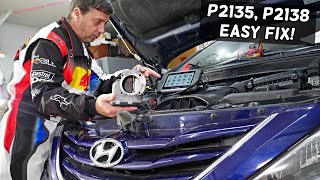
- TPS1 and TPS2 Voltage Correlation — expected: TPS1 voltage should rise (e.g., ~0.5V to ~4.5V) while TPS2 voltage falls (~4.5V to ~0.5V). The sum of the two voltages should remain relatively constant.. 🎬 Watch this video to understand P2135 causes and voltage correlation. Failure: The PCM sets P2135 if the difference between the average values of TPS1 and TPS2 exceeds 4.5% for a set period. On a graph, this appears as a spike, drop-out, or non-mirrored movement.
- TPS1 Voltage (Key On, Engine Off) — expected: Approximately 0.5V at closed throttle and 4.1V at wide-open throttle (90°).. Failure: Voltage that is erratic, stuck, or does not sweep smoothly through the range indicates a sensor fault.
- TPS2 Voltage (Key On, Engine Off) — expected: Approximately 4.5V at closed throttle and 0.9V at wide-open throttle (90°).. Failure: Voltage that is erratic, stuck, or does not sweep smoothly in the opposite direction of TPS1 indicates a sensor fault.
- Throttle Body Connector - Reference Voltage — expected: Approximately 5.0V should be present at the reference voltage pin from the PCM with the key on.. Failure: A reading of 0V or significantly less than 5V indicates a wiring issue or a problem with the PCM's 5V reference circuit.
Scan Tool Commands That Help
- Hyundai GDS (Global Diagnostic System): S/W Management (Software Update) — This is a mandatory step after replacing the separate TPS on 2007-2009 models, as per TSB 10-FL-010. It flashes the ECM with updated logic to work correctly with the new sensor and prevent the code from returning.
- Hyundai GDS (Global Diagnostic System): Active Test -> ETC Motor — This bidirectional test allows a technician to command the electronic throttle control motor to open and close. It helps verify if the throttle plate is physically sticking or if the motor has failed, isolating the problem from the sensors or wiring.
- Hyundai GDS (Global Diagnostic System): Reset Adaptive Values (ETS Initialization) — After replacing the throttle body assembly or cleaning it, this function resets the ECM's learned values for idle and throttle position, forcing it to recalibrate. This can also be done manually by clearing codes and cycling the ignition.
Wiring & Ground Locations
- Throttle Body Connector — Located directly on the electronic throttle body, where the main air intake hose connects.. This is the primary connection point for both TPS sensors and the throttle actuator motor. Checking for 5V reference, ground, and signal integrity at this connector's pins is a key diagnostic step. Corrosion or loose pins here are a common cause of failure.
- G05 / G52 (Engine Compartment Ground) — On the inner fender panel at the left front of the engine compartment (2004 model reference, location is similar for CM generation).. This is a major grounding point for various engine sensors. A poor or corroded ground here can introduce electrical noise or voltage offsets, potentially causing the sensitive TPS correlation check to fail.
- GC101 (Engine Compartment Ground) — Located at the left rear of the engine compartment (2014+ model reference, but a similar primary ground exists on the CM generation).. This serves as the main ground point for the engine control harness, including the ground for the ETC motor and sensor shield. A fault at this location can cause a wide range of sensor and actuator issues, including P2135.
- TPS Signal Wire — Within the throttle body connector harness.. The signal wire color varies by year and engine. For the TPS, it is GREEN for the 2008-2009 3.3L V6, RED for the 2009 2.7L V6, and GREEN for the 2010-2012 3.5L V6. Knowing the correct wire is essential for accurate voltage testing.
Real Owner Repair Stories
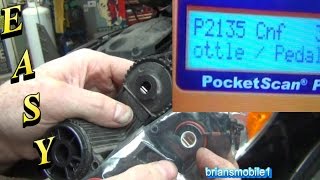
- YouTube user 'Brian's Mobile 1' (2008 Hyundai Veracruz 3.8L (engine is similar to Santa Fe 3.3L/3.8L, uses same TSB)) — Check Engine Light with codes P2135, P1295, and P2106. Vehicle in limp mode.
❌ Tried (didn't work) The video directly proceeds to the correct fix based on the TSB.
✅ What actually fixed it Replaced the separate throttle position sensor on the side of the throttle body with the updated part (noted by the 'NFFF' suffix). The old sensor showed signs of contamination ingress, which the updated part's full O-ring seal is designed to prevent. After replacement and clearing codes, the issue was resolved.
OEM Part Supersession History
35107-3C100, 35107-3E100→35107-3C100NFFF, 35107-3E100NFFF— The original TPS was prone to failure from internal contamination. The updated part, designated by the 'NFFF' suffix, includes a redesigned full-circle O-ring for better sealing against dirt and moisture, and is part of the kit specified in TSB 10-FL-010.
Heads up: Using a non-NFFF part or failing to perform the mandatory ECM software update after installing the new part will likely result in the code returning.
Model Year Variations Within This Range
- 2007-2009: These model years with V6 engines (2.7L, 3.3L) use a throttle body with a separate, replaceable throttle position sensor. The official fix involves replacing this sensor and performing a mandatory ECM software update per TSB 10-FL-010.
- 2010-2012: These model years, with the 2.4L I4 and updated 3.5L V6 engines, use an electronic throttle body with an integrated, non-serviceable TPS. If the sensor fails, the entire throttle body assembly must be replaced. No software update is typically required for this repair.
- 2008-2012: The TPS signal wire color in the main connector varies. For the 3.3L V6 (2008-2009) it is GREEN. For the 2.7L V6 (2009) it is RED. For the 3.5L V6 (2010-2012) it is GREEN. For the 2.4L I4 (2010-2012) it is PINK/BLACK.
Diagnostic Flowchart
Other Known Issues on This Vehicle
Issues unrelated to this code that are worth knowing about as an owner of this generation:
- Faulty Fuel Level Sending Unit 🟠 Medium — Very common on 2007-2009 models. The fuel gauge becomes erratic, showing empty when full or fluctuating wildly, which can lead to running out of gas unexpectedly.
- Theta II Engine Failure (2.4L I4) 🔴 High — Affects 2010-2012 models with the 2.4L Theta II engine. Issues include excessive oil consumption, connecting rod bearing failure, engine knocking, and catastrophic seizure. This led to class-action lawsuits and recalls, including one for the 2012 Santa Fe. (Ref: NHTSA Recall 20V-746 / Hyundai Recall 198)
- Leaking Valve Cover Gaskets (V6 Engines) 🟠 Medium — Common on the 3.3L and 3.5L V6 engines. Oil can leak from the valve cover gaskets, sometimes dripping onto the alternator and causing it to fail prematurely.
- Worn Suspension Components 🟡 Low — Ball joints, control arm bushings, and tie rod ends can wear out prematurely, leading to suspension noises, poor alignment, and uneven tire wear.
- Brake Light Switch Failure 🟠 Medium — A faulty brake light switch was common enough to warrant a recall. It could prevent shifting out of Park and cause the ESC light to illuminate. (Ref: NHTSA Recall 09V122000)
Used vs. New Parts: Buying Guide for This Vehicle
When a used part is the smart pick: For 2010-2012 models requiring a full throttle body assembly, a used part from a low-mileage donor vehicle can be a significant cost savings over a new OEM unit. For 2007-2009 models, the separate TPS is inexpensive enough that buying a new, updated OEM part is the recommended and more reliable choice.
Donor-vehicle mileage cap: roughly under 75000 miles for the part to have meaningful remaining life.
What to inspect on the donor part:
- Check the electrical connector pins for any signs of corrosion, moisture, or damage.
- Inspect the throttle plate for heavy carbon buildup or scoring on the bore walls.
- Ensure the throttle plate moves smoothly by hand (if possible) without binding or sticking.
- Verify the part number matches your original unit exactly, especially for the 2010-2012 models.
OEM-only on this vehicle (don't cheap out):
- Throttle Position Sensor (for 2007-2009 models). Given the specific TSB and mandatory software update, using the official Hyundai 'NFFF' part is critical to ensure compatibility and prevent a recurring failure.
Aftermarket brands forum-validated for this vehicle:
- Standard Motor Products (SMP) for the separate TPS.
- Bosch or Cardone (remanufactured) for the complete throttle body assembly.
Brands owners have reported issues with on this vehicle:
- Unbranded, 'white-box' parts from online marketplaces are a gamble. They may fail prematurely or have slightly different electronic characteristics that can prevent the relearn procedure from completing successfully.
Real Owner Stories
Aggregated from forums and TSBs cited above. Mileages and costs reflect what owners reported in those sources.
2008 Hyundai Santa Fe V6
Symptoms: The vehicle frequently starts up with the Check Engine Light (CEL) on and enters limp-mode.
What fixed it: The fix involves replacing the Throttle Position Sensor (TPS) and performing the mandatory ECM software update as specified in TSB 10-FL-010.
Source hint: Reddit /r/MechanicAdvice - 2008 Hyundai Santa Fe frequently starts up with CEL and limp-mode
2008 Hyundai Santa Fe V6
Symptoms: Problems with throttle and accelerator; codes P2135, P1295, P2106, and P0638 are present. The owner replaced the TPS twice but the problem persisted.
What fixed it: The failure to resolve the issue was attributed to missing the accompanying ECM software update specified in the TSB.
Source hint: 2CarPros - 2008 Hyundai Santa Fe Problems with Throttle and Accelerator
2008 Hyundai Santa Fe
Symptoms: An owner reported the vehicle was throttled and could only drive a couple miles per hour. A diagnostic scan obtained codes P2106, P1295, and P2135.
What fixed it: The owner identified this as a common problem with an existing Technical Service Bulletin (TSB).
Source hint: NHTSA ODI #11019236
2008 Hyundai Santa Fe
Symptoms: A diagnostic found error codes C1513, C1611, P1295, P2106, and P2135. The owner noted the local dealer believed the stop lamp switch was working properly despite the codes.
What fixed it: This report highlights the complexity of overlapping codes in the ETC system.
Source hint: NHTSA ODI #10521113
Related OBD-II Codes
Frequently Asked Questions
Does TSB 10-FL-010 apply to my 2008 Hyundai Santa Fe with the 3.3L V6?
I have a 2011 Santa Fe with P2135; can I just replace the sensor like the older models?
Why did my P2135 code come back on my 2009 Santa Fe after I replaced the TPS?
Is there a specific procedure I need to follow after replacing the throttle body on my 2012 Santa Fe?
My Santa Fe is stuck in 'Limp Mode' and won't go over 2,000 RPM. Is this related to P2135?
Are there any other major engine issues I should watch for on my 2012 2.4L Santa Fe?
Helpful Videos
We Have This Part in Stock

The information in this article is provided for general reference and educational purposes only. Vehicle specifications, procedures, and part compatibility can vary by production date, trim level, and region. Always consult your vehicle's factory service manual and verify part numbers before purchasing or performing repairs. Safety-critical components such as airbags, seat belts, and braking systems should be installed by a qualified professional.
- Hyundai Santa Fe:
- 🧭 Diagnostic Flowchart
- 🎬 Helpful Videos
- 🛍️ Shop This Part
- What's Unique About the 2007-2012 Hyundai Santa Fe
- Symptoms You May Notice
- Most Likely Causes
- Rare But Worth Checking
- Diagnosis Steps
- Parts You'll Likely Need
- Related Codes That Often Appear With This One
- Technical Service Bulletins (TSBs) & Recalls
- Platform-Specific Known Issues
- Mechanic-Grade Diagnostic Values
- Scan Tool Commands That Help
- Wiring & Ground Locations
- Real Owner Repair Stories
- OEM Part Supersession History
- Model Year Variations Within This Range
- Other Known Issues on This Vehicle
- Used vs. New Parts: Buying Guide for This Vehicle
- Real Owner Stories
- 2008 Hyundai Santa Fe V6
- 2008 Hyundai Santa Fe V6
- 2008 Hyundai Santa Fe
- 2008 Hyundai Santa Fe
- Related OBD-II Codes
- Frequently Asked Questions
- 🎟️ Get 5% Off